
Sep 21, 2026
The DeepMind Alum Who Cut Off Hundreds of Investors From an Airstream
Simular CEO Ang Li on Advice He Gives Immigrant Founders
Behind The Scenes

0:00 / 0:00
Advice for first-time founders in San Francisco tends to assume the problem is access. Meet more people, get more intros, take the call. Ang Li's first piece of advice is the opposite.
"Don't talk to investors who reach out to you," he says.
When he raised his first round, he had nothing but a short video of a mouse cursor moving across a screen on its own. He also had hundreds of investors reaching out, mostly because of the four years he spent at DeepMind. He took every call from an Airstream he was driving around the US, and now thinks most of that time was wasted.
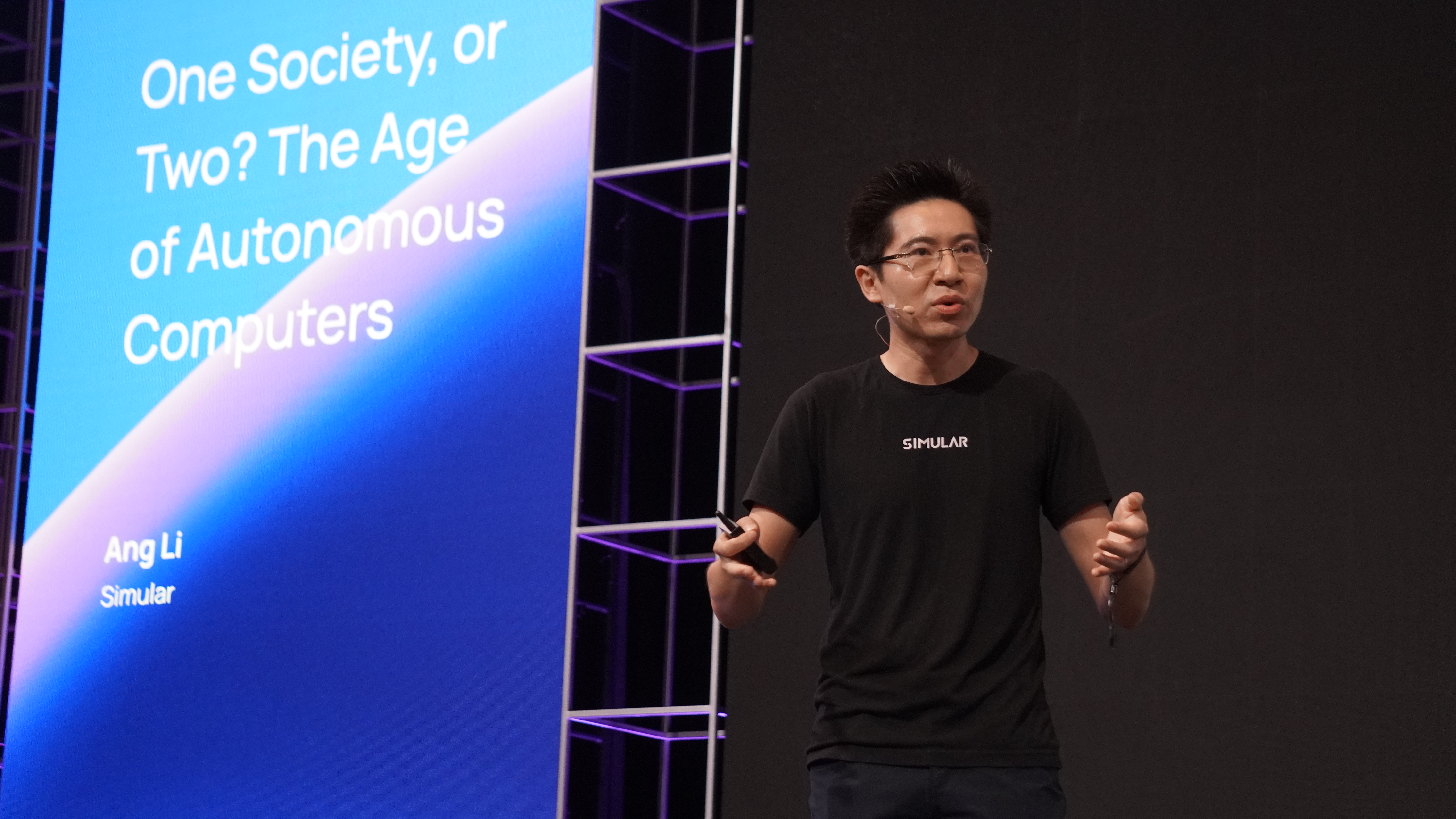
Three years later, Li is the CEO of Simular, which has been building computer-use agents since 2023, long before Astra and Grok Bot made the category a crowded one. Simular released its agent Sai to the public on September 16 and has raised $27 million from investors including Felicis, Nvidia's NVentures and South Park Commons. He also mentors early-stage founders at accelerators, many of them building their first company.
I met him in late August, three weeks before the release.
From Competition Awards in China to Four Years at DeepMind
Q. How did you first get interested in computers?
I grew up in China, and my family got our first computer when I was 10. I was fascinated, so I learned programming every night. I went to some competitions and won some awards. My teacher used to tell me I couldn't go to college if I kept doing the computer stuff, but I got into college without an exam because of the awards.
The curriculum was also kind of boring, since I already knew computers. So I started reading papers by myself. I talked to professors, started doing research, and published a first-author paper at a top AI conference as an undergrad. People were kind of shocked.
Q. Then, how did you end up in the US?
The AI conference was my first time flying to the US. I got offers from CMU and from Maryland, and I went to Maryland. Even my Maryland advisor said, “You're making the wrong decision.” But I felt this person was a good person to work with.
I spent a lot of time in Silicon Valley doing internships at Apple and at Facebook AI Research. I was part of some of the first deep learning deployment projects in big companies. That was important to me. I noticed there was a huge gap between research and production in the industry.
Q. Then DeepMind.
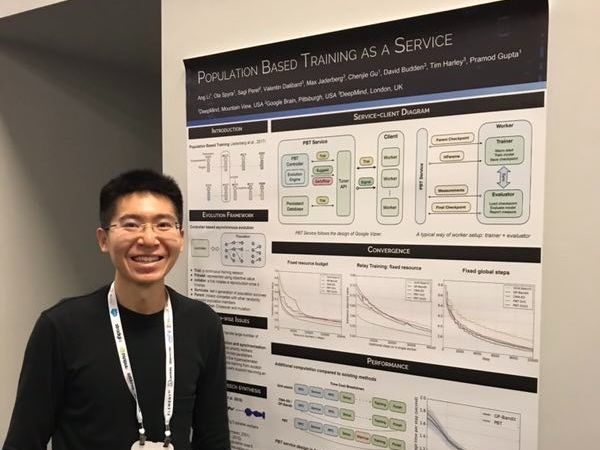
DeepMind wanted to open an applied team at Google headquarters, and I was excited about it. When I got there, instead of working directly with the product teams, I proposed a new idea to the whole team. Since it was so new, people didn't buy it. So I built a prototype myself.
It became the first collaboration between DeepMind and Waymo, and Waymo's model improved in the first week. I got promoted with an exception because my tenure was so short. That's when I felt it: I'm in Silicon Valley, doing a startup's job inside a company. Maybe one day I would start a startup.
Q. What was the trigger to actually leave?
When I was at DeepMind I had already registered the “simular.ai” domain. During the pandemic, I wanted to spend more time in Asia, and Baidu suggested, “If you come over and stay a few months, why not solve some problems here?” So I ended up leading their self-driving team. I wasn't going to stay forever.
Around that time, I was in Beijing for an AI event, and ChatGPT was released that same day. When I looked at it, I told my colleague, “The world is going to be chaotic very soon.” Six months later, I told the company I had to leave and start this now.
Q. You started Simular in 2023. Did the self-driving work shape the idea?
The idea came before that. Self-driving reinforced it.
My research was always about systems that continuously learn and perform at a human level. With a car, the AI system is bounded by the car's own manufacturing cycle, so the timeline slows down. On a computer, everything is digital and the data moves instantly.
When I looked at what the world needs, people carry computers and phones every day. If we have a system this powerful, your computer should drive itself.
What Actually Holds Immigrant Founders Back
Q. So you had the idea, and you decided to build it in the US. Visas are the first thing immigrant founders worry about. What was your path, and did it affect your timing?
Before this, I was on an O-1. Then I got my green card, so I could start a company here. The O-1 is fast to get. Some countries have other visa arrangements with the US. And I have a lot of founder friends on visas who don't have problems working here.
But I don't think the visa affected my timing. Timing is more about this: if you're thinking about something every day, that's the right time to do it.
Q. Then what actually gets in the way? Some people say that if you went to a prestigious school or came out of a company like Google, being an immigrant doesn't really matter.
There's definitely some barrier. As a founder, you need to talk to investors; you need to talk to customers. That's what I see immigrant founders struggle with. Maybe they are shy, or they feel they are non-native, so they're reluctant to speak.
But actually, no one cares. Even if you have an accent, that's fine here. You are coming from the outside world, not Silicon Valley, not the US, and almost everyone else is from outside too. Silicon Valley is the least biased place for foreigners.
It's about the core of your story. That's the part you have to nail. I've talked to English-speaking coaches, and even for a native English speaker, to do a pitch, they practice 100 times in front of a mirror. So it's not about your background or your education. That's just the minimum level of effort for someone to tell a story.
The second one is product. You have to be able to communicate with the outside world in some way, and your product has to be good. If you're world-class in one of them, you shouldn't have any problem starting a company. If you're not nailing either one, that's going to be the struggle.
Q. You mentor early-stage founders. What's the most common mistake you see?
Not knowing who you are. People work on something that's not truly what they want, because an investor told them to, or other people told them to, and they get dragged in different directions.
I remember early on, when I said our computer agent could be used for marketing, investors asked how many followers I had on social media. I didn't have many. So they said, then you're not the best person to do marketing. What they said made sense.
But you also change over time. Now we are doing use cases for marketing. It's important for founders to sit there, try different stuff, and see what they really like to do.
Q. Say a founder can't tell their story yet. What should they do this week?
Whenever you see someone, talk about your story. If you talk about something 100 times, you will know how to change it. I don't think I'm the best person at telling the story. But if you practice a lot, maybe thousands of times, that's the repetition you have to do. There's no better way.
I still remember the first time I pitched to investors. You could tell they didn't actually want to listen. I think it's about empathy. When you say something, you need to know what the other side is thinking.
Show your value as early as possible, because people are busy. Hi, we are building an autonomous computer. That's it. Some people say, "Autonomous computer, what is that? Tell me more." Some people just walk away. That's fine. Whatever you do, 90 percent of people will walk away. That's not a reason to stop.
Raising a First Round With No Deck, No Demo, and a Two-Week Deadline
Q. You left Baidu in 2023 and didn't have a company yet. What did that first year look like?

I quit and bought an Airstream, and I was driving around the US. Hundreds of investors reached out to me. I brought a portable wifi router, and I'm in the desert doing video calls with investors.
I was on vacation, so it was fine, but I felt it was a long time wasted. I could have used that time to build demos, do products, and prepare my story.
Q. What made those calls a waste?
Most of them just want to see what's going on. The real investor who's interested in your project will say, "I can give you an offer, let's move on quickly." They won't wait. Anyone who says, "Tell me more, give me some data, let me schedule more meetings," they're wasting your time. Identify that early, and just say, "I'm busy building."
Q. How did the first round actually close?
I told everyone: if you're interested, give me a term sheet. I set a deadline: two weeks. I didn't even have a deck. Everything was so rough. I didn't have a demo, just a person. I had a little concept video, a mouse moving to my Twitter. That's all I could show.
The deadline was on Friday. On the final day, I realized there was no hope because no one was talking to me. Then at 11 p.m. someone showed up at the very last minute, with a pretty good term sheet.
When I tried to buy a house in the US, they set a cutoff date and most people came in with offers in the last hour. Same thing. Deals usually happen at the last minute, so you have to be patient. The second time we raised, things changed at the last minute too.
Q. You took it?
The offer was good, but I felt maybe I was too immature for fundraising. The experience was bad, and I thought maybe something was wrong. So I called South Park Commons and told them, "I have a term sheet, but I'd prefer to go with the community first and do things on my own."
Q. A lot of founders tell you they want to raise. When should they?
Fundraising isn't something where you say I want to fundraise, so I fundraise. It's about reaching a milestone. Something happens, and the outside world perceives that something is happening at this company. That's when you have the opportunity.
If you're just standing there, not shipping anything, that's not the right time. Investors wait to see if other people want to invest. When you sell a house and put it on the market, and it's been there for a month and no one is buying, what does that mean?
Q. What counts as a milestone if you have almost nothing?
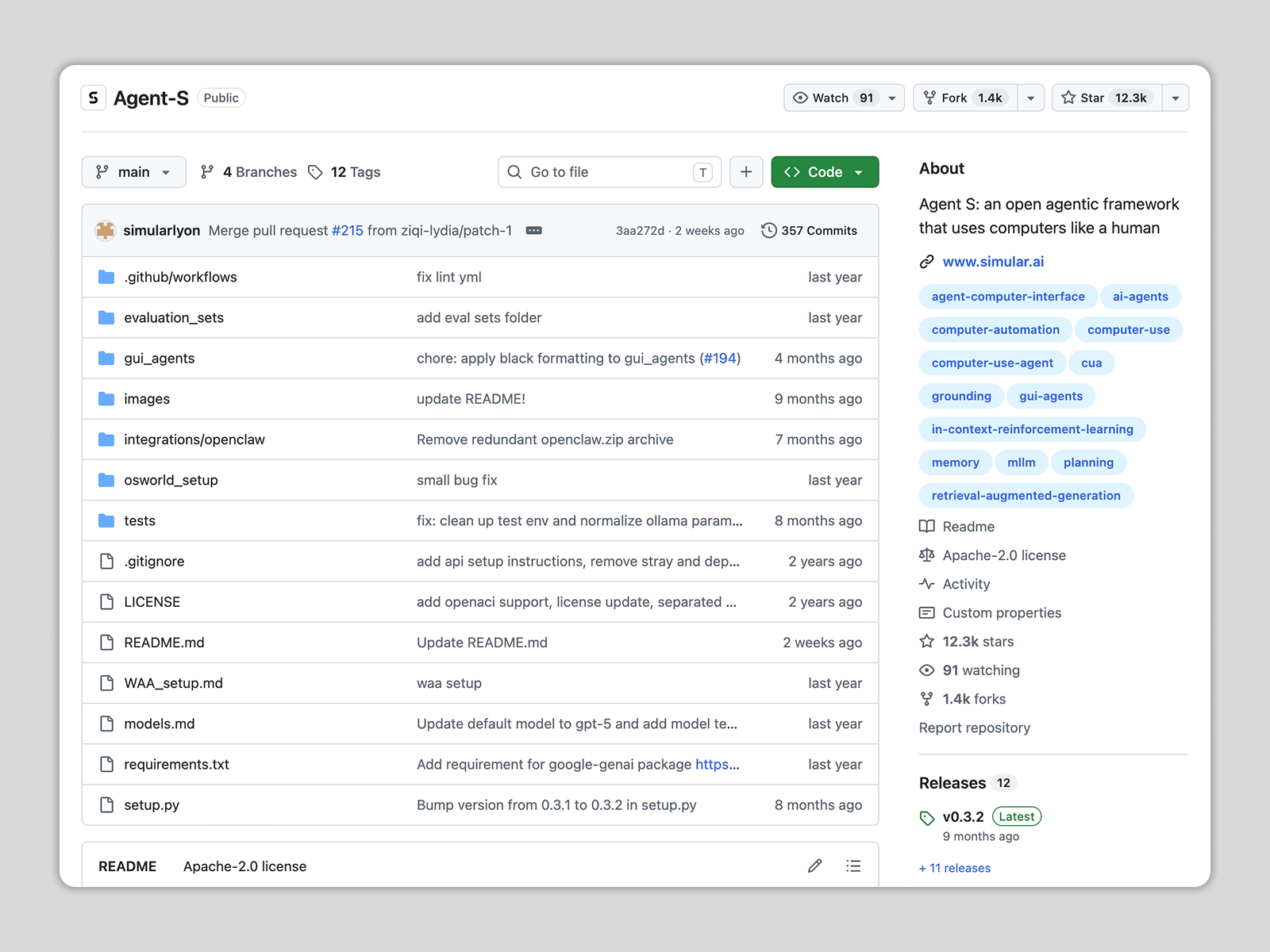
You need a product that's useful to people, or technology that's useful. And then you need evidence. In the beginning, our product was really bad. But we had open source code that people found useful, and benchmark numbers showing the open source was good. Those are evidence. You don't need a million users on the first day. You need a small proof that the idea works and can reach a huge market.
* Simular's open source project Agent S, a computer-use agent framework released in October 2024, had its paper accepted to ICLR 2025. In December 2025 the company said Agent S3, the framework's third generation, was the first computer-use agent to pass human-level performance on the OSWorld benchmark, scoring 72.6 percent against a human baseline of 72.36 percent.
Why Sai Turns Tasks Into Code Instead of Calling a Model Every Time
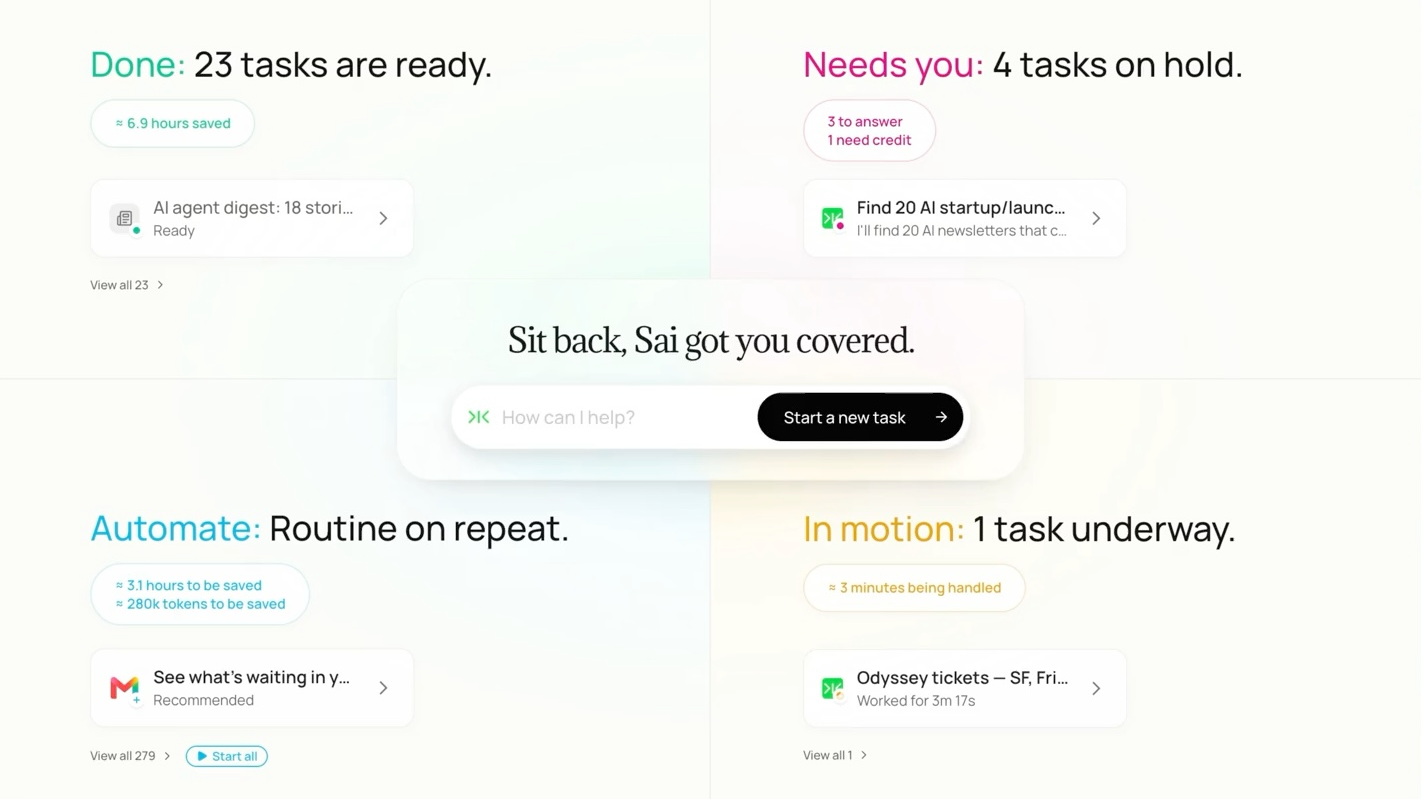
Simular has been building computer-use agents since 2023, starting with open source research and moving to a consumer product this year. Its agent, Sai, takes a task described in plain language and carries it out by operating the screen the way a person would, clicking, typing, and moving between applications.
It runs on the user's own Mac or Windows machine or on cloud computers the company provides, and it can run on a schedule without anyone watching. Sai was invite-only until September 16, when Simular released it to the public.
Q. It's been three years since you started the company. How has the product changed from the first version to now?
I usually call our stuff a prototype instead of a product. We're technically a tech company and we build technology. What we shipped was easy for developers to use. For normal users, it's very hard to produce that kind of product.
This year is the first year we have a real product that normal people can use and feel it's helping them. It should be as simple for an 80-year-old or an 8-year-old to use. That sounds easy but it's extremely hard. During product building it's always, we need to add this, people requested this button, we need another portal. It always becomes more and more complex.
Q. What's the actual difference between a prototype and a product?
Scalability. In the prototype phase, you put in an invitation code because you want a small group of users, and you iterate. Once you feel the product is ready, you go to general availability. You want everyone to come.
That's the part that's extremely hard for an AI product. Tokens are expensive. So either you set up friction, or the price becomes extremely high.
Q. Sai was released to the public with a claim of 90 percent fewer tokens on recurring tasks. Where does that come from?
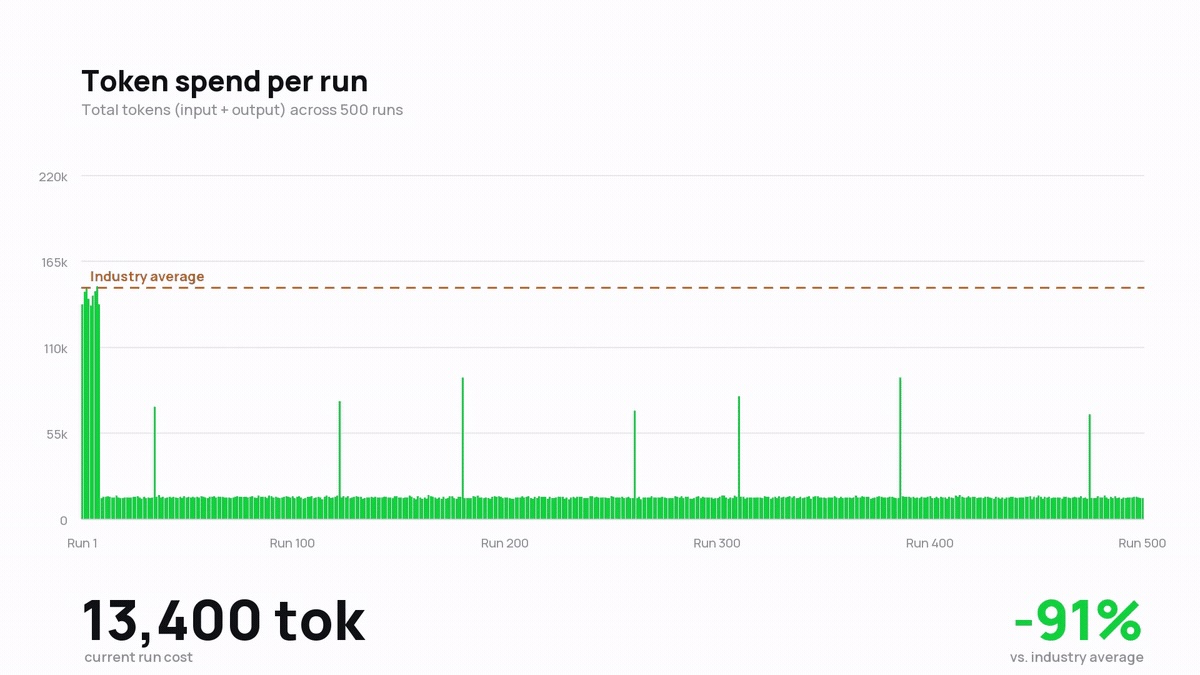
It's called a neurosymbolic continuous learning framework. The foundation model companies give you intelligence through a neural net. Every time you want to do something, you call the model, give it a lot of tokens, and combine the results.
The problem is that each time you ask the same question, it's not going to give you the same answer. It's probabilistic. That's not a problem in chat, but in work, I need every step to be exactly the same. Code is deterministic. Every time, code does the same thing you instruct it to do.
We want work to be automated, so naturally we should execute code. The first time, I ask the neural net to do the job. If it succeeds, we turn it into code. Next time, you run the code. You don't have to send tokens to the LLM every time. That's why the token consumption drops.
Q. Most computer-use agents live in the browser. Sai runs on Windows and offers its own cloud desktop. Why not a browser, or an API?
It goes back to the mission, which is to liberate human labor. What human labor does is sit at a Windows desktop doing manual entry. Seventy-one percent of people in the world use Windows, so it's clear the technology needs to solve problems on Windows computers. If we want everyone to have equal access to this technology, that's where we have to be.
The reason we have a cloud computer is that I shouldn't make assumptions about users. Some people may not have a Windows machine. We give them our own cloud computer so they can still use the agent.
A browser or an API is not solving human labor. A lot of it is happening in traditional Windows desktop applications and ERP systems in traditional industries. It's not a browser task; it's not an API task. That's the last mile of the computer-use agent.
Q. Who is coming in?
We have a lot of inbound from business: finance, banks, insurance companies, doctors' offices, logistics. They have a lot of form-filling in traditional systems. For us, it's about nailing their problems one by one.
When OpenAI Ships the Same Thing You're Building
Q. Anthropic and OpenAI are both building computer-use agents. A first-time founder would panic. You don't.
As a startup, you shouldn't worry about other people copying you. You should be proud. If other people copy you, it means you're leading the wave for the whole industry. If I see more people copying me, I'm right. You can't prevent it anyway. So encourage more people to work on this problem together. You don't want to be the only person running the marathon.
Competition will happen either way. But other people are not as persistent as you. If they chase you this time, and something fancier shows up, they'll switch to that. We never changed.
When OpenAI was working on the Atlas browser, my investors were so anxious. We had to set up a lot of meetings with them. But OpenAI doing the same thing as us actually helped us. They helped everyone understand this technology.
Q. When everyone chases the same technology, what decides the winner?
There should be a winner, but even second place and third place are not losers. If the market is big enough, it's unlikely one winner takes everything. Honestly, if OpenAI can be better than us, I'm happy for them. They have really good designers. Why should I compete with them on a consumer product? We should do what we're the best at.
Q. And what is that?
Everyone can be successful if they find their own DNA. People fail because they have one DNA and chase something else, something that's not their origin.
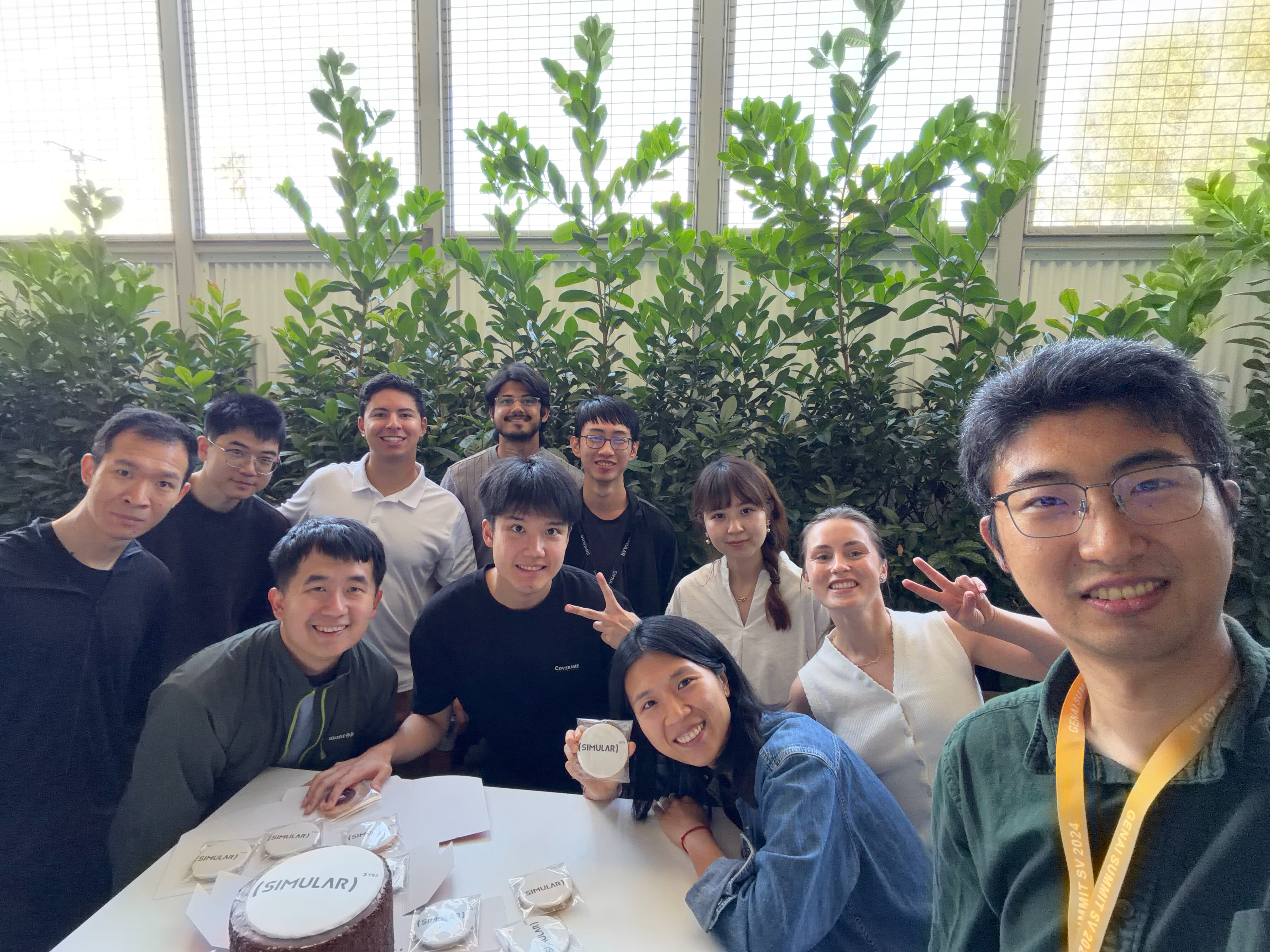
For us, the token-efficient neurosymbolic technology is new, so we're ahead of the market on delivering it. The team is strong. And we're one of very few companies, maybe the only one, that has worked on this problem for so long. We've seen all the edge cases, so we understand computer use better than anyone else. I clearly see big companies doing things we tried that don't make sense.
But the problem right now is that no one really has product market fit. OpenAI's Atlas still has a lot of users, but that's not product market fit. No one has it yet. So it's hard to say who's winning.
Explore more