Aug 10, 2026
Aside: The AI Browser Born From the Post-YC Blues
Interview with Chanhee Lee, CPO of Aside
Behind The Scenes



0:00 / 0:00
Even YC is Not a Golden Ticket
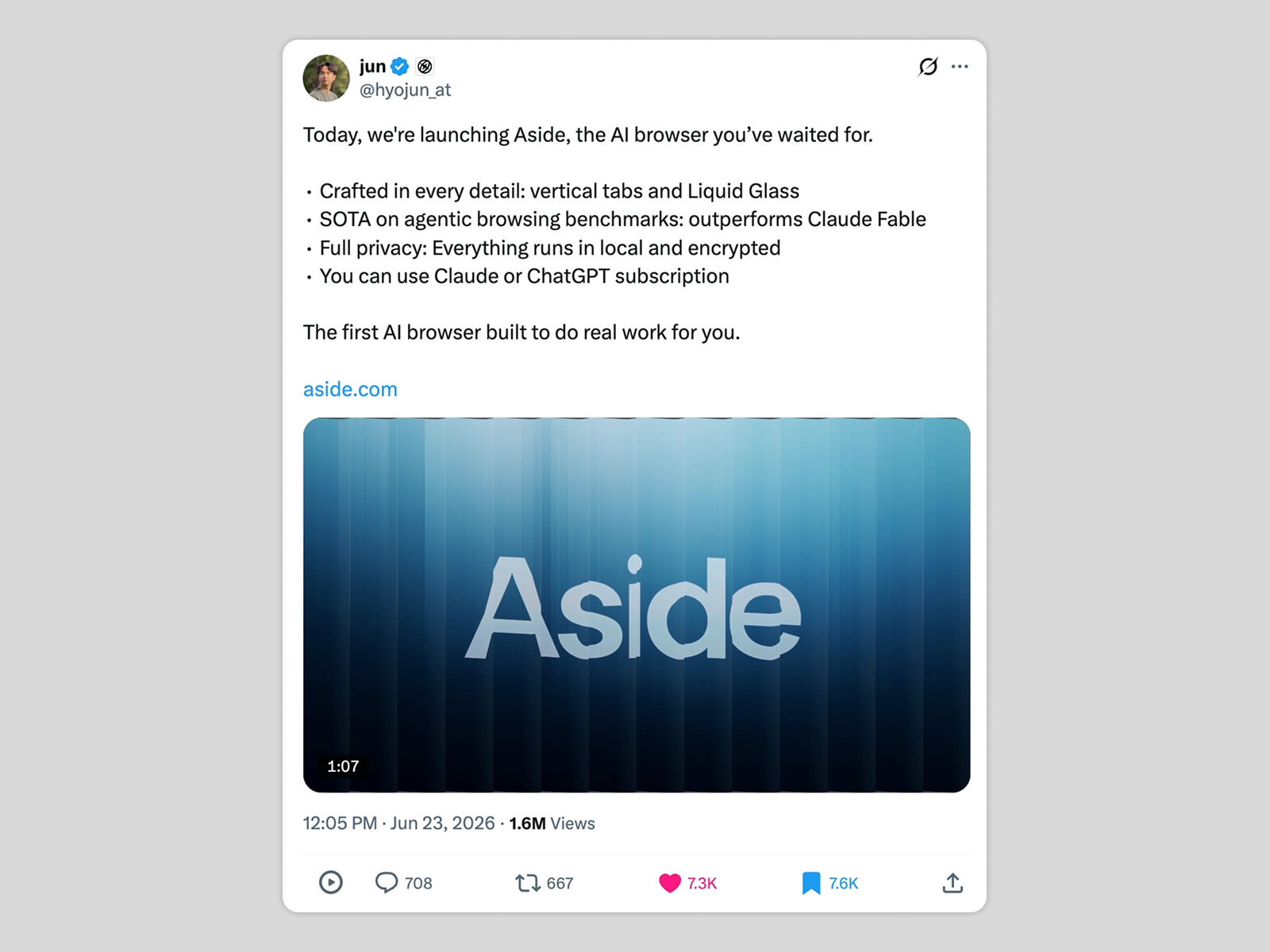
The launch post has passed 1.6 million views. Aside, an AI browser built by five people in five months, launched on June 23. By the two-week mark, Aside had already crossed 20,000 users and enough revenue that the team shut down their previous product. It was also listed as one of the notable AI browsers by TechCrunch.
It reads as another YC win. But six months before launch, this team couldn't bring themselves to build anything at all. They had fallen into what Sam Altman has called the post-YC slump, which started during the batch and worsened afterward.
Aside got into YC on its seventh application, after five pivots. At first, acceptance felt like the reward for everything. It didn't take long to learn otherwise. They were constantly measuring themselves against batchmates, racing to figure out their business and squeeze everything they could out of the three-month batch, without quite knowing how. As Chanhee Lee, Aside's CPO, later wrote on X:
"We finished the batch without meaningful traction. From December through January, we went through a brutal case of the post-YC blues. We did not want to write another line of code."Chanhee LeeCPO of Aside
Even the YC badge, it turns out, is not a golden ticket. The question is how they turned that despair into a sixth pivot, and how their last swing became the biggest moment of their founding journey. I sat down with Chanhee, and what followed was the most honest founder retrospective I've heard in a long time.
(Interview conducted in Korean; quotes translated and lightly edited.)
Messing Up the Three-Month Batch
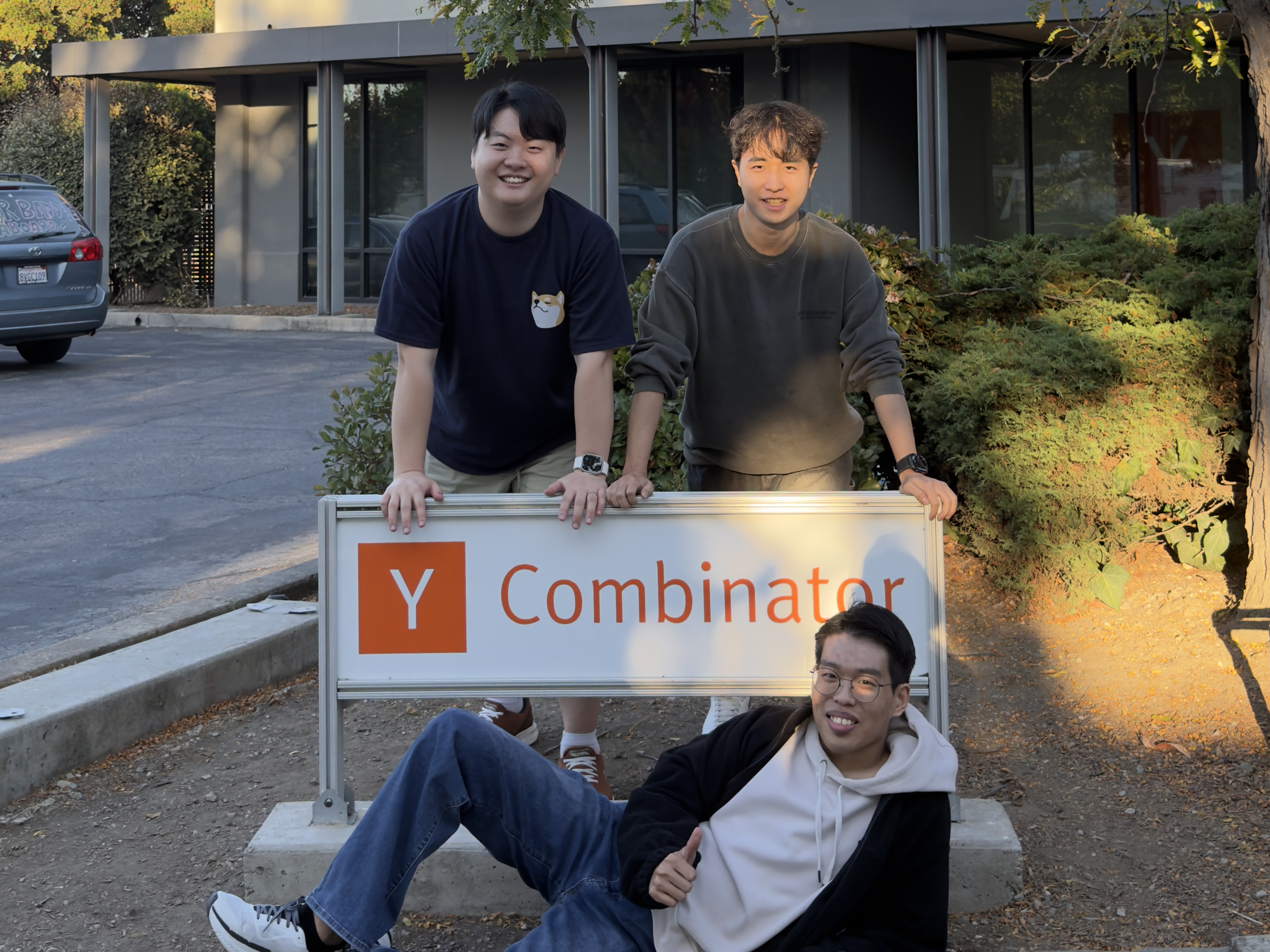
Q. The Aside team struggled to get into YC. What was it like once you were actually in?
When the call came, it felt like everything finally paid off. We had applied seven times. Earlier that year, the company bank account had about $200 in it. And the batch was full of genuine hustlers. It felt like we'd finally made it into the room with the best.
Q. How did the people you met there react to your team?
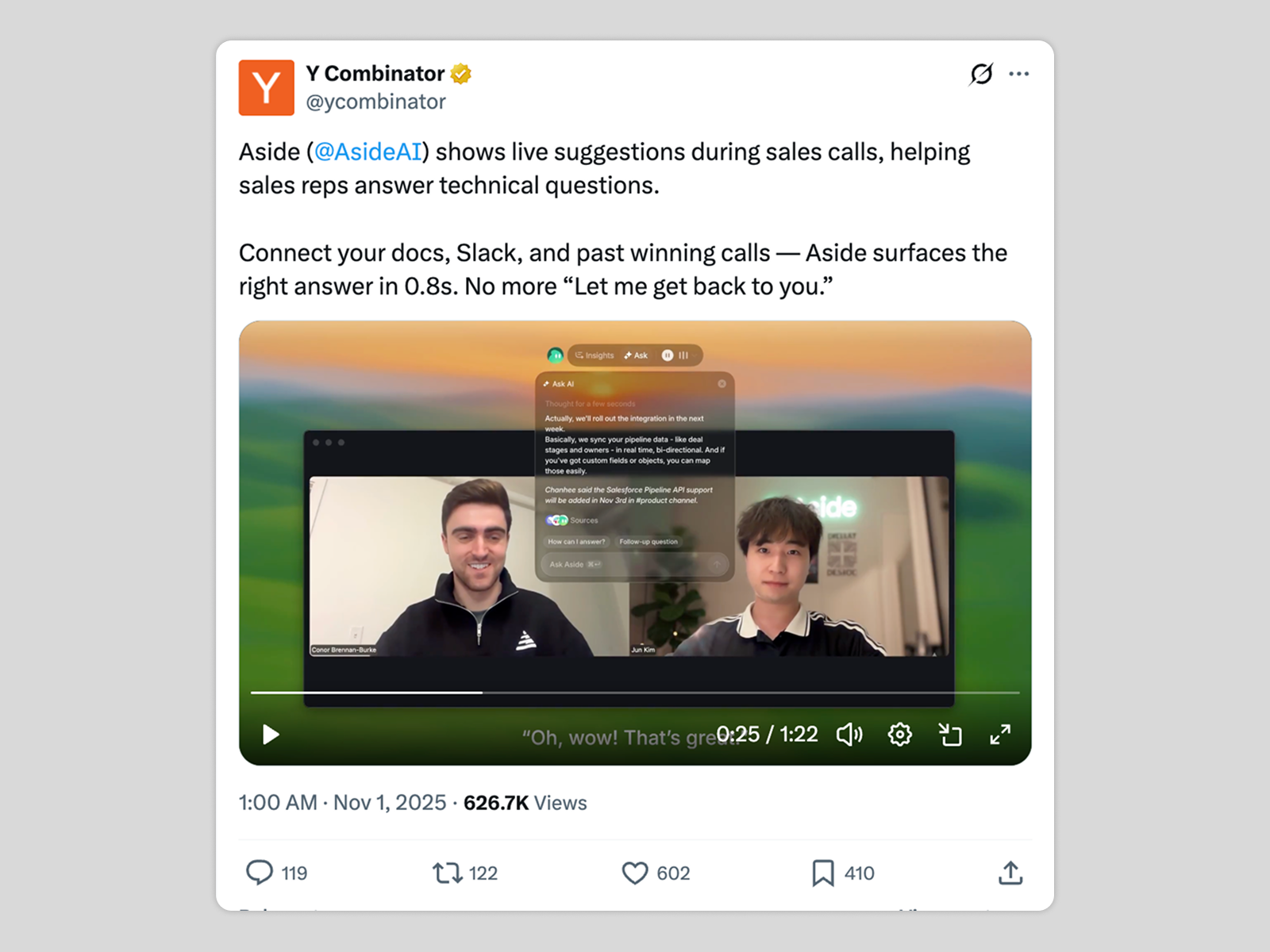
Honestly, nobody cared. The reaction was, "Oh. Cool." That was about it. To be fair, our idea at the time probably looked like a Cluely knockoff to them. Another sales meeting assistant. Something like, "This got into the batch?"
And we didn't sell ourselves well either. I've lived in Korea for all of my 27 years, so small talk didn't come easily, and we probably weren't very charming.
Q. Let's get into the batch itself. Your X post lists the three problems that broke the sales assistant. From the inside, when did you realize you were moving too slowly?
We went to bed at 3 a.m., woke up at 8 a.m., and didn't know what to do. Customers kept complaining, and our energy was gone. I was the most high-strung person on the team. It just felt like, why are we moving so slowly? Why are our commits so low? Why does it feel like we can't build a proper product?
I think energy is everything. It sits in you like base stamina. You can hear harsh things, the situation can be bad, and you keep going anyway. We didn't have that.
Q. Was it like that the whole batch?
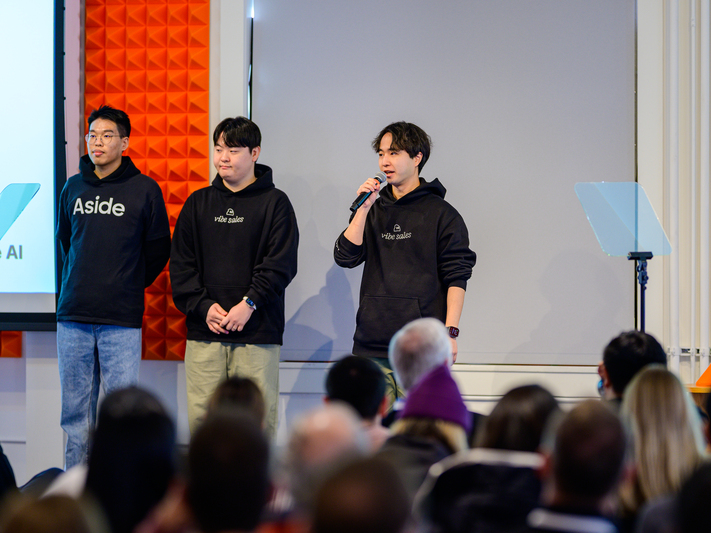
The first half of the batch was fine. We still thought we were good. Then the back half came, and with it fundraising week. We actually had no plans to raise. We had enough money to run the business. But the whole YC atmosphere pushes everyone toward fundraising.
Investors reached out, we booked calls, and the stress started there. We thought, “That team booked 80 calls, why did we only get 50?” Then we went into those calls, and the no's started piling up, and the doubt crept in. Are we building the wrong product? Is our traction just that bad? The more the doubt grew, the more the team's mood broke.
Q. What do investors actually do when they turn you down? Do they say "no" to your face?
Some do. I actually like that. Decisions are fast. If they like you, it closes within hours.
And every one of those investors said some version of, "I don't really get what you're doing, but you clearly build a great product." They were all pointing at the same thing, the engineering and the UX. If they hadn't said that, we wouldn't have known what to sell next. That became the first clue that led to the browser.
Post-YC Blues
Q. Is "post-YC blues" an expression people actually use inside YC?
It's from Sam Altman's blog. Every batch grinds itself down during those three months, and afterward come the anxiety and the co-founder breakups. YC partners talk about it internally too. The post-YC blues are coming, and you have to survive them.
Altman actually told our batch himself. "For the next two years, you're fucked. Sorry, but it's already decided. Some teams survive it and turn things around, and some break up. It's going to happen."
Q. Walk me through December and January, the "did not want to write another line of code" period.
It was awful. The batch ended, and all I felt was, that's it? I blamed myself a lot. Why was this all we could do? And we compared ourselves to other teams constantly. People would ask, "They raised millions. How much did you raise?" And we'd puff up and answer, "We raised this much." But even as I said the words, it felt like lying to myself. It felt like we had lost the reason to keep doing this.
If there's something to do, you do it. If you have conviction, you follow it. We had neither. We'd still sit down at our laptops and type things, but none of it was real work.
Q. Your team lives together, and the house is the office. That must have been suffocating.
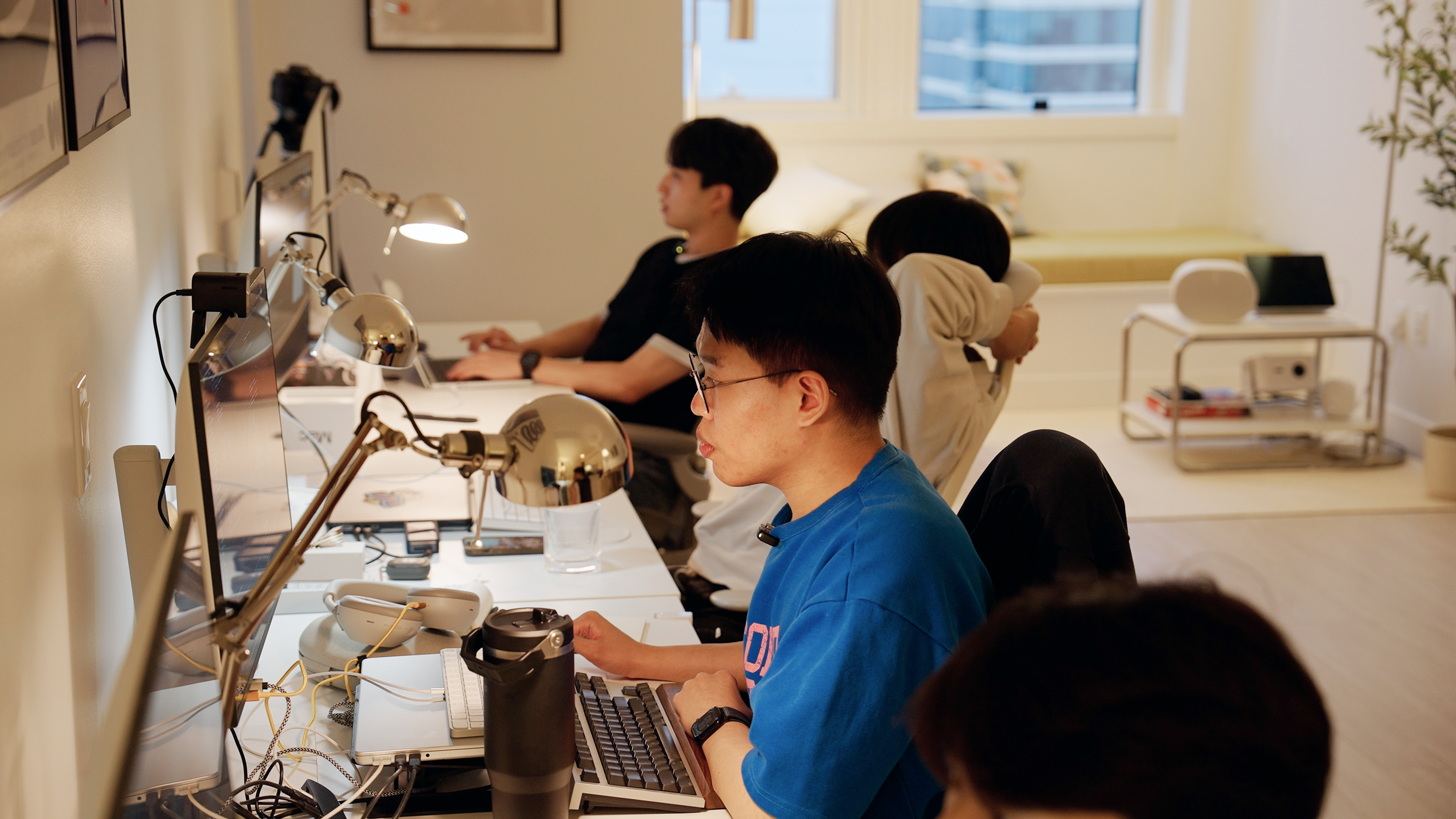
That was one of the hardest parts. Everything feels bleak, but you still wake up, see each other's faces, sit down side by side, and work. And you can see that nobody is really working. Everyone is struggling, and it shows. So the question just loops. Is this even right?
We got angry at each other a lot. I don't like remembering that period. Jun is the type to say something like, "We still gained something, so let's count it as a win.” I'm the exact opposite, deeply cynical. At one point, I even thought, "I just don't want to run a startup. Maybe I'm meant to be an employee."
Q. Looking back, what did you miss? If you could go back and prepare properly, could you do it?
I don't think we understood how much preparation it takes. Getting into YC isn't the end. The moment you get in, you should already have a picture of how to leverage it, and then spend the three months executing that picture efficiently. We didn't have the picture.
Could we do it on a second try? Honestly, I don't know. Some teams run that playbook brilliantly, and it just isn't ours. Part of that is communication skills. Part of it is personality. No amount of preparation changes that.
And as I wrote in the X post, we didn't enjoy building that product. That mattered more than anything else.
The Last Pivot
Q. When did the air start to shift? When did the browser idea first come up?
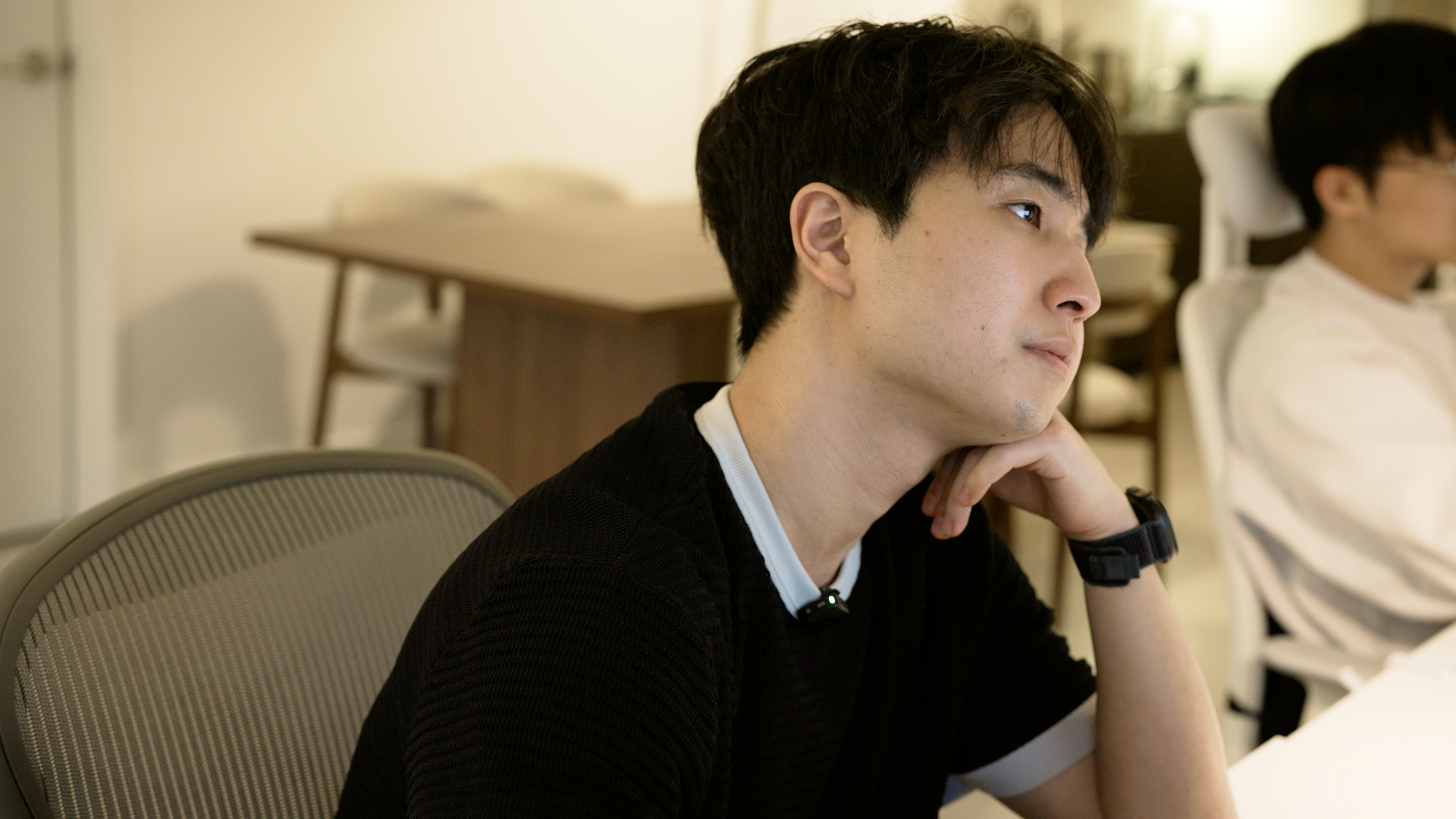
In December, at our lowest, Jun brought it up. It wasn't a new idea. Integrations had been a constant problem during the batch. Every customer kept their knowledge somewhere different, Notion, GitHub, spreadsheets, and we couldn't build connectors fast enough. So we kept half-joking, "Everything already lives in the browser anyway. What if the browser is the integration?"
And investors had already told us where our strength was: the product itself. So Jun said, why not an AI browser as our last pivot? But I was fiercely against it.
Q. Why were you so opposed?
Before I joined, this team had already pivoted five times. All five failed. One of the things founders should fear most is the pivot spiral, pivoting without ever verifying what you're actually good at or what would prove the idea. And I thought, aren't we in exactly that state right now?
Q. But you came around. What changed?
The pivot itself was never the problem. What I cared about was whether we had really taken the old product as far as we could. Meanwhile, I started floating the idea into the team. "If we built a browser, what would it look like?" I was watching what made people light up.
By January, we had run the old thing to the end, and revenue was still flat. And the team visibly lit up around the browser. People kept saying, "I always wanted this when I browse." That was a very good signal. If it's fun, speed follows.
And this was January 2026. Anthropic was insane, shipping something new every day, killing a startup a day. Every startup was quietly asking, "If we miss this window, do we get another one?" We concluded we might not. So we shut everything down and committed to the browser, under one rule. This time, we build what we want.
Q. Still, a browser sounds brutally hard. OpenAI tried, and the response was lukewarm. How did you convince yourselves you could do it?
We were confident we could build a product well, even by San Francisco standards. Across the last ten YC batches, roughly 1,600 teams, fewer than five could customize Chromium, the open-source codebase that Chrome and most modern browsers are built on, at this depth.
During the batch, we kept helping other teams with design and technical problems. I used to think, "Why is everyone so bad at design?" Turns out that was our strength.
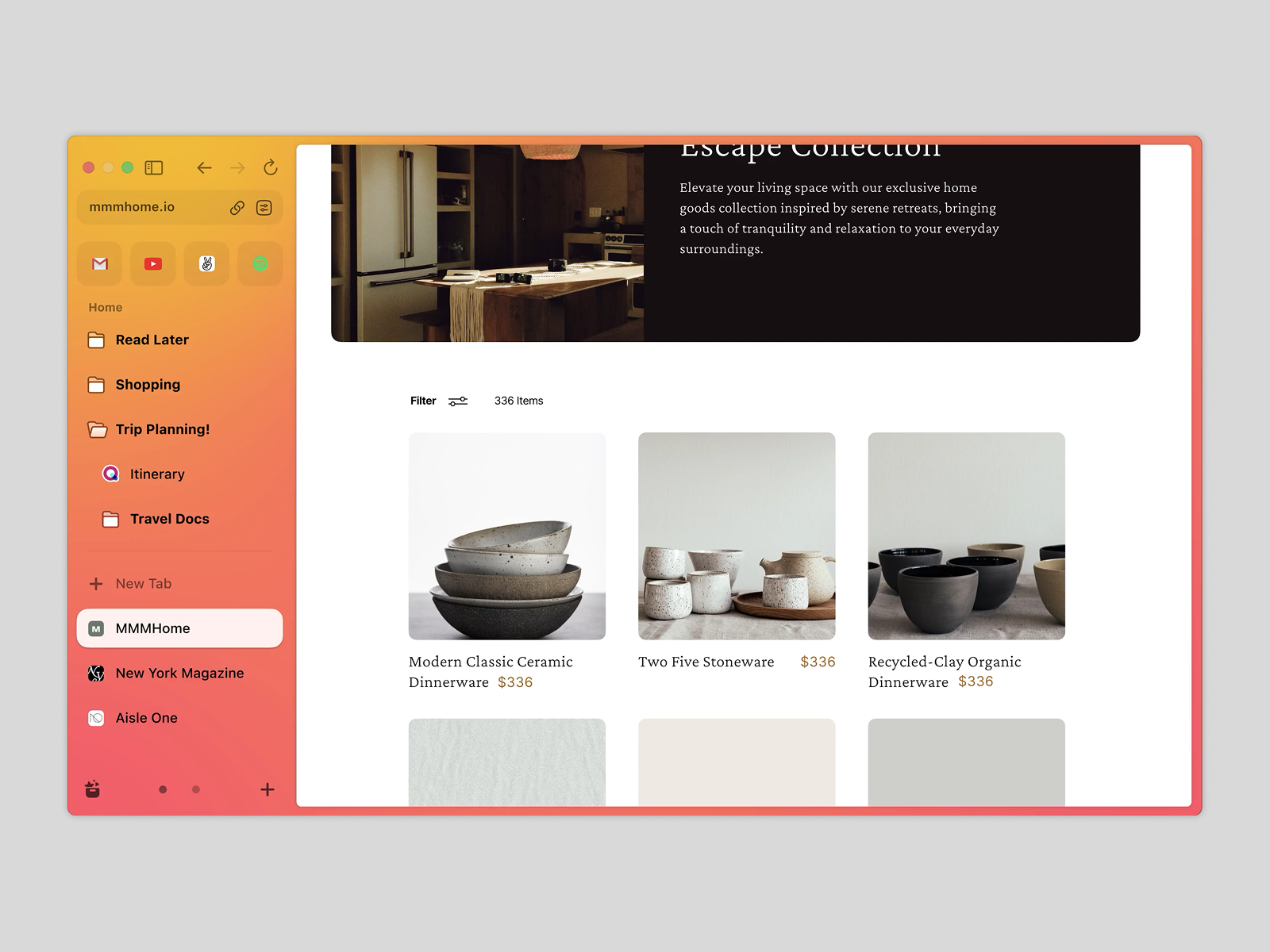
We also knew exactly why people had loved Arc. I was a huge Arc fan. But The Browser Company abandoned it for Dia, and the result was deeply disappointing. My read is that they didn't know what people loved about their own product. And I kept thinking, we could do this better than them.
Five Hushed Months
Q. For five months, you told almost no one that you were building an AI browser. What did you say when people asked how it was going?
"Sales is hard. Not going great." Or the all-purpose answer, "We're figuring things out." Even batchmates didn't really know.
Q. How did those five months actually run?
Jun wrote down what we needed. One, a beautiful browser. Two, a genuinely smart agent. Three, a password manager that AI can autofill. And so on down the list. Each of those could be a company of its own. We built five companies in five months.
Everyone owned a part. Jun took AI, the harness, and memory. Seongmin took the password manager. Sanghun, our CTO, took Chromium. I took design and the thousand small details. And each of us already knew how to amplify ourselves with AI.
The current browser is internally version five. We tore it down and rebuilt it roughly once a month.

Q. It sounds like you were enjoying it. When did you catch yourselves thinking, "we're doing something we really want"?
Our office is in a startup coworking space in Seoul, and one day we ran the agent on the building's own meeting-room booking page. But it didn't work. The markup was illegible to an agent.
I said if we can't even book a meeting room in our own building, we should just shut the company down. So Jun sat down and carved out a better parser until it worked. That was the whole loop. Use it, watch it break, fix the browser.
Q. Any big fights in those five months?
The only real fight was the name. I didn't want to keep "Aside." The name felt cursed to me. My proposal was to call the browser "bro." First three letters of "browser." Our internal Chromium fork is still named Bromium.
My pitch was this. A browser named bro. Zero AI features. Three plans, $6, $7, and $67, with no difference between them. I knew it would work. Build something as good as Arc, call it bro, and they'd pay. Great marketing, too. "This bro kills 50% of B2B SaaS in San Francisco."
Jun's counter was that we had become known in the SF scene as Aside, and throwing that away made no sense. And a meme-first name could overshadow the product itself. A genuinely smart AI browser named bro might just get written off as a joke. In the end, I came around.
Launch Day
Q. How was the launch itself?
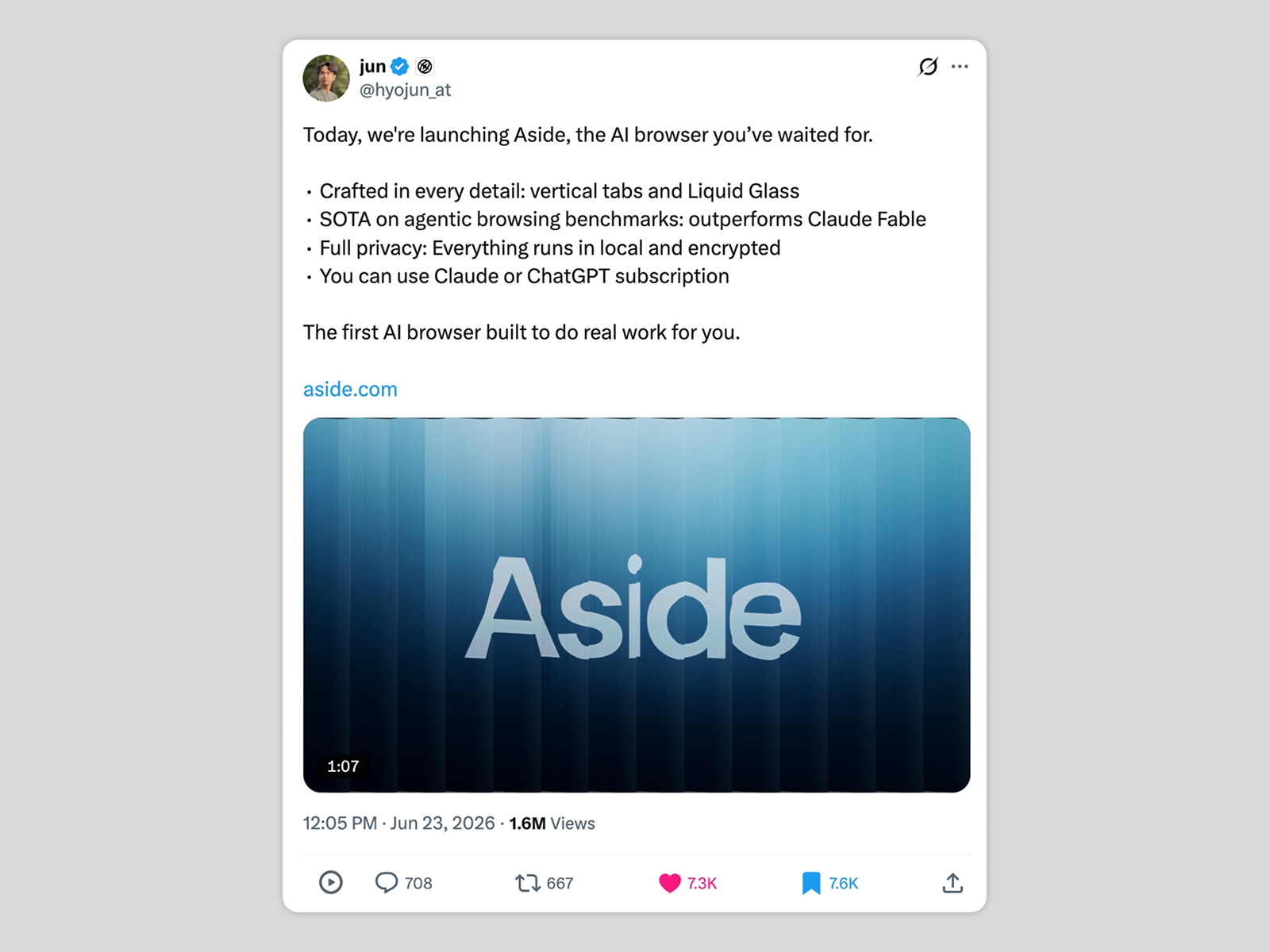
We went live on June 23, around 12 p.m., because Jun overslept. We ran zero ads. Then batchmates started reposting and quote-tweeting, and we could feel it moving unnaturally fast.
An hour in, the launch post passed 200K views, and we started betting. Jun said it would clear a million. I said 800K, don't get carried away. It ended around 1.6 million on X alone.
We didn't know it would go this viral. We'd planned to raise a small round later, but pulled it forward and raised right away.
Q. Even your retrospective post went viral later. Why do you think Aside went so viral?
Arc users wanted out of Arc. And there's a crowd that shows up whenever a YC startup builds something weird. And the launch video had genuinely shocking moments.
In the launch video, the agent goes into my bank account, reads through my transfer history, then logs into subscriptions I don't use and cancels them. There's a creepiness to it, sure. But that same creepiness is what attracts users. I think that's the point that carried it.
Q. Weren't you worried the demo was too creepy?
Everything else we had was creepier. Applying for your visa. Issuing stock options and having you just sign. Someone suggested having the agent research Roy Lee and file the lawsuit itself. We didn't ship that. Rage bait is dead. You can't turn a rage-baited audience into customers.
Q. What did users love most?
Memory was the feature users mentioned most. Before, you had to tell an agent who you are, which services you use, which menu to open. Now you just say "do it," and it does. That shocked people.
Also, the browser is beautiful, and the whole thing feels coherent. And that you can watch the AI work right beside you. A lot of people said, "It's like the Codex app became a browser."
Q. Ironic, considering OpenAI built its own AI browser and then walked away from it.
I think they'll regret killing Atlas for a long time. Their original concept was right. They were just early. Though I'm not sure they could have done it well anyway. They don't want the legal risk, and they don't seem to know what belongs in a browser's basics.
And here's the thing people don't get. You cannot build a browser with AI. Chromium is a 20-year-old codebase, 50 gigabytes of source. A browser is the essence of modern programming. Try reading it with a coding agent, and the context window dies on a single file. So sure, let the big labs try. Every failed attempt raises our valuation.
When Value Exceeds Concerns
Q. Massive attention means massive user feedback. How has that been?
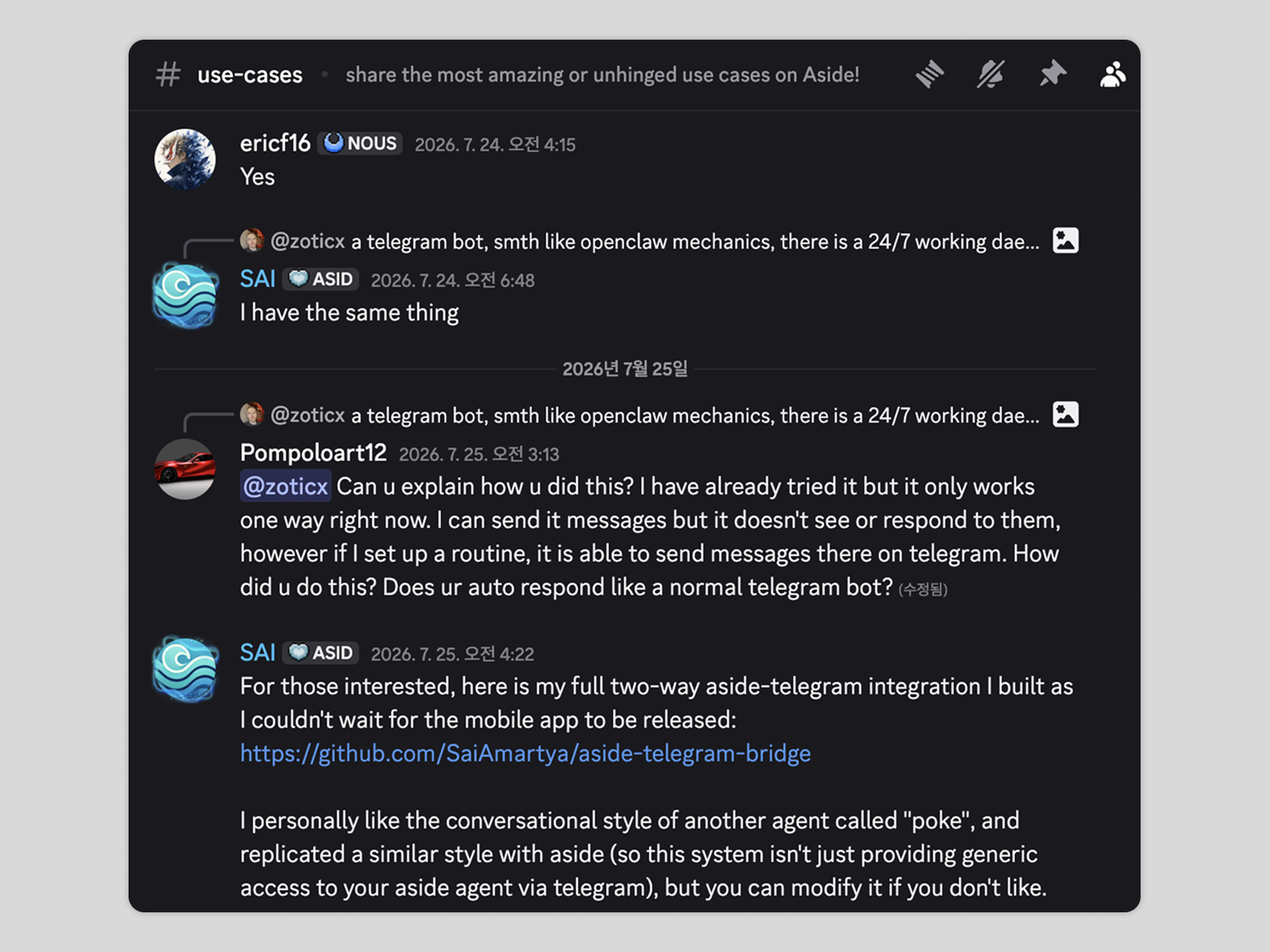
It still feels that way. For the first month or two, the plan was simple. Listen to the feedback and fix things in priority order. That's what we've been doing. To keep that going, we even hired our most enthusiastic Discord user, a 17-year-old in Canada who has already shipped a feature or two.
Q. Are you sure you've found PMF?
I think we've crossed the PMF-finding stage. Most companies die before that, or stay trapped in it forever, in the pivot spiral. We recently emailed users that we're shutting down our previous product. Aside passed that product's entire year of revenue in one month.
People asked, "Who pays for a browser?" Turns out they pay. A lot.
Q. It's still a slightly strange idea, paying for a browser.
Cursor was the same. Nobody thought developers would pay for an IDE. I didn't. Why would I pay Cursor $20? Now I pay, happily. What matters is the first utility a product hands you.
Ours is the same shape. You don't just use it on the tab you're looking at. You give it a task, and it opens its own tabs, works them independently, and finishes. The moment a product starts giving you "wait, it can do that?", you can't go back.
And this arena is bigger than coding agents. Now for the first time, when we say we're a competitor to OpenAI and Anthropic, people respond, "Huh. That actually makes sense."
Q. I tried Aside myself. It scanned everything, even the loan paperwork for my apartment lease. It honestly felt like a police raid on my browser. Aren't users worried?
Everything stays on your local device. When we call an LLM, we built it to expose as little personal data as possible. Credential operations are copy-only, meaning the only information that gets recorded is that a copy occurred, not the content itself.
Dia and ChatGPT Atlas store your search history on their servers. With Atlas, it all goes to OpenAI. We don't store it. Partly because we can't afford to. But mostly, we just don't.
Take passwords. Verifying one requires matching encryption keys, and the private key exists only on the user's device. We can't decrypt it. We couldn't look even if we wanted to.
Q. Even after that explanation, some people will hesitate.
Well, there's a point where value exceeds concern. It has repeated through history. When computers arrived, people asked why they would put important data in a computer. When the internet arrived, why would they put it in someone else's database. When the cloud arrived, why would they hand it to Google. In the end, utility won every time.
Q. Jun wrote that Aside leads the Online-Mind2Web benchmark, beating GPT-5.4, Claude Opus 4.8, and ChatGPT Atlas. But some are skeptical, calling out how the results were self-graded in your own repo. What's your response?
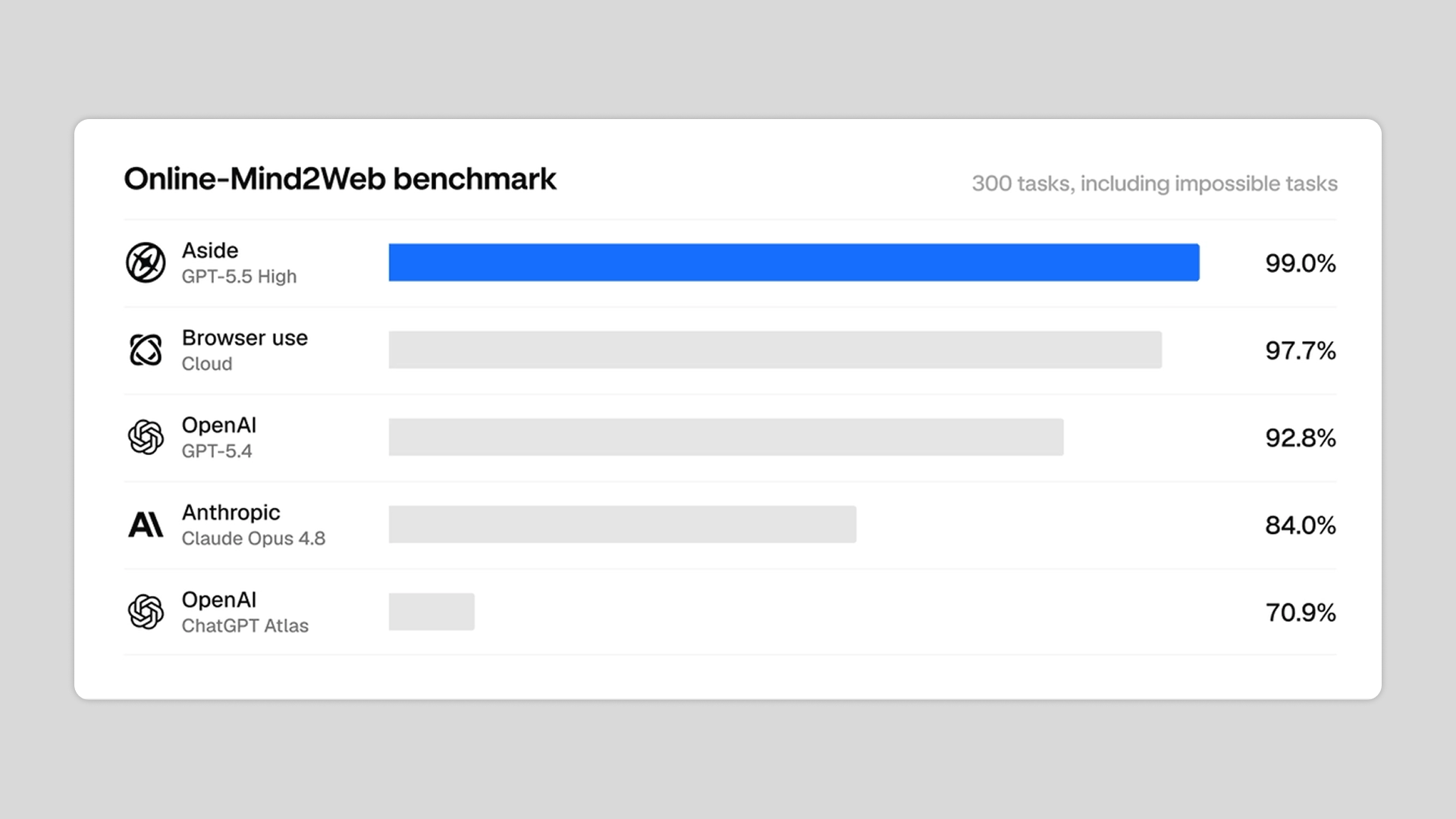
I have a lot to say here. First, we're already in contact with a co-author of Mind2Web and going through verification. It should be on Hugging Face within weeks, so that concern resolves itself.
Second, OpenAI and the others provided no means of verification. No public repository. You can't run it. You can't inspect the outputs. There are browsers claiming they beat us with no execution records at all. We are the only team that published how we verified, what code ran, and what the screens showed.
And honestly, the strange part is that this is even notable. In AI right now, announcing numbers with no verification attached is completely normal, and nobody calls that culture what it is. You can say we rigged the benchmark. But if you're suspicious, run it.
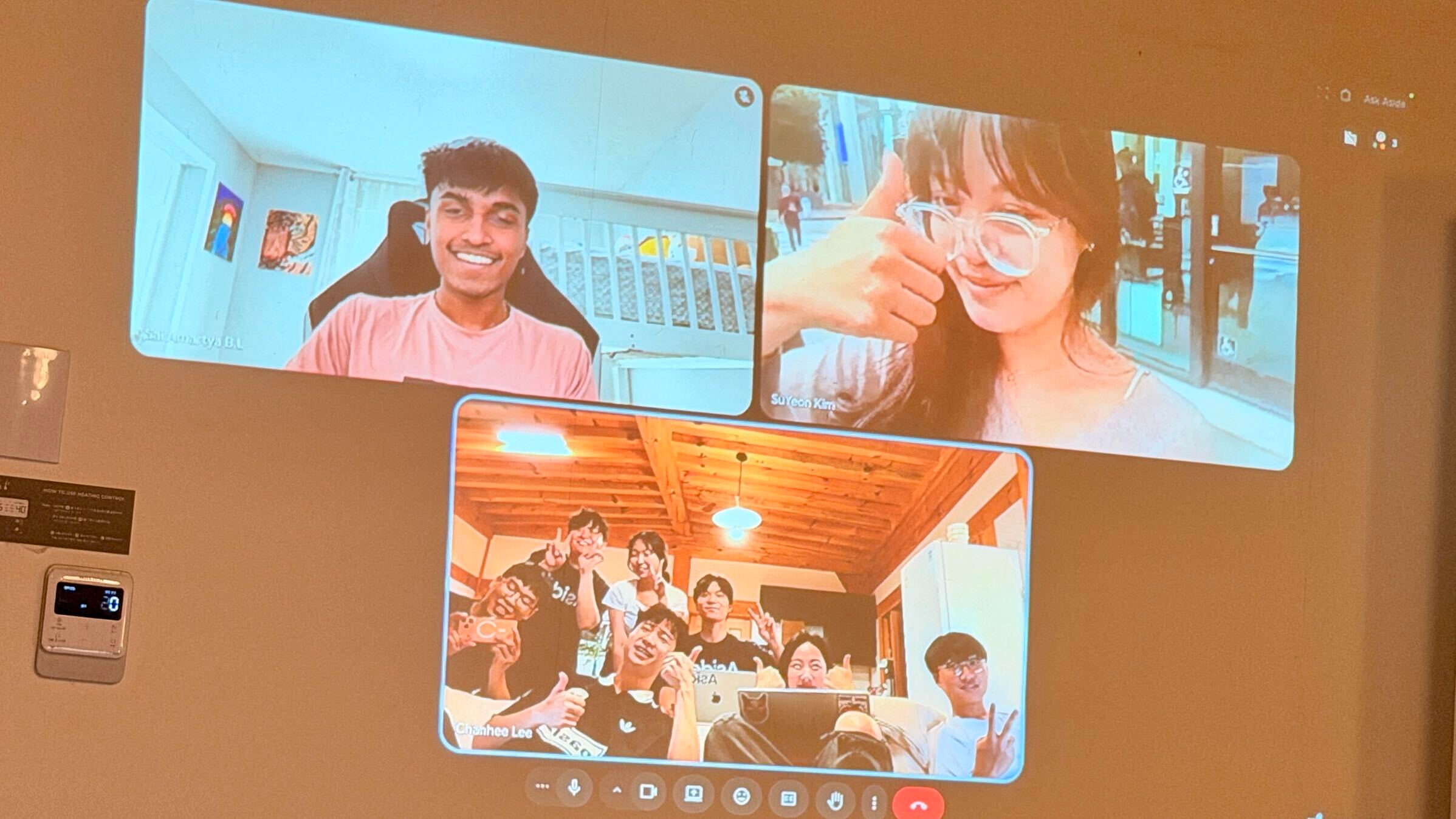
Q. What's the plan from here?
The immediate goal is to burn through the product roadmap as fast as possible. The next two or three months will be developing cloud, mobile, remote control, and organization features.
Zooming out, though, this business is about erasing an entire category: Integrations. San Francisco's B2B startups are built on top of integrations. We're going after that foundation itself, which makes some very fun experiments possible.
And there's a bigger goal. By building a second brain on the browser, we have effectively made AI agents first-class citizens of digital space. So how do you tell the two apart? Who carries the legal and ethical responsibility? The one steering the agent? If a copy of me is out there acting exactly the way I would, who gets control over it? What makes a bot a bot, and a person a person? If we succeed, those are the debates we get to start.
Q. Let me close with this. What does winning look like for Aside?
Aside isn't a browser for everyone. It's for the AI zealots. San Francisco people, in my words. The goal is to become the most famous browser in San Francisco. You land in SF, and everyone is using Aside. That's what we want.