Nov 30, 2023
Stop Overthinking and Just Start Now
Interview with Benjamin Döpfner, Founder of Vesto
Founder Focused

💡
At a Glance
- Who: Benjamin Döpfner is the founder and CEO of Vesto, who started his first company at 15 in Germany and became a millionaire from its exit before moving to the US to found Vesto.
- What: Vesto is a cash management platform that automates treasury and money market fund management so startups can put idle cash to work instead of leaving it sitting in a checking account.
- Traction: Vesto now works with more than 100 companies managing tens of millions of dollars in cash assets, growing roughly 2x every couple of months, with growth accelerating sharply after the March 2023 banking crisis involving Silicon Valley Bank and First Republic.
In this interview, Benjamin Döpfner explains why he thinks the conventional path of investment banking, then consulting, then an MBA before founding a company is backwards, how a German bank's 100 million minimum deposit requirement led him to build Vesto, and why persistence always beats talent and genius.
Key Takeaways
Starting Young Is a Superpower, Not a Handicap
Döpfner argues the biggest advantage of building a company young is time: he's watched 30 and 40 year old entrepreneurs envy his runway to make mistakes and learn from them. He rejects the conventional path of investment banking, consulting, then an MBA before founding a company, calling it the wrong approach if you already have a good idea and a talented team.
A 100 Million Minimum Deposit Sparked Vesto's Founding
After his first company left him with idle cash sitting in a low-interest German checking account, Döpfner asked his bank how to put it to work, only to learn the minimum deposit was 100 million, confirmed by outside coverage as a euro-denominated threshold at a German bank. That gap between what small companies needed and what banks would serve became the idea behind Vesto.
Persistence, Not Talent, Won Vesto's First Round
Döpfner says an early investor called Vesto not a good investment after their first call, so he kept sending weekly updates on revenue, hiring, and progress for six months until the same investor came around, telling him it was his persistence, not the business model, that won him over.
A Fintech MVP Can't Afford to Be Embarrassing
Döpfner says most startups should ship an MVP they're a little embarrassed by, but Vesto couldn't, since any failure in its core financial product would be unacceptable for a company handling customer cash. That meant a longer, more polished build process, and a slower early focus on distribution that he says the team had to catch up on later.
Vesto's Growth Took Off After the Silicon Valley Bank Collapse
Vesto's growth accelerated sharply after the March 2023 banking crisis involving Silicon Valley Bank and First Republic, when companies went from ignoring where their cash sat to making it a top priority. Döpfner says Vesto is registered with the SEC as an investment adviser and never touches customer funds directly, keeping cash in customers' own custodial brokerage accounts.
Not Tracking Cash Burn Is the Most Common Founder Mistake
Döpfner says the two biggest financial mistakes founders make are not understanding their own cash position, since finances are scattered across banks, payroll, and expense tools, and not focusing on profitability at all after a decade of near-zero interest rates made burning cash without a path to revenue seem normal.
Below is the complete transcription of the interview. Minor edits have been made for clarity and readability.
The earlier you start, the better
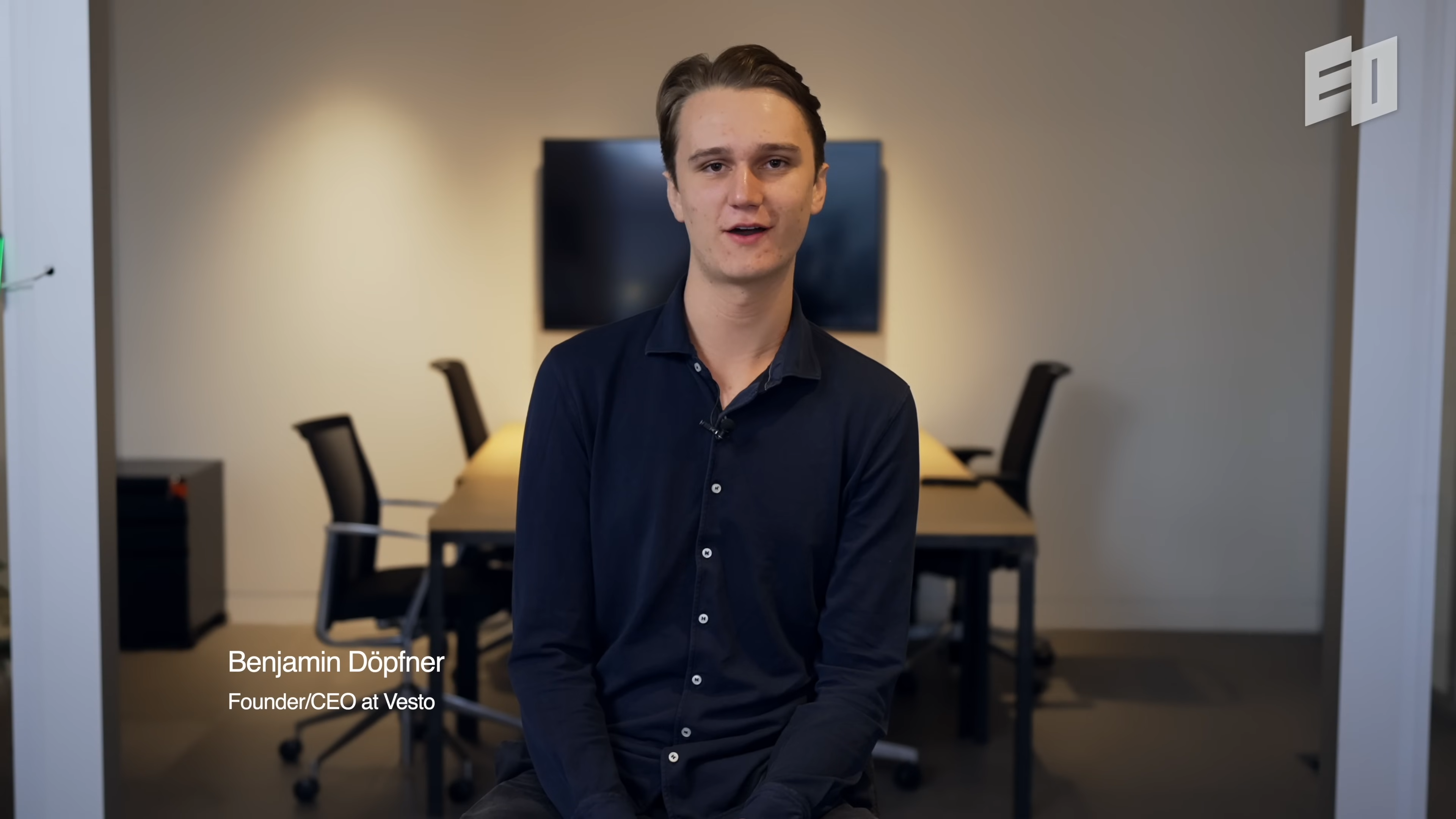
My name is Benjamin Döpfner. I'm the founder and CEO of Vesto. Vesto is a cash management platform for startups, so we help startups invest their cash, make the most of every dollar, and ultimately simplify their finances. We're now helping more than 100 companies put their cash to work, and that equates to many, many tens of millions of dollars of cash assets under our management. We're growing super fast, I think we've seen 2x growth every couple of months, so it's been a good couple of months, but we've got a lot more to go.
How I became a Millionaire at 17
I've always felt like I wanted to be an entrepreneur. I think since I was very young I hated authority, I didn't love school, and I just hated people telling me what to do and how to do it. I started my first company when I was 15 years old, they grew up in Germany. It was a bootstrapped software business, essentially we built software plugins for photographers and designers and creatives. I started this as more of a side project, I was 15 years old, it was more of a hobby.
Within 3 or 4 months after launching it, it was doing $77,000 or $80,000 a month in revenue, and then that kept on growing, it kept on growing, and it kind of just catapulted into this great business, which I probably wouldn't have expected from day one. Then, ultimately through that, I got the idea for Vesto, and I was frankly just much more excited by that, much more excited by the vision for Vesto, so I went all in there and moved to the US and started that company.
Age is not the biggest criterion for success in building a company. I think, oh, you have to be a certain age to start a company, and also obviously the societal norms. For me, I just gave it a go, and that first company started as a side project, and it kind of just created itself over time. I almost never think about it. Sometimes it's crazy to look back and people ask you, wow, you're pretty young, but I think you just have to go for it and not let it influence you, not let it impact your thinking and your decision making. You just have to run it as anyone else would.
Disappointment with Mainstream Banks & Financial Systems
I started Vesto really just out of my own frustration with the existing finance tools and softwares out there. I started my first company when I was 15 years old, grew up in Germany, started that company, and ultimately grew that company over the course of a couple of years, and just had a bunch of cash in a checking account doing nothing. In fact, it was worse than doing nothing, because at the time we had negative interest rates in Germany, so the cash was really just sitting there melting away, and I was super frustrated by that.
So I reached out to my bank and asked them, how can I put that cash to work, is there any way I can invest this cash, and ultimately the response that I got was, well, yeah, but the minimum deposit size here is 100 million. I thought, well, why doesn't something exist for younger startups and small businesses and just growing companies, but in a tech-forward and easy to use way. That's really what led to the idea for Vesto.
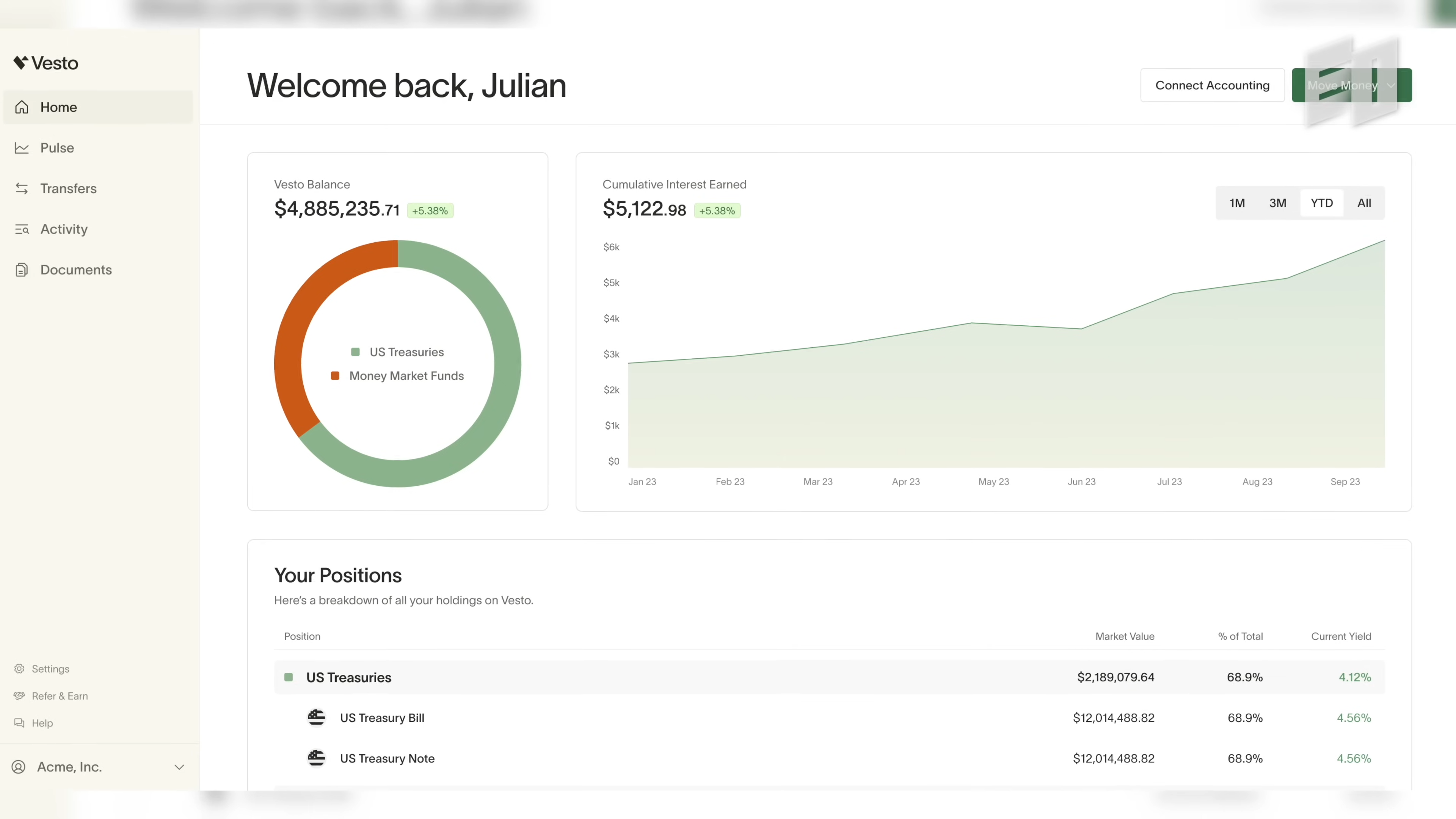
Right now, what Vesto is really solving is just this core issue: a company has cash on hand, a company raises money, or a company is profitable, and they have cash; most of that's probably sitting in a checking account doing nothing. So a lot of businesses are just leaving money on the table by having all their cash sit idle doing nothing. Managing a portfolio of treasuries and money market funds and putting corporate cash to work is not an easy task, not a task that a lot of startups and younger companies can do. That's kind of why we built Vesto, so that we can come in and automate that entire work for companies and make it really easy for them to earn yield on their idle cash, put it to work.
We've really got customers of all shapes and sizes now. I think our core customer is still startups between Series A and Series C; that's where we found the most success, but we now work with pre-seed-stage companies, larger private equity firms, enterprise-stage companies, and even just run-of-the-mill small businesses.
How a young entrepreneur got funding
I think when I initially started the company, I faced a lot of failure getting it up and running. The company almost died before I ever started, because when I had the idea for Vesto, I remember pitching it to people, and people would tell me, "This is a horrible idea; this is never going to work."
When I was raising the initial first round for Vesto, I cold-emailed an investor, and they were like, "Yeah, let's get on a call. Sounds interesting what you're building. You certainly sound interesting. I want to talk to you." I ended up getting on a call, and after the call they were like, "Yeah, probably not an investment for you." In other words, they were saying this is not a good business.
I kept on following up every single week, every month, with just updates like, here's what we've built this month, here's how much revenue we have right now, here's who we hired. After like 6 months of doing that, the primary investor was just like, you know what, I think the business model is interesting; it's getting better every month, but what really interests me about this business is just your persistence, the fact that you just don't give up after being relentlessly questioned and being told no a bunch of times. So I think that was kind of how we raised the first round: just not giving up for six or seven months.
People don't really care how old you are at the end of the day, I think they care about what company are you building, how good is it, what's the product, how are you serving customers, and it really just comes down to facts. So in the long run it doesn't pose any big challenges, it just gets some funny looks every now and then. I think the biggest factor for success is just persistence. I think persistence always beats talent and genius or anything like that, you just have to be incredibly persistent in everything you do.
I think when I look back at Vesto and really all my ventures and my entire life, the greatest moments of success have always come from just being relentlessly persistent, just not giving up, no matter how many times you're told no or this isn't possible or this probably won't work, you just have to keep going and be persistent. I think that's just the biggest thing. Building the product took a long time.
How to create a product that customers trust
I was thinking about it in my head for probably two or three years, and then actually developing it and building it and doing the engineering of it probably took maybe six months to a year to build that first MVP, and I think that was too long. Generally you should be a little bit embarrassed about your first product, your first MVP, there should be some faults to it, but that allows you to learn a lot faster, get it in customers' hands, and get feedback on it, which then in turn helps you make the product better.
So I do think that's super important, but for us, we were in an interesting position where, since we're a fintech company, our product can have some faults, maybe on the design and the UI, but if anything actually goes wrong with the core financial services and the core financial product, that's just unacceptable. So we had to be extra careful and really have our MVP be a very, very polished and very highly tested product, so it was a little different from a typical startup.
I think probably the biggest mistake that we made in the very early stages of the company was just focusing fully on the product. When we started the company, the core focus was, "Let's build the best product for our customers." That's a very good thing to do. Focusing on building the best product for your customers is obviously hugely important.
But I think in the very early stage of the company, we didn't really focus at all on distribution and go-to-market. I think we really had to catch up there and figure out, "All right, how do we actually distribute this product to our customers, how do we actually get this product to our customers?" I think the cliche saying of build a great product and they will come is true to a degree, but I think they won't come at scale, so that's something we had to figure out and really catch up on.
There's an interesting competitive landscape where I'd say there's kind of two ends of the competitive spectrum, specifically for our cash management product. One end is the super simple, self-serve, easy to use products that really lack in functionality, so folks end up leaving money on the table with those. The other end of the spectrum is the really sophisticated institutional banks of the world, but you've probably got to be a multi-billion dollar company to even utilize those. So what we're trying to do at Vesto is really bring that level of product and experience and service that you'd get with that institutional grade experience, but make that really easy and really accessible, something you can set up in 10 minutes, not 10 months.
But ultimately the longer term vision of Vesto goes a little bit further than that. Really, 5, 10, 15 years out, we want to build a financial operating system, a financial control center for companies, and we're essentially using this cash management problem, or product, as the foundation for that. Running a startup is really hard, and even if we were to go out of business tomorrow for whatever reason, and hopefully we don't, all of our customer funds would be held under their own name, in their own custodial brokerage account. They would in that case lose our platform, our product, but their cash is sitting under their name, it's ultimately theirs, it's no one else's, and I think that's super important.
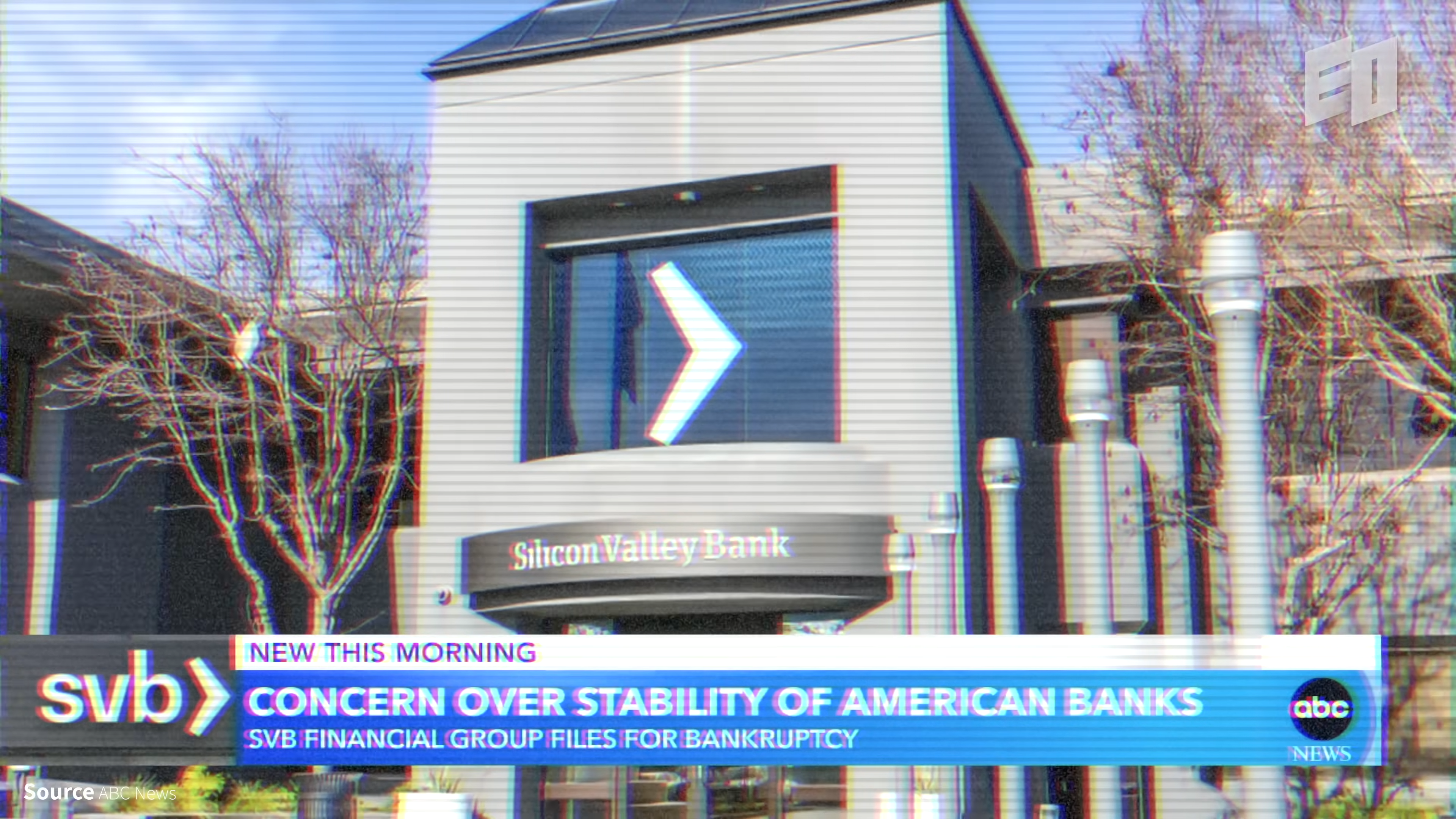
It's part of the reason why we've grown so fast, is that we've grown a lot since the banking crisis back in March, with Silicon Valley Bank, First Republic, that really accelerated our business. All of a sudden people went from never really thinking about cash management, and where's our cash sitting, how much is it earning, is it diversified, to all of a sudden that being the first and foremost priority for companies and finance teams, and that really just catapulted our growth. We took off ever since March and have been growing super fast since.
I think the way we built Vesto from the ground up was to essentially have it be as safe and secure as possible, so operationally we're registered with the SEC as an investment adviser, and we're never in the flow of funds, so we never actually touch our customers' money. People are looking to get away from that traditional banking, fractional reserve banking model, and looking to go into this custodial model, where their cash is held ultimately under their name, and even if their provider fails or goes out of business, their cash is still safe.
The 2 biggest financial mistakes startup founders make
I think the biggest mistakes that startups make when managing their finances, one of them is just not looking at their finances and not actually having a good understanding of what's going on. I see this all the time, and the system of the financial world has made this a little bit harder, because people have different bank accounts, payroll systems and expense management tools, and it's kind of just this mess, and they don't even know where to look.
So they have to go in and consolidate everything and reconcile everything just to understand basic things like, how much cash am I burning, how much cash do I have on hand. I think ultimately the biggest mistake that startups, and especially founders, make sometimes is just not looking at their finances and actually not understanding what's going on, and I think that's pretty easy to solve and something that is so important to solve.
I think another big mistake that founders make is actually just not thinking about profitability and revenue, and just making money at all. I think in the past 10 years, in this zero-interest-rate environment that we've had, it's led a lot of investors and a lot of founders to find it okay to just be burning tremendous amounts of cash with no real path to profitability and no real path to revenue.
When you think about that from day one of starting a company and building a product, it makes it a lot easier for you to grow over time and really build a successful business. There are a lot of startups that will just never be profitable, and I think it's better to look at that and say, all right, well, what can we do to go and change this right now, versus facing that problem in 3 or 5 years from now.
What young entrepreneurs should keep in mind

Being young, dropping out of school, it really puts the chip on your shoulder, because if you fail, you've got not much of a shoulder to sit on and say, "All right, well, maybe I'll just go back and do the other things." So for sure, being young and taking that big risk really makes you want to prove yourself and just work that much harder and be that much more persistent.
Goals and dreams that motivate me and that drive me, it was part of this interview series and they were just like, what do you want, and I was very confused by the question, what do you mean, is it something material, is it something immaterial. Ultimately what I want, what drives me, is not something material, it's not an apartment or a house or an amount of money, it's more really just building something that really lasts. I think when I'm 80 or 90 I want to look back and be able to say, I've built a product, or I've built a company, that's going to be around for hundreds of years.
I think that's super exciting, especially in the world of startups where everyone's thinking on such a short-term horizon and building companies that grow and fail within a matter of months or years. The idea and the vision, the mission of building something that lasts for hundreds of years, is incredibly exciting, it's incredibly difficult, and there's very few businesses who have done that, but I think that's something that's super inspiring and motivating for me.