Dec 13, 2025
25 Years of Building Startups Explained in 17 Minutes
Interview with Matt Hagger, Founder of TaleTree
Founder Focused


0:00 / 0:00
💡
At a Glance
- Who: Matt Hagger is the founder and CEO of TaleTree, a platform helping children preserve imagination and creativity, after 20 years as a serial entrepreneur in the UK and Silicon Valley.
- What: TaleTree gives kids a free creative space to brainstorm and share their work globally, built from Hagger's belief that structured schooling and adulthood dim the natural creativity children are born with.
- Traction: Hagger's earlier venture, a desktop news-alert protocol built as a teenager, was rolled out as Sky Sports' news alerts platform; he later built Scatter, an early photo-sharing app that raised over $1 million pre-seed but arrived before app-store distribution matured.
In this interview, Matt Hagger traces his path from a creativity-driven childhood to building TaleTree, describing how a personal frustration with dial-up internet led to his first product success. He recounts Scatter, an early photo-sharing app that failed due to poor timing and immature distribution, and reframes that failure as valuable feedback rather than a verdict. He closes with advice to work "on the business, not in it" and to build momentum through small daily milestones.
Key Takeaways
Crazy Ideas Deserve Serious Attention Before Agreement
Widespread agreement may signal that an idea is already late, while universal doubt can indicate an overlooked opportunity. His childhood experiences with creativity and school reinforce the value of taking unusual ideas seriously before forcing them into conventional expectations.
Curiosity Turns Personal Problems Into Company Ideas
Hagger's first internet venture began with a personal frustration: dial-up charges rose while his favorite football website stayed unchanged. He built desktop news alerts to solve that pain, showing how curiosity can turn an everyday inconvenience into a product others want.
Deep Passion Keeps Founders Moving Through Struggle
Entrepreneurship is not a lifestyle choice for everyone. Without a meaningful problem to pursue, the inevitable struggle can erase direction, whereas genuine passion gives founders a reason to keep working when the solution remains unclear.
Great Ideas Still Need Timing And Distribution
Scatter was an early photo-sharing app with strong technology access, but it arrived before mature app-store distribution and became too costly to keep developing. Hagger's lesson is that product insight alone is insufficient when the market and delivery system are not ready.
Failure Is Feedback From The Arena
Failure is an evidence that someone tried, took a risk, and exposed an idea to judgment. Like a child experimenting without shame, founders can use the result to identify what not to repeat and return to the work with better information.
Momentum Comes From Small Daily Milestones
Founders must work on the business by aligning people with the mission and breaking an overwhelming vision into manageable moments. Completing those small milestones creates momentum, and repeated momentum becomes the progress that makes a larger ambition achievable.
Watch the full interview now on EO's YouTube channel! Below is the complete transcription of the interview. Minor edits have been made for clarity and readability.
Introducing Matt Hagger, founder of TaleTree
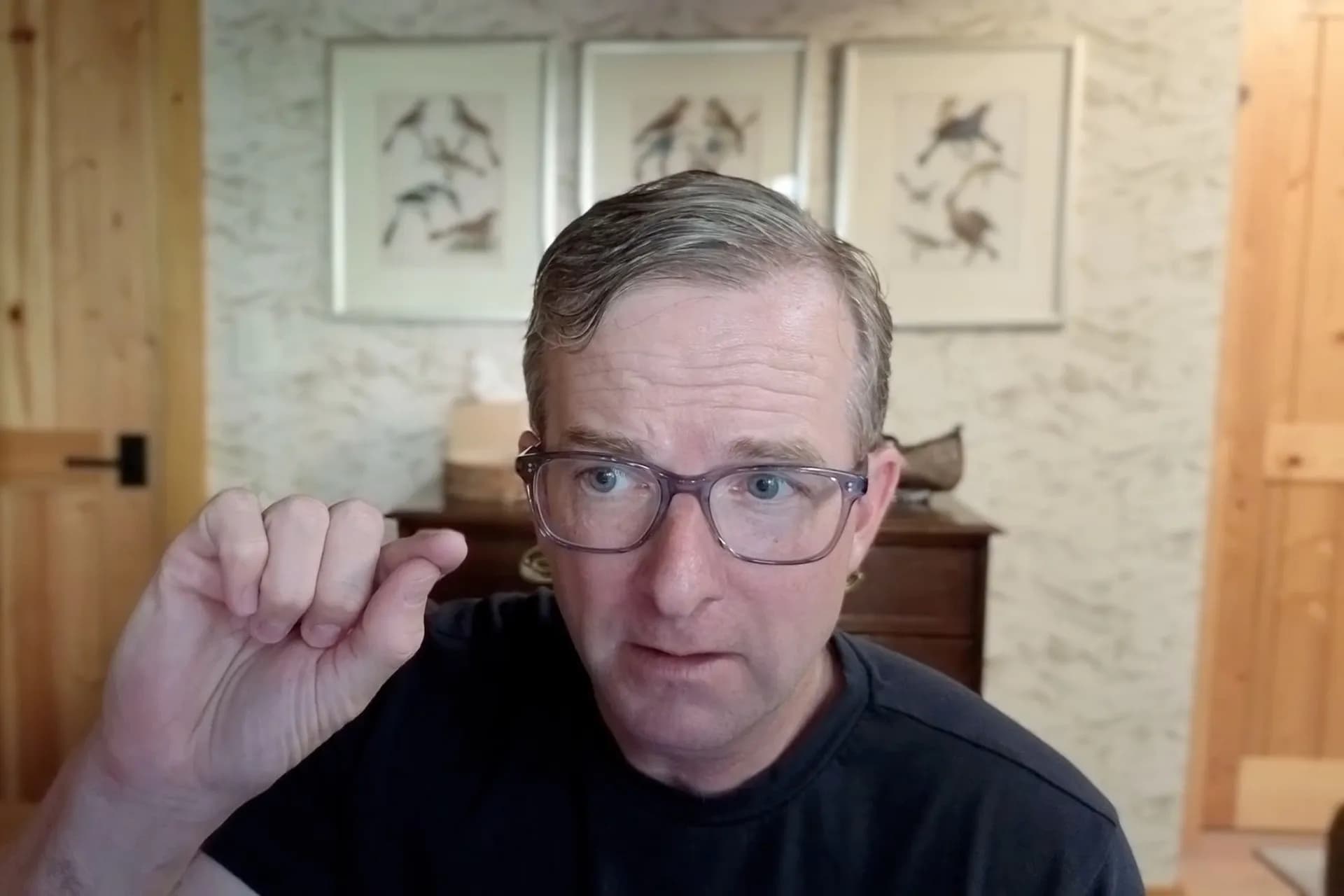
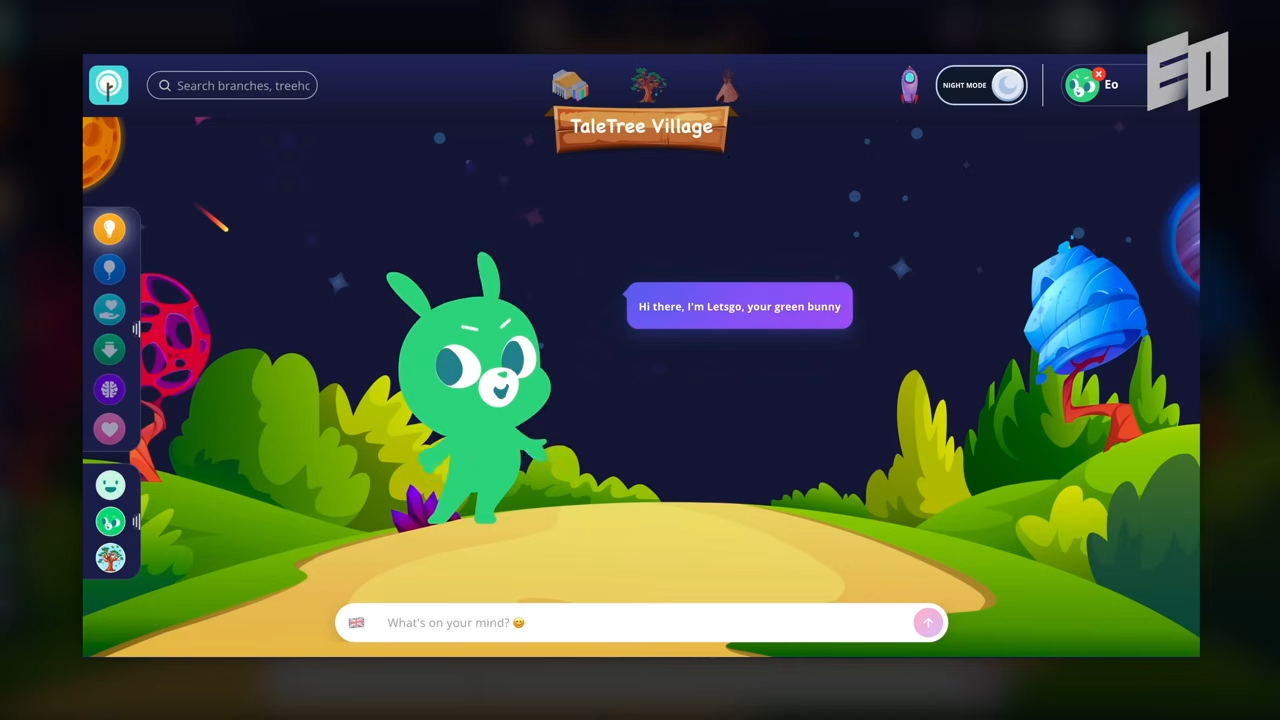
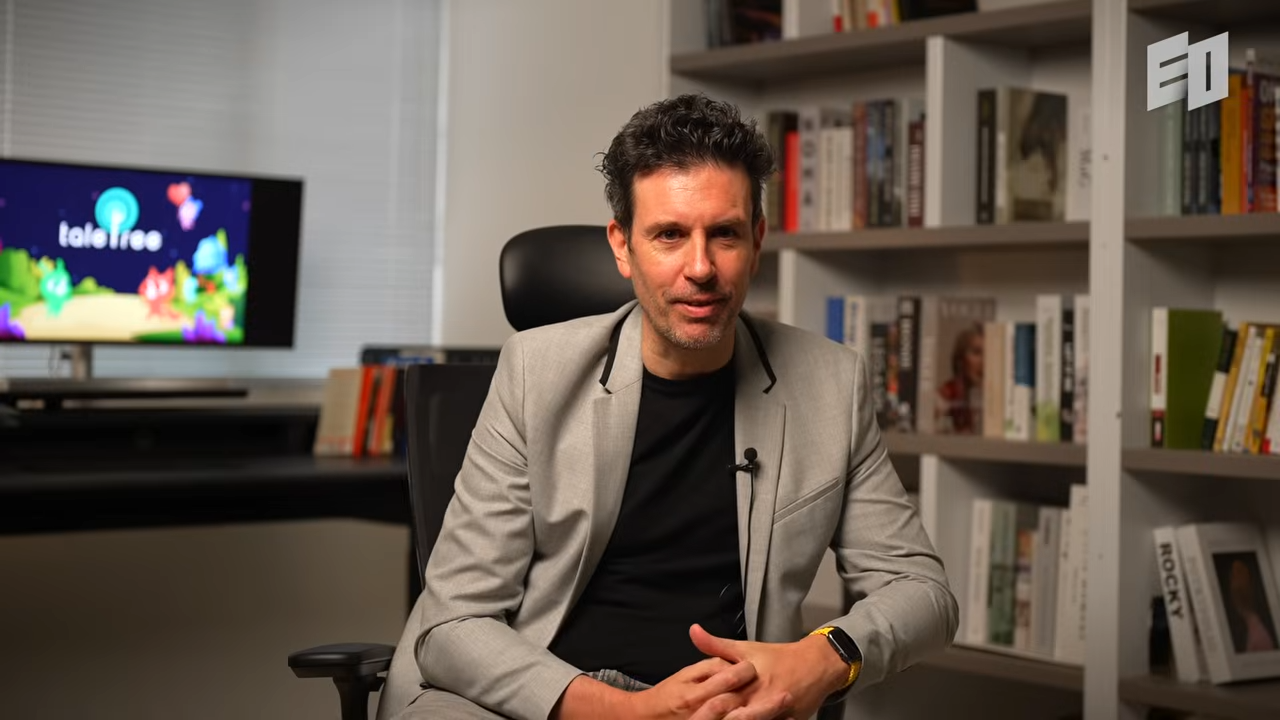
Hi, everyone. My name is Matt Hagger. I'm the founder and CEO of Taletree. TaleTree empowers children in a post-AI era to hold on to the precious gift of imagination and creativity. So, when you arrive at TaleTree and you adopt your companion, you will start brainstorming and imagining and coming up with ideas. So, it's a free space for children to explore what's on their heart, what they care about, their interests.
Prior to that, over the last 20 years, I've been a serial entrepreneur in the UK and then Silicon Valley in Los Angeles in a Emen Venture Labs helping founders turn their ideas into products and into successful companies.
Chapter 1: Say "Yes" When Everybody Says "No"
When everybody thinks your idea is crazy, you should take it very, very serious. That's more important than having everybody agree with your idea. If everybody agrees with your idea, it's probably too late and somebody's already done it. So, I went to a school in England in Cambridgeshire, primary and secondary education. There were certain times at school that I enjoyed, writing stories, drama, art, stuff like that where I could be creative. But, one of the hardest things for me about going to school was the bell ringing when I was working on something.
I remember once I wouldn't leave the classroom because I needed to get my story finished. And I was in the flow of creativity. And my teacher was like, "Matt, you've you've got to go to mathematics now." But, I can't leave the classroom because I'm working on something. I found the answer, you know?
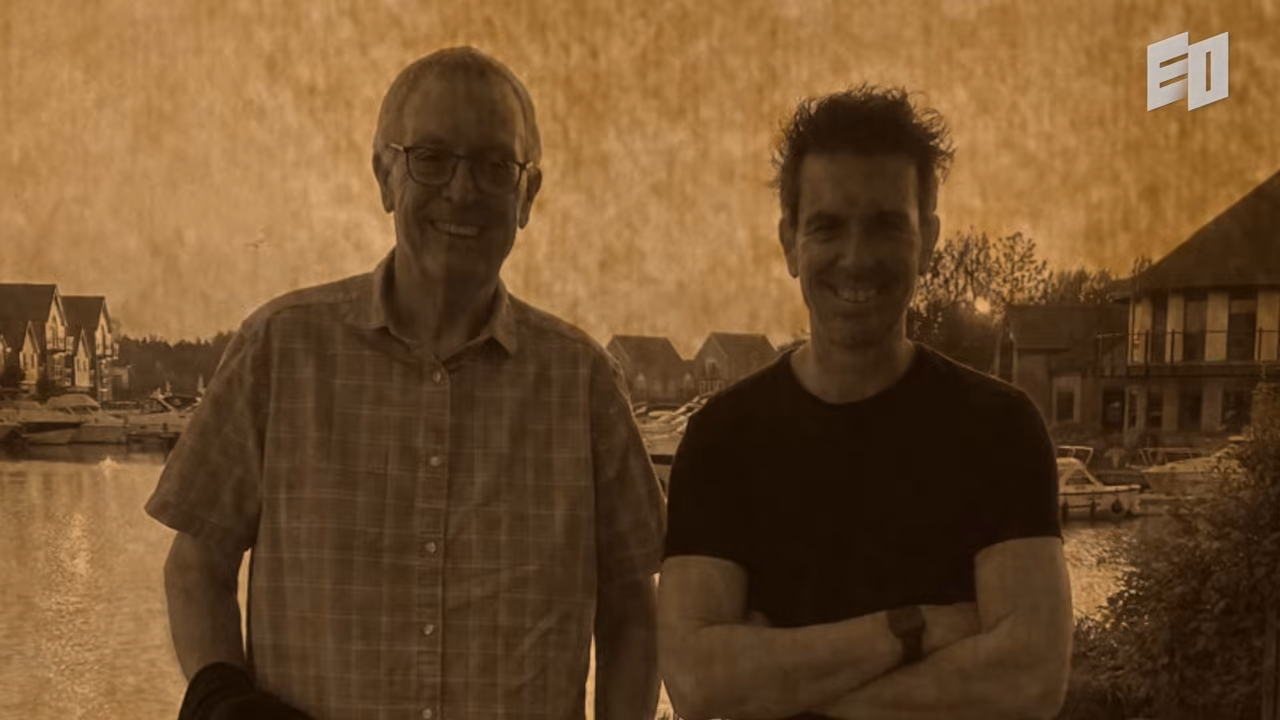
I realized that I wasn't going to have the creative freedom that I had when I was in kindergarten. My childhood was challenging, but as soon as I found the internet, I became incredibly excited about the idea. The way I start companies, it comes from an inherent problem that I am trying to solve, a pain that I have. Every time we used to connect to the internet, dial-up internet, it would crackle and it would load up the web pages. And I would often visit my favorite website, which was obviously my football team, I would see that nothing had changed on that website. I need to solve this problem because I'm costing my mother a lot of money. Every time I dial up, I'm costing a a fortune in the telephone bill. So, she would present me with this telephone bill and say, "Listen, you're going to have to pay for this because you're using the internet far too much." My response was, "Right, I'm going to build something that prevents this from happening for me and everybody else."
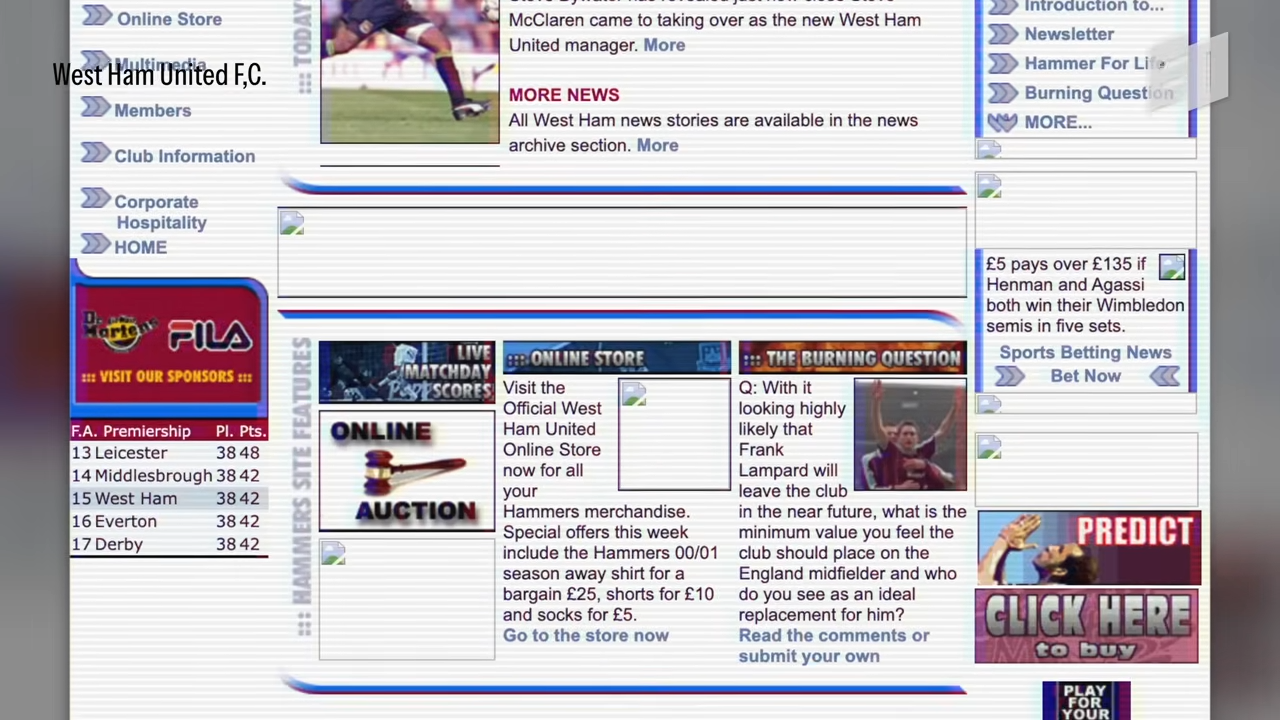
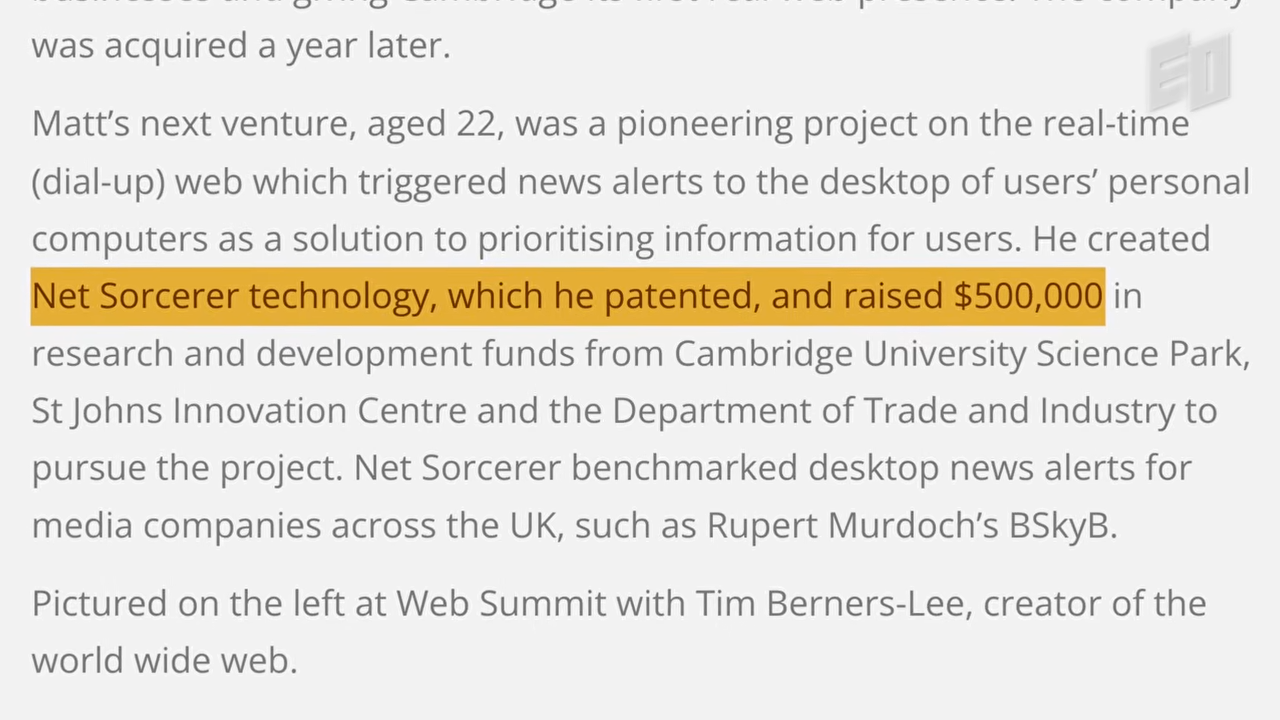
So, this desktop news alerts protocol was built. As soon as you connect to the internet, it would go straight to your favorite website, check to see if there was any breaking news. If there was, it would deliver that breaking news to your desktop. And that simple idea was a big one. I got a feasibility study grant from Cambridge University Science Park and ended up going on this huge journey.
And it was an invention that everybody wanted to uh implement. And it ended up being rolled out as Sky Sports news alerts platform with Premier League football teams and breaking news at Sky. And that's a broadcast media corporation in the UK. It was a very exciting period of my life. The only thing is I didn't understand what venture capital was. I didn't understand what entrepreneurship was. I just knew I was solving a problem for myself. So, these two episodes made me realize that if I was going to progress in life, it was going to be through my own curiosity and my own ideas as opposed to following the status quo.
Chapter 2: Never start a startup without THIS
I have to be honest about it. It is not for everybody. If you don't have a deep and meaningful passion, that scratch that you want to itch, you should not do it because when you get into that struggle, it is going to be extremely hard. You can lose sight of where you're going. So, my childhood does have a direct correlation to TaleTree and why I'm building TaleTree. I feel like sometimes I'm building TaleTree for the child inside me. Even though the school curriculum didn't suit me, my dad acknowledged that and used to help me learn through challenges. Courage comes from taking a leap, throwing yourself in because we don't know the solution, we don't know the answer. I think my father threw me in, knowing that he was there, I guess, if I went wrong, but made me feel like I was on my own doing it.
And that was powerful. We used to go and watch soccer together and travel all over the country supporting our team. He would enable me to open up the map, find out where the city was, and I would be directing my father, and then I would learn about the city that we were visiting and the history behind it. Then he would ask me about the team and statistics, all the different things that had happened during the game. And I felt like I was learning through something that I love. And that was really, really powerful for me.
What I'm doing now with TaleTree is essentially an extension of that. As a child, I realized that I wanted to help empower humanity to think creatively, with authenticity, with purpose. I wanted all of humanity to be able to call upon their authenticity and spiritual gifts and serve others with that. This big thinking, this curiosity, the imagination and creativity and wonder of a child, we all possess that.
It's just as we've grown up and we've gone through the system, we have lost that spark. It's not that the spark is not there, it's just we're not training that spark. Even through the Head Start program that was piloted by George Land at NASA where he tested creativity on five-year-olds and then repeated that test at 10, 15, and 30. The average genius level creativity in children, 98% of all kids that were tested were deemed as geniuses. But, by the time these children reach the age of 30, it goes down to 2%.
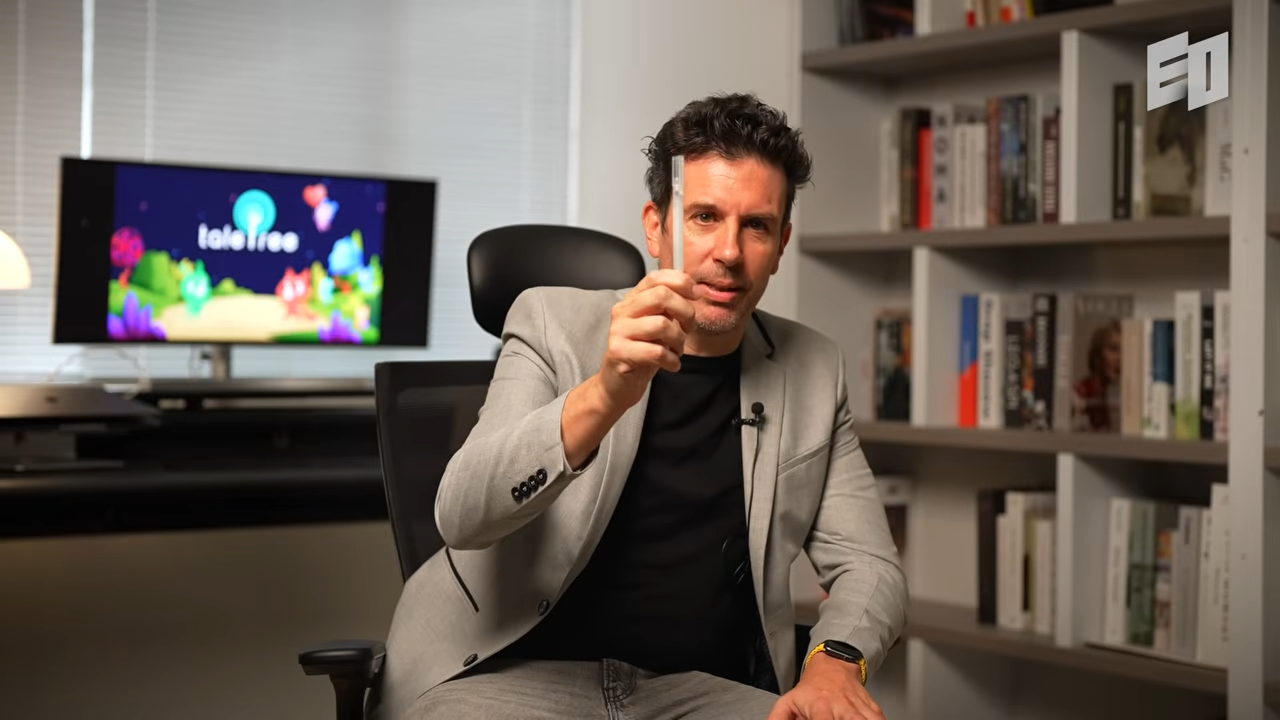
Between the age of 5 and 30, the light of learning, the light of curiosity, the light of imagination, it dims down, it goes off. And it goes off because we're not encouraged to pursue that side of ourselves. We're encouraged to memorize, be graded upon our knowledge, our ability to perform well in examinations, and to become experts in a field that we're supposed to upskill ourselves to be able to perform those duties in societies. If I held up this pen and said, "How many uses of this pen can you think of?" And on average, kids came up with 15 to 20 uses of this pen. Whereas, adults came up with between one and three uses of this pen.
But, for a kid, this could be anything. This could be a sword, it could be a lightsaber, it could be a it could be a paper clip even. Kids just need that one person to say, "I believe in you. You can do it. You're good enough."
These acts of empowerment are so important. Well, that is essentially why TaleTree provides children with this global community of kind and creative kids. Our mission is that kids all over the world can share their works of with one another. Kids all over the world can compliment share. We allow to feel liberated. Having supportive around is very, very important entrepreneurs for creative people. Because community I think we would struggle. So, when you make the decision to become an entrepreneur it's so that deeply love with the problem that you're solving.
Chapter 3: Why I Only Invest in Failed Founders
The ideas that started in Emen Venture Labs will always invest in a an entrepreneur that's failed three or four times because of the learnings that they get from the failure. They're closer to their success with every iteration. And of course, some of the companies succeed the first time has a lot of luck. But, 95% of all startups end in failure.
Around 2005, 2006, it was just at the beginning of the smartphone era. So, Windows Mobile had a a smartphone.
And there was this rumor that iPhone and Android were coming. I was playing around with a Windows Mobile and I realized that the power of a camera was gave us extraordinary abilities as humans that we could share what we saw in real-time that I made the decision that I was going to work on that problem and I was going to actually build Scatter, which was one of the first ever photo sharing smartphone apps. I was incredibly excited about the potential of what I was building. Of course, with any startup you need to raise capital and you need support. Because the smartphone era was at the very beginning, I found it very, very hard to explain to people what I was trying to do. It was like, "This will never take off. People take their photos, they get them developed, they share them with their family. Nobody wants to see other people's media."
One thing which is really interesting is that Scatter did feel like a contrarian truth. You know you're sitting on a good idea when everybody thinks it's crazy. So, all of these issues I was I was being faced with was just very negative and I couldn't really see how in the UK I could get my business going. Luck and timing are hugely important. Having a product that country or that market wants to adopt, having access to the technology that will enable you to distribute it. So, I decided to take a bold leap.

In the US, particularly in San Francisco and Silicon Valley, I saw so much positivity around new ideas, the people, the support, the way people encouraged me and get behind my ideas, the whole ecosystem was just incredible. And if I hadn't have gone out there, I don't think I would have been able to achieve what I achieved with Scatter. One of the greatest things that occurred with Scatter was that Android had just launched and there was just six people in the team and I met one of the Android team members who were working under Sergey Brin, the founder of Google, on this project. So, they invited me into their cohort of innovators and I ended up getting the first G1 Android device and Android 1 was dropped where it wasn't even launched, the Android ecosystem. That was just a beta. So, we got access to the developer kit and we could start building. It was an incredible experience to be able to connect my native app and access the camera. We launched Scatter on Android Market.
There was like 150 apps on the app store. We raised in excess of a million dollars to pre-seed the company.
But, we were too early. Scatter did not become the Instagram, TikTok, or X that we see today because it's not existing right now. We didn't have access to distribution because the app stores were new and we were launching and helping these ecosystems to evolve. All the technical resources required to continue to iterate and build on unstable systems meant it to be very costly, time-consuming, and heavy. And what the biggest takeaway from some of this is that just because you have an idea that's so profound, if you don't have an addressable market or the ability to distribute your idea, you might end up being eaten by somebody that arrives on time. The product life cycle is very, very important and being in the right place at the right time with the right technology.
You often become an R&D lab for somebody that can take your idea and launch a better version of it because they are on time. When you're working on something that means everything to you at the time, you're putting your heart in it, your soul, all your attention and passion is going into it. It becomes a way of life. When you climb that high, the fall is equally as heavy. I felt very, very down and and depressed because I wanted it to become something that every member of the world would access to my product. But, I think failure is great feedback. It tells you all the things that you don't want to be doing next time.
Failure means you tried, means you were actually the man in the arena, not the voice in the crowd. You were doing it. You put yourself out there. You were vulnerable enough to take the risk. You were prepared to be judged and observed for what you were doing, which is why our relationship with failure needs to change. What we need to do is we need to try and think how can we be like a kindergarten kid for life? They're not scared to fail. Nature is not scared to fail. Unfortunately, with adults, when we fall on the floor, we often run away and we never come back. Why? Because of shame, embarrassment, through all these things. It's so hard and so brutal when you fail, but there definitely needs to be a greater acknowledgement and understanding that this is part of the journey and I'm not finished yet.
Chapter 4: The Key Difference: Good vs Great Founder
I always say work on the business, not in the business. If you work inside it for too long, you can suffocate and stifle the growth of the business because you are trying to be every member of your team, you're trying to over-control the outcome and the destination of what's going on. It can suck the energy from you and everybody that's in the company.
When you're building a company, company means company, right? Doesn't mean you, it means a a bunch of people all going in the right direction, all with the same aims and objectives. There are certain founders that are really good at scaling their business.
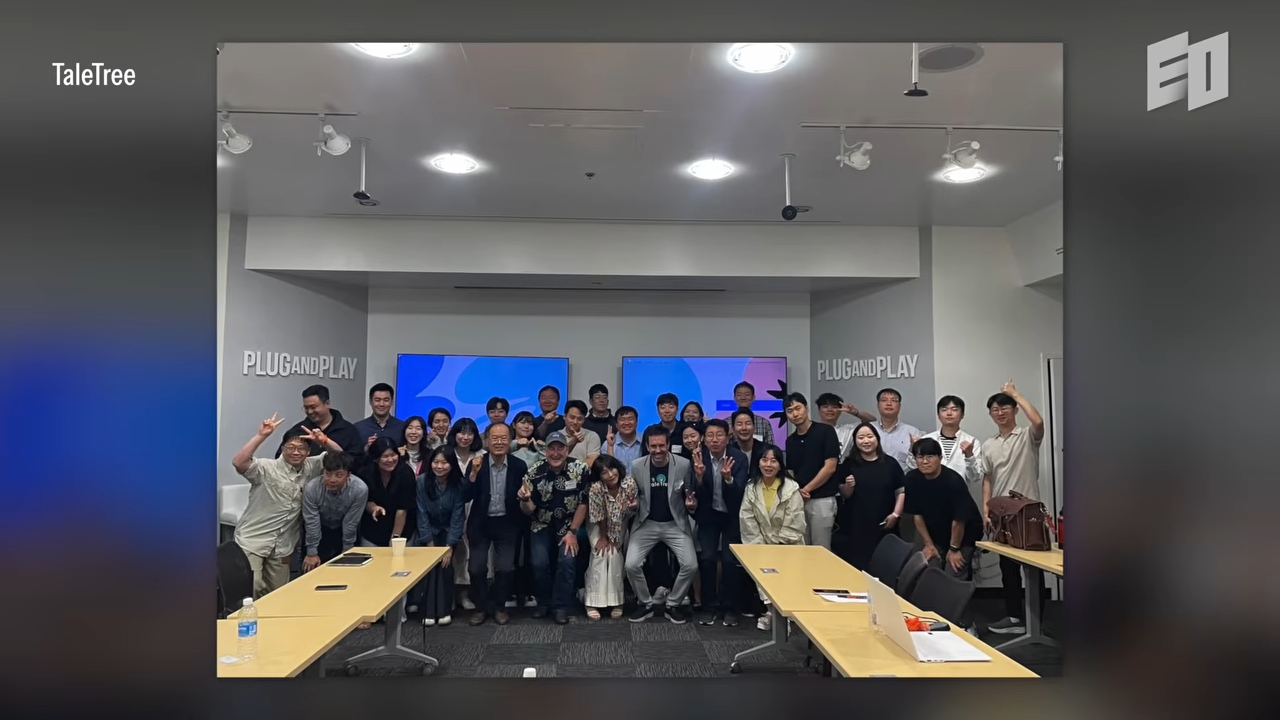
They're really good at working on the business. I think they make great chief happiness officers as opposed to chief executive officers because they have the ability to bring people in and understand the type of people that their company needs when they need it and empower those people to do their best work. I think working on the business is working on a mission where everybody that joins your company feel like it's their mission, too. For example, I'm building TaleTree. I'm going to make sure that from the chief financial officer, chief legal officer, anybody down to the head of well-being, the person who would potentially be preparing food for the company, they would all have a deep and meaningful connection to the problem that we're solving. Have the vision and break down the miracle of the vision into bite-size moments. Every single day has its own problems.
Tomorrow you have another set of problems. You just have to try and break this overwhelming vision down into bite-size pieces and feel accomplished every time you achieve these small, little milestones.
And I always say miracles come from momentum. Momentum comes from a succession of moments. So, every day, as you're completing and getting further towards the end goal, you're creating this momentum through continuing to attack every day the same and breaking things down, working on that company always is I think the difference between being good and being great.
These are the things that I've used to help me on my journey as an entrepreneur.