Nov 07, 2025
What Young Founders Get Wrong About Startups
Interview with Arun Subramaniyan, CEO of Articul8
Founder Focused


0:00 / 0:00
💡
At a Glance
- Who: Arun Subramaniyan is the founder and CEO of Articul8. Before starting the company, he led global AI, quantum, and HPC initiatives at AWS and served as VP of Cloud & AI Strategy at Intel.
- What: Articul8 is a domain specific GenAI platform that helps enterprises get value from the deep domain expertise and data they've collected over decades.
- Lesson: Arun Subramaniyan breaks down the hustle no résumé teaches, why most GenAI pilots never reach production, and why chasing the obvious, crowded use case is the real failure mode for young founders.
Meet Arun Subramaniyan, Founder & CEO of Articul8. Before launching Articul8, he led global AI, quantum, and HPC initiatives at AWS, and later served as VP of Cloud & AI Strategy at Intel, driving some of the most advanced computing projects in the world. Now he shares what Big Tech never tells you about building a real startup from the ground up. In startups, there's no time to wait. You call, text, or show up until things move. Arun reveals 4 core principles every real builder needs.
Key Takeaways
Startups Have No Safety Net, So You Manufacture Urgency Yourself
In a large company an unanswered email is fine because someone eventually responds. In a startup, waiting isn't an option: you call, text, and show up in person until you get the fifteen minutes you need.
The Real Definition of Entrepreneurship Is Working Without the Resources to Match the Ambition
Arun defines entrepreneurship as aiming to do something you don't yet have the resources for. Working eighteen hours a day, seven days a week still leaves seventy percent of the task list undone, and there's no such thing as separating work from life.
Ownership Doesn't Require Permission, It Requires Deciding to Act
A college seminar about the first dam builders convinced him that responsibility isn't something you're given, it's something you take. He carried that lesson into scaling AWS's COVID simulations, work that helped California call the first statewide shutdown.
Say Yes to Problems Other People Are Too Smart to Touch
Arun credits his career to being "dumb enough" not to ask why a hard problem was handed to him. The projects with the highest failure rate were also the ones with the highest payoff when they worked.
Articul8 Was Born From Two Failed Hardware Deals, Not One Successful Pitch
At Intel, a nearly signed AI supercomputer deal collapsed over funding, and a follow-up hardware sale failed too, but the software built to support both pitches became a customer's real ask. Neither failure was survivable alone; stacked together they built the company.
Most GenAI Projects Never Reach Production Because Companies Never Leave the Proof of Concept
Articul8's rule is no POCs, only production pilots capped at four to eight weeks, run on a customer's messiest data and hardest problem. A polished, curated pilot might impress in a demo, but it's exactly the pattern behind the 95% of GenAI projects that stall before production.
The Most Crowded AI Market Is Also the Least Valuable One
Marketing, finance, and HR are the default landing spots for enterprise GenAI because the use cases are obvious and the downside of failure is low. Arun argues the real value sits in harder, less traveled use cases tied to a company's core product, the ones that move the top line instead of just trimming the bottom line.
Watch the full interview now on EO's YouTube channel! Below is the complete transcription of the interview. Minor edits have been made for clarity and readability.
Introducing Arun Subramaniyan, Founder & CEO of Articul8
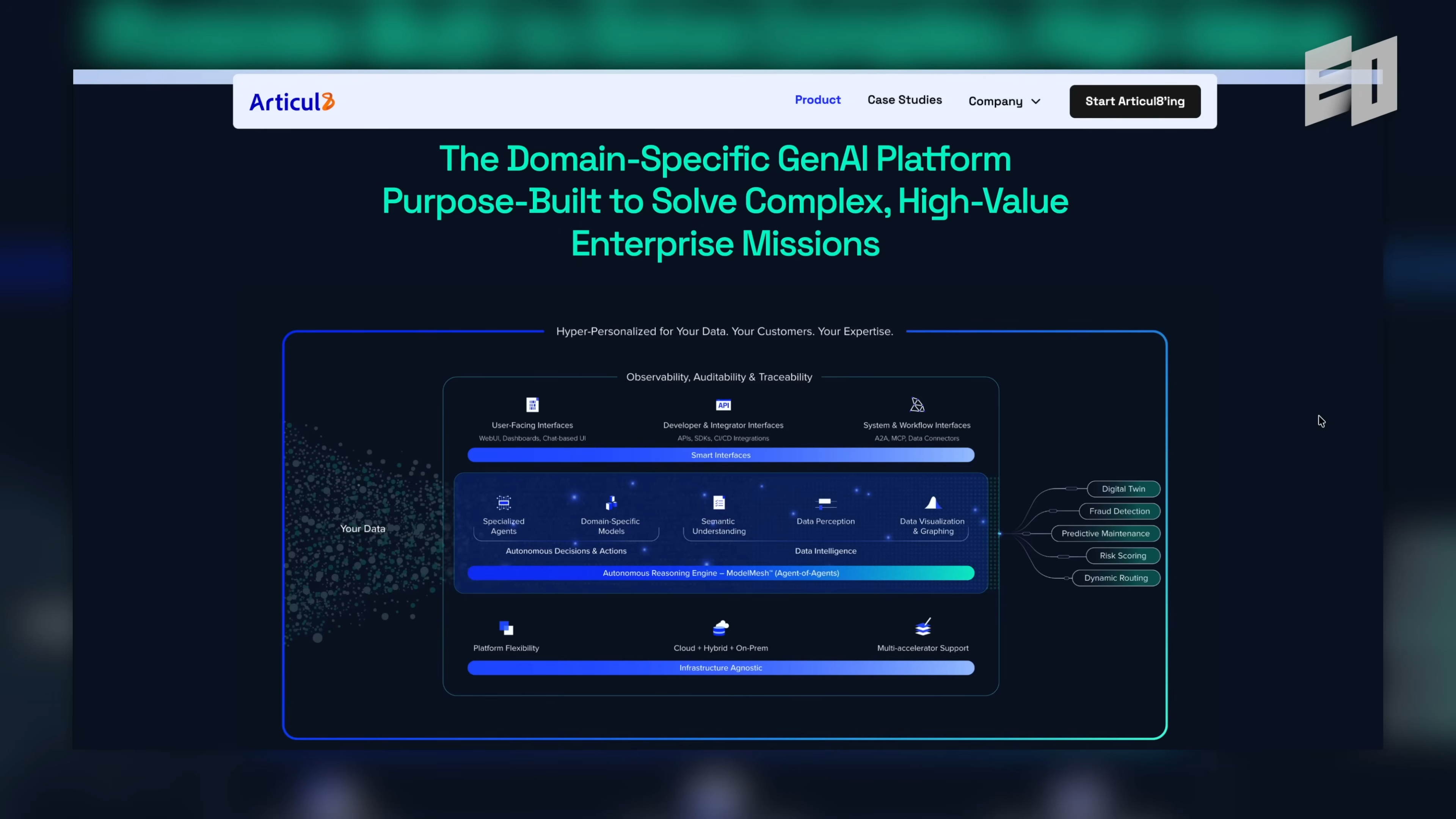
I'm Arun Subramaniyan, founder and CEO of Articul8. Articul8 is a domain specific GenAI platform that enables enterprises to get value from the deep domain expertise and data they've collected over decades.
Principle 1: Make a Dent in the Universe
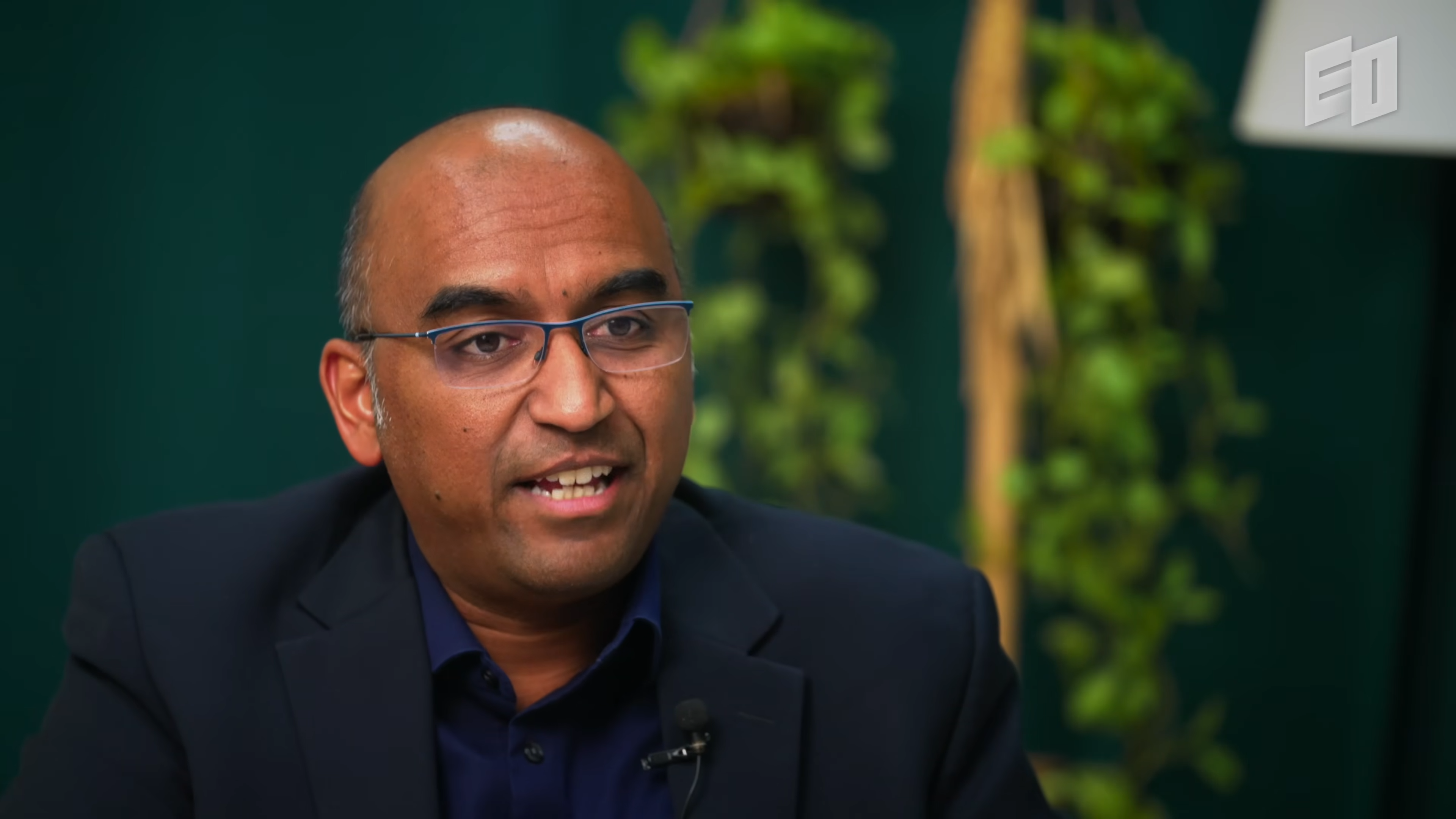
I grew up in a family where technology was a given. A quintessentially Indian upbringing in the '80s and '90s assumed you had to do well in school. That was the number one priority. I was fascinated by anything that flew, even before I got to college. Very early on, I wanted to be an aerospace engineer.
There were very few places you could go to study aerospace engineering at the time, and I was lucky enough to get into one of the top schools. I went to Anna University, at a school called Madras Institute of Technology. My college education was just fun for me all the way through. I finished undergrad there and went off to do my graduate studies at Purdue.
Many people may not know this: Purdue is called the birthplace, or cradle, of astronauts. It's the school most astronauts in the US actually come from. Neil Armstrong graduated from Purdue.
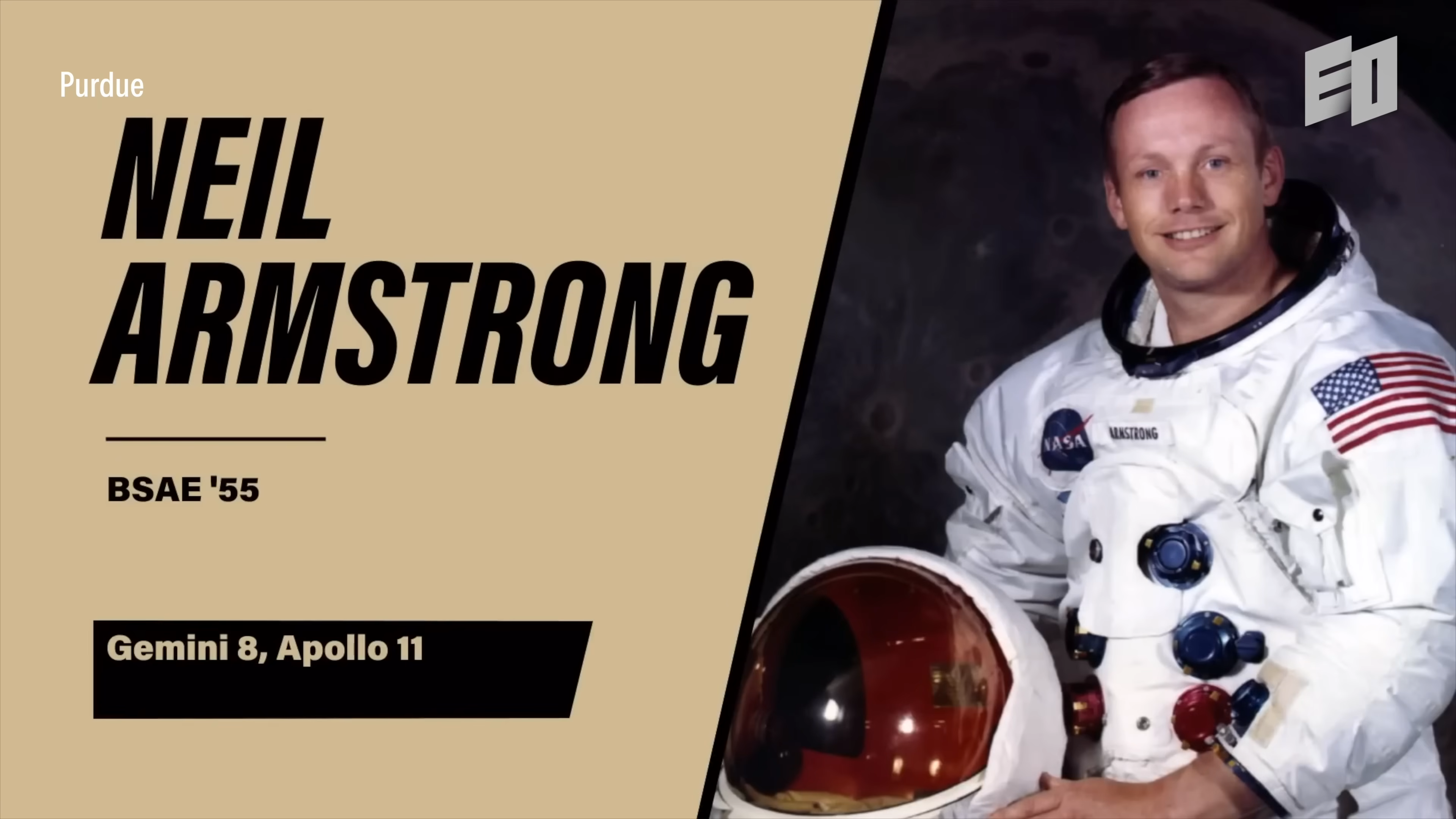
There's a particular incident that deeply touched me. This was when I was in college. I was attending a seminar, and the speaker said something I had never thought about that way before: you need to feel ownership and responsibility to actually help. What that means is he gave an example of the people who first designed and built dams. Whoever they might be, they stopped the flow of rivers. At the time they started building dams, that was all considered an act of God. Whichever culture you were in, they wanted to make sure floods didn't happen, that people didn't die, that they didn't suffer.
They didn't sit and think, "Oh, this is an act of God, God wanted floods to come in, we can't do anything." They actually thought, I will help people not suffer, and went and built the dam. When they first built it, it was an impossible act. Now it's a natural thing, sure, an engineering marvel. We build dams all over the place. But it wasn't for the first person to have thought about it. Think of the responsibility that person took to stop an act of God. That's a massive responsibility.
Not only did they think about it that way, they went and built the dam. If you actually think about it from the perspective of ownership and responsibility, you don't need to have anything to take responsibility. You can do your own small thing to make a massive impact in anybody's life.
That made a very personal impact on me, because it was mind-blowing to me. At that time I was still a teenager, thinking about life like that. Until then, I just thought the world happened around me, that we didn't manifest something in the world. That's one thing.
The second thing that affected me very deeply was the concept of paying it forward. When I was at AWS, we ran the simulations that helped scale the models for predicting the spread of COVID. At the time, of course, COVID was just starting. Shutdowns had never happened anywhere. No state had ever shut anything down.
We helped one of the divisions of the state of California scale their simulations to predict when the state would run out of hospital beds. What we ended up doing was take their models and scale them on a massive amount of compute, because that's what we're really good at doing.
It predicted that in about five days, the total number of beds in California would be exhausted. That simulation, along with all the other data they had, was instrumental in the state of California announcing the first statewide shutdown. That same simulation is being run by many countries today.

It was a deeply touching project to work on, because I didn't go to Amazon thinking that's what I'd be doing. At the time we didn't realize it, but it had a huge impact on a lot of things in the world. It's truly humbling that the work we did helped, in a small way, make the world a better place. In Steve Jobs's words, it's like "make a dent in the universe." But it's really about saying: whatever we find ourselves in, whatever little we do, make sure we leave the place better than we found it.
The group of people we have with us, I would say none of them need this job. None of them need to be here working God knows how many hours they're working daily. They're here because they believe in the mission. They believe in why we do what we do and how we do what we do.
Principle 2: Don't Put Yourself in a Box
If you ask me how my career got built, it's really about being dumb enough not to say no. The reason I use that word is, whenever a problem was given to me, even in the very early days, I didn't know other people would never touch that problem. It was given to me because I was silly enough not to ask why we would do this. I basically said, oh, this is an interesting problem, let me go try solving it.
I failed more often than I succeeded. But the times I succeeded, I succeeded at things everybody else said couldn't be done: the problems that were the highest value, the most difficult to do, where failure was okay.
The way it started was, I was at Intel, leading the cloud and AI strategy and execution teams. My charter was to help Intel sell more AI hardware. But we knew the largest workload was going to be large language models. GenAI was going to happen. This was 2022, six months before ChatGPT was launched. We had built an AI supercomputer and were trying to build a model for it. We worked with a very large company trying to get them to buy Intel hardware, and the project went all the way up to final approval, where everything broke loose.
There was a misunderstanding about who was going to fund what portions of it, which ended up completely stopping the project. It's like the rocket analogy: the rocket blew up on the launchpad. That was the first failure. But because we'd already done the modeling, we went to a customer and said, "Hey, we can do this for you, would you want to?" They said, "Okay, we can try this, let's do a search model."
We actually built a model for them. That model ended up becoming a software product. We built the software, we did all that to sell hardware, and the customer came back and said, "Maybe we'll buy your hardware at some point, but can I buy your software?"
So in a sense, that was the second biggest failure. We tried to sell hardware, we couldn't sell the hardware, but we could sell the software. Within a year, we went from having a project that was almost in the bag, that was already going to become the biggest project out there, to that project failing.
Then we went and got another project to sell hardware. That project also failed. It ended up becoming Articul8, the company. If we had stopped at the first failure, we would have never gotten the second project. If we had stopped at the second failure, we would have never gotten Articul8.
The perspective is looking at it as failed projects getting turned around. Doesn't matter how many times we fall down, can we actually get up?
Principle 3: Why 95% of AI Projects Never Reach Production
One of the principles we go by in the company is that we typically don't do POCs, meaning proofs of concept. We only do production pilots. You may ask, what's the difference? A POC is something anybody can do. Honestly, even a high school student with a good enough knowledge of some of these tools can build a POC with a few tens of documents. The difference between a POC and a pilot is that a pilot is production scale. You have to go after your most complex use cases.
In fact, we go into a customer and say, give us your messiest data set, give us your most complex problem, and let's show you how to actually take that to production. That's what we mean by a production pilot.
The other big difference between a production pilot and a POC is that once you're done with your production pilot, turning on production is just a matter of signing a contract. All the technical work is already done.
The third thing you might ask is, okay, doesn't that mean this should take a long time? We actually cap production pilots at four to eight weeks. No more than that. Even the most complex use case we do is entirely done within eight weeks. That's very important, because when a customer hears the usual pitch, give me a nice, clean, curated data set, give me a small problem to show you it works, after you make the POC, getting to production ends up taking six months or a year.
Most of the projects, if you look at the latest MIT study that found 95% of GenAI projects don't reach production, it's because of that: people do a POC and it never moves forward. It's a very different philosophy.
Principle 4: Stop Chasing Low Hanging Fruit
Last count, a few months ago, there were 28,600 startups in the world that claimed to be GenAI startups. I'm sure the number has more than doubled since. The reason for that is everybody, I believe, thinks they're solving an important problem. I don't think anybody goes out and starts a startup, or works so hard, to solve a problem they don't believe is important. However, what they're solving for is often in domains they think are hot.
There are two ways to tackle a problem. The first is to go after where things are hot, that's the red ocean theory. Or go after things where there's nobody else, the blue ocean theory. A path less traveled is less traveled for a reason: it's hard, and filled with more failures than the path more traveled.
But it really depends on what you have the stomach for, what you're actually solving, and what resources you have to go do it. I don't think there's any one right or wrong answer, it's about what's personal for you. Do I believe these companies are going to make an impact? Absolutely, they already are.
They've changed the world in so many fundamental ways that it's no longer going to be the same, the same way OpenAI did. OpenAI was a small startup when it started. It has fundamentally changed the world, and I think that's going to continue growing.
We believe the low-hanging fruit is, first and foremost, the most crowded market out there. Every company is a GenAI company, and every large company is trying to do something with GenAI. Where do they go? Usually marketing, finance, HR, partly because it's the lowest-hanging fruit: you have use cases, but if you make a mistake, not much is going to change. It's not a company-threatening event.
However, if you look at what's most important to the company, it's mostly not related to any of these things. A manufacturing company does manufacturing. An aerospace company does design, manufacturing, or maintenance. We go after use cases in those particular segments.
We go after what makes a big difference to the company's top line, because if a company can find new business, new ways to make money from AI, that's something longer-lasting. Productivity use cases typically go after the bottom line, which everybody's going to do whether they like it or not.
Every company is going to use some productivity tool to reduce the burden of what they're doing today. That's not going to give differentiation to any company. So we believe in working on things that give a company differentiation, that give it longer-lasting value.
We also have a philosophy we're fundamentally grounded on: we build our business on the fact that we added value to your business, so we share in the value. That's how our business grows. Our business doesn't necessarily grow by making you more efficient.
No Safety Net in Startups, Just Move
So the biggest thing that's different, of course, about being in a startup is that you don't have any safety net. Like any other job I've had, there's always somebody I could go to for help, but ultimately the responsibility lies with me. The buck stops with me, which is a huge change when it comes to it.
That took a little time to adjust to, but the nice thing about being in a startup like this is you don't have time to sit and think. You just have to deal with it and keep rolling. That's a good thing, because you don't have the time to freak out.
I'd say the biggest thing I'd do differently is make sure people who come to the company understand there's no safety net. We've had our fair share of turnover, even among people who were on the early teams. We've had to let go of people who may be perfect candidates at a large company, or outstanding candidates at a medium company, but a terrible misfit at a small one.
The reason for that is you really need a hustle that goes way beyond anything you've seen in life. I'll tell you how a general conversation usually goes. Say we ask someone to go meet with a customer. A week goes by, we ask, did this get done? And they say, no, I sent an email, we're still waiting for a response. In a large company, that's a perfectly fair statement. No problem, you'll get a response. If you're at Amazon, Google, or Microsoft, you send an email and people respond back.
The same people, if you're sending an email from a startup, don't respond. Most of the time they don't have time to. But second, we don't have the time to wait. We send an email, then call the person, then text the person, and text their wife if we have to, to make sure we get a response.
There have been cases where we've said, look, do you want me to go pick up your kids so I can actually get 15 minutes with you? It's that kind of hustle you rarely ever need in any other job, but you need it here. For that, you also need humility, because normally you'd say, well, I'm the CEO, I can't be doing something like that.
It's exactly the opposite: you have to do everything. I can work 18 hours a day, seven days a week, and I'd still not get to even 30% of my tasks. If you're at an early stage startup, there's no such thing as work life balance. Don't kid yourself.
There is work, there is life, it's the same thing. The real definition of entrepreneurship is aiming to do something for which you don't have the resources. It's just that people's mindset has to be very different. I don't think twice before clearing out all the coffee cups in the office. If that's what I have to do, if I see something and I have the time, I have no problem doing it. If I have to be the one talking to the biggest investor out there to raise money, I'll do that too.
So there's no such thing as a job being beneath you, and there's also no such thing as delegating and walking away. You cannot delegate responsibility.
Some people have asked me, have you always wanted to start a startup? The answer is no. I was happy being a researcher, I trained to be one, and I ended up becoming one. I was more than happy. The business side was entirely accidental. I didn't go to business school. Everything I learned about business is what I learned on the job. For me, it's a kid-in-a-candy-store moment all over again, because we're solving problems very few people would solve.
Why is democratization of technology important to me? Partly because it's a universal equalizer. Think about science, math, even philosophy in general: it's universal, deeply liberating, there's no inequality regardless of where people are. If you allow people to use that more easily, that's the most equitable thing you can do for society. That's really what's been driving this.
It also comes from how I grew up. I grew up in a world where things weren't easily available. There was no cable TV when I was growing up, and until I was in high school there was no internet. As crazy as it seems to think about today, going from there to sitting in any coffee shop accessing anything in the world happened in less than a lifetime. The unlock it gives is massive.
Think of the child who may not have the resources, may not have the backing, being able to improve their life because of this. That's really what drives us. The reason I like the word democratization is it's the most equitable thing you can do: you're enabling people to pick themselves up from whatever situation they find themselves in. Some of us have been super fortunate to have had education, to have been in places where we could see these things and learn from them. A lot of people aren't as fortunate.
In ten years, we would have become the platform of choice for domain-specific applications, in any domain, anywhere in the world. That's really the mission we're after. To become the platform of choice, we also have to give disproportionate value back for all of those outcomes.
That's the one thing. The way we'll have changed the world is by making sure every single person working at every single company can have their own digital twin, multiple times a day, and be able to make meaningful outcomes for themselves as well as their company. Meta announced in their Superintelligence Labs that they'll do that for personal life, for people outside the enterprise. We're saying we'll do that for the enterprise.

Nine out of ten startups fail. And even the one in a hundred that does succeed doesn't become a Meta or a Google. But the pain you endure is so massive that you really need an inner guiding principle to get you past that. It's rooted in the belief that we can make a small difference, not because we think we're smarter than anybody else, but because we have perseverance. So what I keep telling my team, and myself, is: we can lose, but we can't be beat.
My greatest source of strength has been my wife. She's brought balance to my life, because I'm a deeply imbalanced person: if I get passionate about something, I'll forget everything and just dive in. Bringing a semblance of balance is something she taught me. I've been enabled by a lot of people, but I don't think I've been enabled as much by anybody else as by her.