Dec 11, 2022
What I Learned From In Hyper-growing Startups
Interview with Troy Malone, Technology Executive and Entrepreneur
Founder Focused

💡
At a Glance
- Who: Troy Malone is a Silicon Valley tech executive who spent more than 15 years leading international expansion at companies including Evernote, Weebly, and Drata.
- What: He most recently led Drata's expansion into Europe before leaving in September, and now co-founds Relevant, mentoring seed-stage tech founders on entering new global markets.
- Lesson: Malone traces the lessons of scaling Evernote's hypergrowth, outlasting well-funded rivals at Weebly, and rebuilding after losing his home, arguing that career velocity beats playing it safe.
In this interview, Troy Malone breaks down the lessons from his 15+ year career taking Silicon Valley companies into global markets. Mainly taking them into global markets, Troy has built a successful career more than 15 years. In this video, he's telling stories of his career experiences and takeaways. Troy left Drata in September after leading the expansion into Europe. Currently, he's mentoring seed-stage tech founders to enter new markets. This video has taken in July at Utah.
Key Takeaways:
Your Only KPI Should Be "Be Awesome"
When Troy Malone joined Evernote during its hypergrowth phase, his boss gave him no metric to hit, just a mandate to be awesome. That lack of a fixed target is what let him pitch and run Evernote's first hackathon, a bet that seeded a global hackathon program.
Why You Raise Money When You Can, Not When You Need It
When the 2008 financial crisis hit Malone's first startup, he cut costs to reach profitability and killed the company's growth in the process. His regret in hindsight was not raising more capital and giving up more equity early, before the market turned.
How Do You Differentiate Yourself at Work? Do Things.
Wherever Malone worked, people asked him how to stand out. His answer never changed: take on a project beyond your assigned job, because most people default to doing the minimum and stop there.
A Nice to Have Product Dies in a Downturn. A Must Have Product Doesn't.
Malone's filter for backing or joining a company is whether the product is something customers are compelled to buy, not something they'd like to have. Drata cleared that bar because compliance certifications are a prerequisite to closing enterprise deals, not a convenience.
How Losing His House Changed Troy Malone's Definition of Success
After a house fire took everything he owned, Malone started questioning why he was still commuting hours a day in Silicon Valley. That reset led him to move to Utah, where he now mentors founders through Relevant while hiking mountains before work.
The Most Fulfilling Part of the Job Is Watching Your Team Grow
After stints leading international expansion at Evernote, Weebly, and now Drata, Malone says the most rewarding part of his career isn't the growth numbers. It's watching people join his team, do great work, and move on to bigger things.
Watch the full interview now on EO's YouTube channel! Below is the complete transcription of the interview. Minor edits have been made for clarity and readability.
Introducing Troy Malone
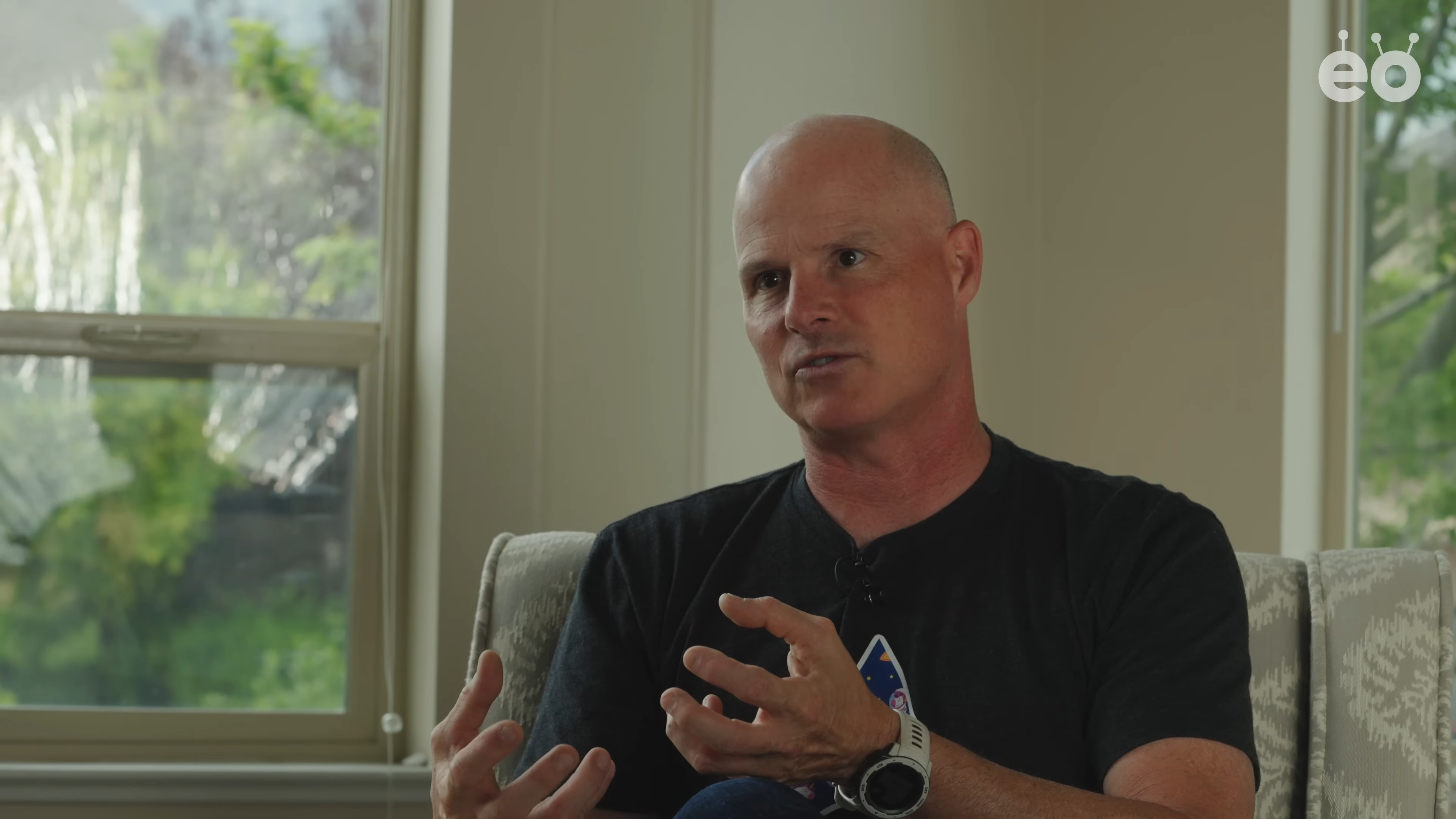
My name is Troy Malone. I've worked as an executive in a number of different tech companies, mainly taking them from the US into new international markets.
Chapter 1: Takeaways From My Company
It all started when I was in business school. I wanted to create a company. This was the very beginning of the Internet, and I saw a lot of potential, especially software companies we could create on the Internet. I created a business plan and started pitching it to investors. They gave me a term sheet. I turned them down because I didn't like the terms.
After I turned them down, the head of the firm came to me and said, "Troy, let me talk to you about maybe another option." He pitched to me creating a venture fund that would focus on investing in Internet companies. So I chose to team up with them, and we started a small venture capital fund. We made an acquisition of a software company, and I got pulled into that to help with the operations. It was that transition of going from investor to builder that I fell in love with. The building part, investment is fun, but to me it got a little boring. So I had ambition always to start a company, but I started first by investing and learning, then moving on to building.

In 2008, I started a company with a co-founder. I was running a production team. We were doing video production at conferences. A big problem that we had was staying synchronized in our communication: is the equipment going to be at the right place at the right time? All of these logistical issues. So we started a project management type of software. You could do messaging, you could share files. We had companies like Warner Brothers, one of the big movie studios, using us and really liking it. It was a fun thing to build, but really my motivation was just to solve an existing problem that I had. That's usually a good entrepreneurial direction: to solve a problem that means something to yourself.
What happened was, in 2008, the financial crisis hit. We couldn't raise more money. We immediately cut back and made it profitable. In making it profitable, we took away all of our growth. The market is so dynamic, it's always changing. A couple of months later, that can all change, and you can't raise any money. Raise money when you can. I would have raised a little more money initially and given more equity away in order to have a little more runway, so that we could get through any potential storms or difficulties.
I learned a lot about product and product management, when to listen to customers and when not to listen to customers. Many times customers think they know what they need, but they don't really. You need to be able to understand the differences between those product dynamics. I would call my other business a failure. We didn't accomplish what we wanted to. But it helped me build the skills I needed to be able to land at Evernote and see success.
Chapter 2: Things I Learned From a Competitive Market
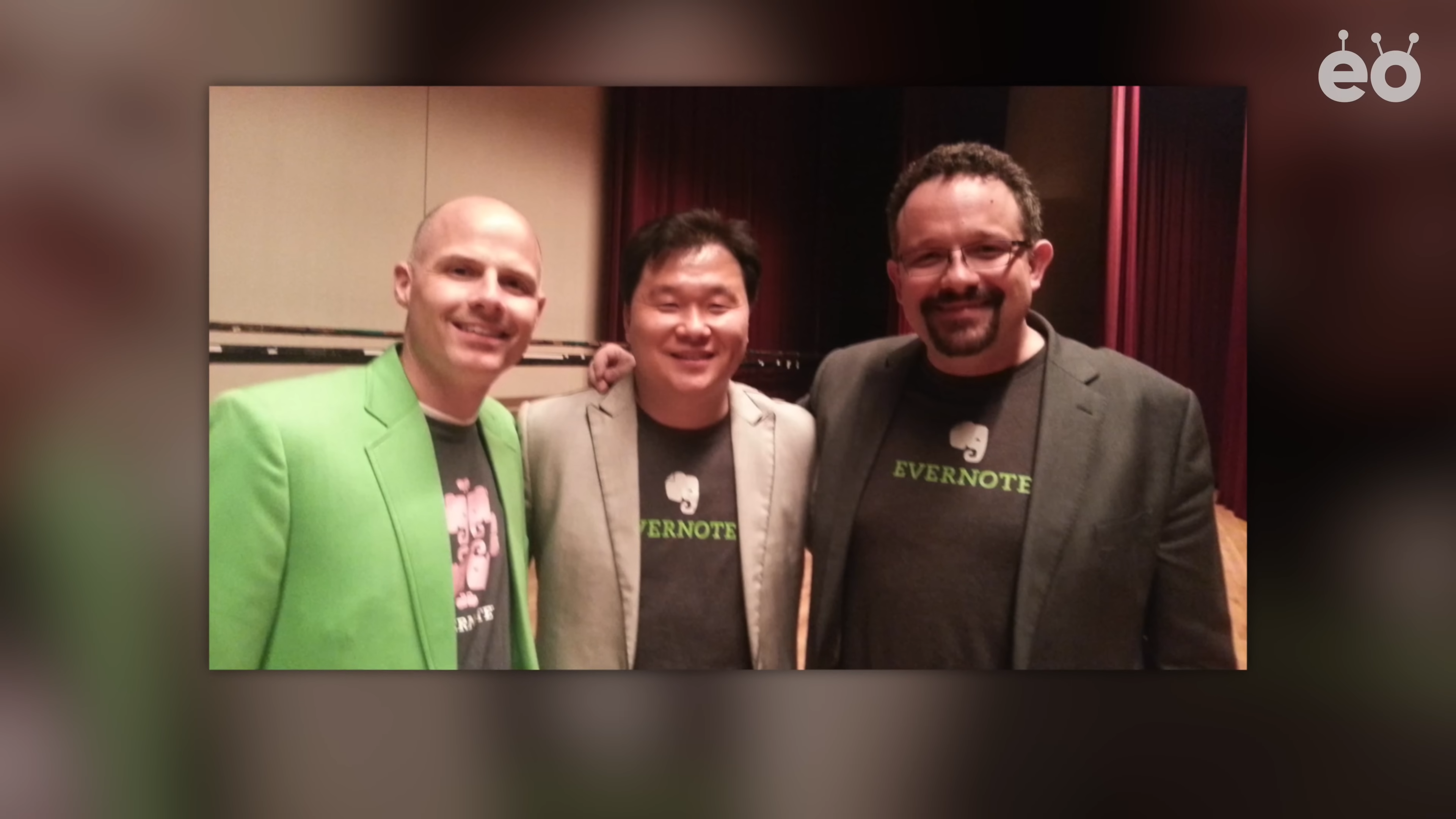
At the same time, Evernote was one of the few companies in 2008 that was able to raise money because their business had such great metrics and user growth. I was lucky in some ways, timing wise, to meet Phil Libin and to talk with him about Evernote, to take Evernote into Asia specifically.
When I joined Evernote, I think we had around 59 employees. We were growing very quickly. We had just hit 10 million users. We were adding 120,000 new users every day, which is crazy even to think about. I would go to bed at night and think, all around the world people are signing up and coming on to this app, 120,000 people a day. And I remember when I first started, I asked my boss what my KPI should be, what my goals should be. He also said something to me that I think made a big difference and motivated me very much. He said, "Troy, your only KPI is be awesome. Like, just be awesome." He didn't have direction to give me. "I'm trusting you to go out and figure out how we enhance this growth pattern and really bring people on."
When we released our public API at Evernote, we didn't know if anyone was going to build on us as a platform. We were kind of nervous, wondering if anyone was going to use Evernote as a platform. So what I did, I said, "Hey, I want to do a hackathon." I remember our CTO at the time said, "Troy, you can't do a hackathon. No one's going to want to develop on Evernote. We're too early." And I said, "Just let me try." So I sent an email to the top IT professors at Yonsei University and Seoul National University, all these professors, and I said, "I want to do a hackathon with you." I got one professor from Yonsei. We organized the date and everything, and we did a hackathon at Yonsei University. I had Phil come over, and he was blown away. He was like, "Oh my gosh, this is so cool." After that we started doing hackathons everywhere globally, because now we knew we could do it. We didn't think it was possible, but yet we did it. So when you tell someone to be awesome, it gives them license to be creative and go do crazy things. Not everything will work, but some things will, and that will change everything.
Lessons that I took away from Evernote: understand monetization early on, what your plans are to monetize. Uber and Airbnb, their revenues started to go way high, and I think it took a little longer than we expected to build the revenue base that we needed to justify the valuation that we had gotten.
After Evernote, I went to Weebly, which is a website creation platform. I headed up the international expansion into Europe and Latin America. Weebly was kind of a different experience, in that it wasn't really growing as quickly as Evernote. There was intense competition. At Evernote we didn't have that problem. We didn't advertise one penny at Evernote. The non-competitive environment was all about figuring out how to enhance virality. It was really focused on community building: how can people share it easier. One thing I did learn also from Phil, I did a lot of press engagement, so I would talk with reporters, and we never talked about competition. Even if people asked us about competition, we would never talk about competition, because sometimes companies feel they need to answer the question about competition or whatever. If you just ignore the competition and build the best product that you have the vision for, that's usually the best answer. That's true in an Evernote context.
But in different markets that are hyper competitive, like Weebly, that is not as true. One year I remember with Weebly, three of our competitors had Super Bowl ads, which are the most expensive advertising here in the US. That's when I knew, wow, this is serious. We don't have that kind of budget. We hadn't raised as much money. When it comes to a hyper competitive environment, it becomes easy to do feature by feature kind of competition. You can lose sight of the grander vision of what you can build if you're just fast following other companies. What we tried to do is pull back from looking at all the features that our competition was adding and really create a product roadmap that we thought was what the customer truly needed. So it was more of a challenge to figure out how to compete in the face of big money advertising.
We were able to grow in the international markets nicely, because it was a little more quiet on the international side, and I gained a lot of knowledge in that role, with marketing, how to be efficient with paid advertising, to bring in users of your product and bring them through the funnel from free to paid, to growing in revenue with us. And we got acquired by Square. It was a good exercise on operating in a hyper competitive environment with a lower budget. It was definitely a challenge, but it was fun, and we were successful.
Chapter 3: Things I Learned From My Entire Career
I think because I went the entrepreneurial route, I didn't have a clear career path. My earlier career was a little bit tough. I was CEO of a startup, I ran a venture fund. But later in my career, as I did Evernote and beyond, I got focused on international expansion.
As I look at people earlier in their careers, they err on the side of being too careful. If I do that, I might get in trouble, or if I do that, it might not be the right answer. What has benefited me is just doing it, just trying it. It's either going to fail or be successful. That velocity has helped me learn faster in my career.
One common question that I got, wherever I was in the world: how can I differentiate myself from all these other people? I would boil it down to a saying: do things. What I look for in people, and what differentiates them, is someone who is doing a job but also has a project over here that they built. Take on more responsibility at every chance you get, because most people don't do that. It's easy to do nothing. It's easy to do the minimum amount of work to get a job done. What's difficult and not common is someone who is willing to take on more responsibility and is willing to help. That's how you differentiate yourself.
I decided to make the move to Drata because Drata is at that hypergrowth stage that I enjoy. Drata is a platform that helps companies become compliant in both privacy and risk frameworks. As companies have these audits and get these certifications that they are compliant with a particular framework, it builds trust with other companies so that you can do business. As I mentioned, the CTO of Drata is a former co-founder of mine, Daniel Marashlian. When he gave me the updates on what they were doing with Drata, and where they were at, and the fact that they were seeing international traction, that's when we started talking seriously about, wow, this is probably ready to go international.
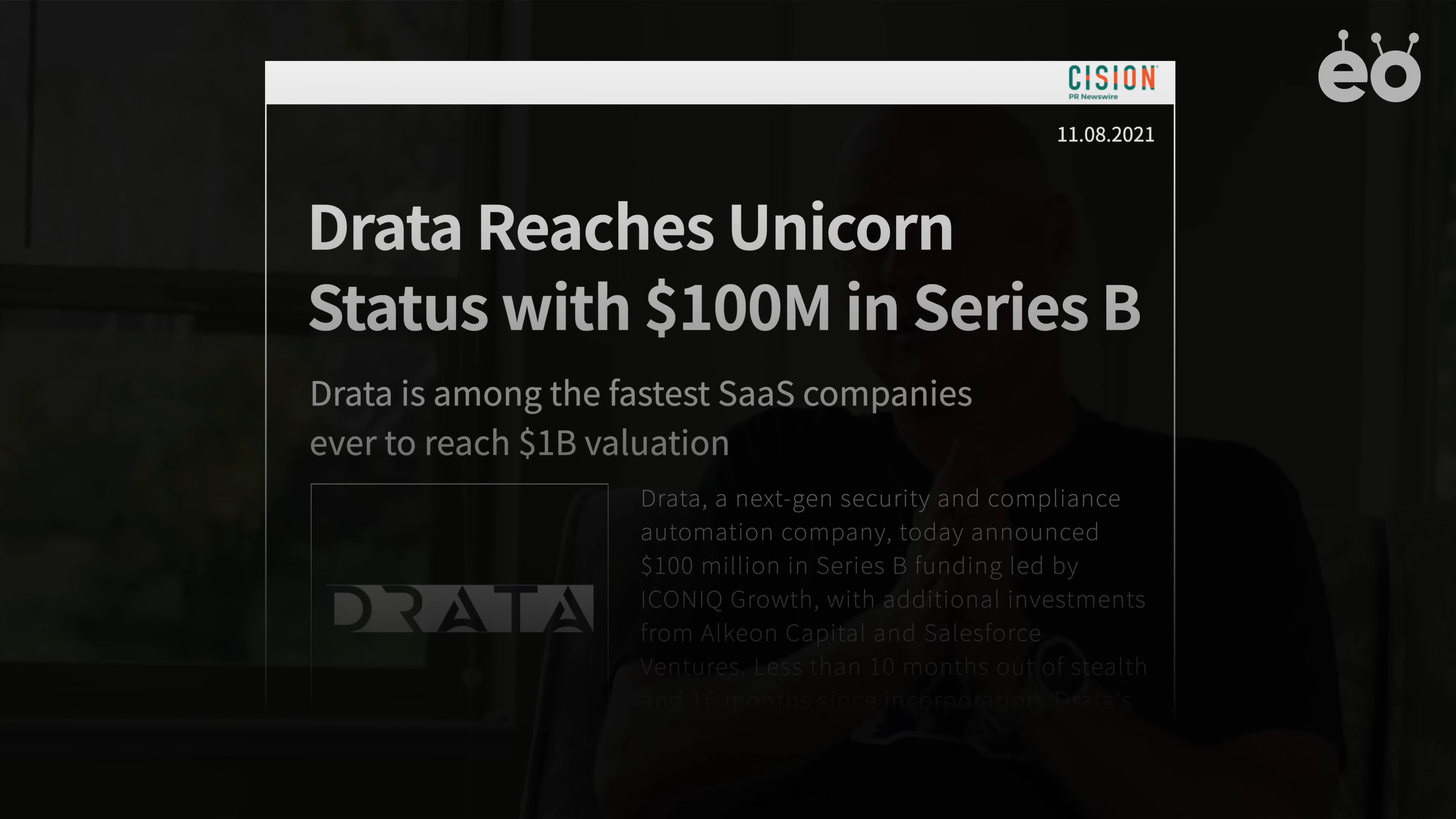
What I look for in a company to be ready to go international: obviously product market fit has to be there, and also seeing indications of traction in other markets. I really like B2B SaaS, but a product that is a must have, not a nice to have. Drata meets all of those requirements, and I think that's why Drata has grown so quickly. Drata became a unicorn ten months out of stealth, which is just amazingly fast growth. Once a company knows they have to be compliant because they want to sell into a big company, it's a must have solution. If you have long sales cycles, you have a difficult time getting your product through the procurement process, then you probably don't have a must have solution.
What I'm dealing with right now is building a great sales team globally, so you can build a very predictable business model if you have a must have product and you know how to build a sales team and a customer success team to adequately service those accounts, because investors love to understand business models: if I invest this, I can expect this as profit out. That's what keeps me awake at night, building that team.
The great thing about Silicon Valley is there were a lot of great people there, a lot of great people to work with. That was it. Quality of life for me was going down, because I was commuting into the city. I was spending two and a half, three hours a day just getting there. I was thinking, why am I doing this? This is not fun. I actually had a bad experience: my house burned down, so I lost my house and everything in it. After that happened, it gave me a new perspective. I started thinking differently. If you lose literally everything that you own, it gives you an opportunity to think in a different way. So I started thinking, why are we here? Why am I in Silicon Valley? Do I want to be here? It gave me an opportunity to think about where else I could live and be successful. So I decided to move to Utah about four and a half years ago.
The difference here in Utah for me: in the morning, I can go hike in the mountains for 45 minutes and come back and start work. I get to be in nature and work hard. But also, the only reason that I was comfortable coming to Utah is because the tech scene in Utah has become really big, because a lot of technical talent has come to Utah. So that made me feel comfortable that I could have a successful career here in Utah as well.
I think right now I'm kind of living the dream, building a significant company. But most importantly, what I'm finding really fulfilling for me is watching my team grow. That, to me, is the most fulfilling thing of my career: to watch people come into an organization, do great things, and grow and learn and be able to go on to even better things. So I would say that's my focus over the rest of my career.