Apr 19, 2025
How Transcend Went from Zero Buyers to One of the Fastest-Growing B2B Startups
Interview with Ben Brook, Co-founder and CEO of Transcend
Founder Focused


💡
At a Glance
- Who: Ben Brook is the co-founder and CEO of Transcend. He founded the company to transform data privacy from manual operational work into automated code infrastructure.
- What: Transcend builds data privacy infrastructure software for enterprises, helping them automatically encode privacy compliance rules, manage data deletion requests, and enforce AI governance guardrails across their tech stack.
- Traction: Backed by Accel and Index Ventures, Transcend is currently at the Series B stage after unseating legacy incumbent vendors through automated migration playbooks and expanding into AI governance.
Ben Brook launched Transcend to tackle enterprise data privacy, only to find that early prospects completely refused to buy his initial product. Instead of giving up, he agreed to act as a hands-on, consultative privacy engineering team for his first three customers to uncover their real technical headaches. Today, Transcend is a Series B startup backed by Accel and Index Ventures that replaces manual data deletion workflows with automated code. In this interview, Brook reveals why founders should price aggressively from day one, how to scale an enterprise sales engine past founder-led selling, and why Chief Privacy Officers are quietly becoming the new heads of AI governance.
Key Takeaways
Use Early Customers as Your Privacy Engineering Team
Ben Brook found early product-market fit by working directly inside customers' privacy problems, automating the work while learning what they needed. The consultative approach turned initial engagements into product discovery and gave Transcend a grounded path into enterprise software.
Hand Off Founder-Led Sales at the Right Moment
Brook says founders can lead the first 20 or 30 enterprise sales, but a first seller must eventually prove the business can scale beyond the founder's personal product knowledge. The right early seller handles pipeline, deals, sales engineering, and the full process end to end.
Price Products Against the Value They Create
Transcend treated pricing as an iterative learning process, starting higher than founders may feel comfortable with and tying the price to measurable revenue gains or cost reductions. Brook's point is that sellers should help buyers build the value case before a CFO evaluates it.
Prove Repeatable Market Share Before Raising Series B
Between Series A and Series B, Transcend focused on building sales and marketing, improving customer experience, and tracking win rates against the incumbent. Brook describes the fundraising story as evidence that customers were repeatedly making a difficult migration, not simply expressing interest.
AI Governance Is Broadening the Privacy Buyer’s Scope
Brook sees privacy teams absorbing responsibility for AI governance as companies collect data for AI systems and confront questions about personal information, bias, harm, and fairness. The buyer is becoming responsible for a broader digital governance mandate, not privacy alone.
Watch the full interview now on EO's YouTube channel! Below is the complete transcription of the interview. Minor edits have been made for clarity and readability.
Introducing Ben Brook, co-founder of Transcend
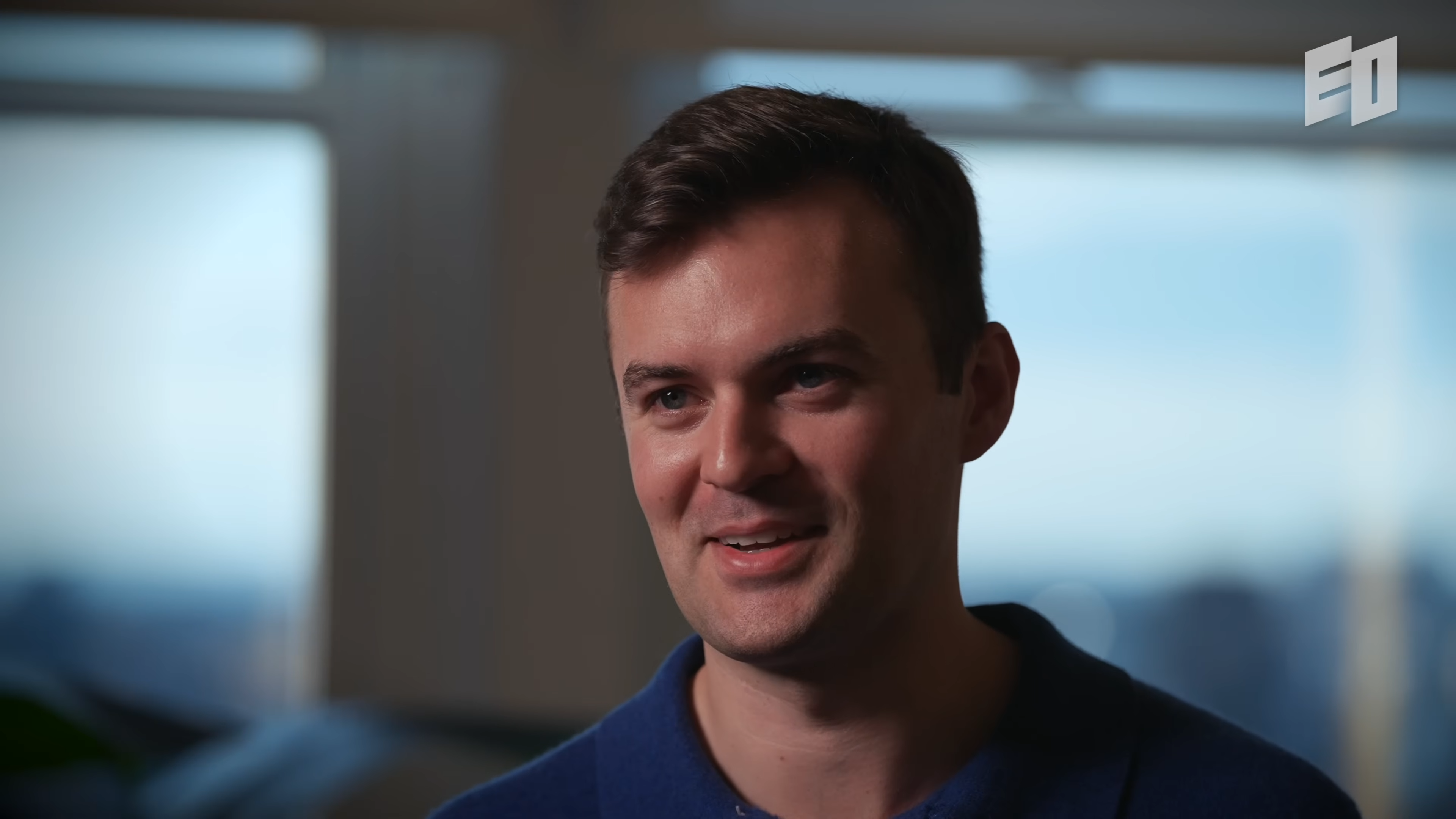
I'm Ben Brook, co-founder and CEO of Transcend. We are a data privacy infrastructure company. We help other businesses encode privacy rules across all of their technology, helping them comply with privacy laws, adopt the spirit of privacy, and give consumers far better control over their personal data. We're backed by Accel and Index, and we're now a Series B startup.
From the First 10 Customers to 100 Customers
The biggest challenge for us, like many founders, was finding that first product-market fit. As a founder in the weeds, you're so excited about this thing. You think, we've got it, this is going to land, people are going to love it. Nobody wants to buy it. Then you really learn to trust the data, to test, to understand what the customer really needs. You can't stress enough, when you're building a product, how much you need to understand your customer.
What we ended up doing was finding a few early customers and basically saying, what if we just automated this for you? We'll be your extended privacy engineering team. Let us build the solution, and help us understand every aspect of it. It was actually a fairly consultative engagement with the first two or three customers, and we made sure they were aligned with the fact that yes, we were going to build a product here. That was how we approached it. Especially when you're a bit more toward the enterprise software motion, that's absolutely a path you can take. You let customers vent their problems and offer to find a way to fix them.
As for scaling from 10 to 100 customers, in enterprise this is when you need your first sellers. Typically you can do founder-led sales for the first 20 or 30 customers. But not only should you start handing that off, it's also an important part of proving that you're able to scale the business past yourself, the person who knows every nook and cranny of the product and has been thinking about this problem for five years. Having a seller become successful at selling your product is an important first milestone.
We really spent the time to find the right first seller. The first seller is completely different from a late-stage seller. They're super creative, and they do every sales role alone, including generating pipeline, actually running the deal as an account executive would, and in some cases a lot of sales engineering, probably contracting, the full end-to-end sales process. We found somebody who is just incredible at this. I really believe there's nothing more important than finding the best hire. If you need to slow down to get it right, it's 100% worth it.
After that, depending on what your ARR is at around 100 customers, you either need to scale your sales team, or, if you're way upmarket, you probably already have. In any case, scaling a sales team really comes down to one thing. If you don't have a sales background, you should find a sales leader. It's such a huge subject, with so much expertise, that you need a great leader who can do all the right pieces, like building playbooks and breaking out the sales process into sales development representatives, account executives, sales engineering, revenue operations, and so forth. There's a whole organization there, and that meta-process is very playbooked, but it's not something a founder should do. They should absolutely find the best leader they can. That's really the 0 to 10, 10 to 100, and beyond.
Make Your Pricing Super Iterative
There are a few things I'll say about pricing. The first is to make it super iterative. You really need to adapt it and change it until you find your price point. Even then, it's only going to last for maybe a year or a year and a half before you have enough data to say certain parts of this are stupid and we need to change it.
Second, you should start as high as possible, because most founders are shocked at what the market will pay for their product. Especially if you're a first-time founder, you almost feel guilty or greedy asking for certain numbers. But ultimately, for pricing, you really have to understand the business value a company is getting by using your product. It sounds like corporate jargon, but this is actually how companies buy.
If you're not articulating the actual dollar value of your product, or you have no idea how to even start, the person buying your product is going to try to create that assessment themselves so they can take it to the CFO and get it approved. So the real question is whether you want to be involved in that process or not. If it's going to get approved, you'd better be involved. You actually have to articulate it. If you're going to drive revenue for the company, how much can you drive? If you're going to decrease costs, how much can you decrease them? Can you articulate what we call value drivers, educate the person who's interested in buying your product, and work with them to build this value case together? Then, whatever that value is, your price should be about a quarter to one-third of it, so they get the ROI on the remaining three quarters.
Your Next Steps Until Closing Series B
The real key to our Series B was proving that we could repeatedly switch customers off the status quo in privacy, which is incredibly manual operational work. Data owners are constantly being interviewed and asked to manually operate on one individual's data when that individual asks to be deleted. That status quo is encoded by legacy incumbent software. The real bet at our Series A was a question. Can we repeatedly show that we can take market share? Is there a long-term outcome where Transcend takes the top spot in the market?
So our Series A to Series B was really all about building our sales team, scaling up marketing operations, and delivering a customer experience that customers would be happy to do case studies about, to shout about us from the rooftops, and to tell their friends to switch as well. We tracked milestones around our win rate against the incumbent competitor. If we could get it to a certain number, we thought that would be really critical for our Series B story, and would ultimately help unstick a market that felt like it was turning into a bit of a cottage industry around the status quo way of doing things. We had a metric-driven process against that and executed really, really well on the plan, so that at the Series B we could tell the full story, which is that customers are making this mass migration switch.
Current Privacy Trends in the AI Era
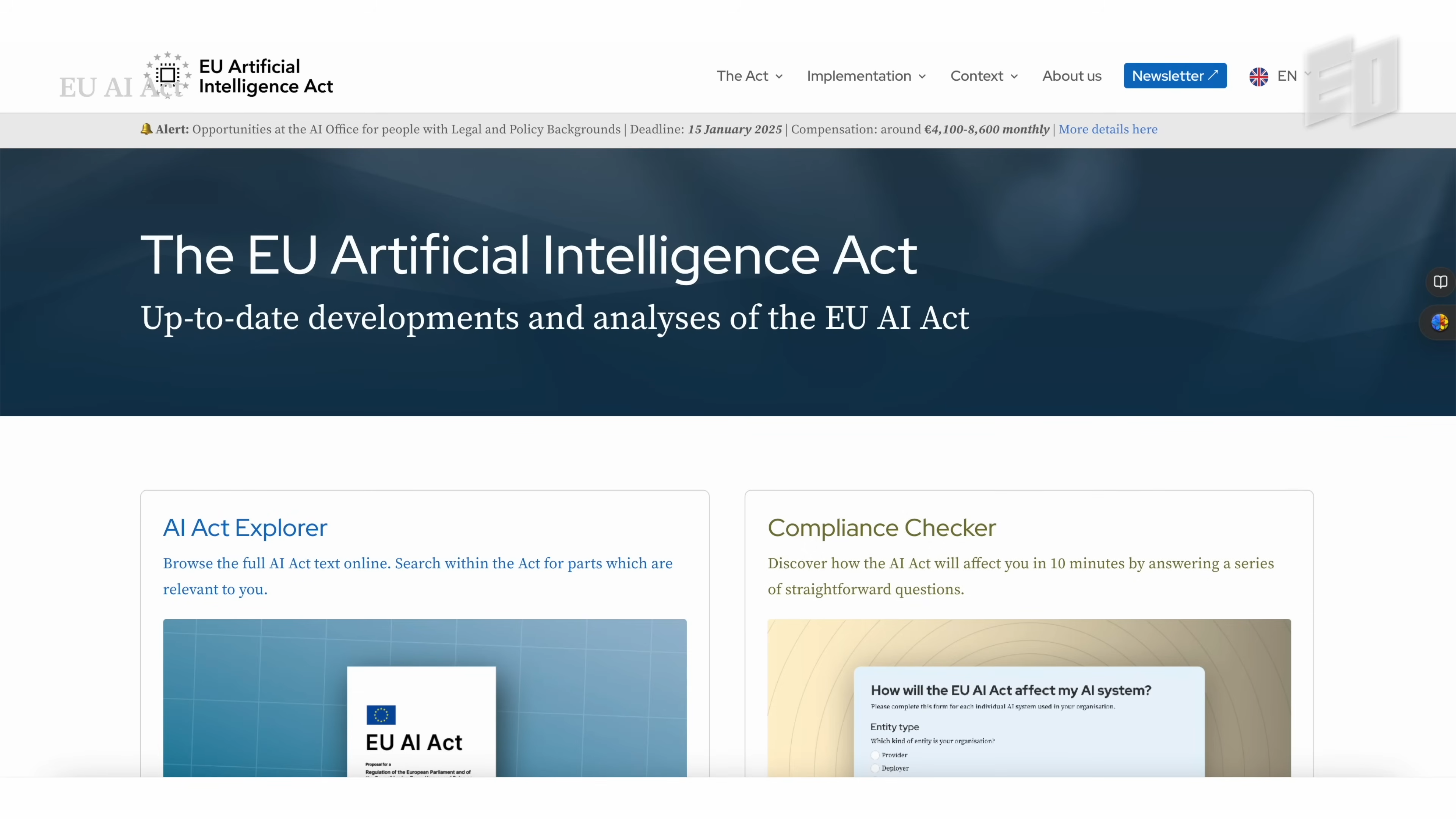
The current trend in privacy right now is, first, governance of AI systems. There is a mad dash inside every business right now to adopt AI, and part of that is compiling all of the data into a format that can be leveraged for AI. For those who are technical, these are vector databases and embeddings. But there are very few guardrails around any of these systems in the way personal information may be processed. On one hand, there's the way personal data is being used in AI systems. On the other, there's the way AI systems may be impacting individuals, like bias, harm, and fairness, particularly when AI systems are used for decision-making. The most recent landmark regulation was the AI Act in Europe. Many businesses are trying to understand how they're using AI and put processes in place to ensure the right guardrails are there, or that they've appropriately assessed the impacts of using that AI. That's certainly a current trend in privacy today.
One of the effects is that a lot of the people who became chief privacy officer are going through a title change, and a change in role and scope, to also be the owner of AI governance. A lot of companies are saying, while we're at it, let's make it everything, meaning digital governance, all regulatory policy, and all governance of our systems short of security. That has been a big industry shift. The customers and buyers we sell to are undergoing a massive change in scope, and that's a really important trend right now.
And then every day there's something in privacy that makes you go, wow, that's a really creepy thing. Or there will be a data breach, or something else always driving the news. Take the Meta sunglasses, for example. It took about three days for two kids at Harvard to turn them into a system that can literally find people's online profiles as you walk down the street, overlaying their name, LinkedIn, and job title just by facial recognition. There's all kinds of crazy stuff in the daily news. But categorically, the shift is toward AI governance and this broadening superset of privacy.