Mar 18, 2023
The Fastest Productivity Tool to Reach 1M Users
Interview with Keith Peiris & Henri Liriani, Co-founders of Tome
Founder Focused

💡
At a Glance
- Who: Keith Peiris is co-founder and CEO of Tome; Henri Liriani is co-founder and CPO, having just redesigned Facebook Messenger before joining Keith to start Tome together.
- What: Tome is a storytelling product that uses large language models to generate the starting point of a story, aiming to be a more interactive, conversational alternative to PowerPoint.
- Traction: Tome says it started growing exponentially in December, is doubling every couple of weeks, has hundreds of thousands of people creating in the product, and expects to reach millions of users in the following months.
In this interview, Tome co-founders Keith Peiris and Henri Liriani explain why PowerPoint was never built for the way we actually communicate today, how a piece of advice from board member Reid changed the way they built for network effects, and why they believe removing pain alone will never make a product people love. Peiris also shares his hundred-year dream for what Tome could become.
One line from board member Reid rewired how Tome was built
Liriani says the advice he remembers most is Reid's insistence that Tome be a networked tool, not something useful to just one person. That single principle is why Tome was built for sharing and collaboration from day one instead of staying a single-player app.
Tome knows it's David against Microsoft's Goliath
Peiris expects Microsoft to eventually bolt OpenAI's models onto PowerPoint itself, and admits it will probably work fine. Instead of competing feature for feature, Tome is betting on a different interaction paradigm: talking with an AI to build a story, not clicking through a template.
Tome's site crashed from too many people trying to sign up
Peiris says growth stayed slow until last July, when people started using Tome for real work like pitch decks, and exponential growth only kicked in around December, doubling every couple of weeks since. Liriani says the site went down the morning before this interview because sign-ups outpaced their servers.
Liriani turned down another Silicon Valley job to jam with a near-stranger
Liriani had just redesigned Facebook Messenger and was about to take a big offer elsewhere when a mutual friend mentioned that Peiris was thinking about starting a company. Their early sessions dissecting why presentations had stopped working turned into Tome.
Peiris's hundred-year bet: the tools change, the need to be understood doesn't
Peiris says his dream is a multi-generational company that keeps adopting new technology without breaking the product millions of people already rely on. Whatever AI becomes, he argues, humans' need to communicate with each other will still be there in a hundred years.
Below is the complete transcription of the interview. Minor edits have been made for clarity and readability.
Introducing Tome
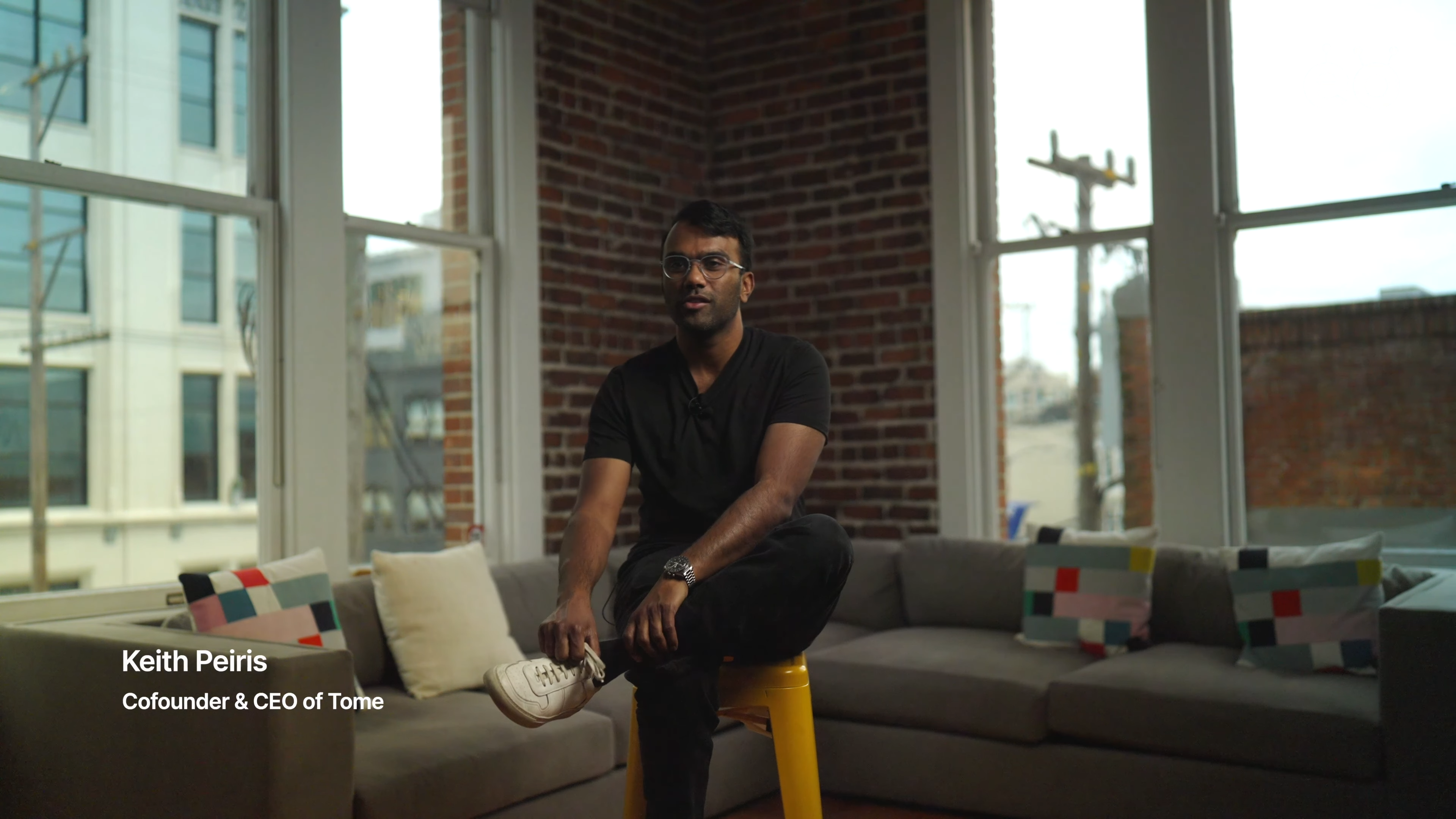
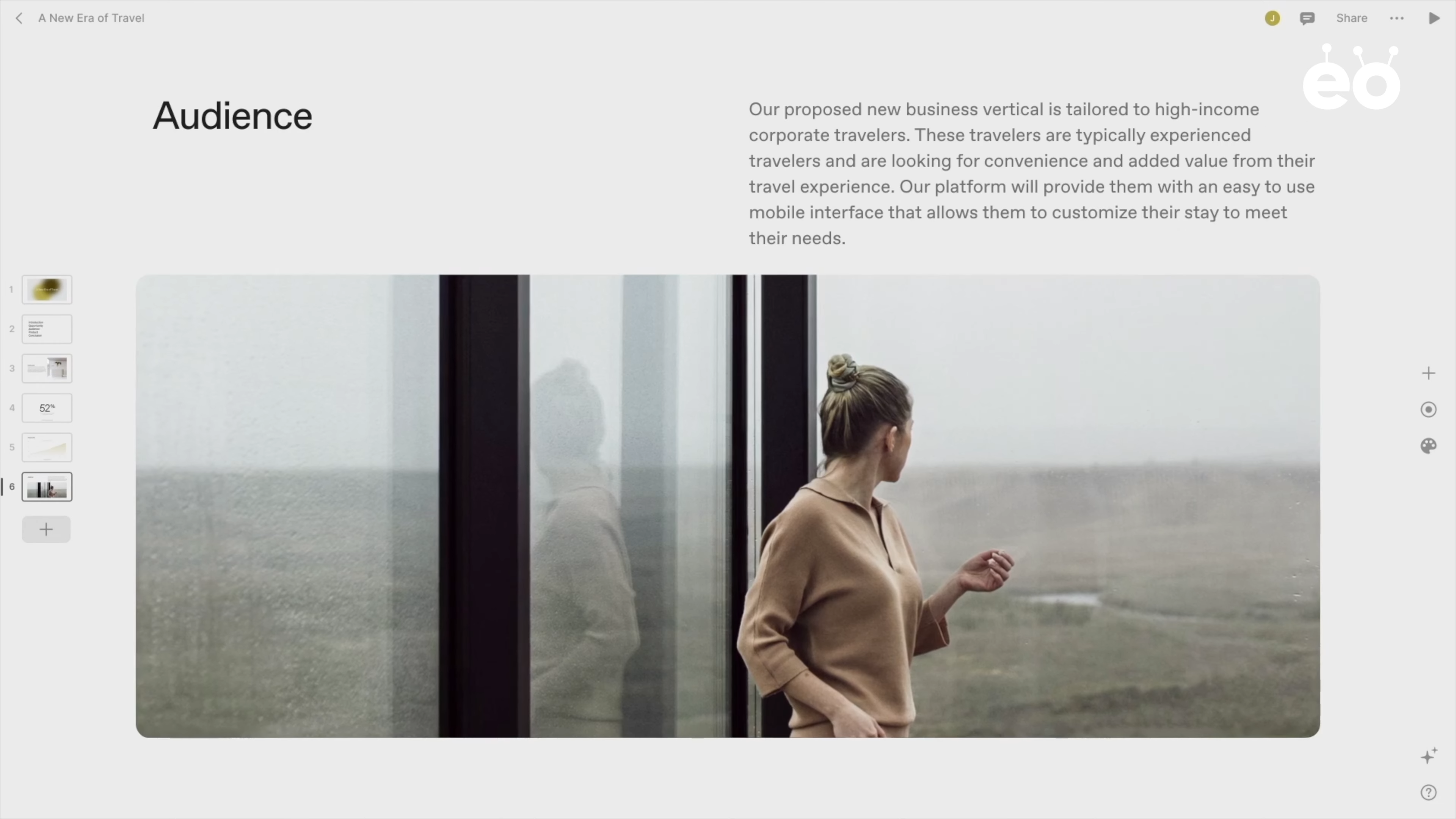
Keith Peiris (co-founder and CEO of Tome): Hi, my name is Keith, and I'm co-founder and CEO of Tome. Tome is this storytelling product: a predictable way to get a story generated for you. A lot of people use Tome as a presentation platform, and I think that's one of the reasons it's growing. It's just so useful across a wide variety of use cases.
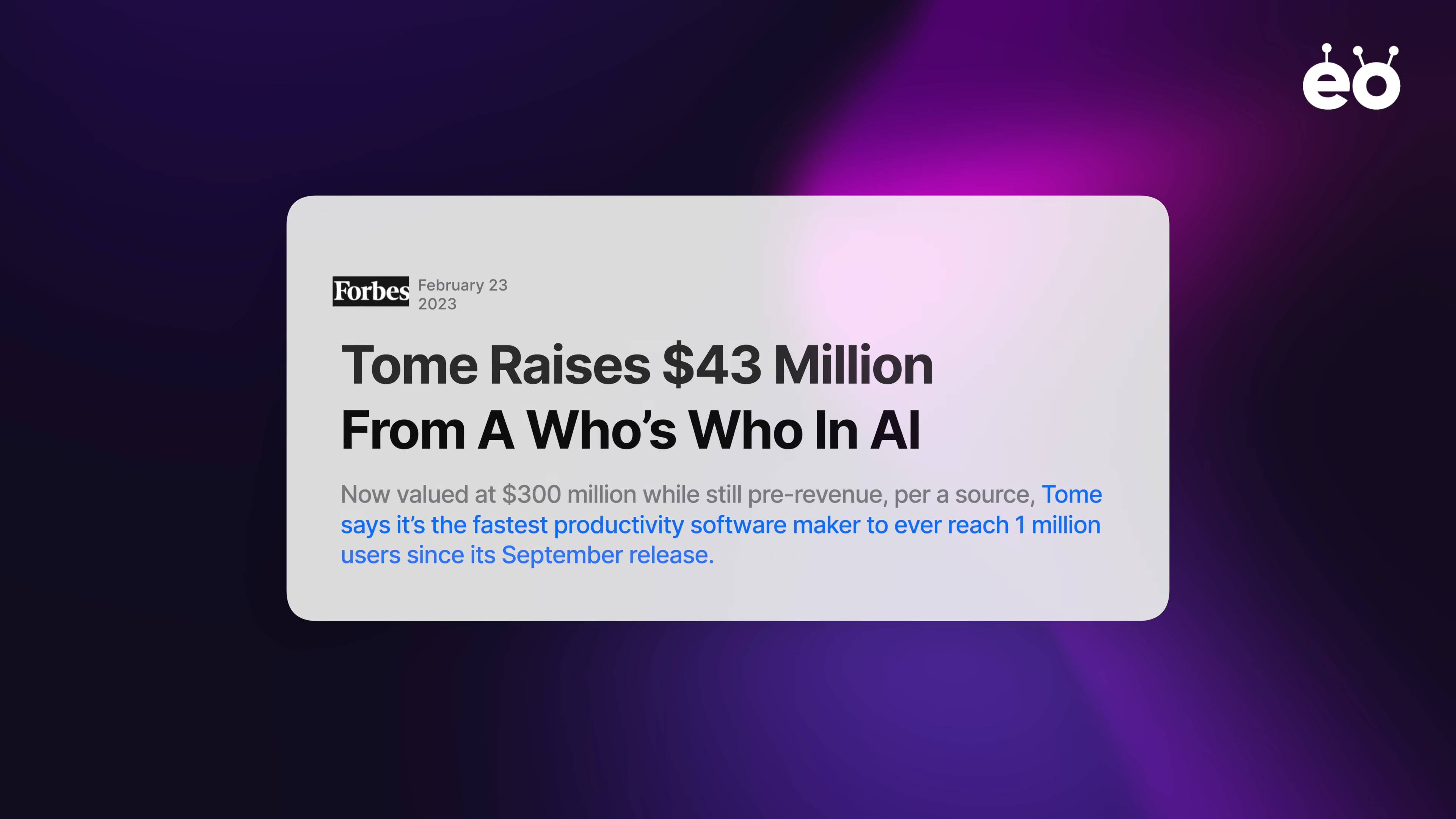
I think we started to grow exponentially in December. We're doubling every couple of weeks now. We'll be getting to millions over the next couple of months.
Outdated Powerpoint
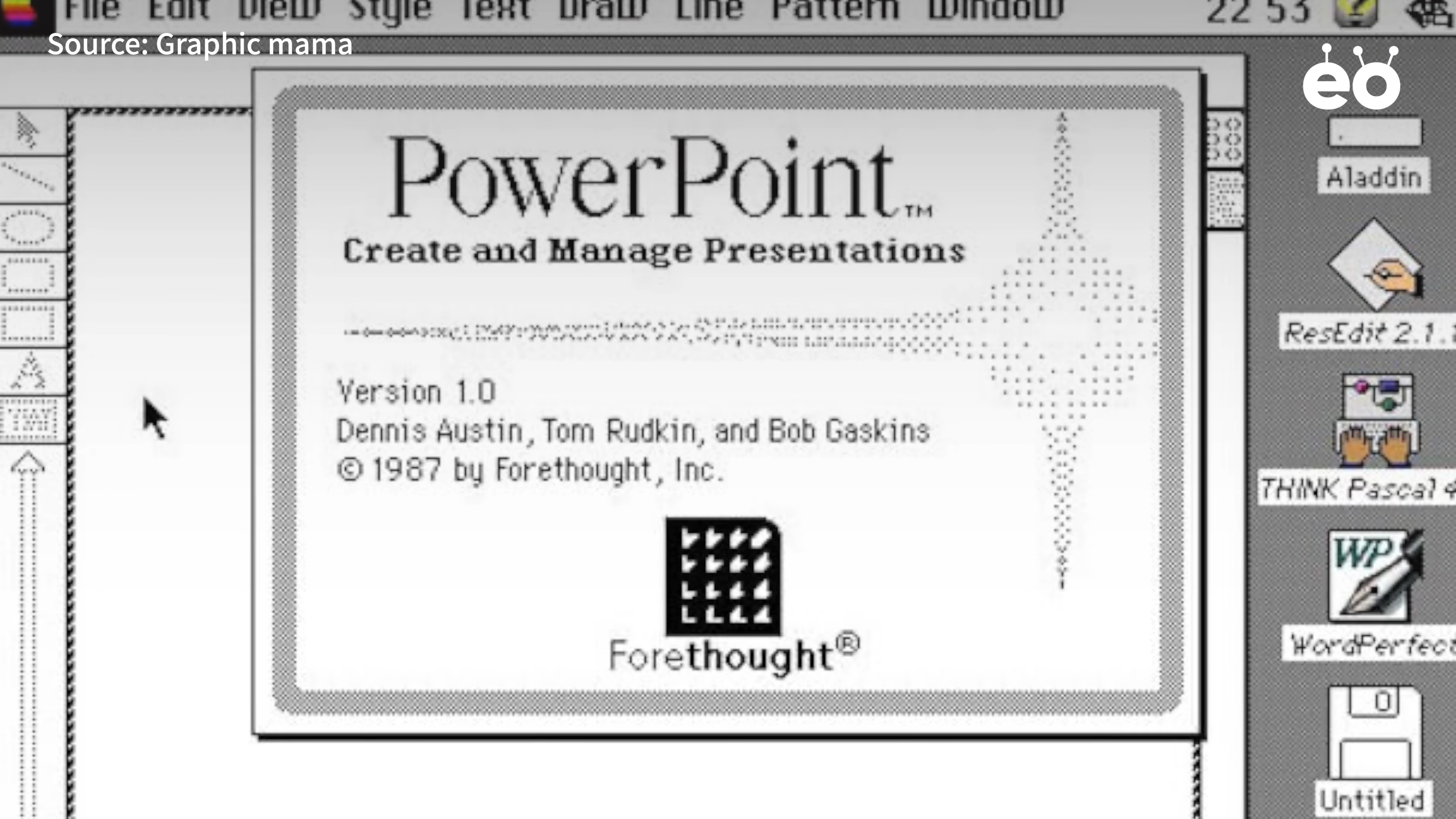
Keith: There's a whole lot, I would say, of problems with PowerPoint. You have to go back to the origin story. The original PowerPoint that was made in the 80s was built for physical slides. You would send physical discs to a print company, they would print your slide, and then you would take your slides and feed them into a projector. You would give your presentation.
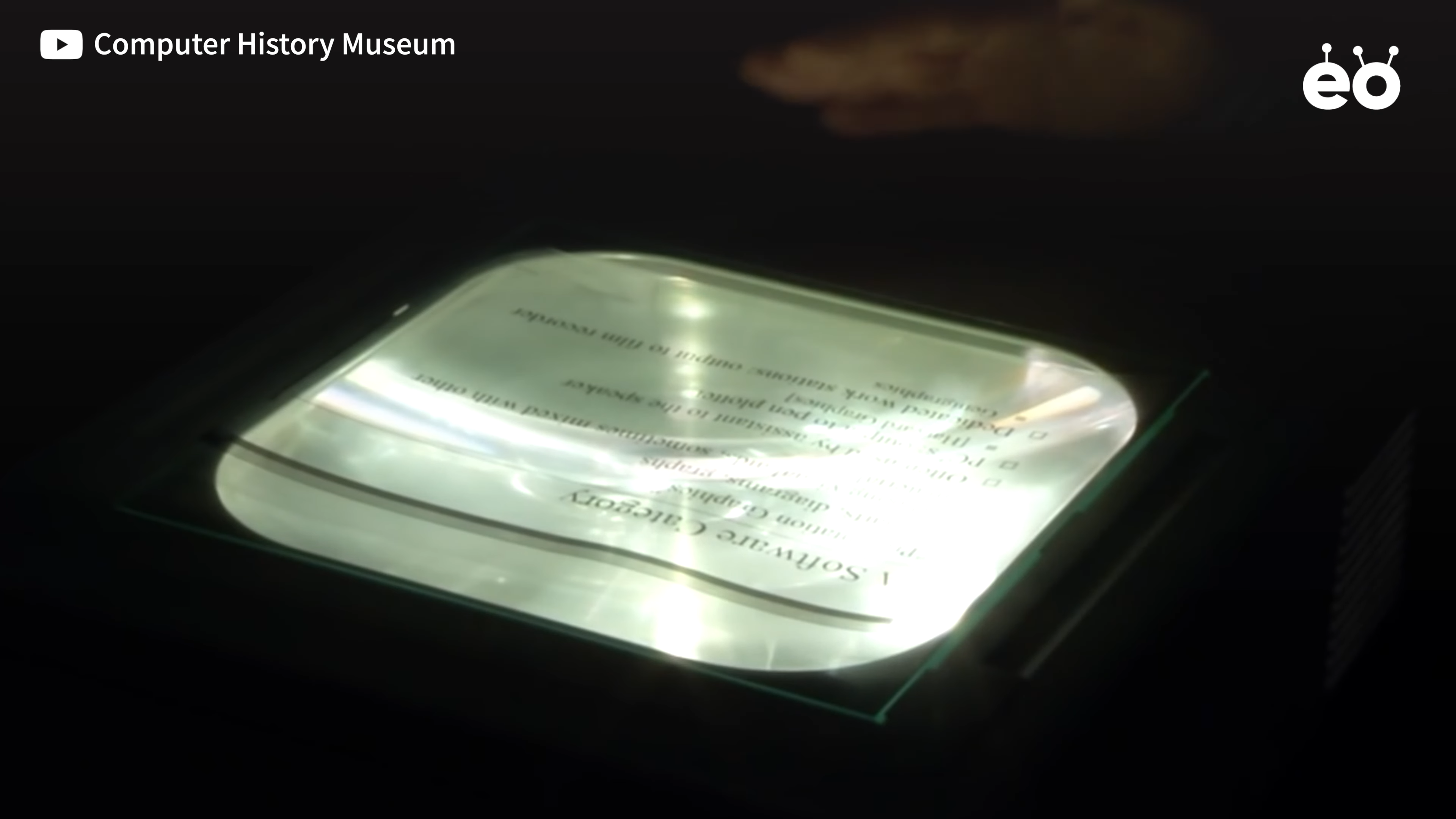
When you think about it, that origin means PowerPoint isn't interactive, and it doesn't take advantage of the fact that we're looking at presentations all the time on digital screens and on our phones. The other thing is that building a compelling PowerPoint presentation just requires a lot of time and effort to design the slides, if you work at a company. So anytime you're designing a slide so that your idea will be considered and understood is just kind of a waste.
But we found that using large language models, we can actually help people with that, because it turns out that most stories sort of follow a similar arc. And we found that this was a really interesting opportunity: if you get a large language model, you should be able to generate the starting point to build your story on top of, like great storytelling connects facts and concepts together into a narrative that we can understand.
I think we started to believe that this idea was valuable, but I knew that I needed an extraordinary co-founder, someone to help imagine a multimodal storytelling tool from the future. I think with Henri, it felt very good, very fast. He had just redesigned all of Facebook Messenger. He was actually about to reject some big other Silicon Valley job.
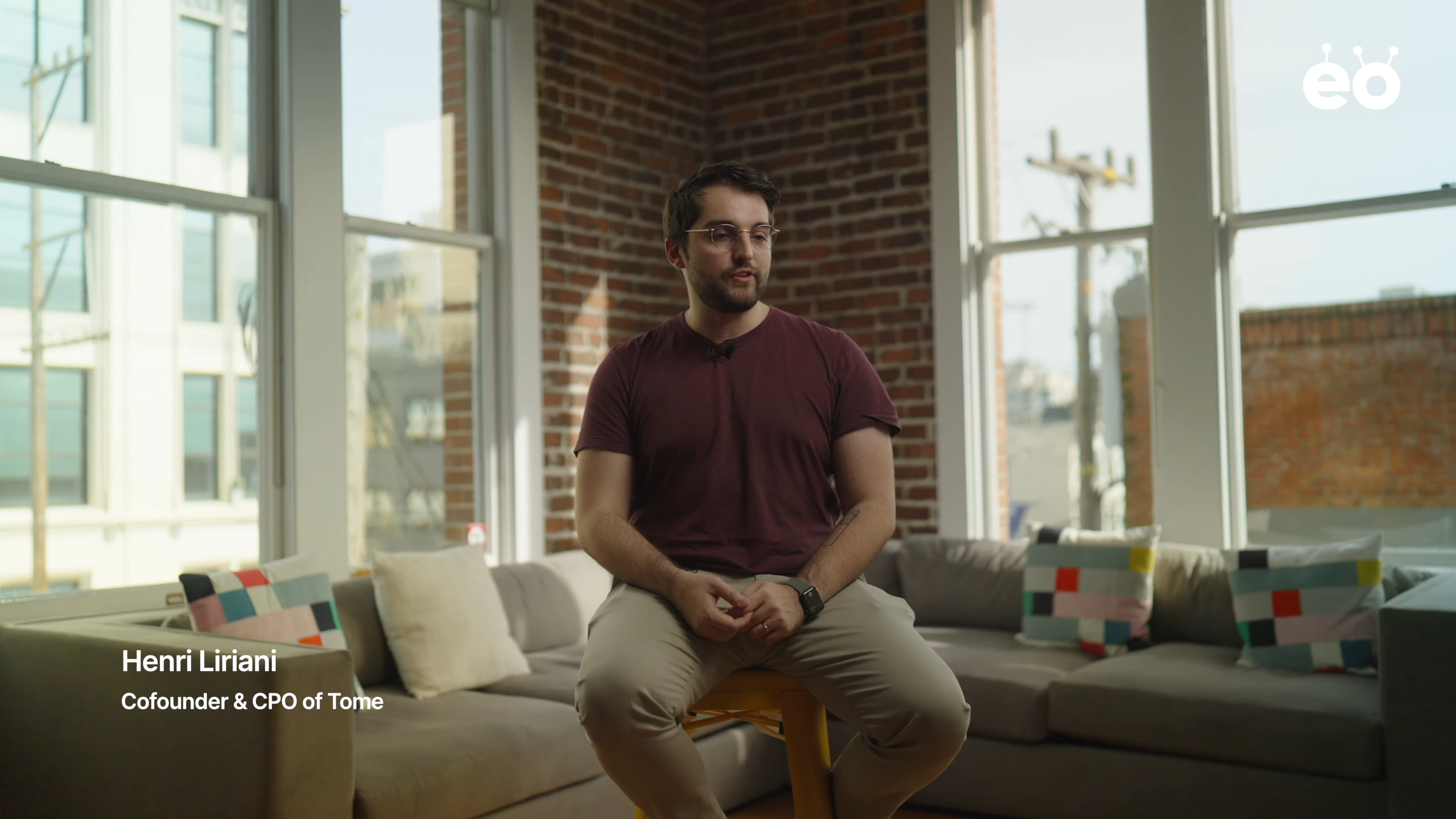
Henri Liriani (co-founder and CPO of Tome): It was really easy to brainstorm and generate with Keith. That was probably the most standout quality to our interactions. When I was still working at Facebook, I was talking to my friend Seth, and Seth mentioned that Keith was thinking about starting a company.
We started to work together and have these sort of jam sessions on exploring this problem space of presentations, and why they're not great anymore, and why people don't really like using them. Those were enjoyable for the reasons I mentioned.
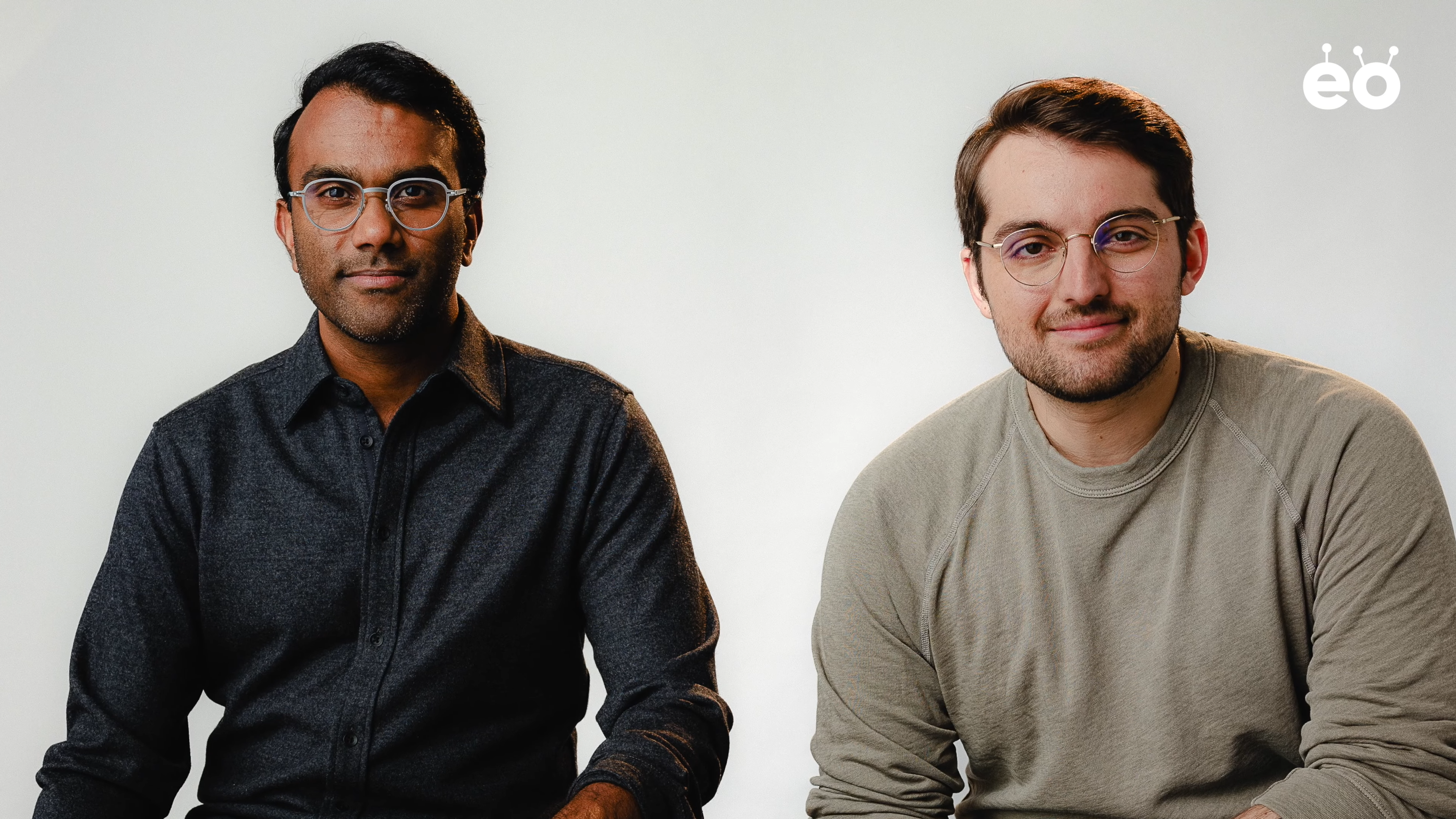
It felt really generative, and we decided to start this company together from the perspective of both having an intense focus on the kind of business it would become, and really being able to create a company with unbounded potential, as well as a product that wouldn't compromise on the details of its execution along the way. Naturally, Keith and I found some harmony to that point, and for me to focus a little more on the product.
Keith: I would say early on it was just us working in the Greylock office. At some point we realized, all right, this is enough analysis paralysis, we just have to make this thing and then iterate on it, instead of sitting in this room thinking about whether we can get the perfect product for the perfect customer.
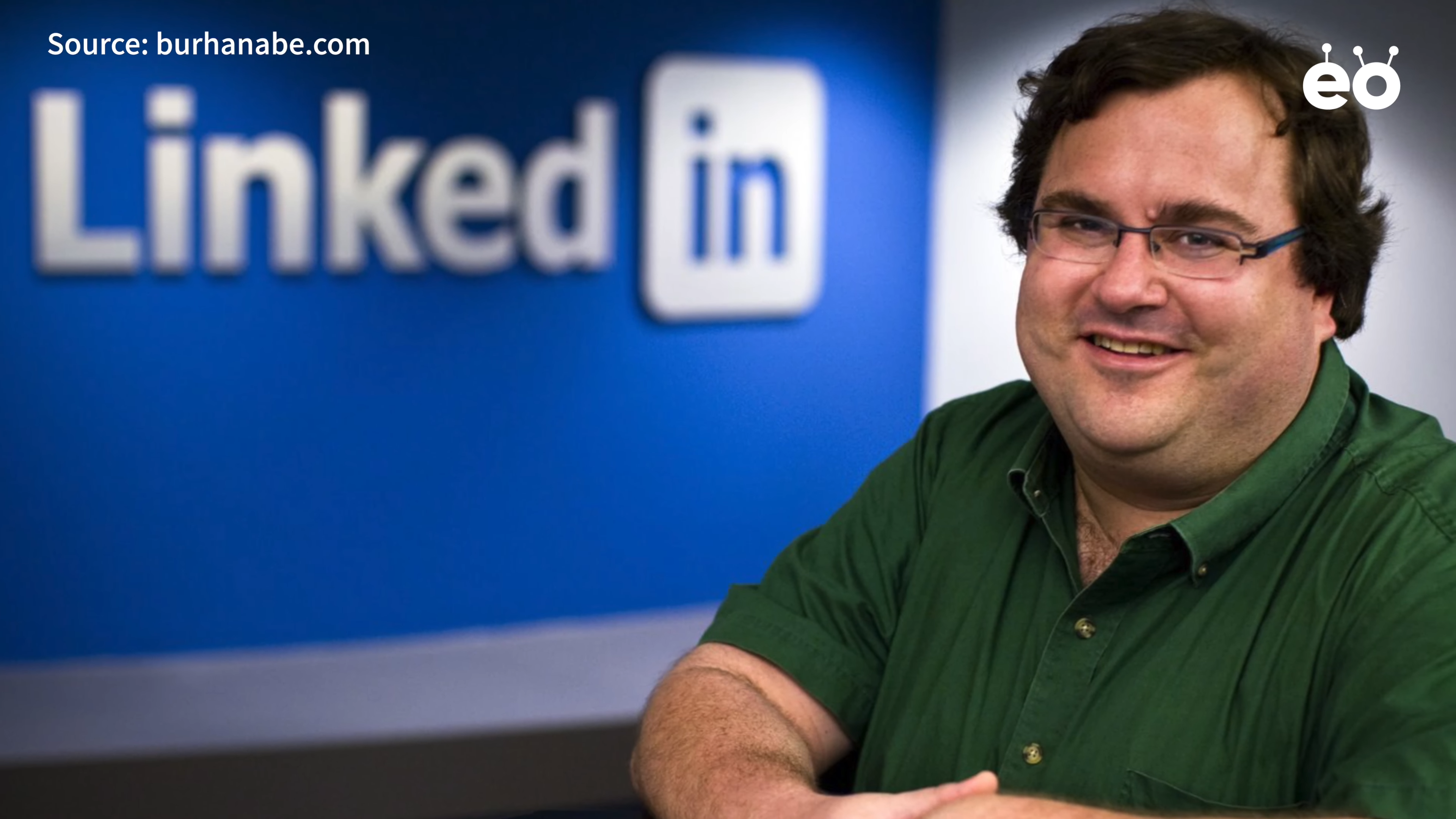
Some businesses are built that way, but certainly not productivity tools. It's the way that it feels, and it's the way that you iterate. The way we attracted Reid to Tome, I'm very grateful that he's on our board and he gives us advice. He's one of the founders of OpenAI. Because usually you can't get someone like Reid to work on your seed company idea with no product.
We just kept emailing him, we kept having Zoom chats with him and showing him progress, and at one point he said, okay, you've made enough progress, you should go start the company. And that's when we put out the ask. We said, well, if you think we've made enough progress to go start the company, would you jump on the board with us?
Henri: The most memorable thing I remember Reid saying was making sure we were building a networked tool, meaning not just something that was really useful to one person, but that could result in them sharing it with other people and then adding them and bringing them into the creation process, being collaborative, and having several touchpoints for network effects to occur.
That felt like it really made a difference as a principle for us as we built Tome, and enabled it to be a little bit more than a single player experience: something that could both travel really well and be a collaborative creation experience.
Keith: We just thought he was sort of in a class of one to come on this journey with us. And I think, to be honest, he was probably skeptical for the first year, but I think we've maybe won him over now.
A startup is dead by default, right? The default path is that you run out of money and you have to pack up your bags. Doing everything well doesn't necessarily mean you will escape that inevitability.
I think early on we had this view that we should write perfect product specs, we should build everything as well as we can, we should force people to show up really early and work really late. And I think those things are necessary but insufficient. You actually need to tap into a deeper human need, and you need to build something that's awkwardly shaped that people could love.
I think that was sort of a realization with Tome: the absence of pain isn't joy. If all you do is remove pain, you aren't going to necessarily create something compelling that's going to bring people in. Really early on, it requires a lot of imagination for someone to understand where it's going and what it could be.
First year at Tome, I think the feedback we got was that this is cool, but it's not ready for me yet. That started to change last year, I would say around July, when we realized people are actually using this for something. We're starting to get feedback like, hey, I'm trying to build a pitch deck with this. And we just realized that the quality of feedback was getting really high, and the quality of feedback was getting high because people were trying to use Tome for real things.
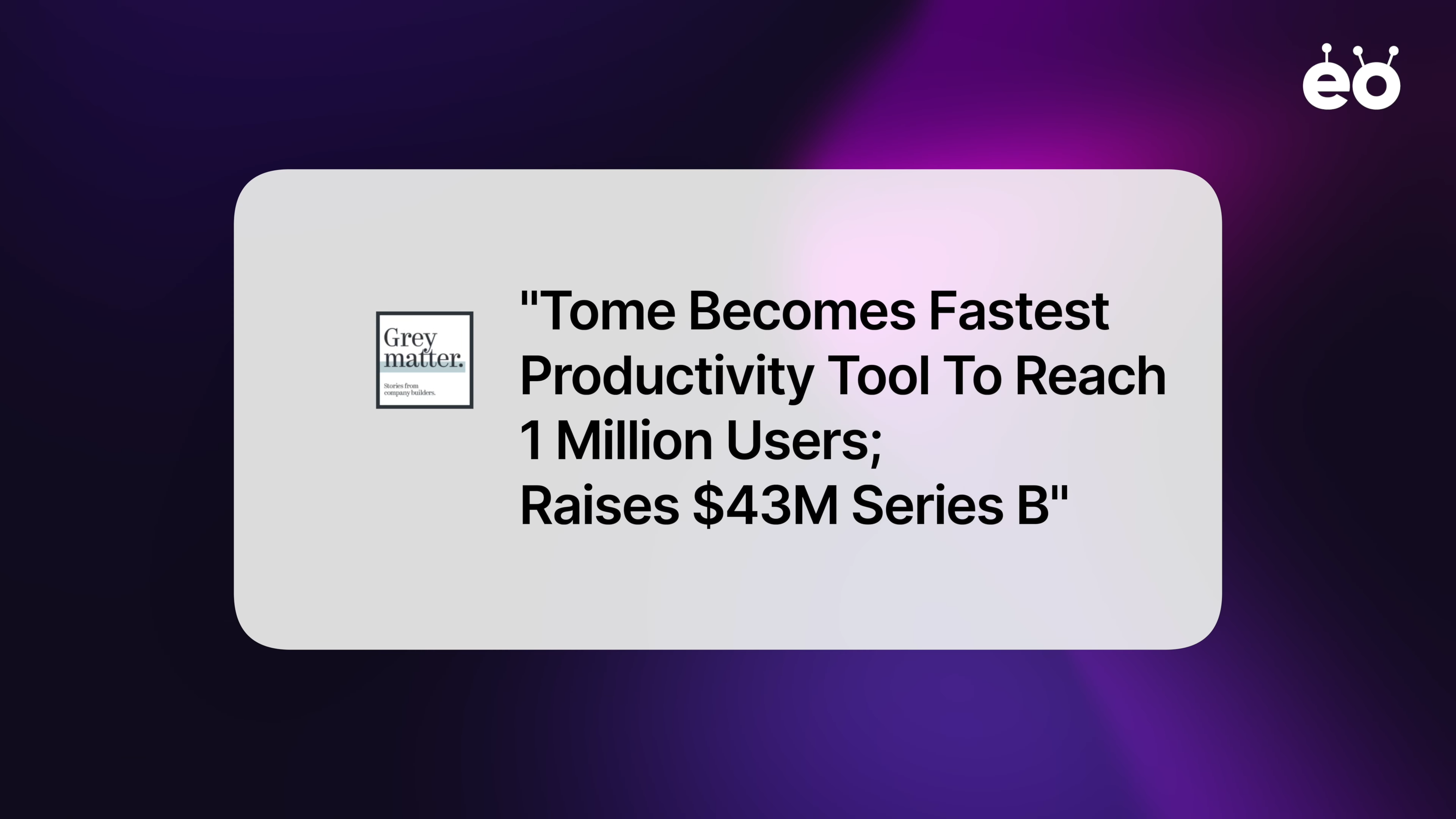
I think we started to grow exponentially in December. We're doubling every couple of weeks now. We have hundreds of thousands of people creating in Tome, and I imagine that we'll be getting to millions over the next couple of months. And then a lot of people use Tome as a presentation platform, so I think that's one of the reasons it's growing: it's just so useful across a wide variety of use cases, which is, I think, a very meaningful moment for us.
How AI Will Change Work
Keith: When I think about the future of AI, AI being this collaborative partner with you, that's a really profound thing. If you work in knowledge work, if you work in an office and you use a computer, it used to be that you needed to create work yourself. I think we're actually moving to a world where people aren't going to do that anymore. They're going to be directors: they're going to ask algorithms to create different types of work.
I think in some ways it's going to turn knowledge work into being a good manager, except instead of managing lots of people, you'll be asking these systems to generate work and you just evaluate it and shape it. For example, research could be really quickly automated, or just retrieval of the right information to put something together.
Henri: Iterations, let's say you had a mockup and you wanted to make five versions of it. AI could do that instantly, and you might take 15 minutes. The more data-oriented and fact-oriented tasks are going to probably take us a little bit longer to get right with these models, because the models aren't able to really understand the difference between opinion and true fact, and also the topic of truth itself is complicated. Like, who's the president of the United States could be talking about today, or it could be talking about a year from now or a year in the past.
A lot of those use cases have a lot of manual effort involved to get to useful information. I think we're really going to quickly see AI tools spring up to handle those problems.
Unlocking Human Collaboration
Keith: If you sit around and ponder what makes humans special, I'd argue that the biggest thing that differentiates humans from other species is our ability to work together. In history, this is why we're able to build spaceships, this is why we're able to build supercomputers, because we can get hundreds or thousands of people to all agree on something and work together.
If we were just building AI PowerPoint, we should go home, right? Sooner or later Microsoft will connect PowerPoint to OpenAI's models, and I'm sure it'll work great. I think what we're building is completely different. We're reimagining how you tell stories in the age of the internet. We're building our human computer interaction paradigms right now, thinking through how you need to have a conversation with large language models, rather than press a button and it generates everything you want.
Henri: We're trying to stay lean and nimble on purpose. It's a lot easier to execute with precision and speed, and be able to change subtly in direction, when you have a smaller team that's all on the same page about the mission, the current set of challenges, and the way that we want to work to get there.
We're clearly learning a lot every day, both about what the impact of what we've built is, and what's missing from the experience in terms of how it feels. Looking at all of it, it's awesome to be able to give people tools to do something that they want to do better.
We need to continue to scale our business. Our site just went down yesterday morning because there were a few too many people trying to sign up and use it, and we had to scramble to get it back up and create more scalability.
We want to create enough space for us to iterate with a team that's really strong for at least a year or two, as we find product market fit at greater and greater scale, so that we don't scale past the point where we're productive and run out of space to be innovative and take risks. But in general, if people are able to do something that they're trying to do more effectively because of Tome, that's personally very gratifying to me.
Keith: I would say my dream is to turn Tome into this multi-generational storytelling company that just takes on different forms of technology. I think if you're truly building something from the ground up with new technology considered, you're in a really good position. Then you need to figure out how to introduce this new technology without bothering all of our millions of users that love the way it currently works.
We know we're David in David versus Goliath, so it's a race. I think this age-old need for humans to be able to communicate with one another is going to persist, no matter how good technology is. My dream is that we can keep evolving and keep building core technology to help people understand each other, even a hundred years from now.