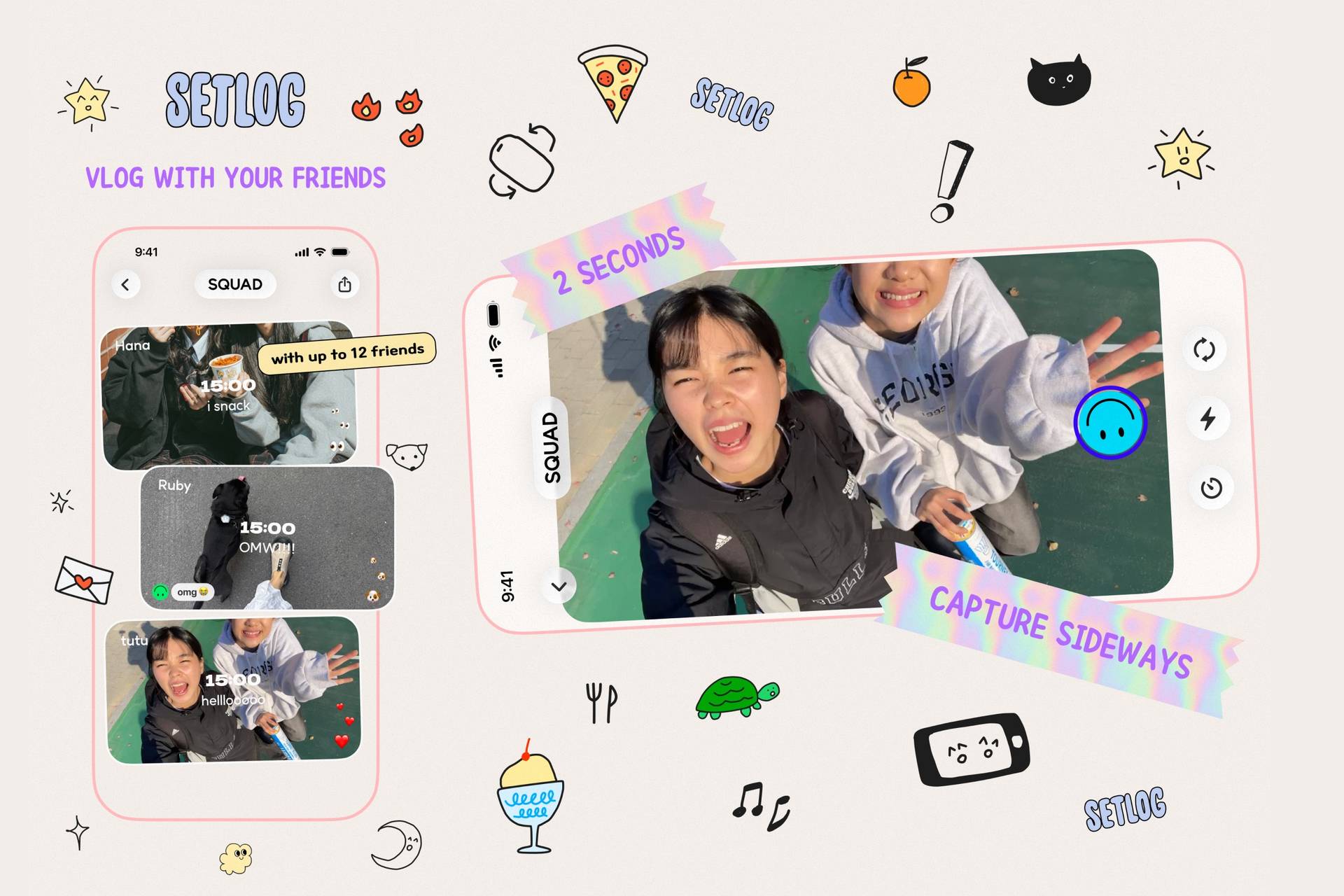
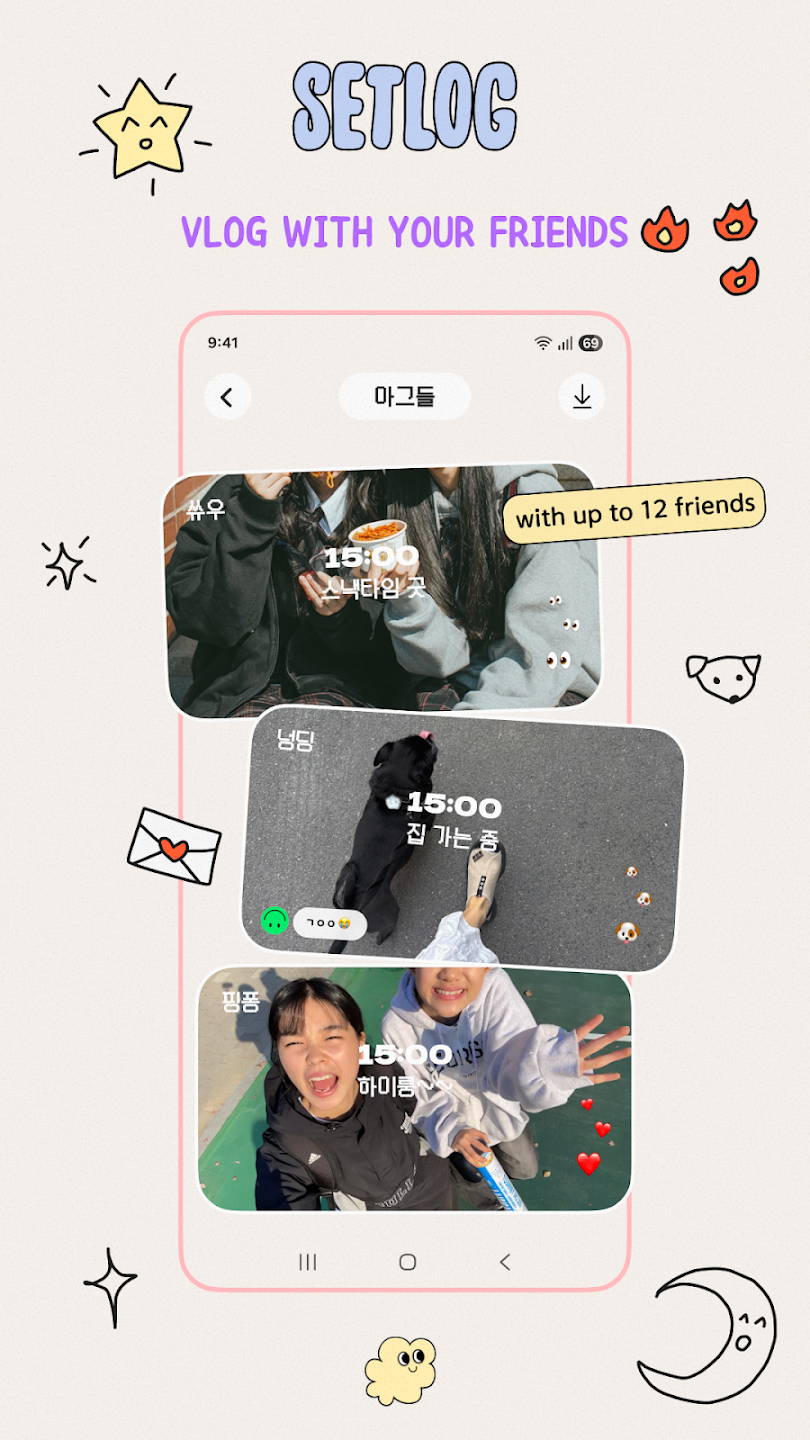
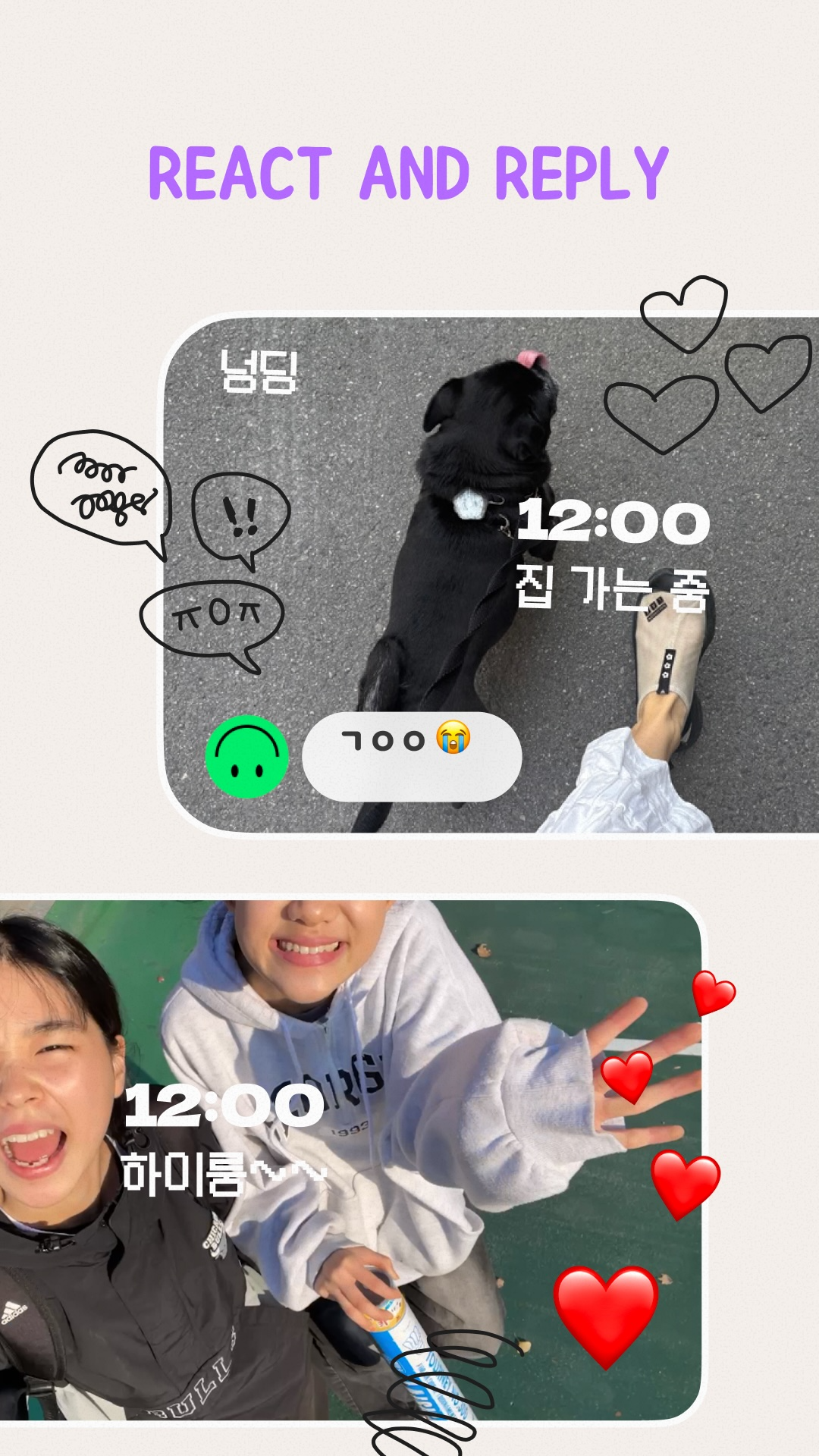
The app is Setlog. It prompts friends to film a few seconds of their day every hour and stitches the clips into one shared video. It launched in Korea on Christmas Eve 2025, hit No. 1 on the country's App Store in March and then spread across Asia.
Today, roughly 10 million users send some 60 million videos on it every day. The company has since raised $12.5 million in a seed round led by Japan's SBI Group. It is now eyeing the US.
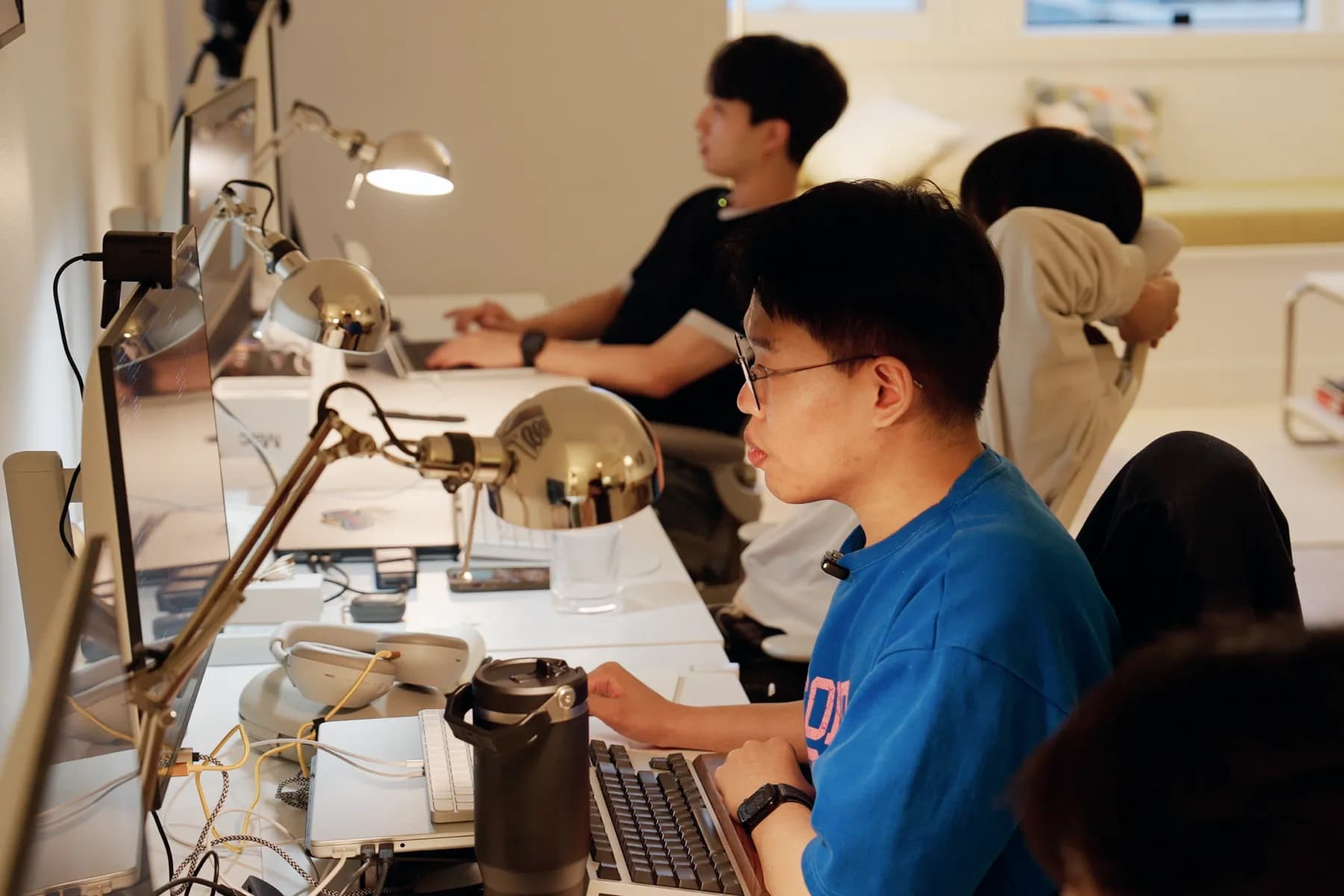
The surprise is who built this Asian hit. The founder is a former Snap designer from America who ran the company from New York. The person who came up with the idea was an employee in Seoul who spent most of a year trying to understand the daily lives of Korean high schoolers, a culture she didn't fully belong to.
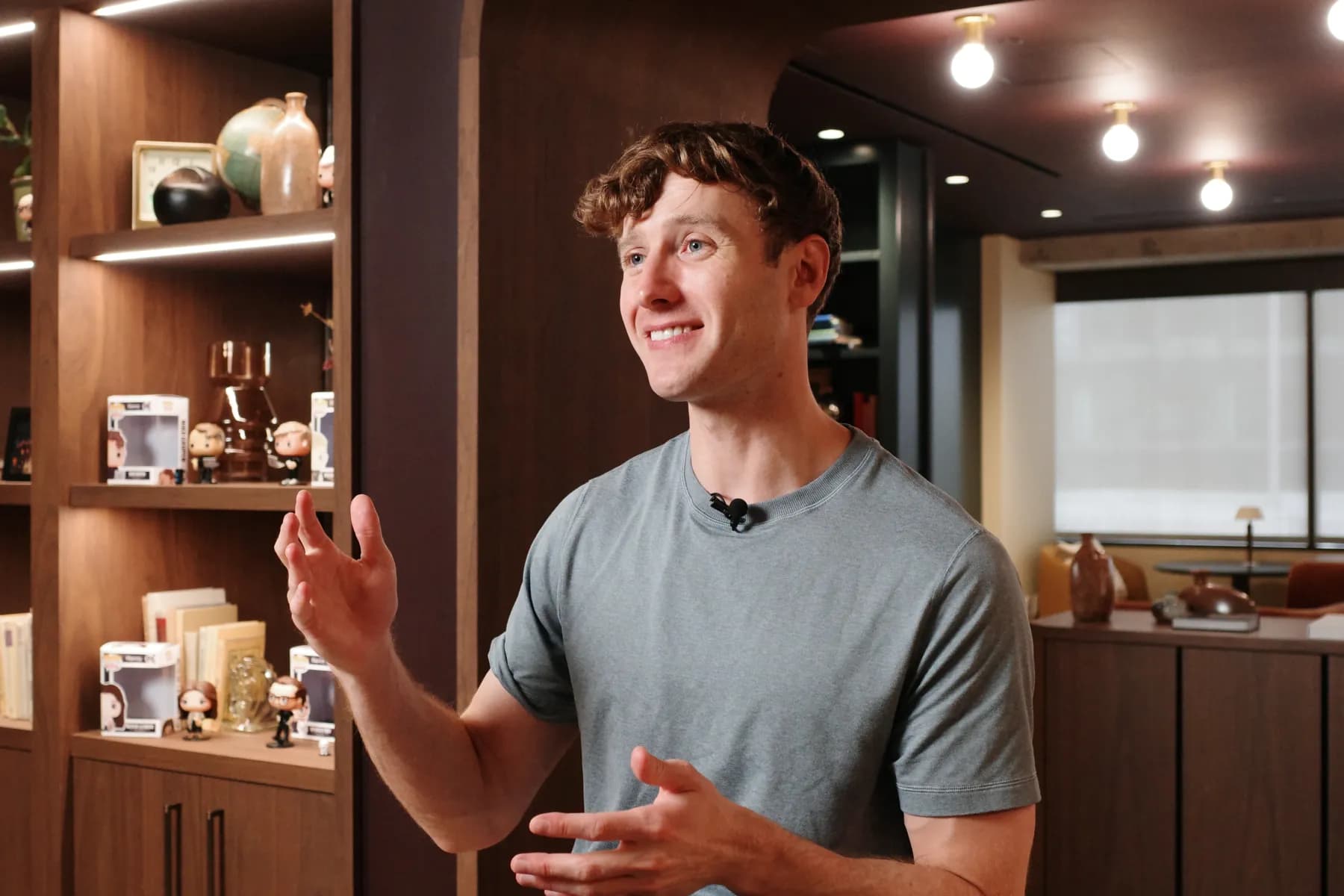
In a podcast interview this August, founder Devin Doty explained where the idea came from. His "growth hire," who was also in charge of social media, "spent a lot of time just observing how Korean teens use SNS and what's trendy," he said. That person shared videos with him "of things that were interesting, and one of them was basically Setlog."
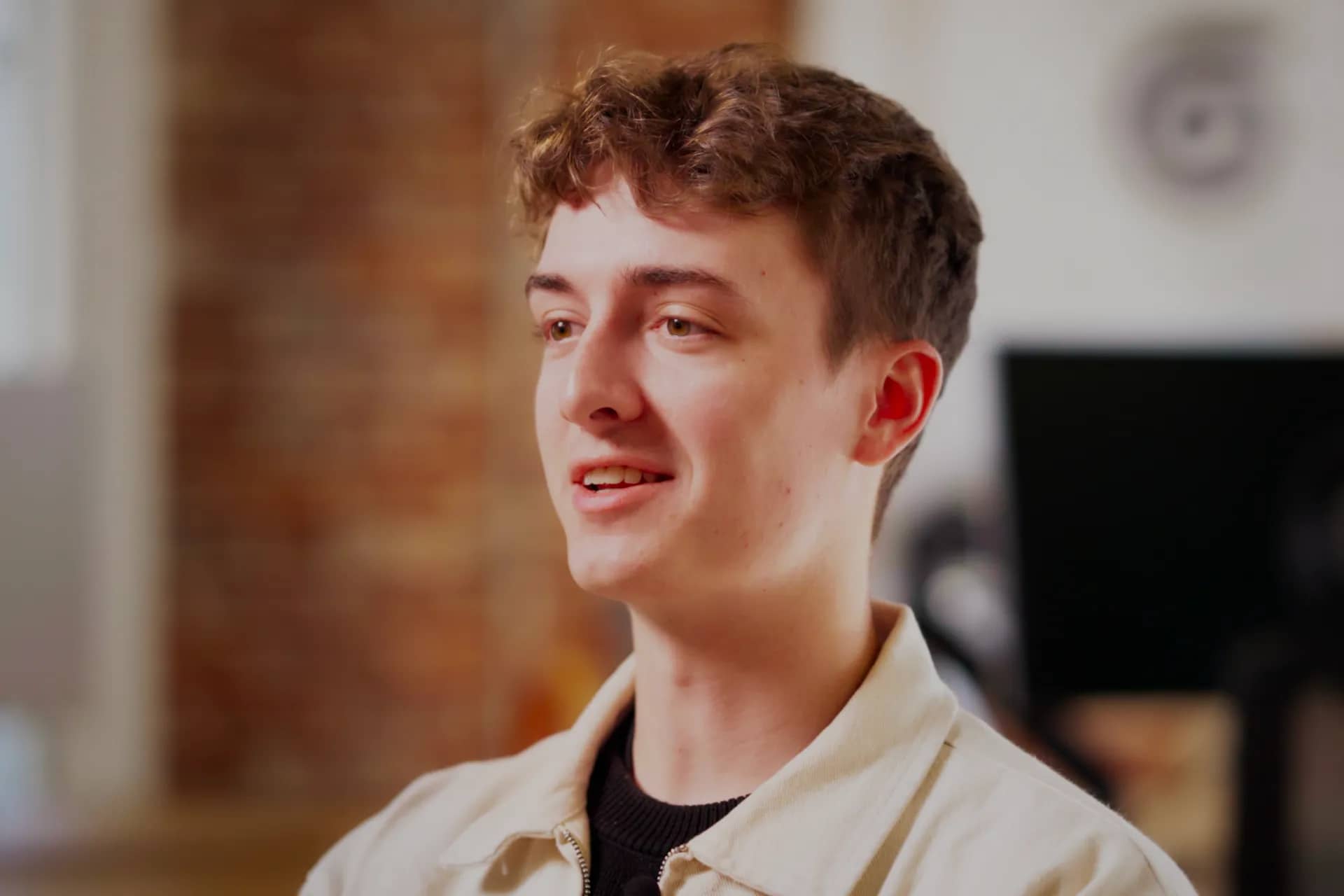
That employee was Mia SeungEun Lee. She came up with the idea and launched it with a fake 11-second Reel that hit 1 million views before the app even existed. She left the company in early 2026, before Setlog's run across Asia. Behind what looked like an overnight hit was nearly a year of misses and a checklist she built along the way.
"The next dating app is not gonna be a dating app"
Lee has been thinking about human connection for most of her life. At 15, she wrote a paper on the "36 Questions to Fall in Love." At 19, she co-founded a peer-education group on healthy dating. She studied sociology at Cornell and found her way to product management through a simple conviction: products shape how people behave.
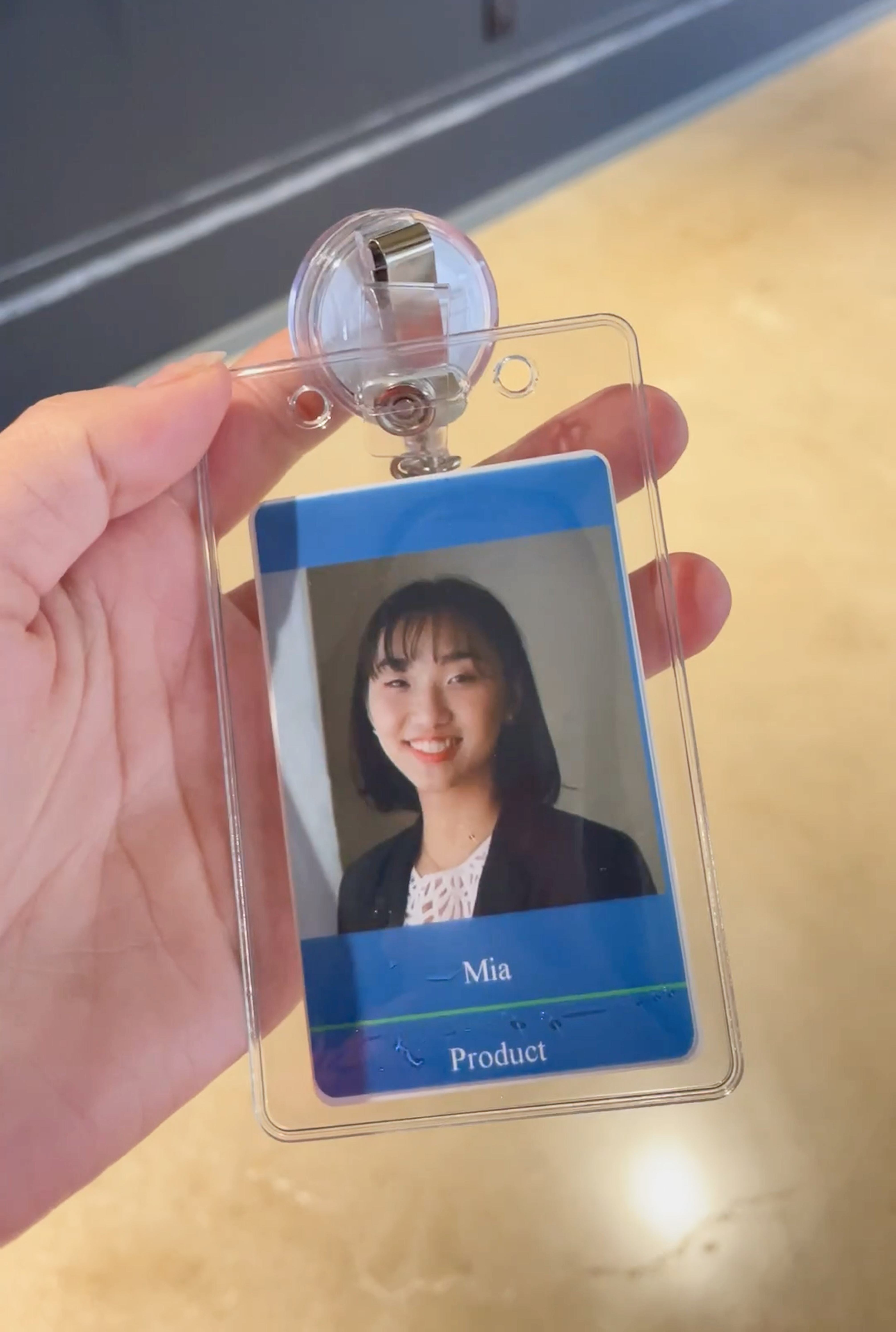
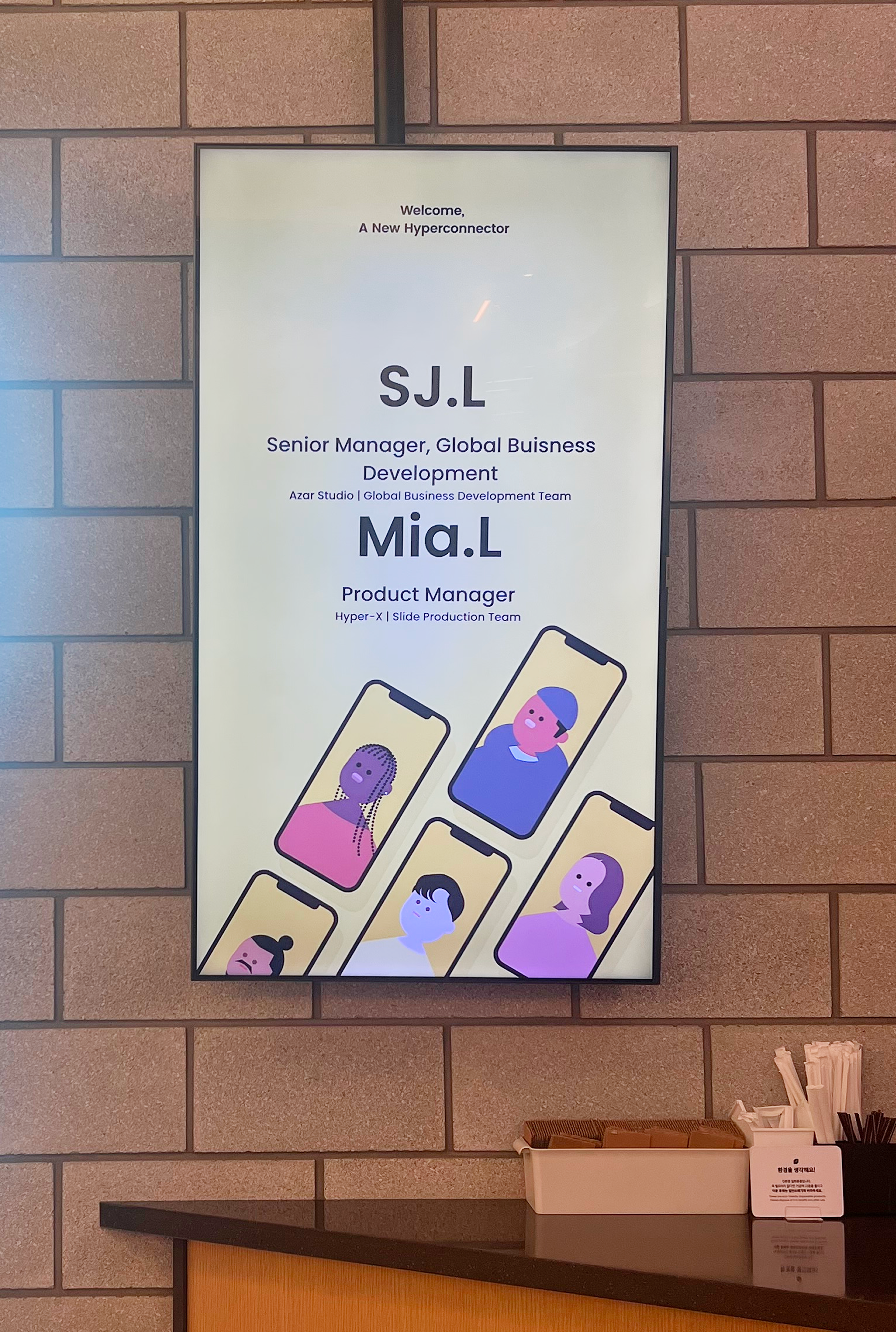
She started her career at Match Group, where she built Share My Date, a safety feature that lets users send date details to friends and was later launched on Tinder. She then moved to Hyperconnect, Match Group's video and social discovery company, to work on the livestreaming app Hakuna.
Ironically, those years only strengthened her belief that "the next dating app is not gonna be a dating app." The big companies had no shortage of data showing that Gen Z felt lonely and wanted authentic connection. What they lacked was a real grasp of the problem behind the numbers, and of how to solve it. Swipe-based matching had a structural flaw. It reduced people to "searchable attributes," boxes to check, and turned dating into "relationship shopping."
Her generation, she believed, wanted community, deeper friendships and "repeat interactions with the same general group of people."
She tested that idea through Antler's founder program, exploring ways to help groups of friends gather at the same cafes, bars and events again and again. Nothing stuck, but two lessons did. The first was a product thesis she still holds: build something that gets groups of people to do things together, repeatedly. The second was personal.
"You need one of two skills to be a founder, which is build or sell. And I had neither."Mia SeungEun LeeWorked on growth at Newchat
A Year of Hooks That Didn't Land
In late 2024, Lee saw a job listing for a social media marketer at Newchat, a stealth consumer social startup run by Doty. She found him on Instagram and sent a DM: "I have no experience in marketing, but I feel like even if we don't work together, we would have a fun conversation." They talked the next day. She was hired to start with marketing and ramp up to product, and the role grew into growth.
The product at the time was an app for sending photos back and forth with close friends. Doty had already picked the market: Korean teenagers, because trends spread fast in Korea and Snapchat had never taken hold there. Doty was in New York, so Lee, in Seoul, became the team's eyes and ears.
Lee became obsessed with finding a hook.
"Especially in consumer social, the product needs to be something that's immediately recognizable. You can explain it very quickly, and the person who sees it will be like, 'Oh my God, I wanna try that with my friends.'"Mia SeungEun LeeWorked on growth at Newchat
The team cycled through ideas. One of the early concepts was leaving anonymous notes in lockers, inspired by a holiday message-board site that went viral in Korea. One of the last ideas, just before Setlog, was using AI to join photo-decorating trends.
Across all those explorations, the main thing that remained consistent was sending quick snapshots to close friends and chatting, part of which now lives on Setlog as the Zip feature. But the Korean students in the beta rarely used it unless the team kept nudging them.
"We were still lacking a really clear and specific use case that fits into their lives, about why they need to download a whole different app and start sending photos on an app where their friends aren't even on it yet."Mia SeungEun LeeWorked on growth at Newchat
Each concept fell short in its own way. Some were fun once but had nothing to do with daily messaging. Some only made sense after a habit had formed, which gave no one a reason to start. Some didn't need a friend at all.
"I think it's really hard to bridge that gap between the first download and becoming a daily thing with friends."Mia SeungEun LeeWorked on growth at Newchat
The launch kept slipping. Lee needed to spend more time with actual teenagers.
Playbook, Part 1: Get Close to Users You Are Not One Of
Lee grew up mostly in Korea, but she went to an international school and moved to the US for college. She didn't know the daily rhythms of Korean teenagers or their slang. Finding what this audience actually wanted in a culture she was only half inside turned out to be the hardest part.
A coffee chat with a co-founder of Blind, the Korean workplace app that expanded into the US, gave her a way in. When he moved to San Francisco, he started hosting parties for tech workers. His advice, as Lee recalls it: give people whatever they want, so you can get close to them and understand them as people.
So she tried everything. She started close to home. She played on an ice hockey team with players ranging from third-graders to 27-year-olds, and she called the teenagers to ask about their lives.


Then she went to stand outside a high school. She first tried on the day of the Suneung, Korea's version of the SAT. She quickly realized she had picked the worst possible day.
"I stood there with all the parents who were anxious for their students to come out, waiting with snacks for them. The vibe was so heavy. For high schoolers, their entire lives revolve around this one exam. It just didn't feel appropriate for me to hand anything out."Mia SeungEun LeeWorked on growth at Newchat
Luckily, her next try worked. It fell on "Pepero Day," when Koreans trade chocolate sticks with friends. Lee handed out the chocolate sticks with a QR code to the survey and a promise of a small coffee coupon. Combined with a $20 paid ad, it brought in 15 to 20 responses.
However, finding students turned out to be easier than getting their time. Beta testing was unfamiliar in Korea, especially for a teen social app, and most students focused on studying, saving what little free time they had for friends.
Newchat's launch party for its first Beta Crew in Seoul, May 2025.Courtesy of Mia SeungEun Lee.
So Newchat turned its "beta crew" into an extracurricular program, with certificates and awards students could use on college applications. In the end, Lee says, the students who helped her most were just two: a hockey teammate about to start college and a student she met through the survey, who became a core member of the beta crew and was among the first to comment on the original Setlog Reel.
In interviews, Lee stopped asking how often teens would use an app. Instead, she had them open their DMs and walk her through the last few photos they had sent: to whom, when, why and whether one-on-one or in a group.
"I tried to find the day-to-day moments that they wouldn't really even think to explain. If I asked them, 'How often do you use this app? Do you feel the need for it?' Those questions don't lead to the very moments when they would actually pull up a product like this."Mia SeungEun LeeWorked on growth at Newchat
The one that stuck with her the longest was a student's most recent photo: a pile of tangerine peels on a desk at her hagwon, a Korean cram school. She was making fun of her friend who had eaten all of the tangerines. The photos revealed two big things.
"It reminded me of why I used to use Snapchat when I was in high school. It's because you're constantly around your friends, so the tiniest things can become an inside joke."
"The other was that a lot of students weren't necessarily sending photos all the time in Korea. Snapchat had created this behavior of maintaining a streak, sending a photo even if you have nothing to show, like the corner of your face. In Korea, people weren't necessarily sending photos unless there was a reason to."Mia SeungEun LeeWorked on growth at Newchat
Any new app would have to give them one.
Lee's field playbook
- Start with the trust you already have. Lee began with teenagers from her hockey team before approaching strangers.
- Go where your users already are, and read the room. Lee's first try outside a high school fell on exam day, when no one was in the mood. Pepero Day, a day for handing out treats, was the right one.
- Pay for time with something they actually want. Lee traded chocolate sticks and a small coffee coupon for survey answers, and ran the beta crew as an extracurricular students could put on college applications.
- Turn early respondents into a crew. Lee sent beta crew members a welcome video with the team's faces in it and paid for everyone to come to an in-person meetup.
- Interview through artifacts, not hypotheticals. Instead of asking how often students would use an app, Lee had them open their DMs and walk her through the last photos they sent.
Playbook, Part 2: Test the Content Before the Product
With the launch stalled, Lee proposed a new workflow: she would independently test a stream of product concepts on Instagram, with different names and different first features, and see what clicked before anything was built. She now says she wishes she had done it earlier.
She studied what went viral in both the US and Korea, saved trends, sent them to Doty and took crash courses on content formats.
"There's product-market fit, but there's also almost content-market fit, where you have to find the right format for whatever product you're trying to launch. What I was trying to do was find the right product that creates the type of content that would go viral."Mia SeungEun LeeWorked on growth at Newchat
It meant a lot of time on Reels, which she didn't love. But spotting a trend and then being able to explain why it was happening, she says, "takes a lot of just going down random rabbit holes."
Those rabbit holes showed her that video trends were overtaking photo trends, and that people had grown used to watching several clips at once.
The Find
Two months into the experiment, Lee was feeling the pressure.
"This was really going to be my last shot at helping Devin achieve his vision. And so I was trying to prove something both to myself and to help make this company successful."Mia SeungEun LeeWorked on growth at Newchat
One genre kept showing up: what Korean teens called "friendship Reels." It included the "day in our life" format, in which friends each film parts of their day and stitch the clips together. The format had started among Asian Americans in the US but never broke out there. In Korea, nobody had a name for it, yet everyone knew it when they saw it.
"It was something people knew about and wanted to do themselves, but it was just such a pain coordinating and editing to make it happen."Mia SeungEun LeeWorked on growth at Newchat
Lee's notebook from October 2025, working out the name and the first screens of Setlog.Courtesy of Mia SeungEun Lee
The idea came in the middle of the night in late October 2025, almost exactly a year after she joined. "I was honestly like, holy shit, I think this is it," she says. She didn't even need to run it against her checklist.
"When I had the idea of turning that trend into a product, it just clicked and it felt really right. It wasn't like I was coming up with ideas and scoring them against a checklist. It was more like this almost vague thing that I was constantly thinking of in my head."Mia SeungEun LeeWorked on growth at Newchat
She wrote Doty a long message. He replied, "I love this."
While he finished engineering the original app, Lee spent the next few days naming the product, mocking up the design and planning the marketing. The name is a pun: set means "three" in Korean, and the trend was mostly among friend groups of three or four.
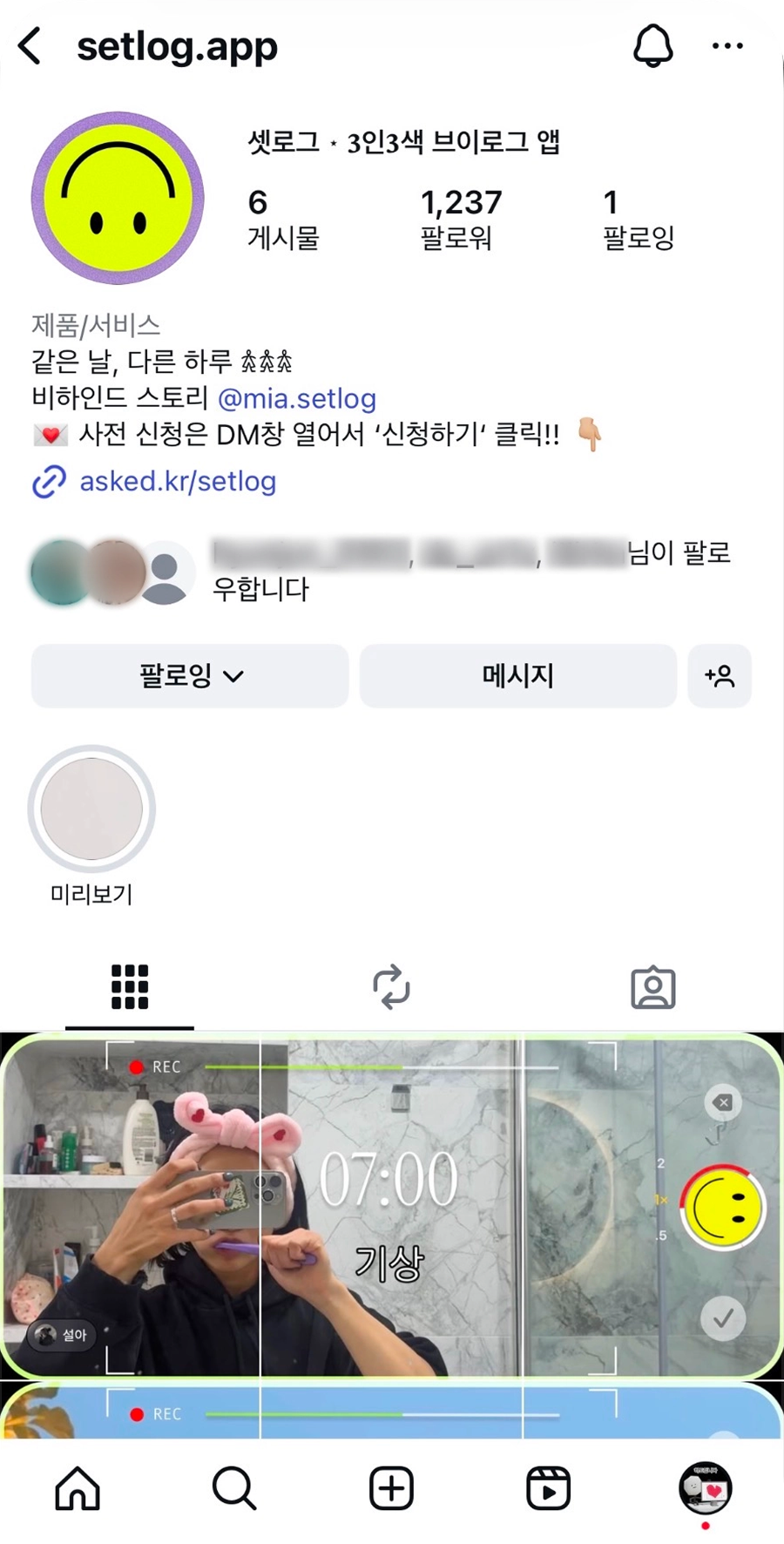
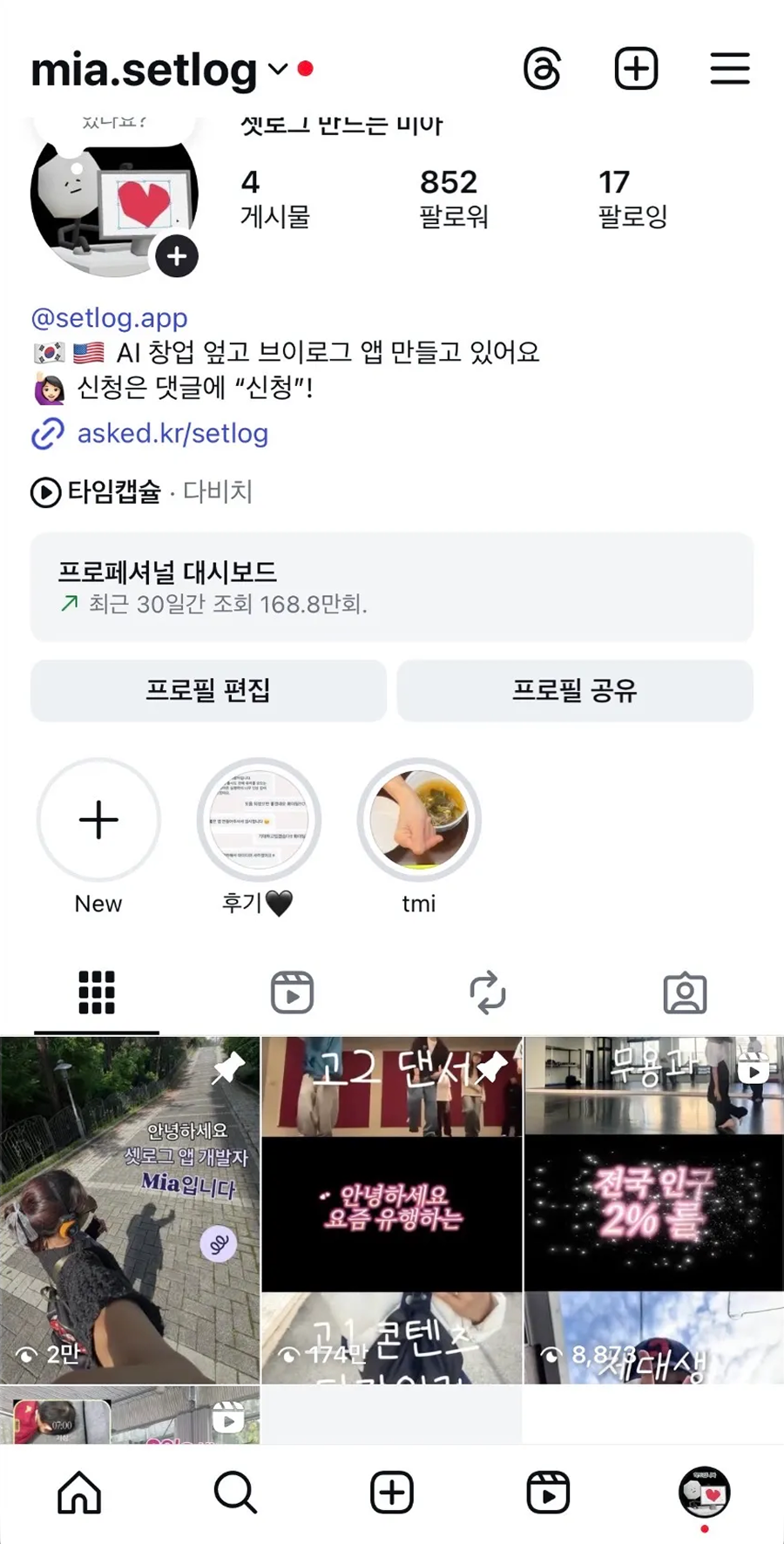
This time, she wanted a face behind the product. She opened a build-in-public account documenting how a Reel trend was becoming an app, and then made the launch Reel.
She faked the app entirely in CapCut, and the 11-second clip took her a week to edit, with every frame planned to show the interface and every line of narration written to be fun and clear. She posted it around 10 p.m. to an account with five followers.
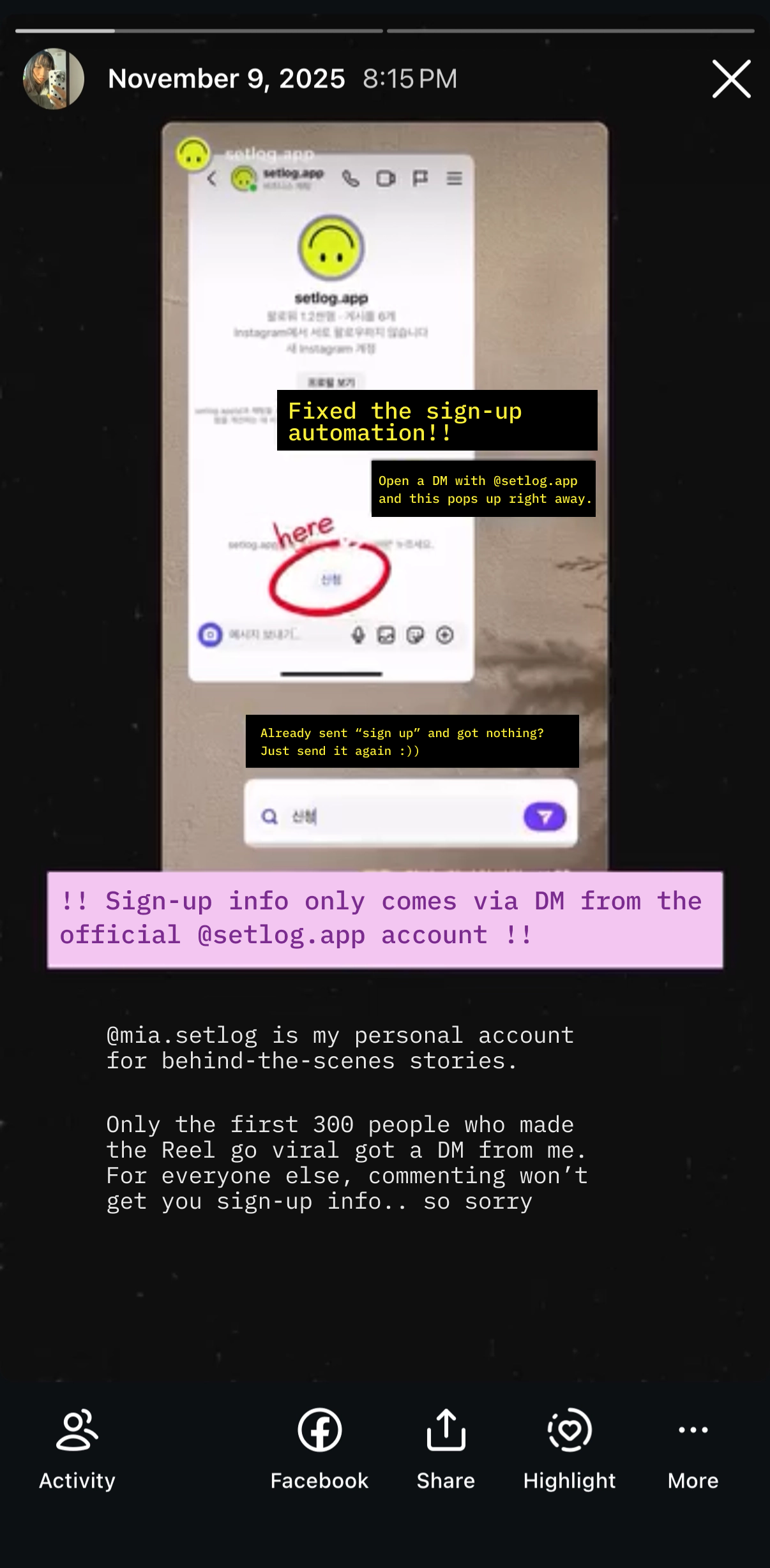
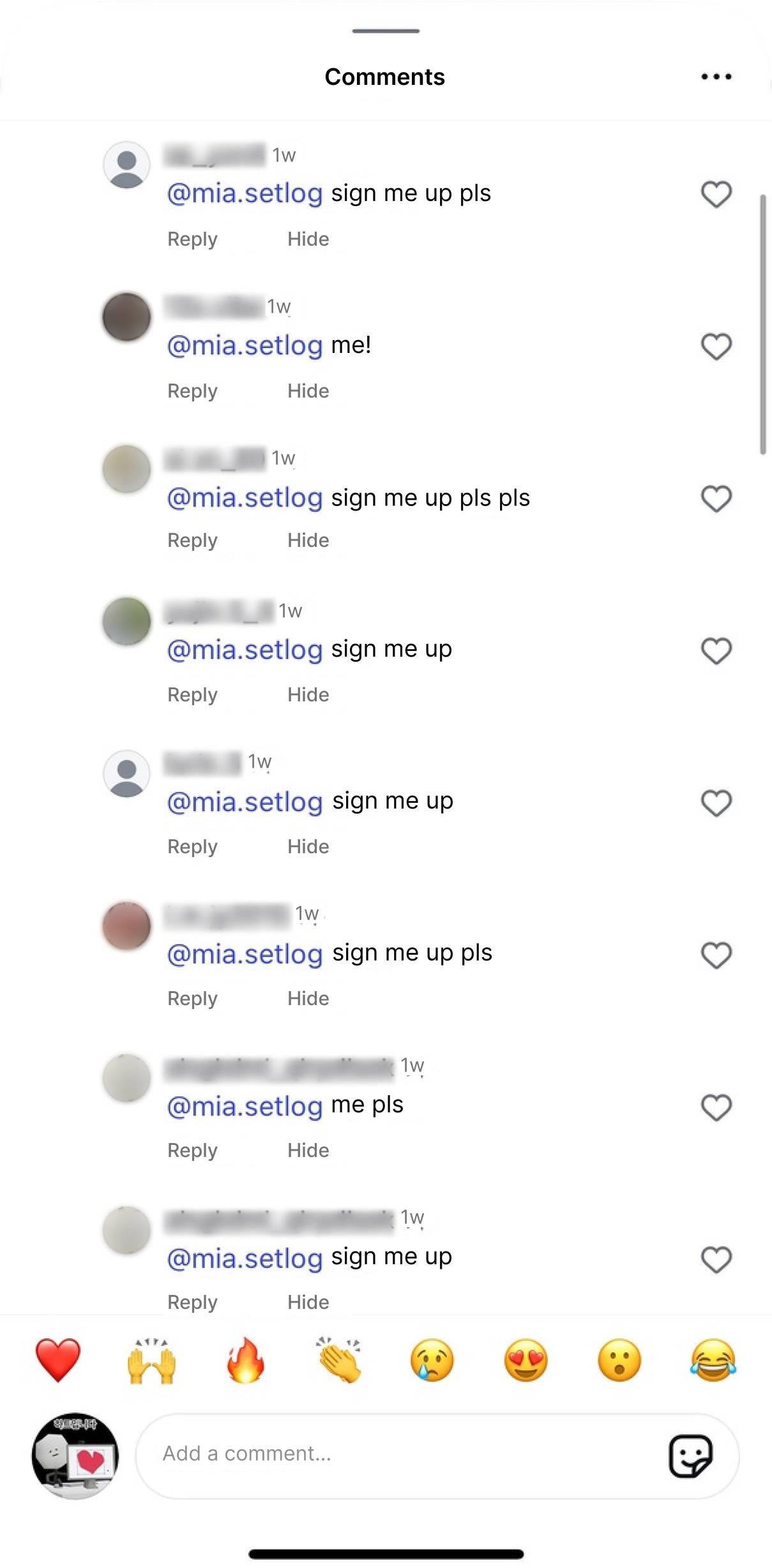
By the next morning, it had roughly 100,000 views. Within two days, it passed 1 million, and somewhere between 7,000 and 8,000 people had commented or sent DMs asking for the app. She hadn't planned for that, so she asked hundreds of commenters, one by one, to DM the brand account to join the waitlist.
The Checklist
Over the years, Lee had built her own checklist for what makes a consumer social product work, much of it from a mentor and a team of consumer social founders she once worked with. Setlog hit every item.
Lee's consumer social checklist
- A clear use case and an immediate need. The hook. Anyone who sees it should want to try it.
- Understood in three seconds. Show it, explain it in a sentence or two, and people should get what it is, why to use it, how and with whom.
- A reason to use it with friends, not alone. In most friend groups, one or two people nag everyone else to download a new app. That first user needs to have the language to say, "This is why you should try it."
- Growth built into the core product. Bringing in friends can't be an optional extra. In Setlog, making a vlog with friends was both the excuse to join and the growth loop.
- A journey that ends in one repeatable core action. Many viral social apps are one-and-done. The core action has to keep going for seven days, then 30, then months.
- An emotional payoff. With Setlog, many early users said the same thing: they felt closer to their friends.
She also shared three signals that help you spot a product like this:
1.
Turn a single-player behavior into a multiplayer one. Before Setlog, one friend had to collect everyone's clips and edit them. Setlog removed the editing and made the whole process "one synchronous, collective experience."
2.
Give everyday people something only experts could do before. Here, video editing and joining a trend.
3.
Make it culturally legible. Log is a familiar word in Korean. Going out specifically to take photos together is already a social activity. Young Koreans also tend to present themselves as a group, from matching outfits to tagging friends in their Instagram bios.
"People don't understand you just by the content you post or the things that you wear. They associate you with who you're with and what you belong to."Mia SeungEun LeeWorked on growth at Newchat
Launch
By launch day, more than 10,000 people were on the waitlist. The team never got to proper beta testing. Lee was handing out invite codes while fielding questions she couldn't yet answer, like whether groups of two or five would work. It was hectic and stressful, she says, but above all exciting, because the tone had changed.
"There were people coming to the account and saying, 'Oh my God, this is exactly what I've been looking for. Thank you so much for making it.' People were showing respect and gratitude, rather than us begging them to try it."Mia SeungEun LeeWorked on growth at Newchat
Messages early users sent to Setlog before launch.Courtesy of Mia SeungEun Lee
An early user told her, "As long as the app doesn't disappear, I will use it for the rest of my life with my friends." A blogger wrote that it felt like "growing with them" because the app changed almost daily.
Setlog had about 13,000 users in its first week, all organic, and reached No. 2 in the social category of Korea's App Store. Within roughly three months, it had about 50,000.
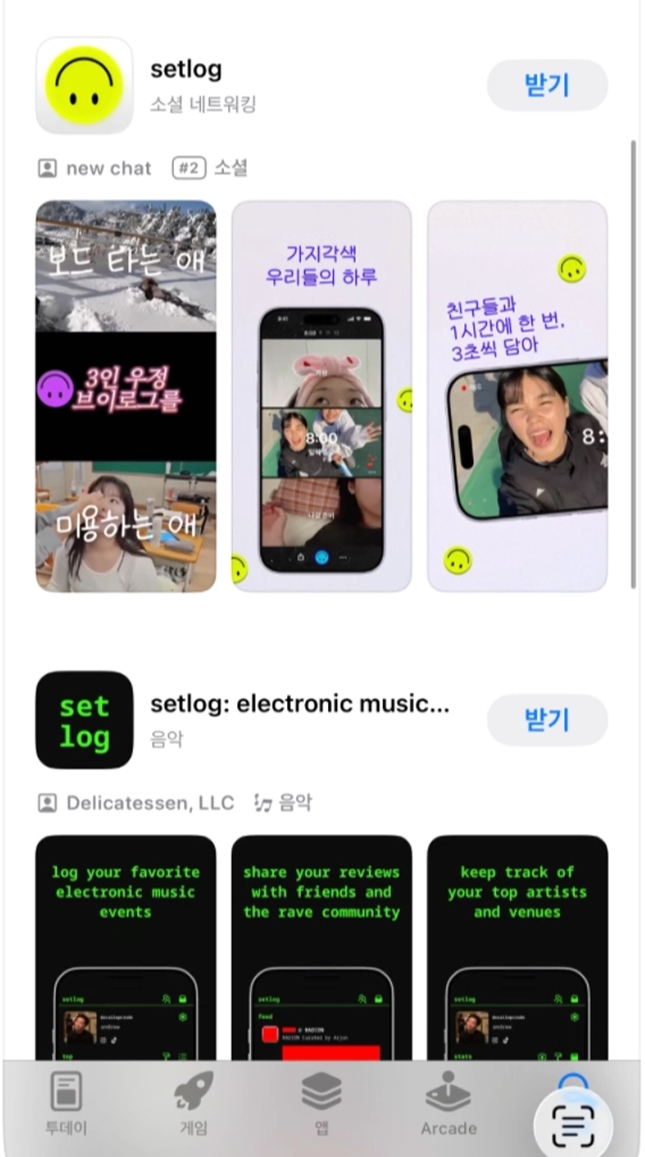
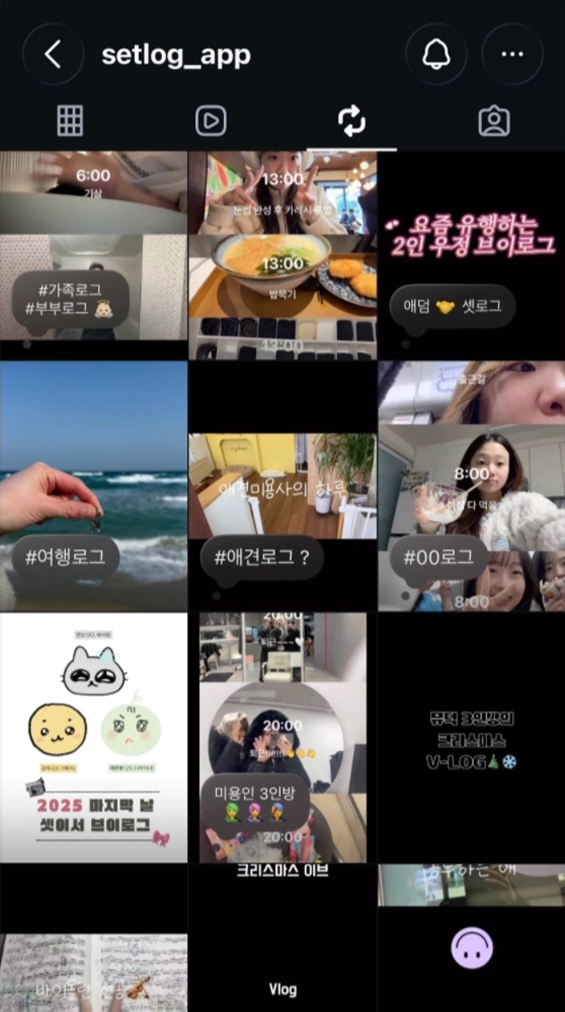
It did all of this on iPhone alone, in a country where most people use Android. Some users even said they would hold off until their Android friends could join. Retention, Lee says, was strong for an early-stage social app. Most of the next few months went to bug fixes, interface tweaks and talking to users.
Leaving, and What She'd Do Differently
Lee's official end date was in February 2026, though she kept handling operations and the transition through March. She explains why she left:
"Newchat was preparing for changes, and I'd become convinced that the direction I wanted to pursue was different from Devin's, since I was always more interested in how to get people to connect offline. I felt I'd helped advance his vision and learned how to take a product from zero to one."Mia SeungEun LeeWorked on growth at Newchat
Weeks after her official exit, the version she launched hit No. 1 on Korea's App Store, spreading first on X and then on Instagram. Asked whether she regretted missing it, she had mixed feelings.
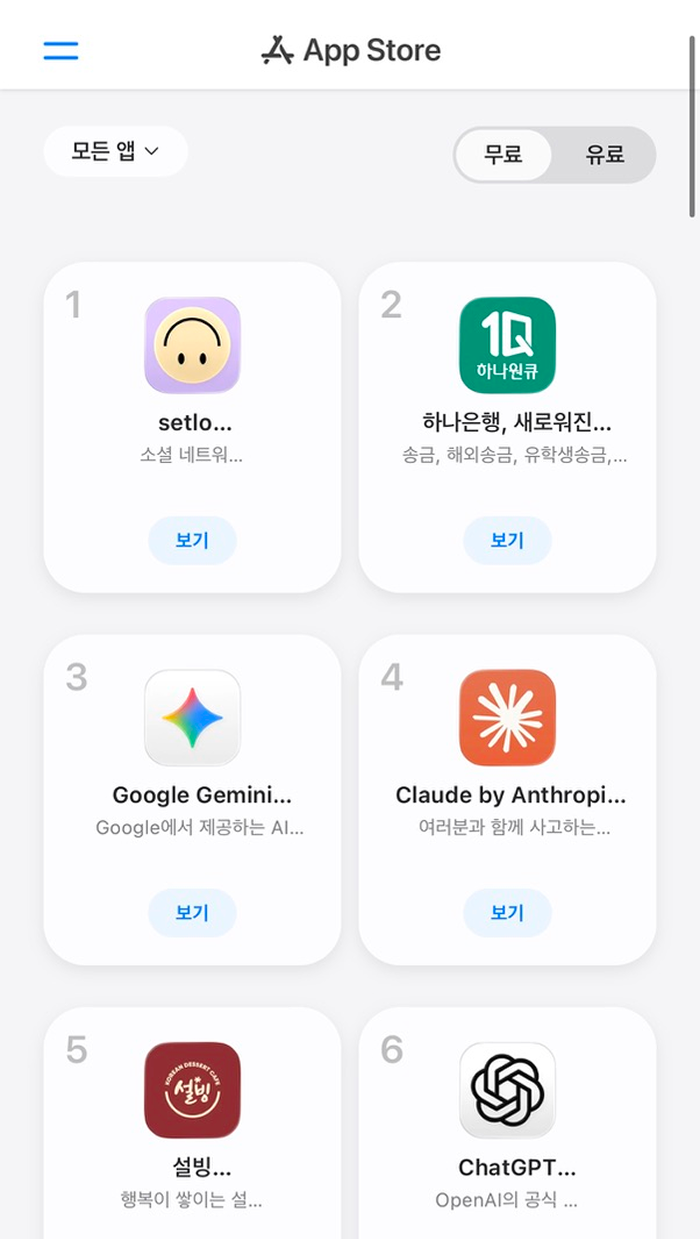
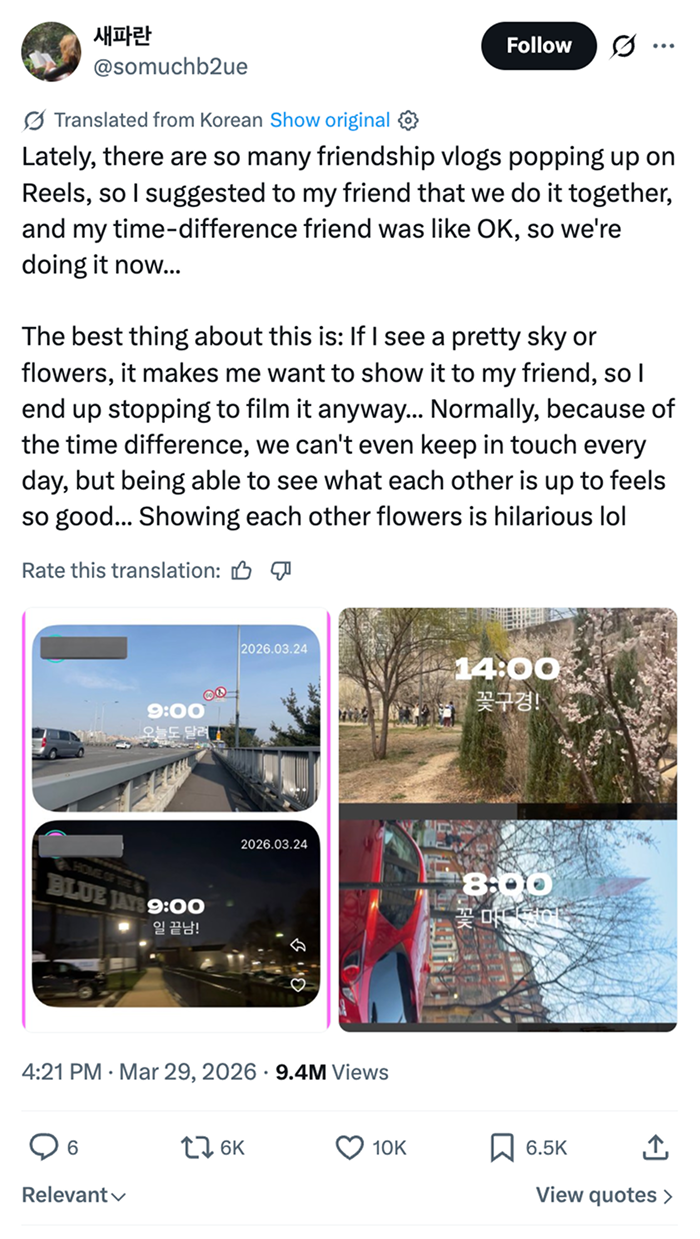
"I was sad that I didn't get to experience the growth at that point, but still happy. Happy for us, for Devin and for myself, just that this had actually worked. And I think it also gave me more excitement to build towards the next thing. So timing-wise I think it was a blessing in disguise."Mia SeungEun LeeWorked on growth at Newchat
Looking back, Lee doesn't put Setlog's success down to luck alone. Luck played a part, she says, but she can trace what worked: above all, "the way the product was constructed for organic growth."
Still, two things caught her off guard. She had never considered growth on X, which she didn't understand in Korea, yet that is where the app first broke out. And the people who turned Setlog into a lasting trend weren't only teenagers.
"The people who made Setlog into an established trend were women in their 20s and 30s, on X and Instagram, saying, 'Hey, did you hear? This is what the kids are doing these days.'"Mia SeungEun LeeWorked on growth at Newchat
Months after Lee left, Setlog's story split in two. The craze faded in Korea, while Japan became its biggest market. Lee, who was gone before the Japan surge, can only guess why. Koreans already share small details of their day all day long, she says. In Japan, Setlog created a completely new behavior.
Building for a Culture That Isn't Quite Yours
Setlog is a rare case of a team finding product-market fit in a culture it didn't fully belong to. An American founder in New York and an employee in Seoul who handled growth and was only half inside Korean youth culture built an app that Korean teens called exactly what they had been looking for.
Lee calls herself "a third culture person" who doesn't fully belong to either the US or Korea. She learned product and growth thinking in the US, then had to learn Korea's internet culture almost from scratch. The hardest part was the language: the slang and in-jokes that only make sense from the inside.
Her advice is nothing new, she admits, but she now knows how much effort it takes.
"The biggest thing is to talk to people and to be where the users are. Not just so you can ask them for favors, but to understand where your problem or the solution fits into their overall lifestyle."Mia SeungEun LeeWorked on growth at Newchat
Being an outsider can even help, she adds, because you notice differences insiders take for granted. The first question she would ask before entering a new market: does the product need to be built for that culture from day zero, or can it scale elsewhere and launch there later? Setlog was the first kind.
Her next venture, aimed at English-speaking users, goes back to the idea she started with.
"Most consumer social products are focused on connecting online. At the same time, our generation is craving community more than ever. My mission is to make community a natural part of everyday life again."Mia SeungEun LeeWorked on growth at Newchat