Jun 14, 2024
First Lesson Taught in Harvard MBA in 18 Minutes
Interview with Thales S. Teixeira, Professor of the University of California
Founder Focused


💡
At a Glance
- Who: Thales S. Teixeira is the professor at the University of California, and former professor at Harvard Business School for ten years. The conversation follows the experience behind the work, including the choices, observations, and working principles which shaped his path.
- What: The interview examines how to unlock customer value chains. It follows the central problem, the decisions made around it, and the evidence or experiences that influenced the next step. Readers get a grounded account of how the subject approaches building, learning, research, leadership, or company growth.
- Lesson: From the speaker's perspective, University of California becomes a practical case study in turning experience into progress. The transcript emphasizes specific choices, constraints, and lessons rather than a polished success story, giving founders a way to compare the subject's decisions with their own company's stage and priorities.
Thales S. Teixeira spent a decade teaching digital disruption to Harvard MBA students after analyzing how startups systematically unseat corporate giants. He observed that high-growth companies do not succeed by chance, but by mapping out everything customers must do to acquire, use, and dispose of products. In this interview, Teixeira reveals founders how to decouple those customer value chains, stealing high-value activities while forcing incumbents into predictable structural traps.
Key Takeaways
Digital Disruption Can Be Engineered, Not Just Intuited
Teixeira rejects the idea that high-growth startups come from instinct. He argues digital disruption follows tools and frameworks you can deliberately design, and that founders who work in an unstructured way simply lower their own odds.
Uber Added No Cars, It Fixed the Matchmaking
There were already enough taxis on the road and enough drivers looking for passengers, but riders could not find them. Uber added no supply at all and instead took out the one broken step in the chain, the moment where riders and drivers failed to meet.
The Only Three Types of Decoupling That Can Exist
Because a value chain contains only value-creating, value-eroding, and value-capturing activities, there can only be three kinds of disruption, and Teixeira uses Twitch, Steam, and Fortnite as his examples. His research found venture capitalists consistently assign higher valuations to founders decoupling value-creating activities.
Money, Time, or Effort Marks the Weak Link
Customers grow unhappy for exactly three reasons. An activity costs too much money, takes too long, or demands too much effort. Teixeira treats rising costs on any of these as the signal that a market has become ready for decoupling.
Point AI at the Activity Customers Resent
AI can be applied almost anywhere, and Teixeira treats that as the danger, because aimed carelessly it creates very little value for the customer. He tells founders to first find the activity where customers are overpaying in money, time, or effort, and start there.
Watch the full interview now on EO's YouTube channel! Below is the complete transcription of the interview. Minor edits have been made for clarity and readability.
Introducing Thales S. Teixeira

Hi, my name is Thales S. Teixeira. I'm a professor at the University of California, and I was for 10 years a professor at the Harvard Business School.
After you watch this video, I hope you will understand that the process of digital disruption, or creating a high-growth startup, can be engineered. It can be designed. If you follow the tools and approaches, you will be much more successful at creating a digital startup than if you just follow your intuition or think about it in a very unstructured fashion.
Decoupling Customer Value Chain
One example of decoupling the customer value chain is ride sharing. Before ride sharing existed, and Uber was one of the first, if you needed a taxi to the airport you would have to go out to the street and try to hail a cab, or call a dispatcher. The challenge was that a few streets away there might be lots of taxis waiting, and none on your street.
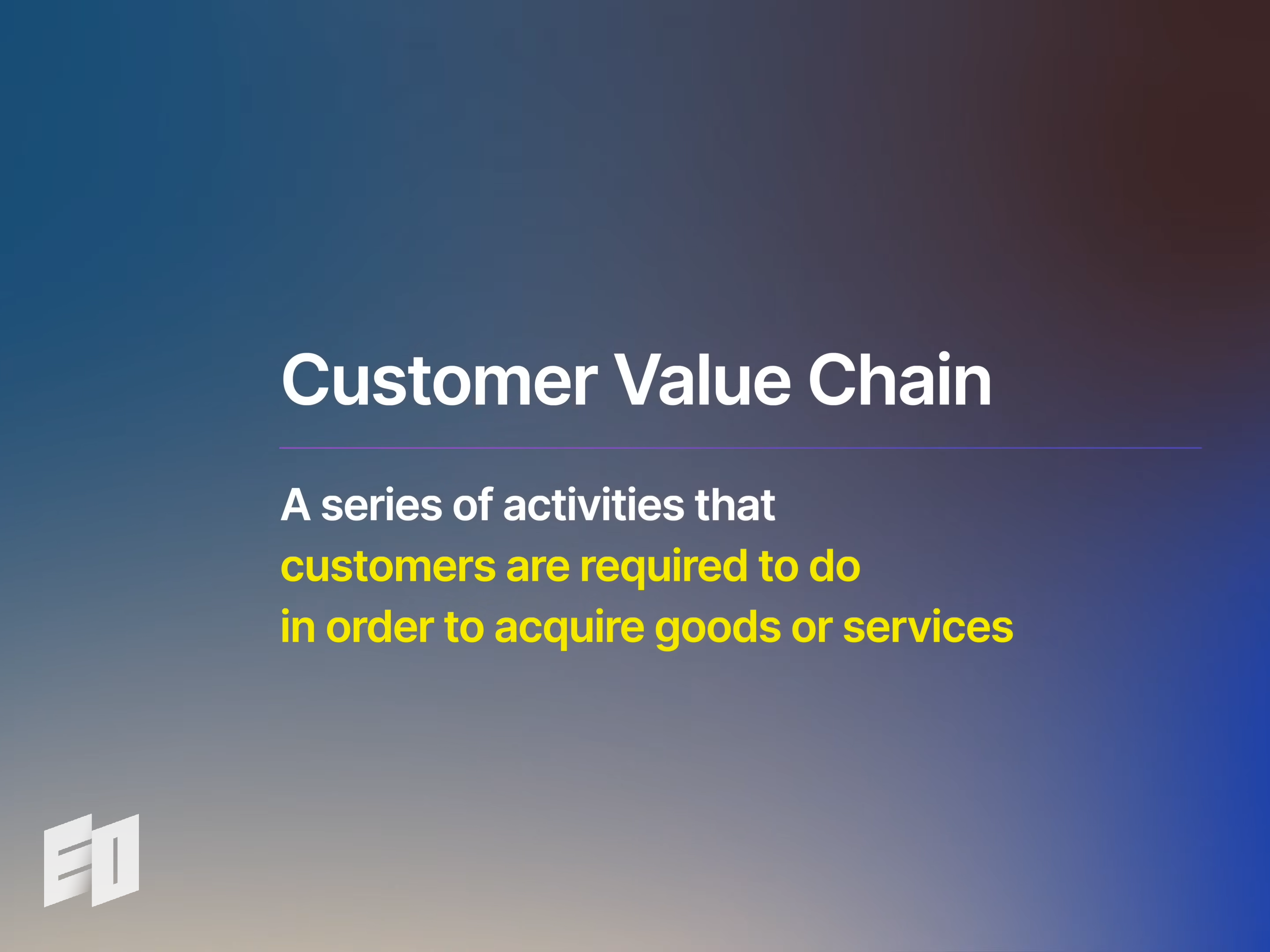
When Uber came out, it came with the idea of facilitating this process of matchmaking riders with drivers. Uber realized that there were enough drivers in the market and enough cars in the market. The problem was that some people didn't know where to get a car, and some drivers didn't know where to get passengers. So Uber looked at the customer value chain, which is all the activities that people are required to do in order to get a car service to take them somewhere like the airport.
After understanding the case of Uber, what you need to understand is that this process is much more common than you would imagine. To really understand how common it is, you need to understand what the customer value chain is. This is what I teach Harvard students and University of California students on the first day of an MBA course. The customer value chain is the series of activities that we as customers are required to do in order to acquire, use, and dispose of goods and services.
For instance, if you want to get a checking account, you need to look at all the available options of banks that can offer you one. Then you go to a bank branch and apply. You provide documents, and they give you a checkbook and other materials so you can open an account and have a checking number. All of these are steps in the customer's value chain.
After an early-stage founder maps out the customer value chain, the next step is identifying the weak link, which is the set of activities that customers in the market have to do with established companies but are very unsatisfied with. The next step is looking at the opportunity to steal that. This is what's called decoupling. How do I define decoupling? Decoupling is the breaking of the links of the customer value chain, often by a digital player, of activities that have historically been provided together by established companies.
When we go back to the case of Uber, Kakao, or many other ride-sharing companies around the world, there is a variety of weak links, or activities that the established companies, in this case taxicabs, do very badly, such as where the cars, the drivers, and the riders are going to meet. In this case, decoupling happened by looking at the opportunity to matchmake better and provide peace of mind for passengers that they will get their car. Once Uber decided to do that, it stole customers from the established companies, the taxi companies, and it grew and started providing more and more activities over time.
3 Types of Decoupling

How many different types of decoupling are there? As I just explained, in any customer value chain there are only three types of activity, value-creating activity, value-capturing activity, and value-eroding activity. By definition, there can only be three types of disruption through decoupling. The first one is decoupling a value-creating activity. I'll give you examples of these three in the video game industry.
Twitch is a very interesting startup. If you go to their website, you look at the list of video games, click on one, and go to a chat room where you see somebody from around the world playing the game you chose. You can interact with the person playing the game, or with other people in the chat room, but what you cannot do is play the video game.
What Twitch realized is something we all know. Playing a video game is a value-creating activity. But watching somebody else play, somebody who plays very well or who is very entertaining, is also a value-creating activity. Twitch broke this apart and decided to offer consumers just the value-creating part of watching somebody play the game.
The second type is breaking apart a value-eroding activity. In the past, many years ago, if you wanted to play a game, whether you bought it or rented it, you would have to go to the store or the video game rental shop, get the media, come back home, and play it. That activity of going there, choosing, and coming back is a value-eroding activity. Most people don't like to do it. So Steam was another startup that came out with the idea that it would stream all the video games. You go online, just like Netflix, and you stream the video game.
Type number three, decoupling value-capturing activities, is the idea that has become the standard for mobile games, the freemium model. You can play the game without having to buy it. Before, you needed to buy the game first. Now you can decouple those activities and just play the game until you realize you like it. You can buy the game afterwards, or you can spend money on virtual items. Fortnite is one of the biggest examples of decoupling the value-capturing activity from the value-creating activity of playing the game.
As I've researched a variety of industries in a variety of countries, looking at the companies that are disrupting through value-creating decoupling, value-eroding decoupling, and value-capturing decoupling, I started to identify the valuation of these startups at any point in time. What I realized is that investors and venture capitalists tend to value the value-creating decouplers much more than the other two. That doesn't mean the others can't grow tremendously. It just means that investors prefer startup founders who are trying to decouple through the process of separating value-creating activities.
The impact of decoupling on customers becomes very strong. When customers get the feeling of decoupling their value chain, they know there is a startup providing one activity, with a lot of focus, much better than the established companies. In the case of Uber, or in the case of fintechs providing digital solutions to consumers, these businesses quickly attract consumers who were unsatisfied. They grow really fast, and they start looking at other opportunities to expand their business. This other opportunity, as I identified it, invariably becomes defined as looking at adjacent activities in the customer value chain and growing outwards.
In my book, I call it coupling. Coupling is the adding of additional activities in the customer value chain after you have done the process of decoupling as a startup. In the case of Uber, Uber first started by saying, we will provide you rides. Then Uber said, we will provide you with delivery of food, and then with delivery of packages. Uber grew outwards in the process of coupling, adding more activities that it was stealing from other established companies in the market.
When I teach my courses to MBA students in the United States, the students immediately realize that just because you can disrupt an industry, or you can decouple, that is no guarantee that you will actually be financially rewarded for it. That's a very powerful insight. Unfortunately, sometimes there's no way to predict whether you will be able to find a profitable formula, a profitable business model, by providing value to your customers while capturing some of this value for yourself in excess of the costs you have to incur to provide it.
As a consequence, entrepreneurs often have to build a business, scale it, learn the economics, and then answer the hard questions. Will I be able to make money? Will I be able to make a profitable business in the long term, or not? You have to try it. You have to have conviction. Sometimes you have to pivot. But there is no fundamental rule of business that says if you provide value to customers, you get a chance to capture value to be profitable.
5 Steps to Steal Customers

The recipe for decoupling involves five steps. The first step is mapping out the customer value chain. Very close to where I lived in Boston, there was a startup called PillPack. What PillPack realized is that if you have to buy and consume many pills per day, it's a very complicated process. They mapped out the customer value chain as going to the doctor, getting tested, receiving a prescription, going to the pharmacy, paying for the medication, and then, once you figure all of this out, creating a plan to remember what time of day to take the medication. Then you take the medication and, hopefully, at the end you feel better. You solve your health problems.
Step two is that for each of these stages in the customer value chain, you need to classify it as value-creating, value-capturing, or value-eroding. In the case of PillPack, taking the medication is value-creating, because it makes you healthy. But pretty much everything else is a value-eroding activity. Going to the doctor is value-eroding. Getting a prescription is value-eroding. Going to the pharmacy, filling out forms, and remembering when to take what are all value-eroding. We have to do them to get the benefit of taking the pills, but in and of themselves they don't create value for the customer. And obviously, paying for the doctor's visit and paying for the medication is a value-capturing activity.
The third step is identifying the weak link. The weak link, again, is the activity that customers have to do but are not happy with the way they have to do it. In the case of PillPack, what they realized is that one of the big challenges, particularly for elderly people who consume many pills per day, is creating the organization scheme that tells them when to take each pill, which pills they should not take together, and remembering to do that.
Step four is actually breaking apart the customer value chain and stealing that activity. In the case of PillPack, this meant PillPack needed to create a way to do this activity on behalf of customers so customers wouldn't have to do it. How did they decide to do that? They created a subscription service in which you, or your doctor, would send the prescription directly to the startup. They would buy the pills and put them in little sachets, little plastic containers formed into a roll. Every day you would pull the roll out, take the medication together, throw the sachet out, and the next sachet on the roll would come out.
Lastly, the fifth step. Once you decouple the process, remember that you are stealing an activity from established players, what we call the incumbents. The established players, both the makers of medication and the sellers, the pharmacies, might want to respond in a certain way. It turns out, as I show in my book, that most of the responses of established companies to decoupling are very predictable. So the fifth step is understanding what is likely to happen and preempting the response. The challenge is that pharmacies could also have emulated or copied PillPack and done the same thing for their customers.
But as PillPack realized, pharmacies have no motivation to do that. If pharmacists start sending medication to people's homes by prescription, fewer people are going to go to the pharmacy, and the business model of a pharmacy today is to get you in the door to buy medication and a variety of other things. The consequence was that PillPack realized it didn't face a strong response from pharmacies to emulate it, and that allowed the company to grow faster. A few years later, Amazon purchased PillPack for more than a billion dollars.
The most important step in understanding decoupling, in order to create a startup that disrupts the market, is really identifying that weakest link in the customer value chain. That's the best opportunity you'll have to build a business that can most easily steal customers from big established companies. That weakest link is the moment in the process of purchasing something where customers are most unsatisfied.
To give an example, in the insurance industry, whether you are buying life insurance, health insurance, or car insurance, nobody likes this process. Nobody wakes up excited about having to buy, repurchase, or change their insurance policy. But even in this process, which is very complex, one of the worst parts of acquiring insurance is comparing policies across different companies. Many entrepreneurs around the world realized this and created a wave of disruption called insurtech.
Insurtechs tried to facilitate the process of comparing, choosing, and signing up for insurance. Again, they identified the weakest link in the customer value chain for a certain industry and built a business around that process to help customers compare insurance policies across different companies. By doing so, they created a lot of value for consumers and built businesses that grew really quickly.
When we think about customers, new opportunities arise when customers are changing their behavior, either because their needs and wants change, or because they have unfulfilled needs and wants. That is when we start identifying opportunities for decoupling in certain markets. When customers are unhappy, we've learned over time that it tends to be because of three factors.
The first factor is that they often find an activity expensive to do. Going back to the insurance industry, many established insurance companies require you to go talk to an insurance agent. You have to get in a car or take public transportation, go there, and see them, and that's probably expensive. Why couldn't you just do it online?
The second element is when customers are unhappy because something takes a long time. In the example of getting a credit card, if it takes two days to submit documents and get approval, and then two or three more days to receive the card, customers are unhappy with that.
The third element is when customers are unhappy because something takes a lot of effort, like going out and getting a DVD for a video game or a movie. Now people just want to stream, which is pretty much low or no effort. Once we look at markets and see rising costs of money, time, or effort to do a certain activity, that is when we see evolving opportunities for decoupling to come into play.
Decoupling in AI Field

AI, and particularly generative AI, has become extremely faddish, successful, and growing. What we're seeing is that established companies are trying to find use cases for AI and generative AI, and startup founders are thinking about opportunities for how to use this tool. It's important to know, number one, that AI is a general-purpose tool. It can be applied in a variety of different scenarios, instances, and use cases, just like the computer, just like the internet. Therein lies the problem. If you don't know how to apply it correctly, you might be applying it to some activity that will create very little value for the customer.
So it's very important to identify activities in which AI can be a tool to really increase value to customers by making a certain activity cheaper, faster, or easier to do. I would suggest, if you're thinking about applying AI to your business, whether you have a startup or an established business, that you really make sure customers are unhappy with an activity, that they're paying costs in excess of what they think they should be paying, and that by using AI you can help them reduce how much money, how much time, or how much effort it takes to execute that activity.
If you learned about decoupling the customer value chain for the first time with this video, my advice is to read my book, internalize the concepts, and then start to apply it to an industry that you know very well. Sometimes, before you create something new, it's nice to apply the methods and frameworks by recreating something you already know. So go ahead, try it out, and try to recreate that business model using the tools of decoupling and unlocking the customer value chain, before you think about trying to identify a new business model in an industry you probably don't know very well. I wish you the best of luck in this endeavor.