Oct 16, 2025
This 25-year-old founder quit Yale and Big Tech to save 100 million lives
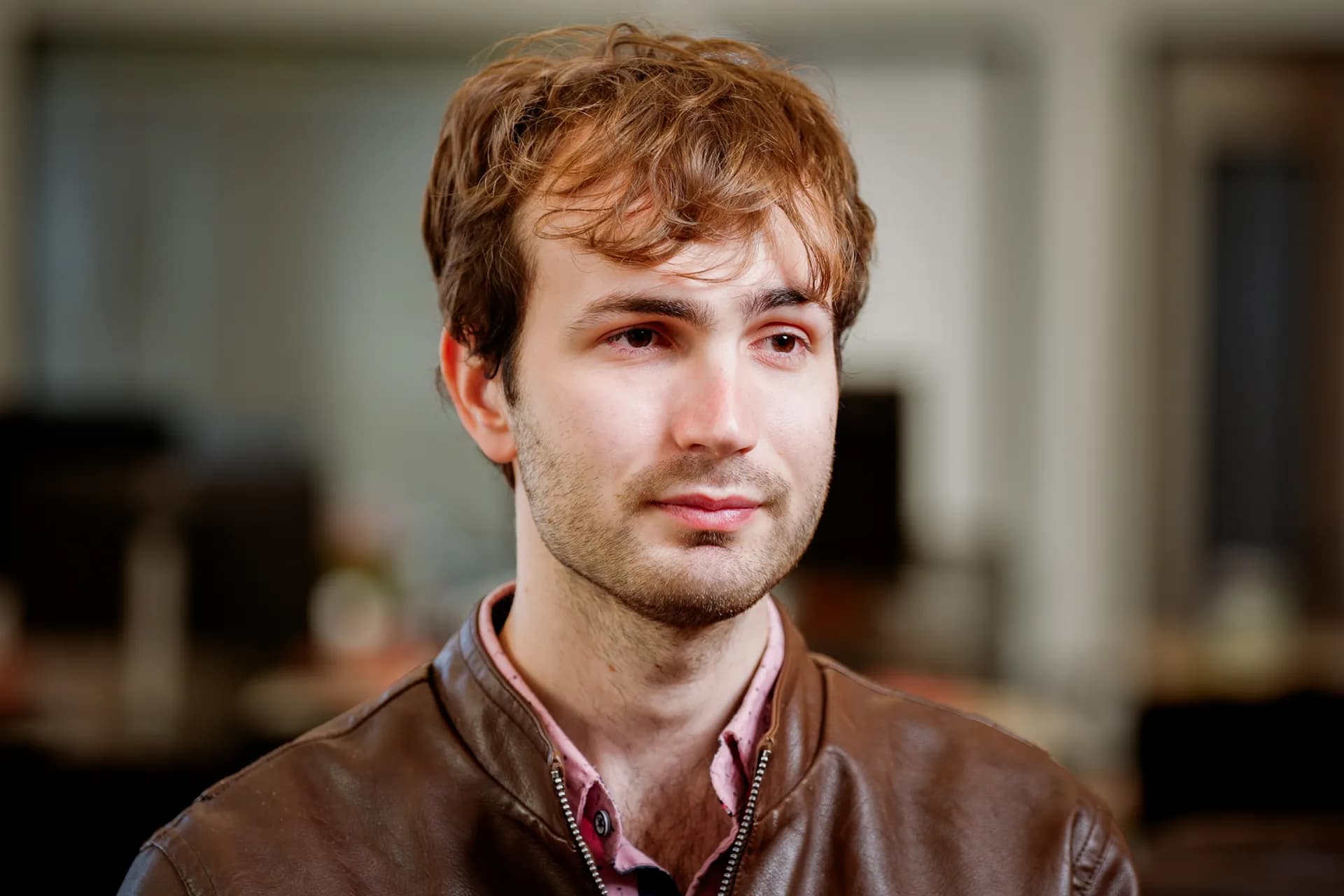
Interview with Michael Chime, Co-founder of Prepared
Founder Focused


0:00 / 0:00
💡
At a Glance
- Who: Michael Chime is the co-founder and CEO of Prepared. At 12 years old, a school shooting in a neighboring town gave him a brutal early lesson that safety is not a given.
- What: Prepared is an AI assistant for 911 dispatch centers that helps them process emergency calls faster and with higher quality.
- Traction: Prepared covers about 100 million people across 49 states, and in October 2025, Axon acquired the company for $640 million.
Michael Chime, co-founder & CEO of Prepared, is revolutionizing America's 911 system. At 12 years old, a mass shooting in his neighboring town gave him a brutal awakening: safety is not a given. Years later, Michael and two Yale classmates dropped out, moved into a small apartment with folding tables, and started building.
Today, Prepared protects 100 million Americans across 49 states. In October 2025, Axon acquired the company for $640 million, validating Michael's vision to transform emergency response with AI. But the real story is how they did it. Michael's insightful playbook is here.
Key Takeaways:
Why Prepared Gave Its Product Away for Free to Break Into Government
Prepared's biggest obstacle wasn't building better technology than legacy vendors, it was getting in the door. The company gave its first product to 911 centers at no cost, betting that once agencies saw a better way, the technology would win the argument procurement never could.
The Bottoms-Up Playbook Prepared Borrowed From Slack and Yammer
Corporate software once conquered Fortune 500 companies by handing tools directly to end employees instead of going through IT, forcing big companies to compete on technology instead of process. Prepared applied the same logic to government, treating procurement as the public sector's version of a locked-down IT department.
Why Integrating With Legacy 911 Systems Beat Ripping Them Out
Most 911 centers still run on infrastructure built for landline calls, and missing a single call isn't an acceptable cost of switching systems. Prepared built its product to work within existing infrastructure instead of demanding centers replace it, earning trust competitors never did.
The Hardest Part of Scaling Is Letting Go of the Job You Were Just Good At
Scaling meant giving up the job he'd just gotten good at, twice: first trading selling for managing salespeople, then trading individual management for building culture. Most founders get stuck because they keep doing their old job long after the company needs them to do a new one.
Why He Ignored Investors Who Said to Avoid Government
Early investors warned that public sector work was slow to change and too small a market to matter. That advice became a reason to go narrow instead of broad, a bet that let Prepared build real depth in 911 before anyone else took the category seriously.
An Ambitious Mission Is How You Win the Talent War
Committing to a goal as difficult as ensuring every 911 caller gets the best possible response sounds arrogant on its face. Naming that scale of ambition out loud is exactly what attracts people willing to work harder than they would for a smaller goal.
Why Michael Chime Says It Doesn't Have to Be Him
Prepared's mission is bigger than any founder's ego. If a competitor mass-distributed the same technology and saved lives on Prepared's back, that would still count as success, because the point was never to be the one who did it, only to make sure it got done.
Watch the full interview now on EO's YouTube channel! Below is the complete transcription of the interview. Minor edits have been made for clarity and readability.
Introducing Michael Chime, CEO of Prepared
I'm Michael Chime. I'm one of the co-founders and the CEO. Prepared is an AI assistant for 911 calls that helps them process the calls better, faster, with higher quality. We are in all but one state, I think, so 49 states. We cover about 100 million in population.
I kind of landed into technology and startups just by seeing that emergency happen in my community as a kid.

"A second student has died from Monday's school shooting in Chardon, Ohio. All schools in Chardon are closed today."News 5 Cleveland
It was an active shooter event when I was 12. I was in third grade, I think. Someone came onsite and brought a weapon, shot students, and I think there were four people who passed away. My town borders the town where the emergency happened. My school walked down because it was so close. As a young kid, I was 12 when this happened, and so you just recognize: safety is something that's not a given.
Technology all around us is moving really rapidly, but it's not in public safety. I was an undergrad at Yale, of all things, so people are like, "Why are you building in public safety? That's a unique life choice."
From a School Shooting at 12 to a Lifelong Mission
I grew up in a small town outside of Cleveland. I think I wanted to play sports after college. I was always naturally drawn toward things that were challenging to do and felt important, and sports was the best way for me to do that.
I probably would have played sports or just taken a FAANG job after school. That's probably what I would have done. I don't think, pre that event, I ever really thought about safety or the idea that I wouldn't be safe. As a kid you're like, "Oh my goodness, this is not a drill," and the teachers are actually nervous. It becomes real quickly that you're not always safe.
Seeing that happen in a place where I actually knew the people, I think it really hit home. Emergencies could happen and they could impact people you actually know, and that was in the back of my head. It was a thought that I had all throughout my childhood.
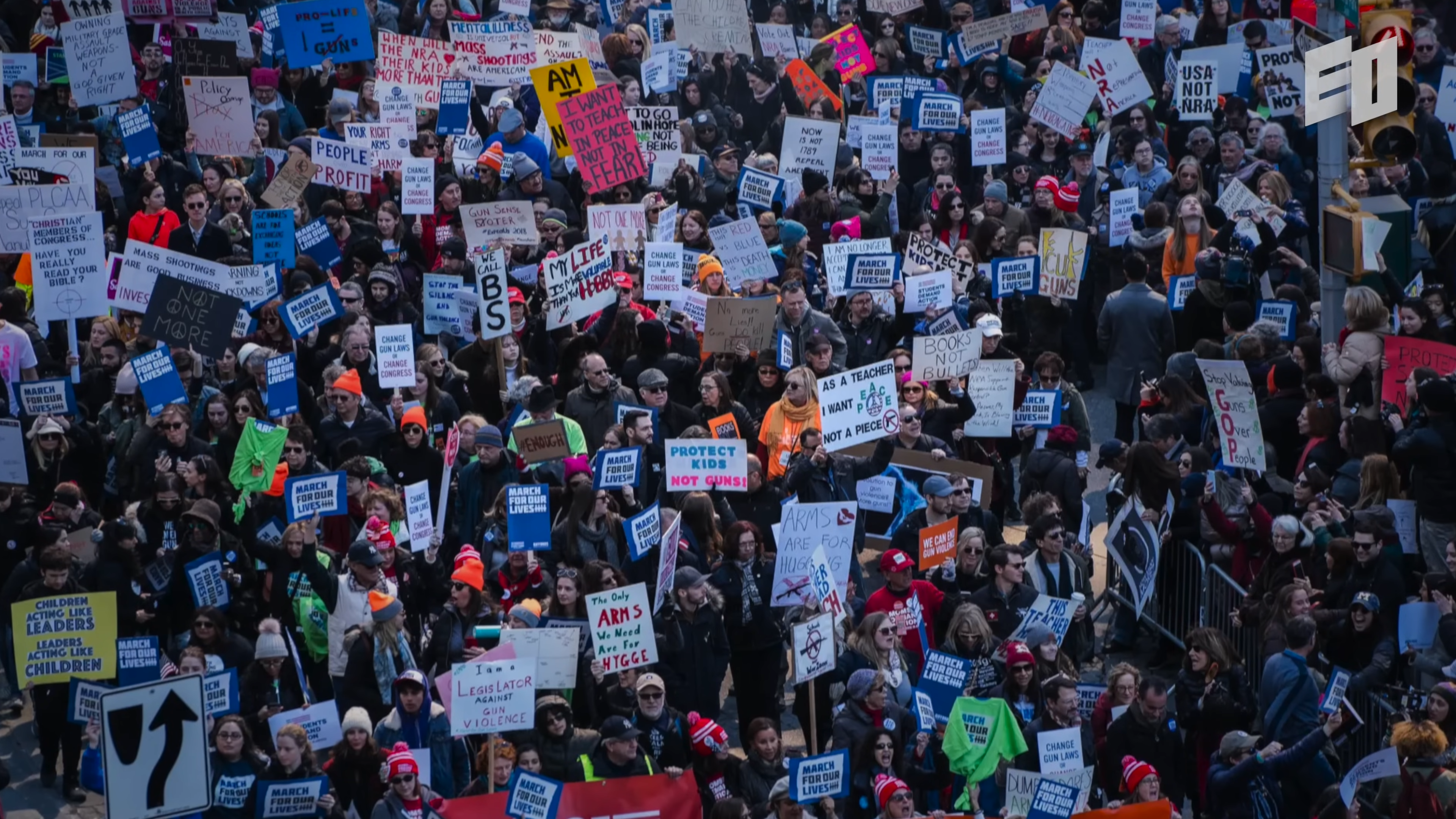
Then, when I went to high school and was thinking about these things more, March For Our Lives was at its peak. Our generation was really starting to take a stand and say, "Hey, this is not so great. We should change things here." And that was compelling and exciting to me.
When I went to college, I met two classmates who turned out to be co-founders later, Dylan Gleicher and Neal Soni. They grew up in a very similar environment. The town over from them was Sandy Hook. So, generally speaking, we thought about it more as kids. We didn't think we would build a company. We just thought we would build this simple tool schools would use in college, and then we would go off and do whatever our jobs were after.
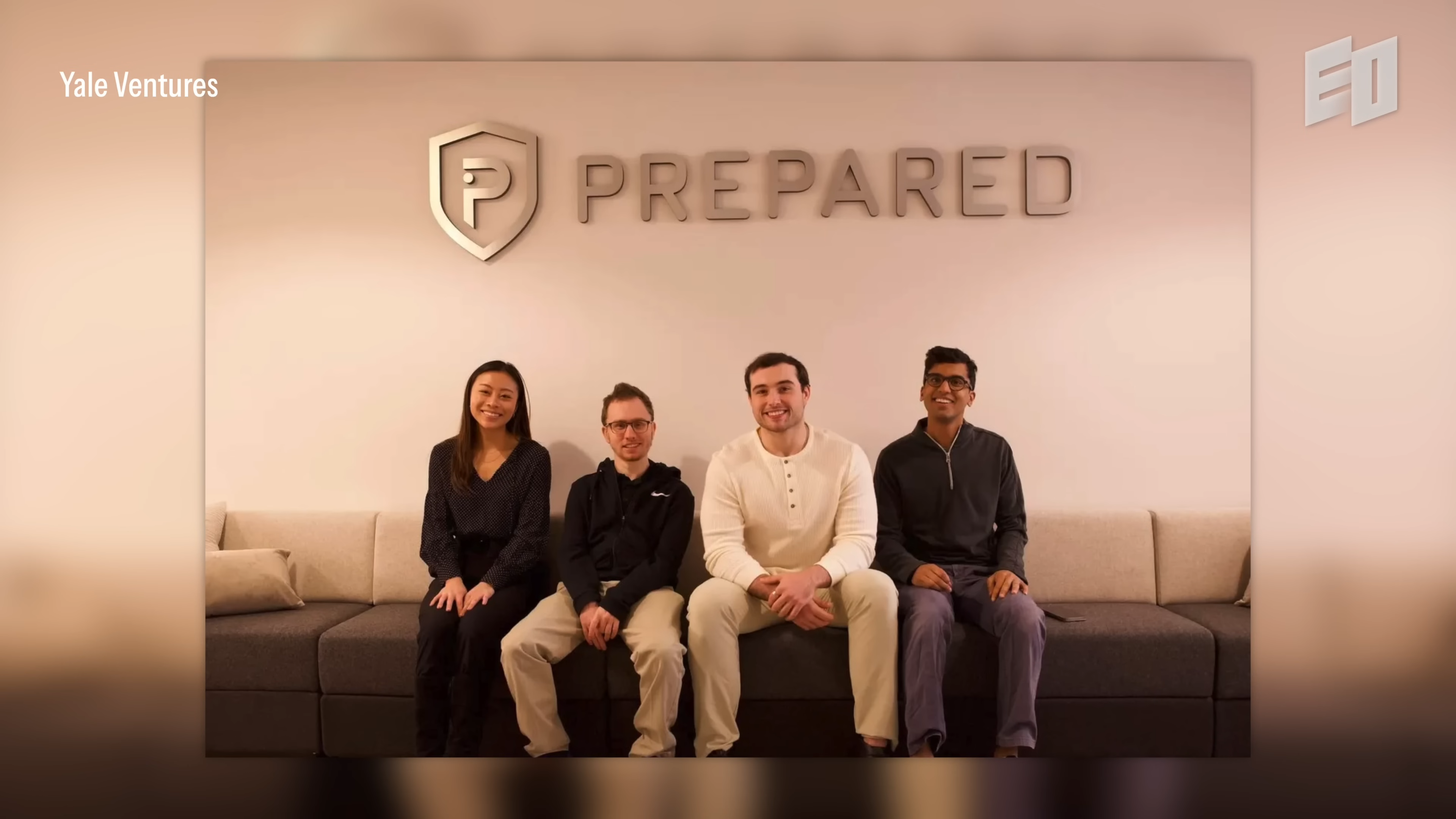
3 Yale Dropouts Develop 'Active Shooter' Alert App
Our first product was an app for schools, and we had a couple hundred schools across the country launch that solution. That's how we got into 911: schools would say they were running a drill, right? They would take a picture of something on-site and then they'd want to share it to 911, because 911 would respond to that situation.
In doing that work, we'd want to share data to 911 centers. But what I realized is that that simple idea, sharing a picture to somebody in emergency, the current 911 systems weren't set up to do that. I don't think many people know this, but still today, most 911 centers are using technology built on the assumption those calls are landline.
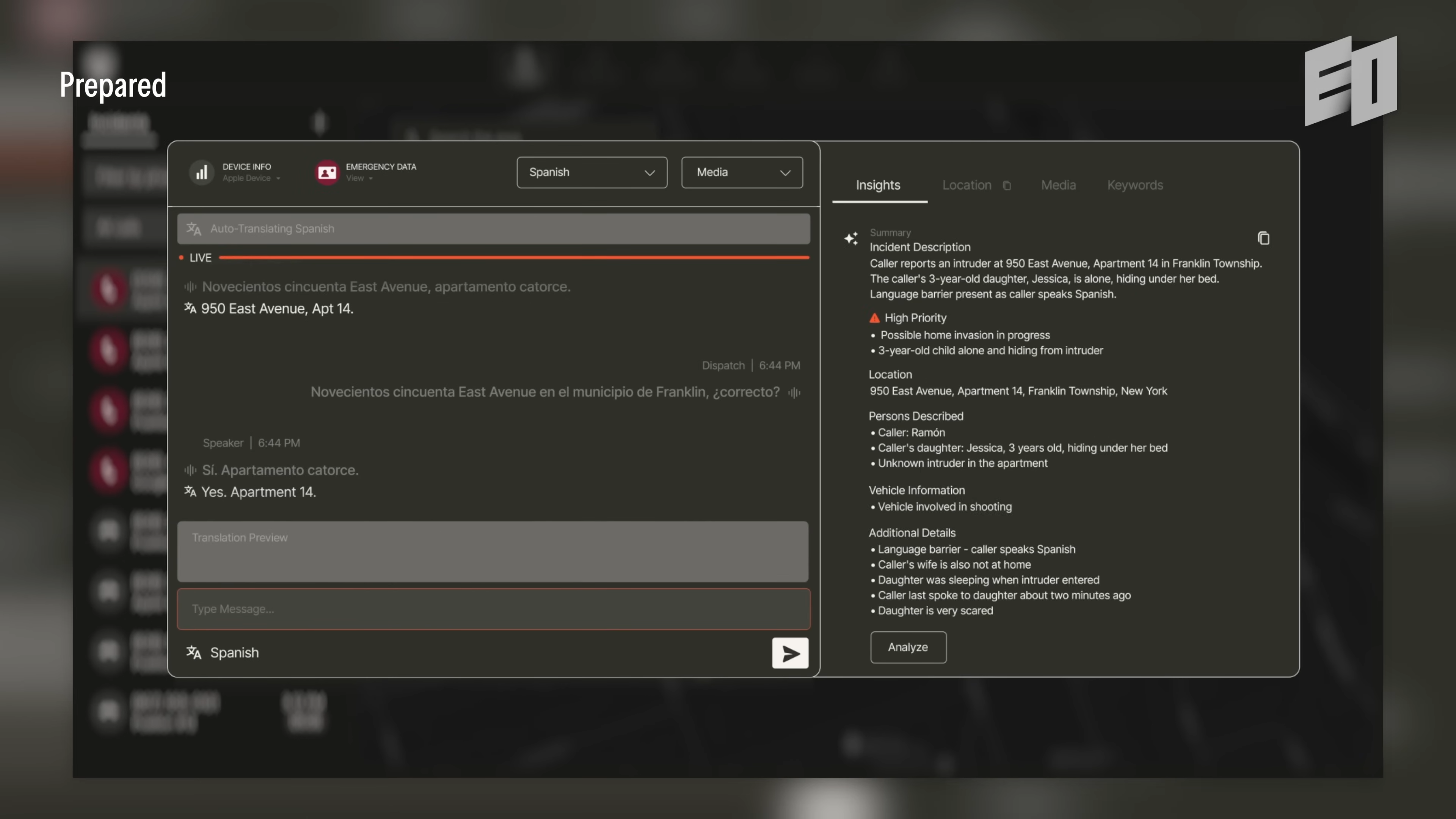
So the first problem we attempted to solve was how do we make sure that when we call, the systems are intelligent enough to take that information in? I think we can hold the line and say, okay, when somebody has that situation, how do we hold a really high bar and make sure that we use whatever technology possible to try to make that the best possible response?
What was going to be senior class at Yale was taking the year off school. I'm like, "Okay, I guess I'll do that, too." I took the year off. That's when I applied and did the Thiel Fellowship. The pitch to my parents, who did not like the idea of me doing the fellowship at all. My mom actually hated it. Both parents are like, "Michael, you're one year away from graduating. Why not just finish up? Why not just go all the way through?" This was, it was nonobvious that we were going to have any success.
Our first office was an apartment, and the master bedroom was the office, and it was just folding tables with monitors. I was like, "Mom and dad, I'm going to go and live here and I'm going to work on this thing." So it was a hard pitch. I said to them what I said here, which I really believe: mom, dad, the problem that we're talking about here, somebody calling 911 and having a really bad experience, that's happening everywhere. I actually don't know if I'll be successful, but I think I'll regret not having tried. And they let me do it.
So this is when I just started knocking on the door of 911 centers, and then they walked me through the center. I remember that moment, walking through a 911 center for the first time, really vividly. I had come in with this assumption that I was about to walk in and see the coolest technology I've ever seen, the best technology in the world. And I saw the complete inverse. I remember the first time I sat next to a call taker, and they were doing their best work, but the guy, he's taking a call.
Someone was very urgent. He kind of had the headset on his ear. He's typing as fast as he can every single detail that this person's trying to describe, clearly missing stuff, and anybody would miss stuff if I was in that same seat. But that dashed stream of consciousness of notes is what someone was going to run into a burning building with, and my mind was blown. It's very daunting to rip out their current technology. If you rip out a center and you miss one single call, that's a really big deal.
So what we had to do was architect: okay, how do we fit within the systems? We sit there and we say, hey, I can appreciate why the technology is that way. It's very hard, it's difficult to switch systems. How do we actually build our solution around your concerns, which are valid, right? I don't think any vendor's done that, or any technology company has done that before. They've just said, "Well, why is that so bad? Let's just rip it out." I think you need something more thoughtful than that to see real change. We should solve it today. We shouldn't wait 10 years to go and solve that problem. So we thought the best, most speedy way to start making progress was integrating with the systems, as opposed to ripping them out.
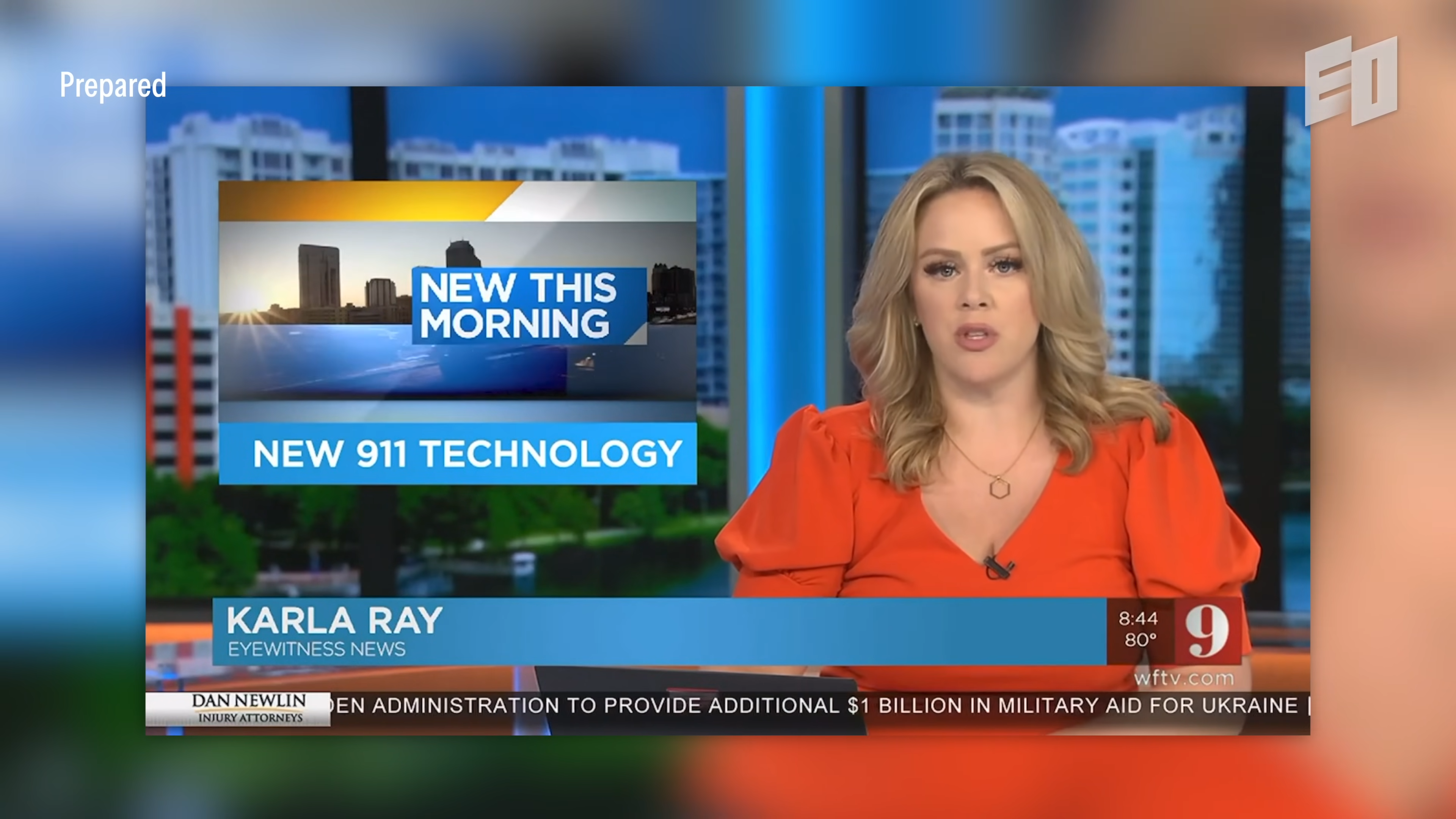
"The next generation of 911. The Orlando Fire Department is upgrading its dispatch center with new software that allows callers to live stream videos and pictures."WFTV.com
I remember when we first turned on our product for 911 centers. Within our first week, people used it to save a life. I think it was a CPR call. Someone calls in, they're with their friend, and they pass somebody on the street that was passed out, and they were like, "Okay, we're going to initiate. We're going to do CPR."
But they had no idea how to do CPR. They had never done it before. The call taker was trying to walk them through it over the phone but couldn't understand where their hands were placed, if they were breathing at the right time. And they remembered, "Oh, I have Prepared," and they turned on live stream. The friends started streaming CPR with the phone on speaker, and the call taker saw it and was able to coach them through live, and the guy comes back to life. That was in our first week of deploying the technology, and you're like, okay, that's pretty cool.
I think early on that was a real driver and motivator, and now we are on track this year to process well over 30 million calls every day. You just get stories of how people are using it to save lives.
Let Customers Evolve Your Product
One way to make sure that we internalize the weight of what we're doing is spend time with the centers. You go into a center and you see somebody take a call and just kind of feel the weight and the pain of not being able to handle that call because they're sitting on LanguageLine or they miss a key detail. The impacts of those things are life-changing. Every new product that you've seen us launch has been sitting next to a center who's actually using it, and we just watch them have a problem and then we go and solve it.
In our first month, where we launched the very first version of our product, which was again you could send a link to a citizen and they could live stream and share pictures, videos, etc., our first month we had like 350 incidents go through the platform. Shortly thereafter, three months later, we had 60,000 monthly messages going through the platform.
We saw a huge uptick in emergencies. You had this large amount of data that you can go in and talk to customers: hey, why are you using it this way? One of the things that became clear was if you had bad information go into 911, that was actually worse than no information at all. Language translation is an example. Initially, we would see people text back that link in Spanish.
We literally have centers go into our platform, get that text in Spanish, copy and paste it into Google Translate, translate it, and then go back to us. They were toggling between these two screens, and we're like, "Oh my goodness, we'll just bring that in." Our first paid product was this, just language translation over text, and centers used it.
The next evolution of our product was, oh wait, why even text them at all if they don't speak English? Why can't we just translate it right on the call? Our next product was: could we plug in, pull out the audio, and start translating on the audio as opposed to moving them to text? We launched that product and centers across the country started using that transcription and translation.
Now, this last year, we started launching new versions, new modules on top of our product because we saw new problems. We started processing millions of calls a month. You just look at those calls and you see, oh my goodness: one, we have hold times on non-emergency calls. And two, when emergency calls come in, I'm rushing between call to call.
Why do we have the critical resource, a human agent, focused on noise complaints or parking tickets? AI could do that job. So we launched a voice agent that could handle non-emergency calls, and now some of the biggest cities in the country are fully offloading those calls to us. We've just kind of consistently looked at the usage in our system and then gone and solved problems.
We've just really gotten focused on how they're using the system, and then what new problems are coming up that they're trying to use the system to solve, and then how we just actually solve those. What I've learned is that often the centers are telling you exactly what you should build and the problems that they have.
If you just stay really tight to them and build those things quickly, you'll probably have a lot of success. Now I spend a lot of time in centers just sitting next to them. I think, even as we've gotten big, I've tried to spend a week or two weeks a month in centers sitting next to them, and it's just been such an advantage for us. How are they actually using it? You'd be surprised how many founders or companies don't do that, just don't sit next to the centers and ask how are they actually using it. A lot of the decisions get made in rooms like this, totally away from anybody that's actually using the technology. It's something that we've tried to stick to as we've gotten bigger.
How We Hacked B2G - Launch Your Product for Free Now
I remember when we were first starting and we were pitching investors, they would tell me, "Don't work in government. Don't work in 911."
One, it's very hard to do, very hard to see change, which is certainly true. But also, there's not much money in 911. It's not a big enough market. And I remember that advice of starting small and focusing on something niche was actually a good thing. So I stuck to that, and it worked out.
One of the things that had blocked innovation was this long, arduous process to even get in working with the center. There were startups in other markets that had faced similar problems two decades ago selling to Fortune 500 companies. For a startup, it was very difficult. Normally that was just like Oracle or Salesforce, or any other big company, was able to actually punch at that weight, and the reason was you had these large systems IT units in public companies.
They would block everything. They would say, "No, you can't work with the startup. We're going to work with the big guy." Naturally, the big companies didn't face any pressure. So the technology got really decayed. You had Fortune 500 companies with really antiquated tools.
Startups started to change their model. Companies like a Slack or a Yammer started to give their product to end employees. At the time that was very controversial. They're like, "Wait, you can't just give your technology to the end employees. You got to go through IT first. You got to do all these things." They did it, and it worked. Bottoms-up was born.
This idea of starting with the end employees, then going back to the kind of processes of the big company. But at least now you have the users at your back. You've already shown them they have something better. The reason that was really innovative was now the large companies could no longer just defend on process.
They had to actually defend on technology because you were getting in, right? Our idea was that government was the same thing, or that procurement was the systems IT equivalent in government, and that if we could get our technology in the hands of end users and make the discussion about technology and not procurement, we would win.
That was a big part of our initial strategy. Our first product was no cost for centers, and the only goal was to get our technology in, build the best solutions, show them that there was a better way, and then we thought that if we did do that we'd be able to expand from there. Our first roughly thousand cities, and we have over a thousand cities now across the country that use us, paid us nothing, but they saw, oh my goodness, there is a better way. That was a big part of our initial strategy.
Startups should really think first-principally about what is the reason the thing that they think should happen has not happened. Every good company starts with a vision of a better future, right, and to you it's clear that that future should come to pass, but it hasn't, right? So it's really sitting on the question: why hasn't it come to pass?
In our space there was a lot of companies that had actually built better technology, but nobody used it, right? The real constraint for us was nobody had hacked distribution. Most times the hard problem with government is actually getting in. Again, a counterintuitive idea, because a business should make money, but if my goal is to get the technology side by side, what should you do? Give it for free.
Remove all the barriers and all the friction needed to get your technology next to theirs. Sometimes it's not obvious. It's not just build a better system.
Unlearn Fast, Change Faster
I think the hardest thing is, especially at the rate that we've grown. We were in that apartment office only three and a half, four years ago, and now here we're plus 100 people, might double in the next year.
I think the hardest thing is the job is changing every month or every day. When we first started, first customers, I was selling. I was going out and having the conversations with them. Very quickly we need to scale that and grow that, and I was no longer selling, and now it was about managing people that are going and having those conversations. Selling it, and managing people who are selling it, are very different jobs. Doing it versus managing it. The hard things for me were letting go of the past job and getting good at the new job, because it's not so fun.
You feel like, "Oh, I'm just starting to get good at this selling thing, and now I got to go and do something I've never done before," and that's uncomfortable. You're not so good at it initially. I learned: how can I get good at communicating why I would do it this way, working through whether their way is actually right, agreeing on some solution, and then them taking it? It's like your baby and you want to do it.
Now, as we have very professional managers on the team, it's really about building a culture. We don't really compromise on: are we customer-obsessed? I think it's incredibly important that even as we get to a thousand people that we're still sitting next to customers. We're not going to budge on that. But there's certain things we absolutely need to budge on and change because the company's changing so much.
How do you do that at scale across a lot of people is very different than management, which was the last job. Letting go of the last job, being like, okay, this is the new job, and being okay with leaning into it and the discomfort that comes with learning. I think that's where a lot of founders get tripped up: they just keep doing their last job even though the company needs them to do their new job.
Sometimes it's really hard because the people want you to keep doing your old job. But if I spent my whole day with one-on-ones with every team member, I probably wouldn't talk to customers very much. I probably wouldn't make very many decisions that are important. So it's difficult to let go of the last job.
I think it's actually easier to build a hard company than an easy one, if that makes sense.
The Hard Way is the Easier Way
There's this thing in the world that nobody's done yet, and us, a group of kind of ragtag people you put together, we're going to change it. That's an inherently confident, maybe arrogant, thing to say. Yet it's very easy to get people rallied around that. When you say something like our mission is to ensure that every time somebody calls in an emergency they get the perfect response, they get the best possible help, people get excited about that. Very, very hard. Very, very difficult. We can't take that lightly. But people get excited, so you attract better talent. You attract people that are willing to work harder toward that thing. It's much easier to get the right talent necessary for a startup if you do the ambitious thing.
So people are like, "Why are you building in public safety? That's a unique life choice." I don't know if I ever thought it had to be me. I guess I still think it doesn't necessarily have to be me. I think that one of the most compelling reasons to work on the company is we legitimately believe if we didn't do the work, it wouldn't get done. I would say most days it feels quite uncomfortable. I did not come out of a dorm room ready to build a company.
Most of the day is doing things that you haven't done before, but you have to do quickly. You have to learn really, really fast. A lot of days I think, oh my goodness, why me? But it does seem true that if we just stopped tomorrow, the world would be less safe. The technology would likely fall back into the status quo, being okay with decay, being okay with antiquation, the result of that would mean everyday lost life. And I don't feel okay with that.
Our work seems to be raising the temperature of the space. As we go out and launch new things that the space hasn't seen before, so too are the big companies, which is also great. I tell the team a lot too: look, if we build things and then they get mass distributed by somebody else and it saves millions of lives, that's freaking great too. Our work will be super successful even if somebody else does it on our backs. That's amazing for the world. It just feels like we have to do it less, that it has to be me.