Interview with Max Brodeur-Urbas, Co-founder of Gumloop
At a Glance
- Who: Max Brodeur-Urbas is the co-founder and CEO of Gumloop. He studied software engineering at McGill University and previously worked at Microsoft.
- What: Gumloop is an automation platform that lets non-technical people, like marketers, salespeople, and ops teams, automate their own workflows. It now runs about 4 million workflows a day for companies like Instacart, Shopify, DoorDash, and Gusto.
- Traction: Gumloop recently raised a $50M Series B.
"50 AI agents running my company" — that's not automation. That's a slop machine. Max Brodeur-Urbas, Co-founder and CEO of Gumloop, just raised a $50M Series B. He got banned from the U.S. for 5 years, built countless failed products from his bedroom, then created Gumloop, now powering more than 4 million workflows a day for Instacart, Shopify, and DoorDash. Here are 5 rules the "AI bros" will never tell you about building with AI.
"50 AI Agents Running My Company" Is a Slop Machine, Not Automation
Replacing your own judgment with a fleet of AI agents that tell you what to do every day isn't automation, it's an admission you've stopped thinking. Max says the best AI users stay AI enabled without ever handing over the parts of the job that need a human.
The Counterintuitive Founder Skill: Hunt for the Reason Your Idea Won't Work
Most early founders build for months hoping someone will validate the idea, wasting entire quarters chasing false hope. Max says you should instead go looking for the strongest reason it can't work. If you can't find one, you actually have something worth pursuing.
Gumloop Was the Consolation Prize From a Failed Product, Not the Original Plan
Max built AgentHub to help people onboard onto the unreliable open source AutoGPT, only to realize the agents underneath it barely worked. He gave users what they actually wanted, reliability and predictability, and that pivot became Gumloop.
A Network Isn't Built at the Cocktail Party
Founders think fundraising requires working a room of investors, but Max argues the opposite. Build something exceptional and investors come find you. His own co-founder is so heads down that most people in the industry have never met him.
Only Automate What You Actually Understand, or You're Building Malware
Max only automates tasks he could do himself by hand. Using AI to build or automate something you don't understand doesn't save time, it just creates uncertainty you can't see coming, whether that's shipping broken code or a workflow that quietly fails.
The Best Hires Were Already Customers Who Loved the Product First
Nearly everyone at Gumloop was hired through the network, and several were customers at Instacart, Webflow, and Shopify who quit their jobs to join. Max compares hiring to dating: you can't beg someone to join, you have to build something so good they want in.
Founders Win by Refusing to Count the Reasons They'll Lose
Max says he could have listed a hundred reasons Zapier or OpenAI would crush Gumloop before he ever wrote a line of code. He argues the founders who obsess over "why won't a bigger company just do this" never end up building anything.
Watch the full interview now on EO's YouTube channel! Below is the complete transcription of the interview. Minor edits have been made for clarity and readability.
Introducing Max Brodeur-Urbas, Co-founder and CEO of Gumloop
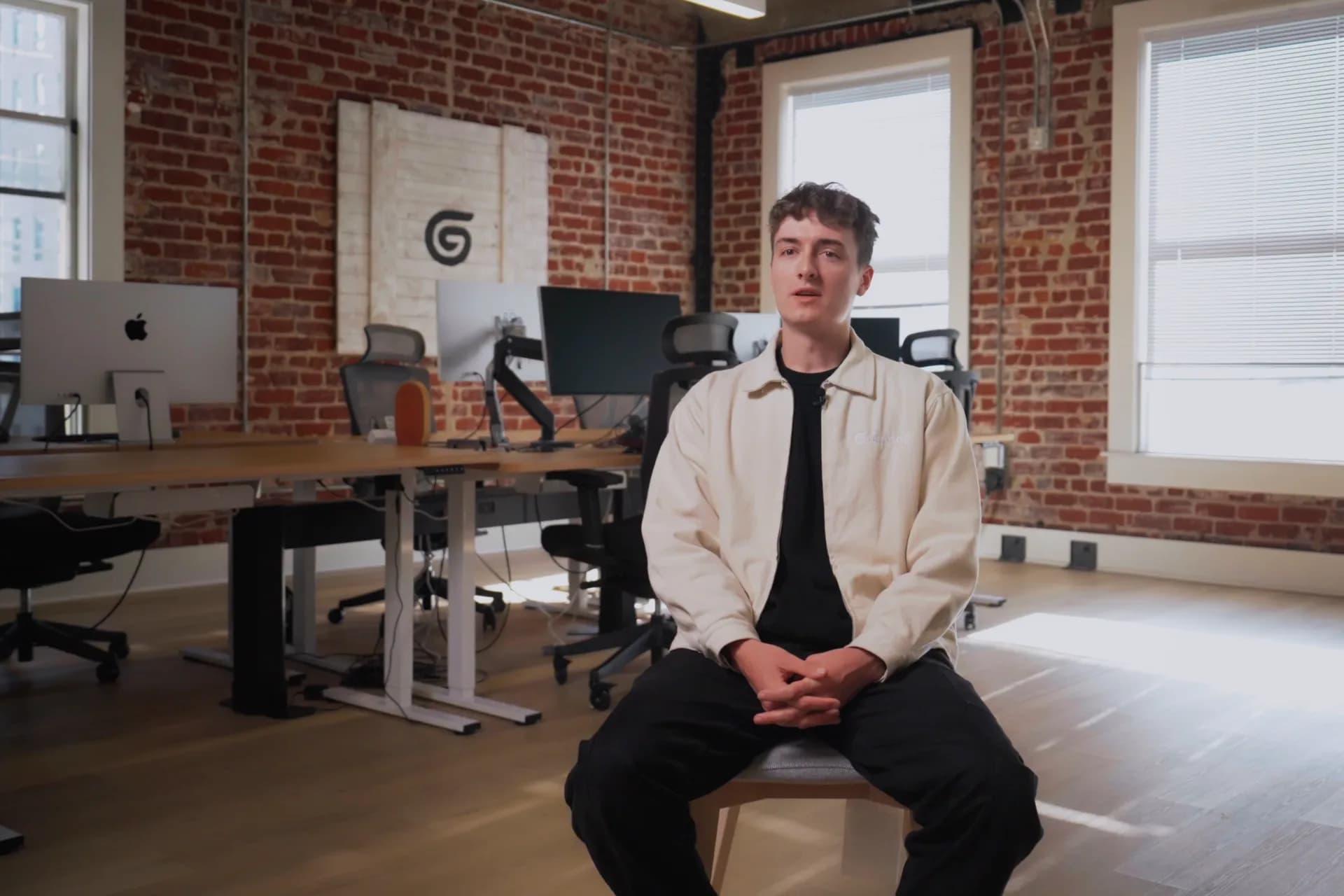
My name is Max. I'm the founder and CEO of Gumloop. Gumloop is an automation platform that is automating about 4 million workflows every day across huge businesses like Instacart, Shopify, DoorDash, and Gusto. We're a team of 15 at this point, scaling pretty quickly. What it does is it lets people who really understand a problem within a business, like the marketer or the salesperson or the ops person, automate their own work instead of having to spec it out and explain it to an engineering team to build that solution for them.
Rule 1. Throw Yourself Into the Ether
I went to McGill in Montreal. I studied software engineering. I really liked doing well in school, so I put a lot of effort into that. I studied all the time, tried to get the best grades I possibly could. My goal all throughout college was just to get a good job. I wanted to work in big tech because I thought that would be the right path to follow. Realized pretty quickly that I hated it.
What most people say when they're thinking about starting a company is, "I'll just go to big tech for a little bit. I'll learn a bunch and then I'll do my own thing." I think that's kind of cope, in a way. A lot of people say that they go and do it, and then they end up getting golden handcuffs and never leaving, and they never actually go and start their own thing. I don't think I've used anything I learned in big tech in my startup at all. I think the only thing working in big tech actually provided is some sort of default respect, I guess, from people, when they realize you're not just a random person, like you actually had a company validate that you're competent in some way. So getting that logo on your resume is helpful a little bit. But I don't think I learned anything novel when I was there. A lot of the things that I do now are motivated by the things I didn't like at Microsoft. Most of the things I do are the exact opposite of how they work in big tech.
What you can do when you're 21, 22, 23, with no responsibilities, no obligations to anyone, those are kind of years you can never get back. If you're spending it just going to your 9 to 5, logging in, fixing a ticket, and then logging off, you're kind of wasting those really, really important years. If we're going to do it, why don't we just do it now? Figure out what the more reliable, responsible thing to do later. I think that was the right choice, just throwing ourselves into the ether and seeing what worked.
I actually got deported from the United States and banned for 5 years. It was nothing illegal or anything. I quit Microsoft and then I moved back to Vancouver. My thought was, I'm just going to live in Vancouver for a year, build stuff in my bedroom. Then one weekend I was going to visit my old roommates in Seattle, and the border people were like, "Where are you going? Where are you staying? What do you do?" So they turned me around at the border after a bunch of questions because I was suspicious. Basically, the suspicion was that I was going to stay for longer than I was saying, even though I was just going to stay for 2 days. But that came with a 5-year ban from the country. That was kind of the moment where I realized I had to build a company, because I had no fallback plan. I decided to just take it more seriously, build things that people actually want, something that could make money.
I was pretty terrified, honestly. I remember driving back from the border to my girlfriend's apartment, just almost in shock. It took me a couple days to settle and calm down a little bit, but after that, it was just focus. I worked for the next 6 months as hard as I could.
Rule 2. Prove Yourself Wrong
I tried everything. I was trying to build anything that seemed remotely valuable. I built video game moderation software in VR, then I did general trust and safety tooling. I did bot detection software for web traffic, a platform like an anti-scam platform. I built a ton of stuff, and then would make an MVP and try to sell it and see if there was interest from the market. Over and over, I tried that, kind of like once a week. I had a different idea, something I was experimenting with, and then I'd learn pretty quickly that it was a bad idea.
The more I did it, the more I got used to proving myself wrong, and I kind of learned the counterintuitive fact that in startups, you're actually chasing proving yourself wrong. That's the best thing that can possibly happen, because you're saving weeks or months of time. In the beginning, I was building ideas for months, and then I would hope that someone would prove me right and say this was worth building. But that's the opposite of what you should be doing. I wasted maybe 3 months doing that. You should actually be hunting for someone to tell you why this won't work. If you can't find a reason it won't work, then you actually have some sort of tangible idea you should pursue. If I could do it all over again, I would be hunting for the strong reason why something won't work instead of hoping for the reason that might. Build as much as you can because that's what provides the most information. I don't think I would have ended up building Gumloop if I didn't fail 10 times before that.
Talking to users as much as you can, it's almost a privilege you have to earn, because in the beginning you won't have any users to talk to. You'll be kind of begging people to try your product, which is not a fun position to be in, but something you have to kind of go through. I think putting them at the forefront of everything you're building, even if they're saying things you don't want to hear, "your product sucks" or "you're not building the right thing" or "it's not solving my problem," that's actually the most valuable feedback you can get.
When I started working on the current version of Gumloop, that was like one of the first days where I stayed at the office till midnight because I was so excited about what I was building. I couldn't get enough of it. That just kind of compounds over time. If you find that thing that will get you to work until midnight and not want to close your laptop, every day becomes easier. You kind of just build this crazy momentum that you can't get enough of.
Do you remember AutoGPT? There was this super popular open-source agent framework. It kind of took Twitter and the world by storm, because it was the first time that it felt like AI could do something agentically and solve a problem on its own. I saw it on Twitter, tried it out. It was pretty amazing. I didn't actually push the limits and see how it would break, but in the first demo, it seemed really cool. So I joined the Discord server, which was growing pretty exponentially at the time, and I would see all these people asking, "What is GitHub? How do I use a terminal? How do I install something locally? What is a dependency?" I realized if I just solved that problem for them and built this nice little UI, then I'm doing something interesting.
My thought was I would learn how to build a front end, so it would be a good use of time. I didn't think it would become anything special. But whenever anyone would ask in the Discord server for help setting up their local environment, I would send them a link to AgentHub, which was the first version of it. After building it for a couple days, I was like, "Oh, this could be like GitHub for agents. If agents are useful, I could have the platform that you host them on, that you can interact with them on." That idea kind of crumbled after a few days, when I realized the agents weren't useful, which was the aha moment.
I had a platform that people wanted to use, but they were frustrated with, because the agents were so unreliable. So I kind of gave them what they were secretly asking for, which is just reliability, predictability. All of their use cases were so simple that I thought I could just build a framework that lets them automate the steps one after another. That kind of just naturally grew into this crazy automation platform. It was for developers, because it was an open-source project. But the audience that really went crazy for it were non-technical. They were like business admins at a company, or ops people, or HR people, who were just enthused about the idea of AI actually solving a problem for them and automating their work. So realizing that the actual audience was 80% non-technical, that was when I realized I need to build something that is approachable for them, that feels fun for them to use, that doesn't frustrate them with all the complexity. That was kind of the motivation behind the simplified version of AutoGPT.
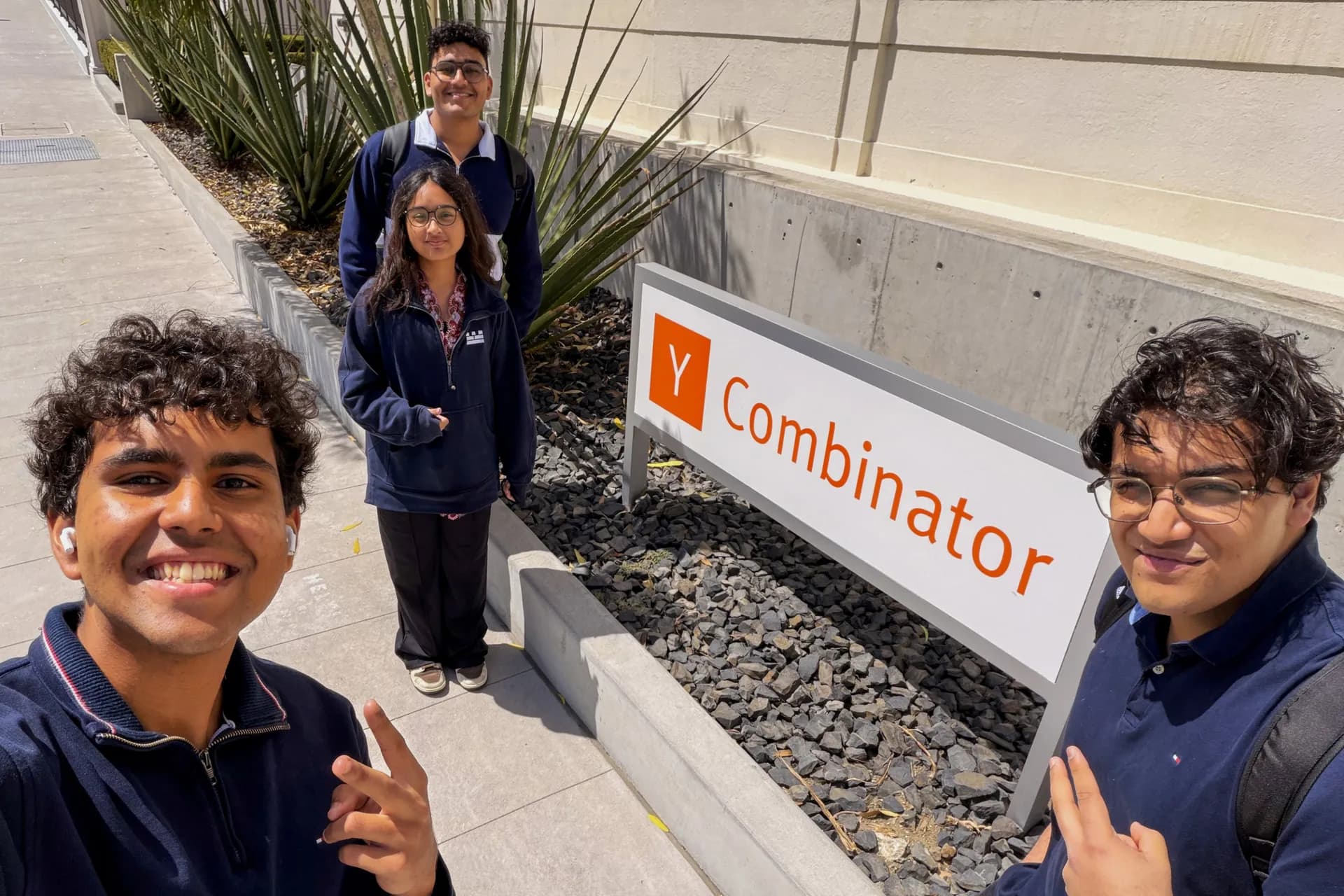
We got into YC 5 months before the batch started. For that 5 months the product was still completely free. We knew that we were going to turn on pricing at some point. During the batch, I think in the first week, we turned on pricing. We made the product $20 a month, because we couldn't imagine charging more than ChatGPT. But our first paying customer was just this guy named Kai, who paid $20. We freaked out. It was like the greatest moment ever, seeing the Stripe notification pop up. And he's still a user.
Rule 3. Real Networks Aren't Built at Cocktail Parties
I was stuck in Canada during all of YC. So I had all of the pressure of needing to build something amazing and live up to the expectations that we had for being in YC, but I didn't have any of the distractions. I was just in a small studio apartment in Vancouver, in my room, coding as fast as I could.
I think we learned that staying focused and not getting distracted by the networking events and the random parties that people in tech host is really powerful. The people who are actually building something amazing are not at those events. No one is really networking if they're onto something. So I think I've kept that attitude going forward. I don't normally go to events for the most part. My co-founder never goes to events, almost to a fault. Most people haven't met him because he's just working all the time. That's the biggest takeaway, that if you stay focused and you just talk to users as much as you can, your network will emerge pretty naturally.
Fundraising, a lot of people think you have to go out and network in order to find and meet these investors and convince them about your idea. But if you build something exceptional, they will actually come to you. It's not actually that complicated. You just have to show them that you'll succeed without them, and then you'll be the one getting the email telling them to wait. That was probably the biggest realization during YC, that it's not that complicated. Just build something great. A network is not made at the cocktail party.
Rule 4. Great Products Aren't Built in One Click
There's kind of an anti-pattern with AI right now where you can go too far in one direction and become the type of person who's like, "I have 50 AI agents running my company and I have a suite of AI that tells me what to do every day." I think that's the wrong approach. That's just like you're making a slot machine, basically. Slop, not slot. I think it's important to know what you should be using AI for and what you shouldn't. Keeping the human touch in the important parts and automating the repetitive things is the way to go. I always see the best users as being super AI enabled, not replacing their entire job with AI.
But it's a slippery slope. Everyone on Twitter is like, "I automated everything and I don't... I work one hour a week and I make $10 million on the weekend with my SaaS app." Most of that is just marketing. They're lying to you. For the most part, I think there's a lot of course bros, I like to call them, people who sell the dream. All these people on Twitter are kind of inspired by the fact that they could make $30,000 this weekend if they just copy this workflow and comment, and then they'll give them the recipe. I guarantee that's never worked. They're shilling the vision of productivity without actually offering anything novel. I think the value comes from when you apply AI to something you understand deeply. If there was some magic solution that would make you $30,000 in a weekend, they wouldn't be giving it to you on Twitter. The most productive people, who are actually generating the most value, it normally comes from taking something you really understand, applying AI to it wherever you see fit, and then just scaling from there.
I think it's because I see the same patterns emerging. Whenever there's a hype bubble, like with crypto, or with NFTs, or with AI, there's a section of the community that's a little vulnerable. Easily persuaded and convinced that something will save them from whatever situation they're in. You can sell hope really easily. So I think there's a lot of people online who take advantage of that and make content that is just fictitious.
There's a category of wantrepreneurs, might be a negative term, but someone who thinks that they can just build a business with a single click. It's effortless: because I bought this course, I now have the recipe to making a million dollars a year as a side hustle. But you're selling this vision of skipping the hard work, shortcutting directly to the value, which will never happen. It'll never work. But for the person who's selling you that course, they're going to make a ton of money. They found the way to print money.
I only automate the things I really understand. If you're automating something you don't understand, it's just going to be a slop machine. If you're using AI to do something you don't actually understand at all, oftentimes you're creating just uncertainty. If you're using AI to code and you don't know how to code at all, you're making malware at the end of the day. It'll come back to bite you. And vibe coding can only go so far. Same thing with automating workflows. If you're trying to automate something you could never do yourself, or you don't understand, you're going to create something that's pretty poor.
So I apply AI to speed myself up and take the things I do understand, do it way faster so I can learn more things and grow as a person. But I'm never trying to shortcut understanding something, or expanding my skill set, by having AI just replace me and do things for me. It's possible that the last generation of great engineers has been born, because there was this era of actually needing to understand what's going on and then getting accelerated by AI. But now people can skip the understanding part and just accelerate with AI.
I think there's going to be a much smaller community of people who actually use AI as a learning tool, who understand the fundamentals, and use it like a teacher to really grasp what's going on. But it's a slippery slope as well, because it's so easy to not want to understand why something works, because your website worked, or the feature did what you wanted, but you didn't take the time to really dig into why it worked, or why it didn't, or what knock-on effects this could have. So I think there will be a bigger split in the people who are truly exceptional versus the people who are not. Because if you can actually have the determination to pause, try to understand the problem, have AI teach you the things you don't understand, you'll become exceptional even faster than before. And then the average person will just kind of fall to the slop.
Rule 5. Hiring is Like Dating
Almost everyone we've hired is through our network. A lot of people we hired were actually customers. Our customer from Instacart quit his job and joined us. Our customer from Webflow quit his job and joined us. Someone from Shopify quit their job and joined us. They already had conviction. They loved the platform so much that they decided to drop everything and contribute to the mission.
It's a really fun way to hire, because the only thing you really have as a startup is optimism, in general. You need to be excited to come to work every day and be the one proving everyone wrong when they say, "Oh, why won't this company do this?" or "Why won't this big company just steamroll you?" But these people are already bought in. They use the tool every day, so they love what you're doing already, and they see the vision. So it's a very quick transition. You just have to figure out the details of how you onboard them.
It's like dating, in a way. You have to be the person that someone would want to date. You can't just beg someone to date you, just like you can't beg someone to join your company. So you have to build something amazing and have traction to make the best people on earth want to join you. But it all starts with just doing it. You have to start somewhere. My co-founder only joined because I had a version of the product that was working in the early days. I was demoing the first version of it, and he got excited by that. So he joined. You have to build something exceptional.
We're having a lot of fun at Gumloop. Every day there's no one being told to stay late. There's no hour you have to show up, or hour you have to leave. Everyone is just kind of all equally excited about the mission and love what we're doing. A big filter for how I hire people is, do I actually want to spend all my time with this person? Could I hang out with them 24/7? That has just kind of compounded over time. Now we have a big group of people that are all really well adjusted, really fun to work with, ambitious, excited, intelligent. The more people you hire like that, the more exciting it gets for everyone. So it just kind of builds momentum in this direction, and people love what they're doing.
I think there's a million reasons to not build every startup. It's very easy to hear an idea and say, "What's the moat? Why won't X company do this? Why won't Y company do that?" I think the people who are really asking themselves that and obsessing over those questions will never build anything. You end up just working for a big player and being a pawn in their game. But if you try things, and try to prove, just take a risk and try to prove other people wrong, you'll end up somewhere that people are like, "How did you get there? How are you leading this company that so many people use?" The answer was just, you tried and it worked. And when it didn't work, you tried again.
I could have, on day one, explained to myself a hundred reasons why Zapier would do this better than us, or why OpenAI and all these big players would crush us, and then no one would be using Gumloop. We wouldn't have created anything new. I think the biggest quality that makes a founder start founding something is thinking that they can do it. You will never start a company if you don't think you're going to be the person to do it. So it just takes this blind confidence. It's pretty exciting just how much someone can do when they think they can do it.