At a Glance
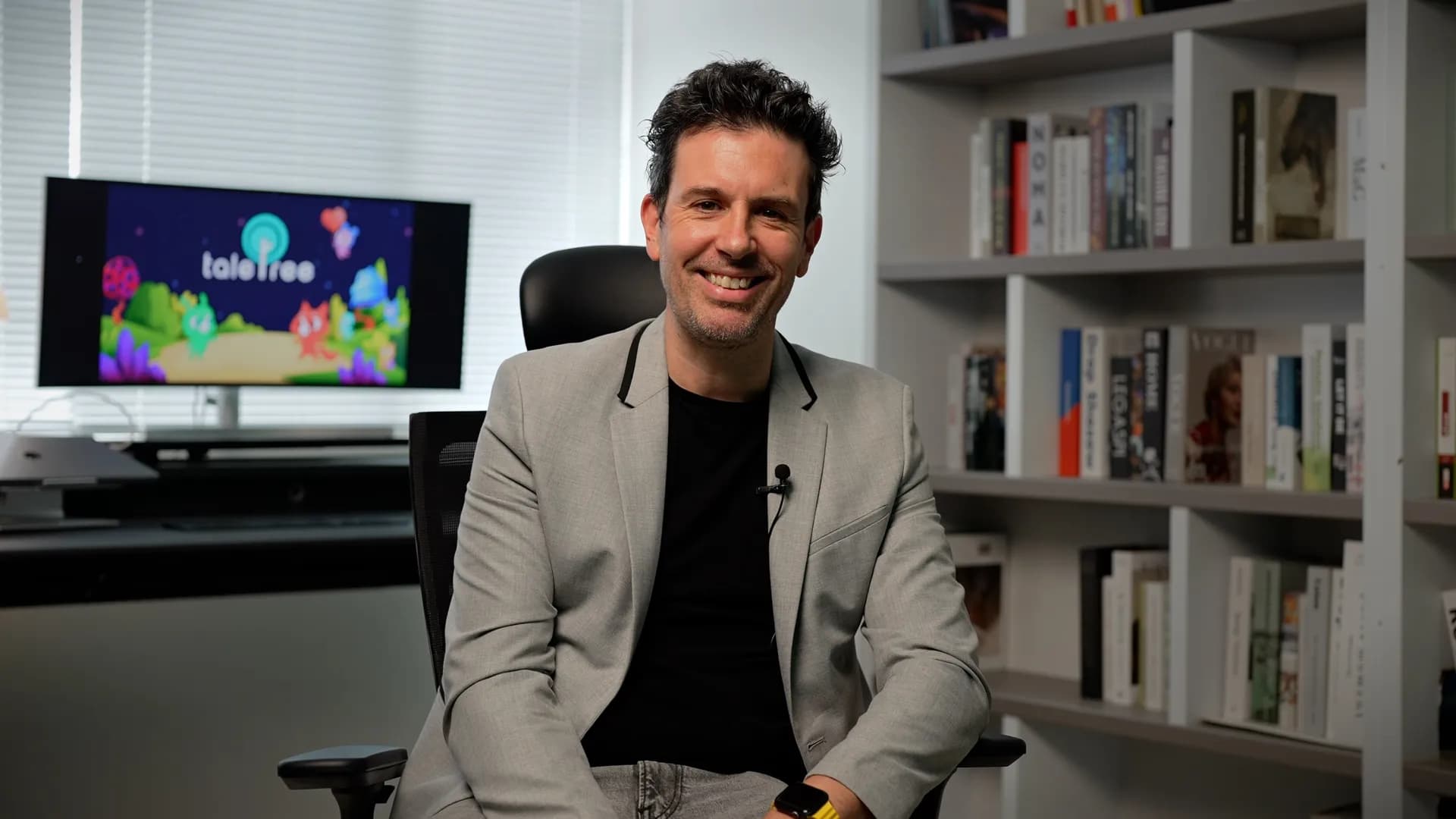
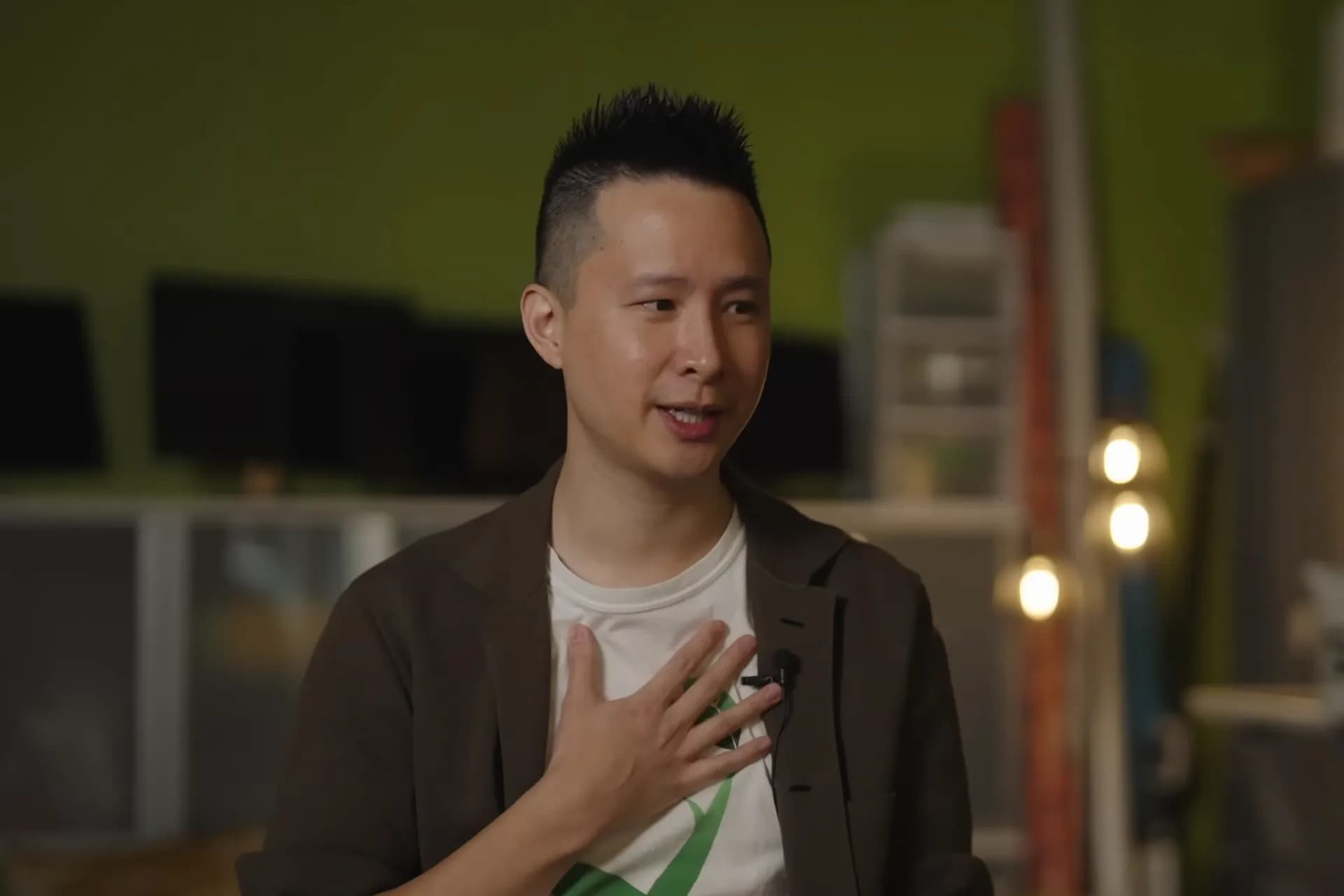
- Who: Joseph Huang is the CEO of StartX, the Stanford-affiliated startup community, and previously founded WifiSLAM, an indoor location startup acquired by Apple in 2013.
- What: StartX is the community for startups coming out of Stanford, including tenure-track faculty, serial entrepreneurs, and industry experts.
- Traction: WifiSLAM was StartX's fifteenth admitted startup before it was caught in a bidding war and acquired by Apple in 2013.
Discover Joseph Huang's inspiring journey from startup founder to CEO of StartX and founder of WifiSlam. Learn lessons from his time at Apple, conquer fear of failure, and uncover traits for becoming a legendary startup founder. You will feel motivated by this industry titan's incredible insights. Get inspired now!
Why StartX's Refusal to Help Was the Real Lesson
When Joseph and his co-founder asked StartX's mentors for direct help closing deals, they were told no, founders have to learn to do their own sales. He was furious for six months, until the discomfort of being forced to figure it out himself became the exact thing that taught him how to run a company.
Every Decision at Apple Had to Answer One Question: How Does This Affect the Customer?
After Apple acquired WifiSLAM, Joseph learned that even a trillion-dollar company doesn't make decisions on instinct or preference, every choice had to be justified by its impact on the customer experience. As a two-person startup, he learned the flip side of that same discipline: you can't afford to do multiple things mediocre, you have to pick the one thing you can do well.
Startups Succeed Because No One Is Afraid to Fail
Joseph's closing argument is that success teaches you nothing, while failure is where the real learning happens. The founders who create the most innovation aren't the ones avoiding risk, but the ones willing to be different and inspire others to join them, even when the outcome isn't guaranteed.
Watch the full interview now on EO's YouTube channel! Below is the complete transcription of the interview. Minor edits have been made for clarity and readability.
Introducing Joseph Huang, CEO of StartX
My name is Joseph, and I'm the CEO of StartX. StartX is the community for startups coming out of Stanford, including tenure-track Stanford faculty, serial entrepreneurs, industry experts, and well-funded and market-ready. We represent Stanford entrepreneurship all across campus.
I started my first company, WifiSLAM. It was acquired by Apple in 2013, and it was actually StartX's fifteenth startup.
Chapter 1: The Spark of Innovation
Actually, most of my life I have mostly made choices based on the options available. I know people who say, "I want to be a journalist in ten years, so I'm going to take the little steps one way or another." I went to Stanford because they accepted me. I went to Waterloo. This one seemed a little more used for undergraduate education. Normally to pass a school term, you would have to finish your midterm exams and get a good score, then finish your final exams and get a good grade. But Waterloo is a little bit different. You have to pass your midterms, but you also have to apply to up to 50 jobs in the real world. Then you have to go interview with those companies and get at least one job offer, work there for at least four months, and get a positive performance review, before you get to pass your final exams.
A lot of people choose one industry they want to be part of. They say, okay, I want to learn to do graphic development, so I'm going to work at a small graphics company, then I'll work at another graphics company, and they do that. But I gave myself the rule: every time I apply for a job, I'm going to apply only for industries I've never worked in before. So I started in finance, went to telecom, robotics and computer vision, enterprise software. Lastly, I went to work at Google. We were doing consumer web. I didn't care if it was better or worse. I felt like if I was just doing things everyone else was doing, we're never going to get anywhere interesting.
The very first opportunity I had to start a startup, I didn't do it because I wanted to be in a startup. We just did it because most of the people around me were writing papers, and this seemed kind of like a waste if we didn't. And honestly, if you fail, who cares? You can still go work at these big companies after.
When we started WifiSLAM, there was still a debate. People were still saying, smartphones are just this fad, it'll go away. And the other half of the people were saying this is the future: your mom, your grandma, your babies will have smartphones, you'll use them every day. The funny thing about 2010 is this was a debate. People didn't know which one was right.
Today, in big cities, downtown metropolitan areas, the buildings are so tall that even if you're outside, you can't always see enough satellites to get GPS. WifiSLAM allowed your mobile phone to get location services even when there's no satellites around. Dave and I were able to produce something that worked. We solved this problem that even big companies were struggling to solve.
Should we let this go to waste? We could both go work at big companies, we could go do whatever we want. But one day you realize if I just publish a paper, this doesn't actually help real people in the real world. It just becomes an article that other people read. We were looking for a community of entrepreneurs that were the best of the best. We were the fifteenth company ever admitted to StartX, and just being part of that culture, being part of the Stanford entrepreneurship ecosystem, I think inspired us to ask the same question: would we just let this go to waste if it was just a paper?
Chapter 2: Accelerating Success
We didn't know anything about running our own tech company. It was only through the StartX community, the Stanford community, and the StartX program that over the next three years we learned everything about each step along the way, what to do, how to do it. We spent maybe 90% of our time at StartX for the first year or two of our company. We had problems that we had to solve. We had customers we had to get in front of.
If you're in any of these programs, you think they're going to help me with X, Y, and Z, and then I'm going to succeed. And the funny thing about community, or at least my experience, was we would show up and we would say, hey, there's this mentor here, they know X, Y, Z, can you help me get a business deal? And they told us, no, you need to learn how to do this yourself. If you're building an enterprise tech company and you need to sell or license your technology to big companies, you need to learn how to do your own sales. If you can't learn how to do that, we'll be doing it for you forever.
Most accelerators won't do this, because they need you to come back and be engaged so you can get the resources that are there. But StartX was willing to say no, and I was furious. I was really unhappy with StartX for a good six months there. I still remember it was October. We had just moved to a new office, and we were on the whiteboard charting out the different sales leads that we had. What were we going to do next with each one? And it struck me: wait a minute, I know how to do this now. Dave and I were making a plan, just going out and talking to customers, and it was only because they forced us to learn it. It's because they didn't help us that helped us the most. It was because of that night in October that I came back and told StartX, okay, you're right, sorry, let's do some other stuff.
You have this saying: if I give you a fish, I can feed you for a day; if I teach you to fish, I can feed you for a lifetime. But the teaching can be much more uncomfortable. It's also not fast. You can't solve a problem for someone tomorrow. If we're really in this to create great entrepreneurs, if we're not in it just to bet on a company or an idea and make sure it succeeds as fast as possible, we need to do what's right for the founders. That was my personal experience going through the early startup journey, and I think that's really shaped why StartX resonates with me so much. In 2013, we were caught in a bidding war. We sold our company to Apple. We couldn't have done it without StartX.
Chapter 3: A Game-Changing Acquisition
My goal from the very beginning was how do we impact the most people? And we knew that if we could take this product that we built and incorporate it into Apple, 100 million new people would use it every year. For a giant, trillion-dollar company, they make really great decisions, and they teach us: number one, you're a startup, you only have two people, you have to choose to do one thing really well, you cannot afford to do multiple things mediocre. Number two, there are so many strategies you could choose, because you're starting from zero, you don't even have any preconceived notions of what has to happen, but you have to choose the strategies that play to your strengths. You have to understand who you are and choose the strategies that maximize your own strengths the best. They are constantly pushing you to say any decision you make, you have to be able to describe how it affects the customer experience. You can't just make a decision because you want to. You have to tell me who the customer is, how it's going to affect their experience, and that's why we want to make this decision to improve the customer experience.
On different days, at different times, each of us would go from, oh my God, we definitely should not sell, we have so many other things we could do, to oh my God, we definitely should sell, this is a really great opportunity, we could go. I don't think any of us ever agreed all at once, and I also think from week to week we all had different opinions. Combined, from the day we started to when I left Apple at the end, it's probably six years, and along the way every stage was different. We went from the smallest company in the world to the largest company in the world overnight.
There are definitely people who like the comfort of saying, look, I'm going to get comfortable with what I do and then I'm going to do it for a long time because I like it. But if you want to be an entrepreneur here in Silicon Valley, you have to be prepared for every year of your life to be completely different.
Every day now, when you use your phone, either in a big building like a mall or an airport, or in a large metropolitan area where there are tall buildings, you're probably running WifiSLAM technology as well. Every time I'm in an airport and it tells me I'm in front of gate 23 instead of gate 24, I know how that happens.
Chapter 4: Inspiring the Next Generation
You have to be always super paranoid of anything that could cause your plans to fail. You also, at the same time, need to be always super optimistic and energetic and excited about what you're doing, because it's such a tough problem to start a company from zero.
Make sure you know that you're world-class in something. Forget the startup, pretend that it's just you in the world by yourself. What are you world-class at? What can you do better than anyone else, no matter what company you're working at, startup or big company? What are your biggest strengths, what are your biggest core competencies, and can you identify that for everyone on your team? Can you construct an understanding for how those strengths fit into the vision of the problem you're trying to solve? If you can't relate those two things, it's going to be an uphill battle for the next ten years.
My journey has been about doing things that are different, to see what we can figure out. Whether it succeeds or fails doesn't even matter to me. I know that if we learn something new, we can apply that the next time around. But the thing about why startups succeed here is because no one is afraid to fail. We know that you learn more from failure than you do from success. Succeeding actually doesn't teach you anything. But if you learn from every mistake and you put in your best effort, you'll always have your best chance to get whatever you're trying to get.
So you can ask yourself: if you grow up in a culture where your parents, your media, your movies, your role models, they all see failure as a bad thing, this will take time to change, because you have to change a whole society. But what I can challenge you to do is say, okay, what about these three cultural points aren't about failure?
They're about trying to inspire others rather than solve a problem by yourself. The people that create the most innovation always think about problems outside their own assignment. So you're assigned to do something, and you do it. But you're also thinking, wait, how does this affect this and this, these other parts, other teams I'm maybe not on? Maybe I can make their lives better too.
Number two, they're not afraid to challenge the status quo. They're not afraid to be different, because when you're different, people don't know if it'll succeed or fail. But you can't be afraid to be different.
Number three, when you want to solve a problem: no great problem has ever been solved by just one person by themselves. If you're going to do anything impactful, you have to inspire other people to become part of it. Even in a big company that has nothing to do with entrepreneurship, that always tends to lead to innovation, thinking about problems, being able to help more people than just what you've been assigned.
I wonder if, for the people who think that way, failure doesn't matter anymore, because at least I did something different. At least I inspired some people to agree with me, and at least I tried to help someone else that was not myself.