Oct 04, 2026
Longshot: Why Getting to Space Might Need a Gun, Not a Rocket.
12 hours inside Longshot, the startup trying to make space launch 1,000x cheaper
Defy the ODDS



0:00 / 0:00
Everyone Thinks SpaceX Holds the Key to Space
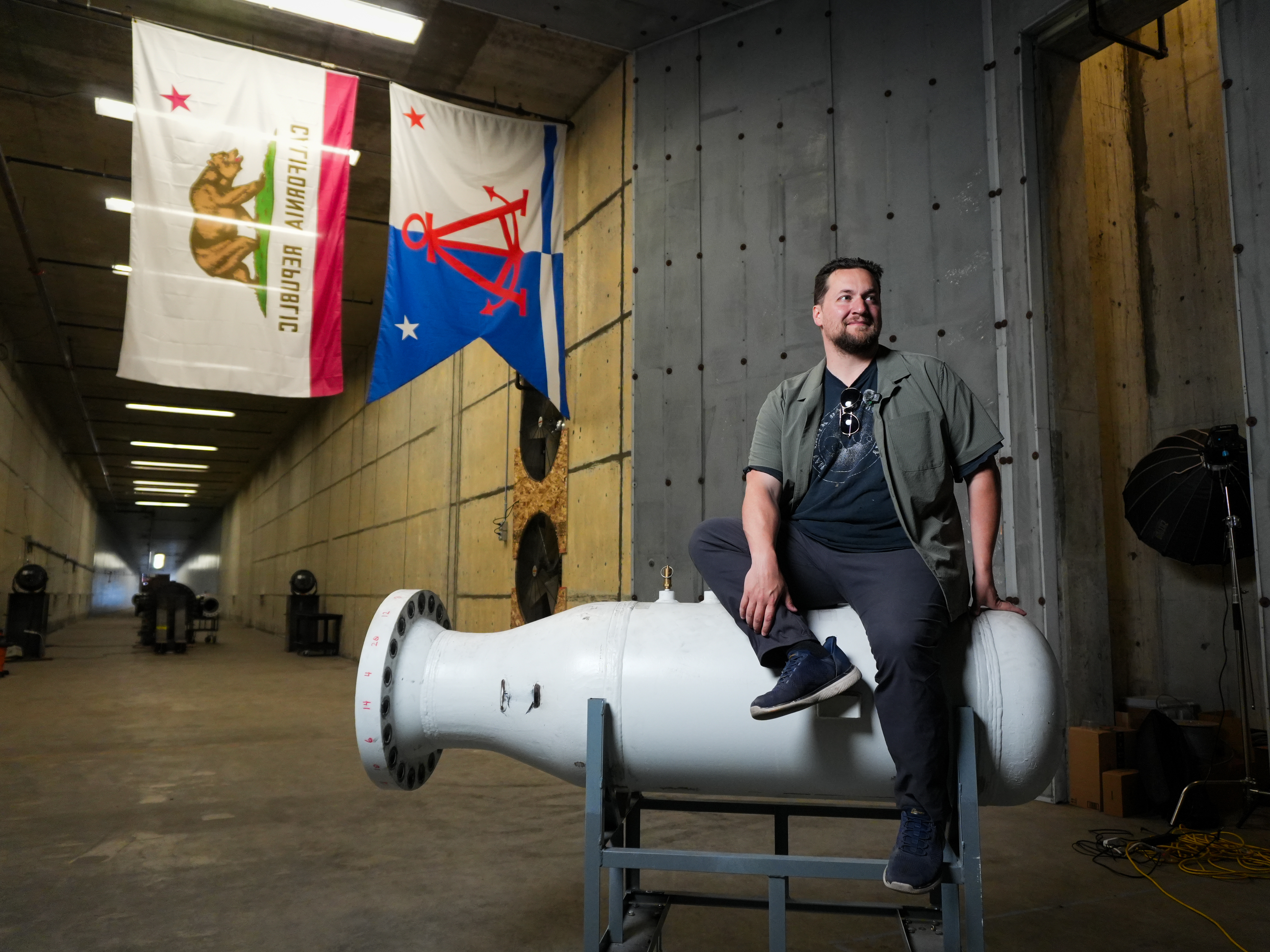
If you think SpaceX is the ultimate key to commercializing space travel, maybe you've been indoctrinated by too many science fiction movies full of rockets. The answer, as I came to see in 12 hours inside Longshot, isn't making rockets cheaper. It's building a gigantic space gun that shoots things into space.
The first time I heard the words "space gun," I pictured Star Wars playing out in real life. I could talk about every floor of the Death Star. But when it comes to real-life rocket science, I'm an outsider. Even on the ride to Longshot's facility, I had to ask Claude about basic rocket science.
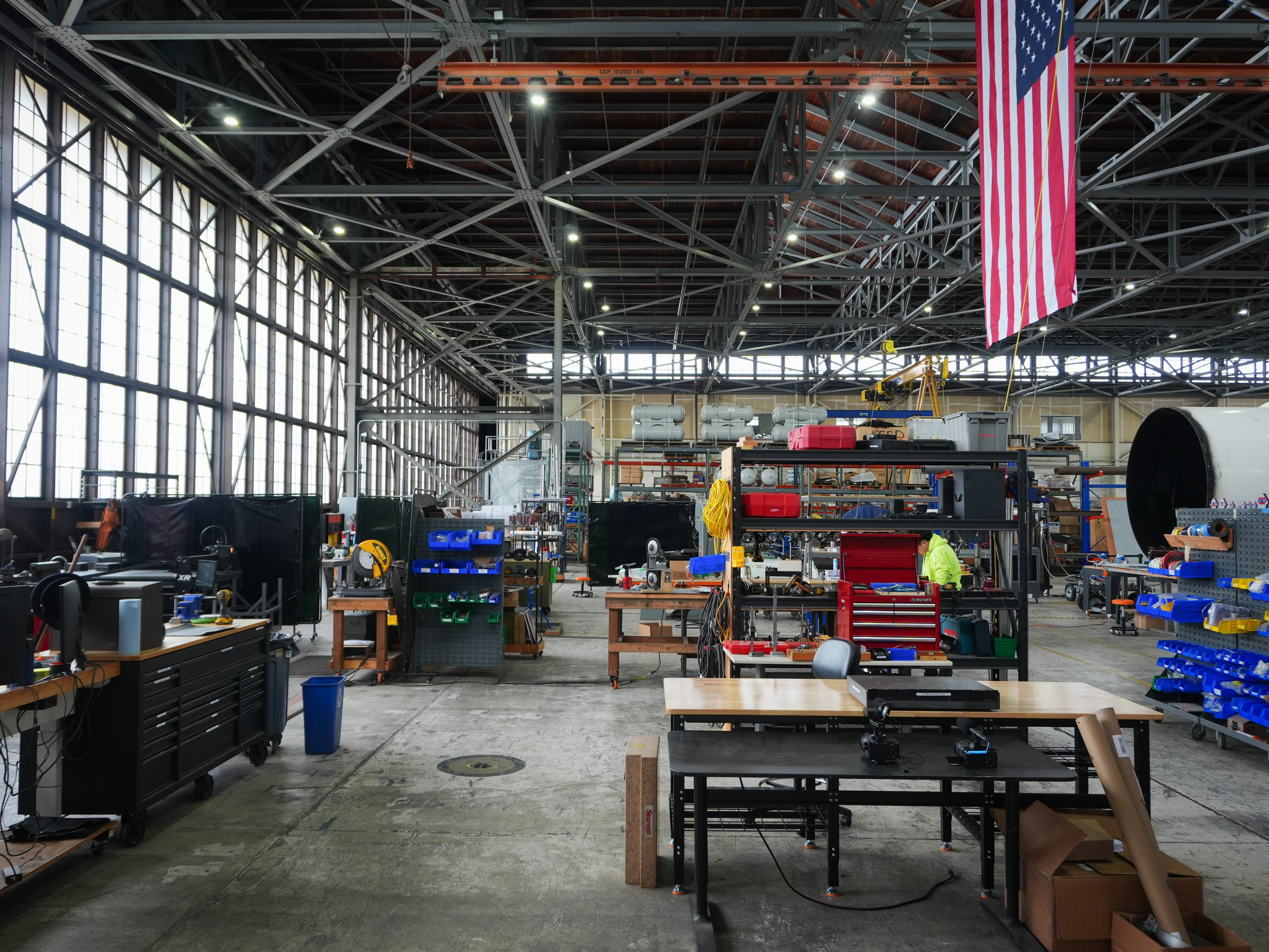
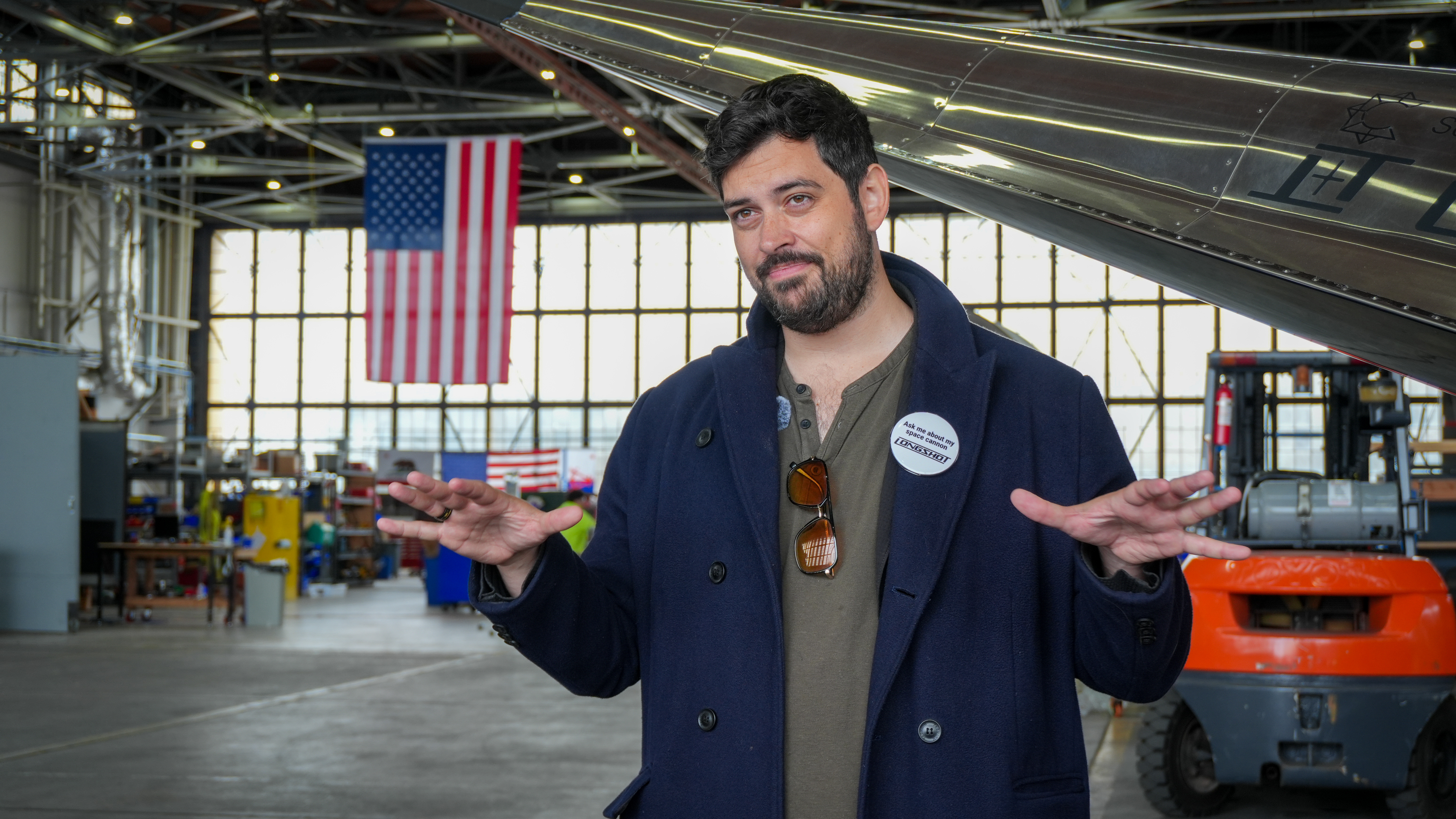
Longshot is based in Alameda, in a former WWII Navy air station hangar far from the dense cluster of AI startups. I was there to meet Longshot's co-founder, Mike Grace.
It was 8 a.m. Mike came out of the hangar and said, "Yo, welcome." Minutes later I was standing next to the small gun Longshot had built, a bench-top prototype of the full-scale launcher.
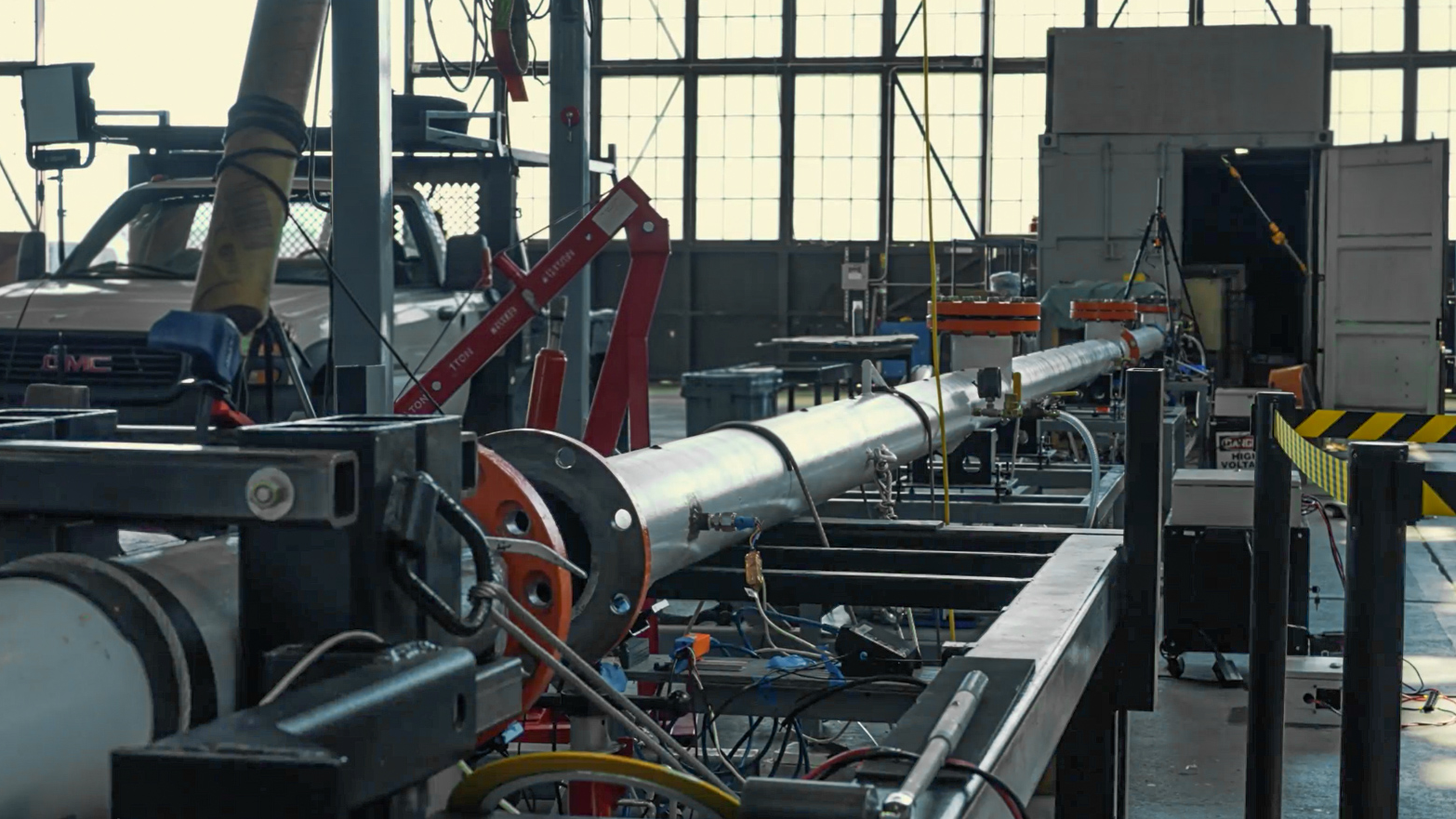
Longshot is a space launch company. Mike calls it a supergun: a fixed piece of infrastructure on the ground that throws things into space. A rocket carries its payload up. Longshot throws it.
Former Army paratrooper Mike Grace founded it with Nathan Saichek, a former manufacturing engineer at Astra. They've raised $20M from Draper Associates, Starship Ventures, and South Park Commons. Sam Altman came in as an angel, and the US Air Force is among their customers.
Longshot ultimately wants to sell cheap, repeatable launches to orbit for satellites and cargo. Cost per kilogram is the bottleneck of the entire space economy, and today a ride on SpaceX's Falcon 9 runs about $3,000 a kilogram. Bring it down to $400, Mike argues, and businesses that sound absurd today start to make sense.
This is the first story in Defy the Odds, a series where I spend a full day inside a startup. At Longshot I toured the hangar, interviewed Mike and his team, and got a glimpse of the space gun they're building and the world it could change.
Rockets weren't built for space traveling
"After World War II, the Americans and the Soviets come in and kidnap every single rocket scientist they can. Is that because they wanted to put stuff on the moon? No, it's because they wanted to deliver hydrogen bombs to the surface of the Earth. Do you care about the marginal cost of launch if you're delivering an atomic bomb? No, not at all."Mike GraceCEO and Co-founder of Longshot
That's when I caught a bias I didn't know I had. Why did I always picture space travel as a tall, pointy rocket on a launch pad? I'd assumed rockets were simply the only way up.
Rockets won not because anyone made a first-principles decision, but because they were a great weapon, even though they were a poor fit for the civil job of reaching space.
The money tells the story. The US alone spent about $3.2 trillion putting nuclear weapons on missiles, bombers, and submarines. By Longshot's estimate, humanity has spent only about $100 million on space guns.
Satellite companies didn't care what a launch cost either. From the 1970s through the 2000s, the world launched maybe 50 satellites a year. Each was a giant that would earn billions, so the price of launch was a rounding error.
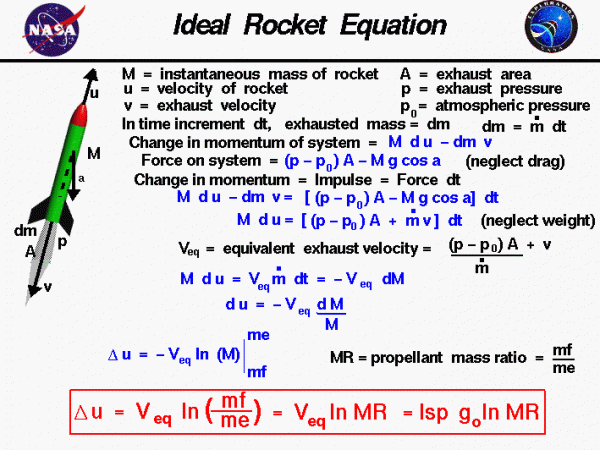
Rockets also have a price floor. The cause is physics, a problem engineers call the tyranny of the rocket equation. A rocket has to carry its own fuel, plus the fuel to lift that fuel. So over 90% of a rocket is fuel, engine, and steel. Most of what lifts off never reaches orbit.
Mike thinks like an economist, not an engineer. He sees the world change through incentives and markets, and to him rockets are a product-market-fit story, working technology built for the wrong demand.
SpaceX proved that cheaper launch creates new businesses, and it won on economics, not new technology. Nothing in Falcon 9 was impossible in the 1970s. SpaceX was the first rocket company that tried hard to drive the price of rockets down.
How much further the price falls is another question. Mike argues SpaceX's price won't fall on its own, because it has investors to pay back, and he wants Longshot to be the competitive push that makes SpaceX great again.
Already at this point, I was close to being convinced that rockets aren't the medium that will democratize space travel. But Mike's gun might be. He says it can launch things 10 to 100 times cheaper than a rocket ever will.
I then asked Mike how he came up with the idea. He didn't. He stole it. The idea traces back to a scientist whose space dream began on a Caribbean island and ended with an assassin's bullets in Brussels.
Gerald Bull: Mad Scientist, Father of the Space Gun
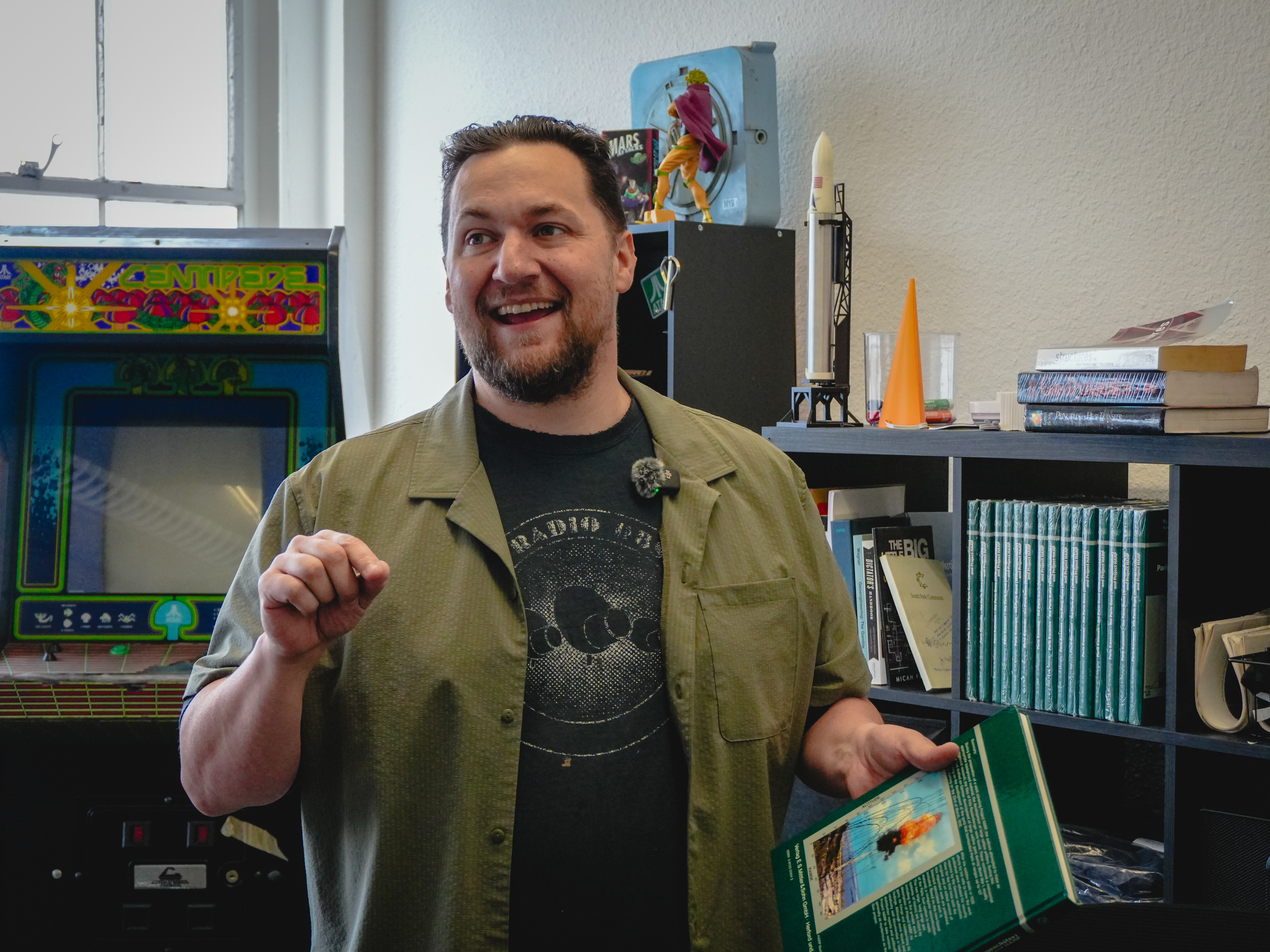
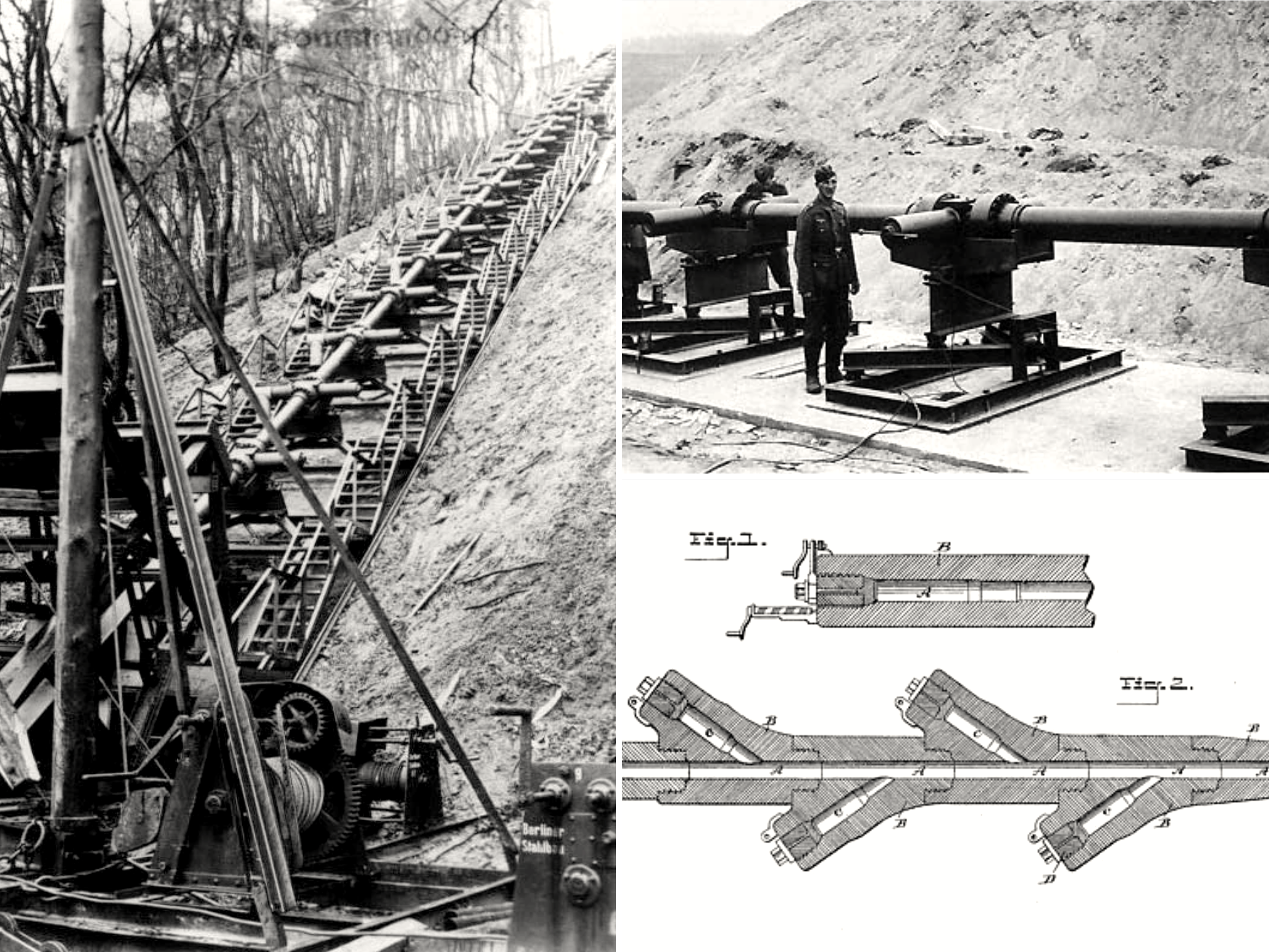
When I arrived at Mike's office, he handed me a copy to read, Paris Kanonen – The Paris Guns (Wilhelmgeschütze) and Project HARP. Its author was Gerald Bull, a 1960s Canadian ballistics engineer Mike calls one of the great mad scientists. He built the first gun that could reach space.
In 1961, Bull's Project HARP joined two battleship barrels into a 36-meter gun on Barbados. The whole island heard every shot.
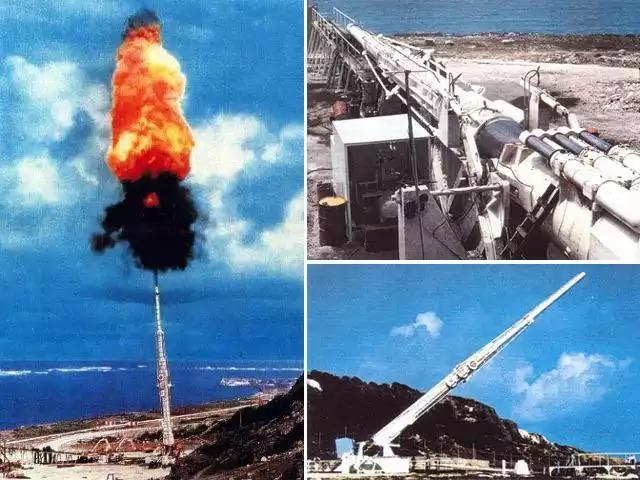
In 1966 a HARP gun in Arizona sent a projectile 180 km up, past the edge of space, a record that still stands. But the project died in 1967, when the US and Canada pulled funding as the Vietnam War took priority.
To keep his dream funded, he sold artillery designs and shells to almost anyone who would pay. That included apartheid South Africa, in breach of a UN arms embargo.
That sale sent him to a US prison for six months. After he got out, Saddam Hussein hired him to continue his work. The job was Project Babylon, an even bigger gun. As Bull designed it, the gun would launch satellites, at $1,700 a shot.
Bull had no intention of turning Babylon into a weapon. He wanted the world to remember him as the pioneer who opened space on his own. But Hussein's enemies saw something else. For Israel and Iran, cheap Iraqi satellites were one worry; a gun that could fire shells straight into their capitals was a far bigger one.
On March 22, 1990, Bull was shot five times in the neck and the back of the head in Brussels. Nearly everyone blamed Israel's Mossad, but his killer was never found.
"The real moral of the story of Gerald Bull is: don't build super weapons pointed at… Just don't point it at anybody, really."Mike GraceCEO and Co-founder of Longshot
Bull died, but the idea didn't.
Decades later it found Mike, through "Cannons to the Planets," a 2009 talk at Google by an engineer named John Hunter. The talk showed the physics worked, but no one had built a business on it. Mike still makes every new hire watch it. The idea stuck with him, and years later he decided to build that business himself.
How to Build a Space Gun
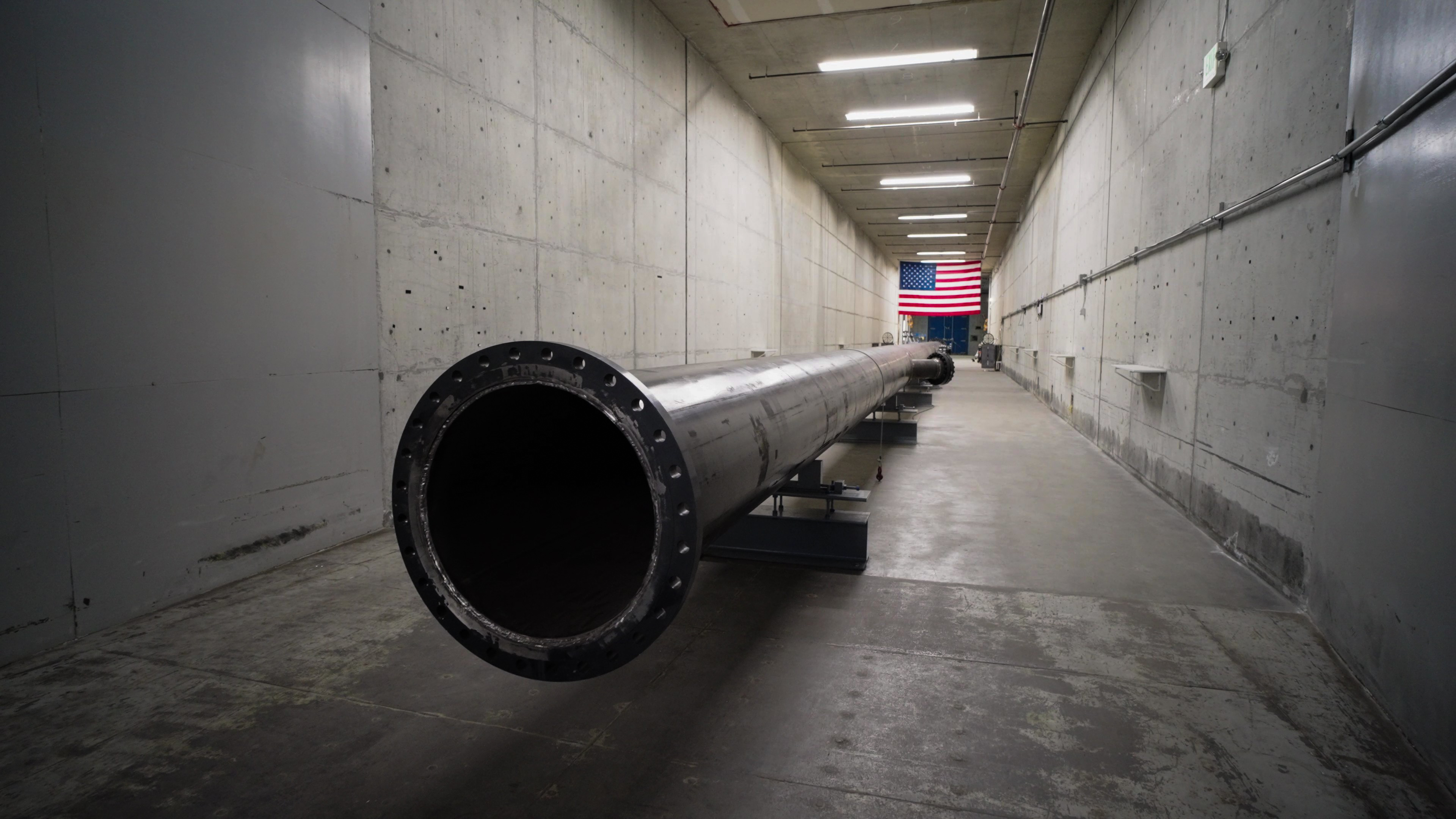
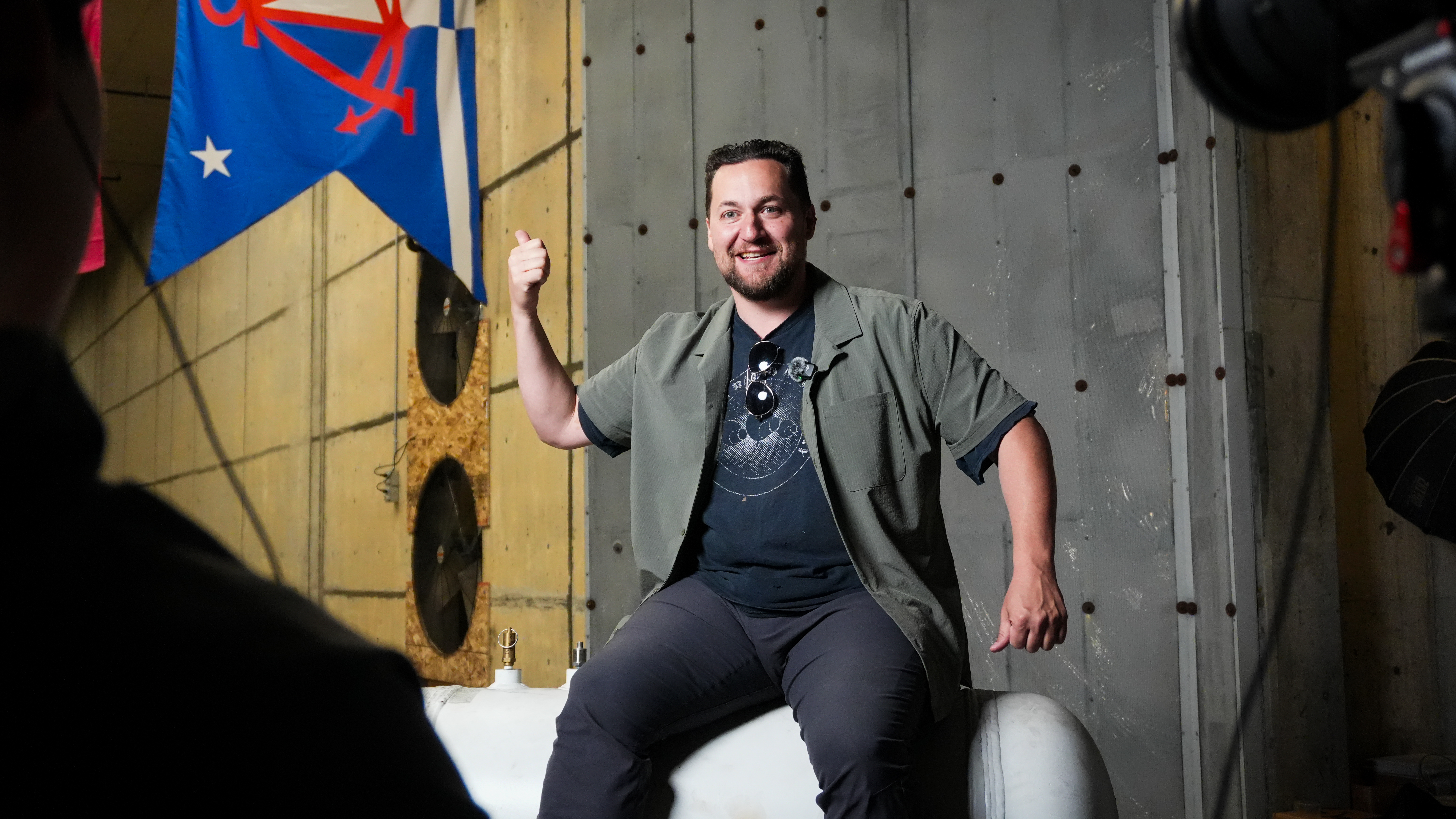
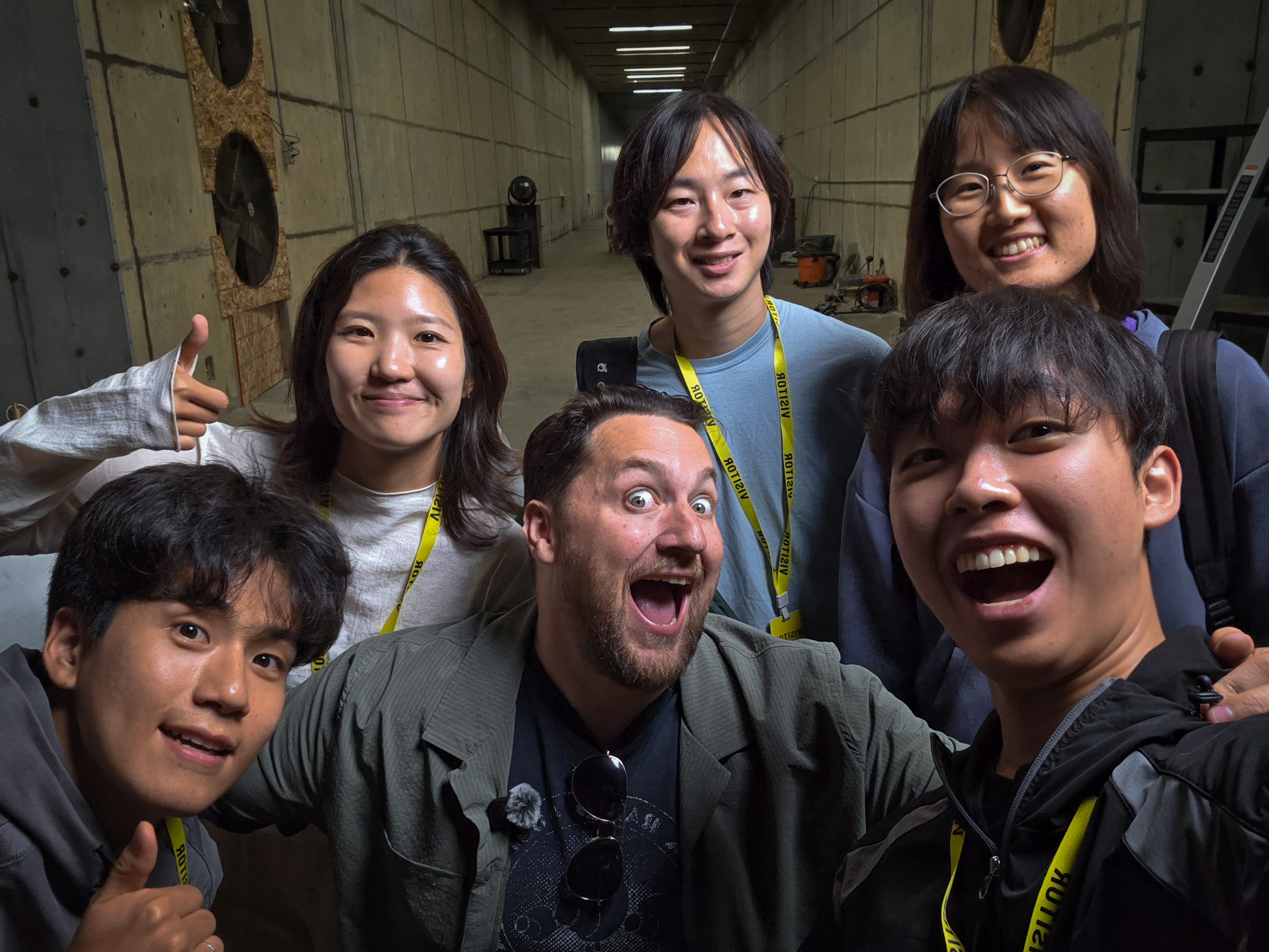
The small gun in the hangar wasn't the only one. Mike then took me to Longshot's other building, an old Navy gun-testing facility on the water. Inside was a steel hallway about 300 feet long. "This is currently the largest gun on the planet," he told me, and started explaining how it works.
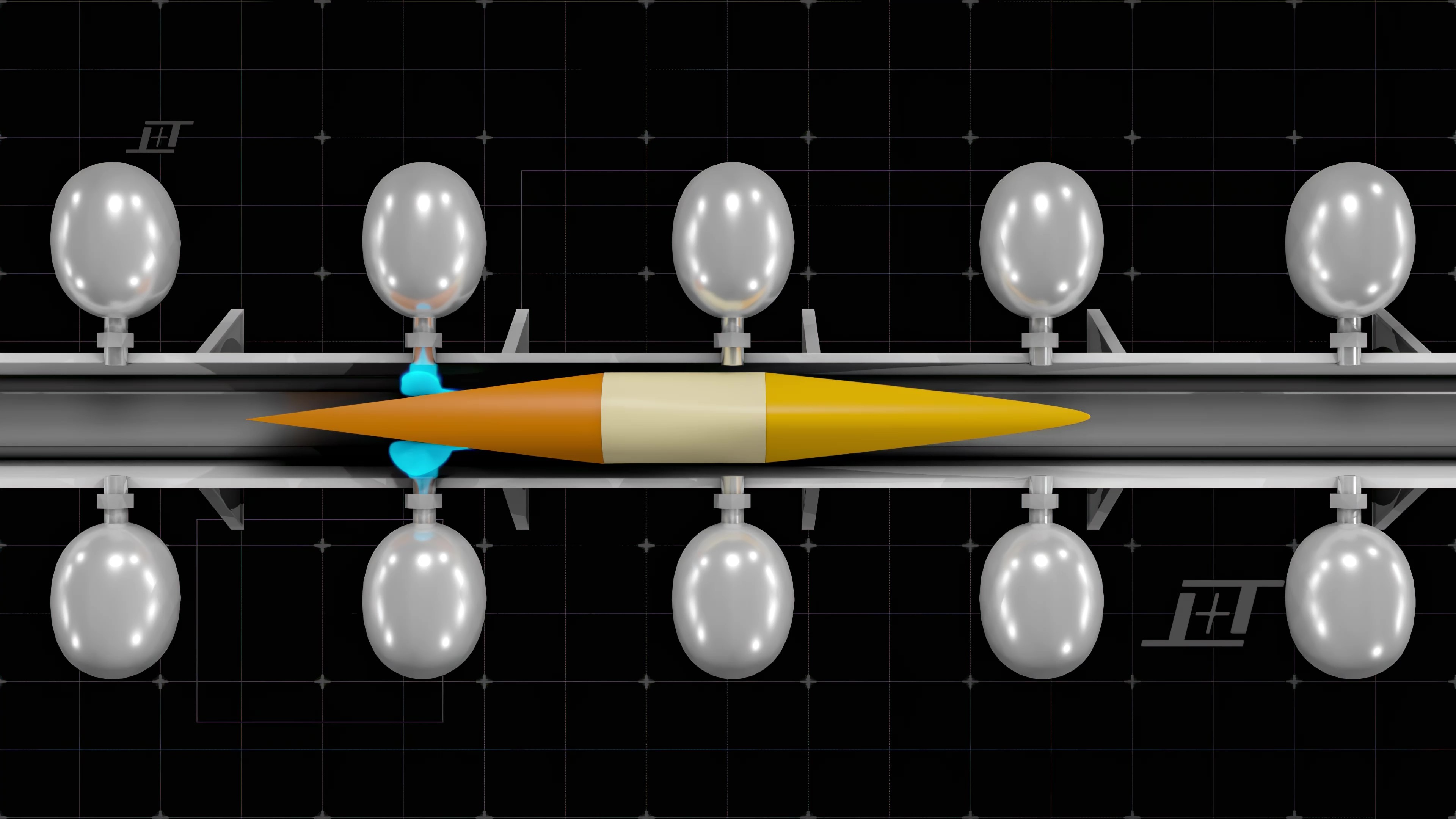
Instead of one big explosion, the gun gives the vehicle (Longshot's word for whatever it fires) a series of pushes down the barrel.
The trick, Mike says, is popping balloons made of metal. Each one is a tank of pressurized gas sealed by a thin steel disc.
Pop them one after another, exactly as the vehicle passes. Each one gives it a push. The barrel ahead has been pumped empty of air, so there's vacuum ahead and pressure behind.
Here are the hardest problems Longshot is working on.
1. Spreading the push over a long barrel
Artillery fires everything in one blast, and whatever it throws takes tens of thousands of Gs or more. Longshot keeps adding gas all the way down a long barrel, so the push is spread out to about 200 to 300 Gs. That's low enough for ordinary electronics to survive the ride, even a phone.
But not a person. Mike plans to go to space in a rocket himself; the gun will never be gentle enough for a human being.
Rockets are the airplanes of space. Longshot's gun, as Mike describes it, is the boat. A world with only airplanes would be far poorer, with no way to move fuel, food, and supplies in bulk, and a civilization in space is no different.
2. Surviving the first seconds out of the gun
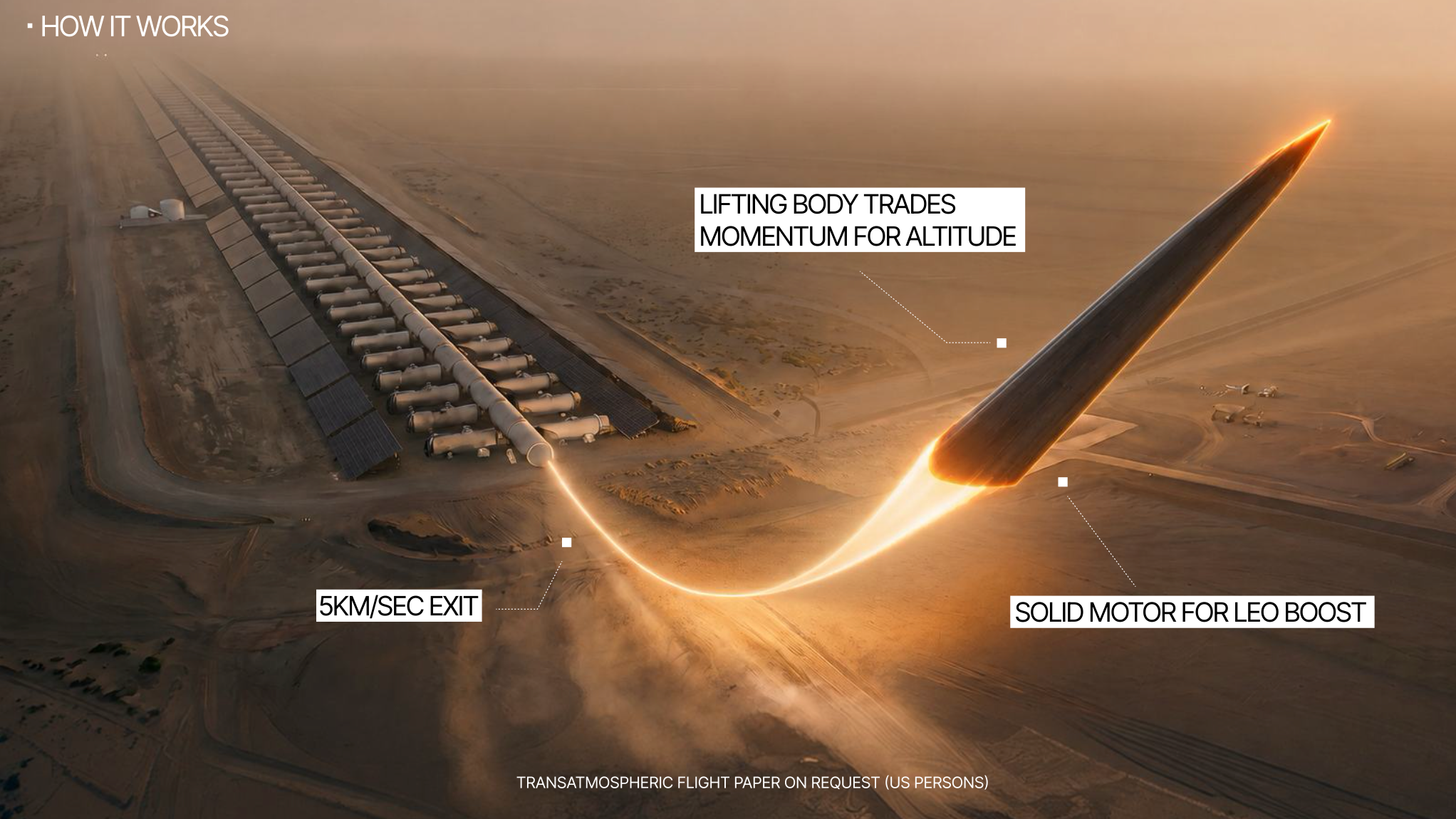
Watch a SpaceX launch and the crowd cheers twice: at liftoff, and again when someone calls out "Max Q," the moment of maximum pressure on the rocket. If a rocket is going to blow up, it usually happens by then. Longshot's vehicle hits its Max Q the instant it leaves the gun, at top speed in the thickest air.
It leaves the gun at 4.5 to 9 km/s at sea level, and at those speeds the only thing that helps is mass. Throw a feather at Mach 10 and it bursts into flames; throw a steel ball and it goes through a couple of houses. So the vehicle has to be big and heavy.
It also has to survive the heat. The answer is a heavy, winged "bullet" adapted from a NASA design, wrapped in a heat shield that melts away and carries the heat with it.
"There's never been a vehicle that's flown at this flight regime, at this pressure, at this enthalpy, ever."Alex StroudHead of Engineering of Longshot
3. Building it big
Mike's eventual dream is a pipeline 10 to 15 km long, throwing 40-ton vehicles to space several times a day. That means thousands of pressure vessels filled with hydrogen, the largest use of it anywhere.
Alex jokes that "the hardest part about building a space gun is not building the space gun. It's actually the regulatory hurdles."
Even the gun in the steel hallway sits on hold while the city of Alameda decides whether Longshot can run more electrical cables into the building. Finding land for bigger guns is harder. "I wanna build a two-kilometer-long super cannon on your property and shoot it," Mike says. "You gotta find a very special landlord to say yes to that."
After listening to all possible ways Longshot could go wrong, I asked Mike what the odds were when he started.
"Low. Super low. They're still low… I don't think we're over the 50% mark of probability of success… But I actually think technical risk is kind of low on my list."Mike GraceCEO and Co-founder of Longshot
What scares him is regulation and raising capital. Still, the prize outweighs the fear.
"If you have a very small probability of owning the solar system, it's worth it," he says. He jokes that Elon can have Mars. He just wants what's left.
Mike & Longshot: The Man Behind the Gun
In Longshot's earliest days, it was just Mike in his backyard, building potato guns out of PVC irrigation pipe. They exploded all the time; plastic, it turns out, doesn't want to go Mach 1.8. One prototype punched a hole in his garage plaster.
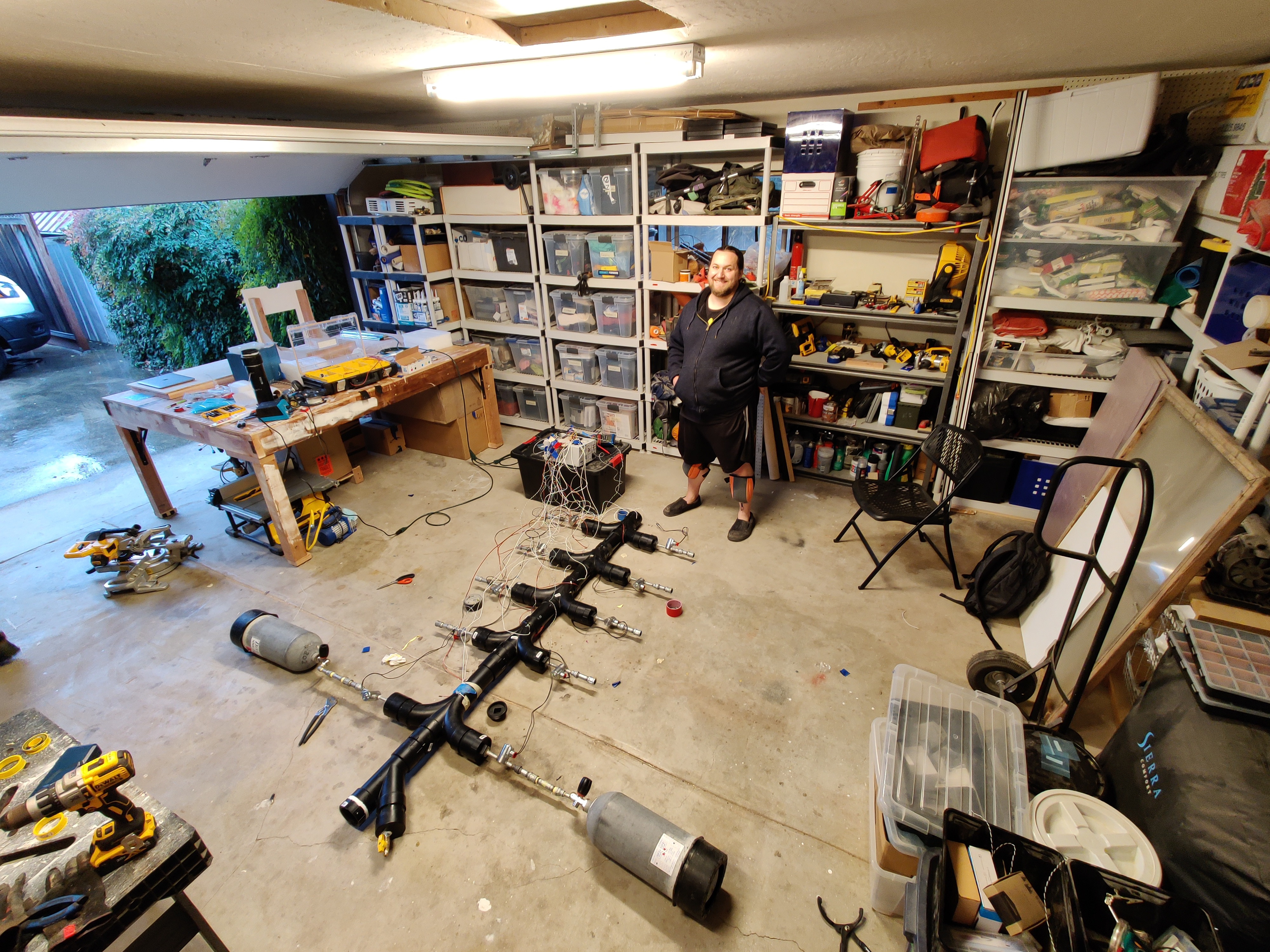
Those potato-gun days say a lot about how Mike builds a company. Mike's first co-founder, before Nathan, was embarrassed by the PVC gun and wanted to raise money before building anything real. Mike disagreed. The prototype proved they were people who build things, and most people with big ideas never build anything.
"If you have an enormous vision, a huge painting, a huge vision of what you wanna build, the best thing you can possibly do to bring that whole thing into fruition is build any part of it. Just build something. A single pixel of that entire image."Mike GraceCEO and Co-founder of Longshot
He was willing to look foolish. Much of the plastic for his first Longshot gun came out of a dumpster behind Home Depot, because he had no money. Amazing things happen, he says, when you're prepared to give up your dignity.
Mike calls himself a weird kid. His family moved 16 times before he turned 18; his parents went bankrupt about every seven years, and they lived in motels and trailer parks. He didn't learn to read until he was 12, and he was ashamed of it. His way out, he says, was to stop trying to fit in at all. He traces Longshot back to that.
"To do really any startup, you are effectively making an assertion that everybody else is wrong about something… 'I don't care if there are hundreds of people out there who are smarter than me or know more than I do about this thing, they're wrong, and I'm right, and I know it.'"Mike GraceCEO and Co-founder of Longshot
Most people who live this way don't make it. He calls it a poisoned chalice.
That didn't stop him. He chose Longshot from a list of startup ideas he'd kept for years, scoring each on how much he cared and how hard it would be. Longshot scored 10 on both.

He was 35 and broke after grad school. He asked his wife, Diana, for six months to try. If no one invested by then, he'd stop. Five and a half months in, David Kempson became Longshot's first investor with a $20,000 check.
Since then he has come within three months of bankruptcy at least three times. He works 80 hours a week, and only that few because Diana makes him go home. Diana works at NASA, and the two of them have an interesting deal: If either of them ever gets the chance to go to space, even one way, the marriage is off.
Mike wants his kids to have a real chance to go to space someday, not as astronauts or billionaires but as ordinary people. For that, three zeros have to come off the cost of going to space.
When I told him it all sounded like science fiction, he agreed. One of the oldest works of science fiction, Jules Verne's From the Earth to the Moon, fires people to the moon out of a gun. Submarines were science fiction once too. "So science fiction it is," he said, "but that doesn't mean it needs to remain science fiction."
"Mike is a crazy science fiction nut job… Mike is one of the few people I've met who is very practically trying to build a much better future."Simon SaichekMachinist of Longshot
The Longshot Team
Mike isn't the only one who bet on a space gun. Over the day, I also heard from four of the people who followed him, and each had a different reason for coming.
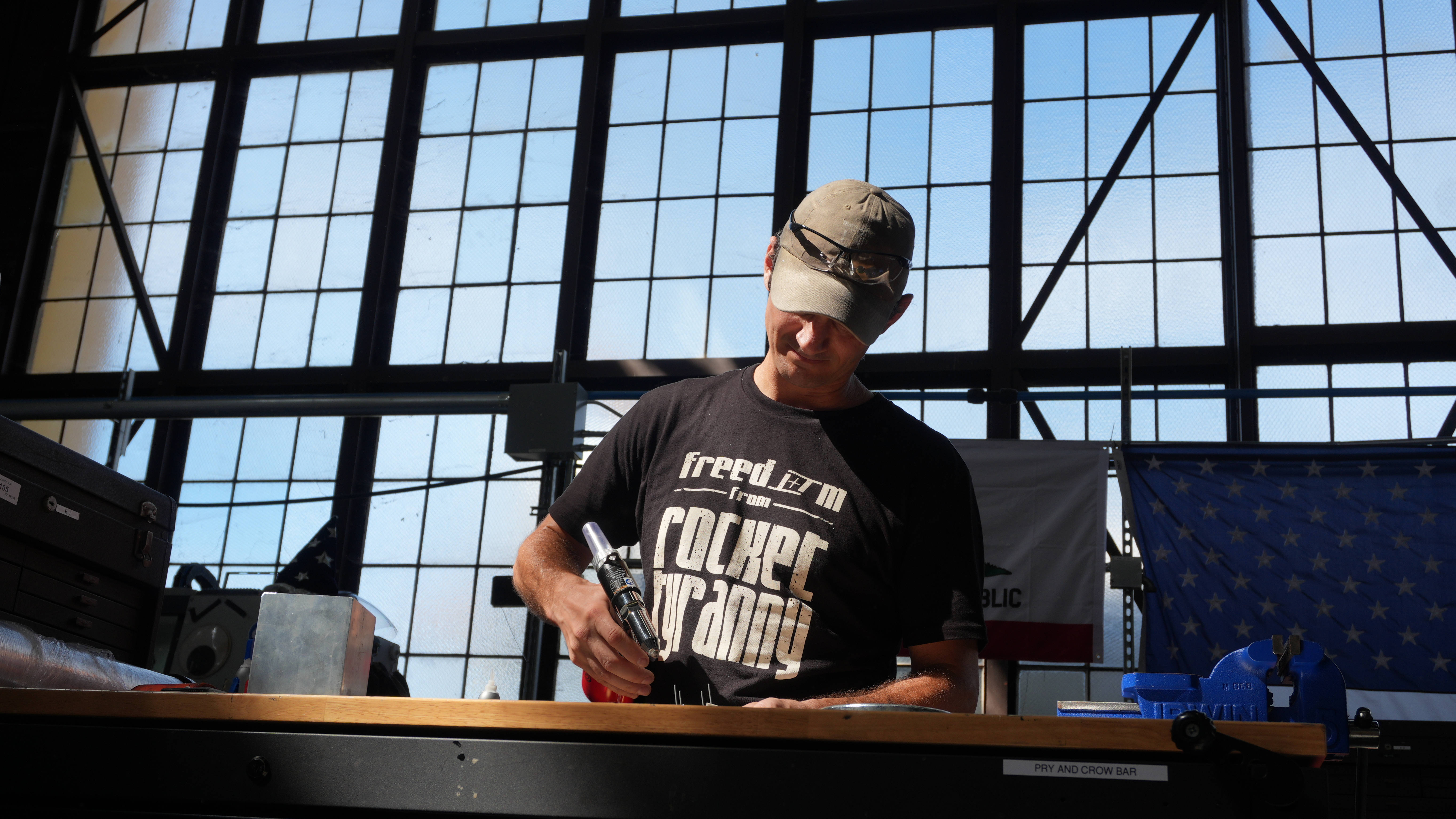
Brendan (Chief Operating Officer) has been Mike's neighbor since 2018. He became Longshot's first employee, unpaid for three months, banging scuba tanks together in Mike's garage. To Brendan, Mike is weird and delightful. Mike asks for help without any fear of looking weak, an honesty Brendan rarely sees.
Brendan took minimum wage for years by choice.
"When I am sitting on my deathbed, do I want to say that I was a data analyst at a Fortune 500 company? Or do I want to say that the first business I ever started was a company that was building a gun to shoot satellites into space?"Brendan ConwayChief Operating Officer of Longshot
Alex (Head of Engineering) was Mike's intern back when Longshot's office was a boat in Alameda, where Mike test-fired pool noodles out of a two-inch PVC gun. He left to work on SpaceX's Crew Dragon, but he never stopped thinking about the space gun and eventually came back. His family thought he was nuts until they visited and saw the contracts.
Andre (Chief Strategy Officer) was with me all day, answering every question I had. He had been a fan of space guns for a decade before he met Mike, the person who could make that dream real. His excitement for Longshot was contagious, even for me.
Simon (Machinist, no relation to Nathan) spent 18 years as a whitewater rafting guide, visiting some of the most beautiful places on Earth. He joined Longshot to keep them that way, by moving mining and refining off the planet. That only works if launch gets cheap.
In my eyes, all four of Mike's employees were telling me the same story, each through the lens of their own job. They are all dreaming the same dream.
However, investors won't fund a 10-year dream. Even the smallest space gun, throwing 10 tons at Mach 15, would be 10 km long and cost about $1 billion. Nobody funds a $1 billion gun on day one, so Longshot needs revenue and proof along the way.
Its next gun, a half-kilometer system in Barstow, will throw 100 kg at Mach 5. That's nowhere near space, but it's exactly what the US military wants. It needs a cheap way to fire hypersonic targets, like clay pigeons, to practice shooting down missiles and to test heat shields.
Longshot's current customers include the Air Force, DARPA, and the Pentagon. Government bookings so far come to $4 million to $8 million. Mike calls this an intermediate market, a stepping stone toward the space gun. It's a good business, but it isn't the one he dreamed of.
"I call it chopping up your baby. You have this beautiful idea, it's like your child, this wonderful thing you want to give the world. And in order to raise money from Silicon Valley, what you're gonna have to do is take a meat cleaver and chop off one of the legs of the baby and be like, 'Look at this leg, this leg is gonna make you so much money.'"Mike GraceCEO and Co-founder of Longshot
He first pitched Longshot as a pure space company and had to learn to tell a different story, one built on military work. Changing your story from what you want to build to what the market will buy, he says, is the gate most dreamers never get through.
Listening to the dilemma Mike is going through, it reminded me of Gerald Bull, who sold a piece of his dream to the military to pay for the rest.
Democratizing space launch is double-edged (aka: Mike's Oppenheimer Moment)
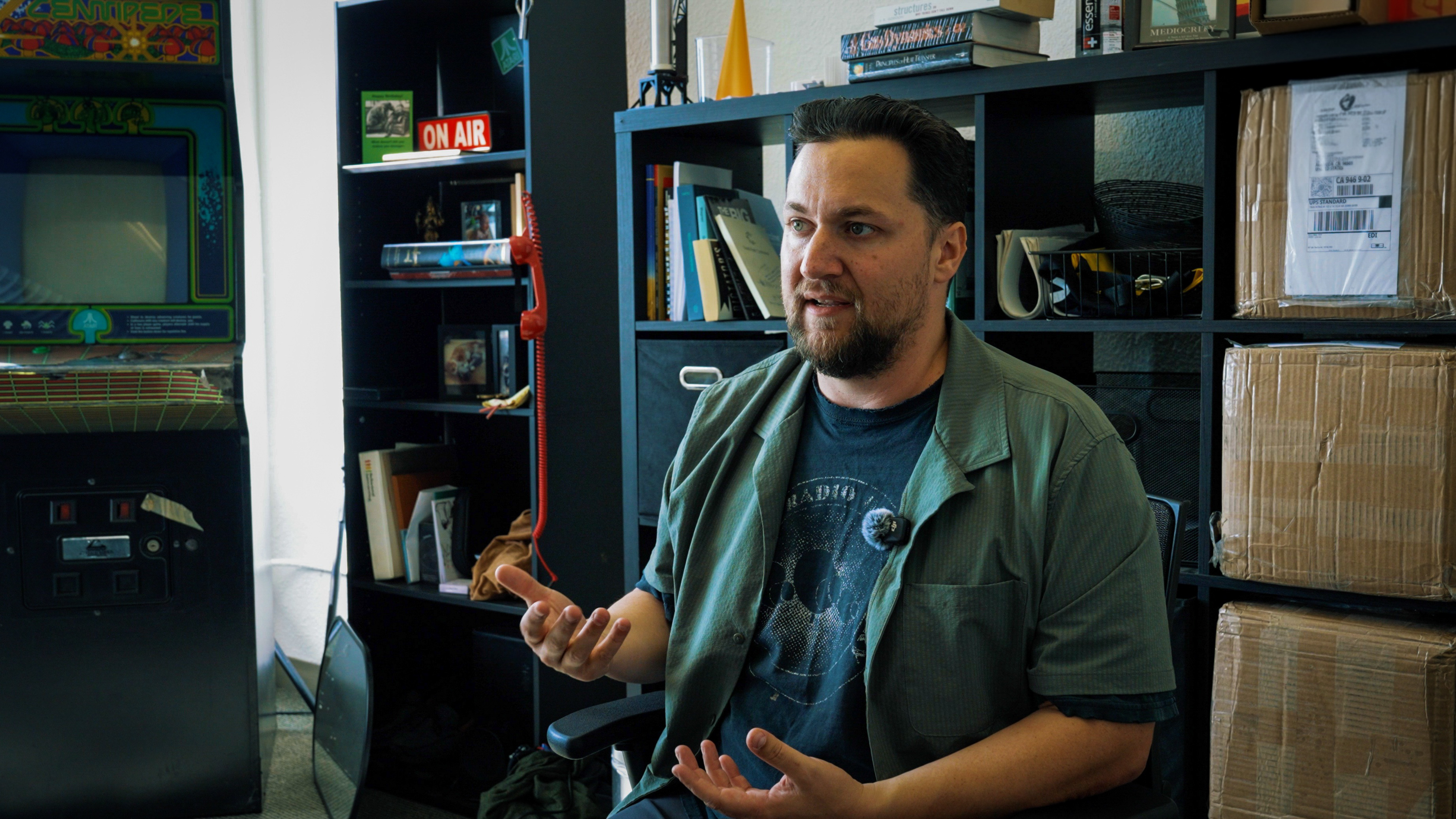
I came in biased. Mike is a former Army paratrooper with two tours in Afghanistan, and his company is funded by the Department of War. I assumed he'd be the most proud of what his gun could do for defense.
What I saw in Mike and his team broke that bias. He joined the Army at 17 over a war he now calls a mistake, hated it, and is grateful he never had to kill anyone. It was reassuring, but it raised a harder question. How could I know Mike's gun wouldn't end up like Bull's, with the gun one day turned against us?
When I asked him, Mike didn't promise it wouldn't happen. "Every technology that is built and useful is going to end up in the hands of the military at some point," he said. "I can't stop it."
So the real choice is to build or not to build, and he thinks not building is the wrong one. The first big rocket rained warheads on London, and its descendants carried people to the moon; the jet engine that flies you across the Pacific was a Nazi invention.
"You can't have atomic energy without atomic bombs. You can't. And whether that ends up destroying humanity or saving humanity is up to us."Mike GraceCEO and Co-founder of Longshot
He has very little interest in building weapons. Longshot probably could, he admits, but even a thriving defense business would count as failure; space is what matters to him.

Inside Longshot they like to say that defense will make them a billion-dollar company, but space will make them a trillion-dollar one.
Oppenheimer started out wanting to end a war, and spent the rest of his life haunted by what he'd unlocked. I saw something of that in Mike. He is a veteran who hates war, working with the military because it's the only road to the future he wants. He knows his own success could become someone else's weapon.
Longshot is full of dualities: a gun that was never meant to be a weapon, a veteran who hated the Army, Department of War money paying for a ticket off the planet.
When the world finally has the space gun Longshot is building, what changes?
Drop the price of reaching orbit, Mike says, and human civilization can bloom in space. Right now the gravity well keeps us down here, and he wants to punch a hole in it.
He has the thresholds worked out. At $400 a kilogram, data centers move to space, where the sun never sets. Below $100, mining copper on Earth stops making sense when there are rocks of it floating out there. Move heavy industry off the planet, and the Earth can be a garden.
And people will follow. Just like America was settled by misfits and religious oddballs, Mike hopes a bunch of weirdos will do the same in space, starting little human experiments all over the solar system.
I find the future he describes genuinely beautiful. Space is the final frontier, and opening it feels like the purest form of human curiosity. The astronauts who saw Earth from the moon came back saying our borders and quarrels looked small from up there.
No one knows what the world looks like once anyone can afford to reach space. For most of history, guns and rockets were pointed at other people. Longshot's barrel lies flat on the ground, aimed at no one. What leaves it, Mike told me, eventually turns and climbs straight up.
Want to know more? Watch EO's full documentary on Longshot.
Click to add YouTube video