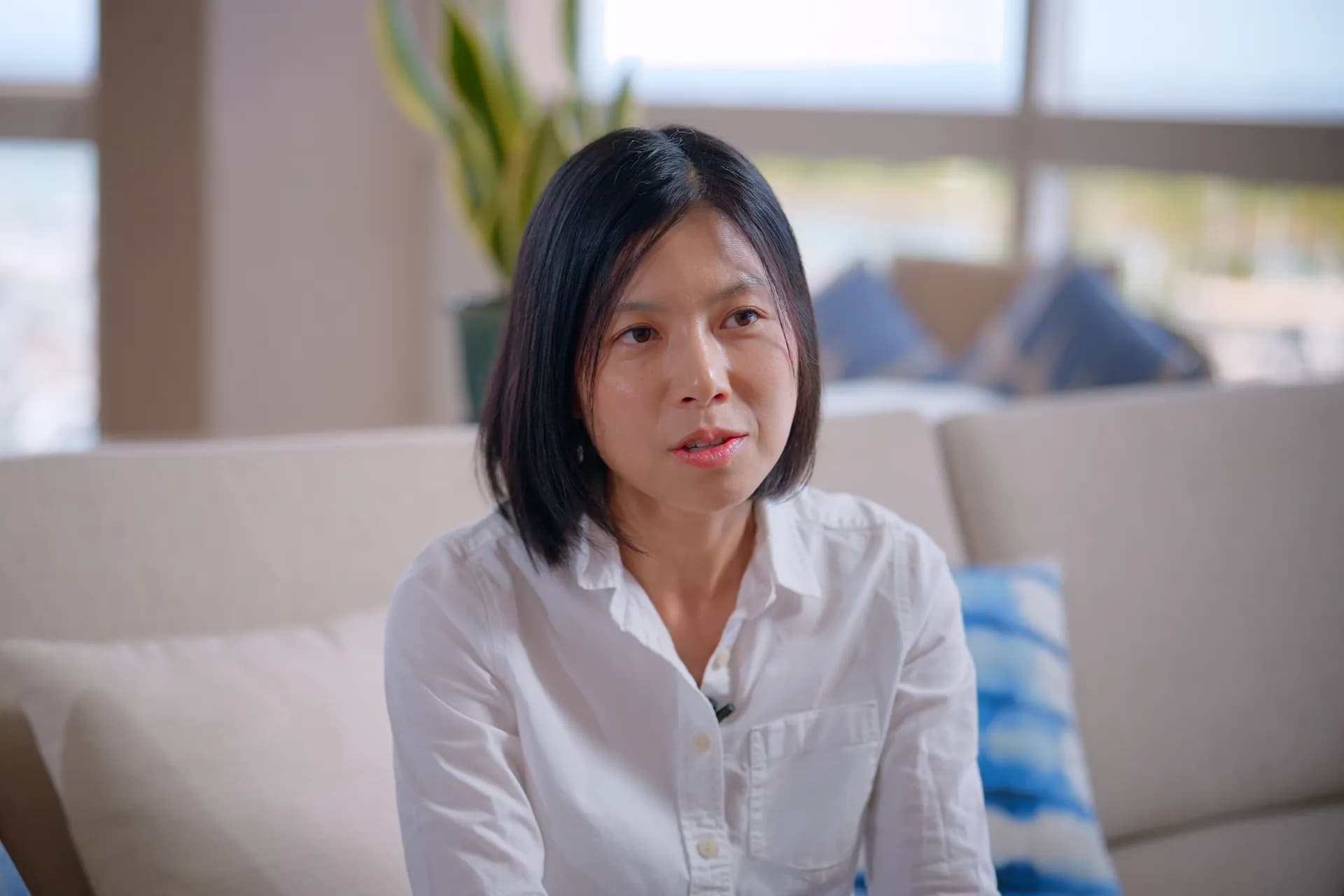
Interview with Arvind Jain, Founder of Glean

At a Glance
- Who: Arvind Jain is the Founder and CEO of Glean. An engineer by training, he previously spent over a decade at Google and co-founded data protection startup Rubrik in 2014 before founding Glean in 2019.
- What: Glean is an enterprise generative AI and search engine that connects across a company's data sources to deliver personalized workplace intelligence. Rather than training proprietary foundation models, Glean integrates models like GPT-5, Claude, and Gemini with internal corporate data graphs.
- Traction: Reached a $7 billion valuation with over 1,000 employees globally. Glean built early product conviction by offering its search engine for free to 20 design partners for two years, generating word-of-mouth adoption that attracted Sequoia Capital.
Arvind Jain saw firsthand how employee productivity collapsed at Rubrik as the company grew, with workers wasting hours searching across fragmented SaaS tools for internal information. Jain spent two years in stealth engineering Glean to bring Google-quality search and generative AI reasoning to enterprise knowledge bases without training proprietary models from scratch. Today, Glean is a $7 billion enterprise AI platform with over 1,000 employees, delivering contextual workplace intelligence to global organizations. In this interview, Jain breaks down why focus and speed are a startup's ultimate weapons, why partnering with foundation model providers beats reinventing the wheel, and how word-of-mouth product quality drives enterprise sales.
Key Takeaways
Glean Began With a Productivity Problem at Rubrik
Arvind Jain noticed Rubrik's per-person productivity worsening as the company grew, while employees struggled to find information and the right colleagues. Rather than pursuing entrepreneurship as an identity, he saw a recurring technical problem and decided a company might be the vehicle to solve it.
Conviction Sustained Glean Through Two Years Free
Glean offered its product free for two years while 20 design partners used it and employees resisted attempts to turn it off. Jain treated persistent usage and internal dependence as stronger validation than immediate revenue, allowing the product to earn word of mouth before charging.
Launch Only After Enterprise Search Feels Google Quality
Because enterprise search carried a history of failed products, Glean believed it had one chance to reset expectations. Jain's team waited until the experience could return relevant documents quickly, matching the standard users had learned from Google before launching broadly.
Partner With Model Builders and Focus Your Engineering
Jain says Glean avoids rebuilding foundational models so it can concentrate on bringing enterprise context into AI applications. Customers want solutions to business problems, and partnering with model builders lets Glean invest its engineering effort where other companies are not yet focused.
Keep Belief Alive When Others Remain Lukewarm
Jain's advice to founders is to test whether a problem affects enough people, then protect the conviction that led them to it. Investors or employees may be uncertain, but the founder should not become the person who abandons an idea that still solves a real problem.
Watch the full interview now on EO's YouTube channel! Below is the complete transcription of the interview. Minor edits have been made for clarity and readability.
Introducing Arvind Jain, founder of Glean
My name is Arvind Jain. I'm the founder and CEO of Glean, which is an enterprise AI company. Think of it as a more powerful version of ChatGPT that is connected to all of your company's data and knowledge. You can go to it and ask any question or give it any task, and Glean will use all of that enterprise context as well as the world's knowledge to answer those questions for you or complete those tasks.
We started in early 2019, and that makes us one of the first enterprise gen AI companies in the world. We have so much opportunity to transform how people work and to fundamentally change the nature of how humans are going to be working.
Why I Started Over After a Unicorn Company
I'm an engineer by training. I studied computer science in college, and since then I have worked at five different startups over the last 25 years. I worked at Google when it was a privately held company, and then we started Rubrik in 2014. We have been in the tech industry for quite some time, and through all of it I've been an engineer and I've been a programmer. That is my core identity.
I also never set out to start these two companies, Rubrik and then Glean. They were things that happened as I was working through problems. I've always thought of myself as a product builder. I love working on technology, and I love taking complex problems and figuring out how software can go and solve them. In fact, the journey for Glean started the same way.
I was already the founder of a successful company when I started Glean. Rubrik had pretty good success and we were growing fast, and as we grew fast we started to see our company struggle on the productivity front. All of our business metrics, how much code we were writing and how much business we were doing, started to look much worse on a per person basis. When we tried to understand what was happening, our employees complained the most that they could not find information within the company. They also could not find the right people who could help them with their tasks, and I started to think that this was not a unique problem, because we are like any other company.
We have knowledge and we have data, and every single person in our company struggles with it, so their productivity drops. When I saw that, it was obvious to me that here was an opportunity to help every single person in every single company in the world become more productive. If I'm going to reduce their frustration, that means a lot to me. I feel very motivated to solve a problem like that.
When people complained that they were not able to find information inside the company, we had to go and solve that problem. I did not have to think twice, and I was super excited to go and build this product. That is what led me to create Glean. It was not as if I was trying to start a company or wanted to be an entrepreneur. The idea was more that I wanted to solve a technical problem and build a product like Glean, and to build that, maybe I should start a company.
The 2-Year Stealth Mode That Built $7B
Search as a product is quite hard to build. You have to bring a lot of data together in one place, and that data comes in different formats and different types, like images, tickets and documents. You have to build a deeper understanding of all of those different types of data, and you have to understand activity and patterns inside the business. It is a pretty complex piece of technology, and doing a good job is super important, because most search systems in the enterprise in the past were systems that people did not like. We were building a product in a category where enterprises already had fatigue.
Enterprises had tried buying search products in the past and they had all failed, universally. We had to really battle that perception that enterprise search products are all really, really bad.
We were building this product and we wanted to get feedback. I would go on LinkedIn and connect with a lot of the industry leaders I wanted to hear from, because I wanted to learn whether they would actually benefit from the product I was going to build. When I tried to connect with people, most of the time nobody would respond back to me. I could not manage to get even 30 minutes of somebody's time.
I was a stranger who had nothing to offer and just wanted their time, because I had not yet built a product and I could not show them a demo. Being a seller, being a business development representative, sending cold outreach through email and through LinkedIn, that was a humbling experience for me. It helped me develop as a person and build that stamina and that mental strength and fortitude. It was difficult and it was disheartening.
Building a business is never easy, and a lot of the time you give up. You give up because there is so much struggle, or so much negativity, or a lack of support. But for me, I had a surprisingly strong conviction in this.
I knew how hard it was to find information at my own work and how many hours I spent on it. I talked to a lot of people around me, and everybody readily agreed with me every single time. There was not a single person who said that it was easy for them to go and find information at work and get answers to their questions. So I knew that people needed it, but I knew that leaders were not used to buying it.
But once you build a good product, ultimately the world will come to it. We knew that we would only have one chance to succeed, so we had to build a product of very high quality. Remember that the expectation people have from a search technology is what Google delivered to them, where you ask a question and instantly you get the right documents in the small amount of time that you have.
So we were willing to wait. We were willing to spend the time and make the investment, and only when we started to feel that we had a Google quality search experience did we want to launch.
The problem we are solving may not generate immediate business success, but everybody understood that it is an important problem to solve and that it is high impact if somebody solves it. I think the connection came from the fact that we use the product ourselves, number one, so we knew it was useful.
Even in our own company, we could not live without Glean after we built our first version. So we were offering the product for free for the first two years. You see the usage even when you are not charging. We had 20 design partners, and people inside those companies were raving about the product and loved it.
We had one or two situations where the security team inside wanted it turned off, because it connects with a lot of systems. When they tried to turn it off, there was a revolt inside those companies, and people just would not let the product disappear. These were powerful enough signs for us that we had built something that was useful to people.
In 2022, Sequoia invested in Glean, and it was not that I had to go and convince them. We did not go to them. They came to us, because by that time everybody got to use the beta product for free and we had word of mouth. People had started to figure out that we had built a good product, so it was a natural expectation that was built in.
We told our customers that we were going GA, so everybody could now go and buy this product, and they had the choice to go and buy it. Of course, each one of them bought it. Everybody's expectations had already been set for a long time that at some point we would start charging, so it went pretty smoothly.
Build Less, Win More
For a startup, you always have one weapon, which is that you are focused and you have the ability to move fast. We had to use those as our primary weapons to stay ahead. Our engineering philosophy at the company is a very obvious one, which is that we don't want to reinvent the wheel here.
We want to make use of all the great technologies that are available to us, and we want to focus on innovating in areas where others are not wanting to spend time. Building products is our job, and you don't get to say, look, I'm just going to build some cool technology and hopefully people will go and buy it. When you think about models, we have so many companies out there building these foundational language models and they are all amazing and great. Instead of going and making the same investment ourselves, we want to leverage these amazing technologies that companies like Google and OpenAI and Anthropic are building. In fact, our enterprise customers love the fact that we are not building models.
Customers are looking for solutions to problems. They are not looking to buy great technology. That has been the working model for us at Glean, which is to partner well with whoever is building great technology and see how you can incorporate that technology into your product. Then we focus on the rest, on the problems others are not yet paying attention to.
In our case, to make AI work in the enterprise, you know that these models don't really know anything about your enterprise. They don't have that context and they've no idea how your company works. To still make use of this technology inside your enterprise, you have to bring that enterprise context to any task that you are trying to solve. If we don't have to build the same technology that others are building, and we can make use of it, for example GPT-5 and Claude and Gemini, it really allows us to focus and dedicate our engineering time on problems that others are not investing in.
Glean is now over 1,000 people, so we are no longer a small startup and we are a very large company. We are, in fact, investing more in making AI work in the enterprise than any other company out there in the world. We're a pure-play enterprise AI company. We don't have any other product lines and no legacy products to support, and all of our attention goes into how to make AI really, really effective in the enterprise. That focus, that investment, the speed and the agility, and making the right strategic choices where we don't, for example, have to train our own models and we benefit from the industry's innovation, those are some of the approaches that will help us stay ahead in this market.
The number one thing for any aspiring founder is belief and conviction. You start with an idea because you thought about a problem and it exists. Make sure that you talk to a good number of people so that you can see that it is a problem that impacts a good number of people. But once you have done that, it is now your job to stay true to that idea.
You are going to talk to more people and you are going to talk to investors. Some investors will be lukewarm on the idea, and some employees that you hire may not believe in it as much as you do, but that is all okay. You have to keep that belief in it, because ultimately you started thinking about that problem for a good reason, and that reason still exists. Keep the conviction. Don't become the person who kills your own idea.