At a Glance
- Who: Qasar Younis built Applied Intuition after serving as COO at Y Combinator, founding a company that was acquired by Google, and starting his career as an engineer at General Motors and Bosch.
- What: Applied Intuition, founded in 2017, is a physical AI company that takes one platform and puts it on cars, trucks, and industrial equipment as a horizontal intelligence layer, with the mission of putting intelligence on a billion machines.
- Traction: Younis says the company has almost 1,500 people, including over 1,000 engineers, was valued at $15 billion in its 2025 Series F round, and has products deployed in dozens of countries, including self-driving trucks running on Japanese roads.
In this interview, Qasar Younis reveals why Applied Intuition refused to go vertical in 2017 when most self-driving companies did, what years on factory floors taught him about running a company, why he still doubted product-market fit at $10 million in revenue, and why a $15 billion company still keeps him humble.
Below is the complete transcription of the interview. Minor edits have been made for clarity and readability.
Key Takeaways
When nobody knows which vertical will win, sell to all of them
In 2017, many self-driving companies tried to build everything themselves, from tools and data engines to the vehicles, which demanded huge capital and stacked market risk on top of capital risk. Younis bet that it was not obvious which vertical would work, so Applied Intuition provided the tools and let everyone try. He notes that the vast majority of those vertical companies have not made it to today.
Build the business model into the technology from day one
Younis's biggest contrarian view is that technology and business model have to be designed around each other, because you cannot add commercialization on afterwards, just as plumbing is hard to install after the house is built. Selling to automotive OEMs in a fiercely competitive industry forced Applied Intuition to build products with very clear value.
A company is a system, so run it like an engineer
Time in factories taught Younis that every input changes quality and throughput, and that everything can be measured. He applies that mindset to strategy, hiring, and investors, summing up the company's values as radical pragmatism. Writing decisions down makes intentionality concrete and lets the team trace exactly where its logic went wrong.
Is your market hot, and is your founding team small enough?
From thousands of companies at Y Combinator, Younis concluded that good co-founder teams are two or three people with complementary skills, emotional compatibility, and aligned ambitions; four or more is too many, and going solo is risky. Even a strong team fails in the wrong market: sell ice in hot weather, not in a cold area.
Product-market fit is a state you earn every day
Younis argues first-time founders mistake product-market fit for a destination when it can disappear as products get substituted. Even at $10 million in revenue he was not sure Applied Intuition had it, and he points to Coca-Cola's marketing spend as proof that fit is temporary. The real test is usage and production deployments, not vanity metrics like a million app downloads.
When Everyone Went Vertical, I Went Horizontal
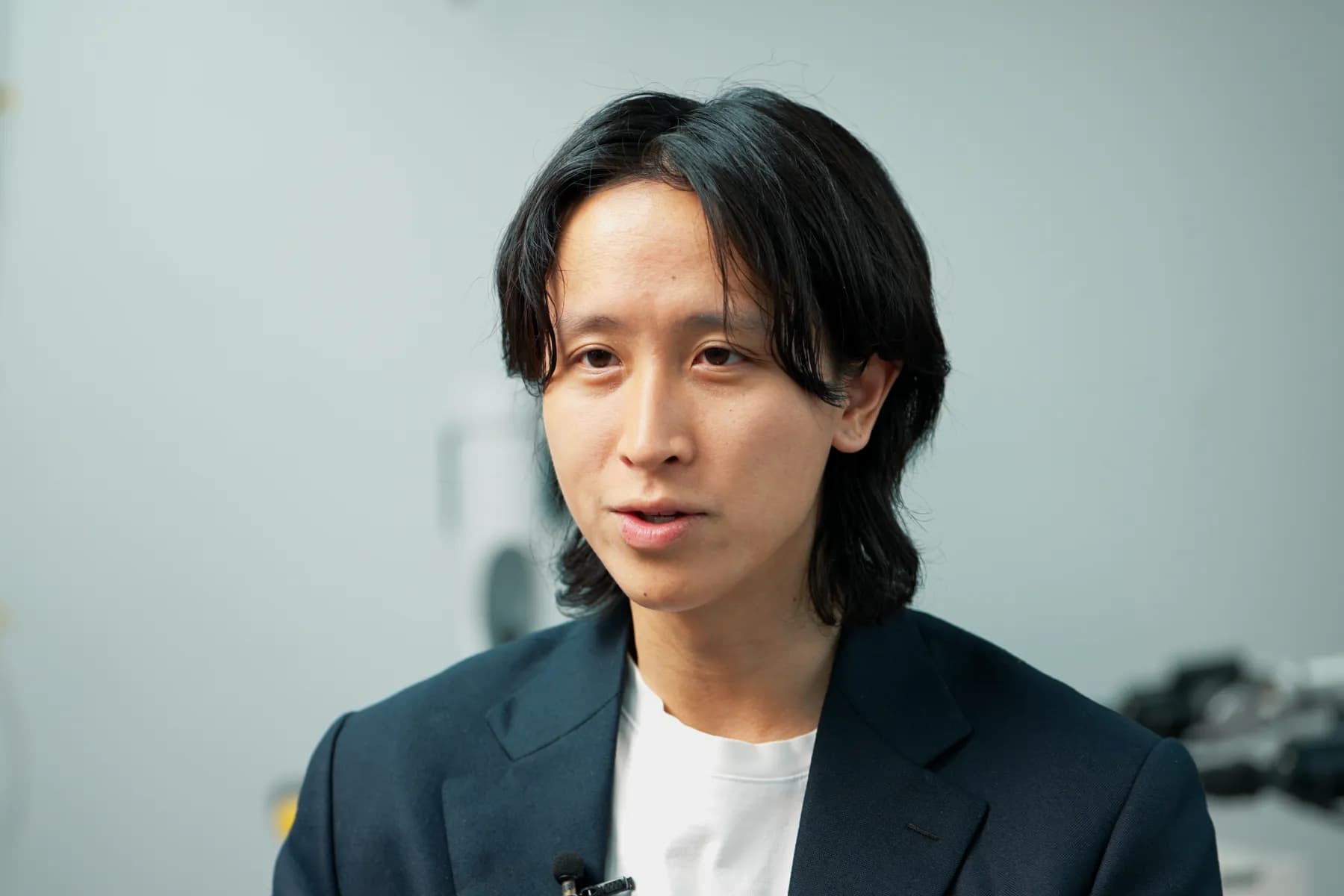
My name is Qasar Younis. I built Applied Intuition. Before this, I was the COO at Y Combinator, and before that I founded a company which was acquired by Google. And at the beginning of my career, I worked as an engineer at General Motors and Bosch.
Applied Intuition is a physical AI company. A lot of times people think physical AI is just humanoids, and humanoids is a very interesting form factor of physical AI, but I actually think cars and trucks and industrial equipment is something that can be made more intelligent and have a bigger impact sooner.
This is the Giga truck. It has some self-driving hardware on there. These trucks are running live on Japanese roads right now autonomously. Our mission is to put intelligence on a billion machines. The only way you do that is you take the same platform and you put it on lots of different machines. And why do you want to put intelligence into those machines?
Because those machines right now are pretty dumb. They require human beings to operate them. If you can put intelligence into machines, they can function themselves, and if they can function themselves, they provide a lot more value.
The company is over 1,000 engineers, or almost 1,500 people. The company is valued at $15 billion. Our products are deployed in dozens of countries around the world, in lots of manufacturers, in many verticals.
I grew up very much in the shadow of the American car industry losing its position as the best in the world. So I'm entering as an engineer an industry which was in a very volatile situation. My reflection on that was, if I stay in this industry and the industry shrinks, that could be very bad for me as an engineer.
So part of my ambition to become a founder was to control my own destiny. I left really great jobs at General Motors and at Bosch with really great companies to make my own company. It seems like a pretty risky thing, but 20 years later, it was the right thing.
The industry was very different when we founded Applied Intuition in 2017. Self-driving wasn't. People were not clear how self-driving would be built. It wasn't clear if self-driving would happen. It seemed like it was very research-oriented.
A lot of the AI breakthroughs hadn't happened, and this is really important. The transformer and this new architecture, which the large language models have really benefited from, also has a lot of impact in self-driving. All of these building blocks didn't exist.
Maybe the biggest point was we weren't sure if self-driving would ever happen. I think at that time, lots of self-driving car companies, many that don't exist anymore, were doing actually what some of the AI companies today are doing. One thing is they would try to go vertical.
They would try to build everything: the tools, everything, the data engine. Sometimes even the vehicles themselves; they're going to do robotaxi or they're going to do trucks. That becomes very, very expensive. At that time, we felt pretty strongly it's not obvious which vertical is going to work, and it's not obvious that being a vertical self-driving car company is actually valuable. A lot of times, companies will spend a lot of their resources and energies on things that actually the end customer doesn't really care about.
This is the inside of a car. This is a classic inside of a vehicle, and this is using some of our platform. And the big difference between these two is there's a lot fewer components here.
As you make a vehicle intelligent, you also want to change the platform that it's on. The traditional platforms are not really made for autonomy. They're not really made for intelligence. Each of the components are separate. With the newer version vehicles, we can reduce a lot of that onto individual compute.
And then you can put intelligence on there and you can do all these other non-intelligent things like rolling up the window and playing your music and things like that. The downstream impact is just a lot fewer components. I think the most exciting part is taking the same platform and putting it on so many different vehicles.
If you're building this type of platform or intelligence just for one vertical, it might never happen because it's too expensive. In most industries, the horizontal companies actually do really well.
Take, for example, data labeling. Every company can make a data labeling product for themselves to help label the data that they're collecting from their fleets.
But the end customer who buys the self-driving system doesn't really care: did they buy the data labeler, or did they make the data labeler? If you fast forward to today, there's a lot more horizontalization. So you can go and you can buy a lot of the parts of the stack, allowing you, as the self-driving company, to focus on just the most valuable and most important part of the self-driving problem.
The downstream impact of the 2017 approach is it required lots and lots of capital if you're building everything yourself in a very specific vertical. So you're taking the capital risk, and you're taking the market risk of winning the vertical. And that's why the vast majority of the companies have not made it to today.
And we said, okay. Actually, we should just provide the tools and let everybody try to figure out self-driving. And that was a very, very good move, predominantly because on the manufacturing side, so not on self-driving, but on the manufacturer side, they were always going to be interested in building a lot of this technology themselves.
One of my first, earliest engineering managers, in his office, had a sign that said "No problem can withstand the constant onslaught of thought." AI companies today are spending a lot of money. That doesn't necessarily mean that they will be successful. It doesn't mean they are automatically going to be unsuccessful, but it's more risk.
So I think the best founders are thinking about the whole problem. Some of the problems are the engineering and the technology. But the other problem is the business. And you want to make sure both of those things are working together. Having a fair amount of focus on commercialization, I think, is important.
Automotive OEMs work in a very competitive industry. I went to the General Motors Institute. I grew up in this extremely competitive industry. When you're in a very competitive industry, you're very thoughtful about how you spend your money, and therefore there has to be very clear value.
And so the way that it impacted us is we have to build products that have very, very clear value. There's no company on the planet, including in the Chinese ecosystem, that does physical AI in this breadth, that does it the way we do it, as a horizontal company providing that intelligence layer to all these other companies.
My biggest contrarian view is that you have to build a business model into the technology, and the technology has to be built around a business model. You can't add it on afterward. It's very hard to put in plumbing after the house is built. I think my biggest recommendation is to really think about commercialization earlier than you think you should be thinking about it.
Engineering Mindset: Measure everything
My previous experience is working as an engineer, and I spent a lot of time in factories. The huge impact, as anybody who has worked in factories knows, is it's a heavily processed area. You do X and the quality of the parts is Y; if you do a different thing, the quality of the parts is different, and throughput and efficiency, everything can be measured.
Think about a McDonald's, but times a million. A factory is just all these little things that have to work together. I think that reinforced in my brain this concept that even a company is almost a system. So I take the engineering mindset into business. And I think that's been very valuable for the company.
The engineering mindset is one where measuring things is important. It's one where being truthful is important. Let's say we're talking about art: sometimes it's up to somebody's taste. They like this band. They don't like this band. They like this painting. They don't like this painting. Physics is not like that.
Material science is not like that. It's an absolute: a product functions in the way that you designed it or it doesn't function. Let's say you're designing something simple: a door and the hinge and the knobs and then the heat transfer between rooms. Those are things you can measure. If you make a door and I make a door, one of those doors will be better.
If you make a painting and I make a painting, it's not actually black and white. So once you take that engineering mindset to business and starting a company, then you come up with the same types of deep, hard questions where you try to objectively answer: Is this going to be a better product strategy?
Is this a better hire? Is it a better investor? Why are we doing this? This is the reason we're doing it. You can boil all of our values down to two words: radical pragmatism. Radical pragmatism. Another way of saying that is being intentional. Who becomes an investor of ours? We're intentional about it.
What product we should get into? We're intentional about it. Should we open an office in Korea? We're intentional about it. And so we don't just open an office and hope there'll be some business there. We should build this product because it's going to be demanded by our customers. What do they want? What do they need?
What are they good at? What are they weak at? Why would they buy this from us? How much would they pay for it? We write all those things down. Intentionality and writing things down are the same thing. Even if you make the wrong decision, then you can go back and you can understand where the mistake in your logic was.
Hard-Won Lessons From Thousands of Startups
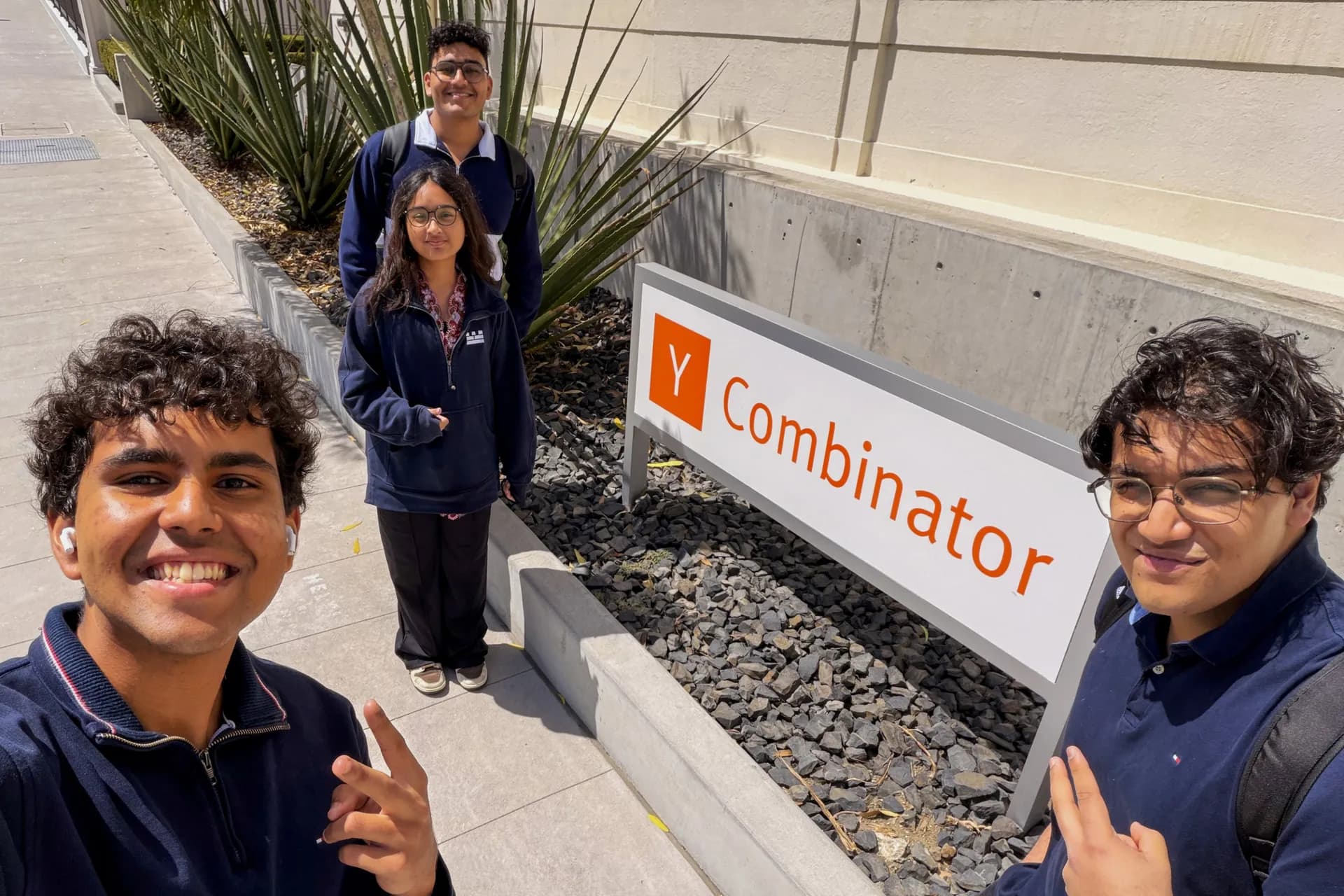
Y Combinator taught me a lot of things that I don't think I could have learned by just being a founder. I saw lots and lots of companies, thousands of companies, in my time there. If you're in a relationship, you only have that experience. But if you're a couples therapist, you see lots of relationships. So YC is like couples therapy.
And so then you start seeing the patterns of functioning co-founder relationships. A good co-founder relationship is one where the two or three complement each other really well. I would never recommend doing a company with four people or more. There's just too many people who are now trying to lead the company, and there's just simple logistics, because then you have to get four or five people together to make a decision.
And I would highly recommend against doing it alone as well, because having multiple people brings a higher likelihood that you have all of the skills. I think emotional compatibility is really important, as in how you lead, how you give feedback, how you talk to each other. I think similar ambitions too.
You can't have one co-founder that works really, really hard and another co-founder who doesn't want to work hard. You can't have one co-founder who wants to build a generational company, and another co-founder who just wants to get rich. You have to make sure you're aligned. Also, picking the right market.
I saw lots of really hardworking, good co-founder relationships, smart people who are just in the wrong market. Imagine if we were trying to sell ice, a very simple product, just ice. If you're trying to sell ice in a cold area, not a lot of people are going to buy it. You sell ice on a hot day, a lot of people buy it.
And that simple analogy is actually really true. So sell ice in the hot weather. The mistake first-time founders make about product-market fit is they think it's like a destination, and product-market fit is really more like a state. It can go away, and you're trying to wonder if you have product-market fit.
The proxies are: are people willing to give you time, or are they willing to give you money? But you should be pretty cynical that you don't have product-market fit. I remember for us, even when we had $10 million in revenue, I wasn't quite sure if we had product-market fit.
Your product sits in a dynamic market. There's other products and other companies and other technologies, and it can always be substituted. So you're always re-getting product-market fit.
A good example of this would be Coca-Cola. Everybody knows Coca-Cola. But Coca-Cola spends a lot of money on marketing. So why is that? It's because the fit, the consumers wanting to drink a beverage, is temporary. If they forget about it, they'll stop buying Coca-Cola. So product-market fit is earned every single day.
The way we stay within the product-market fit zone- maybe that's the better way to put it rather than "have product-market fit," is that we're constantly talking to customers. Are they using the products? Is it making an impact on their programs? Are we getting products into production?
If you remember in the app universe, when the iPhone was becoming big, there were many apps that people would download but they would never use again. Founders would say they have product-market fit because they have a million downloads, but a million downloads is not an indication, because if nobody uses it again, that's not product-market fit.
So I think you have to be very honest as a founder. Are you in the zone of product-market fit or are you not?
Read deeply, think clearly, and aim higher
I don't believe you can be very successful and not read a lot. I'm reading this book called I Am That. It's actually an Indian spirituality book, and it talks about more of a Hindu philosophy about detaching from the world around you and how that lets you see things more clearly.
I think there's something about reading a book that takes hundreds of pages and continuous focus. I have a book list on my own website, which are actually my favorite books and the ones that impacted me a lot.
Sam Walton's Made in America is a really great book. Mahatma Gandhi's autobiography is really good. It's called My Experiments with Truth. Nelson Mandela's Long Walk to Freedom. An extremely good book. When you read that, it makes these other books look like disposable chocolate.
The root of my ambition is to control my own destiny. Why I want that, I'm not sure. Maybe it's because I moved from Pakistan to America as a child, and it really created a lot of tension in my brain as a child. Maybe. But I think a lot of who I am is from my experience of being an immigrant, my experience of being in a working-class family.
And so fear was a part of our existence all the time. You're already living in fear. It's always there. You don't have enough money to make the bills, and to make the things you're always living for. So I always had a tolerance of fear. I have a high fear threshold.
In business, especially technology businesses, because I like technology, I like engineering, it's really hard to get to the top. I mean, even in Silicon Valley, $15 billion is an impressive company. But right down the street is Nvidia, which is like $4 trillion. So it always keeps you humble. Yeah.