Aug 19, 2023
Why 90% of Startup CEOs Are Failing
Interview with John Kim, Founder of Sendbird
Founder Focused

💡
At a Glance
- Who: John Kim is the Founder and CEO of Sendbird. He moved to Silicon Valley from South Korea to build a global developer platform, ignoring widespread warnings that a Korean startup could not succeed in the US market.
- What: Sendbird is an enterprise conversation platform that provides chat, voice, and video messaging APIs for mobile and web applications.
- Traction: Valued at over $1 billion with $220 million in total funding raised, 340 employees across seven countries, and powering over 250 million monthly active users and 7 billion messages for clients like DoorDash, PayPal, and Reddit.
John Kim defied widespread industry skepticism when he relocated from South Korea to Silicon Valley to build an enterprise API company. By establishing a tight 24-hour product feedback loop with early developer customers, Kim turned Sendbird into the leading conversation platform for mobile applications. Today, Sendbird is a unicorn valued at over $1 billion, powering seven billion monthly messages across major apps like PayPal, Reddit, and DoorDash. Kim's experience outlines why founders must commit to ten-year horizons, how corporate culture acts as an organizational superorganism, and how CEOs must continuously seek guidance from peers two stages ahead.
Key Takeaways
Choose A Company You Can Build For Ten Years
John Kim warns that founders often choose ideas because they are timely, then quit when the work becomes harder and slower than expected. His test is simple, which is to imagine doing the work for ten years, because durable commitment matters more than temporary market excitement.
Talk To Customers Daily And Ship Within Days
John Kim expects founders to speak with three to five customers a day, then connect those conversations to rapid building. At Sendbird, promised follow-up within 24 hours, weekly delivery when possible, and two-week sprints kept customer learning close to product iteration.
Culture Is A Superorganism Built Through Daily Habits
John Kim describes culture as a superorganism whose combined behavior exceeds individual values. Because habits change slowly, leaders must create iterative feedback loops and live the standard daily, because written values matter only when execution, decisions, and treatment of people consistently embody them.
Study Companies One Or Two Stages Ahead
As Sendbird grew, John Kim sought companies and people one or two stages ahead, interviewing several to identify repeatable patterns. Working backward from the next stage then clarified which skills, hires, coaching, and resources the team needed to reach it.
Longer Time Horizons Make Bigger Risks Possible
John Kim connects Sendbird's move from Korea to Silicon Valley with a willingness to take a bet others called impossible. The experience expanded his time horizon, because confidence grows when a difficult choice produces positive feedback, making the next ambitious decision easier.
Watch the full interview now on EO's YouTube channel! Below is the complete transcription of the interview. Minor edits have been made for clarity and readability.
Introducing John Kim, Founder and CEO of Sendbird
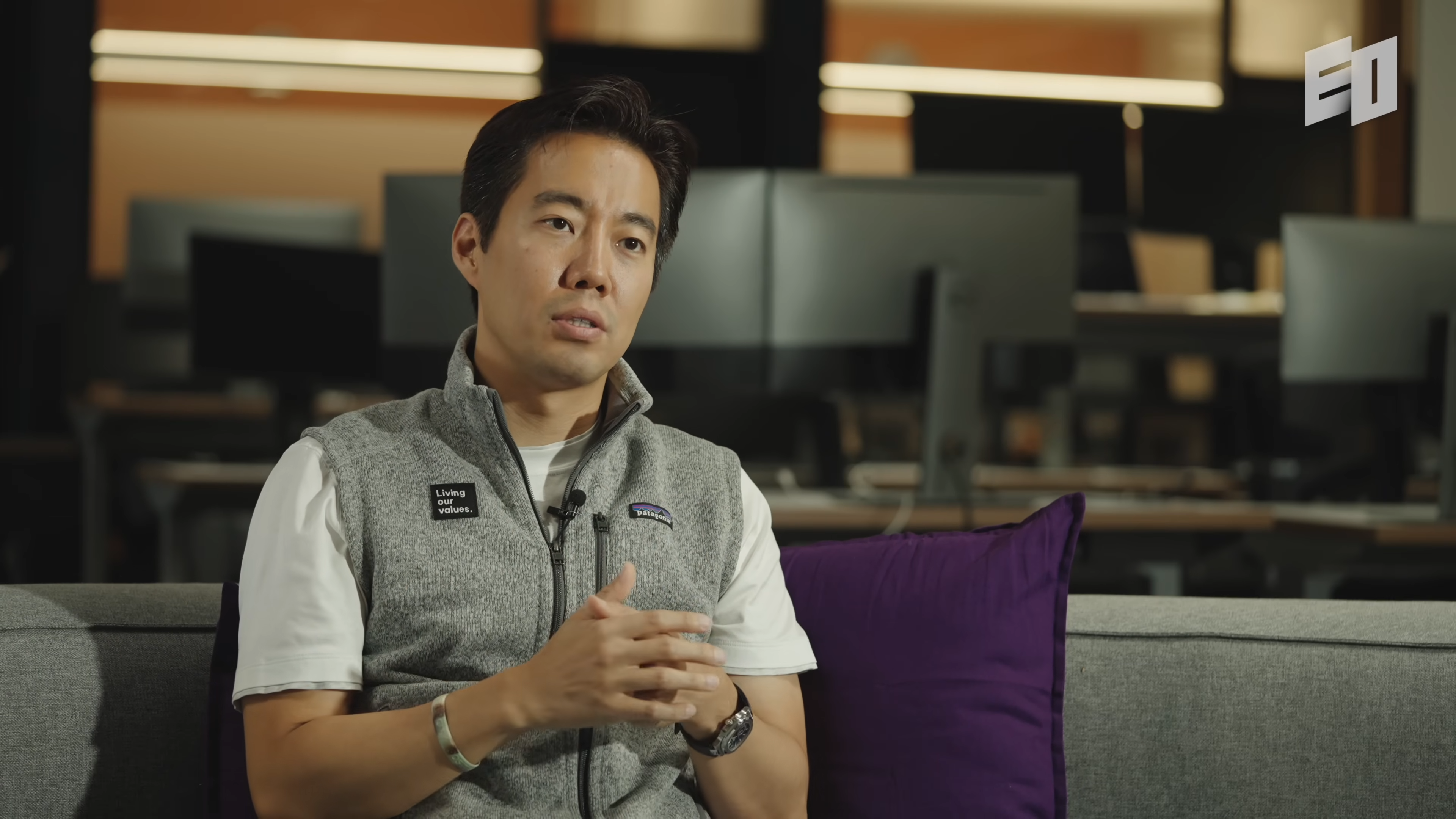
Hi, my name is John Kim, founder and CEO of Sendbird. We are the world's leading conversation platform for mobile applications. We power a quarter billion users on a monthly basis, sending more than 7 billion messages, powering major applications like DoorDash, PayPal, Reddit, Yahoo Fantasy Sports and Krafton in Korea. Today we have over 340 employees globally in 7 different countries, and we have collectively raised over $220 million in funding, valuing our company at over a billion dollars.
Can You Do It for 10 Years?
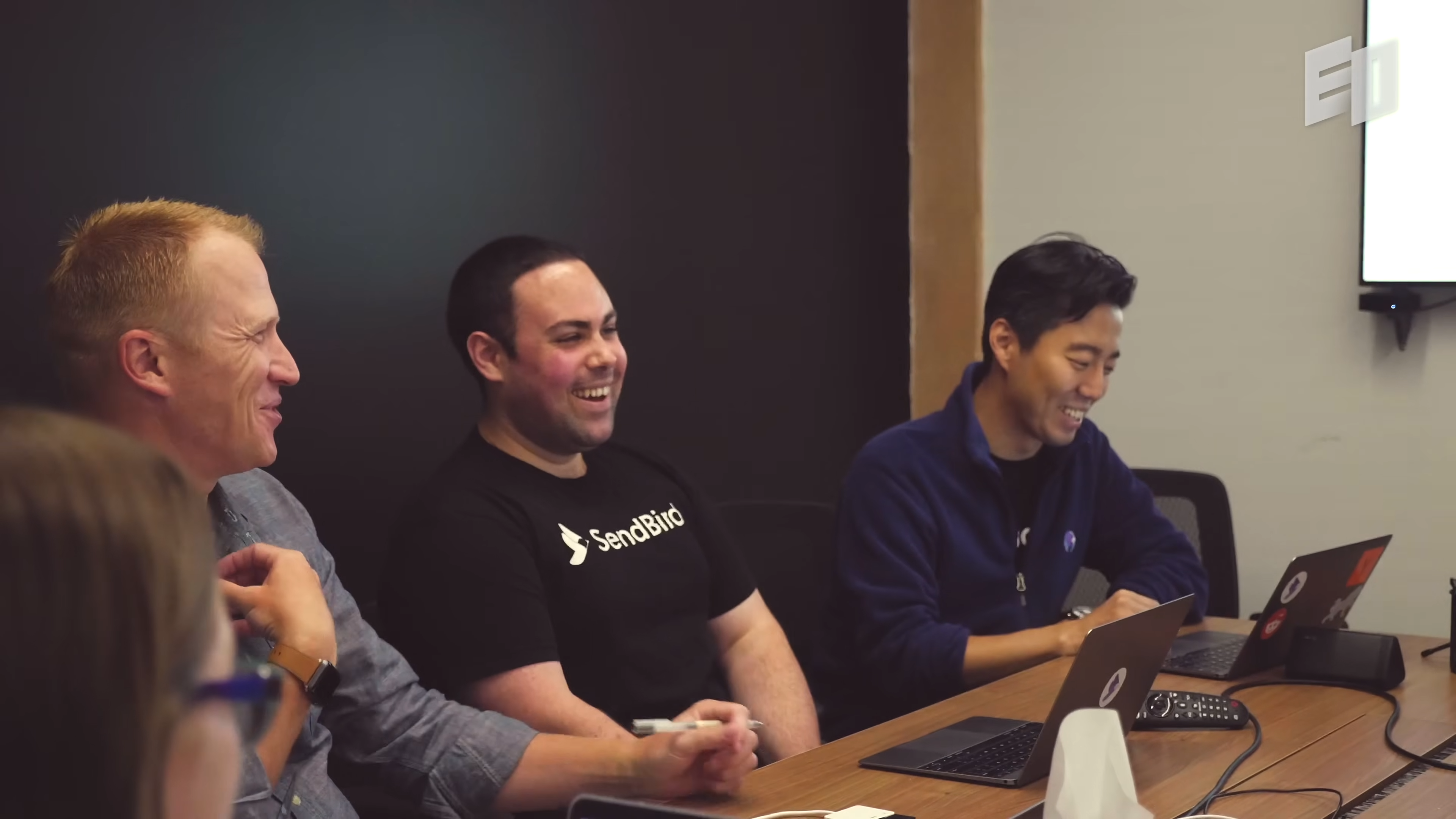
Something that a lot of first-time founders don't really think about is that they look for market trends or opportunities they think are interesting and timely, but a lot of founders pick ideas that are not really aligned to their own strengths. What ends up happening is that after two to three years, they realize that pretty much whatever you do is harder than you think. It will take longer, it will be harder, so a lot of smart people end up giving up too quickly. It wasn't really something they wanted to commit to for the next 10 years.
Whatever the next thing you pick is, try to see if you can really commit to the idea. Imagine yourself doing that for the next 10 years, which is very, very hard. But if you can really see yourself in the next 10 years doing that, hopefully greater at scale, that is one of the important questions I would ask myself when starting my next company. Can I commit to this for the next 10 years?
Talk to Users

I'm still surprised by a lot of founders when I ask them how many customers they talked to last week. They say, oh, I talked to 3 customers last week, or 5 customers last month. I say, are you kidding me? You need to be talking to 3 or 5 customers a day.
People who are good at one thing tend to overlook the others. For instance, if you're an engineer and you love building great products, you will be naturally biased towards spending more time on product. So instead of spending more time with customers, you think you have an idea about the customer and you try to go build it before even talking to customers or validating it with them. If you're very outward facing, you'll be attending so many networking parties, going to every single conference and every single speaking event, but you don't go back to the fundamentals of building a strong product. So think about what your strengths are and make sure you are balancing talking to customers and building a fantastic product. Try to deprioritize everything else. None of that really matters until you find a strong product-market fit in the early days.
In the early days, when you're trying to find product-market fit, the loop was within 24 hours. You talk to a customer. In the evening you build something. The next day you follow up. 24 to 48 hours is when you follow up. When I was doing the sales call myself, towards the end of the first call I would say that within 24 hours you'll hear back from me on pricing or next steps, and within 48 hours you'll get a call from me. I always tried to set that milestone in my very first call for when I would follow up. If it was a future development, they would surely know at least whether we're going to deliver it or not within 24 hours, and if we do, we'll probably ship it within one week.
We have about a two-week sprint, so every two weeks we're releasing something new about our product. That is our level of iteration. Once a B2B company gets to a certain scale, you can't do daily releases. That will alarm some customers, because they integrated one way, and the next day the documentation changes, so they're going to be alarmed. You want to manage expectations about cadence a little bit, so you build in a two to three week cadence. It's a matter of days, if not a week.
Build a Great Culture
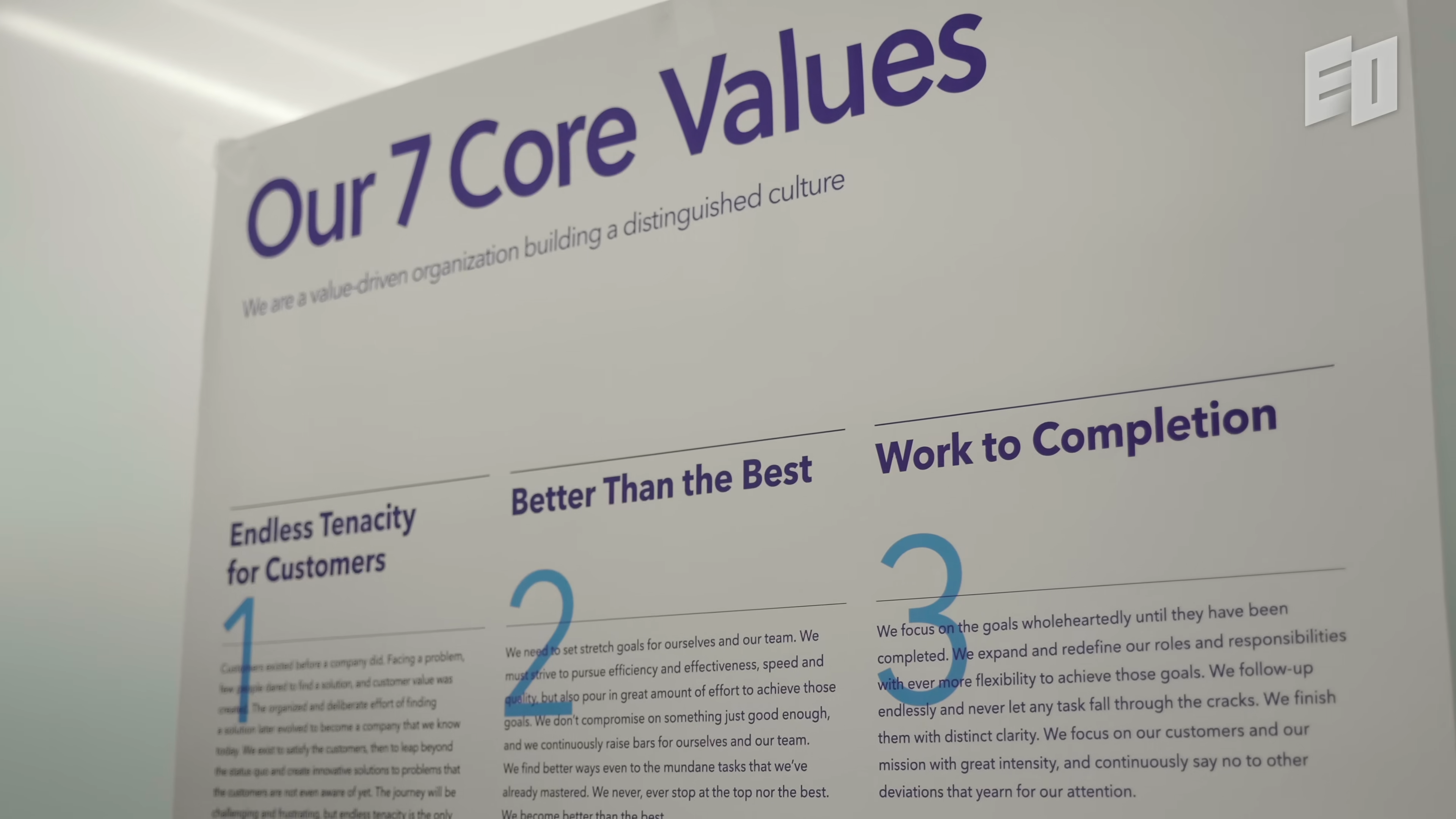
The way I think about culture is organizations as superorganisms. It's a collection of people, but the collection is greater than the individuals combined. So 1 plus 1 is not 2. Ideally it is 3 or greater. If you were to look at a single person, that person has a set of core values, and they may have dreams and aspirations. If you map that to an organization, you can think of the culture as personal core values turning into corporate core values. The organization's strengths and weaknesses collectively become what we label as culture.
A culture is like muscle memory. It is very hard to change a habit. It's very hard to just say, hey, today we're going to define our culture as X, Y, Z, and we're just going to change this way. It doesn't work like that. It's a collection of people's habits, again like a superorganism, so you have to really nudge and create an iterative feedback loop. It's a slowly evolving system. That's why it's so critical. Your day-to-day decision making, day-to-day operation and everyday execution is really dictated by the culture of your organization, not by a couple of checklists. It's not what you write on the wall, it's what you do and live and breathe every day, and that is the culture.
I came to realize the culture of a company is super important even way before I did my first startup, because I used to work at other companies before finishing school. We had 100 employees. The CEO had studied abroad and had a PhD. It was pretty cool. It was like an earlier version of Starlink. Then I started to see the company not execute well and miss its goals. I think what really drove down the company was the culture. The leadership was disconnected from what was happening in the field, and then I started to see a lot of good people leave first, while people who were a little toxic and weren't doing a good job, but were great at selling to their senior bosses, were getting more power and more roles. I could tell that these guys were playing StarCraft all day long and were not working.
If I were this person, if I were the CEO, what would I do differently? What would I have done differently? Ultimately I came to the conclusion that if they had a very strong culture of understanding and empowering good people, and of knowing what was happening in the company, maybe they could have had a different outcome.
So when I started my first company and also my second company, we started out with a mission statement and a set of core values. We do workshops. We try to get the early employees and the management, including the founders, to get together and spend maybe a day talking about core values and the culture of the company. Since then we've always thought culture was one of the most critical operating systems of a company.
Find Your Next Step From Others
People have to realize that if your company is growing quickly, you don't really have the time to organically learn the things you need to learn, meaning the skill sets. So my general advice is to continue to seek out companies or people that are maybe one stage or two stages ahead of you. I think this is generalizable beyond startups, to anyone seeking fast growth in their own professional lives and careers.
What does greatness look like? Seek out people who've been there and done that before, and try not to connect with one person, but to interview three, five or ten people, to see the general pattern of what greatness looks like that will get you to the next level of the company, the next stage, maybe 12 months from now or 24 months from now. Seek out people who have gone down that path a few times, and then you'll start to find this pattern emerging. What are the things that you need to have 12 months from now, or 24 months from now, that you currently don't have? Then try to build a path toward that. It's almost like Amazon's or Jeff Bezos's mantra of working backwards.
Think about what your end game or next stage looks like, then figure out your steps to getting there and who you need to work with, whether that is upgrading or coaching your existing team, or recruiting from somewhere else to really level up your leadership. Ultimately, the job of a CEO is to do 3 things. One is to get the strategy right for your company and make sure it's executed. Get the right teams onboarded. And get the resources, whether that is fundraising or allocating your resources. Strategy, people and resources are how you navigate to the next level.
Risk Great Things

Have bigger dreams, have a longer time horizon, and have the patience to dare and to risk greater things.
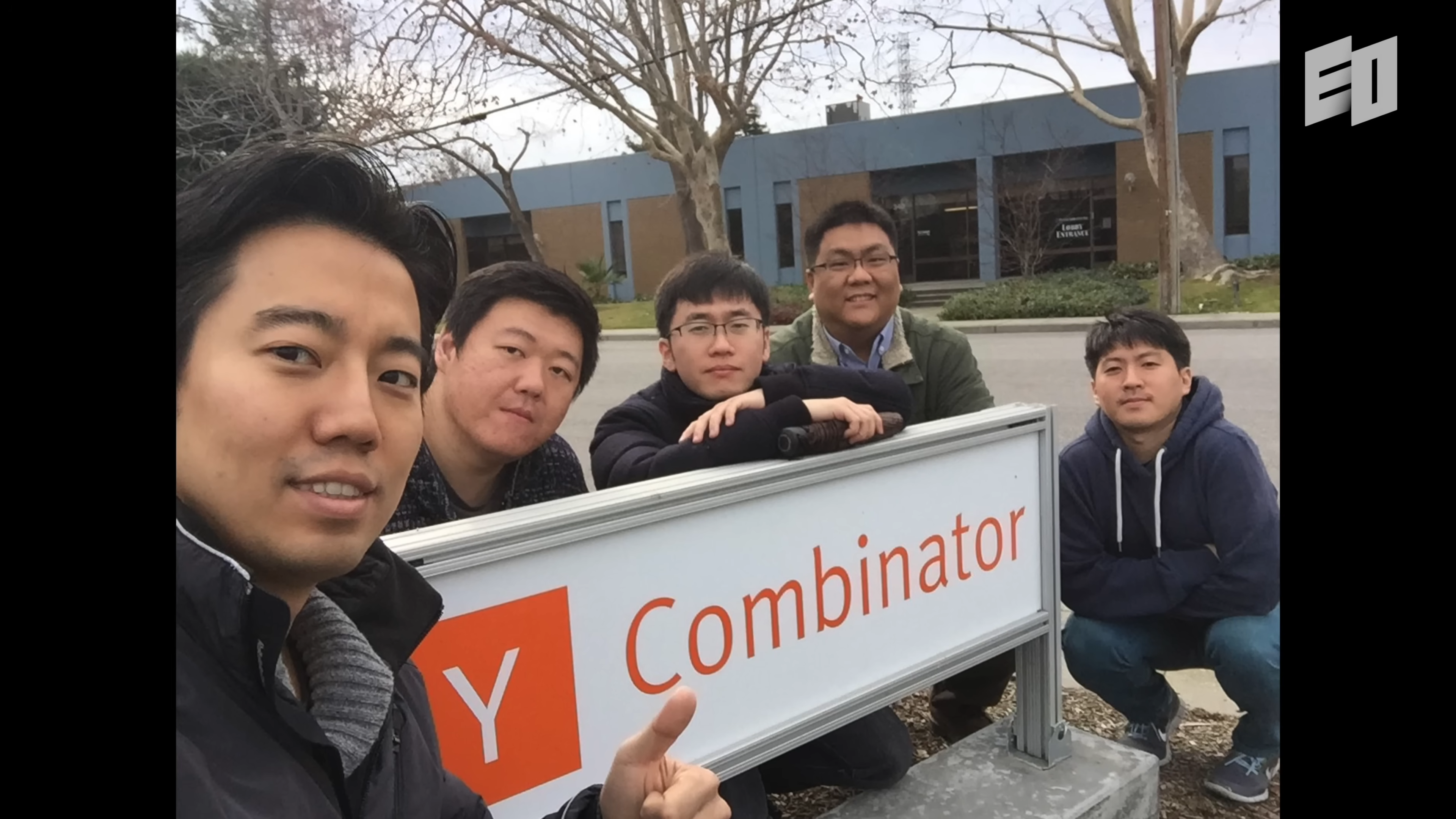
I believe that probably gave me more confidence to be able to do something like this, coming to the US when everybody said no, you can't do it. We couldn't really find a playbook of a Korean startup coming to the US and doing something in Silicon Valley, and literally everyone I spoke to, whether here in the US or in Korea, said it cannot be done. That's stupid, that's too risky, you'll lose all the money and your time. But being able to take that bet probably came from that first-time experience, being able to achieve something, have the positive feedback loop, and increase the time horizon of the next journey. I think that is probably one of my greatest learnings.