Sep 30, 2024
How I Built an $80M Annual Revenue Business in Just 5 Years
Interview with Steven Zhao, Founder of Sandbox VR
Founder Focused

💡
At a Glance
- Who: Steven Zhao is the Founder and CEO of Sandbox VR. An immigrant who began coding games at age 12, he studied electrical engineering at UCSD and ran Blue Tea Games in Hong Kong before pivoting to location-based virtual reality.
- What: Sandbox VR builds full-body, motion-tracked VR retail locations where groups of friends play original and licensed multiplayer experiences.
- Traction: Reached $80 million in annual revenue across 47 global retail locations, secured Series A backing from Andreessen Horowitz, and partnered with Netflix on major IP titles like Squid Game.
Steven Zhao risked his remaining capital during the 2017 VR winter to open a small, motion-tracked virtual reality room in Hong Kong. By using software algorithms to lower camera hardware costs and building viral social video sharing features, Zhao expanded the concept into Silicon Valley, winning investment from Andreessen Horowitz. After navigating store shutdowns and Chapter 11 restructuring during the pandemic, Sandbox VR expanded to $80 million in ARR across 47 global stores. His journey shows how custom distribution hooks build consumer demand, how economic discipline protects retail models, and how persistence overcomes extreme external crises.
Key Takeaways
Build For What Will Be Popular Later
Steven Zhao's first game company struggled because it adapted too slowly when gaming shifted from PC to mobile. He carried that lesson into Sandbox VR, arguing that founders should anticipate what people will want one or two years ahead because products take time to finish.
A Failed Consumer Game Led To Location Based VR
Sandbox VR's consumer game sold well enough to rank among the top sellers, but the market could not support the business. Steven pivoted toward group experiences in physical locations, pursuing deeper immersion and social interaction rather than forcing the original consumer model to continue.
Resource Constraints Can Improve Scalable Product Design
With little money and an expensive full-body tracking problem, the team used software to reduce the number of cameras required. The constraint produced technology that lowered the cost of every future location, turning an early limitation into a scaling advantage.
Build Distribution Into The Product Experience
Sandbox VR turned customers' funniest and most embarrassing moments into shareable videos after each visit. That product feature generated word of mouth without a large marketing budget and taught Steven that a company must design a distribution strategy alongside the product itself.
Survive Crisis By Rebuilding The Business Model
When COVID-19 closed every store, Sandbox VR lost about 80% of its team and entered Chapter 11 because of its leases. The remaining team used the shutdown to improve technology, operations, content, and margins so reopening could support stronger demand and economics.
Social VR Could Become The New Movies
Steven sees Sandbox VR as an outing people choose with friends, family, or colleagues rather than a screen-based activity they consume alone. More locations create demand, content investment, and franchise momentum, supporting his vision of neighborhood venues that make shared immersion routine.
Watch the full interview now on EO's YouTube channel! Below is the complete transcription of the interview. Minor edits have been made for clarity and readability.
Introducing Steven Zhao, Founder of Sandbox VR
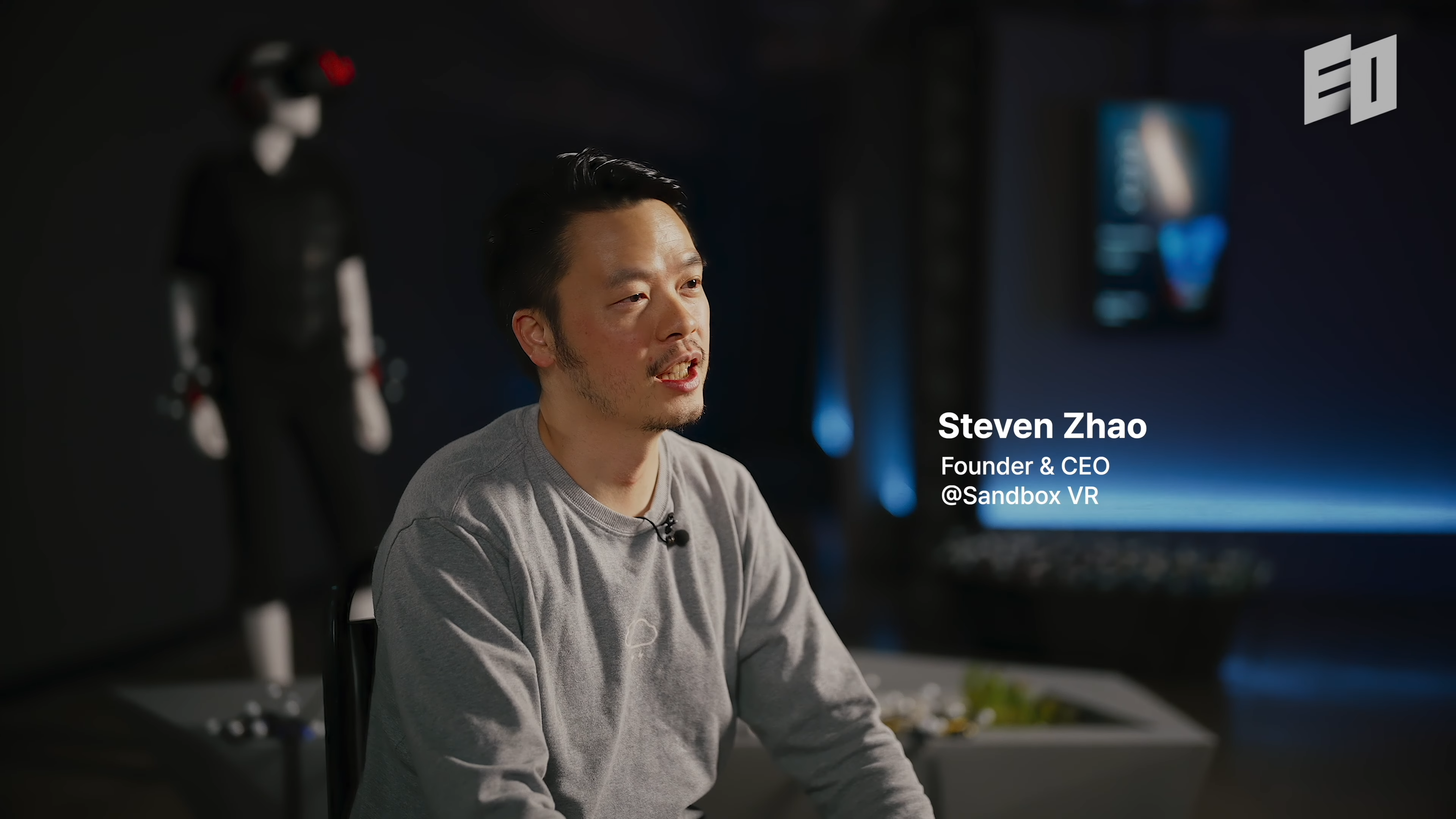
My name is Steven Zhao. I am the founder and CEO of Sandbox VR, and what we do is provide full body VR experiences for friends to play together in our retail spaces. We create our own technology to enable that, we create our own content, and we both open our own locations and franchise them out. Today we have 47 locations, so we grew pretty quickly.
We have eight pieces of Tidal, and not just original IP. We are also working with Netflix, so Squid Game is in Sandbox. Rebel Moon is going to come out later this year, and we hope to continue the partnership with them and with other IP holders.
Lessons Learned from Pivoting the First Game Company
I grew up in San Francisco, and as a child I spent a lot of time pretty much alone, doing a lot of reading and sometimes playing games. Part of that is the immigrant story. Both my parents immigrated here when I was a child and they worked long nights, so I had a lot of time to myself, just doing my own things. Luckily, at a young age my parents got a computer, and I really started to figure out how to use that machine.
One day a friend showed me a game creation software, which I put into the computer, and I started making games. It became a hobby of mine. So since 12 years old, I've been building games. I studied electrical engineering at UCSD, University of California, San Diego.
After college, I moved to Hong Kong to build a gaming studio called Blue Tea Games, where we made PC and mobile games. We grew from two people to 40 people, and it was pretty successful for a time. During that period PC was pretty hot and people downloaded games onto their computers.
But the shift to mobile created a brand new way of playing, and personally I did not adapt fast enough. I was late to the mobile space, and because of that, when we transitioned to mobile we did not catch up and we were not able to create games that could be successful. That was a pretty big learning for us, which is to always look at what is trending in terms of technology and how you build for that future.
When you build a game, it is important not to build what is popular today. Because by the time you finish, you will be nine months too late. What is going to be popular 1 or 2 years down the line? From my first startup at Blue Tea, we failed to do that and we were not able to scale.
It was around 2015 when we saw that VR was becoming very hot. So we decided to take our learning as a game developer and bring it to a whole new medium, to double down on VR, and to do it with a brand new company. That is essentially how Sandbox was formed.
When we started the company we were doing two things. Number one, we were building games for the VR consumer market. A part of us also took our learning back at Blue Tea, which was that you always want to build for the future. What do people want 25, 10 years in the future?
We felt like the consumer VR headset itself was not enough. We want to be fully immersed. We want to be able to interact closely with friends. To us, and I grew up watching The Matrix, the question was whether we had the technology to actually create the Matrix. And then we looked back, and we did.
So we did a regular consumer game and we basically iterated on what the Matrix looked like. Come the end of 2016, we launched a consumer game. It was a top 10% best selling game, but the market just was not there, and we were not able to make enough revenue to keep the company going.
So at the end of 2016, all our bet went into building this other project, which is now Sandbox VR, a location based VR experience for a group of friends to play together. For us, that was our pivot. At that time it was what we call the winter of VR. The Christmas sale did not live up to the hype people thought VR had, and trying to raise in 2017 was essentially impossible.
So we had just two months of runway left, and I really wanted to build this physical space in VR. None of the investors came in. One of the investors would ask us, well, you are just a team of six people. We did not have a big team, so that was one big challenge we had.
How a Small Hong Kong Game Company Successfully Entered the US Market
The second challenge we had was that we were not located in the US. There is a geography challenge, because our team is based in Hong Kong, and that comes with a certain type of perception. Really, you are not in the dominant market, so how do we know that this is something that can work in a different country?
For us, we had to build our technology, build our content and build our retail locations, so there was not a lot of money to come around. We had to be very resource creative, and for us that meant figuring out how to use technology to solve something that would otherwise be solved with a lot of hardware. For instance, in order to do full body tracking you need a lot of cameras, but each camera was very expensive, so we spent a lot of time figuring out how to use software to minimize the number of cameras. This turned out to be a blessing, because it was very important later down the road, as we scaled, that every location would be as low cost as possible.
Another challenge we had, in terms of being resource constrained, was figuring out how to get people to come to our location. One of the hardest things is marketing your business, and as a small company you do not have a big marketing budget. So we had to be very creative about how we get people to come.
We decided to productize it. We would create a software video that we give to you after you come and play, and this video captures the most embarrassing and funny moments of you playing with your friends, so you can easily share it on social media. When we created that, every customer who came in started putting it on social media, and it generated an insane word of mouth.
That taught us two important things. Number one, if you look really deeply into every problem and really analyze it, there is probably a creative way to solve it with fewer resources and get a much better outcome. The other thing we learned is that it is not only important to build a product, it is also really important to build a distribution strategy for that product.
At that time, I took all the money I had and I put it into Sandbox, and then in six months' time we built the technology infrastructure and we opened a really small shop in Hong Kong. I remember vividly a story where we tried to hire a game producer and he asked how Sandbox could beat Sony or Nintendo or any of the big VR players in the United States. Of course, coming from a Hong Kong company, where we had never seen success at that scale in Hong Kong, that was a very valid question.
What I told him was that I always believed that in order to make a big change, you have to have a direction that is uniquely different. For us, we believe that what we are building is something that no one else in the world is doing right now.
The moment we felt like we had product market fit was during a test run, before we even launched the product. My friends came and played, and with that experience they were screaming and yelling, so loud that the neighbors came knocking on the door asking if everything was all right. We did not know the type of visceral reaction a customer would have, and we felt that reaction was something that had never been done before. We thought, there is probably something there.
After we got product market fit in our one Hong Kong location, we got funded by Gobi and Alibaba, and that allowed us to really build out our location, to fine tune our unit economics, and to start franchising. At that time things were going well, but one of the biggest pieces of feedback we got was that this works in Hong Kong and it could work in Asia, but it probably would not work in the US. That kind of pissed me off.
So I thought, you know what, we are going to bring this to the US, and we decided to open in San Mateo in the heart of Silicon Valley. We put the location there and people came and played. Many of the people there, if not all of them, said they had never experienced anything like this before.
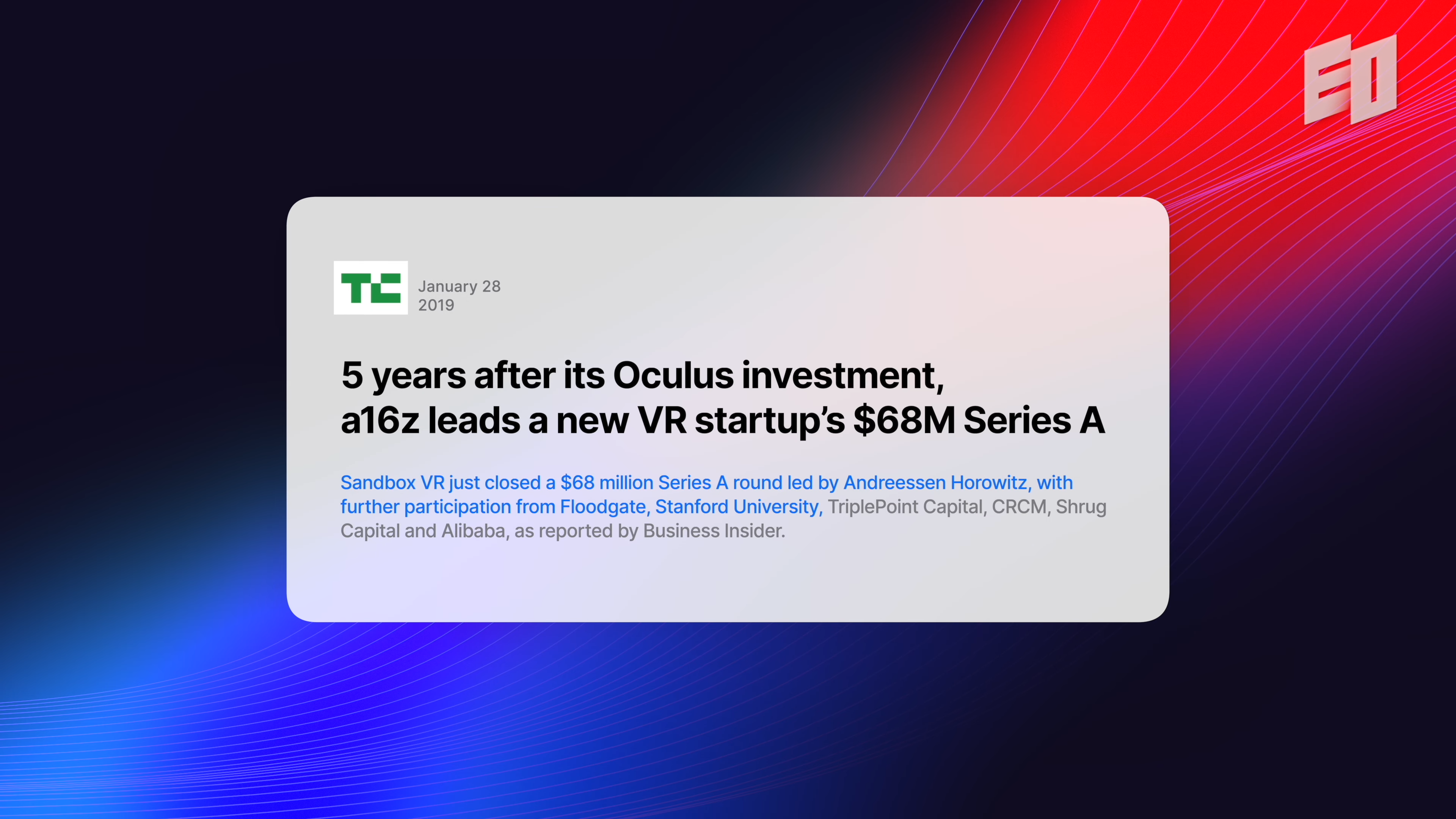
Pretty soon, I remember, Mark Andreessen and Ben Horowitz came and tried it out. The partners did, and they said, Yeah, this is really awesome, we are going to bet on you. That became my Series A, and the funding allowed us to really scale up the business and open about nine locations across the US.
I remember we were sitting here in the San Francisco downtown location. This was in December 2019, and we were very excited, because this is our flagship store and we were able to share it with the world. Of course we were ready for the next stage, which is getting to Series B. But a couple of months later the whole world shut down. The World Health Organisation had officially given the coronavirus a new name, COVID-19.
Around March and April 2020, when the pandemic hit, all the stores that we had were closed right away, and we did not know how long this was going to last. At the beginning I thought it was a funny joke. It is already really hard to run a startup, and it is really hard to run a retail startup.
The first thing we did as a company, unfortunately, was downsize, and it was pretty dramatic. We lost about 80% of our team, and you can imagine morale was at an all time low. Of the people who stayed, a good amount of them left as well in the months following that.
From $68M Series A Funding to the Brink of Bankruptcy
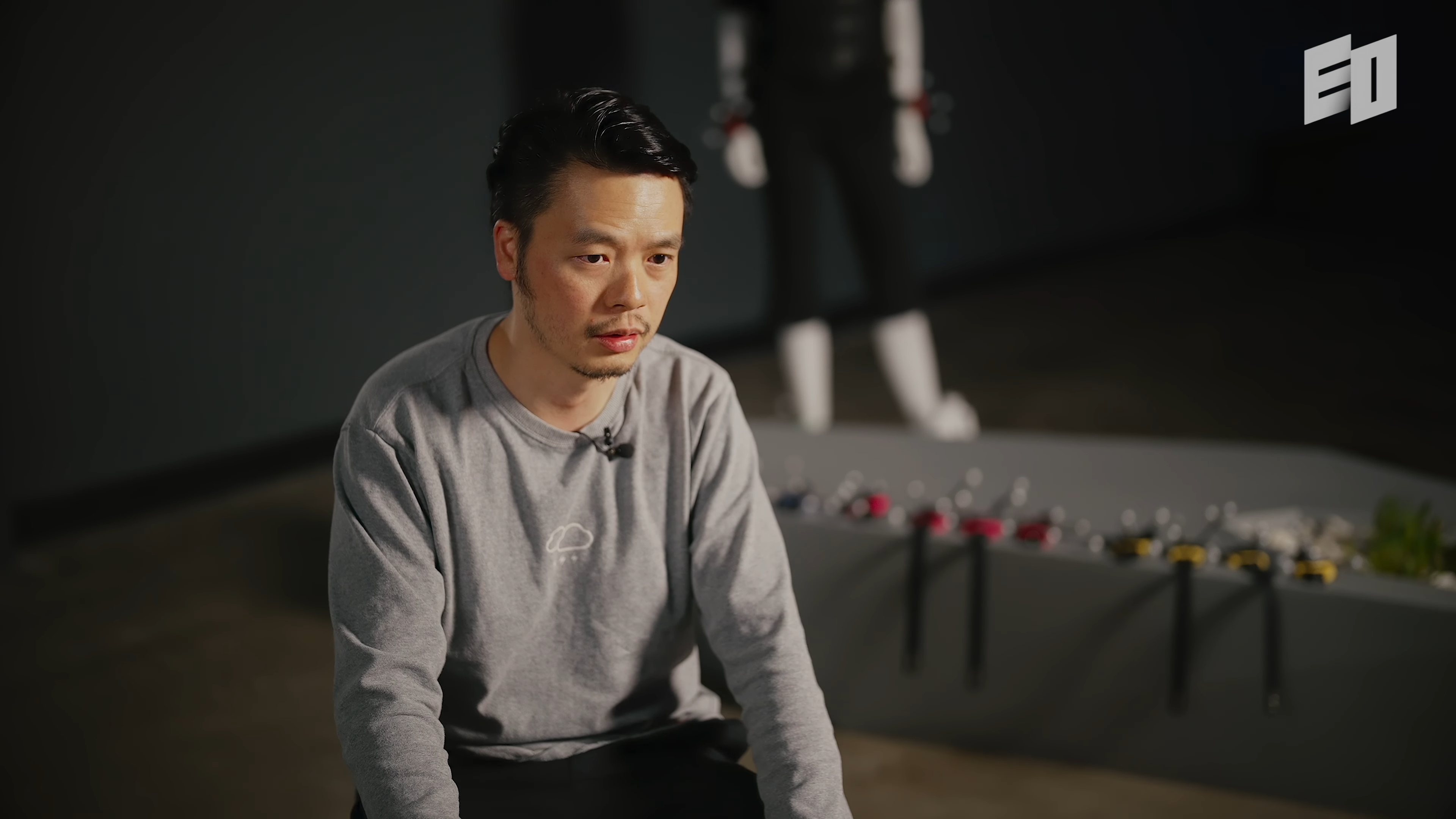
So the number one thing we had to do was keep the team motivated, and have that vision of surviving COVID and what that would mean for Sandbox and for us. It was just repeating that message and being a cheerleader, saying we can fight through this, and this is one of the biggest tests for any of us. It is a tough story, and something that you will be proud about even if you fail. That is what we wanted to set, having a really strong story of the future.
The last part is that we had to go through Chapter 11 bankruptcy, because as a retail business we have a lot of leases and there was no way to get out of the leases at that time. So we had to go through Chapter 11 to get an emergency and work through it with our landlords to figure out how we survive out of this. That was just a lot of collaboration with the people we owed money to, and we worked with different lawyers across different groups.
But during that period we also took the opportunity to really fine tune our business, down to the minor, minor details. The question was how we build the most economically strong retail that we can, in terms of how we improve our technology, our operations and our content. That way, when we open back up again, not only will we be very strong and have people come back in droves, we will also have a very strong profit margin, because that is what we need to come out of this.
Around that same time in 2021 is when the world started to open up again, especially for our stores in California, and the moment it did, people came back in droves. I remember an incident where the mall was completely empty, but 100% of the customers booked online. We had to wait for customers in the parking lot to guide them inside an empty mall to our store, and I saw that across other locations. Very soon the locations were filled up.
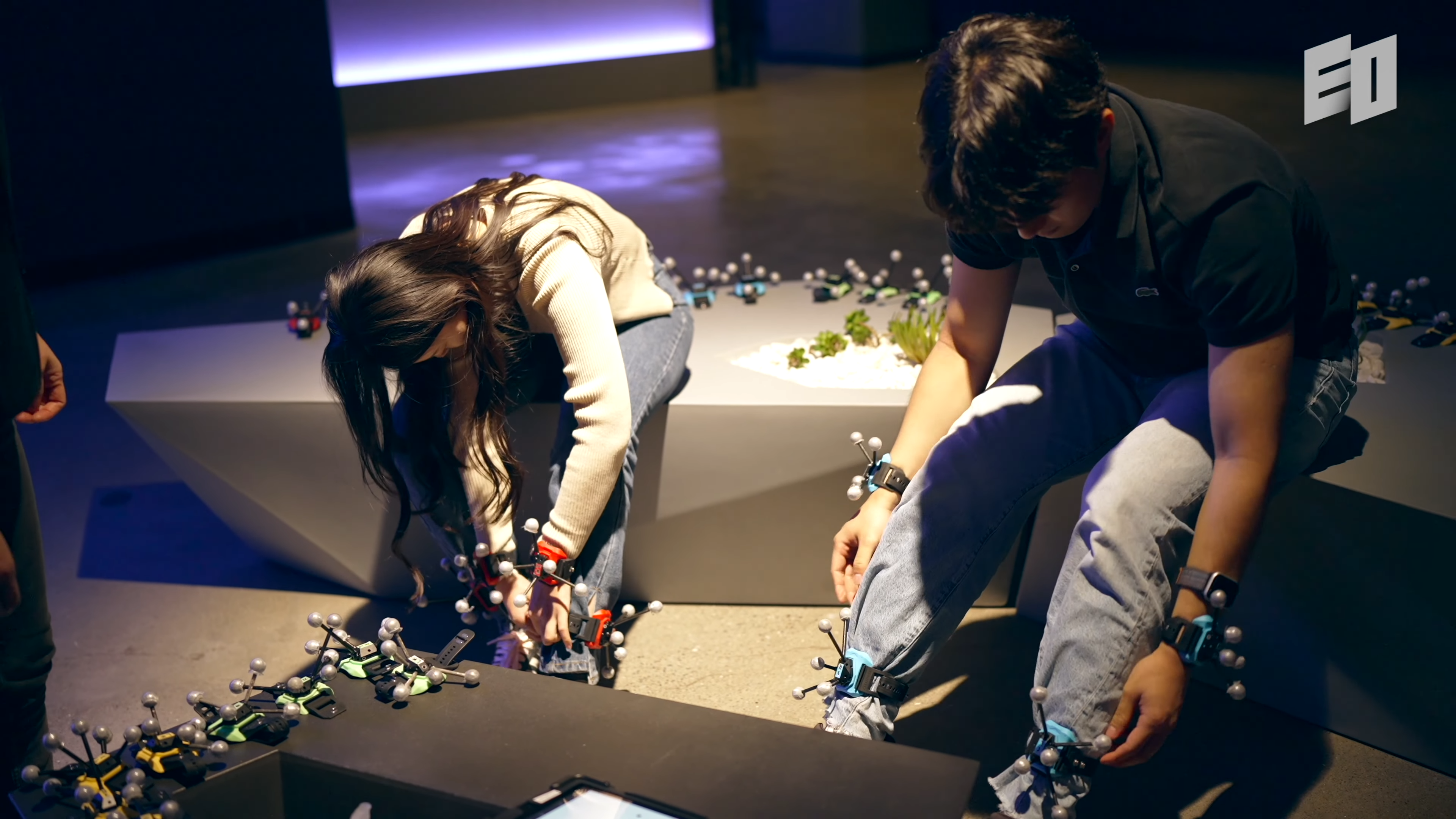
Customers are happy to have a place they can share with their friends and family, and we were able to take that traction to open more locations by working with landlords who could fund us. By grabbing that traction we were able to paint a picture of how Sandbox is going to look in the next few years. Fortunately, we started fundraising again, and investors had seen our progress. They knew everything we had been through, and it was, OK, you guys survived the worst, the future looks bright, we are going to back you, and they did a Series B.
After we got a Series B in 2021, we had about maybe 13 locations. Today we have 47 locations, so we grew pretty quickly. We see Sandbox VR as pretty much the new movies. This is something we believe people will go out for, with their friends and family and colleagues, instead of just watching it on a screen. You get to live in it and embody it.
It is a very social experience that you really get to share, and it creates a lot of team bonding moments. For us, the question is how we create a repertoire of amazing experiences on a regular cadence to get people to come back again and again, and how we continue to open more locations so that we can have a Sandbox in every neighborhood. Our strategy for that is to continue to build up our franchising, because the more locations we have, the more we can reinvest back into our technology and into building better and bigger content. More content in turn helps create more demand, and with more demand we can have more locations and go from there.
So the next big thing for Sandbox is two-pronged. It is how we build better content, which is a very iterative process, and it is also working with strong IP holders to bring their worlds into Sandbox in a really organic way that works best for our platform. What I see in 10 years is that you have what you get at home, the home consumer side, and that gets better over time. The headsets get lighter and the quality of the experiences improves, and that is something you would likely just do as multiplayer, playing for hours on end. And then for us, out of location, in 10 years' time we want thousands of locations, one in your neighborhood, where you have a reason to go out and play with your friends.