Nov 14, 2025
How I Got Half a Million Users in Just 16 Weeks
Interview with Vishal Virani, Co-founder of Rocket.new
Founder Focused


0:00 / 0:00
💡
At a Glance
- Who: Vishal Virani is the co-founder and CEO of Rocket. He grew up and studied in Surat, India, became the first engineer in his family, and started companies directly after college rather than pursuing a master's degree.
- What: Rocket is a software-development automation platform designed to turn an idea or prompt into a complete product that can be launched without the user managing the full development process.
- Traction: Virani says Rocket raised a $15 million seed round within 15 weeks of inception and had millions of applications on the platform in its first 16 weeks. His previous Figma-to-code company, Devise, reached about 350,000 users and processed roughly 10 million screens.
In this interview, Vishal Virani explains how growing up outside the usual startup hubs shaped a mindset of using constraints as advantages rather than excuses. He traces the evolution from Devise to Rocket after GPT-3 convinced the team that Figma-to-code would become only one small feature in a much larger software-automation opportunity. He also describes surviving more than 40 investor rejections, using customer conversations as signal, and proving the business through product and traction rather than relying on pedigree.
Key Takeaways
Turn Constraints Into Advantages
Virani grew up without an engineering family background or access to the startup networks associated with elite universities. Instead of treating those constraints as reasons not to start, he focused on what could be learned online and what advantages could come from his own environment. His farming analogy is that you cannot control the weather, but you can control how you work with the conditions you have.
Conviction Can Require Leaving a Comfortable Product
Devise had reached hundreds of thousands of users and processed millions of Figma screens, but GPT-3 changed Virani's view of what would become possible. He concluded that Figma-to-code would eventually become a small feature inside a much larger software-development platform. That conviction led the team to pivot from a comfortable business into Rocket.
Listen for Signal, Not Every Piece of Advice
Virani says founders receive enormous amounts of advice, especially online, and not all of it is useful. He tries to distinguish repeated customer evidence from noise, speaking with everyone from Fortune 100 CTOs to solopreneurs. Customer pain around prototype-quality code helped reinforce the team's belief that production-ready automation was the right problem.
Use Rejection to Improve the Pitch
The team faced more than 40 investor rejections and at one point had only days of cash remaining. Rather than only focusing on the pain, Virani reviewed the language, numbers, and structure of the pitch to understand why it was not working. He credits that cycle of analysis and improvement with helping the company finally secure a term sheet.
Product Can Compensate for Missing Pedigree
Virani says founders without elite-school or big-tech credentials may face more skepticism, especially if they are not native English speakers. His response is to prove the story with the product and traction rather than relying only on a pitch deck. He points to Rocket's product discovery by Salesforce Ventures and the rapid seed round as evidence that a strong product can travel beyond geography.
Watch the full interview now on EO's YouTube channel! Below is the complete transcription of the interview. Minor edits have been made for clarity and readability.
Introduction
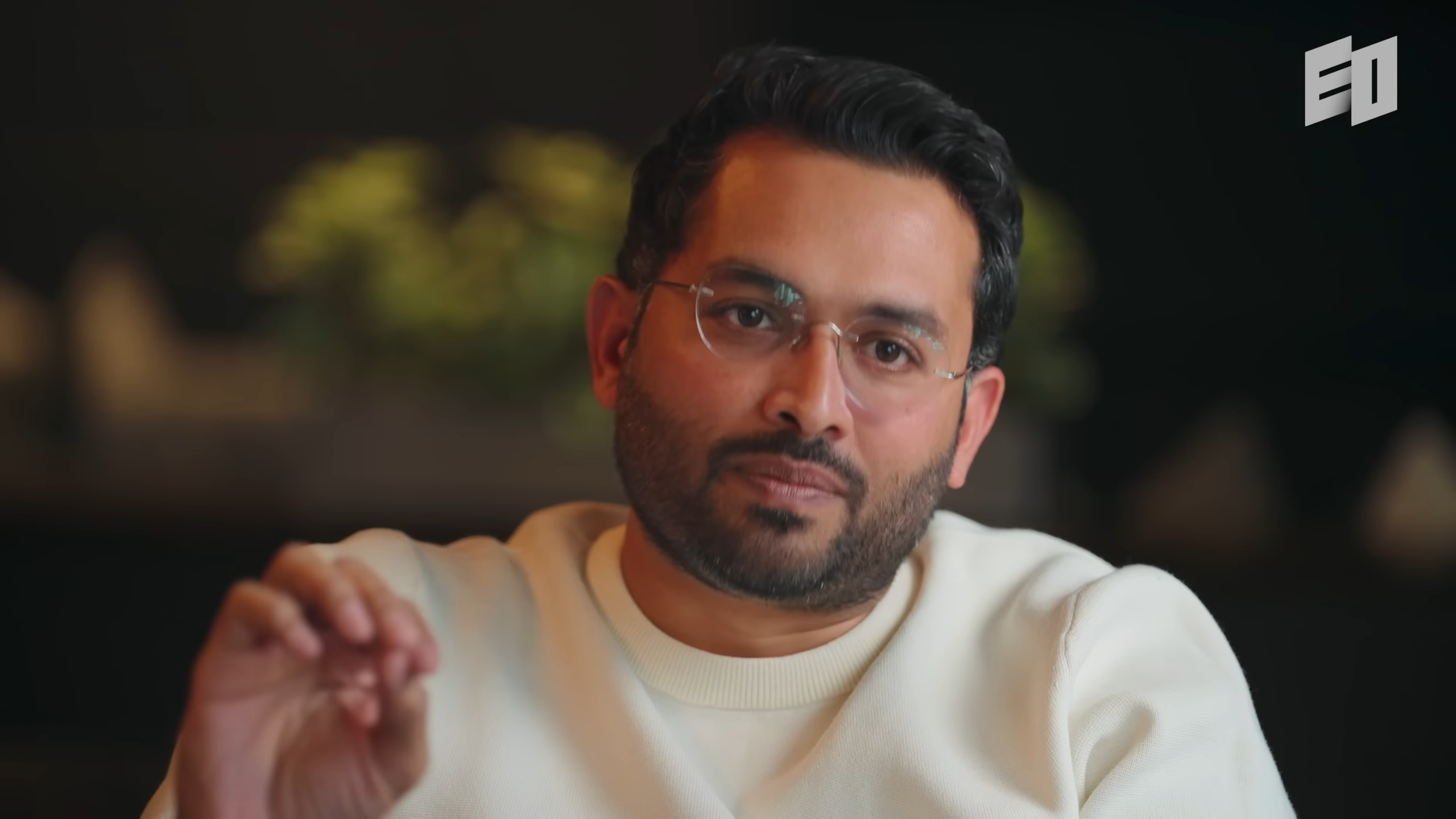
I'm Vishal Virani, co-founder and CEO at Rocket. I'm growing up in an environment where no one was an engineer. Right after the college, I started my first venture. Device was a Figma to code platform. Device, we scaled our user base from 0 to 350K users. When GPT-3 launched, we realized like, okay, this world is going to be changed faster than our imagination.
That was the pivotal moment. And then after, like, I started my second and third venture, which is Rocket. If you have an idea, just put it in Rocket platform.
You will have your entire product ready, which you can just launch without worrying about anything. In just like first 16 weeks, we had like a multi-million applications on our platform. Rocket is funded by Salesforce Venture and Accel. In just 15 weeks of our inception, we got like 15 million dollars of seed round. So in next five years, my entire goal is removing the entire mundane clerical and repetitive work from every user's life.
Chapter 1: The First Engineer from a Farming Family
I grew up in Surat. I did my schooling and my college in Surat. If I describe about Surat, everyone interacted with the product of Surat, because Surat is the largest diamond manufacturing hub, where out of 10 diamonds, 9 diamonds get manufactured in my city, and one of the largest textile manufacturing as well.
A kind of without resources, without a kind of an environment where I can grow. I was a quite curious guy, and I'm the first engineer of my family. They don't know anything about the education. So I said, like, okay, I want to pursue the engineering. They said, You have my blessings, but we cannot support you because we don't have money.
But also they feel proud because, like, someone from our family is able to do this thing, able to cross these barriers and achieve this next status. And just using my principles, which I learned from my surroundings of farming. In farming, you cannot control the rain.
You cannot control the weather. I just read everything on internet without complaining about my Ivy League background or a startup background. I started building. I just give wings to my curiosity and build the startup.
Chapter 2: You SHOULD Be Ready to KILL Your Success
Rahul and I have very similar thoughts. Instead of doing masters, can we learn it from the world? And that's how right after the graduation, we started our first business. Instead of doing masters, and our goal was like, okay, for two years we'll take all risk of our life. We'll not focus on earning the money, but we'll focus on learning. And if we just get the money to survive ourselves, it's like one of the biggest achievement.
In 2021, we realized everyone is just hiring the developers. LinkedIn was flooded with like, we are hiring developers. And we realized they are not even enjoying their own work. So the thought was like, okay, how we can remove the mundane and repetitive work from users' life? It's the pre-LLM era.
We started doing our research. Ultimately, we focused on building the Figma to code solution, where users just need to upload the Figma designs and we can convert into code. And with that thought, we started Devise. Devise, we scaled our user base from zero to 350K users. We processed 10 million screens, which is like highest in this entire space. Our users convert 10 million Figma screens into code, and it was like quite comfortable business for me. When GPT-3 launched, we realized like, okay, this world is going to be changed faster than our imagination.
And I still remember I spent almost 60 hours of time sitting straightforward to write my prompt to create something which is unbelievable at that time. And this is the time to add up the new things. We have the conviction, like, okay, now LLM is enough powerful where we can create a very big impact in our users' life. There is a world before GPT-3 and there is a world after GPT-3. This is just iPhone version 3.
We need to think about iPhone version 15, how powerful it's going to be. So don't worry about the current version of GPT. Think about GPT-15, how powerful it's going to be. That was the pivotal moment. Figma to code is going to be just a small feature in future.
Let's think bigger. And that's where we again relook at our vision of like automating the entire software development lifecycle. Prefer conviction over a comfort zone. And with that, we decided to pivot like, okay, Figma to code product to a complete software development automation where user can just put the prompt and we can deliver the entire results. And when we got the conviction, we decided to pivot from like Devise to Rocket.
Chapter 3: How to Know Your Conviction is Right
We always listen to our users. Whenever I interact with like any founder, any right person, I always listen them. We actually talked to a CTOs of Fortune 100 companies, to solopreneurs, everyone.
So right now, it's everyday three new vibe coding platforms launch themselves on the product hunt, and everyone had the same answer, like these are the prototypes which is not scalable, which is not even a production-ready code, just trying to replace our Figma designs with these prototypes.
But it breaks, and that's where we realized like, okay, we are building the right product. We got the email from a new user, and he emailed us like a long email where he was just showing a kind of gratitude. Without your product, I can never imagine this kind of thing. He's a solopreneur.
He don't know about product management. He don't know about product marketing. He don't know about anything. He just had an idea. He was using like multiple vibe coding platform and delivering the results. And when he got to know about Rocket, he tried the platform. He wrote to us like, in my life, I never able to close seven projects in just like 20 days of time. He started his journey with a $25 subscription, and now he's paying $4,000 per month without any sales pitch.
Just think about your users. Till now, like we got like hundreds emails every day. I send an email personally to all the users, definitely it's an auto mode, but when they reply, I read it personally. And then we provide the required support to our users, and that motion really works well for us. And that's how we gain the trust from our users in the very early days.
Chapter 4: You Haven't Failed Until You've Spent the Last Penny
I still remember it was a 2021 time. We got 40-plus rejections from the VCs. When every small and big ideas were getting funded, we were like getting one after one rejections. After 40th rejection, we got the first term sheet.
Just 15 days of money left in our account, we got the term sheet. That was like the last three months when we know like after three months we are going to die. It was like hardest time. Every time you need to have a background. You need to be from Stanford or IIT or some good colleges. It can be like ex-Google or ex-Microsoft will get easily funded. I was not from the product.
I always introduce myself as ex of my ex. The reason is like after college I started my first venture, and then I started Device. They don't say it upfront, but I know how they judge, what they judge, and they are right at that place because they need to trust on their parameters. They have some thesis and all. So definitely we are not fit there, but we didn't give up. Don't worry about your location. Don't worry about your zip code. We always try. We learn new things. We try this language of this world. I decided like till a last penny in my account, I will not give up.
I will fight for that term sheet. I will fight for that funding, which can help me to survive. For the founder, those are the most important moment. When you are in pain, don't think about the pain. Think about the mistakes that you are making because of that you are having that pain. So for me at that time, what was wrong in my pitch? Why I am not getting the fund when everyone else is getting?
I start analyzing my own pitch, the word that I'm saying, the kind of, like, numbers that I'm presenting, how I can articulate it better. Instead of, like, getting into a kind of depression or something else, I just started thinking of where I'm making a mistake every day. And every day I try to improve myself, and that's how we got the first term sheet of our city. Before that, like, no one else got the venture capital funds. We got it. I only say, like, that will, never give up attitude helped me a lot.
Chapter 5: Don't Take Any Advice Before You Know THIS
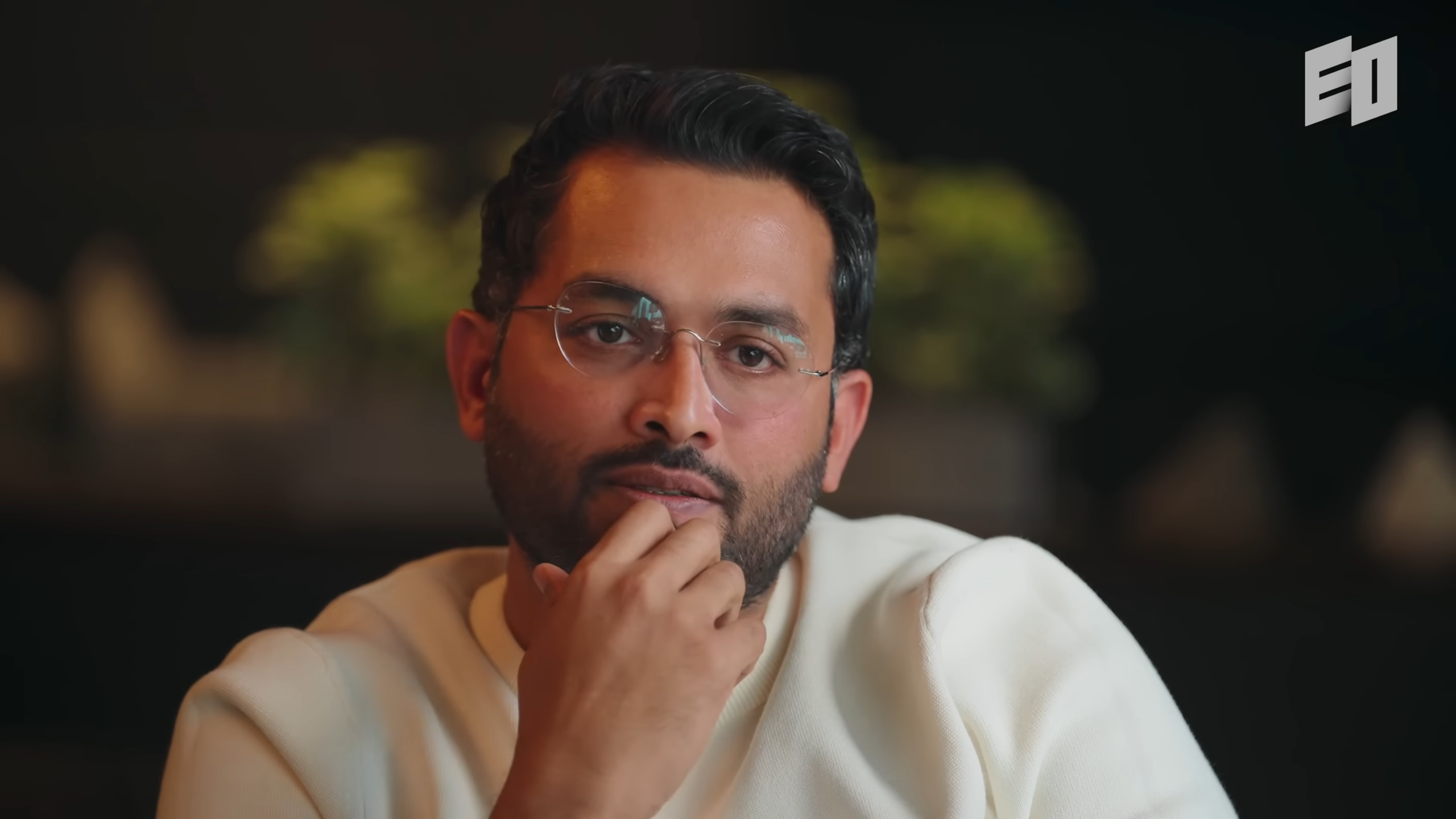
Every advice is not signal, and as a founder, you need to understand. If you build the right product, you will be able to capture the market. But if you just build the marketing company, someone will come and capture your market. Just focus on product, product, product. Stay away from noise.
Identify the signals, because nowadays you will get, like, hundreds of advice, hundreds of new things on X.
Identify the signals, because nowadays you will get, like, hundreds of advice, hundreds of new things on X.
But from all the noise, you need to identify which signal will work for you. Let me give you an example. GitHub Copilot was the first product who started, like, code generation. They have the power of Microsoft. In Satya Nadella, in all keynotes started with GitHub Copilot. They have the power of OpenAI and everything. But still, after one and a half year, Cursor came and captured the entire market. GitHub has everything. In that case, like, Cursor has no space.
But still, with the right product, Cursor captured the market. If you are not a native English speaker, you will have a hard time to convince someone. Don't speak, just prove. That's why instead of creating the pitch deck, we created the product. We created the traction, and that's why Rocket is funded by Salesforce Venture and Accel. Salesforce Venture got to know about Rocket platform on X because someone shared the story.
They give a try to our product first. They actually already tried the product, which is already at Series A, B level in the vibe coding space. And when they tried our product, they think, like, this is the best product they ever seen in this particular space, and that's how they reached out to us.
And in just 15 weeks of our inception, we got, like, 15 million dollars of seed round, which is, like, one of the highest round in India. So build the right product. In the early days, focus should be, like, 60%, 80% on product, 20% on marketing. It should not be other way around where you are just focusing 20% on product and 80% on the marketing.
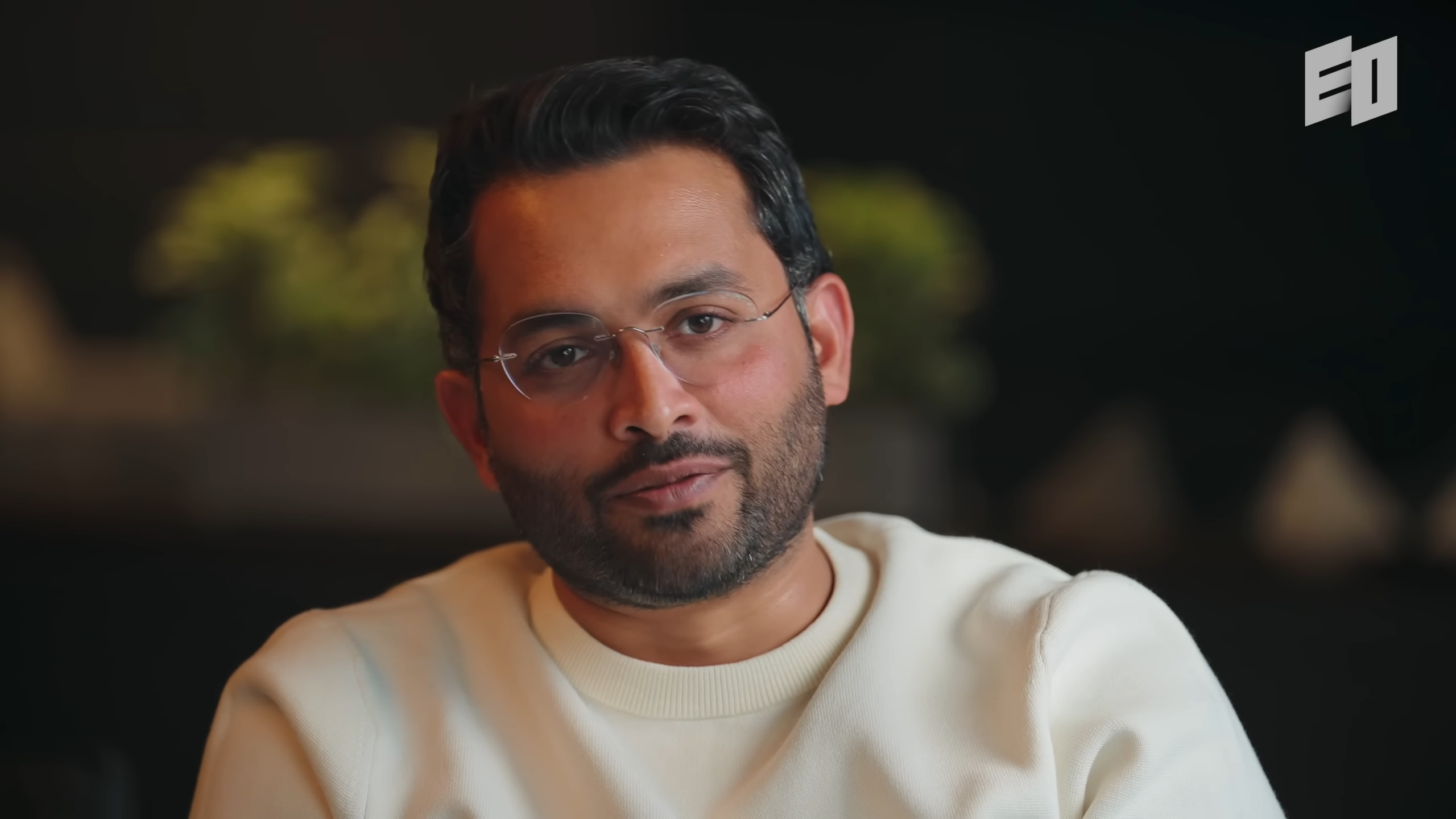
That's kind of a learning that I got in last, like, four years of my device and rocket journey. In next five years, I just want to create a world where if you have an idea, just put it in Rocket platform. At the end of day, you will have your entire product ready, which you can just launch without worrying about anything.
Future is going to be looks like, just consider like Jarvis when you are traveling from Palo Alto to downtown. Just talk to Rocket with Siri or with your CarPlay, and by the time you will reach at office, like you will have your application ready. How we can remove legacy systems from the world and we can create the new system. That's what I think about every day.