Mar 02, 2025
How to Scale Up When You’re Stuck Between Early and Growth
Interview with Alex Beller, Co-founder of Postscript
Founder Focused


0:00 / 0:00
💡
At a Glance
- Who: Alex Beller is a co-founder of Postscript, an SMS marketing platform built on top of Shopify that lets e-commerce brands retarget, transact, and converse with customers over text message.
- What: Postscript grew out of a simple insight that e-commerce brands wanted a fast, powerful way to text their subscribers directly, and the company stayed deliberately narrow, serving only Shopify merchants even as larger, non-Shopify brands offered lucrative deals to expand elsewhere.
- Traction: Weekly revenue climbed from about $200 to $3,000 through inbound word of mouth and the Shopify App Store, a trajectory that helped Postscript get into Y Combinator and cross $1 million in annual revenue within roughly 6 to 7 months of launch; the company has since raised through a Series C, acquired Fondue, and grown to about 270 to 280 employees.
In this interview, Alex Beller traces Postscript's growth from a scrappy, overlooked Y Combinator applicant into an SMS marketing platform serving thousands of Shopify brands. He describes how the founders' own round-the-clock live chat support fueled early word-of-mouth growth, why the team turned down lucrative business outside its niche to stay focused on Shopify e-commerce, and how the memorable FEACH values acronym helped Postscript hold its culture together through repeated headcount-doubling growing pains. He closes by discussing how AI and predictive machine learning could push SMS marketing from one-way notifications toward more personalized, conversational commerce.
Watch the full interview now on EO's YouTube channel! Below is the complete transcription of the interview. Minor edits have been made for clarity and readability.
Key Takeaways
Early Revenue Growth Made Postscript Impossible To Ignore
Postscript's weekly revenue climbed from about $200 to $3,000 through inbound word of mouth and the Shopify App Store. Beller says that visible trajectory helped the company enter Y Combinator and reach roughly $1 million in annual revenue within months of launch.
Founder Support Can Create Product Learning And Growth
A live chat widget rang all three founders' phones, so they immediately answered questions, collected feedback, and helped customers use the product. That hyper-availability improved the roadmap, built trust, generated reviews, and spread word of mouth before the company could scale support.
Focus On One Core Customer Before Expanding
Postscript declined lucrative requests from large brands using other technology so it could stay focused on Shopify e-commerce marketers. Beller believes a narrow customer, product, and use case create deeper expertise and excellence before a company expands into adjacent opportunities.
Every Headcount Doubling Changes How Companies Operate
Beller has seen organizations break as they grow from 10 to 25 to 50 to 100 or 200 people. Each stage requires new communication, management, and resource-allocation practices, shifting the founder's job from building directly to directing the system around the builders.
Memorable Values Keep Culture Aligned As Teams Scale
Postscript turned its values into the memorable FEACH acronym and reinforced them through onboarding, recognition, reviews, and Slack. Beller also changed 80/20 to excellence as the company matured, showing that values should remain useful rather than permanently frozen.
AI Could Make Marketing More Personal And Conversational
Beller sees e-commerce marketing moving from one-way notifications toward personalized conversations. Postscript's existing human sales operation and accumulated conversational data give it a base for using AI and predictive models to make that interaction more scalable.
Introducing Alex Beller, Co-Founder of Postscript
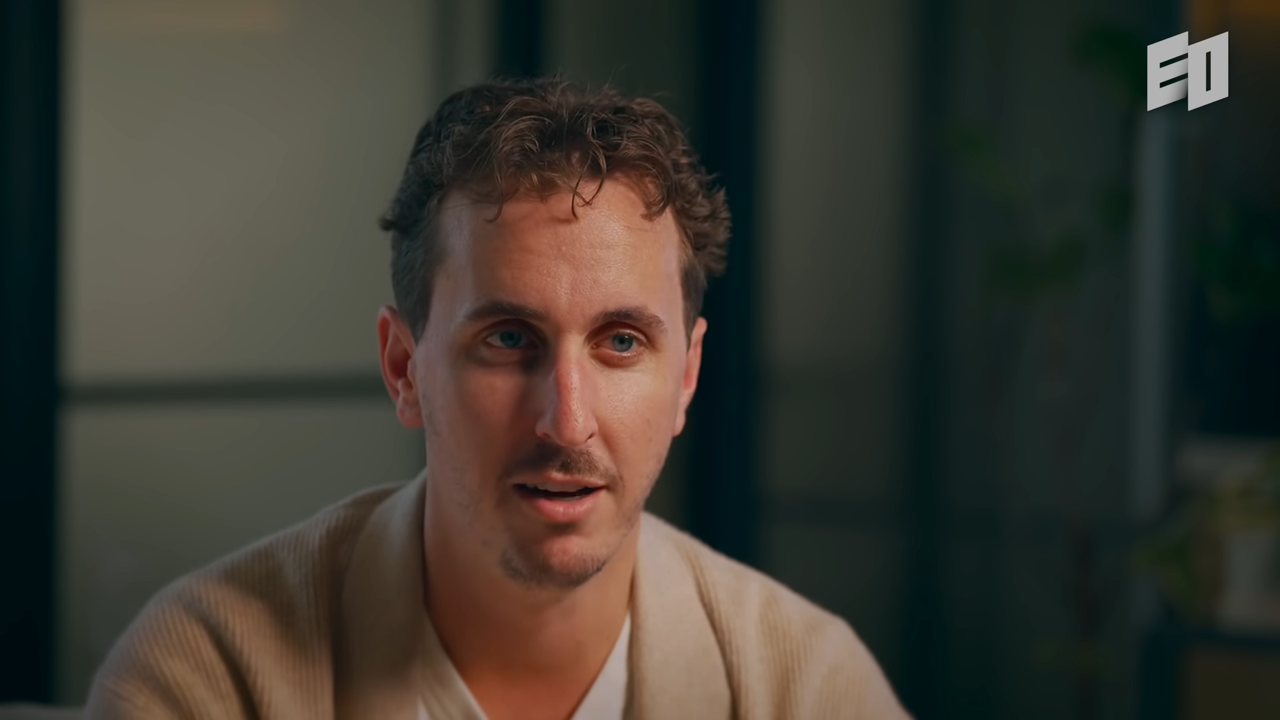
I'm Alex Beller, one of the co-founders of Postscript. Postscript is an SMS marketing platform for e-commerce businesses. The idea from the start was SMS marketing for brands built on top of Shopify: a really easy, really powerful solution that lets people retarget, transact, and converse with their customers over text message.
Postscript found product-market fit very early. Customers wanted to send text messages to their subscribers, to their shoppers, and as long as it generates a clear ROI, they're going to want to send more. Around this time, we decided to apply to Y Combinator, and we did that.
For many reasons, we were kind of outsiders. We were based in LA and in Arizona, and we weren't very connected to the tech scene. And I went into our application after we filed it every few days, and I would update it with our new revenue number, so that when they logged into our application to review it, they would see: on this date, this was their revenue; on this date, the revenue was higher; on this day, the revenue was higher. And this was like our second or third month, and that was the time when our revenue each week was going from like $200 a week to $800 to $2,000 to $3,000.
I believe that the reason that we got into YC was because they saw this growth trajectory, and all that growth was coming from word of mouth, and it was coming from the Shopify App Store; it was all inbound to us. We were in the right time at the right place with the right product that generated value for our users. By the time we left Y Combinator, we were past a million in annual revenue, approximately 6 to 7 months after we launched.
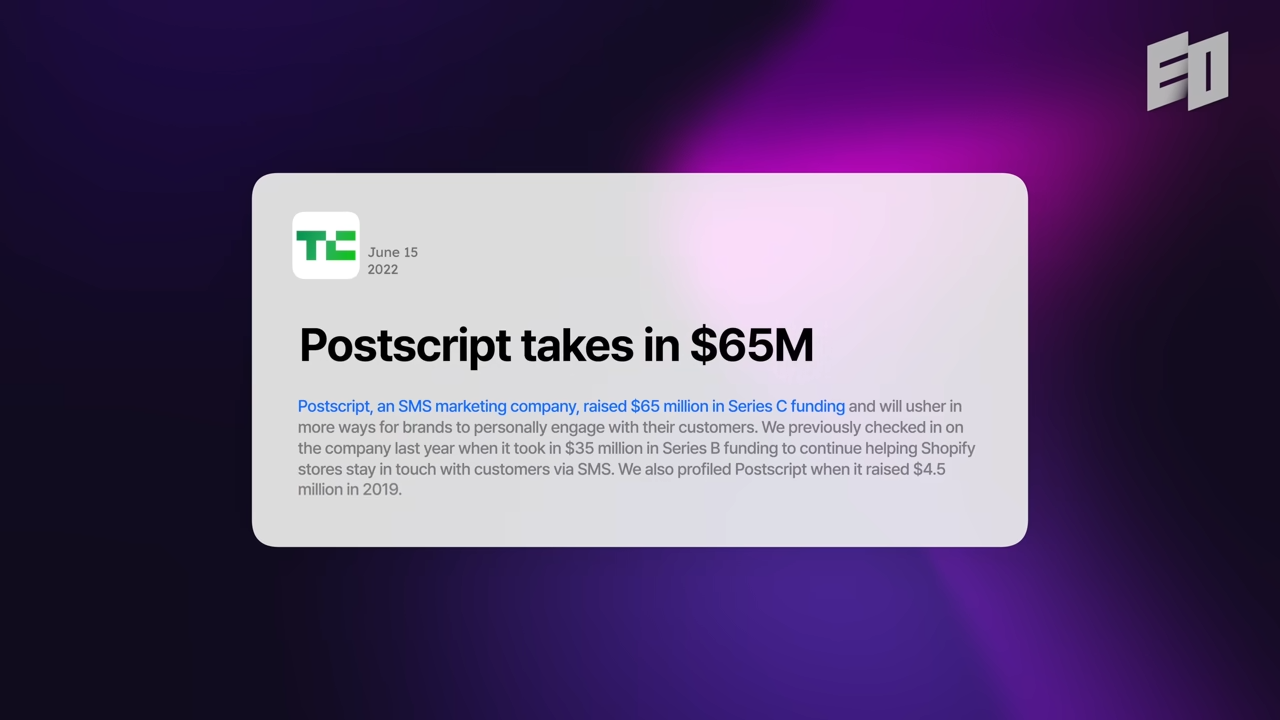
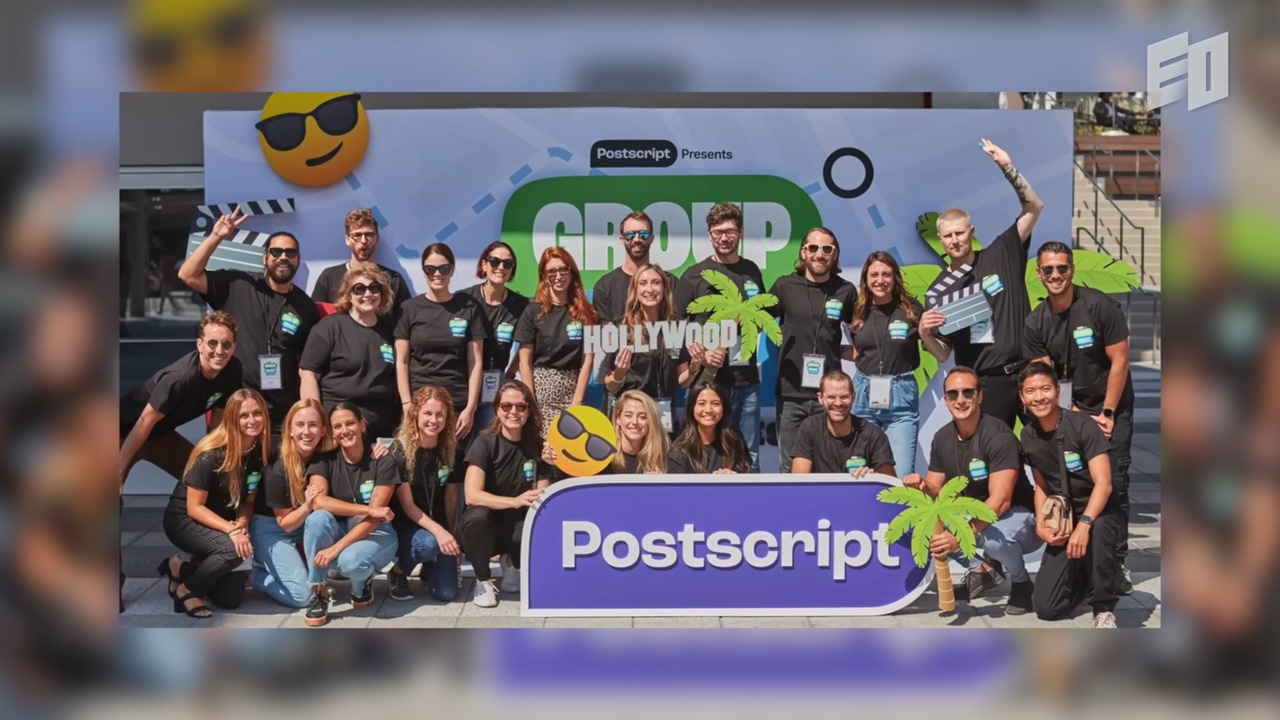
We've raised several rounds of funding since then, through Series C. We bought a company called Fondue, and we are now about 270 or 280 people spread out across the US.
Chapter 1: Do Things That Don't Scale
You know, we were talking about different startup ideas. Me and Adam, our third partner Colin, they started building what became Postscript. Our early customers were amazing; they're very funny, they were small e-commerce entrepreneurs. So a couple of things worked for us really well in the early days. We did something that, in hindsight, we hadn't put much thought into, but it ended up being a really good idea, and this is a secret that I would recommend to everyone. We put a live chat widget on our website and inside the Postscript application, and we set it up so that whenever anyone chatted in, whenever any user submitted a chat, it would call all three of our cell phones.
It would ring us, mine and Adam's phones too, and we would immediately stop whatever we were doing. And we would drop it, and we would go log in and try to help that person. We would answer their questions, we would take feedback from them, we would help them use the product, whatever that turned out to be. It was an incredible secret that accelerated us so much, and there's a bunch of reasons why. First, we learned so much from these early customers; I mean, they were giving us feedback on holes in our product and what we needed to build next, and pricing; they're giving us feedback on everything.
And so then we could just build exactly what they were asking for, and they'd be happier. But the other thing that came out of it is people were getting great, amazing hands-on support from the founders, and we would be super open that we were the founders of this tiny little business, and people really liked that. And so they started to tell their friends or other people they knew about the Postscript product; they started leaving us good reviews on the Shopify App Store, which then had our application listing rank even higher there. And so, us just talking to our customers as much as possible and being super available, I mean, we would wake up in the middle of the night when our cell phone rang to help customers, we would leave the ringer on, and that created a lot of our groundswell that led to our early growth. And so our first 100 users, a lot of it came from being hyper-available, from being public but listening to our customers, talking to them, and just providing completely over-the-top support.
It's actually a lot of what Paul Graham talks about when he says do things that don't scale. You know, now Postscript has 18,000 customers, I cannot do the chat support for all of them anymore, but doing that for so long, we spent months and months and months; we were the only ones who did support for Postscript, and we did it all the time, live. And it was from doing that so much that we learned so much, the product advanced so much, and we got to spread a lot of word of mouth from that too.
Chapter 2: The Courage to Not Pivot
So we launched really with an MVP that directly grew into Postscript; we've enhanced it and we've expanded it, but we never pivoted. It was SMS marketing for e-commerce on Shopify, and that's still what it is today. In the early days of Postscript, we had brands come to us, big brands that heard about us that weren't on Shopify, and they wanted to give us a lot of money to send text messages. So they're an e-commerce brand, that's our sweet spot, they want to use Postscript for exactly what everyone else uses it for, but they had a different underlying technology; they weren't on Shopify, they were using a different platform. I'm the revenue leader of the company, that's a hard thing to say no to, right, that's hard to walk away from a huge, prominent brand who wants to pay us a lot of money and be our friend and do a case study with us. But we decided to pass on that, and we said, you know what, we'll see you later on down the road, but right now we're focused on this one thing. And that's a difficult thing to do, it requires a lot of discipline, but it would have taken us off track, it would have led to distraction, we would have been building in many different directions then with limited resources, and it would have been a mistake.
Because of that focus, so much of our value has been created. And so, yes, we've considered expansion many times; we've considered expanding markets, we've considered expanding use cases outside of SMS, but what we keep coming back to is that there remains more opportunity in this core space, and no one has really solved it yet. We think we're doing an excellent job, but there's still so much more to build and so much more value to deliver to these customers; we want to do that first, we like to be the one that goes deeper. I think there's many traps and many mistakes that all of us fall into in the early days, myself and us included, but focus is one that is underrated, especially within the tech and the startup landscape. We're all attracted to big names and big dollar signs and big markets, but focusing on a core product and a core user in a core use case to start, not forever, but to start, I believe that breeds excellence in a product.
The riches are in the niches, I really believe, and that's paid off for us, where we've been so laser-focused on e-commerce marketers that use Shopify and delivering them an amazing SMS experience, and that's really paid off for us. And I think that anyone who uses Postscript or works with the Postscript team experiences that craft, because they can tell that there's so much expertise there. What makes great CEOs and great leaders is the ability to look at your resourcing, look at your organization, look at all the opportunities in front of you, and sequence things properly so that as much lines up as possible.
Chapter 3: Unforgettable Corporate Values
There's a common framing that I hear from a lot of other late-stage founders or investors that I believe is true, which is that every time your company doubles in headcount size, it breaks, and I've really seen that to be the case. You know, when it's 10 people, everyone's connected to everyone, and it's all automatic, and then suddenly it's 25 people and you need management layers of some kind, and then it's 50 and it's a completely different company, and at 100 and 200 they're totally different companies, and they require different styles of communication and management, and they require a lot of different things from their founders.
When you advance to the growth stage, the people challenge really sets in; your organization becomes so much more about how you can direct the resources at your disposal, instead of how you, as a craftsman or a practitioner, can build product or work with customers, and those are very different skill sets. When I think about some of the biggest lessons or tips that I could give entrepreneurs thinking about scaling, what comes to mind more than anything else is values. When we started the business, we didn't create a set of values, and the reason for this was because we'd all worked in companies before that, you know, had values, but maybe they weren't that important, or, you know, they just hung on the wall, but no one really knew them or was connected to them. And so we just thought it was superfluous. But Tim Brady, who was one of our partners at Y Combinator, when we were about to hire our first team member, he said to us, create a couple values, it'll help you anchor the culture in something.
And that's what we did; the three of us sat down and we banged our heads against the wall, and we got the whiteboard out, and we created a set of values. That value set has been core to the culture that has been built at Postscript for now almost 7 years. The key tip that I would give people is not just to create a set of values, but to make sure it has a great acronym; this is actually the hack, because what's more important than what the values are is that everyone knows them. Like, the specific things, I'm sure everyone can pick inspirational, good values, but what's more important is just that everyone can remember them, and that they reflect how you believe work should occur. So, to get specific, the values at Postscript, the acronym for them is FEACH.

It's kind of a funny word, it's F-E-A-C-H: Fearless, Excellence, Animal, Customer-first, Humility. Every time a new person joins Postscript, they go through a training with me where I walk them through all of our values, what FEACH stands for, the story behind each one, how we believe it should show up at work. And then people get recognized for living these values, and it comes up in their annual reviews, and we have a Slack channel going where people get shouted out for living within these values, and that has really helped guide our culture and keep us all together as we've grown remotely. But I believe that the values that are going to be relevant to an organization are going to change over time; they're not always the same. I'll give you an example: the E in FEACH stands for Excellence in our company's values today; it didn't always stand for that, it used to stand for Eighty-Twenty.
Eighty-Twenty, meaning we wanted people to be operating from an eighty-twenty mindset; we didn't want folks to focus on perfection, we wanted to be moving really quickly, we wanted to be doing whatever we could to capture as much value as we can with 20% of the effort and then move on to the next thing. And that was great, that helped us move quickly, and that helped us inform how we built product, and that helped us inform how we built process, and that was an amazing early-stage value; I mean, I would recommend it to many folks. But after a while, we realized we were running into issues because of it; we were well past 100 people, and we needed more robust processes and systems, we needed our product to be sturdier and more stable, and less about just shipping everything that's new, making sure what we had was really robust as we were serving bigger and bigger customers. And at that point, we went in and we changed the value from Eighty-Twenty, which starts with an E, to Excellence, which also starts with an E, and that way the acronym for our value stayed the same, but we got to change the DNA of the company. And we haven't done that many times, it's probably happened three times, but each time it's been really valuable, and it's kind of a weird, quirky little learned secret.
But I would really recommend other entrepreneurs, as they're scaling, think about doing something similar: be comfortable going back and changing your company values. Sometimes it's incumbent on a founder to reset something and to make it clear that, you know, I'm hearing all this feedback, but actually I disagree, and we're going in this direction here, and values are a great way to do it.
Chapter 4: AI, The End of Cold Business
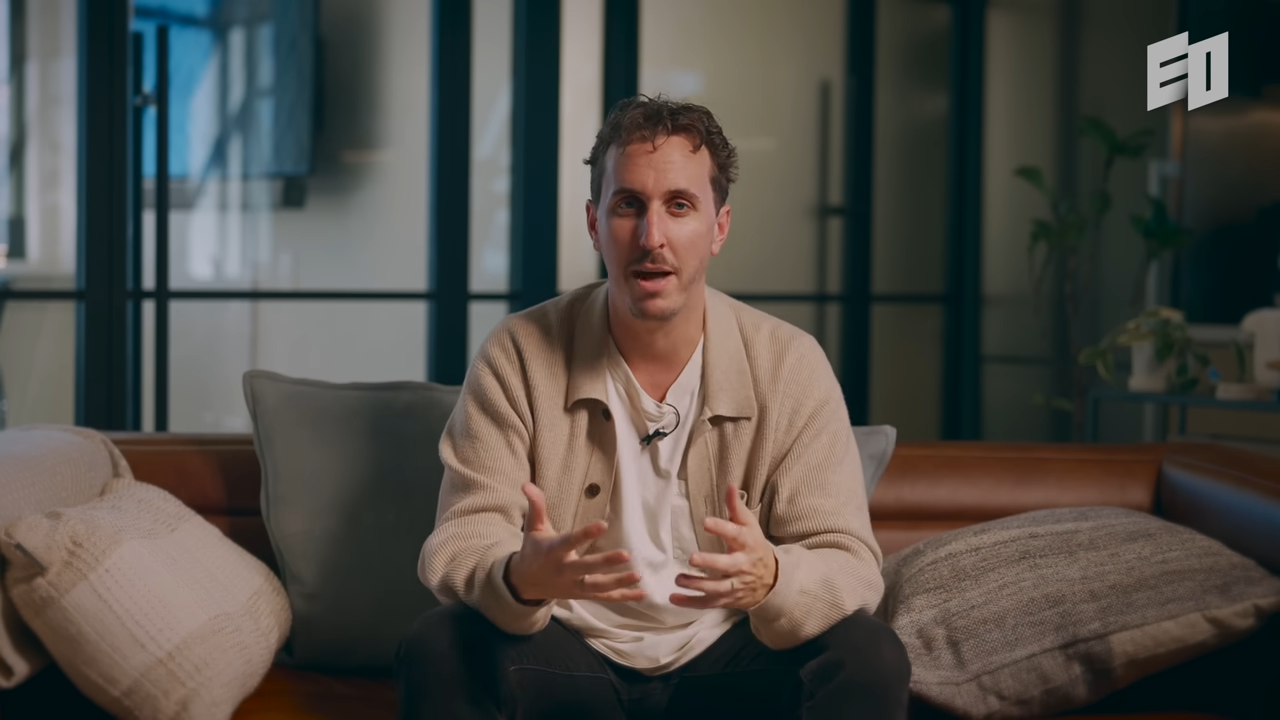
About what's going on with AI today, with generative AI, and when I think about what's going on, what's been going on for a long time with predictive machine learning, what I see is a future where one-to-many marketing goes away, and where it becomes highly personalized, and in the SMS space, highly conversational. Since the beginning of the e-commerce use case, marketing has been generally one-way: I'm an e-commerce marketer, I am pushing out a notification to my audience to try to get them to go buy, that works, it's fine, but that's not how we actually use messaging. We all text one another back and forth in conversations, and at Postscript, we've always believed that there is an enormous opportunity for brands to see even higher performance, and for consumers to be even happier, if the interactions are conversational between them, rather than more of a push marketing approach.
At Postscript, we've been invested in this for a while: we built and launched a product called SMS Sales. It is the only part of our company that is in-person, and we have a huge office in Phoenix, Arizona, that is filled with e-commerce salespeople who work on behalf of our brands to sell and drive more transactions over the SMS channel. It's kind of old school, it's like if you walk into a retail store and someone helps you shop, or buy, or answers your questions, it's like that for e-commerce. And we've been doing this for several years, and we've built up an enormous amount of expertise in it, and many of our largest customers, many huge brands, are using it to drive more sales and to keep their customers happy. And we are so excited at the opportunity of bringing that to further scale with new advancements in AI and the data sets that we've been building, and the conversational training that we've been doing over the last several years; we believe it puts us in a unique position to capitalize on that trend.
AI and predictive machine learning together are not only going to unlock the personalization I was just talking about, but they're also going to allow for a much more conversational marketing experience. That phrase, conversational commerce, has been floating in the ether forever, and no one's really done it, and I believe now it's actually going to happen.