Dec 19, 2025
How an 18-Year-Old High School Dropout Raised $6.2M
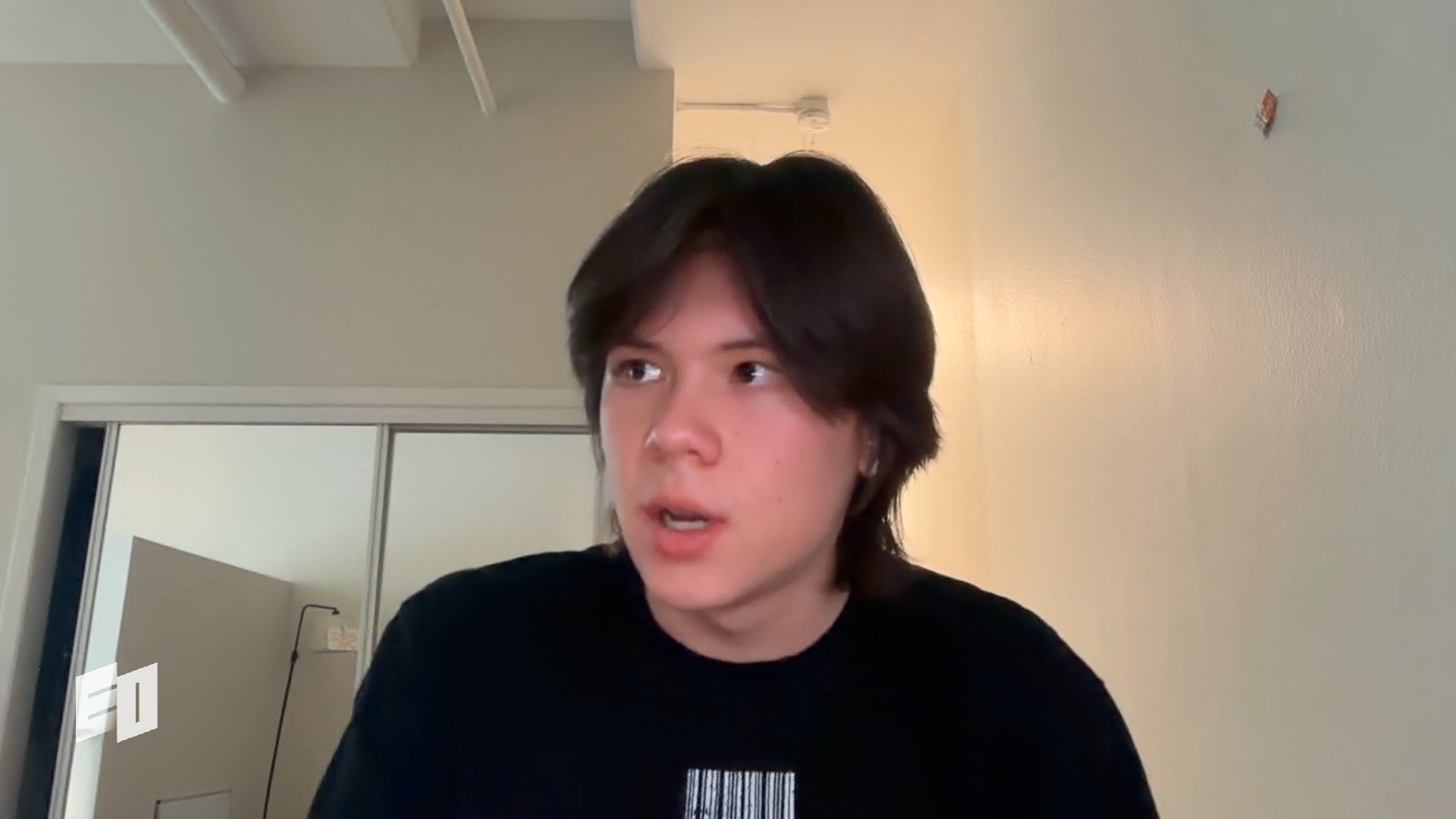
Interview with Arlan Rakhmetzhanov, Founder of Nozomio
Founder Focused


At 18, most people are worrying about prom or college applications. Arlan Rakhmetzhanov was chasing down Paul Graham in a parking lot, begging for another chance after being publicly roasted in front of 100 people.
The high school dropout from Kazakhstan had just been told his startup pitch was incomprehensible and that he'd never raise "a penny" during YC's fundraising week. Most founders would have crawled away in defeat. Instead, Arlan saw it as the opening move in what would become one of the most audacious fundraising stories in recent YC history.
In this candid interview, Arlan reveals how he went from that humiliating public rejection to raising $6.2M for Nozomio, his AI-powered developer tools company that reduces code hallucinations. His journey from cold-emailing 900 professors as a 16-year-old to implementing "Collison installations" across Silicon Valley offers a masterclass in persistence, global thinking, and the art of turning rejection into rocket fuel.
Watch the full interview now on EO's YouTube channel! Below is the complete transcription of the interview. Minor edits have been made for clarity and readability.
Key Highlights:
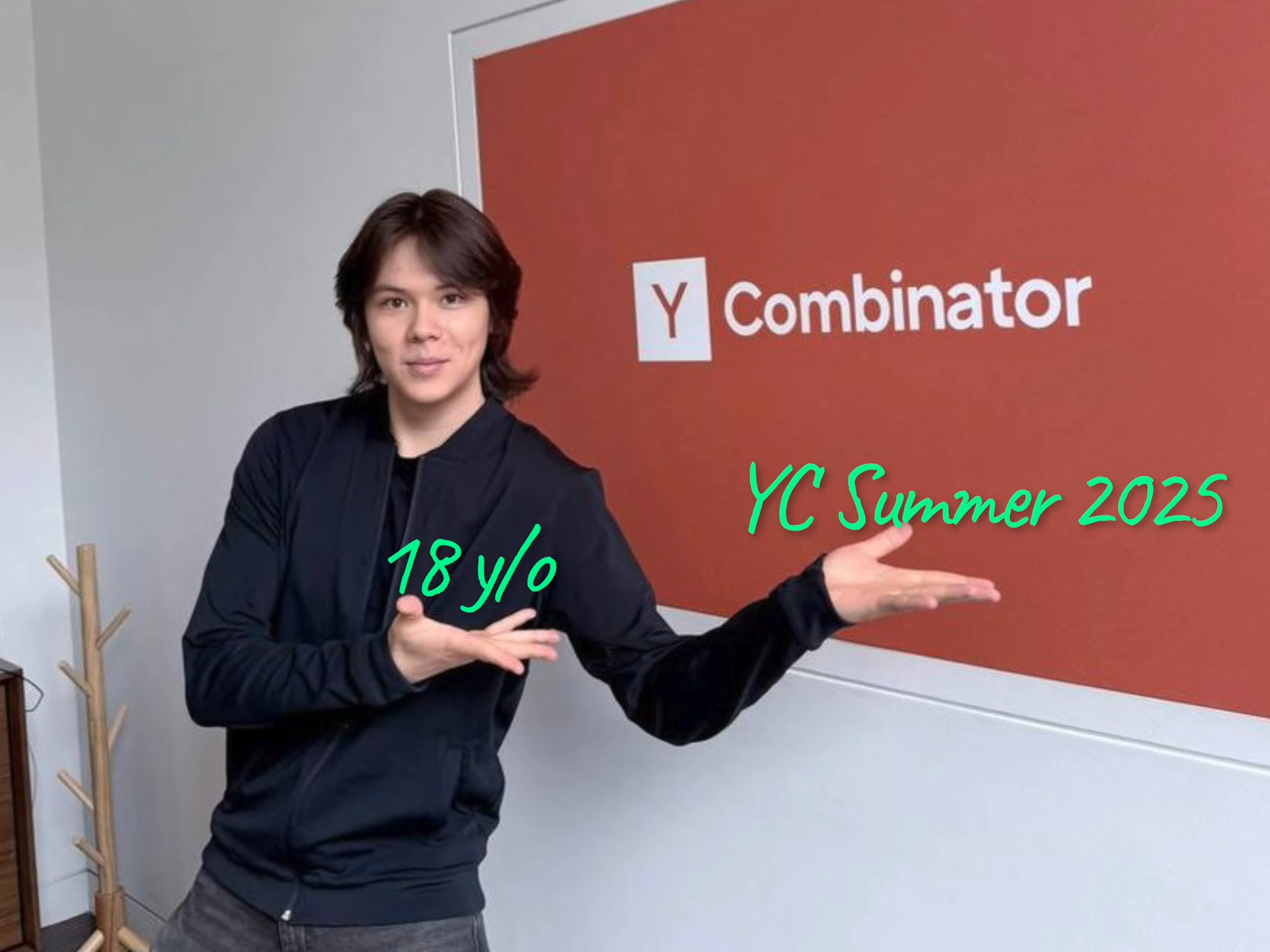
"Hey everyone, my name is Arlan. I'm like still 18, I just finished YC summer 2025 batch. I'm from Kazakhstan. High school dropout, recently quit 11th grade and relocated to San Francisco."
"When I had my mini office hour with him, once he was leaving, I just crammed to his car and started yelling, 'PG please just give me a second. Can you have an office hour with me for just 53 minutes?' He was very annoyed."
"The same second I emailed this guy, well, he was in the car, this is like one of the craziest emails. You can already see the subject, 'the kid who stopped you in the end.'"
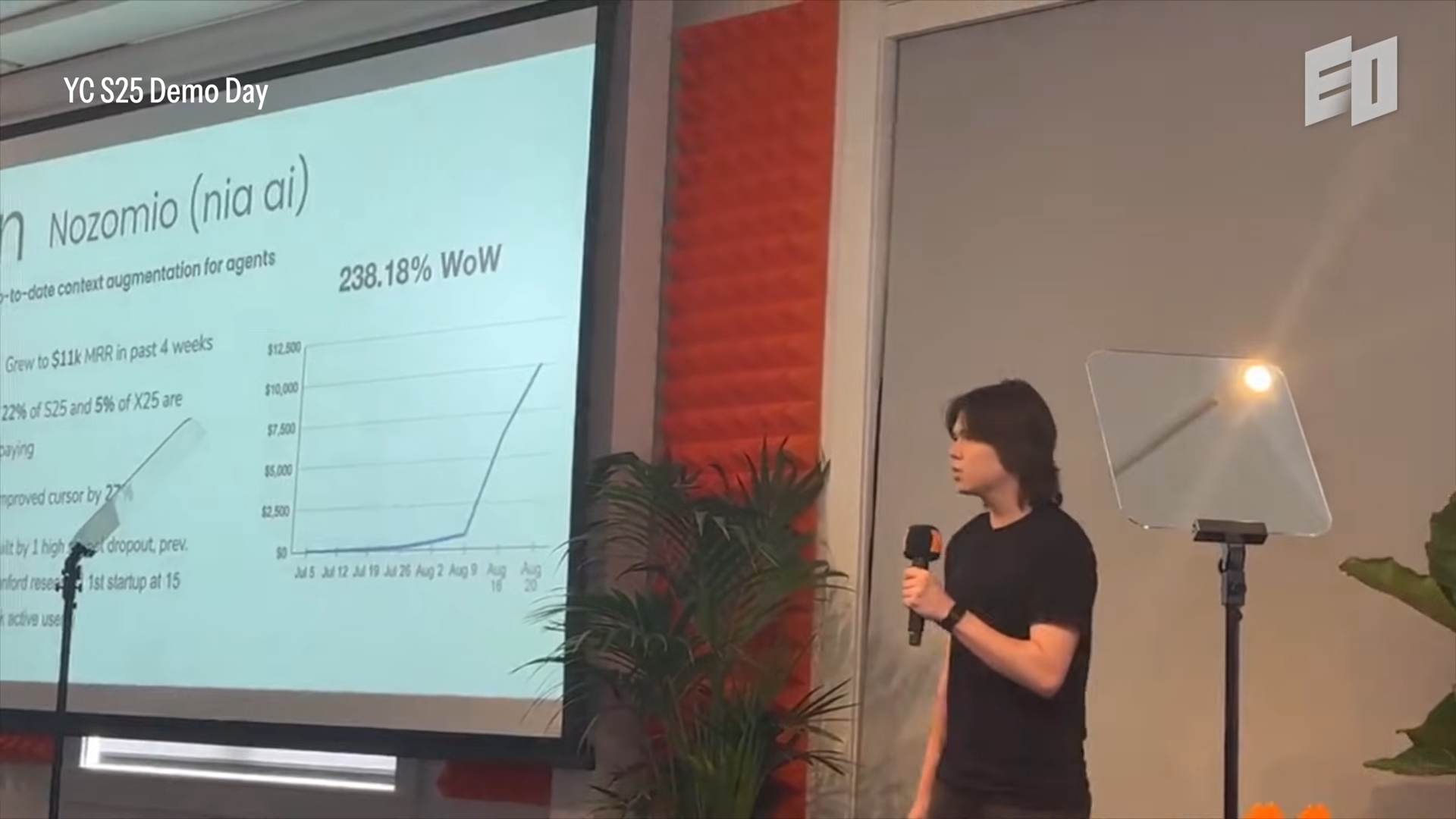
"I grew to 11K MRR in the past four weeks by going to users' houses every day. 22% of the YC S25 batch, and 5% of the print batch are paid customers."
"If he sees a billion dollars opportunity in the business, also in the founder, he's gonna invest. I guess I showed that to him cause I saw his eyes from like, when I told him about it. And it ended up being my pre-seed round."
"When I had my mini office hour with him, once he was leaving, I just crammed to his car and started yelling, 'PG please just give me a second. Can you have an office hour with me for just 53 minutes?' He was very annoyed."
"The same second I emailed this guy, well, he was in the car, this is like one of the craziest emails. You can already see the subject, 'the kid who stopped you in the end.'"
"I grew to 11K MRR in the past four weeks by going to users' houses every day. 22% of the YC S25 batch, and 5% of the print batch are paid customers."
"If he sees a billion dollars opportunity in the business, also in the founder, he's gonna invest. I guess I showed that to him cause I saw his eyes from like, when I told him about it. And it ended up being my pre-seed round."
When Dad Planted the Silicon Valley Seed
What first introduced you to the world of startups and Y Combinator?
Arlan: My parents, my mom, and my dad had like a really, really big impact on me since childhood. My dad had like 20 years of experience in construction tech. The first time I heard about YC was from my dad when I was around 10 years old. We were walking around like a local river, Nalmati, back home in Kazakhstan. He just told me, "Hey son, there's like a university for startups. So once you grow up, maybe you'll go there and it's gonna be very, very cool. It is based in Silicon Valley."
And like, I had no clue what Silicon Valley means, or like, what is he talking about? So I just forgot about it for a couple of years. But then, in my high school, no one was really interested in startups. They mostly wanted to focus on studies. There were a lot of like, high achieving students who wanted to get into good universities.
And like, I had no clue what Silicon Valley means, or like, what is he talking about? So I just forgot about it for a couple of years. But then, in my high school, no one was really interested in startups. They mostly wanted to focus on studies. There were a lot of like, high achieving students who wanted to get into good universities.
How did your focus shift from traditional university goals to entrepreneurship?
Arlan: Back in 9th grade or 10th grade, my mom mentioned that there's like, this university called Harvard and Stanford, and I was like, damn, OK, maybe I should try studying at least a little bit and just put more focus on my applications. Getting into Stanford became like, my number one goal ever. I really wanted to get in, maybe start a company after I graduate.
I needed to have a very, very strong university application, which also includes like, really good extracurriculars. I did everything just for my university application. And when I actually turned 15, I took my first coding class in my high school back in Kazakhstan. The first thing I launched is Extra Purify, which was an AI scholarship for high school students. To basically help them apply to summer programs in the US and had like AI counselor. It was very, very early chat GPT days.
I needed to have a very, very strong university application, which also includes like, really good extracurriculars. I did everything just for my university application. And when I actually turned 15, I took my first coding class in my high school back in Kazakhstan. The first thing I launched is Extra Purify, which was an AI scholarship for high school students. To basically help them apply to summer programs in the US and had like AI counselor. It was very, very early chat GPT days.
Breaking the University Obsession
What made you realize that the traditional university path might not be for you?
Arlan: It was kind of useful. I got 20,000 active users, I made a couple thousand dollars on the side, but then I didn't think I would do the startup for my entire life, and it would just look good on the university application. So that's like the reason I built it first. I always had this bias towards like, comparing everything to university, which is really, really bad if you want to be serious about it.
That's like one of the patterns I see among all of the high school students right now is that, oh, I'm gonna build this thing, I'm gonna launch, I'm gonna make a lot of money, but at the same time, they're still obsessed into getting a good university. But in the back of my head, I realized the most useful thing you get out of university is that you just get thrown into the community of like-minded people who are equally smart, so that's like the single most useful thing. It's just like networking and connections.
That's like one of the patterns I see among all of the high school students right now is that, oh, I'm gonna build this thing, I'm gonna launch, I'm gonna make a lot of money, but at the same time, they're still obsessed into getting a good university. But in the back of my head, I realized the most useful thing you get out of university is that you just get thrown into the community of like-minded people who are equally smart, so that's like the single most useful thing. It's just like networking and connections.
What was the turning point that made you choose YC over university?
Arlan: Your life can like definitely be ruined even after going to a prestigious university. That's like why I stopped cause I didn't see myself like going 10 years down the line. And during that time, my dad, he applied to YC and later he told me that he unfortunately got rejected with his idea that kind of motivated me even more to get in YC like before university, because I realized that it's gonna help me kickstart my career exponentially, compared to if I would go to university and spend 4 years there.
From day one, I always wanted to go global while still in high school. I just started applying to every single accelerator in the world. I got accepted into the best accelerator in Europe called Entrepreneurs First in London. So like, I literally had no choice but to move to London and quit school.
From day one, I always wanted to go global while still in high school. I just started applying to every single accelerator in the world. I got accepted into the best accelerator in Europe called Entrepreneurs First in London. So like, I literally had no choice but to move to London and quit school.
The London Pivot and YC Breakthrough
How did your time in London lead to getting into Y Combinator?
Arlan: I met a lot of people, like friends in London. My investor introduced me to a lot of people. I talked to a lot of YC founders because I also was applying to YC in London. When they're accepting you, they have to give you a WhatsApp call. That's like their tradition. So when I got the call, like the first thing I hear, "Hey Arlan, how are you doing? Yeah, you're in YC congrats."
So I just started screaming on the call. I screamed so hard that he started laughing. It was like 1 a.m. in London, so I hang up, I called my dad, he said like, "You accomplished so much in like a couple of years that I couldn't do in like 5 or 10 years, and I'm so, so, so proud of you, and I'm gonna support you." And relocated to San Francisco.
So I just started screaming on the call. I screamed so hard that he started laughing. It was like 1 a.m. in London, so I hang up, I called my dad, he said like, "You accomplished so much in like a couple of years that I couldn't do in like 5 or 10 years, and I'm so, so, so proud of you, and I'm gonna support you." And relocated to San Francisco.
Building Nozomio: The AI Context Problem
What problem were you trying to solve with Nozomio, and how did you identify this opportunity?
Arlan: I always thought that I have to think big, like, there's no way I will stay in Kazakhstan. I always knew there's no way I'm gonna think locally. I'm like a very heavy user of GitHub Copilot and cursor. I really want to work in that space, like the codegen, developer tools, because I didn't really have the main expertise outside of that. I'm still in high school, I only know how to code.
But what really every single coding agent lacks, and just like agent in general, is having up to-date knowledge base, what is happening around them. So when you use cursor, for example, you say like, "Hey, I want to build this application using Vercel AISDK or like this package." Cursor will build that for you and it will access the web, but it will still hallucinate because it doesn't have this up to-date training data of the latest documentation that Vercel has.
But what really every single coding agent lacks, and just like agent in general, is having up to-date knowledge base, what is happening around them. So when you use cursor, for example, you say like, "Hey, I want to build this application using Vercel AISDK or like this package." Cursor will build that for you and it will access the web, but it will still hallucinate because it doesn't have this up to-date training data of the latest documentation that Vercel has.
How did you develop and evolve the product?
Arlan: So Nozomio started out as like a mini server or like a mini plug-in that can be used with Cursor, and it kind of grew that just made me pivot entirely and go full in on that domain. I'm pretty sure it's like a fact. A lot of people think the same way I do. Like you should just go global. Especially, I'm a dev tool. It's not like I'm building some vertical B2B application for hospitals in Uzbekistan or Afghanistan. It's a developer tool that can be used with any agent that you can imagine.
Why would you distribute locally if you can just share it with people online? It doesn't take a lot of time to set it up for yourself. To actually go global, just launch on global websites like Product Hunt. I got some traction for that, launched some Product Hunt, got the product of the day, reached out to a lot of YC founders.
Why would you distribute locally if you can just share it with people online? It doesn't take a lot of time to set it up for yourself. To actually go global, just launch on global websites like Product Hunt. I got some traction for that, launched some Product Hunt, got the product of the day, reached out to a lot of YC founders.
Collison Installations: Old School Hustle
Tell us about your "Collison installation" strategy and how it helped you grow.
Arlan: Yeah, I started Collison installing people in the beginning of the batch. Collison installation, it literally means that those brothers, Patrick Collison, John Collison, are founders of Stripe, during the early days of Stripe, they would come to people's offices and sit by their side by taking out their laptops and installing Stripe on other people's laptops to see how they use the product, if there are any issues, because it's a developer tool that's required onboarding.
It's really rare that the founder himself would come to your place and install the software on your laptop, because founders are really, really busy. And I started out with my batch, just by going to their houses, offices, and installing my software on their laptops of how Stripe Brothers would do during Stripe days. I would post every single Collison install I would do, and also give merch to those people.
It's really rare that the founder himself would come to your place and install the software on your laptop, because founders are really, really busy. And I started out with my batch, just by going to their houses, offices, and installing my software on their laptops of how Stripe Brothers would do during Stripe days. I would post every single Collison install I would do, and also give merch to those people.
What kind of results did this hands-on approach generate?
Arlan: So yeah, just like a wholesome moment and also getting the product out there. I grew to 11K MRR in the past four weeks by going to users' houses every day. 22% of the YC S25 batch, and 5% of the entire batch are paid customers. I wasn't scared, I needed that negative feedback. Even right now, whenever I get a new customer or user, I just tell them like, "Please, can you roast my product in my face? Try to make me cry, roast my product, I need that feedback." Cause it's like the most valuable thing you can get from the user or a customer, constructive feedback.
The Paul Graham Parking Lot Hustle
Walk us through that infamous encounter with Paul Graham that led to your funding.
Arlan: That's also like the PG thing, he helped me out a lot. PG usually selects founders that he likes, but with me, I guess it was kind of different. He comes to talk for every single batch at YC in Mountain View. Like 400 people take Uber and just go to the old YC office. So during his talk, he has like mini office hours with every single founder who just comes up and stands in a circle.
And when I had my mini office hour with him, he roasted my company and me, like, in a good way. Of course, but it was really demoralizing for me. So like, he said, he doesn't understand what I'm doing, or like, what I'm building. I should improve my pitch, or I'm cooked during my fundraising week, and I'm not gonna raise a penny. I said to myself, like, OK, I got roasted in front of 100 people. I really gotta work on myself.
And when I had my mini office hour with him, he roasted my company and me, like, in a good way. Of course, but it was really demoralizing for me. So like, he said, he doesn't understand what I'm doing, or like, what I'm building. I should improve my pitch, or I'm cooked during my fundraising week, and I'm not gonna raise a penny. I said to myself, like, OK, I got roasted in front of 100 people. I really gotta work on myself.
How did you turn that public rejection into an opportunity?
Arlan: So I was really sad for the rest of the evening, but really motivating at the same time. Then at like, around 10:00 p.m. I stayed until the end, until PG actually goes to his car and leaves. So once he was leaving, I just crammed to his car and started yelling, like, "PG, please just give me a second. Can you have an office hour with me again, like for just 53 minutes? I'm going to improve my pitch and you're going to be shocked."
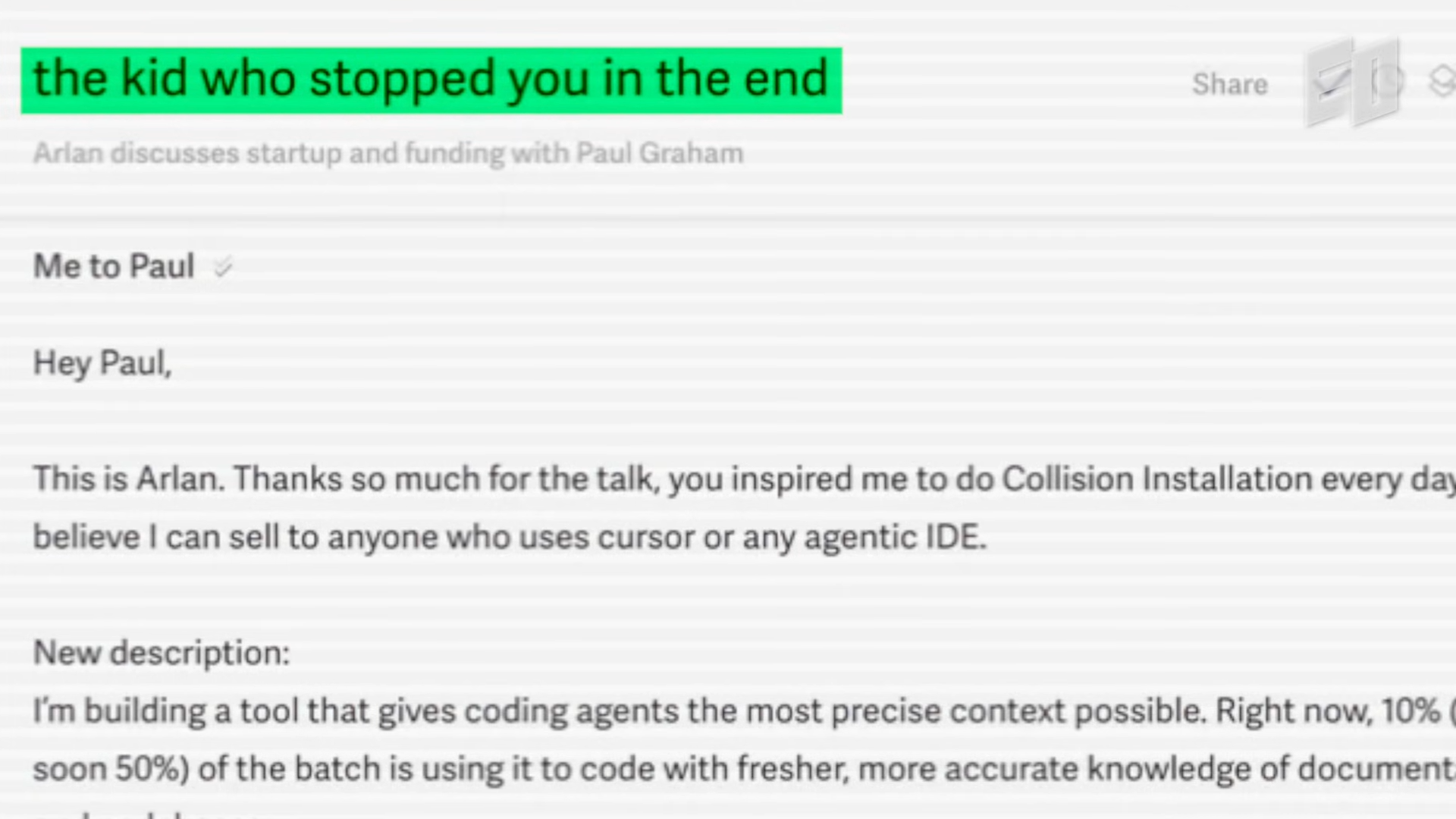
He was very annoyed, so he just said, "Email me at PG@ycombinator.com." So the same second I emailed this guy, well, he was in the car. This is like one of the craziest emails. You can already see the subject, "the kid who stopped you in the end." This is really surprising cause what the hell is that subject?
He was very annoyed, so he just said, "Email me at PG@ycombinator.com." So the same second I emailed this guy, well, he was in the car. This is like one of the craziest emails. You can already see the subject, "the kid who stopped you in the end." This is really surprising cause what the hell is that subject?
What happened when you finally got that follow-up meeting with Paul Graham?
Arlan: So he has like some memory from that, and yeah, straight to the point. "Hey Paul, this is Arlan, thank you so much for the talk. You inspired me to do Collison installation every day. I believe I can sell to anyone who uses cursor or any generic IDE." And like, here I put new description, so cause like, he asked me, you should really improve your pitch. So I said, like, "I'm building a tool that gives coding agents the most precise context possible," straight to the point.
Couple of days later, he responded like, "If you want to come talk about your startup, his assistant will find us an office hour." So I drove to Palo Alto by myself, spent a couple of hours with him, and he is actually trying to understand like what each business does, and if he sees a billion dollar opportunity in the business, also in the founder, he's gonna invest. I guess I showed that to him and also mentioning Collison Installation, because like Patrick Collison and John Collison are one of his most favorite founders ever.
Couple of days later, he responded like, "If you want to come talk about your startup, his assistant will find us an office hour." So I drove to Palo Alto by myself, spent a couple of hours with him, and he is actually trying to understand like what each business does, and if he sees a billion dollar opportunity in the business, also in the founder, he's gonna invest. I guess I showed that to him and also mentioning Collison Installation, because like Patrick Collison and John Collison are one of his most favorite founders ever.
How did the meeting conclude?
Arlan: Like he was the first investor in Stripe, so I guess like he also liked that, cause I saw his eyes from like, when I told him about Collison installation. We talked for a couple of hours, and I'm not going to show that part, but like in the end he said, "Hey, I would invest in you if you'd like." So that's the entire story.
The Cold Email Masterclass
You mentioned cold emailing 900 professors. What did you learn about effective outreach?
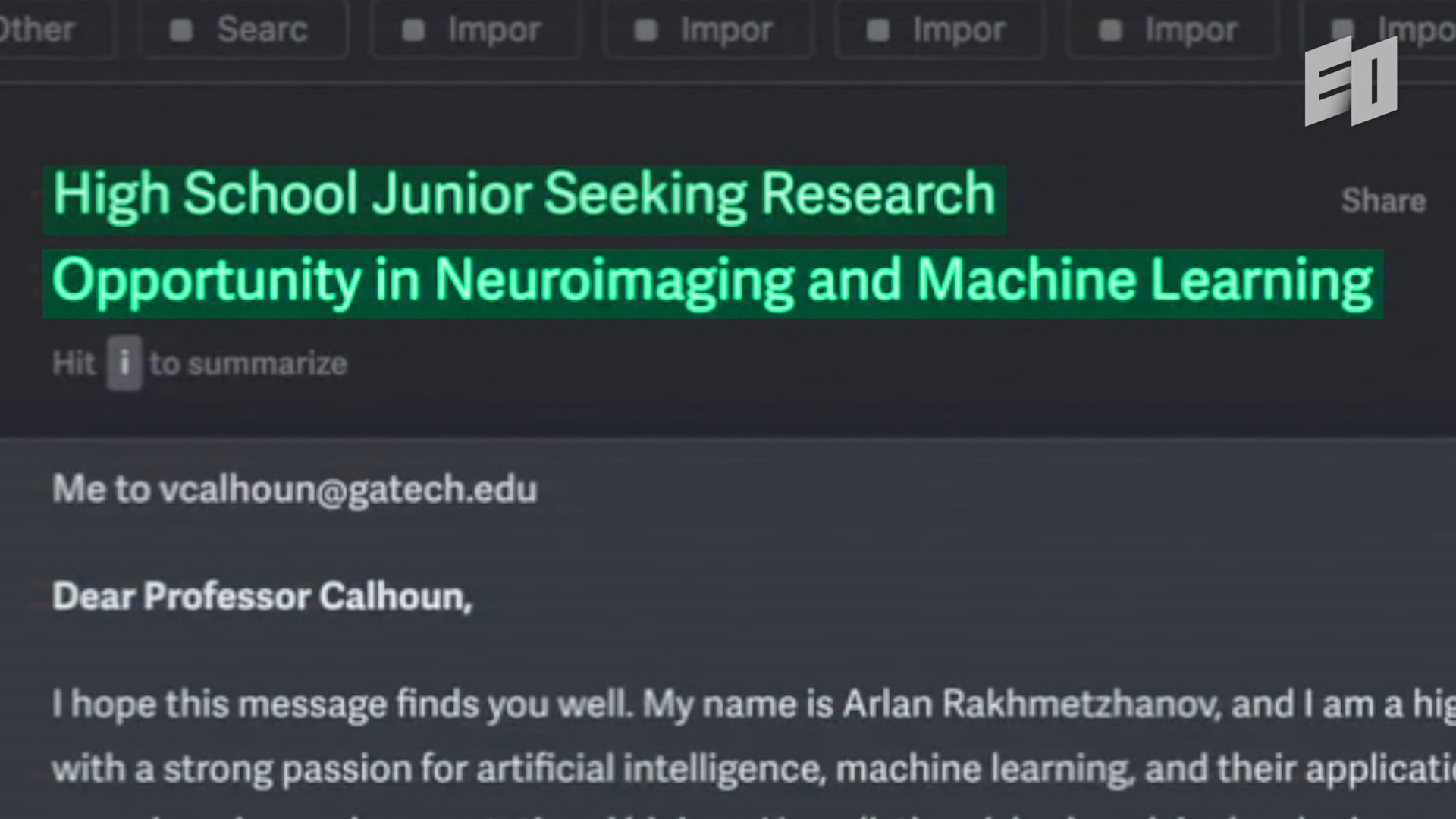
Arlan: When I was still in high school, I was 16, I would just spend my entire summer, 2 hours per day, just cold emailing a bunch of professors, cause I really wanted to get into Stanford, so I think it was around like 900 professors from top 20 universities, Georgia Tech, Caltech, Harvard, Stanford, and I got a lot of rejections, like 99.9% were all rejections, cause I'm a high school student, they didn't have any opportunities for me, even though I said I would love to work for free.
Yeah, so this is one of the emails, and I'm gonna explain why it's so bad. From the subject, you can see it's really bad. If I was reading that email, I would instantly put it in the trash and archive the person who sent it to me. Subject is really important. I'm not opening an email unless I get a very interesting subject in the headline.
Yeah, so this is one of the emails, and I'm gonna explain why it's so bad. From the subject, you can see it's really bad. If I was reading that email, I would instantly put it in the trash and archive the person who sent it to me. Subject is really important. I'm not opening an email unless I get a very interesting subject in the headline.
What are the key principles for writing effective cold emails?
Arlan: The worst thing you can do is put "inquiry," "exclusive," "seeking for," so those types of messages are really cliche and just make you sound like a bot. So just try to avoid those and be very direct even on the subject. Like to PG, I just told him "the kid who stopped you in the end," or "follow up on voluntary opportunities," so like a really, really concise, just cut the bullshit.
So try to keep it under like 5-4 sentences and jump straight to the point. Like, what do you actually want to get from that person? Give an introduction about yourself. To 3 sentences, it gets straight to the point. Professor Ilya, who actually allowed me to work for him for free, he's the head of venture capital at Stanford. Now, here's the email, I wasn't that good, but it was shorter this time. "Hello, my name is Arlan. I would really, really love to explore virtual unpaid internship. Here's my resume."
So try to keep it under like 5-4 sentences and jump straight to the point. Like, what do you actually want to get from that person? Give an introduction about yourself. To 3 sentences, it gets straight to the point. Professor Ilya, who actually allowed me to work for him for free, he's the head of venture capital at Stanford. Now, here's the email, I wasn't that good, but it was shorter this time. "Hello, my name is Arlan. I would really, really love to explore virtual unpaid internship. Here's my resume."
How important is persistence in cold outreach?
Arlan: He didn't respond, and I didn't give up after that. Like, I kept sending follow-up emails for like 2 months. It wasn't an instant acceptance, but he said, "Hey, great from you on accomplishing so much. I may look for volunteer research assistance soon." So, it wasn't a rejection, but also not an acceptance. For like 2 months I sent 3 more emails, so I said like, "Hey, hope you're doing great. I wanted to follow up on our previous conversation, in case you didn't get my email. Just wanted to let you know that I'm still really, really interested and would love to work."
The message is like really, really straightforward now, and that's like when I got an acceptance. If they didn't respond, I would just continue sending emails every single day, like, I would have to die to just of being tired or like losing motivation, cause I genuinely care about the entire thing of like to get there, I need to complete those small steps. This is like the matter of just how determined you are and like, what's your end goal.
The message is like really, really straightforward now, and that's like when I got an acceptance. If they didn't respond, I would just continue sending emails every single day, like, I would have to die to just of being tired or like losing motivation, cause I genuinely care about the entire thing of like to get there, I need to complete those small steps. This is like the matter of just how determined you are and like, what's your end goal.
Breaking Mental Barriers
What's your advice for people who feel like they're not meant for this kind of success?
Arlan: I'm so, so genuinely excited about what I'm doing right now and why like that I pursued this path. I couldn't be more grateful, and like, I don't see myself anywhere else. It's just like, people limit themselves, that's the only thing. People limit themselves and they think that they're people who were born with the talent of dream big and they cannot do that cause they're just like not born or like not meant for that life.
Look around, every single human that ever existed on this planet, founding fathers who built America, all the presidents, Steve Jobs, Elon Musk, they're the same people as you. They just were really, really curious, and they stayed curious during their childhood, during their adulthood and when they were adults, they just keep exploring. So if you just put it in your brain, in your head, that all of those people are identical, but they're just more curious and more eager to explore the world, you will realize that you can operate at the same scale if you will just go do the thing.
Look around, every single human that ever existed on this planet, founding fathers who built America, all the presidents, Steve Jobs, Elon Musk, they're the same people as you. They just were really, really curious, and they stayed curious during their childhood, during their adulthood and when they were adults, they just keep exploring. So if you just put it in your brain, in your head, that all of those people are identical, but they're just more curious and more eager to explore the world, you will realize that you can operate at the same scale if you will just go do the thing.
What's the one piece of advice you'd give to someone starting out?
Arlan: So, like Nike or what company has this saying, "just do it," go through that limit and break the barrier, so that's like the only piece of advice I can give.