Jan 17, 2024
$8B in Just 2 Years, The World's Fastest-Growing Startup
Interview with Aravind Srinivas, Co-founder of Perplexity AI
Founder Focused


💡
At a Glance
- Who: Aravind Srinivas is the co-founder and CEO of Perplexity AI. He previously researched AI at OpenAI and UC Berkeley before starting the company in 2022.
- What: Perplexity is a conversational answer engine that replaces traditional search with direct, cited answers to natural language questions.
- Traction: Within 18 months of launch, Perplexity reached 10 million monthly active users and a $1B valuation, making it a unicorn in under two years.
In this conversation, Aravind Srinivas shares the journey of building Perplexity AI, the challenges faced, and the strategic decisions behind their success. In just 18 months, this startup has reached 10 million Monthly Active Users and is valued at $1B, which makes Perplexity hit unicorn status in less than 2 years. The startup is backed by Jeff Bezos, Nvidia, and Tobi Lütke. Get an insider's perspective on how Perplexity AI is reshaping AI-driven search technology.
Key Takeaways:
Why Great Search Quality Is an Orchestra, Not a Single Model
No single component decides answer quality. Site ranking, summarization, and hallucination control all have to work together, and one weak link breaks the whole result, which is why the problem stays hard even for companies with far more resources.
Why Perplexity Priced Its Pro Plan Exactly Like ChatGPT Plus
Pricing Perplexity Pro at $20, the same as ChatGPT Plus, was a deliberate test. It forced users to prove they valued Perplexity's own product, not just cheap access to a subsidized GPT-4.
Why a 30-Person Team Can Still Outbuild Big Tech
A small team can only do a few things well, so Perplexity treats that constraint as an advantage. Focusing on one problem and shipping it at high quality beats spreading thin across many features, regardless of how much bigger a competitor's team is.
Why "I'll Do It Tomorrow" Is the Wrong Answer at a Startup
Momentum compounds in both directions, a startup that stalls decays fast, while one that keeps pushing accelerates. That's why the internal rule is to ask why something can't happen today before accepting that it should wait.
The Internship That Humbled a Top Student Into a Founder
Arriving at OpenAI in 2018 as one of Berkeley's top AI PhD students, Srinivas found people far better than him and took it as a wake-up call. That reality check pushed him toward deeper first-principles thinking rather than resting on his prior track record.
Why the Mission, Not the Valuation, Is the Metric That Matters
Srinivas says the goal was never to hit a valuation target by a certain date, it's to keep making the product better and more accurate for more users. That focus is also personal, he treats waking up early and feeling like there's always more to do as a privilege, not a burden.
Below is the complete transcription of the interview. Minor edits have been made for clarity and readability.
Introducing Aravind Srinivas, Perplexity AI Co-Founder and CEO
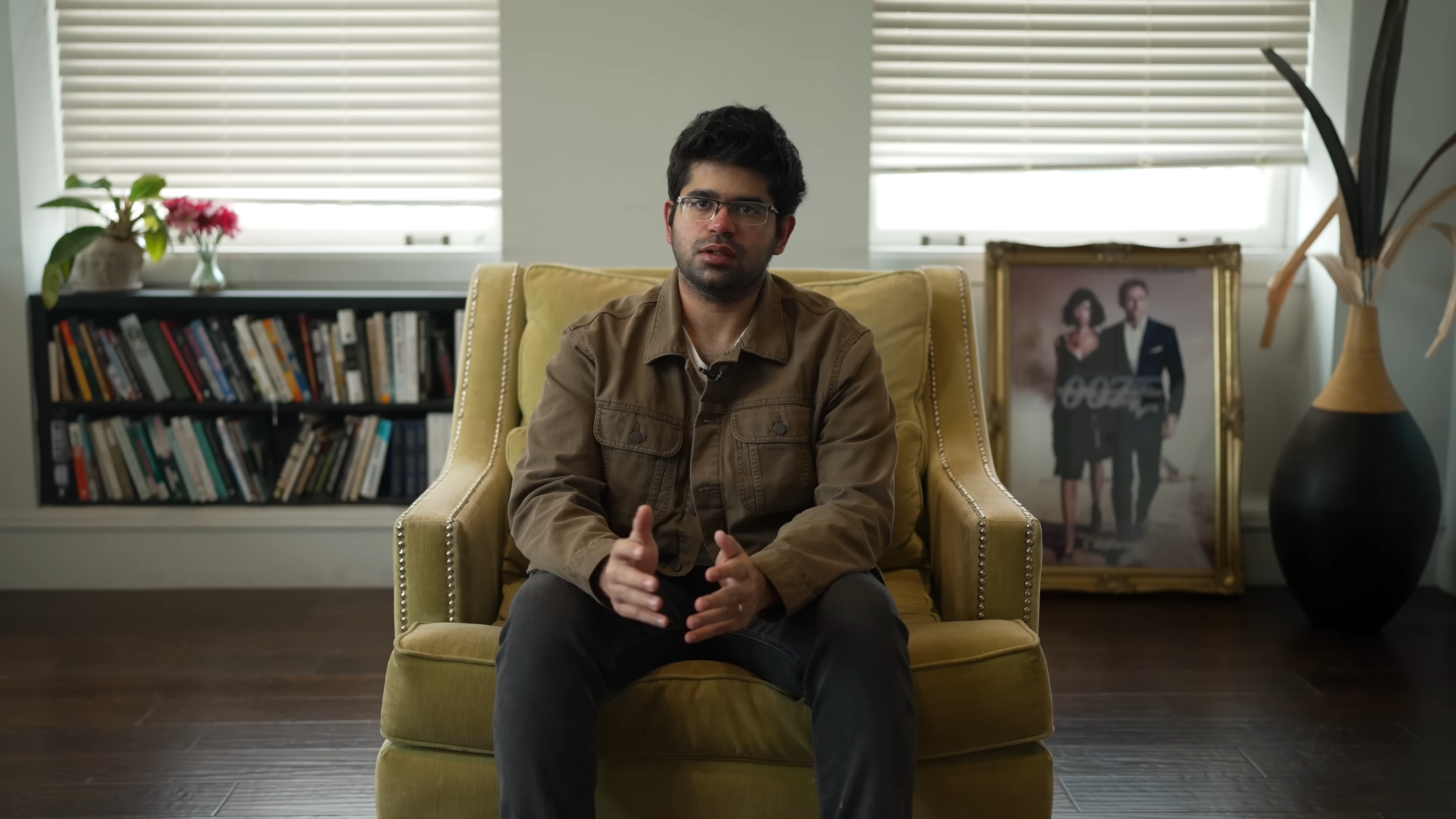
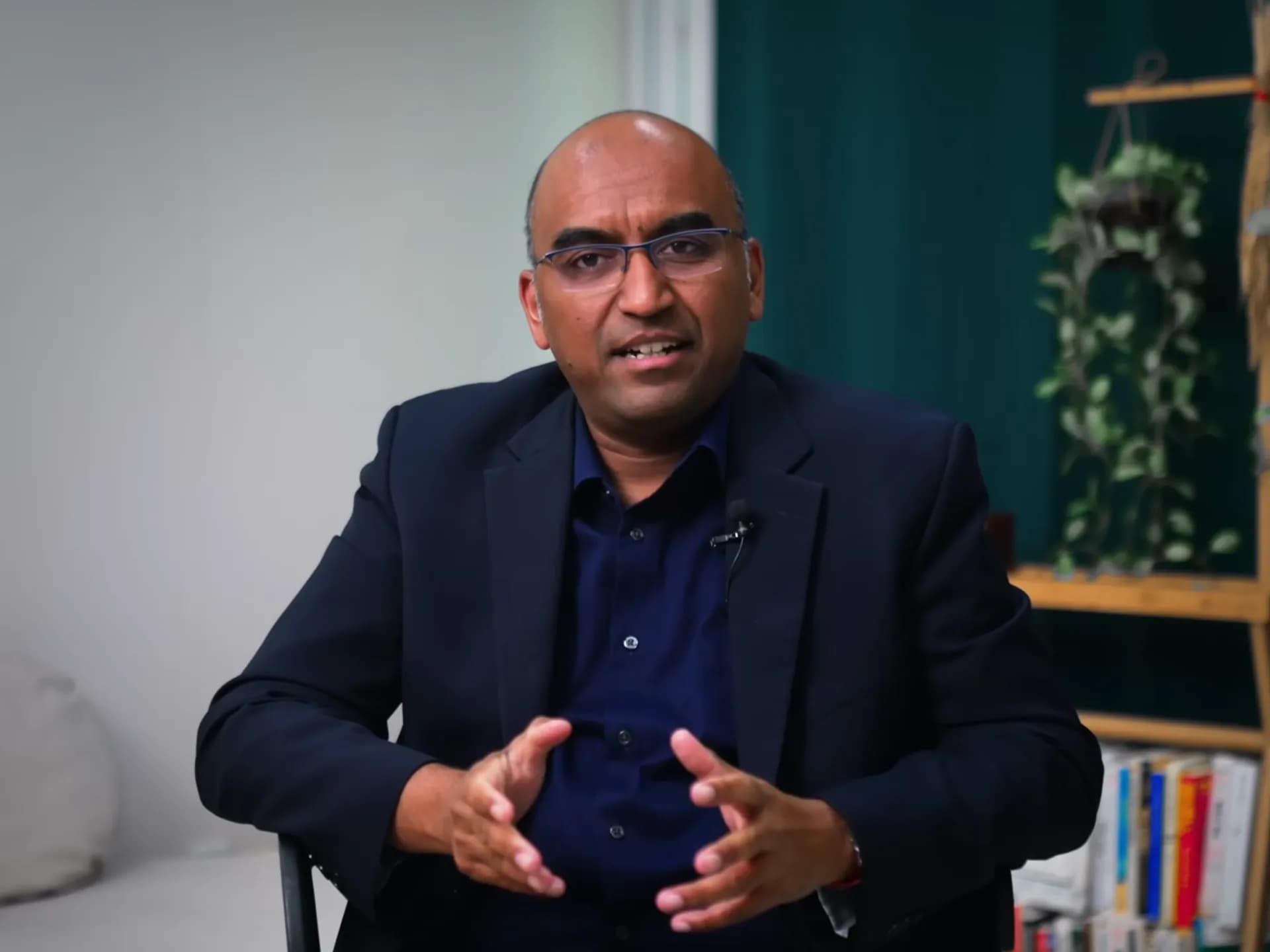
I'm Aravind Srinivas. I'm the co-founder and CEO of Perplexity AI. Perplexity is a conversational answer engine that aims to deliver answers to you, to whatever questions you may ask. We are trying to revolutionize how people consume information online. Instead of getting ten blue links, they can just ask questions in natural language and get an answer instantly.
We launched the product on December 7th, 2022. We have about 10 million monthly active users at this point. It's basically grown a thousand X over a period of one year.
Academic to Startup Founder
So I grew up in India, studied at one of the IITs there, and I was really into algorithms and programming ever since the beginning. A friend of mine told me about a machine learning contest. I didn't even know what machine learning was. All they told me was, hey, there's this data set and you can figure out a way to predict the output given the input.
It was fun. I won the contest without spending a lot of time on it, and it came more naturally than I expected. So I decided to go deeper into it, and I went and did my PhD in Berkeley on AI and deep learning. I worked at OpenAI in the summer of 2018 as a research intern. I thought I was good, I did really well in India.
I came to Berkeley thinking I was definitely one of the top AI PhD students. Then I went to OpenAI and I felt really bad, because people were so much better than me. It was a big reality check, that I could improve a lot more in programming, a lot more in first-principles thinking, in clarity of thought.
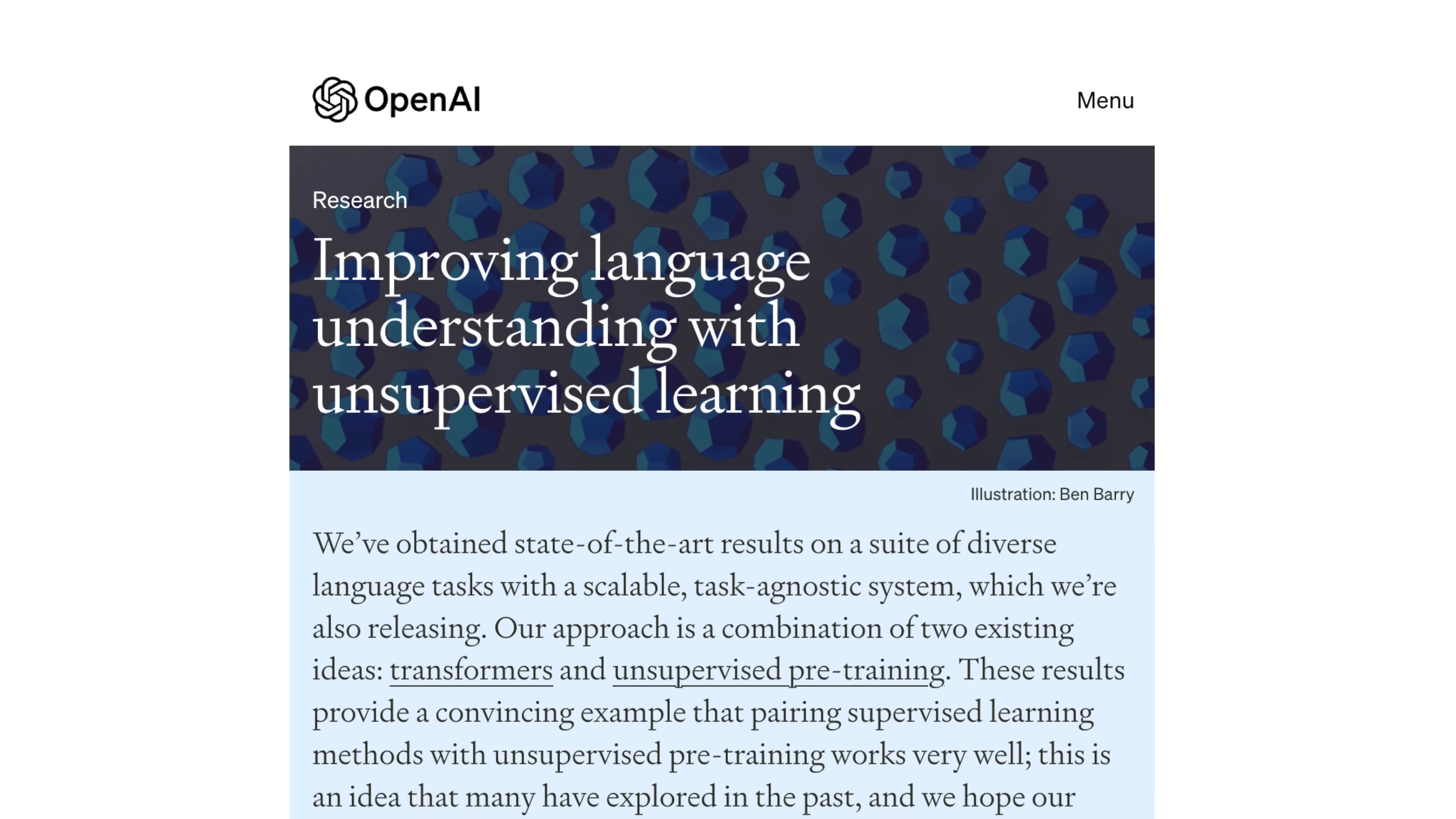
After an internship at OpenAI in 2018, when GPT-1 was published, we realized there was this new form of learning, using all the internet data and learning from it, and I figured that was going to be more important. So I told my advisor this is the right thing to do, we should go work on this.
He was actually pretty open-minded and said, okay, you know what, I'm not a specialist here, but let's try. If this is the next big thing, the best way to learn a new topic is to force yourself to teach it to others. So we spent a lot of time on holidays and weekends just learning, coding, and understanding all these things.
We did this for two years. All of that helped me find a new research topic: how to combine generative AI and RL together, which is what results in these amazing technologies like ChatGPT. ChatGPT is not just predicting the next word on the internet. It's doing that, and then making sure it knows how to communicate with humans.
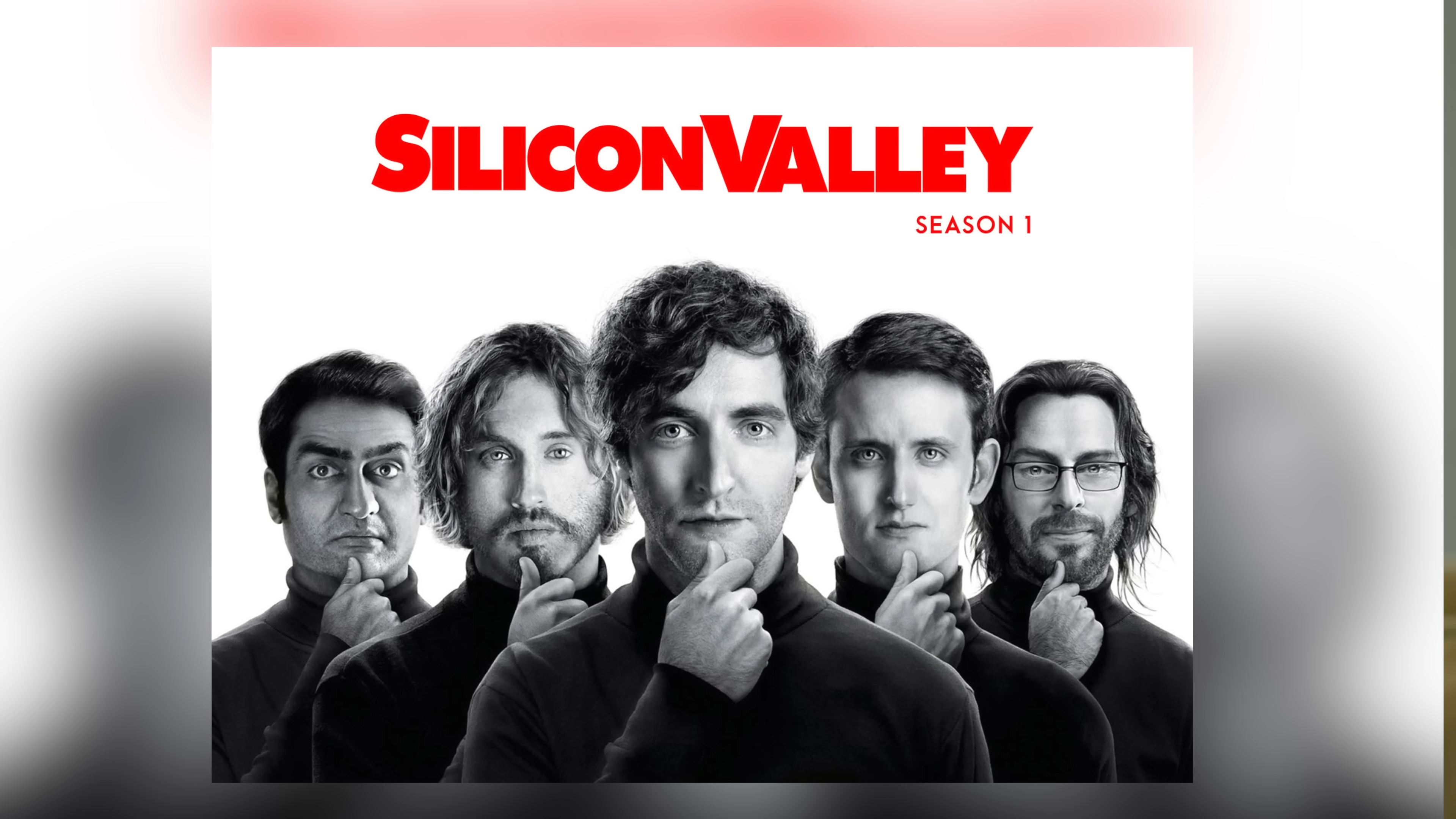
I'd always been interested in entrepreneurship, because I'd been in the Bay Area. I watched this TV show, Silicon Valley, which is pretty real, but never really found an example of an academic turned entrepreneur that I really resonated with. It was all undergrad dropouts. At one point I was in the library late at night reading books, and I stumbled on this book that told the story of Larry and Sergey, called How Google Works.
Larry had written the foreword. Reading it, I realized I had only two career pathways for myself: professor or entrepreneur. The reason is that no other career pathway would let me execute on my own vision. I would have to be working on someone else's vision. I wouldn't be able to bring the ideas in my head into reality.
Building the Next Gen Search Engine
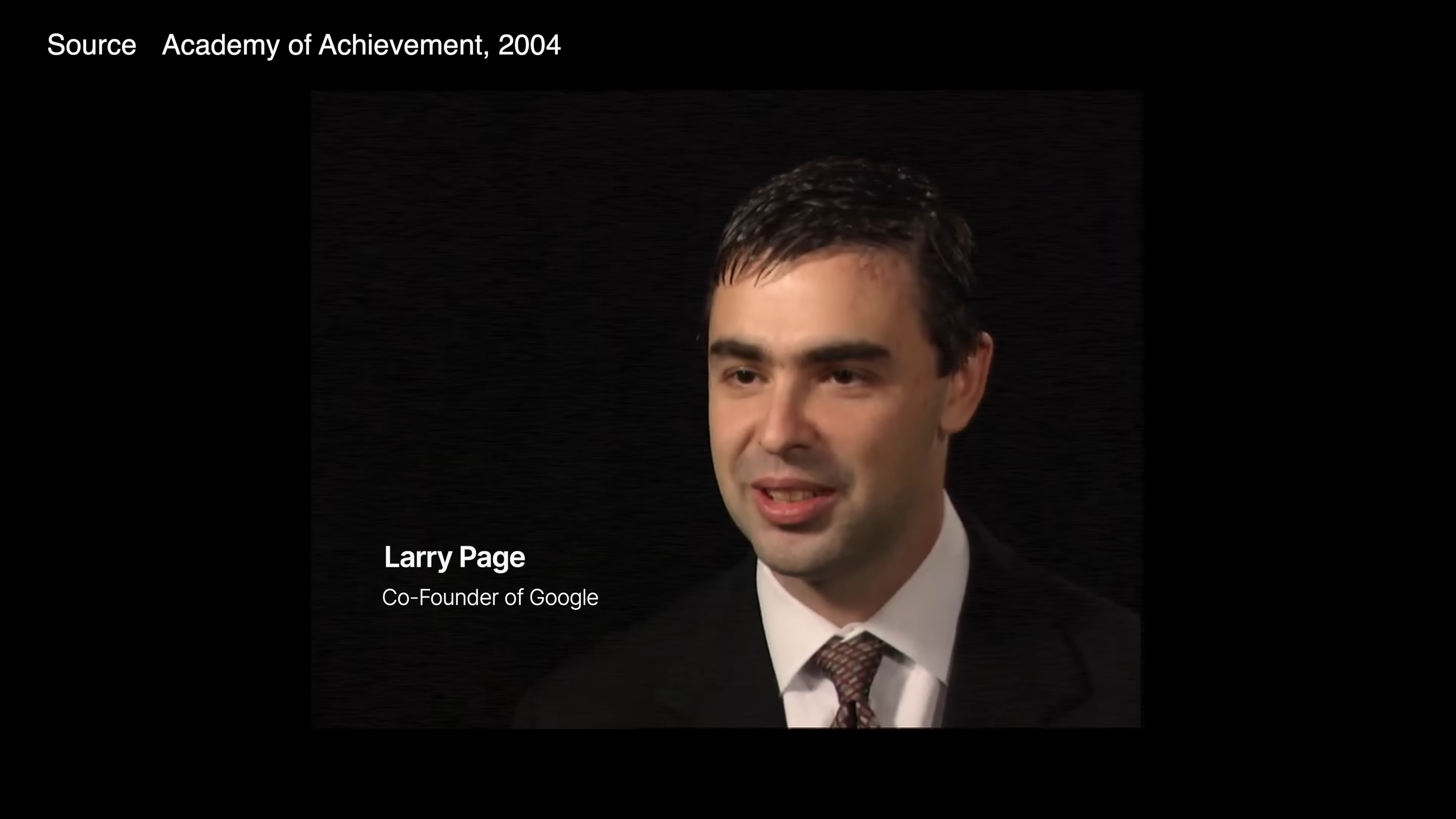
"Artificial intelligence would be the ultimate version of Google. We had the idea of the ultimate search engine: it would understand everything on the web, understand exactly what you wanted, and give you the right thing. "Larry PageCo-Founder of Google
Perplexity is the world's first conversational answer engine. What does that mean? Earlier we were used to entering keywords or a bunch of phrases, and Google would give you ten blue links, and you'd open each of them and start reading.
Perplexity is trying to build a future where you don't have to do this. You can just come and ask a question, just like how you would ask a friend, and the AI replies with the answer, not just the answer. Every sentence it says also has a corresponding reference, what we call a citation.
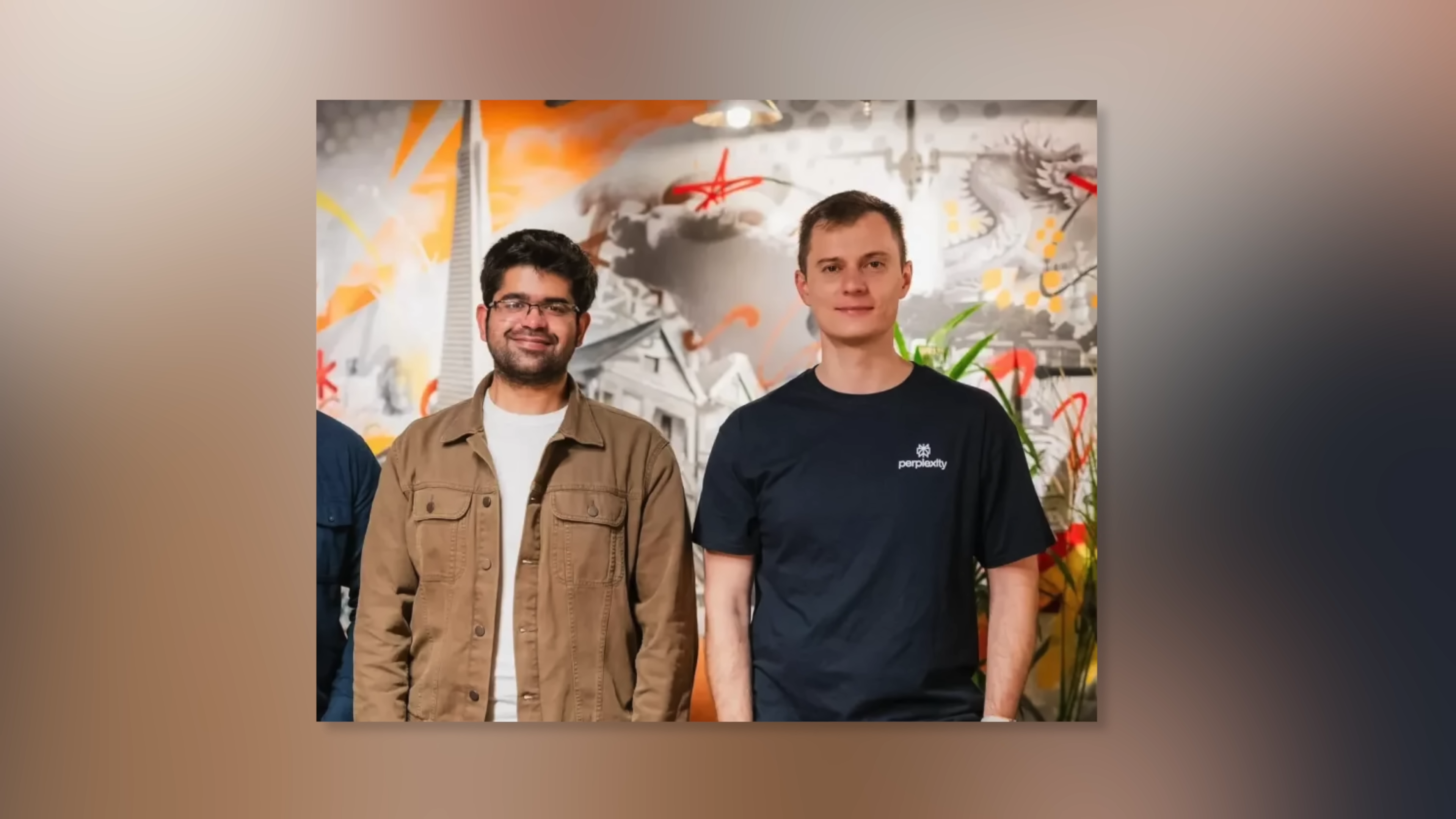
This is all coming from our academic background. My co-founder, Denis Yarats, and I are both PhDs. We figured we would use the same principle: everything in an academic paper has to be backed up with a reference from some other paper. That's how Perplexity works. It's almost like how a journalistic essay or a research paper is written.
Often you're curious about something, but you don't exactly know what you want. Even so, how can I help you if you don't know what you want? People are not expert prompt engineers, and they're never going to be. Don't blame the user for not having a good prompt. Blame the AI for not being able to help them expand it into a good one.
That's why we built this thing called Copilot: as you ask a question, Copilot will ask clarifying questions, and your prompt gets expanded interactively. This is similar to talking to a friend. Say, hey, I'm figuring out which school to go to. Oh, okay, cool, what are you actually interested in? Are you interested in English? So you're interested in computer science? I think I might be interested in both English and computer science. Okay, yeah, Yale might be a good option for you. That's how you talk to a friend. We want that experience, that human intelligence needed to do that, to come to a search engine, done now by an AI.
We think this is the future of how people are going to interact with information on the internet. We launched the product on December 7th, 2022. On our first day, we saw around two to three thousand queries. Now we serve more than three to four million queries a day. It's basically grown a thousand X over a period of one year.
Growth so far has come from people saying ChatGPT doesn't work for this particular thing, or Bard sucks at this thing, and then tweeting, oh, look at this Perplexity thing, it just gets it. Maintaining the quality of the answer comes down to improving every single component: does it have spammy sites, or high-quality sites? How good are you at writing an amazing, concise summary without hallucination? We are playing the orchestra here.
These are all individual musicians, and any one musician failing will make the result fail. That's why this is a hard thing to build. It's not something where, oh, because you're a startup, you're going to lose, because even for a big company, playing the orchestra is hard. Of course, if you have more money, you can hire better musicians and play a better orchestra over time.
But that's still just part of orchestrating. The user doesn't care where it goes wrong in any of these. For the user, they read an answer and think, oh, this is good, or this is not good. That's why this particular product is so hard to build, and that's why we're so focused on improving every aspect of it.
This is a really hard problem, and we believe it can be solved over time as we gather more data from users and improve our own stacks in each of these components. Your experience is going to keep getting better. The Pro plan is priced at $20 a month, the exact same pricing as ChatGPT Plus. I'll tell you why.
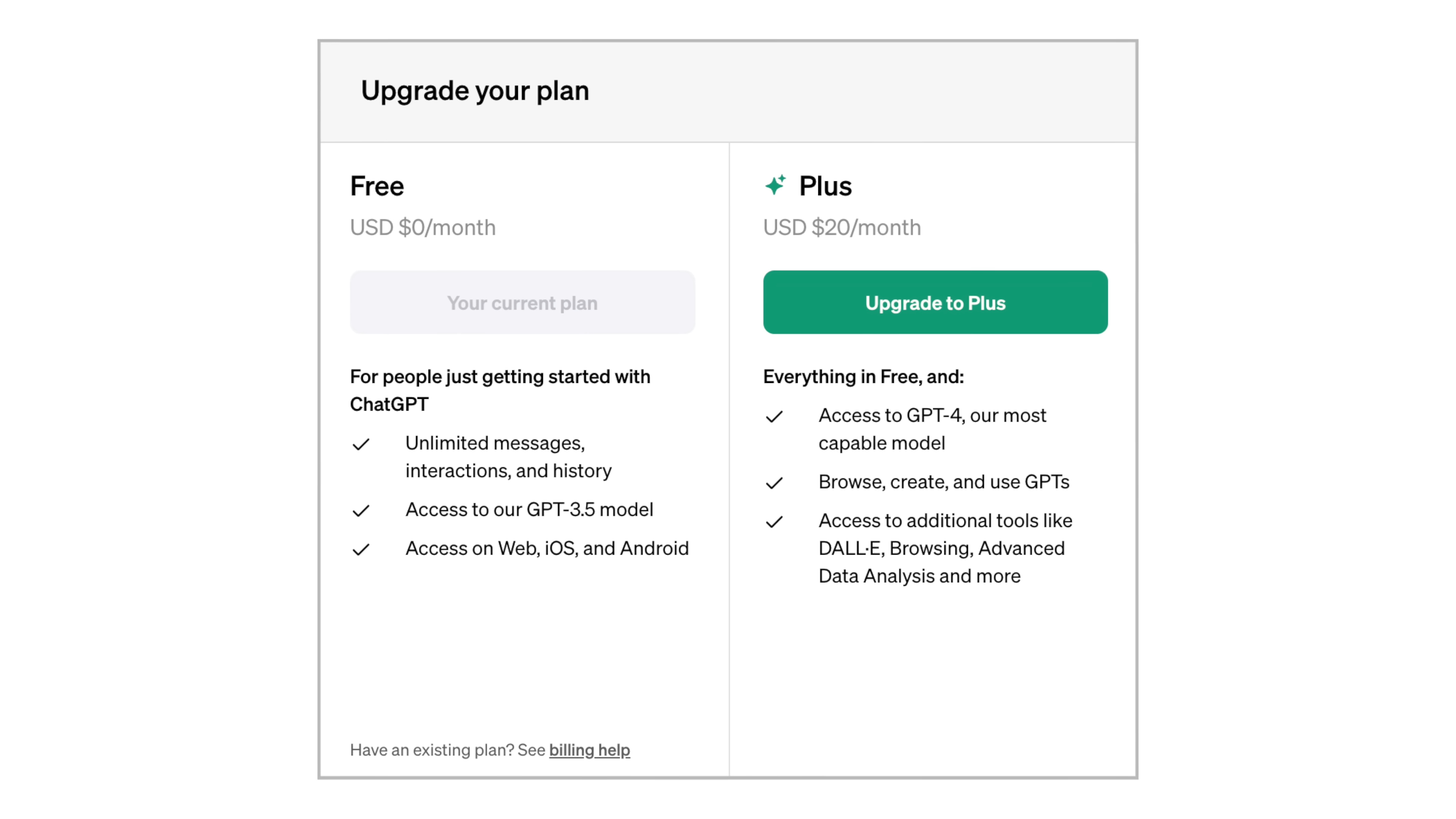
We use OpenAI's GPT-4. If we priced it lower than ChatGPT Plus, people would come and pay for it, but not necessarily for what we're providing, because we subsidized GPT-4 and gave it to the user. Subsidy in any industry can look like product-market fit. But then, do you have product-market fit as a company because you're subsidizing something everybody wants, which is GPT-4, or do you have product-market fit for your core offering, which is combining LLM and search together? It's very important not to conflate one with the other.
So we decided we'd price it the same and see how many people were still paying for our product. Either they'd have to cancel their GPT subscription and come here, or pay for both, just like how you pay for both Netflix and HBO.
That's why we decided to do this, and we're super happy it worked, because it means when a user comes and pays for us, they're communicating one thing: that they value us providing the best service on this one particular thing, that they want the highest quality.
How a 30-person startup challenges Big Tech
The best strategy for startups is to focus on very few things, literally even one thing, because there's not much time. As a startup, you're supposed to move fast, and you have very few shots at failure. You're also supposed to ship high-quality things so the user trusts you, so it's physically impossible to do many things. We're still a small team, around 30 people. When you have fewer people, you can only do fewer things.
So you spend a lot of time thinking about what to do, and once you've decided, you just do it. There's a quote I really like from the Airbnb founder: you have to earn the right to ship a new feature from your user, because the user already wants a bunch of things. Your job is to actually go and do that for them, and once they're happy, they'll tell you, hey, give me new features.
That's when you've got to go and ship new features. We have this mentality in the company: don't immediately say yes to every single obvious idea you can do. Really think about what the user wants and how it fits our mission, which is to make the world's most knowledge-centric company, the ultimate knowledge app. Once we've strategized that well, we just focus on execution.
We wouldn't get distracted. Once it's shipped and in a good enough state, we finish the project and move on to the next thing, and it becomes a repeatable workflow. It's also the culture you want to set. If someone tells you, okay, I'll do it tomorrow, just ask: why can't you do it today?
Don't tell them no, just ask, can we do it today? If they have a solid explanation for why it can't be done today, fair. But maybe they didn't even consider it, they just assumed they could do it tomorrow. Not in a way that comes across as toxic, but more like pushing them towards urgency.
We're a startup, we need to execute. If we don't, all our potential just decays. If you have a rolling ball and you do nothing, it will automatically stop. But if you keep kicking it, it'll go even faster.
How to Make Decisions When Everything Feels Complex
Something is complex because there's a lot of information. Then force your brain to say, okay, this is a lot, but what is the one most important thing? What is the second most important thing? Usually there's not more than two. Let's say there's one thing that has two choices, and there are three things that have eight choices. Now your brain is not able to process eight choices at once.
It usually has 3 or 4 at best. So your job is actually to figure out what those two choices are. In fact, there's advice from Reid Hoffman that says, in life, whenever you're going to make decisions, people usually do pros and cons, where they write down the pros, they write down the cons, and then see which has more, and they pick that option.
But that's the wrong way of doing things, because that way you're weighing everything equally important, when things are not equally important. Usually some things are way more important than others, so you've got to be able to take something, pick the most important thing out of it, and focus on that.
Usually it works: reformulate the problem better, so the complex problem becomes much simpler, and then iterate. Look, I'm not saying I'm really good at this today. I can still improve, and so can everybody. So believe in the improvement process. Don't believe in being perfect. We all learn, we all make mistakes, and it's fine.
Do What You Love: Advice for Founders
I've given this advice in other interviews, and I want to continue to say it, not just for consistency, I really believe in it. When you're starting a company, do what you really love, because the world is not static, it changes dynamically, really fast. I'd say what you love doesn't usually change, so start with that.
The mission is not about making money. That said, the mission requires money, and therefore we will make money in order to serve the mission. The metric should never be, oh, by X year or X month I'm going to increase the valuation by alpha times X. It should be really focused on: I should make the product better, I should have more users, I should have a higher-quality product, more accuracy.
A lot of people, when they wake up, feel like going back to bed. They feel like they want to sleep one or two more hours, and nothing's really going to change. For me it's the opposite. I'm waking up sooner than I wanted to, sleeping later than I wanted to.
When the day ends, I always feel like there's more stuff I could have done. So that's actually a privilege. I also feel stress, but the opposite wouldn't make me feel any fulfillment, honestly. So it's very fulfilling. It's definitely a privilege, and I want to keep going this way.