May 17, 2023
Unconventional Story of an Entrepreneur
Interview with Manu Kumar, Founder of K9 Ventures
Founder Focused

💡
At a Glance
- Who: Manu Kumar, founder of K9 Ventures, a Palo Alto venture fund that has backed companies like Lyft, Lucidchart, and Everlaw.
- What: Kumar built his first company, SneakerLabs, an early web customer-support product, and sold it in a stock deal worth over $100 million when he was 25.
- Traction: K9 Ventures has invested in about 55 companies over the past 14 years, with roughly a third of them acquired.
In this conversation, Manu Kumar, born in New Delhi, started his first business in the United States at the age of 20. He has since been active as an investor, founding seven companies and investing in over 50 others, building a successful career. What was the driving force behind his ability to perform successfully in both roles as an entrepreneur and an investor? Watch the video to find out!
Key Takeaways:
Entrepreneurship Is Just Showing Up Until Resistance Runs Out
Kumar talked his way into an oversubscribed class by literally living out the professor's own definition of entrepreneurship, standing in the back every day until a seat opened up. The lesson stuck: the only real edge in building something new is refusing to stop when the door is closed.
What Separates a Founder Worth Backing From One Who Isn't?
Kumar tests founders by pushing them with hard questions and new information, then watching whether they get defensive or actually absorb it. The ones worth backing take feedback, synthesize it, and still make the final call themselves rather than outsourcing the decision to whoever spoke last.
The Investor's Real Job: Alignment, Not Just Capital
Kumar sees his role as making his own interests match the founder's, since the company is the founder's one shot while it's just one of his fifty-five bets. That asymmetry is why he frames himself as a partner in the outcome, not just a check-writer.
Some Companies K9 Backs Will Fail. Kumar Has Made Peace With That.
He treats both wins and losses as part of the game rather than outcomes he can fully control, since plenty of failure happens for reasons outside anyone's influence. A high enough hit rate, not zero losses, is what makes the model work.
Whether He's Founding or Funding, Kumar Is Just a Builder
He draws a straight line from building with Legos as a kid to founding his first startup to backing companies today, treating all three as the same underlying instinct. The through-line isn't the vehicle, investing or founding, but the ambition to build things that reach billions of people.
Watch the full interview now on EO's YouTube channel! Below is the complete transcription of the interview. Minor edits have been made for clarity and readability.
Chapter 1: It started with a computer
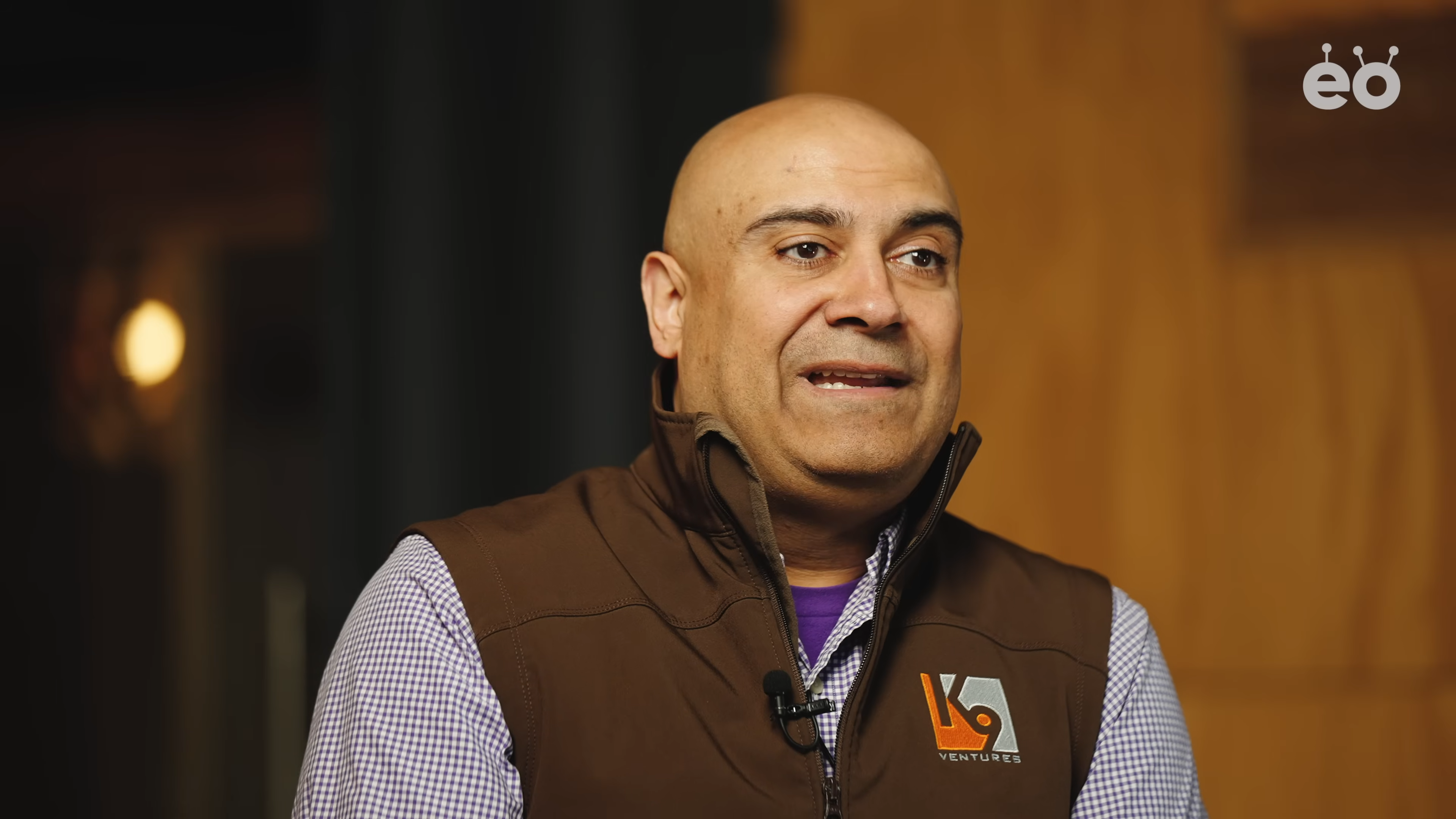
Hi, my name is Manu Kumar. I'm the founder and chief fire starter at K9 Ventures. I grew up in New Delhi, in India. I was interested in electronics and building things, so I would go to the electronics market in India and buy components and transistors and try to actually put together different projects. That's what I would do for fun.
When I got introduced to a computer, it was actually when I was visiting somebody's house. They were playing computer games, and I looked at that and I'm like, wow, this is a fascinating machine. I want a computer. It took me a couple of years to convince my grandmother to get me a second hand computer. And then once I had that second hand computer, I just went to town and learned as much as I could about it. I took a summer class. It was supposed to be a 14, 15 day program, and I'd finished all the stuff that they needed to do there in two days. I got exposed to computers, and it was no looking back for me from there.
When I was 14 or 15, I decided that I wanted to leave India and come to the United States. I had never traveled outside of India at that time. I got accepted to Carnegie Mellon. That first time, being outside the country and seeing everything around me, I think for me the excitement of being in a new place and in a great school was so much that I didn't care about anything else.

When I arrived at Carnegie Mellon, within the first semester, the reaction I had was, oh my gosh, there are so many smart people here. In my high school, I was towards the top of my class, but this was my first time kind of stepping out of that bubble, seeing all these smart people coming from different parts into this one university and working hard. That was an eye-opening experience.
When I was at Carnegie Mellon, I wanted to take a class in entrepreneurship, and that class was only available to business school students. I went to the professor and asked him, can I take your class? And he said, well, the class is already oversubscribed and there's no space. So I showed up for the class on the first day anyway. The first slide the professor put up on the board was his definition of entrepreneurship: insane perseverance in the face of complete resistance.
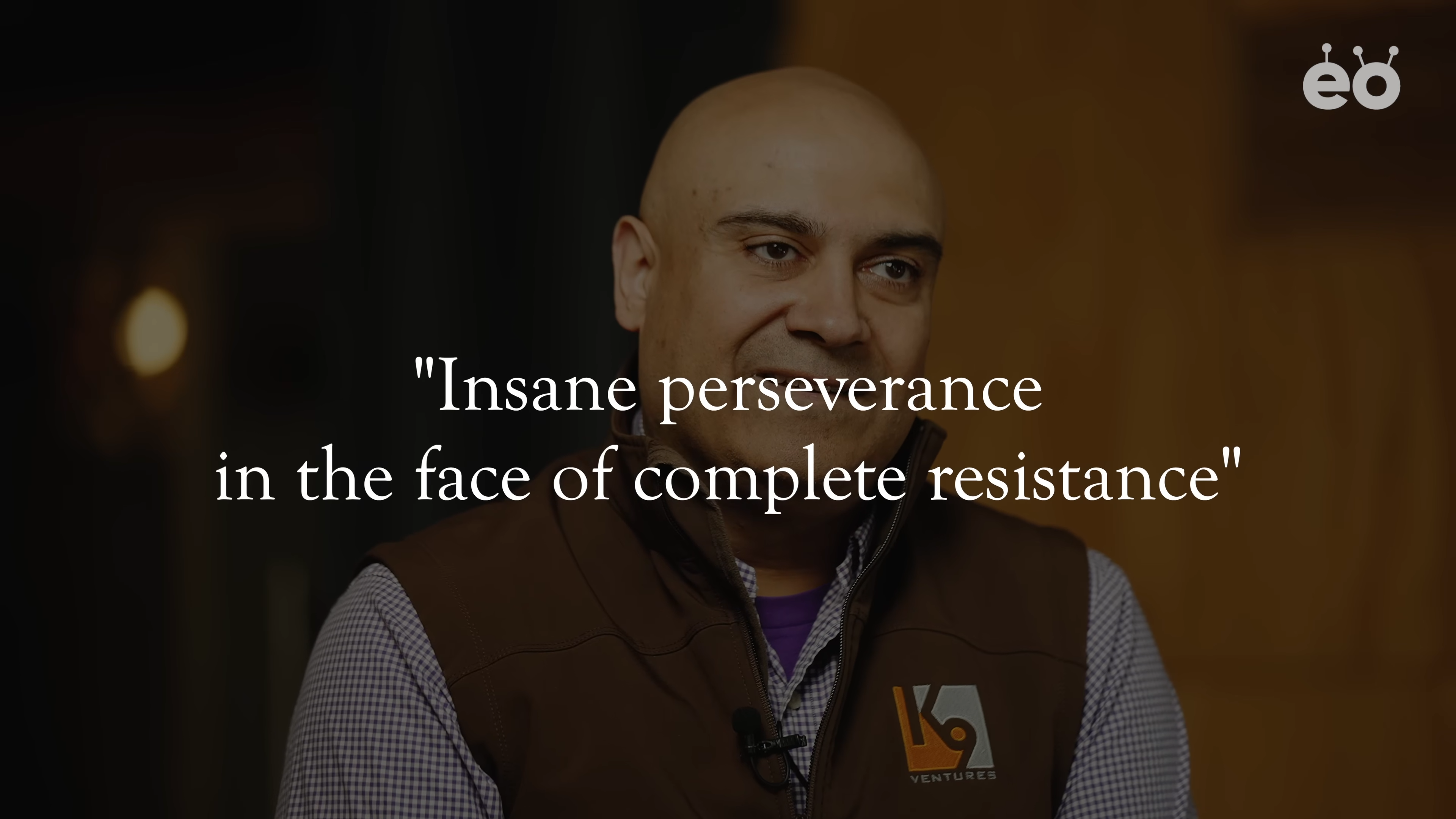
And I read that statement and I'm like, great, I know exactly what I need to do to get into this class. I went back to the professor and I told him, look, you put up this definition of entrepreneurship on the board that says insane perseverance in the face of complete resistance. And I'm here telling you that I'm going to show up for your class every single day, and I'm just going to stand in the back and keep watching and learning. When I said that to him, he's like, okay fine, I will let you into the class.
That, to me, has always been the defining essence of entrepreneurship. If you want to make something new and you want to create something new, you're going to run into all kinds of obstacles. And the only thing that will get you through that is having insane perseverance and grit to just keep on going and getting through it.
While I was doing my Master's is when Java first came out and became a thing. And so I started tinkering around with Java, trying to teach myself, and I ended up creating an application, which was an interactive chat room that you could host on any website. I had 20,000 people who were coming to this one little site. One night, it was almost 3 or 4 in the morning, one of the people who was using the chat room was messaging me and essentially saying, you should start a company. That's what became the defining moment for me, oh yeah, there is potential here to actually start a company. That's kind of how things got started.
Chapter 2: Lessons in creating the first company
Starting a company when you're 20, and you kind of don't have a lot of idea about how to do things, it is definitely not easy. How do you incorporate a company? How do you hire somebody? What's the product? How do you find customers? There are all these questions that were just kind of in front of me. I didn't have answers to all of these questions.
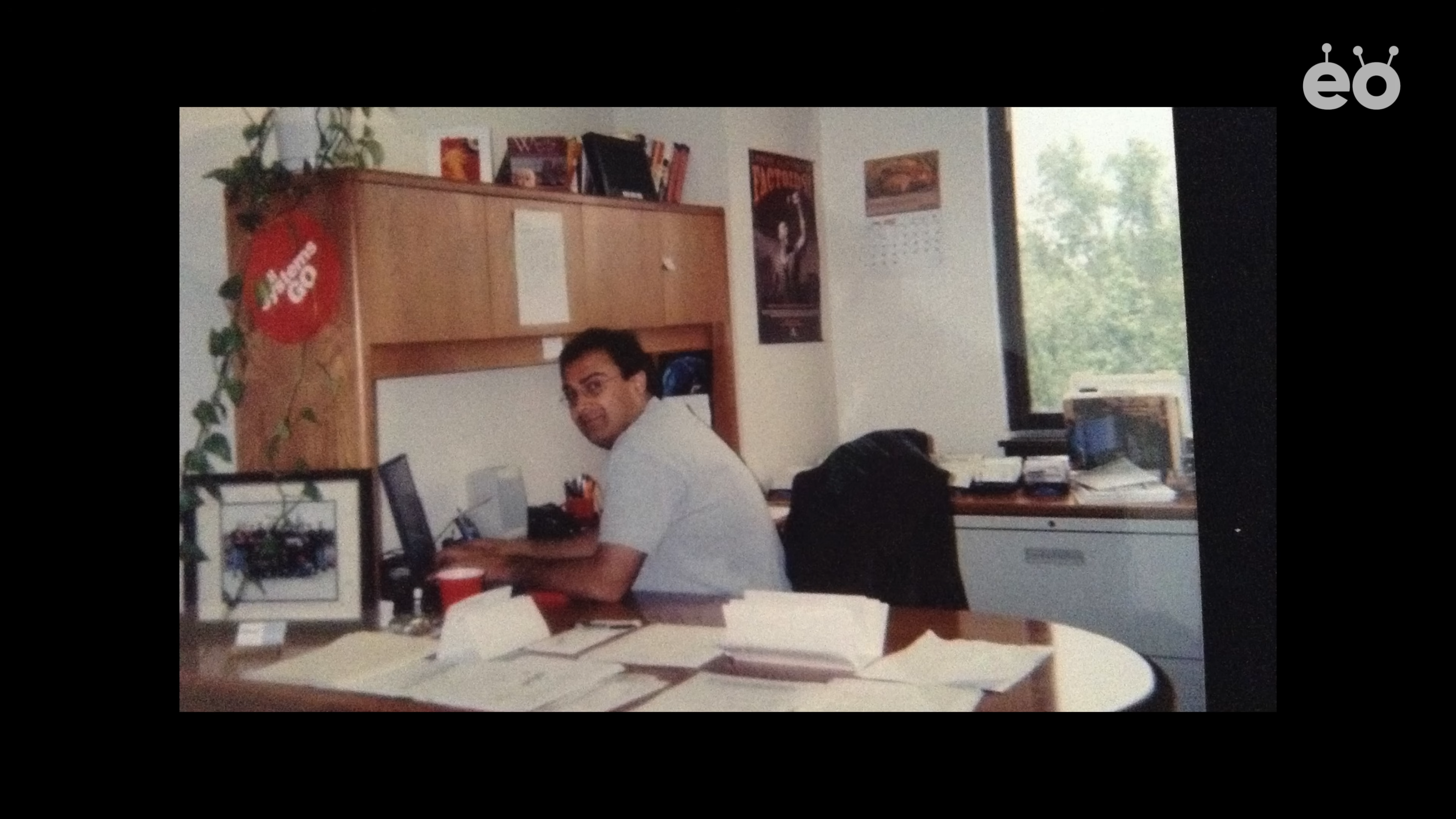
I started Sneaker Labs when I was 20. For Sneaker Labs, our initial product was a customer support product. In fact, if you go on a website today and you get a little window that pops up and says, hi, may I help you, or somebody is trying to chat with you on a website, you can blame me for that, because that was something I created in 1998. So that's what Sneaker Labs created: online customer service on a website. We were pretty much a SaaS business even going back to 1998.
I learned a lot of interesting lessons when building Sneaker Labs. I started my first company in Pittsburgh. There were not a lot of options for raising capital in Pittsburgh. So the way that I ended up raising capital for my first company is that I first started the Pittsburgh Java Users Group. Then at one of the meetings for the Pittsburgh Java Users Group, there was a professor who showed up from the University of Utah, who was on sabbatical at Carnegie Mellon. He showed up and started talking to me about my company. I told him about my company, and he said, oh, I've got some friends I can introduce you to. So he introduced me to the people who then became my first investors in that company.
I did not start the Pittsburgh Java Users Group because I needed to raise capital. I wanted to start something and help it grow, and just kind of seeing the power of the network evolve and realizing that who you know often matters more than what you know was a key lesson for me. So when I think back, yes, that's a lesson I learned 20 years ago, or 30 years ago, that I'm still using today as well.
So for Sneaker Labs, we grew the company to where we had about 20 employees in the company. We had a real product. We were fairly cutting-edge in terms of what our product was actually delivering in the marketplace. I decided that it was time for me to try and either raise capital or essentially take the company to the next step. I came out to California and the West Coast, to Seattle and also to the Bay Area, and had several meetings about either trying to raise money or partnering with different companies. It was an eye-opening visit to come out west, because in one trip, I came back to Pittsburgh, where I had started Sneaker Labs, with at least six different expressions of interest from people who wanted to acquire the company or fund the company.
We agreed to be acquired by a company called Octane Software. We were going through the process of that acquisition, and I got a call from their CFO saying, oh, by the way, we are being acquired. And that was quite an experience, because we were going from being a 20 person private company to being a 200 person private company. That's what the journey would have been. At the same time, while we were going through this acquisition process, the company that was acquiring us was also being acquired. And so the way it played out is that we were 20 people in private on one day, we were 200 people in private on the next day, and we were part of an 800-person public company on the third day.
So Sneaker Labs was acquired for over $100 million at the time. It was a stock transaction. I learned a lot of lessons about stock transactions and how stocks can actually go down in value as well. It was an amazing experience to go through an M&A process at that age. I was 25 at the time and just learned about how deals happen, how deal-making happens, how you negotiate in different situations. I still look back and that experience is what helped define what I'm able to do in the future, because I just learned so much in such a short period of time that it gave me the confidence and the ability to go off and try again.
Chapter 3: Choosing founders to invest in
After ten years of being in school for five years and then five years of running a startup in a very intense period, I was kind of burned out and I decided that I needed a break. And I'm not the type of person who can go and sit on a beach. I'm constantly looking for intellectual stimulation. So I decided that I would actually apply for a PhD program, and the only place I applied to was Stanford. I am grateful that they let me in. And then while I was doing the PhD, I was still active in startups, still both advising startups and starting new companies as well. So after finishing the PhD, I decided that there's an opportunity to actually start a new venture fund, and that's how I got to K9 Ventures.
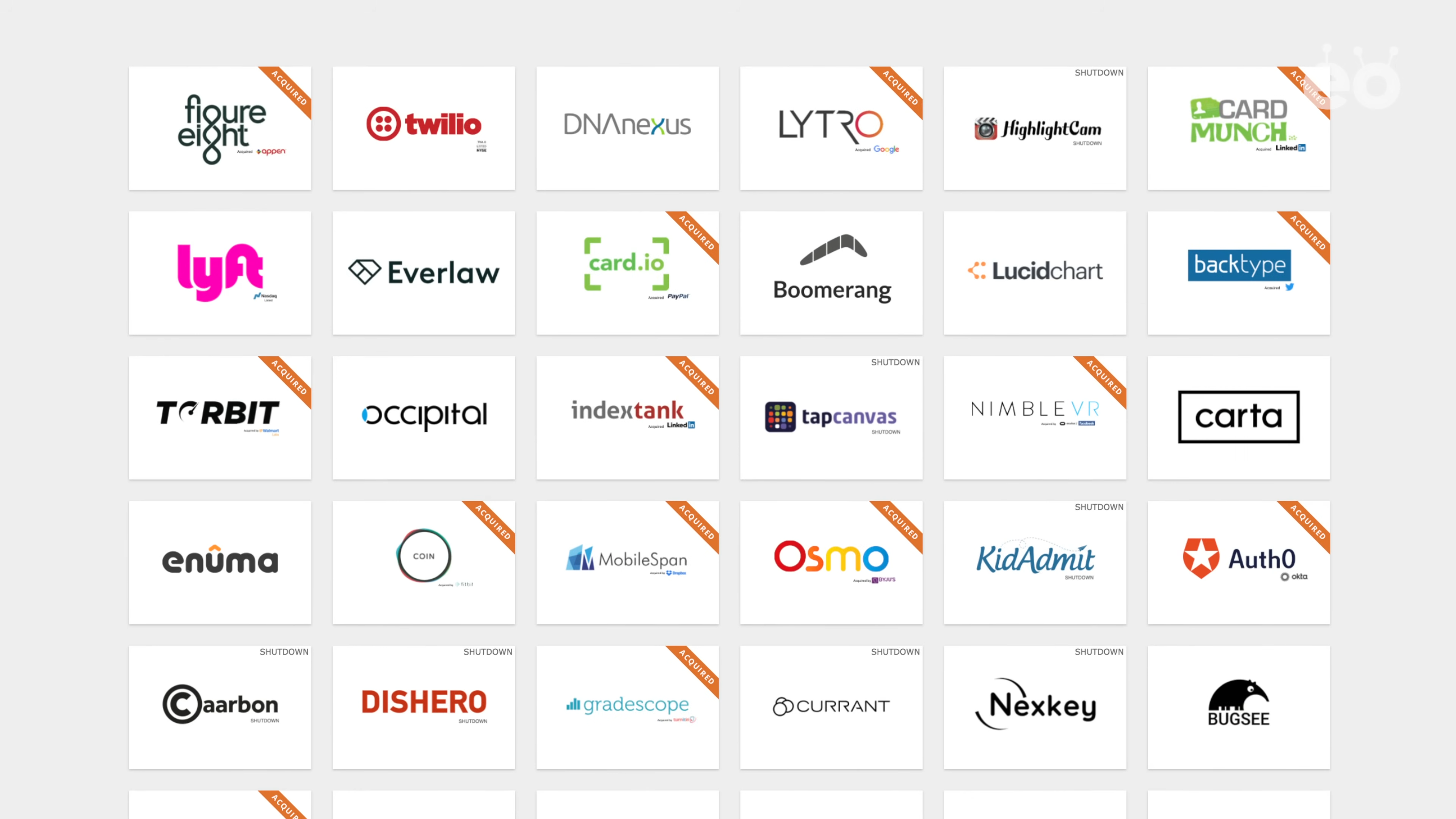
I've invested in about 55 companies. Lyft, Lucidchart, and Everlaw are among the companies I've actively invested in. When I invest in a company, I think about aligning my interest and K9's interest with the founders who are founding that company. And what that means is that the founders who are starting that company, that company is their one effort that they're putting all of their energy into, and they want to make sure that that company becomes successful. I want to be their partner in that process, in helping to make sure that that company becomes successful.
Investing comes with risk. It's not something that I take for granted. I don't take the successes for granted and I don't take the failures for granted either. But it is part of the game. It is part of the game that some companies will succeed and some companies will fail, often for reasons that you may or may not be able to control. As an investor, yes, it is something that I have fully come to learn and understand over time, that not every company can be successful, even though I want every single company to be successful.
K9 has invested in about 55 companies over the last 14ish years, and about a third of the companies have been acquired. Several of them were acquired in what I would describe as positive outcomes, where they were good outcomes for investors and for the team. Some of them may have been acquired in situations which were not good outcomes, but the companies were still acquired in that situation as well. K9's performance in terms of the number of companies that are successful and the number of companies that are unsuccessful, it is my expectation or my perception that we're doing well, doing well in the sense that the number of companies that are successful relative to the total number of investments is pretty high.
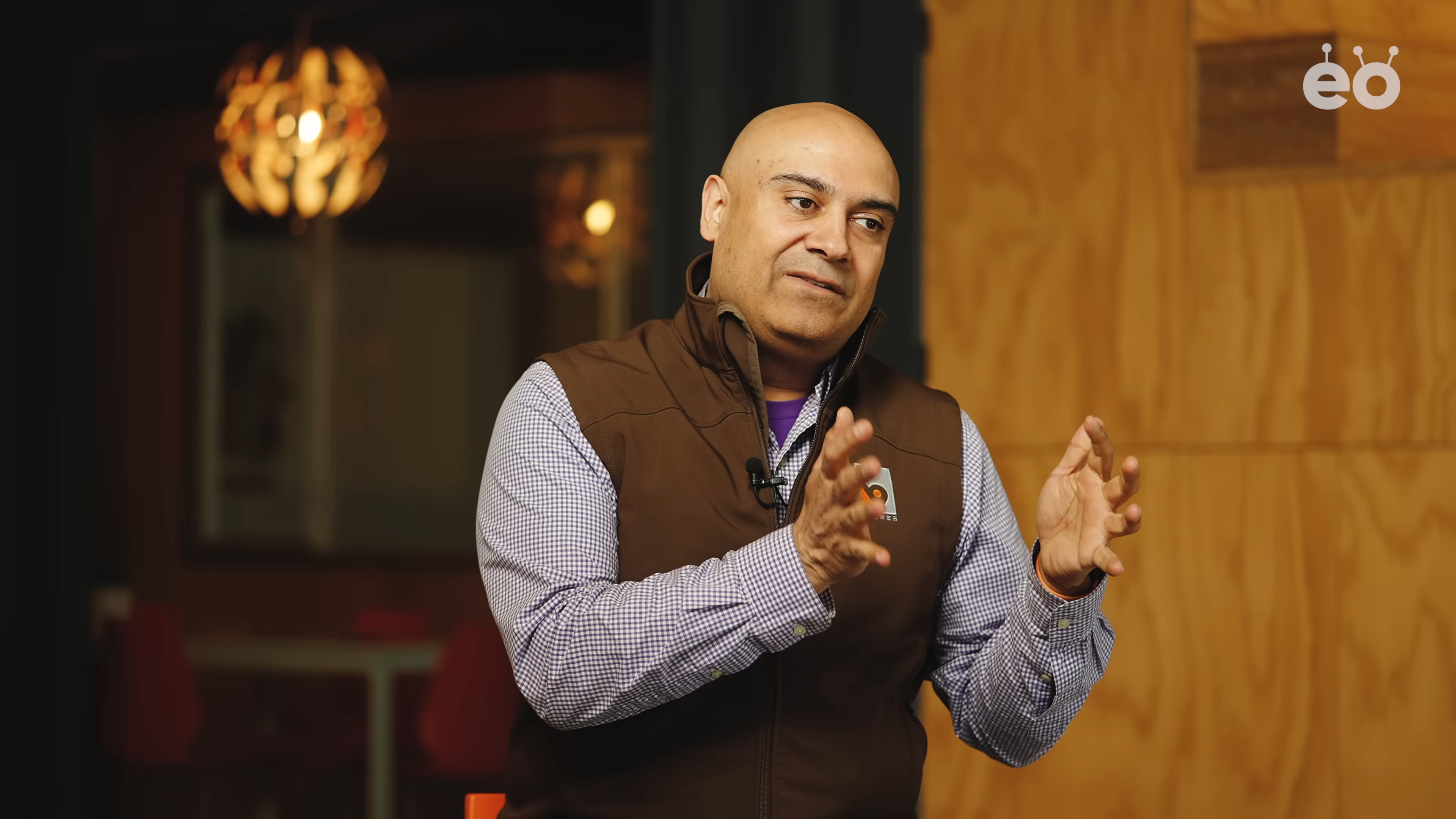
When I'm talking to founding teams, I'm typically asking them questions like, why do you want to do this? Is this an idea that you want to work on for the next 5, 10, 15 years of your life? Because that's what it's going to take to actually create a successful company. I'm also probing and seeing how they react to different questions. Do they learn or do they become defensive? You need a combination of both. You can't always be listening to what somebody is telling you. Likewise, investors are not always right in their feedback. It is really up to a founder to actually take that feedback, synthesize that feedback into something useful, and then make a decision on the basis of that.
I am exploring the boundaries of this. If I push over here, how do they react? If I give them some new information, how do they take that new information and absorb it and adapt in that situation?
I see myself as a builder. That's what I enjoy doing. You can go back to whether you're building stuff with Legos, whether you're building software, or whether you're building companies. I want to be able to build things that impact billions of people, and I want to build things that have a positive impact on the world. Whether I'm doing this through investing in companies or I'm doing this through actually founding companies, that's what's in the back of my mind in terms of what is the impact of this going to be and how is it going to help things improve in the future.
I highly recommend starting a company when you're young. The amount of learning that happens is trial-by-fire level of learning, and you really have nothing to lose in that situation. If you fail, it's okay. You're still young and you can go and get a job somewhere else, and if you succeed, that's a life-changing event. Either way, you learn so much that it's an incredible experience.