Feb 01, 2024
From a Graduate Who Left Google to Stripe's 28th Employee
Interview with Cristina Cordova, COO of Linear
Founder Focused

0:00 / 0:00
💡
At a Glance
- Who: Christina Cordova is the Chief Operating Officer at Linear. She previously led platform partnerships and self-serve growth initiatives at Notion and spent seven and a half years at Stripe working on partnerships and new financial-services businesses.
- What: Linear builds software for product-development teams. Cordova describes the company's growth as heavily organic and grounded in craft, customer love, and earning adoption rather than hacking growth.
- Traction: Cordova says Linear spent no more than $35,000 on marketing while growing largely through word of mouth. Earlier in her career, she joined Stripe when the company had fewer than 30 people and helped build partnerships with companies such as Shopify.
In this interview, Christina Cordova traces a career shaped by choosing fast-moving startups over more conventional paths and learning partnerships through repeated experimentation. She explains why Stripe focused on smaller fast-growing customers when large partners still dismissed the company, how objective product improvements can make a stronger sales story than financial incentives, and why organic customer love drew her to Linear. She closes with a personal lesson from leaving Google: prestigious choices are not automatically the right choices for the individual making them.
Key Takeaways
Learn Partnerships by Testing the Message
Cordova did not start out with a polished partnership playbook at Pulse. She sent cold emails, saw that they did not work, changed the pitch, and kept testing until response rates improved. The experience taught her that partnership skill is built through iteration rather than credentials.
Grow With Customers Who Are Growing Too
Early Stripe was often rejected by large partners that saw it as a product only for startups. Instead of forcing those deals, the company invested in smaller customers and partners with high growth potential, including Shopify and YC startups. Some of those small companies later became very large, and Stripe grew alongside them.
Sell the Better Product, Not the Bigger Incentive
Cordova often showed prospective partners their existing payments onboarding flow and compared it directly with a simpler Stripe version. The visual difference made the product advantage concrete even for executives who had never personally gone through their own onboarding experience. That objective customer-experience improvement was often more persuasive than offering more money.
Customer Love Can Build the Brand
Cordova was drawn to Linear after seeing users talk about an issue tracker with unusual enthusiasm. The company had grown largely through people recommending the product to one another rather than through heavy paid marketing. She saw the same craft and product-love orientation that had attracted her to Stripe.
Prestige Is Not a Substitute for Personal Fit
After college, Cordova joined Google and quickly realized the role was not right for her even though people around her saw Google as the ideal employer. The experience taught her not to outsource career decisions to people who do not understand her goals or daily experience. A path that is great for someone else can still be wrong for you.
Watch the full interview now on EO's YouTube channel! Below is the complete transcription of the interview. Minor edits have been made for clarity and readability.
Introduction
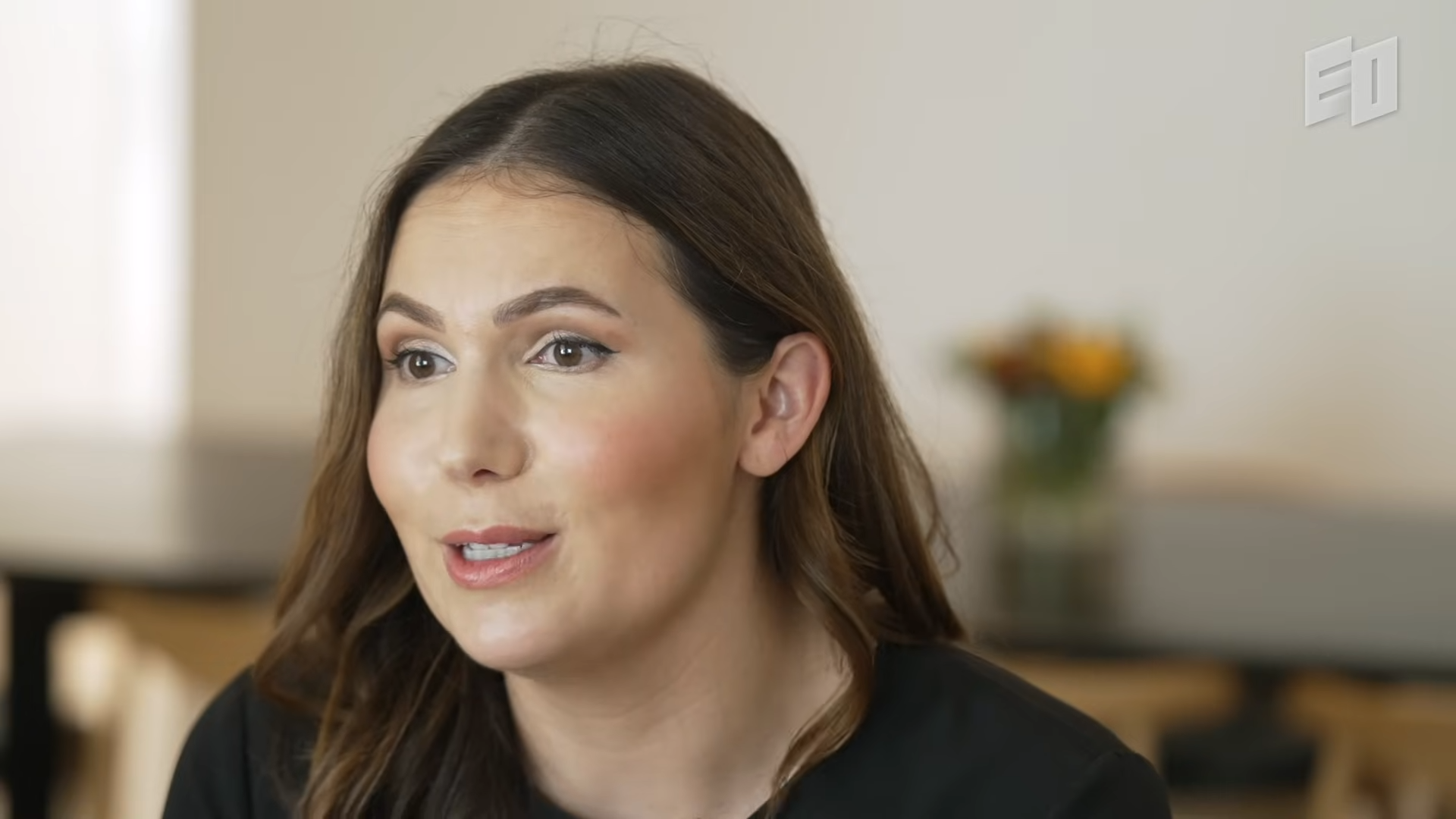
Hi, I'm Christina Cordova. I am the Chief Operating Officer at Linear. I was at Notion, where I led our platform partnerships and self-serve growth initiatives. Prior to that, I spent seven and a half years at Stripe, leading a lot of our early partnership initiatives and business units focused on building new financial services. Somewhat unrelated to what I'm doing now, I was a political science major because I thought I wanted to be a lawyer.
I think from taking my first introduction to American law class, you start to realize that if you want to do these, like, land-breaking cases, you have to wait a really long time. I am someone who just, like, wants to get stuff done, and I really hate waiting around. I had a friend who was interning at Tapulous, the mobile gaming startup. She was telling me about all of the things that she got to do as an intern, and in comparison to all of the kind of more legal-related internships I had done prior, those were so much more interesting.
She was given projects that you normally wouldn't give to an intern, things that would actually touch live users, things that would be big marketing programs. She went and studied abroad. I wanted to take over for her internship. You know, I would say within a few months of that, I wanted to be in the technology industry and that I loved how fast everything moved and I loved how fast everything changed.
So I'd say with Pulse, when I joined the company, it was really just me and the founders. Pulse was a news reading application for iPhone and iPad originally. The thing that propelled me to this avenue of partnerships was that's what the company needed. The company was a content delivery application, a news reading application.
You may not realize, but it's like you have to go out and get all of these content providers to give you permission and give you access to their content. Otherwise, you don't have anything to show to the customer. I don't think I was good at it initially. I think a lot of what I did was testing and trying things and figuring out what worked.
You may not realize, but it's like you have to go out and get all of these content providers to give you permission and give you access to their content. Otherwise, you don't have anything to show to the customer. I don't think I was good at it initially. I think a lot of what I did was testing and trying things and figuring out what worked.
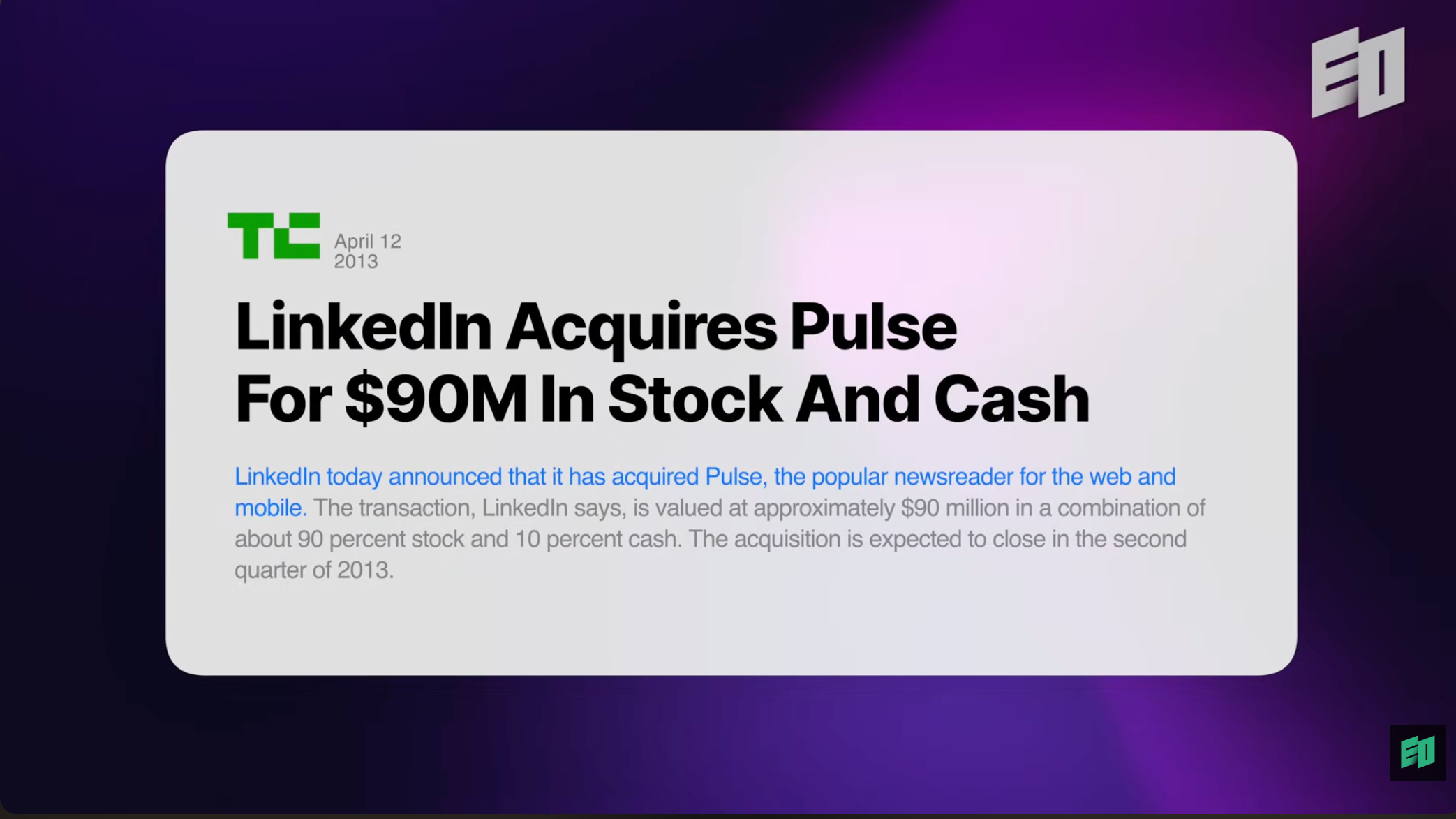
I would send all these cold emails to big publishers saying, Hey, would you like to work with us and partner with us? And I wasn't getting any responses, right? So you, like, tweak your email and you try to figure out what's going to work. And then eventually, over time, I was able to come up with, like, a pitch that actually got a really high response rate from people. And most people had no idea that I was 22, right out of undergrad and building all of these partnerships with global media companies. We had this, like, really big moment where Steve Jobs at an Apple conference put up a screenshot of the Pulse app.
For anyone who works in technology, that's just, like, a crazy moment. And at the time, the product was built just by two co-founders, Akshay and Ankit. In a lot of ways, it kind of brings you to this moment where you realize, wow, like, these two students effectively could build something so powerful that Steve Jobs knows about it. From that point on, what was really like a school project, in a way, a university project, became a company. Eventually, it became a way that millions of users were able to read the news, check in on what was happening, subscribe to publications that they enjoyed reading.
That was what Pulse was. For me, that was the biggest check that I had ever seen in my life. One of the reasons I was so attracted to startups is because of the impact that you can have. But I didn't think about early on so much was what impact that can have on you and your family financially.
I had not grown up with a lot of money. We were always kind of on the edge or worried about how we would pay for certain things, you know. To have that moment, I think, was a time where you could realize if you have the ability to join a company that does incredibly well, what does that outcome look like? So I think it does get your mind thinking about what the possibilities are.
Chapter 2: The 28th Employee At Stripe
I ended up joining Stripe from when Stripe was just under 30 people.
I remember when I joined and I looked at the data of how many customers we had, and I was like, hmm, this is smaller than I would have thought. I remember at the time we had customers like SF MoMA, for example. It was like the SF MoMA gift shop online.
I remember when I joined and I looked at the data of how many customers we had, and I was like, hmm, this is smaller than I would have thought. I remember at the time we had customers like SF MoMA, for example. It was like the SF MoMA gift shop online.
This is probably not generating a ton of revenue for us. I think early on in the payments world, there's just a lot you have to do to gain credibility and gain trust from partners and from customers. In a lot of ways, when we attempted to partner with very large companies early, they would quickly rebuff us and say, Oh, like, you're small, like Stripe. You're for startups. Like, you're not for real companies. It made a lot of those partnerships much more difficult. I think it made sense for us at that stage to focus on the kinds of customers and partners that were likely to achieve some long-term success of their own in a very high-growth manner.
So we partnered very early on with Shopify. I want to say it was roughly the same size, maybe a little bit bigger than Stripe was at that stage. Worked with them over the course of years, and a lot of people probably would have said, like, Shopify is a small company. Like, why do you care so much? Why are you spending so much time on that instead of focusing on a big partner, a big customer? I don't think people realize that Shopify was doing something incredibly interesting and incredibly powerful. If you looked at a lot of the other e-commerce software out there, it was terrible to use.
And I think that in a lot of ways, Shopify was building something that customers loved in a way that felt so similar to Stripe's journey. And so we could see the parallels: very different customer base, but a very interesting story, and we wanted to build to support them. So I think we focused on what was achievable, what we thought we could win, and then focused on customers and partners that are growing just as fast as you are.
One thing that I learned at that time is that small customers become medium-sized customers, and medium-sized customers become large customers. And if you're able to keep up. Up with the growth of companies, as you scale, what have been a no-name company in 2012 ends up becoming Instacart, ends up becoming DoorDash. In a lot of ways, I think you have to focus your energy on the customers, the small customers that really matter. So in early days for Stripe, that was really working on getting every YC company to use Stripe because it matters that they use us early because switching is so hard.
At Stripe, we worked for years and years and finally started getting people to switch over to our product. But it didn't happen overnight. It took many years for people to say, okay, Stripe is a good enough product that I am going to do the work to migrate from some other solution to Stripe.
Initially, I focused on what I thought Stripe did better than anyone else. And you didn't necessarily want to be the best offer on the table. Sometimes you want someone to pick you because you're the better product, not because you're offering the most money. I think we focused on what the product experience would be for their customers if they chose to adopt Stripe and how much better that would be than what they were currently on.
So early on, I would basically take screenshots of their current kind of payments onboarding flow if they were a platform. And what was funny is that when you would do that and you would present it back to like a VP of product or a CTO, many of them haven't been through that experience before, so they don't even know what their own product looks like.
So I would kind of show them the screenshots, and you could hear sometimes they'd be like, Oh yeah, that looks a little difficult, or, oh, that's not so nice. And then I would mock up what the experience would look like on Stripe, or I would take screenshots of what another platform had done with Stripe. So here are ten screens, and with Stripe, it's three screens and it's done.
It is kind of showing the differences there and focusing on what the better experience would be for the customer objectively generally got us to more conversations and then to a partnership. I think with any company, when you're thinking about building partnerships, you have to focus on what makes you unique, what makes you special. You have to create a compelling story for why you're different. You're different. What makes you special and why you're not just like everyone else. And I think that applies in sales. I think that applies in partnerships and in many other things in life.
Chapter 3: Career Transition From Established To Startup
Later on at Stripe, I was building a new business unit focused on financial services products for early stage companies. And we came out with a product.
Linear was a beta user of that product. I remembered them using the product, so I followed him there, and I think I followed Kari after that too.
Linear was a beta user of that product. I remembered them using the product, so I followed him there, and I think I followed Kari after that too.
I started to just see Kari's tweets about the business, about how well it was performing, like that the company was profitable. In a lot of ways, his values for the company in terms of not hacking growth, really trying to earn it with customers, really focus on craft and building a product that people love. It kind of brought me right back to where I was when I was at Stripe.
When you hear people talk about a product that they really love, that is a product that no one loves, right? Like when I was at Stripe, nobody loved their payments API. Nobody loves their issue tracker, their project management software in the same way. So when I started to see that level of fervor and customer love, I shot Kari a DM on Twitter, and he replied, and we set up some time for coffee.
After that conversation, I felt really positively about Kari and about Linear, and I was thinking about it over the course of a few weeks, and then I reached out to him again and was basically saying, like, if there's a role that might be a fit for someone like me, for someone with my skills and experience, like I would love to potentially be part of the journey.
One of the things that really intrigued me about Linear as a company is how incredibly far the business and the company has gotten to this point with very little investment. We've spent no more than $35,000 on marketing, which has all been just very experimental. And when you look at the growth for the business, it's all been heavily organic, people just telling other people about how great the product is, and those people then sign up for it. And I think when you have that amazing word of mouth, it starts to build a really strong brand for the company.
I think the next challenge for us is enabling that product to reach as many people as possible. There are a lot of people who have never heard of Linear all around the world who are building software. software, building products. And I think we want to build a go-to-market organization that reaches those customers, helps them understand what value Linear can bring to them, and helps them build successful products. So I think that's really our goal of what we want to achieve.
Chapter 4: Advice For Navigating A Career
Way back to earlier in my career, there was a time when I had graduated from college and I was supposed to go take a job at Google, which was the job that I got post-graduation.
And I started my job there. Pretty immediately, I was unhappy. I did not think that this was the right role for me. I felt like this kind of cog in a machine.
And I started my job there. Pretty immediately, I was unhappy. I did not think that this was the right role for me. I felt like this kind of cog in a machine.
I remember having a call with my mom at the time where I said, This job is, like, so mind-numbing. I hate it. I don't like it. And she was like, But it's Google. It's the best place in the world to work. And I remember saying, like, well, maybe not for me. I think in a lot of ways, it made me realize that what's great for someone else and what they're willing to withstand and persist through to maybe get somewhere else is very different to what I'm, like, willing to persist with.
And I think a lot of people are under pressure from parents, from other authority figures to do what they think is best for you. Don't listen to people who don't necessarily know enough about you and your goals, what you're experiencing when you're thinking about your career, and that if you feel strongly about something, you should pursue it regardless of what your family thinks or what other people think. Because I talked to my mom now and she's like, It's pretty good that you didn't stay at Google. And sometimes it can work out for the better.