Apr 21, 2025
Built 2nd Startup at 23, Execution was Everything
Interview with Theodoric Chew, Co-founder of Intellect
Founder Focused


💡
At a Glance
- Who: Theodoric Chew is the co-founder and CEO of Intellect, a mental health care platform built for Asia-Pacific and beyond.
- What: Intellect provides end-to-end mental health support. It spans proactive self-guided care, live coaching, and clinical and crisis treatment.
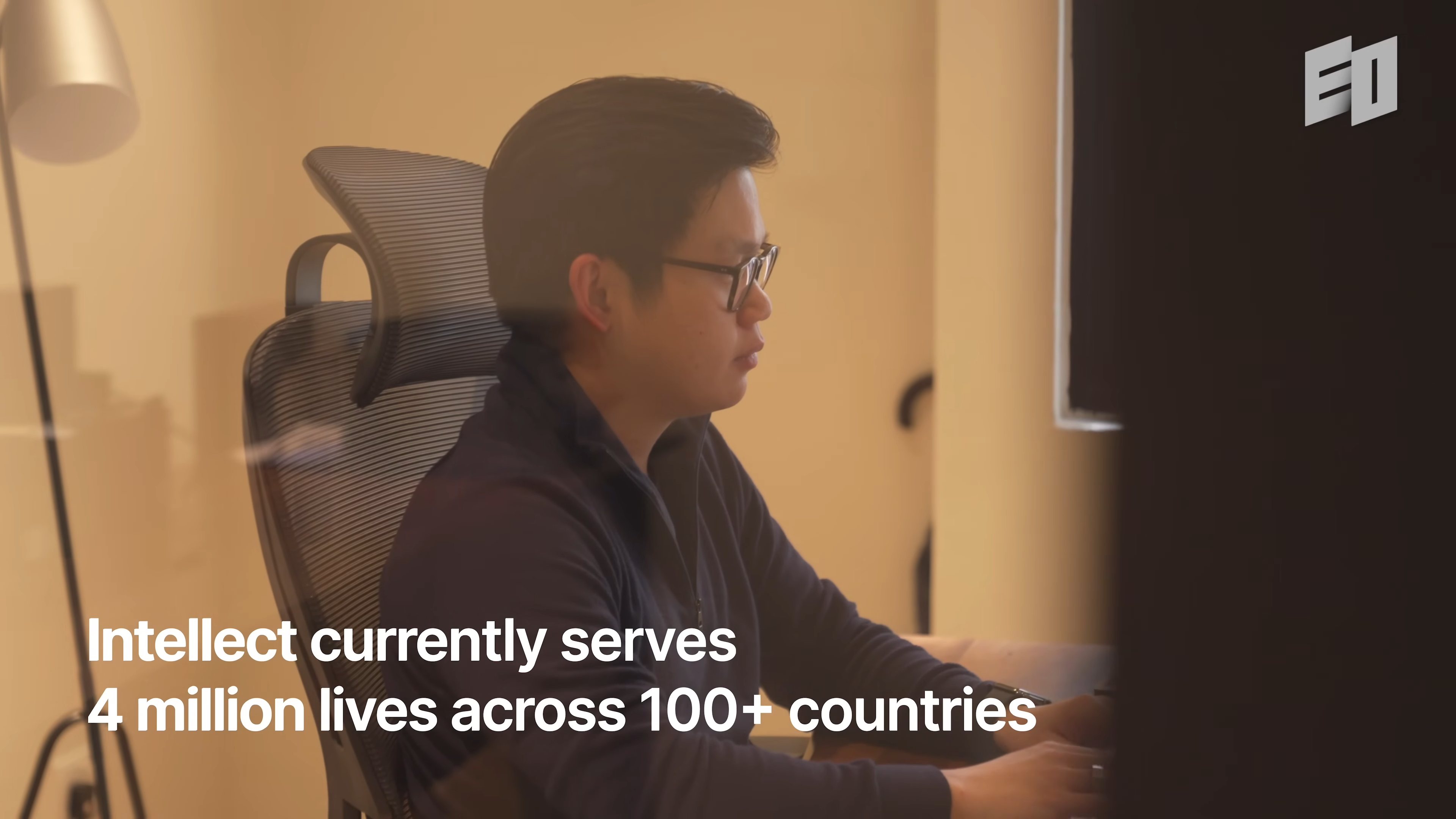
- Traction: The company has raised more than $30 million from Y Combinator, Tiger Global, and Insignia Ventures. It now serves more than 4 million users across over 100 countries.
In this video, he shares the mindset he had when launching Intellect.
Key Takeaways:
Execution Beats Expertise When You Don't Yet Have the Skills
Chew ran his first company without even calling it a startup, building it entirely by doing rather than waiting until he had the knowledge or experience to feel ready.
Why Ambition and Naivety Make a Founder's Best Starting Fuel
Chew credits his outsized ambition, paired with a healthy dose of naivety, for pushing him toward bolder bets than a more cautious or experienced founder would take on.
Most Investors Saw No Market for Mental Health in 2019. Chew Built Intellect on the Bet That They Were Wrong.
Convinced mental health care was a "when, not an if," he built Intellect on conviction alone, treating investor and client indifference as an opening rather than a warning sign.
How Intellect Found Its First Customers Without a Ready-Made Market
Rather than chasing scale early, Chew validated Intellect with a small pool of early-stage startups willing to test the product and give honest feedback, chipping toward the larger vision one step at a time.
The College Trade-Off: Chew Chose Experience Over a Degree, Not Against Education
Skipping university wasn't a rejection of formal education so much as a deliberate bet that fast-growing startups and venture builders would teach him faster what he needed to build.
Watch the full interview now on EO's YouTube channel! Below is the complete transcription of the interview. Minor edits have been made for clarity and readability.
Introducing Theodoric Chew, Co-founder and CEO of Intellect
Hi, I'm Theodoric Chew, the co-founder and CEO of Intellect. We are a mental health care company serving and building for Asia-Pacific and eventually the world. We provide end-to-end mental health support from proactive care all the way towards coaching, clinical, and distress support. We've raised funding from the likes of Tiger Global, Y Combinator, and Insignia. To date, we've raised over $30 million in funding, well poised to grow and scale in the many years to come.
Chapter 1: Skipping College to Start a Business
Growing up, I always had an inkling that I wanted to be an entrepreneur. My parents aren't entrepreneurs themselves, but I've always been quite inspired by people who have built things that they believe in themselves. I studied in Raffles Institution. It's the leading secondary high school in Singapore, where many of our greatest Singaporeans have been. I got in from the benefit of a great education system and having worked hard to get there as well.
But as I went through my years studying, what I found out for myself was that I had a clear want to build, to do things, and not necessarily go through the career path that most of us set out to do. I was quite clear that I wanted to build, to do something that I actually cared about and believed in. That's why I decided against pursuing going to university or college, and rather chose to learn by doing, joining companies that had been through it and learning by doing myself.
The first company I started back then was a digital media platform, where we gathered thought leaders, experts, CEOs, and doctors to contribute thought leadership pieces and expert articles to help people learn and grow. At the point itself, I was huge on personal growth. Think of your Tony Robbins type, that actually helps you grow and develop who you are. I was huge on this back then in my later teenage years, and I believed that many others would benefit from consuming such pieces of information versus just etiquette or fun quiz type stuff.
That company back then was very, very lean. It was entirely bootstrapped. We had a whole network of anything from volunteers to part-timers to guest writers that all contributed to build the network of what we had. In the end, I ran the first company for about two-plus years. At that point in time, the biggest challenge was that I really didn't know what I was doing, very candidly. I didn't even call it a startup. It was a website platform that I was kind of doing.
One of the core things I believe in is simply doing. I do believe that one does not have, and would not have, all of the knowledge and all the skill sets at any point in time. You can be more experienced, but by doing and trying, one gets there. The challenge was the fact that I didn't really know what I was going about doing. What I took was very logical steps: finding the right people to work with, the right content to create, the right audience we wanted to reach. Things followed through from there.
Chapter 2: Learning on the Ground and Starting Up
After exiting my first company, I actually spent a few years working for other very exciting firms. I spent time at startups. I spent time at venture builders. The high-level intent then was, I was quite aware that I was a very young individual. I was about 19, 20 or so, and I had very little skill sets. I had gotten lucky to have done something interesting, but I didn't have the experience nor the skills to actually build something at a large scale if I really wanted to. So I decided to spend time to go and endeavor and find startups that were growing fast, that I could learn from, that excited me. That's what I did.
Following the years I had doing my first company, I joined a Japanese travel tech startup called Voyagin, where I led a component of their marketing team. The company got acquired by Rakuten, which is a huge Japanese conglomerate. That was very eye-opening as well. What actually happened next was I moved towards sort of a VC venture builder. That was the next chapter of my own journey.
I wouldn't say there was particularly regret or remorse going through that journey. I was very intentional about the choices I made and what I wanted to pursue. The way I looked at it, there were trade-offs in both paths. I do strongly believe in a good education system, so I think it's fantastic that folks who go that path have their own journey there as well. The trade-off, if anything, would be what one goes through in college: the experience and exposures that go with the college experience. At the same time, I felt I learned equally, if not more, in terms of what I wanted to acquire: exposure to a fast growing startup, looking at how a venture builder, a VC, thinks, and actually doing. Learning from actually practicing and doing on the job as I built my own experiences.
After exiting my first company, it was quite clear to me that I was going to build something that could reach, help, and impact more people. On a personal level, mental health has always been a very personal journey. Something I went through in high school, in secondary school, was actually quite chronic ongoing anxiety. I struggled with anxiety in my teenage years, and I actually started having panic attacks when I was 16. That's when I started to see a therapist. What I remember quite clearly was my very first therapy session was one of the most cathartic experiences I had. If people knew how helpful therapy was, everybody would be actually doing it.
There was a national survey done pre-pandemic in Singapore. One of the key stats that stand out quite scarily to me is that there is a four-to-seven-year treatment gap in mental health support and care. That means to say if someone is actually mentally unwell and needing care, they waited four to seven years before they got that care. And that's for those who actually eventually got care, which is a scary long and delayed period of time if you think about it from a physical health point of view. It's a huge issue. If you look at it from an outcomes perspective as well, Asia's many of the fast-moving cities have some of the highest suicide rates. The problem is extremely clear and extremely real. From a top-down perspective, the mental health market across the world, and even in Asia, is in the tens of billions of dollars. This market, not from our belief but in reality, is growing annually in double-digit percentage rates.
Fast forward years later into 2019, mental health was something I was quite clear was one of the key things I wanted to tackle and solve for. Having gone through many more lived experiences, having seen peers, friends, and friends of friends go through much more troubling and darker things themselves, a very clear thing popped up: how do we actually change this? How do you make mental health care accessible every day, no matter how big or how small your issues may be?
In the earliest days of Intellect, in a very, very lean setup, we went about understanding mental health: what is the problem, what was the thing that needed to be solved for. We came to a very simple problem statement: people in Asia need help, they want help, but they don't know where to start. Our initial hypothesis was how do we bring care to them in a way that it's almost extremely simple, so simple there's no reason why one couldn't access care. That was the simple initial hypothesis: bringing access to everyone first, scaling access, and then getting deeper and deeper in the care that we bring. That's why what we do spans across different mediums. There is self-guided content that is anytime, anywhere, in different languages. We have deeper live virtual care. We even have crisis support. We've gone on that journey from scaled-up care towards deep, immersive, face-to-face support.
Starting any company is hard, no matter how experienced or inexperienced one is. There are so many uncertainties, so many variables that never guarantee anyone's success. For us in particular, mental health, when we started the company back in 2019, was a very, very nascent topic, particularly so in Asia. Most clients, VCs, and investors were not seeing this as a priority at that point in time. For us, it was really stemming from a strong conviction, a belief that mental health was not an if but a when. Mental health is as important as physical health, in many ways even more important, because of how it affects all that we do.
So for us the challenge then was how do we build the market? It was a nascent space. How could we actually convince our first investors, users, and customers? It was hard to convince people to actually meet you firstly, or even want to do a pilot or trial. Much less finding customers for us. The early days were really speaking with a lot of individuals: HR professionals, clinicians, folks on the street even, to try and very clearly understand the problem we were trying to solve for. The first 10 customers, a small pool of people to validate, were early stage startups happy to actually test it out and let us know if it worked or not. What worked out well for us was actually starting small, knowing quite clearly what the broader vision and mission was, but starting in smaller steps we could chip away towards that larger goal.
Chapter 3: Advice for First-Time Entrepreneurs
It's been quite a journey. Relative to the bigger scheme of things, it hasn't been a huge amount of time, but a time in which a lot has happened, at least in my life. One of the biggest learnings I've had, one that I find useful and keep reminding myself of time and again, is that it helps to have a bit of naivety in terms of what one has. In terms of what I think is my superpower, if I could call it that, it's huge ambitiousness in terms of what I believe one can actually achieve. That has, for better or for worse, guided me into taking the steps I have taken: not going to pursue higher education, starting a startup, and doing what we have today. I think having a huge amount of ambition and a good amount of naivety is what helps entrepreneurs get started, and having that dreamer within you helps you do things that are bolder, that one wouldn't conventionally take.
In terms of what my advice is for people aspiring to be entrepreneurs, young or old, it's definitely possible. I'll encourage those who are interested to try, to definitely give it a shot. I fundamentally believe that there is no better time in our history for one to actually start a company, to have the amount of access to information and reach of audiences than ever before, with the internet and with all that's happening. Definitely try, but definitely expect that outcomes may differ from person to person. I don't think that everyone is born or meant to be an entrepreneur, but I think everyone can definitely try, because if anything, one learns massively from the experience. In many cases, one can actually impact a lot more people. I do believe fundamentally there are many paths towards what one defines as fulfillment or even success. This is the path I've taken, but there will be many more paths that people can take to achieve what they want to do.