Aug 22, 2024
How to Win in the AI Hype Cycle
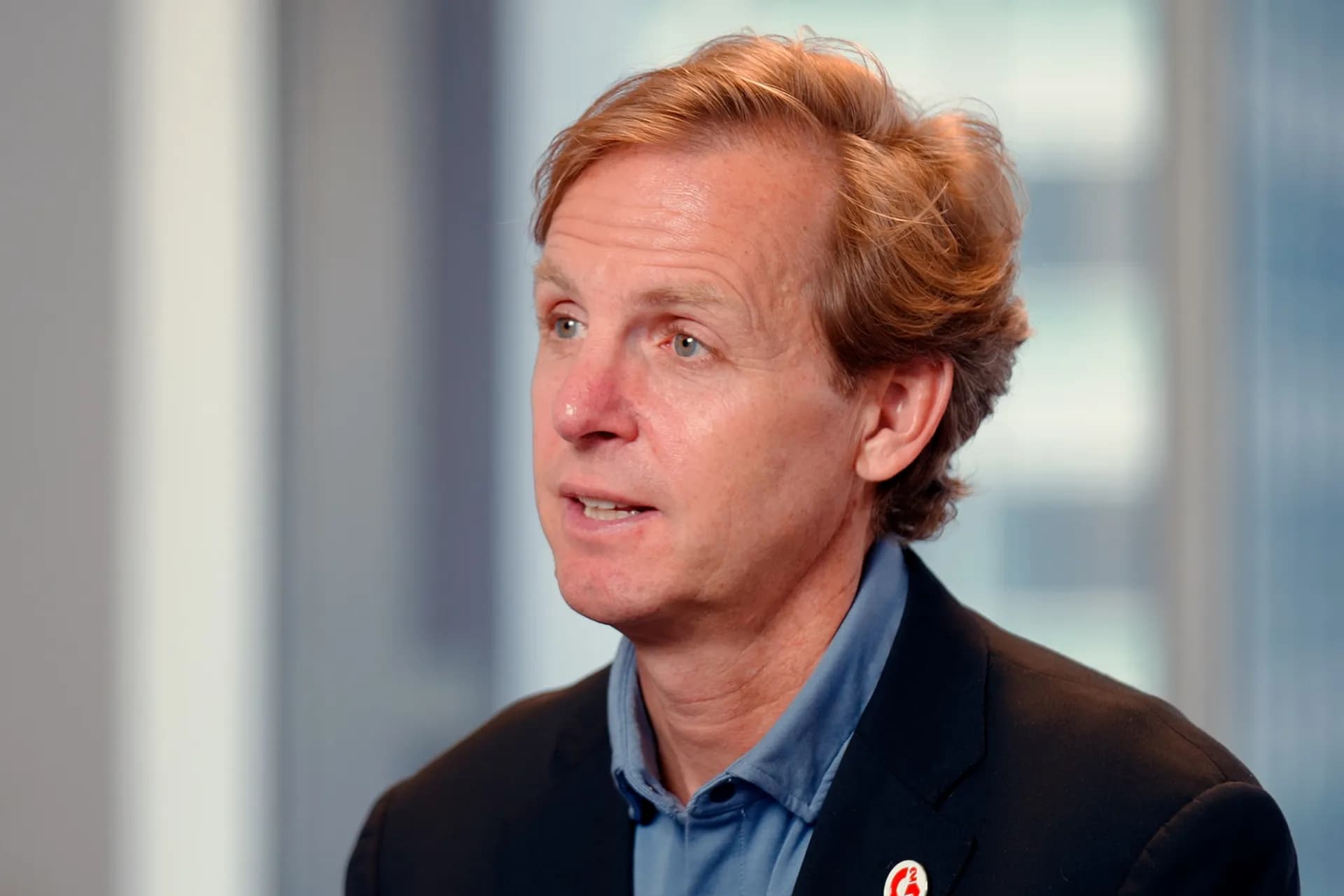
Interview with Rick Nucci, Co-founder of Guru
Founder Focused


💡
At a Glance
- Who: Rick Nucci is the co-founder and CEO of Guru. He previously founded Boomi, an integration software company that Dell acquired in 2010 and later sold to private equity for $4 billion.
- What: Guru is an AI search product that lets employees ask questions and get instant answers. It surfaces information without requiring them to interrupt a teammate to find it.
- Traction: Guru has just over 2,500 paying customers, including Sonos, Etsy, and Spotify. The company has raised just over $70 million over its first 10 years.
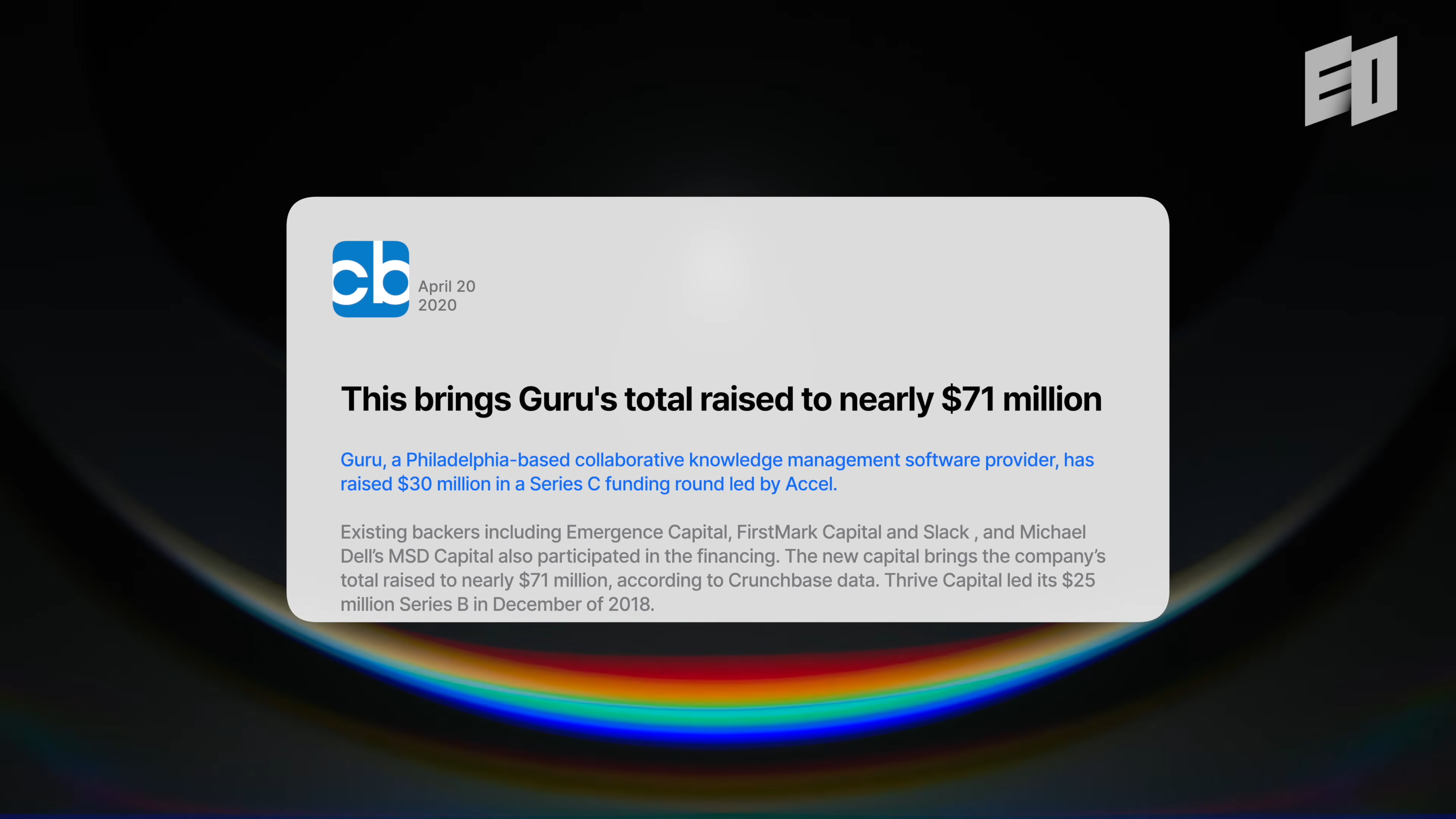
In this interview, we sit down with Rick Nucci, Co-founder and CEO of Guru, a Philadelphia-based tech innovator challenging Silicon Valley norms. Since 2013, Guru has revolutionized enterprise information accessibility, raising $71M and becoming a leader in AI-based search and knowledge platforms. Rick, with over 20 years in software development and success with Boomi (acquired by Dell), brings invaluable experience to Guru.
Rick discusses Guru's new AI tool and shares insights on AI advancements and workplace culture as the company turns 10. His expertise in startups, SaaS, and cloud computing offers crucial perspectives on the future of corporate information management and AI utilization. Discover how Guru's success story and Rick's leadership philosophy, including "Don't take yourself too seriously," are shaping the future of AI and knowledge management.
Rick discusses Guru's new AI tool and shares insights on AI advancements and workplace culture as the company turns 10. His expertise in startups, SaaS, and cloud computing offers crucial perspectives on the future of corporate information management and AI utilization. Discover how Guru's success story and Rick's leadership philosophy, including "Don't take yourself too seriously," are shaping the future of AI and knowledge management.
Key Takeaways:
Why the Old Startup Playbook No Longer Works in the AI Hype Cycle
Big incumbents are moving as fast as startups because they see AI as an existential threat, not something to ignore. Nobody, including Nucci, has figured out yet what intellectual property is actually defensible in this cycle.
How Betting on the Same Kind of Wave Twice Built Two Companies
Nucci built Boomi for the shift from on-premise software to the cloud, then built Guru for the shift to AI, betting early both times that a hyped trend would actually become the new default. Riding an industry-level tailwind, not a clever feature, is what made both bets pay off.
The Investor Question That Changed How He Thought About Differentiation
An investor once asked if Boomi's sales pitch would still work with a competitor's name swapped in, and the honest answer was yes. That single question sent Nucci searching for the undressed part of the market no one else was focused on.
The "10 Unaffiliated Customers" Test for Real Product-Market Fit
Borrowed from SaaStr's Jason Lemkin, the test is whether 10 total strangers, people with no relationship to you, will actually pay for your product. Guru tracked this metric explicitly in its early days instead of trusting revenue growth alone.
The Five Case Studies Test That Exposes Fake Product-Market Fit
If five recent customer case studies would all tell a different story, revenue might be growing but repeatability hasn't actually arrived yet. Guru scaled its sales team too early in its history by mistaking growing revenue for real product-market fit.
Why the Best Companies Get Built During Recessions
Recessions push problem validation to its highest bar, because skeptical buyers with shrinking budgets only pay for something they truly need. Any company that gets people to sign up and pay during a downturn is proving its problem is real, and that quality compounds once the economy recovers.
Below is the complete transcription of the interview. Minor edits have been made for clarity and readability.
Introducing Rick Nucci, Co-founder and CEO of Guru
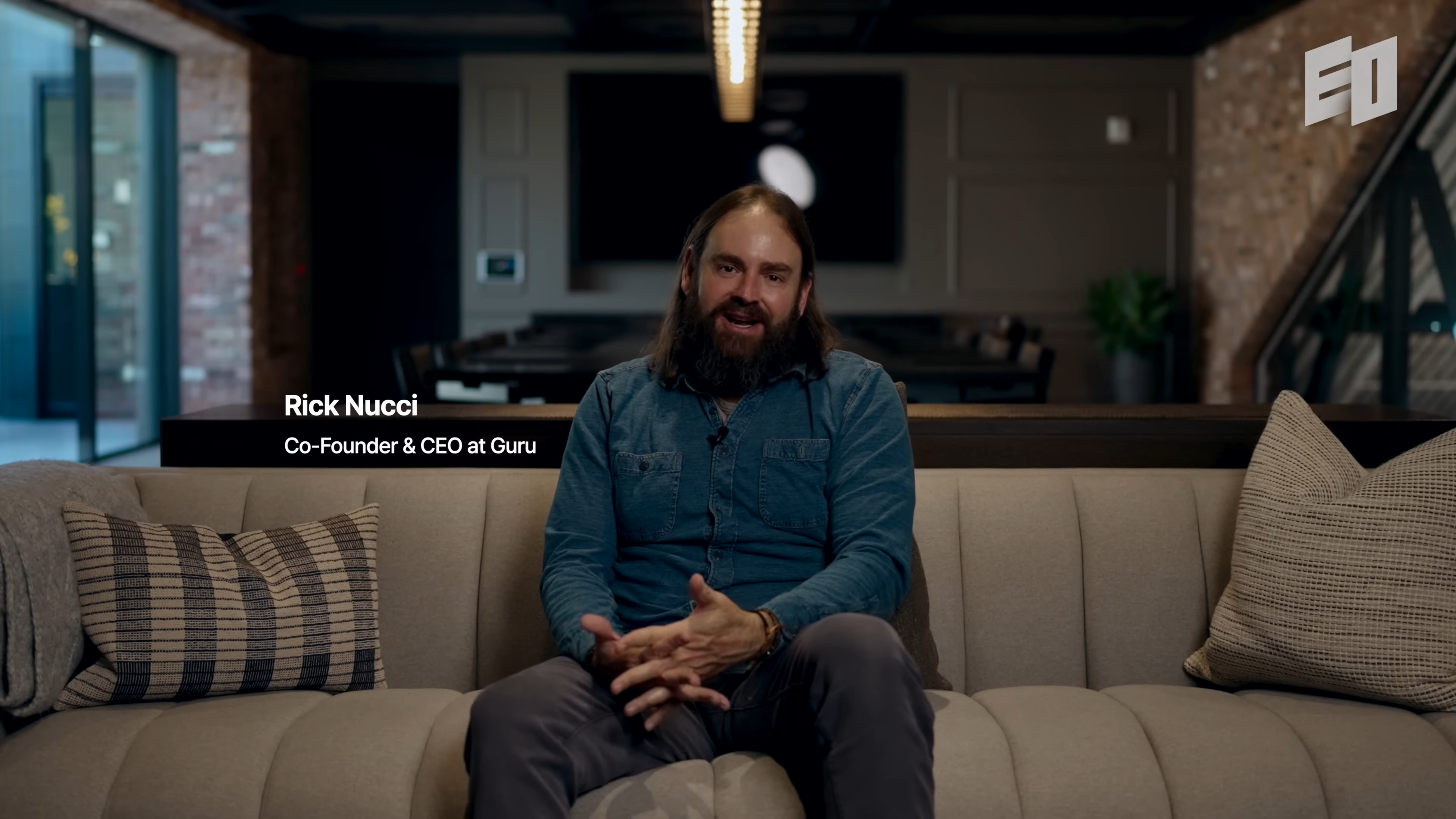
My name is Rick Nucci. I'm the co-founder and CEO of Guru. Guru is an AI search product that helps employees ask questions and instantly get answers to those questions without having to interrupt their teammates. As far as achievements Guru's made so far, we have just over 2,500 paying customers. We work with customers like Sonos, Etsy, and Spotify. We have raised just over $70 million over the 10 years of Guru. Before Guru, I started a company called Boomi, which is in the integration space, and sold that company to Dell, then went on to start Guru.
The classic startup playbook is: okay, new technology, big guys are going to move slow, we're going to rush to market, we're going to find an opening, and we're going to go. That isn't happening now. The big incumbents, the big tech companies, all of them are moving remarkably fast, surprisingly faster than you might think. The reason that's happening is because they view AI as an existential threat to their company. They are at peak motivation to ensure they remain not only relevant, but have the market share they currently have in this new world of AI and generative AI.
I think that's the threat: that playbook is gone. The incumbents are now moving as fast, or almost as fast, as startups are. I think everybody's asking themselves what's defensible, what is the intellectual property I can build that is defensible, that is hard to copy. I don't think anyone knows the answer to that yet. Right now there's a lot of uncertainty, but it's a fascinating time. To me, the North Star is what it's always been: find problems that matter and solve them using this technology. Complexity and risk are a little bit higher than I think they were in prior hype cycles.
Selling the First Company to Dell
I would say that as a child, entrepreneurship felt a little bit natural. Both of my parents were business owners. As I thought about starting a company later in life, it felt normal, like something you do. From there I went to Penn State University. I would say halfway through my time there I was a business major, but really figured out that technology is what interests me and what inspires me, so I pivoted halfway through my college education and went full bore into technology. I joined a software company right out of college, and that led me to start my first company, Boomi, when I was 24.
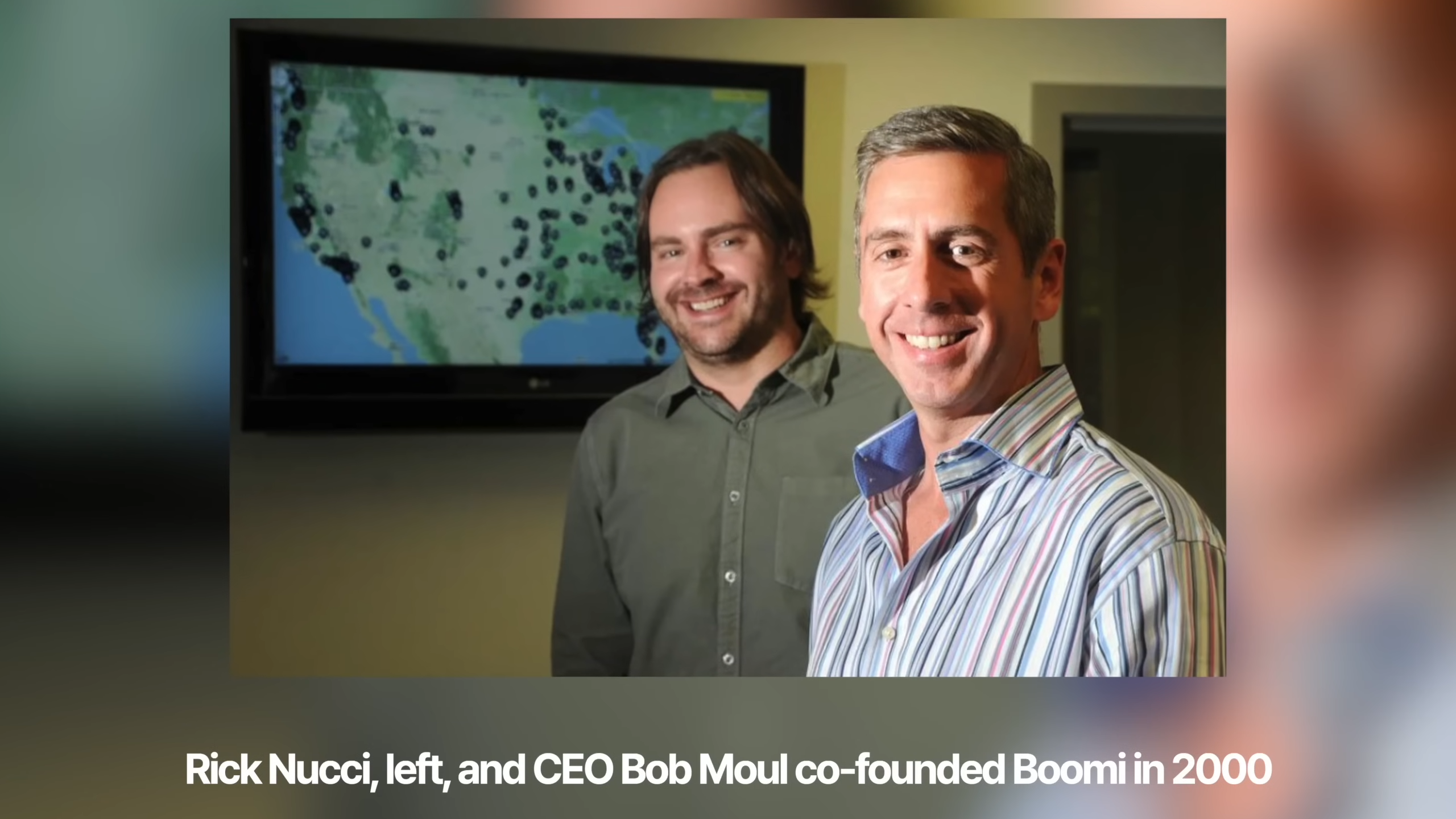
Boomi interestingly grew up in the last big hype cycle. Back then it was moving to the cloud, and of course you had Salesforce leading that way, but it ended up becoming an industry transformation. Boomi was really built in that time. We were trying to solve the problem of integration, which simply put is how you automatically connect and move data between enterprise applications. It was really the move to the cloud that happened at an industry level that created tailwind for Boomi. The bet we made was: if the world moves from on-premise software to the cloud, the way those systems are integrated is going to fundamentally change, so let's build for that future. That would put Boomi in a very unique and exciting position. I would say it was a bet that ended up paying off.
Boomi was acquired by Dell in 2010 and later sold out of Dell to private equity for just over $4 billion a few years ago, and now runs as an independent business again.
One of the things I learned the hard way was that when you are a founder of a company and you begin hiring a team, the weight of your words matters. I found that the way I delivered things was maybe unexpectedly or unintentionally harsh, so I overcorrected. Over the years I've really leaned into this philosophy, this framework called Radical Candor, which is all about how you balance the idea of challenging someone directly and caring personally about them. If you just do one, you're not really helping the person. If you're challenging someone but you don't care about them, you sound like a jerk. If you're caring about someone but not challenging them, they call that ruinous empathy, which means you're not really helping them get any better. That communication style was something I learned the hard way.
Another big learning from Boomi was the importance of differentiation and positioning. In the early days of Boomi, Microsoft launched a product called BizTalk, which was conceptually very similar to Boomi, and as we saw the market move on, we saw more and more alternatives. I remember meeting with an investor in the early days. We had created these sales assets and were all excited to show them to this investor and get their feedback, and he said, "If I was to replace your name with a competitor's name, would the story be the same?" We were like, okay, yeah, we got it. We really weren't getting the need to stand out. That has stayed with me forever, but I think it led us to go on this search: we're small, we're not as big as these incumbents, we need to find our space. What is the undressed area of the market that no one is really focusing on right now?
I was talking earlier about that bet: if cloud becomes the thing, if it's not just a fad, which it was in 2006 and 2007. People were wondering if this was really going to be where it all goes. We said, let's bet that the answer will be yes, and build toward that. A lot of what drove our ambition was this need to be obviously unique, obviously different, in a sea of crowded things. Especially when you're building in hype cycles, I think cloud computing was a big hype cycle, generative AI is a big hype cycle, this need to be obviously different is spotlighted more than at any other time.
Why Founders' Self-Awareness Is Crucial
The common thread across building two startups, for me as a leader of those companies, has been self-awareness. Self-awareness requires a willingness to be vulnerable. It requires a willingness to accept areas where you're not as strong, and areas where you are exceptionally good, and being honest with yourself. I think that starts when you're founding the company. I think a mistake we made at Boomi was that we had redundant skill sets as a founding team, and later we corrected that.
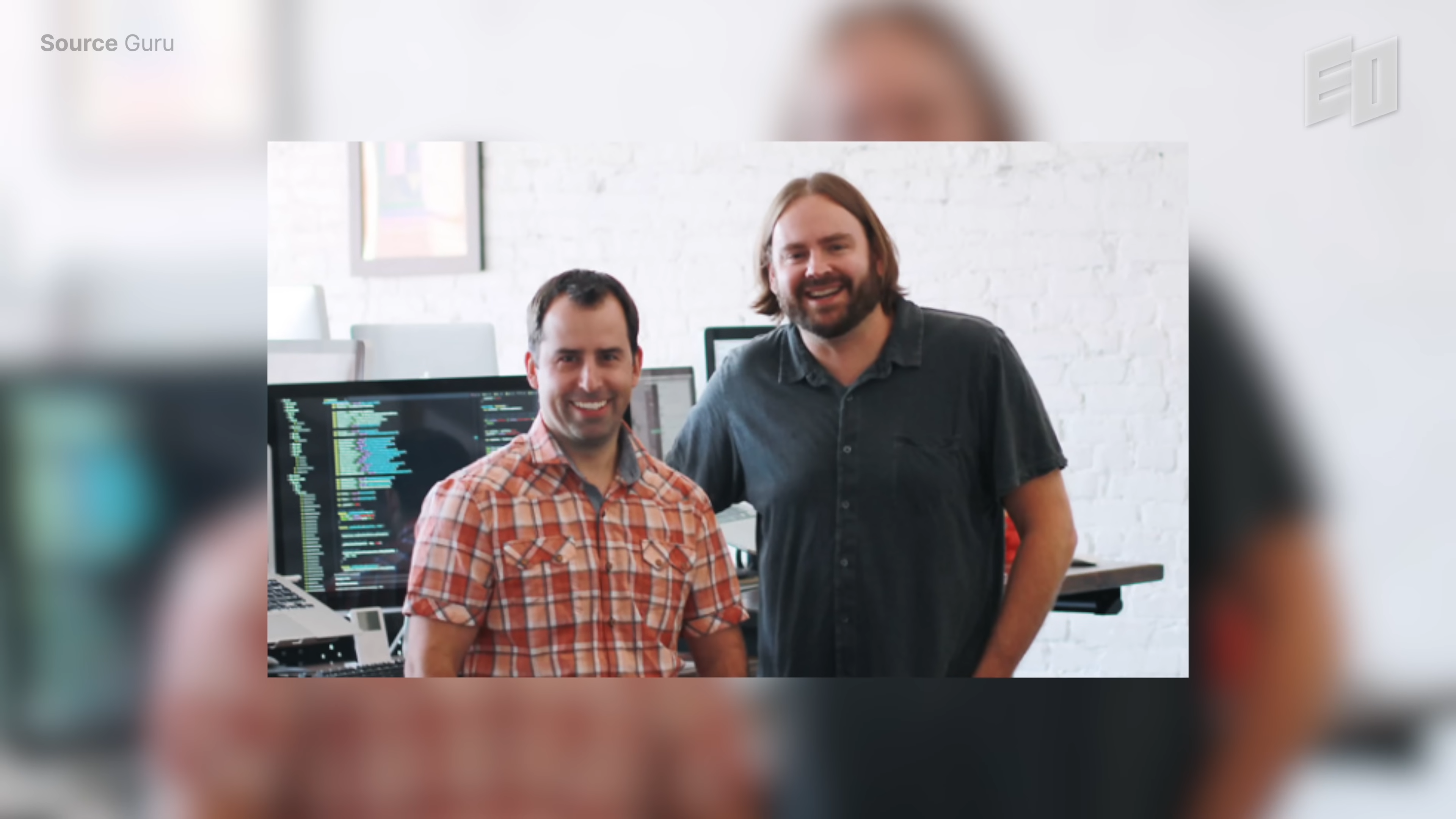
At Guru, I'm very fortunate to have the co-founder I have, Mitch, because I think we complement each other really well. But in order to understand what makes you complementary with your co-founders, it requires this self-awareness. That's not to say you can't be awesome at anything you want to be awesome at, but at any given time, how can you move as fast as you can by bringing in people who complement what you are good at and where you need help executing? That might mean your role isn't best suited to be CEO, or it might be. I've talked to many founders, and went through the journey myself, of realizing the job of the CEO isn't the thing that actually gives me energy, it's actually building, it's actually doing X or doing Y.
At Guru, I'm very fortunate to have the co-founder I have, Mitch, because I think we complement each other really well. But in order to understand what makes you complementary with your co-founders, it requires this self-awareness. That's not to say you can't be awesome at anything you want to be awesome at, but at any given time, how can you move as fast as you can by bringing in people who complement what you are good at and where you need help executing? That might mean your role isn't best suited to be CEO, or it might be. I've talked to many founders, and went through the journey myself, of realizing the job of the CEO isn't the thing that actually gives me energy, it's actually building, it's actually doing X or doing Y.
Self-awareness has been such a huge part of the journey, and I think the other big aspect where self-awareness comes up again and again is around setting and defining the culture of your company. Ultimately, you need to find the characteristics and behaviors you want in the culture at your company to be successful, that are compatible with you, compatible with your style. If you're introverted as a founder, you're unlikely to have a thriving extrovert culture, or you can, but it might feel very unnatural and uncomfortable to you. You might accept that, or you might decide you don't want to accept that. These are all self-aware moments.
I would say all of the things that I have done that have had immense ROI, being a founder for a long time, are coaches, learning frameworks like Radical Candor, ways to self-improve, discover blind spots, and be interested in correcting them. The final thing I'll say about it is it's a very hard thing. It is the hardest thing I have ever done, starting either company, very hard for different reasons. Finding product market fit was equally hard in both companies. It didn't feel any easier the second time around. Why self-awareness connects to a startup being hard is you need to understand your energy. It's so easy to let the startup become your identity, which is really dangerous, because when the startup's doing well you might be riding high, and when things aren't going well you might take that way too low. These are all lessons in self-awareness, and recognizing where to draw the line, where to disconnect, those kinds of things.
4 Steps to the Epiphany, Founded at Age 24
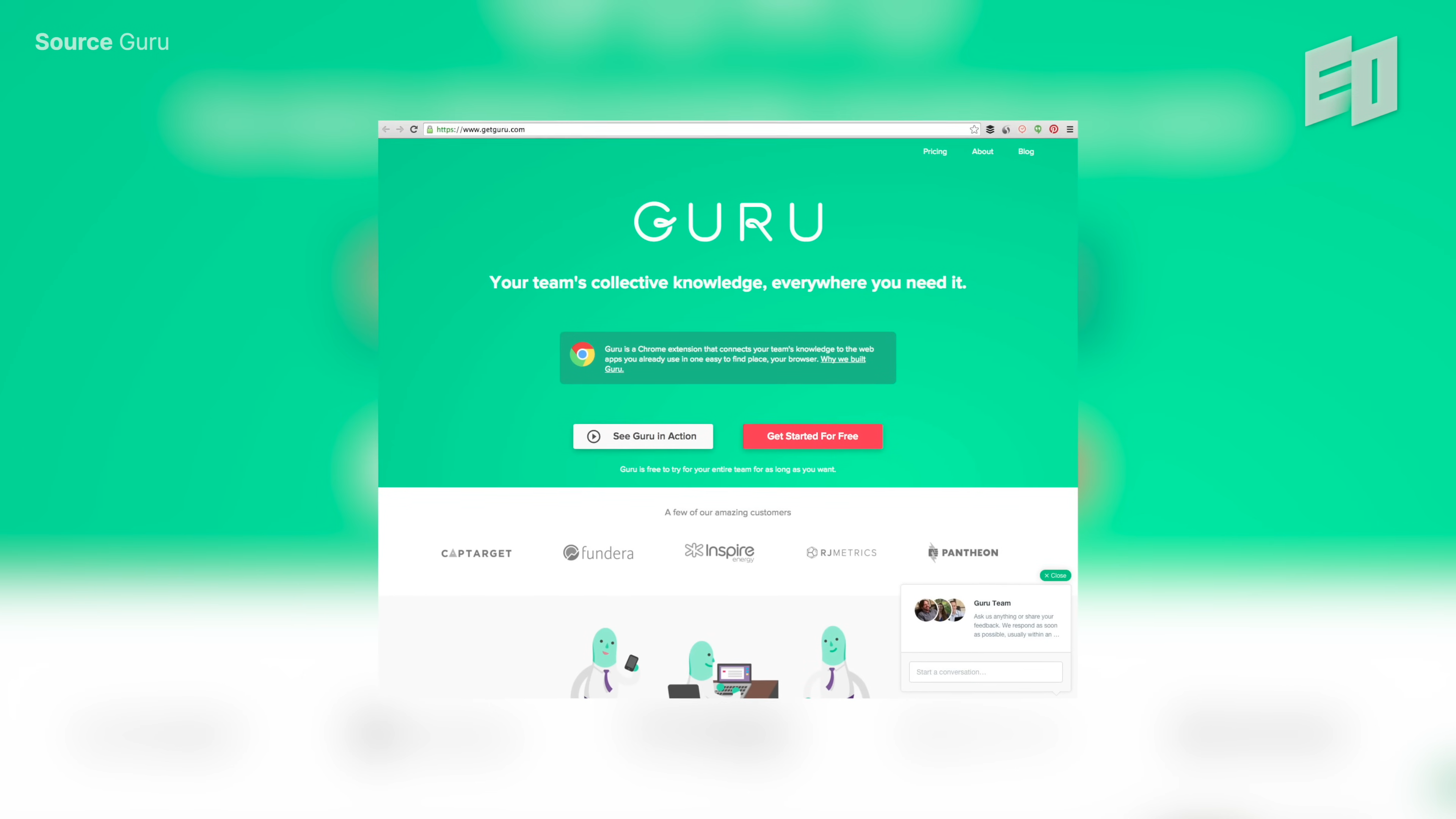
Guru began as a pain that my co-founder and I observed in our last company. It's one of those startups born out of personal pain. We saw the problem, we lived the problem firsthand, and that was this idea of knowledge sharing and information access in a company. Regardless of what your job is, a big part of it is finding information quickly and easily to do your job effectively.
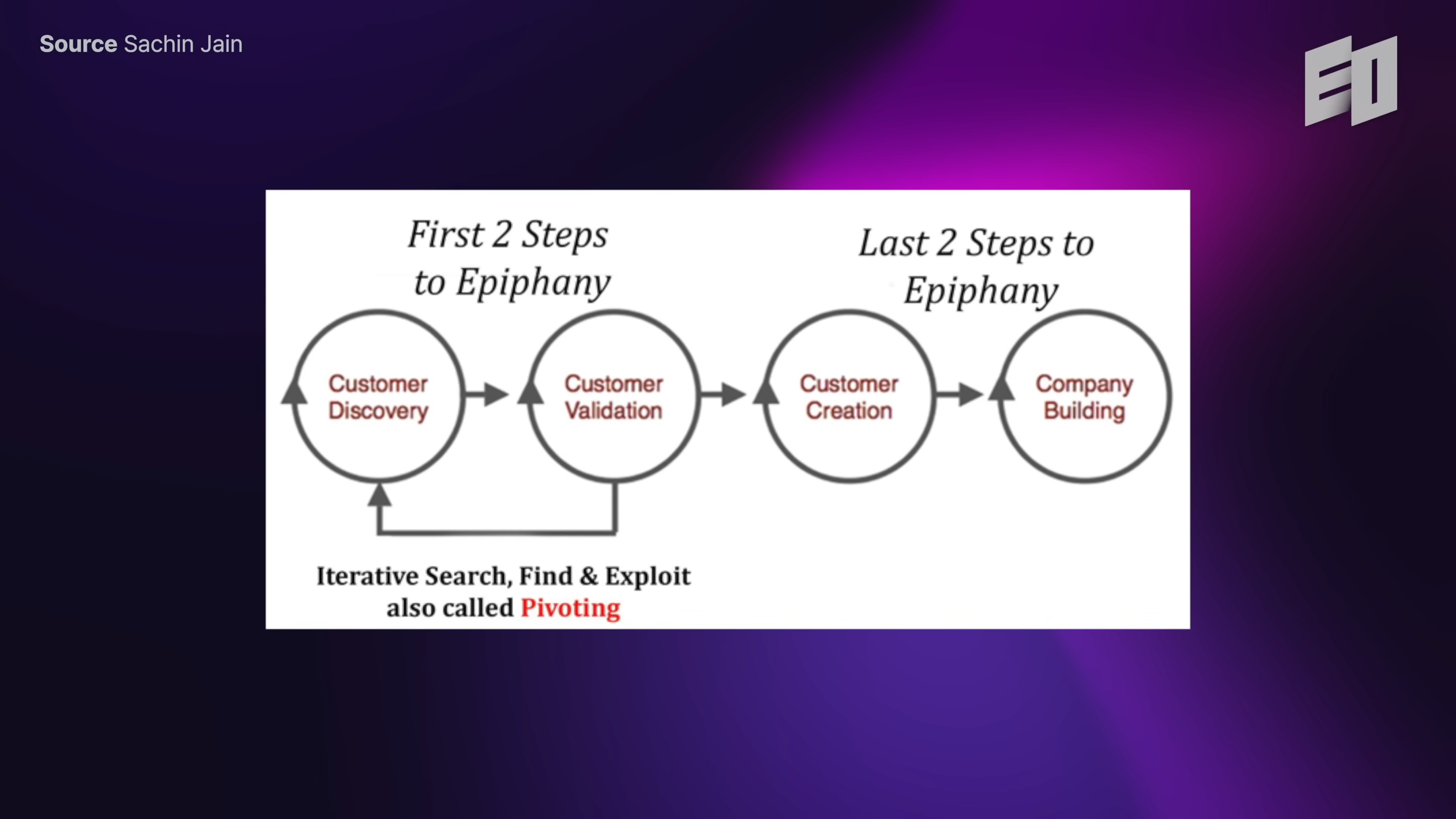
Getting our first customers, we took some inspiration from a book written by Steve Blank called The Four Steps to the Epiphany, and specifically within that he talks about a concept of customer development. I did a lot of outbound prospecting to strangers. In the early days I talked to some friends, some people I had worked with in my past life, not because I had anything to sell them, but because I wanted to validate the problem. That was a learning straight out of this book: the most important first step is not the actual solution you're building, but the problem. Does the problem matter, and is it a must-solve problem or a nice-to-have problem.
For example, one of the things we would always do when we first met with people in this phase of problem validation was take five or six things that were problems and say, take a look at these. A problem in this list would be something like, "My sales team is not performing as well as they could because it's too slow for them to find information to get back to customers." Let's say there were five or six of those, and then we would say, rank these problems from most important to least important. Ranking was a really helpful exercise, because one of the things I still find surprisingly difficult is that people default to nice. People don't want to crush your hopes and dreams by telling you the startup you're working on is no good and is never going to go anywhere. You want to hear the things that aren't resonating, aren't landing, or don't sound important. I found it surprisingly hard to disarm the person. We would sit down and say, you cannot hurt my feelings, there's nothing you can say that will hurt my feelings, so tell me anything you don't like about this.
Ranking was an organic way to do that, because I could put this list in front of them and say, rank these in order of most impactful to least impactful. We probably did that 50 times, with anyone who would meet with us that worked broadly in the domain of businesses we worked in. Getting out, meeting people, talking to them, not even telling them anything, just explaining the problem we were trying to solve and trying to quantify and understand the impact and what matters. Through that work, through those 50 coffee meetings, which was literally the goal we set in the first quarter of the first year of the company, came the two learnings that still matter to this day. The first was: my team already works in a lot of places, they need to bring that all together into one experience. The second was: we've tried things like this and it just exposes inaccurate content, so they have that experience once and never go back to using the system again, they just go back to asking each other. Those two things came through doing that exercise, tremendously valuable, and then drove our product roadmap for the first year.
Strategies for Finding PMF and Continuing Growth Afterward
The very first product market fit we found was sales teams at technology companies. I would say the two-year time for us was building initial versions of the product, validating the pain point, validating the initial buyer, and proving that repeatability point. Another metric we tracked in the early days of Guru, and I learned this from Jason Lemkin, who runs SaaStr, he calls it 10 unaffiliated customers, and I really like that. Can you get 10 customers who don't know you, who are strangers, so they don't trust you any more than any other vendor, can you get them to actually pay for your product? That was one of the metrics we were tracking in those early days, getting to those 10 unaffiliated customers. Within two years, we had honed in on that sales team use case and gotten to about 100 paying customers. That's when we knew we had the beginnings of product market fit.
Where over-hiring go-to-market can actually cause more problems, it all comes down to how well you have found repeatability. There's a very dangerous, or deceptive, version of product market fit where your revenue is growing but your use cases are not yet consistent. If you were to write five case studies about a recent cohort of customers, how similar would each case study be to the next? The more similar it is, the more likely you have found product market fit in the sense of repeatability and the ability to invest in growth. If you stare at those five case studies and they're actually all different, meaning these customers are all happy to spend money with you, but they're using different parts of the product in different ways, that's a pause. If you just start ramping a sales team, you're inviting that chaos into all of your sales conversations, and you're going to be asking your salespeople to constantly pivot. Guru's gone through these mistakes in our early years. We were too inconsistent in our repeatability. I think one of the checkmarks in product market fit is around repeatability, that you understand the buyer and why they bought, and it's similar enough that you can tell that story and get your next 10 customers through it. Then I think you're on the path to scale.
The Best Companies Are Born During Recessions
As a founder building now, there's this overused adage, but I love it: the best companies are born during recessions. I believe that very much. The bar of problem identification is at its peak during recessions. People are most skeptical to buy things, people have lower budgets than in other cycles, and therefore they're going to be maximally scrutinous during that time. If you identify a problem that even with that criteria people still want to pay to solve, you are going to build an amazing company, because as those economic cycles get healthier and improve, you will just ride that wave.
Right now is easily the hardest it's been in the last 10 years from a tech buying cycle perspective. You're still getting people to sign up and pay. Those are amazing cohorts of customers. That's my advice: you can look at it as really hard, but really you're creating a high bar by which every customer who pays you is worth five times what they might be worth in boom times, when people are just throwing money around, trying different products, and it's relatively frictionless to sell. Hopefully that lands as a motivating statement, because at least it's motivating for me.
I started Boomi when I was 24, briefly worked at Dell, and then started Guru again. Over the last 20-plus years, it's really all I know. Despite the really hard times that come with a startup, it is something I genuinely enjoy doing. I genuinely love being able to say, this is a problem, this is a thing that should exist, let's actually manifest that into the world and make it exist and see if we can make it something people will care a lot about. I check in with Mitch, my co-founder at Guru, about once a year and say, could you see yourself doing this for the next 10 years? As long as we both say yes, I think we're on the right path.