Jun 06, 2024
How He Helped Double Lung Cancer Survival Rates from 13% to 26%
Interview with Dorian Averbuch, Founder of Provect.AI
Founder Focused


0:00 / 0:00
💡
At a Glance
- Who: Dorian Averbuch is a serial entrepreneur and the founder of Provect.AI, with three companies and two exits behind him, most notably SuperDimension and Body Vision Medical in lung cancer diagnostics. Trained as an engineer in Israel after being unable to pursue medicine in the Soviet Union, he moved into healthcare technology after a chance project at defense company Elbit Systems.
- What: The interview traces Averbuch's path from wanting to be a doctor in the Soviet Union to building two medical device companies that improved lung cancer diagnosis: SuperDimension, which used electromagnetic navigation to guide biopsies and was acquired by Covidien for $350 million, and Body Vision Medical, which used real-time imaging to reach the smaller, harder-to-diagnose lesions SuperDimension couldn't.
- Traction: SuperDimension's navigation technology became standard of care, treating 70,000 patients and generating about $70 million in sales before its $350 million acquisition by Covidien in 2012. Body Vision Medical later achieved diagnostic yield over 90%, comparable to CT-guided approaches, while being accessible to doctors without the CT equipment those approaches require.
In this interview, Dorian Averbuch, a serial entrepreneur with three companies and two exits, traces his path from wanting to be a doctor in the Soviet Union to building medical technology that reshaped how lung cancer is diagnosed. He describes SuperDimension's electromagnetic navigation system, which became standard of care and sold to Covidien for $350 million, and Body Vision Medical, which used real-time imaging to reach the smaller lesions SuperDimension couldn't. He closes with his next target: lower back pain, a $50 billion market where he wants to move treatment out of expensive hospitals and into ambulatory centers.
Key Takeaways
Medical Innovation Began With A Doctor's Feedback
Averbuch's move toward healthcare accelerated when a doctor reacted with visible excitement to an early prototype and offered feedback. That interaction gave the engineer a reason to iterate faster, showing how direct engagement with practitioners can turn technical ability into a mission with human urgency.
Navigation Technology Made Lung Biopsies Safer
After learning that lung cancer survival was far lower than breast cancer survival, Averbuch connected electromagnetic sensing with virtual lung navigation. The resulting approach helped doctors reach difficult lesions through bronchoscopy, eventually becoming standard of care after regulatory clearance and broad clinical use.
Medical Products Serve Doctors Institutions And Regulators
Averbuch says medical technology must satisfy three customers: the doctor using it, the institution buying it, and regulators permitting its use. Engineering complexity is only one part of the product, so teams must understand clinical workflow, adoption needs, and the time required by a regulatory strategy.
Define The Problem Before Building The Solution
For Body Vision, Averbuch worked backward from the clinical problem, discussed the opportunity with doctors, and built an early prototype quickly. Their questions exposed whether the idea was viable and clarified the smallest feature set that could make physicians genuinely want to use it.
Back Pain Presents Dorian's Next Healthcare Challenge
Averbuch's next focus is lower back pain, where many people suffer but relatively few receive a permanent solution. He wants procedures to move from expensive hospitals into ambulatory centers, making treatment more efficient and safer while creating a better outcome for patients, doctors, and payers.
Watch the full interview now on EO's YouTube channel! Below is the complete transcription of the interview. Minor edits have been made for clarity and readability.
Hello, I'm Dorian Averbuch. I'm a serial entrepreneur. I have three successful companies behind two exits, and right now I'm working on a new exciting company that is poised to change the pathway of back pain patients in the US and worldwide.
Introduction
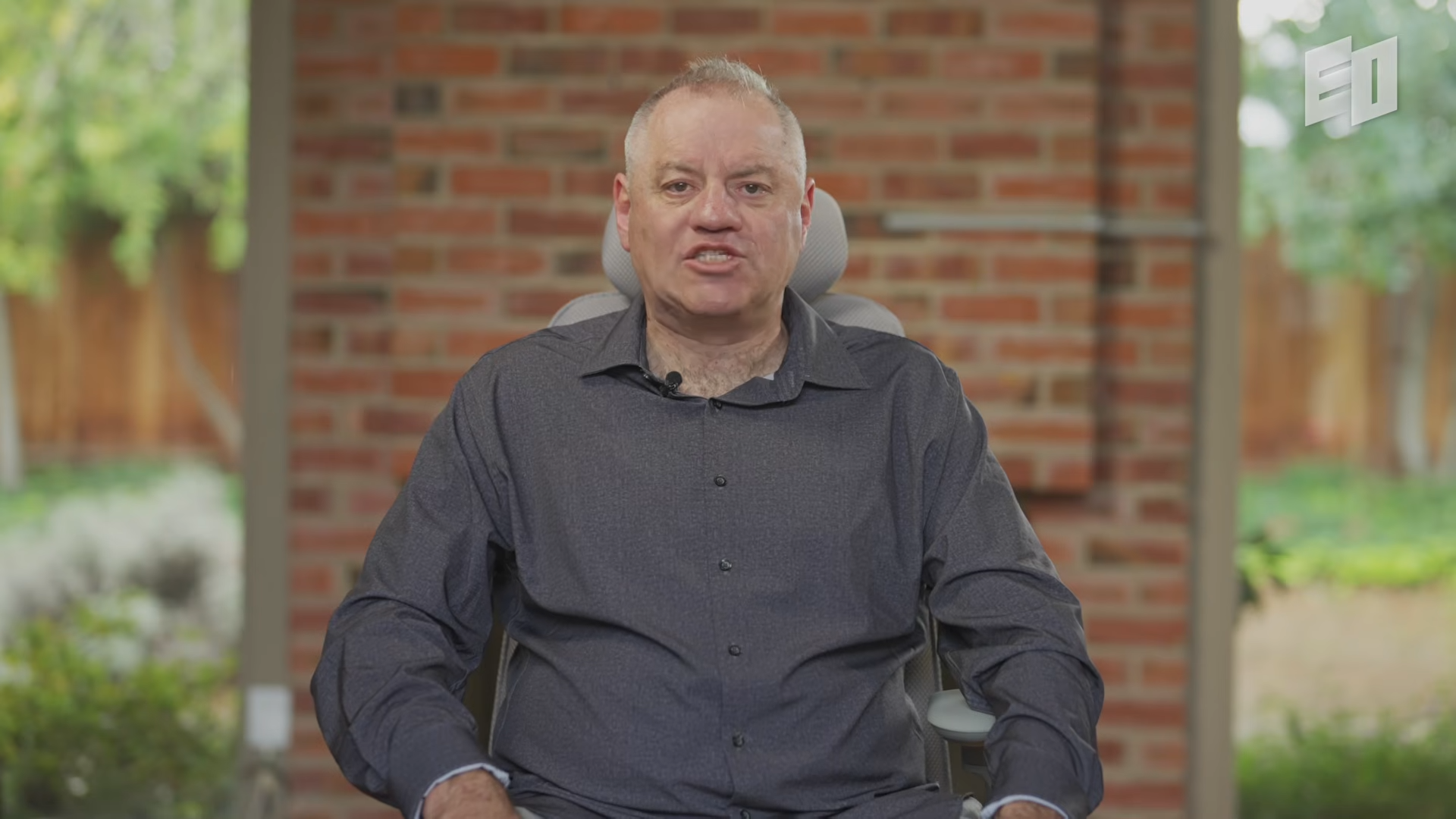
Hello, I'm Dorian Averbuch. I'm an entrepreneur. I have three successful companies behind, two exits and right now I'm working on a new exciting company that is poised to change the pass way of back pain patients in the U.S.
Chapter 1. An engineer dreamed to be a doctor
I'm coming from Kishinev. Kishinev was the capital of Moldova at that time. It was part of the Soviet Union. As a child, I wanted to be a doctor, and I was interested about what doctors do and read books about doctors, including a famous book of Archibald Joseph Cronin about penicillin, and I was really motivated by these examples. But a doctor's career was not achievable for me, because in the Soviet Union in general, there were specifically difficult requirements for Jews to attend a medical school. So my parents wanted me to be successful, and they convinced me to pursue an engineering career.
When I was 20, I came to Israel. I went to engineering school. It was a very interesting pathway for me. Every day I discovered new things, new subjects, so I had a significant passion for software and algorithm development, which made my career in computer science and computer engineering very accomplished. So when I worked for a defense company called Elbit Systems in Israel, I was approached by a head of business development and proposed to develop some solution in healthcare using the flagship technology that was used for cockpit helmets.
When I created a prototype, I wanted to get feedback from the doctors, and I started to talk with him. This meeting, I think, was the pivotal meeting, because when I was talking to him, I felt such ecstatic excitement, such high passion to the conversation, to the fact that I'm talking with doctors and he's listening to me, that I wanted to repeat this experience again and again, and I wanted to implement his feedback into the product. And this gave me motivation to do it faster so I can meet him again and present again the new prototype. So this is how this all started.
Chapter 2. Improving The Survival Rate of Lung Cancer Worldwide
Later I worked for a company called TransCan Medical that was dealing with breast cancer diagnostics, and I learned much about cancer. During my learning process, I found that actually the survival of breast cancer patients is over 90%, but there is other cancer called lung cancer where survival rate is just 10%.
If you want to know the lesion has cancer or not, you have to get a sample of the tissue from the lesion. Lung lesions, they are enclosed within the chest and surrounded by ribs, important organs, and a lot of blood vessels. It's risky to the patient, and you need to weigh risks and benefits. And I started to think, and I connected the electromagnetic technology with the lung, and I developed myself models that allowed to perform virtual navigation in the lung.
I developed this model for myself, and I started to look for the company that has electromagnetic sensing technology, and I found SuperDimension. So what SuperDimension developed, it developed a legitimate approach where, through a relatively simple procedure like bronchoscopy.
Meaning that you take a flexible tube with a camera and you move this tube towards the lesion, and then, using the tube called a working channel, you can protrude tools and get biopsy from the lesion. But since these lesions are very far from the area where you can see, doctors were not able to approach those areas. So this gap was said to be closed using electromagnetic navigation.
There is a sensor on the tip of the flexible tool, and using the map coming from pre-operative imaging like CT, in a way similar to how we navigate cars, doctors were able to approach the lesions. About, I think, 2006, we received FDA clearance and started the journey, the commercial journey of this new product, in the United States, and this was an amazing experience. So this solution became a standard of care. In the next 10 years from 2001, the number of patients treated with SuperDimension reached 70,000, and the sales were about, I think, 70 million.
And in 2012, the company was acquired for 350 million by Covidien, and now it remains part of Medtronic. In the medical world, we have three main customers.
Number one, a doctor who is going to use your product. Number two is a medical institution that is going to buy the product. And number three is regulatory requirements that are going to permit this product for use.
Number one, a doctor who is going to use your product. Number two is a medical institution that is going to buy the product. And number three is regulatory requirements that are going to permit this product for use.
Technology was very complex from an engineering point of view, but we had to match the experience of doctors. For us, this was a whole world, but doctors, they were interested to accomplish diagnostics as fast as possible, and it was definitely a visibility gap of how we planned the product to work to how they want it to work. Today, FDA, also European community, they have very sophisticated regulations. So somebody who is starting to work on medical products, they need to be aware of timeline. It's not going to be fast.
How much time you have to wait depends very much on what problem you are solving. Very important, what is your regulatory strategy for approving this product? I think that the important thing is awareness that technology is not enough. It's a big, important part of the product, but once you develop technology, you need to make sure that it satisfies the other needs.
Chapter 3. How to properly define the problem to be solved
But one thing remained unsolved with SuperDimension. We were able to approach only large lesions. The survival from lung cancer is directly connected to the size of the lesion. If the lesion is small, say 5 to 15 millimeter size, the survival rate is close to 90%, but when the lesion is larger, then the survival rate is around 26% today, but at that time it was like 15%. This was the reason why I started Body Vision Medical and developed new technologies that made this available.
The way I approach this, I would approach this from the end: what problem we are solving and what is the solution. I would imagine how this would work at the end and what kind of problem it will solve. The second is who is going to use it and how, in order to solve the problem.
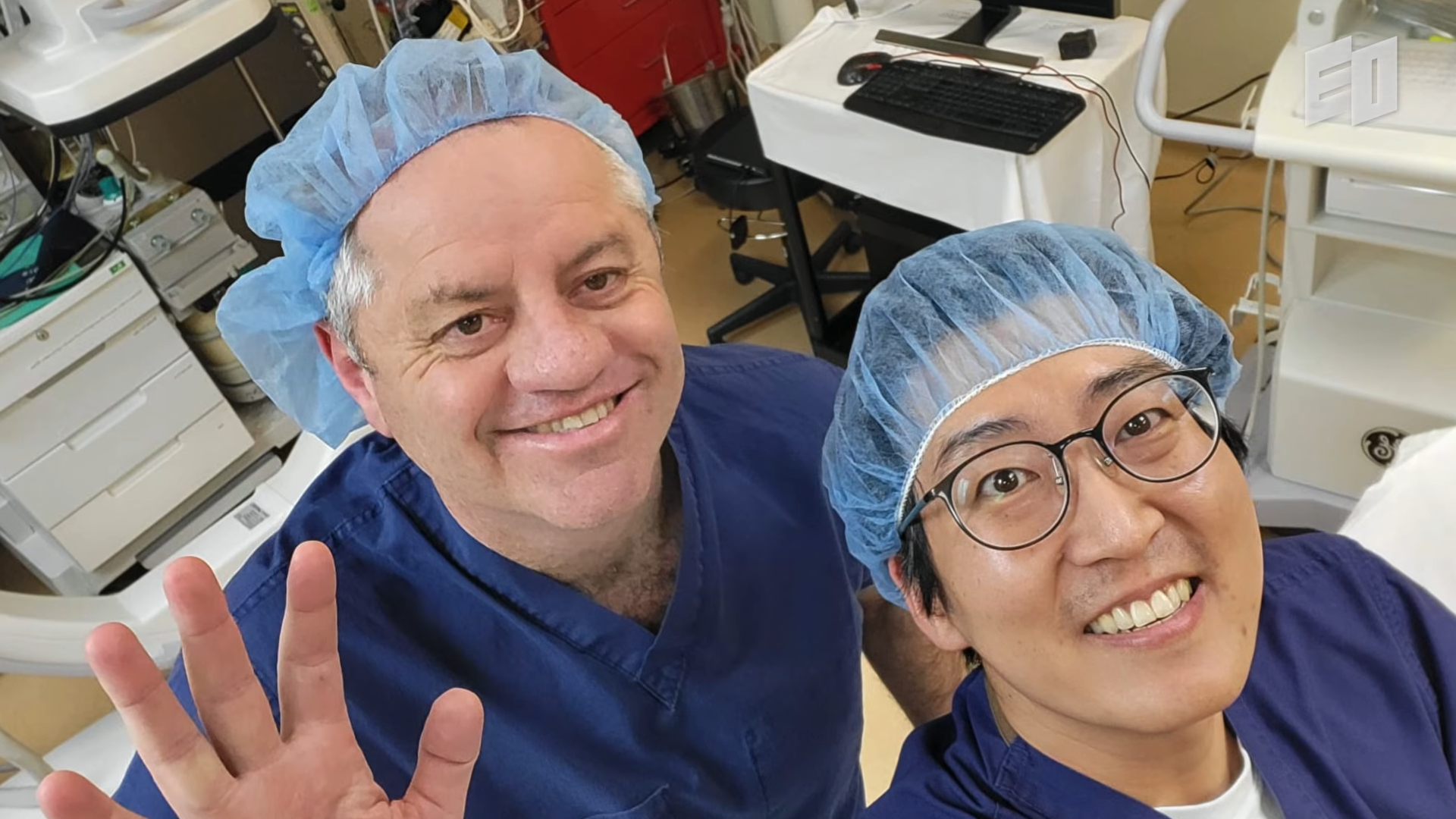
So we are talking about healthcare. I would have first conversation with the doctor about the opportunity and hear from doctors if this makes them excited or not. The next step would be to create a very early prototype as fast as we can in order to explain how this is going to work.
Doctor's imagination will work very differently from engineers because they have a practical experience. So when I'm showing them the prototype of the product or mockup of the product, they would approach this completely differently. They would ask the right questions, and as a result of these questions, I would be able to understand whether my solution is viable or not, and if it is, what is the minimum feature set that will make them excited and actually wishing to use this product.
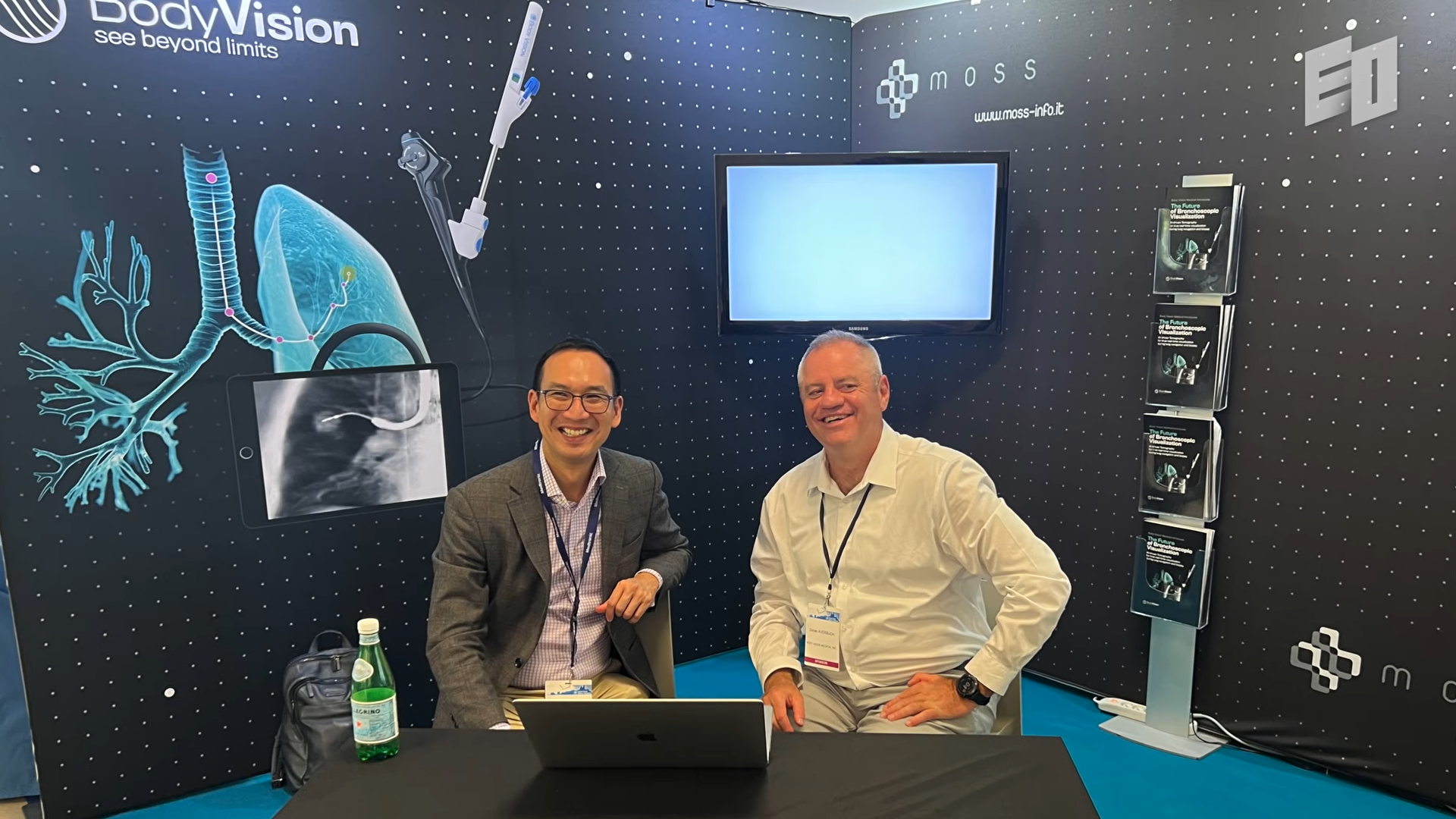
With Body Vision, we developed completely new technology, not based on electromagnetic sensors, but using real-time modality such as CR, X-ray machine used in bronchoscopy. And with CR, we were able to reveal invisible lung cancer lesions in real time and help doctors to diagnose them.
Body Vision achieved high diagnostic yield, over 90%, comparable to a CT-guided approach, which opened up the diagnostics and treatment for lung cancer, not just in the US but worldwide, because this technology is easily accessible by any doctors in the world. And now this technology became actual standard of care.
Chapter 4. Towards a new challenge
Now I'm looking at a different market. I see that low back pain is a significant problem. There are 70 million people in the US alone that suffer from back pain. 26 million suffer from acute back pain, but only 1 million are getting a permanent solution for their pain, creating a $50 billion market in the US. I see this as a next challenge for myself of how to approach this large problem and solve it in a simple and elegant way. A lot of large companies are looking into solutions, and they are trying to solve the problem, but they are locked in the hospital where they have to use very expensive equipment.
My goal is to allow moving these procedures from hospitals to ambulatory centers where they can be performed more efficiently, safer for the patients, and also it becomes win-win for payers, doctors and patients themselves. We are losing 80 million workdays collectively for the back pain.
If we can get this time back, this would be a very impactful solution for people, and I think that everyone who can join us in this journey is welcome to talk to me and see how you can contribute to this important mission.