Sep 30, 2026
Eiffel Tower to Silicon Valley: How Hexa Bridges European Founders
Interview with Emile Geeraert, Venture Growth of Hexa
Inside Hacker Houses

A 2-month-old, European hacker house is punching a hole for Europe's toughest founders to penetrate Silicon Valley. Last July, 10 Europeans moved into Hexa House to expand their companies into the US. The cohort included founders who'd already built unicorns, founders who'd already exited, YC alumni, and researchers pulled straight out of MIT.
Even with that track record, European founders arrive in San Francisco carrying a longer checklist than local founders do. No visa. No place to live. And a network that doesn't exist yet. While local founders spend their time chasing customers and building the product, European founders spend it visiting city hall and doing paperwork. That gap is what Hexa is trying to bridge.
"When you go to a great school in Europe, the cultural credibility is automatically given. Here, nobody knows your school or cares about it."Emile GeeraertVenture Growth & US Lead @ Hexa
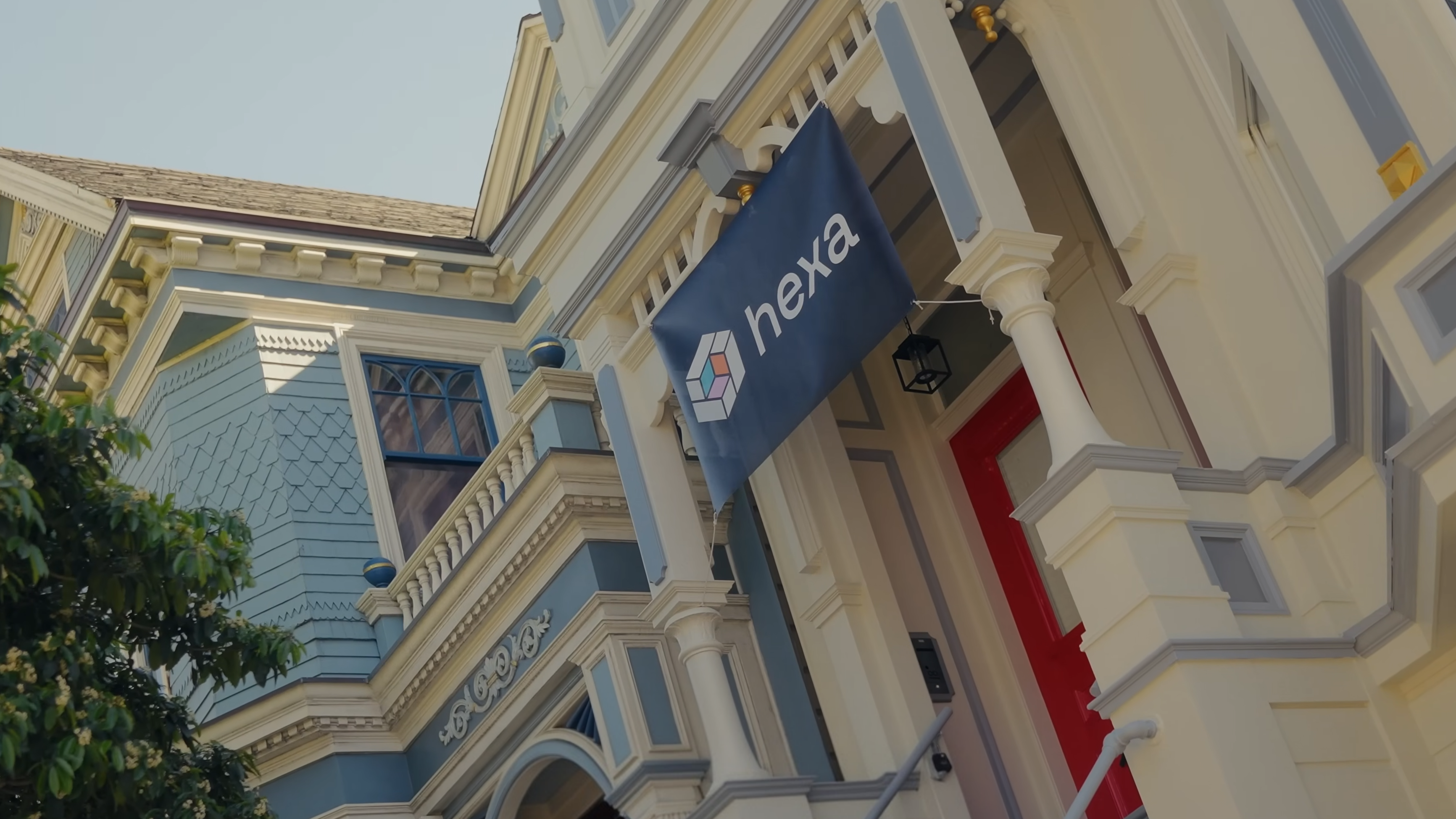
I visited Hexa House on what turned out to be the last day of the program's first cohort. A closing ceremony was scheduled for later that afternoon. Emile, the house's operator, met me at the door and walked me through the house before we sat down to talk about what Hexa is building in the middle of San Francisco.
Nobody Knows Your School Here
Q: For European founders specifically, what's the biggest bottleneck, and the biggest reason they want to come to SF in the first place?
There are four bottlenecks. First, you need clients here. You need credibility and depth in the market, and your market needs to be large. If you start in France, the market is small. If your target is a niche, you hit a glass ceiling fast. So you need to go and scale in big markets.
Second, most tech companies here are already advanced, a year ahead in how their organization runs. If you're building a product for tech companies, you need to target companies that are that advanced. Companies in Europe are, in general, less advanced than companies here. Third, you need a plan to raise here, at US valuations. Raise big, and build large global companies. That's the goal.
Fourth, there's the visa. It's always somewhere in your mind here if you're not a US citizen. Talk to any European and everyone's talking about visas.
Q: Beyond the structural bottlenecks, is there a social cost too?
They don't have the cultural credibility that comes automatically in Europe, where people trust you if you went to a great school. Here, nobody knows your school, even if it's great. You have to build the trust yourself. At the early stage, nobody has a track record to point to, and it's worse for us. No US school on your resume, no network here, none of the patterns that usually reassure a buyer.
Q: So even once you're physically here, is it easier to break through?
If you're targeting companies in SF, it's the most competitive place to do outbound. Everyone gets reached out to by companies worldwide. Your inbox is already full of SDRs running a talk track that doesn't quite land. Sales-led just isn't a fair fight for an early-stage European founder here anymore.
That's why I emphasize product-led growth (PLG) so much. If the product can't sell itself, sales-led won't save you in this market. And here at Hexa House, that's exactly what we spend the time pushing them toward.
Zero-to-One Creates No Value in SF
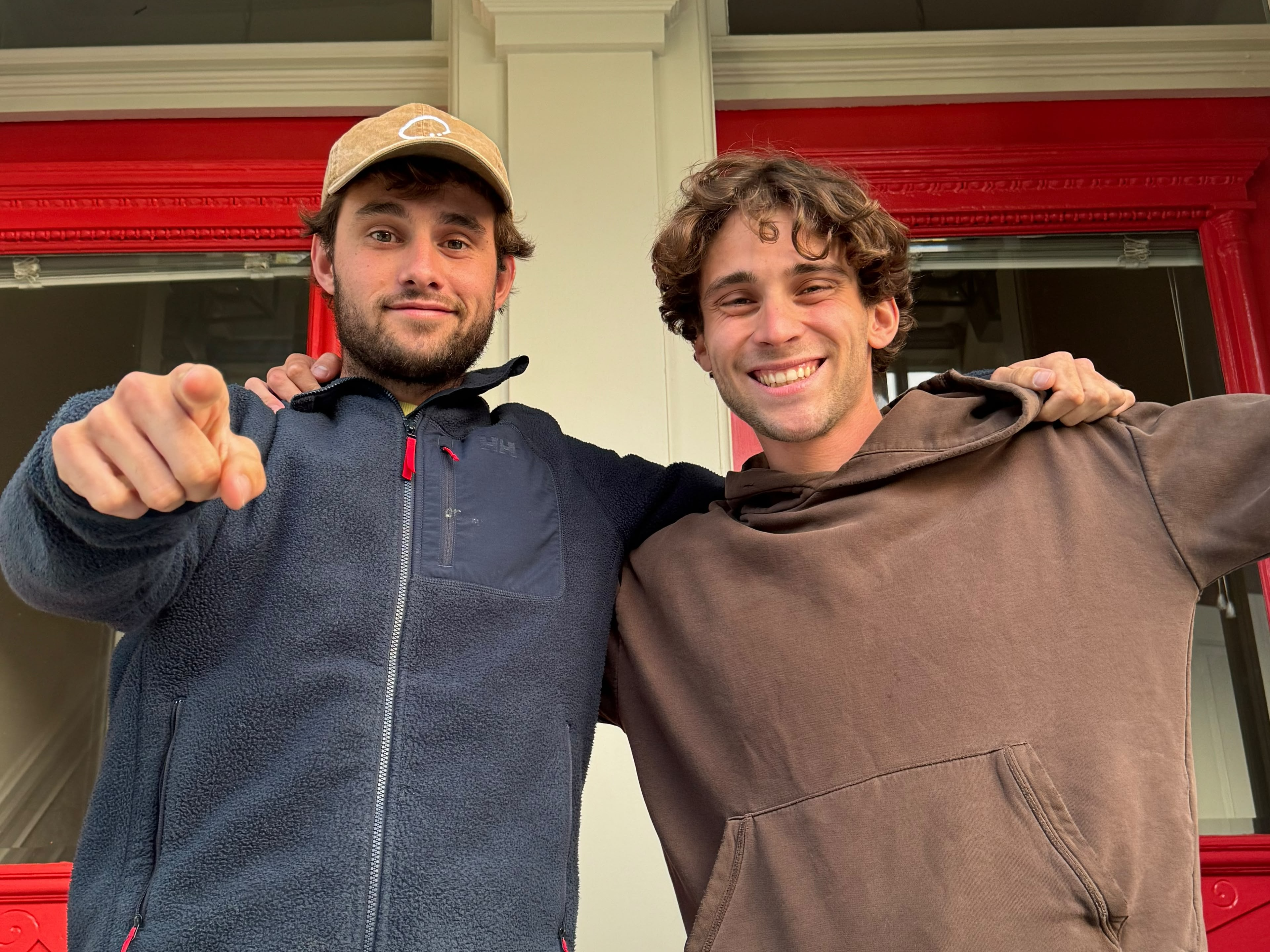
Hexa House is a European hacker house in San Francisco, created by Hexa, a European venture studio based in Paris and investing globally. Emile Geeraert has operated Hexa House since it opened and runs Hexa in the US. He's the one accountable for the hackers living there, running the week-to-week rhythm and setting the bar for what a month at Hexa House is supposed to produce.
Q: Before talking about Hexa House, could you tell me more about yourself and how you became the operator of Hexa House?
I come from France. Before this I was a founder. I sold my company in 2025. After that I wanted to join a team that's super ambitious and smart, working on frontier ideas. Hexa is a world-leading venture studio that's famous for always asking, "What optimizes the odds of building the best and biggest companies?" That idea led me to join.
Inside Hexa, I saw how European founders, engineers, and researchers were relocating to San Francisco to build AI-native companies. What used to happen occasionally is now a migration movement. From there I thought, "I also want to be in this ecosystem where the baseline of the people is insanely high." So I pushed for building a hacker house here. We launched this house, and we encouraged every founder to come here, to challenge their idea and their ambition.
Q: What is a venture studio, and how is it different from other accelerators?
Venture studio is different from a typical VC firm. VCs put money into companies that already exist, and founders do whatever they want with it. We work earlier than that: we start with an idea, sourced from experienced entrepreneurs who know a market deeply, not from a first-time founder's guess. Once we believe in an idea, we bring in two founders to run it and invest up to a million euros for equity. That's the point. At YC, half of every cohort ends up pivoting because the idea wasn't right to begin with. Hexa starts with an idea that just needs the right environment to scale.
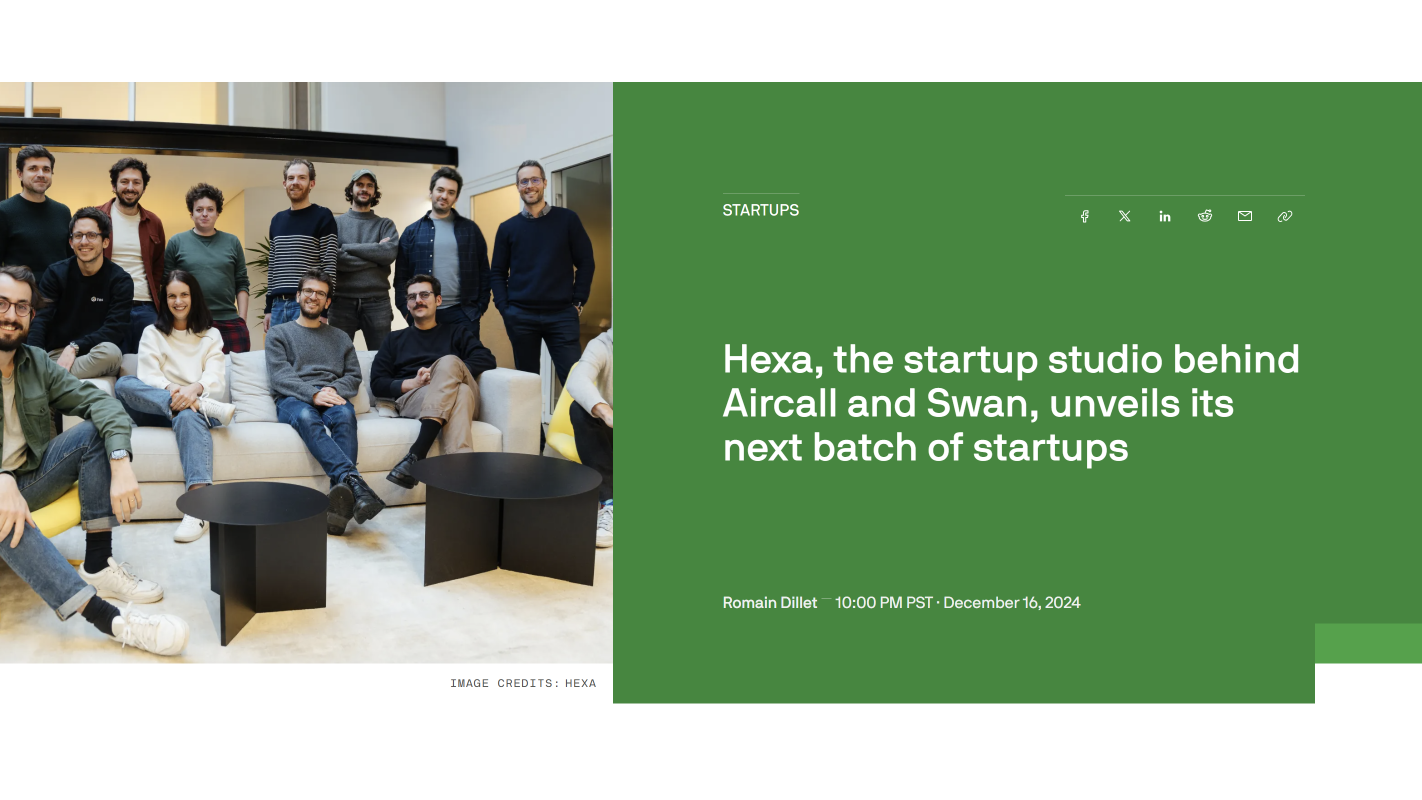
We've been doing this for 15 years. Our founder, Thibaud, started Hexa after he sold his previous company to Adobe for 800 million euros. His mission from the start was to democratize a new way for entrepreneurship, building companies in teams instead of just backing them. Thibaud and other successful entrepreneurs are our partners. Now, we're a world-leading venture studio that has built 3 unicorns: Front, Aircall, Spendesk. We have companies across all stages, from pre-seed to IPOs.
Q: So having a house here in SF, what does that actually accelerate for founders?
The July cohort wasn't the usual Hexa play of building the first product in Europe before coming to SF for clients. It was a standalone, 1 month program for entrepreneurs who are already at an incredible level. They land here with their idea, accelerate on go-to-market, and raise from US funds through our VC network here. It also raises their ambition. And it gets them market intelligence far faster than they'd get it anywhere else.
Building the best product and doing zero-to-one is important. But there's no value created in zero-to-one unless you find a great idea that can become a billion-dollar company. That's where the PMF hunt comes in. In SF, we push founders to go deeper and confirm PMF. Then we help them get through zero-to-one. Nine out of ten die because they fail to get through this stage.
Q: Everyone knows PMF is important. What is Hexa House's way of PMF hunting?
You have to realize your first intuition about the market is wrong 99% of the time. To increase the chance, you have to iterate a huge number of times. You learn each time, and your intuitions sharpen as you go. So what we optimize for is how fast we learn about the market.
We provide the founders the iteration frameworks with short cycles. Every week, founders run at least 1 GTM iteration. We launch a lead magnet and see whether it works at all. End of every week, we evaluate whether that action worked or not.
Then in parallel, week two, we ship the second lead magnet. We also start cold calling to see whether a different method works. As weeks progress, we add a different layer to our iteration. Maybe it's cold calling one specific persona on the first week, and the week after we test a second persona. It's never one big bet but a new iteration every week.
Q: How did you personally get to realize that PLG was so important?
It clicked for me in two moments, and both were painful.
First was when I was a founder myself. We were doing a sales-led approach, and everything depended on getting in a room and convincing someone. We were confident we gave our customers the right value, but the bottleneck was getting in the room itself. When you have no credibility or network, getting in the room itself becomes a bottleneck.
Second was in Hexa, helping go-to-market for our portfolio companies. I watched European founders try to close deals in the US next to American founders, and they were less effective. Not because the product was worse. It was the accent, a school nobody here recognizes, no logo the buyer knew. European founders' product design is stellar. What we're missing is the marketing.
With PLG, we could remove these bottlenecks. We shift the approach so that it's not a person judging a person, but a person judging a product. The bottlenecks don't completely disappear, but you could control it far more than you ever do in a sales call. I've gone back and forth five times in a year since joining Hexa, and now I understand why people get the Europe versus US debate wrong. Yes, you can build your startup from France. But you find your PMF here, build early traction from here. This is where the most demanding users are, where feedback is brutal and fast.
PLG-Hacking: What happens inside Hexa House
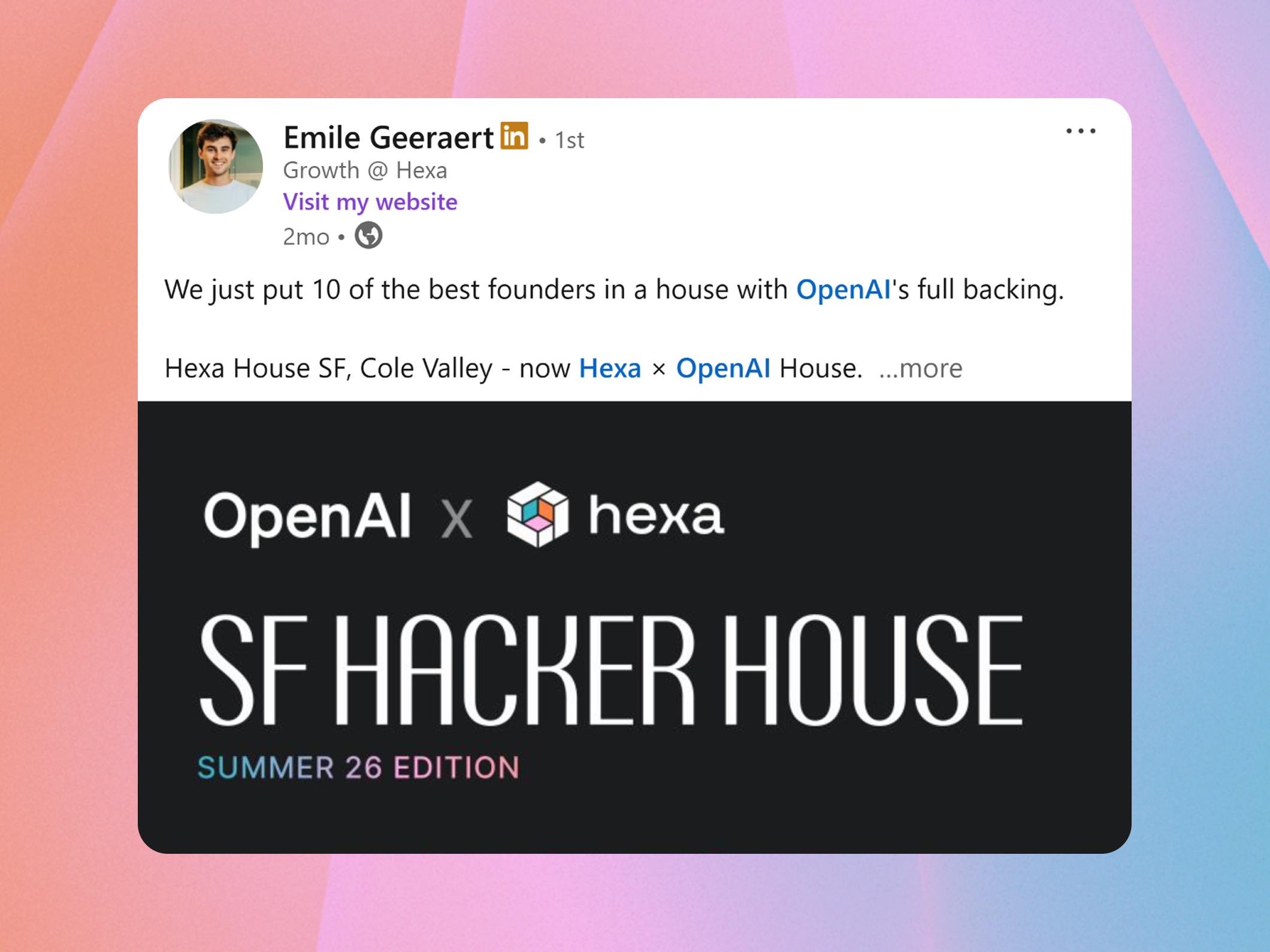
The one-month sprint focused on 3 goals: recruit the most talented founders, give them the room and food to stay, and get them hunting for PMF. To achieve this the house took nothing. No equity, no rent fees, just an environment for founders to focus on building.
Q: For this cohort, how many founders are living here, and how did you pick them?
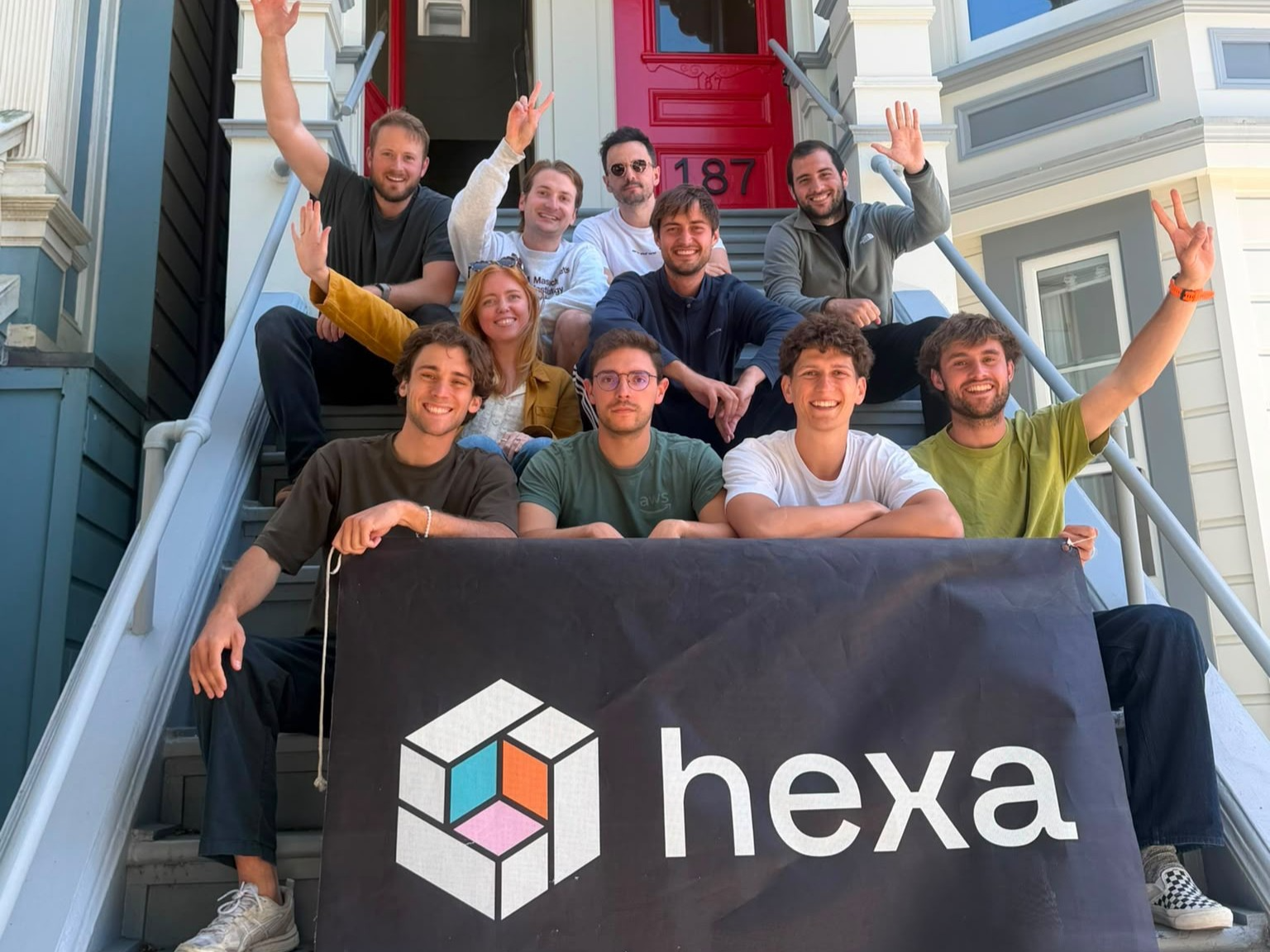
10 founders for this cohort. We had to be quick to start the program so I did 38 interviews for 19 hours straight. The DMs alone were in the hundreds. People I'd never met, warm intros, cold pitches. All of it landed the same week. Everyone who applied Monday knew by Sunday if they were moving to SF.
Three filters mattered. Background: what they'd built before this. Execution speed: how fast they'd moved from a raw idea to something concrete. And whether I'd want to work with them every day. That last one isn't consensus in the Valley. But for the month to work, living together has to work too, not just the business. It's a culture-fit test. Every one of the 10 founders is someone I want to have dinner with.
Q: Day to day, what did the July program actually look like?
Note that this batch was more of an experiment than a formal track. But that doesn't mean it was chill.
Every Monday you have a kickoff. You commit in front of everyone a metric you want to hit that week. This includes what you're going to do in go-to-market, revenue, LOI, anything measurable. Founders would gather again at the end of the week to share their milestones and insights.
We also pushed the founders to build in public. Choose between channels like X and LinkedIn, then commit to posting the progress for the whole month. I made a scraper on LinkedIn and X that queries views, likes, and engagement to turn it into a game-style leaderboard. There's no contract that says you have to post, but they eventually do it since they know it's beneficial.
We also have partners and teams that could help them hands-on. They're experts in go-to-market, in product design, in product. Founders can book a call with them to kill their bottlenecks. From there, we leave the founders to go hunting.
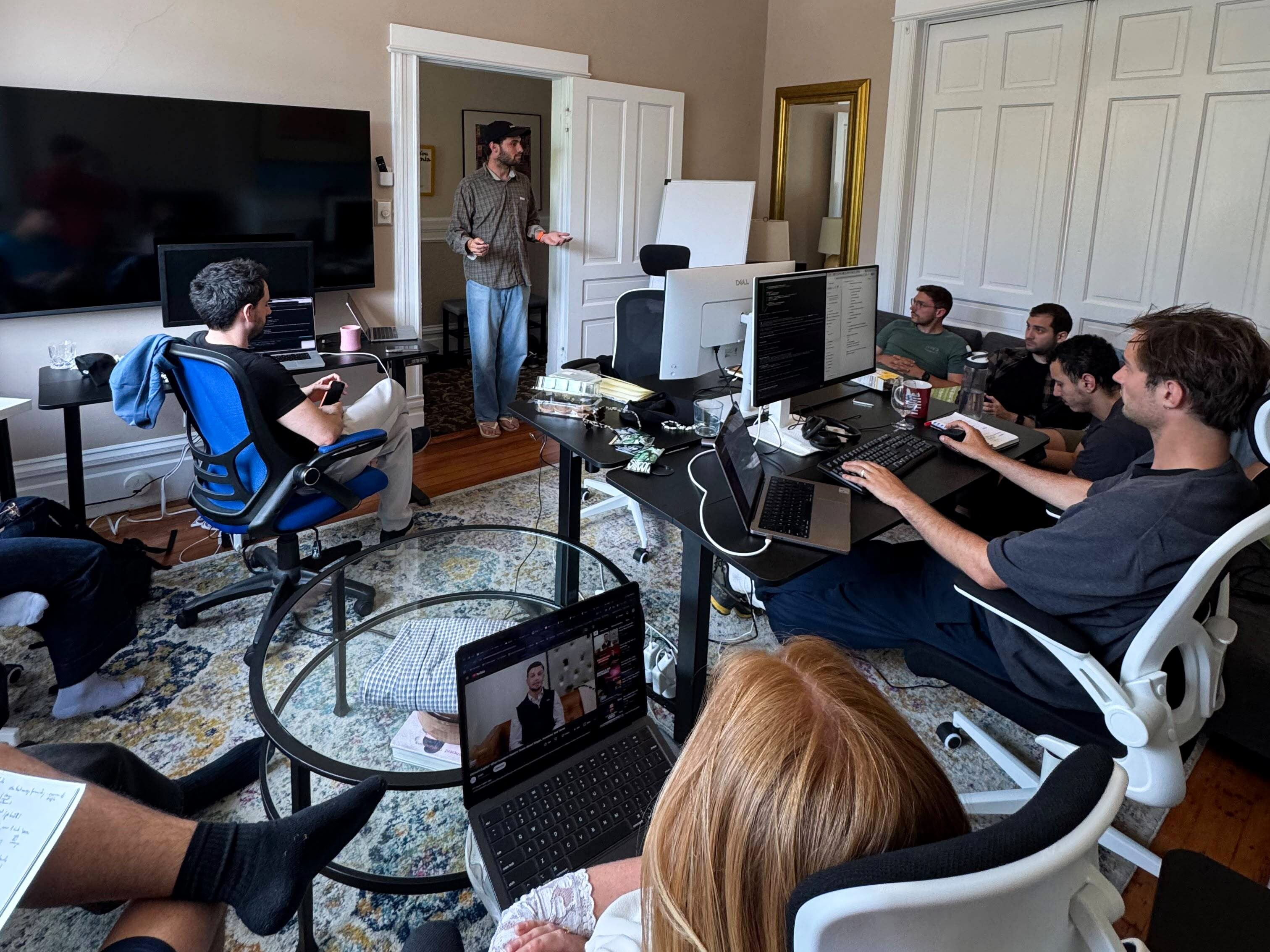
I designed the program to minimize workshops or sessions and give founders the flexibility. Some founders here had already done YC, some had already exited, some are researchers from MIT. Doing generic workshops would hold them back.
Q: Did giving that flexibility work for the founders?
Yes. In fact, it was the thing that worked the best.
The Monday commitment, the end-of-week round, the build-in-public leaderboard. That structure is what pushed the whole cohort forward. People weren't reporting to me. They were reporting to each other. That's what made everyone accountable and move faster than they would have alone.
In Hexa House, one person's learning is everyone's learning. Someone figures out a hack on Tuesday, and by Thursday three other teams have used it. This is possible because we're a house of founders that are all outside their comfort zone. No network, no credits. Founders next to each other are all they've got.
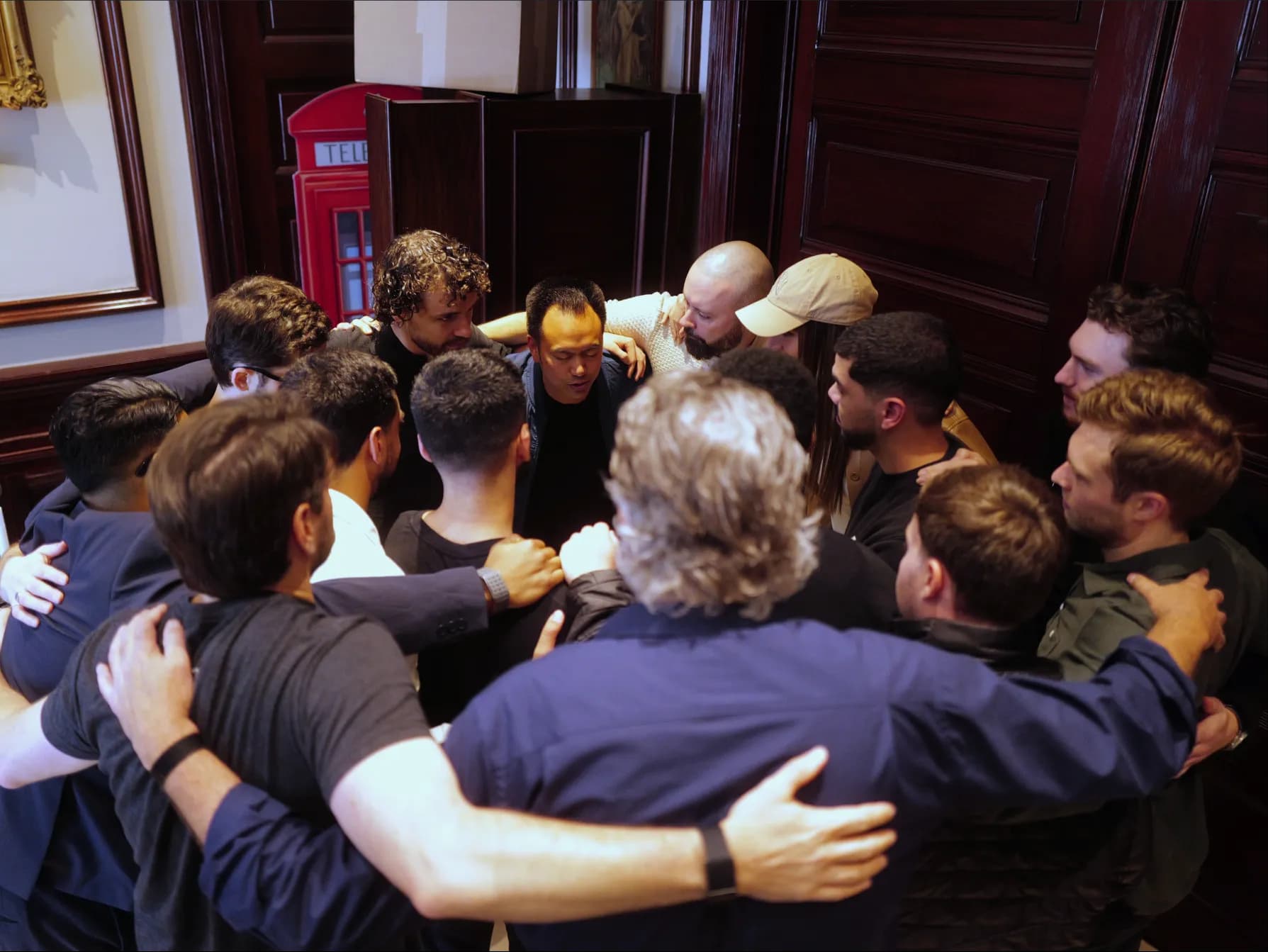
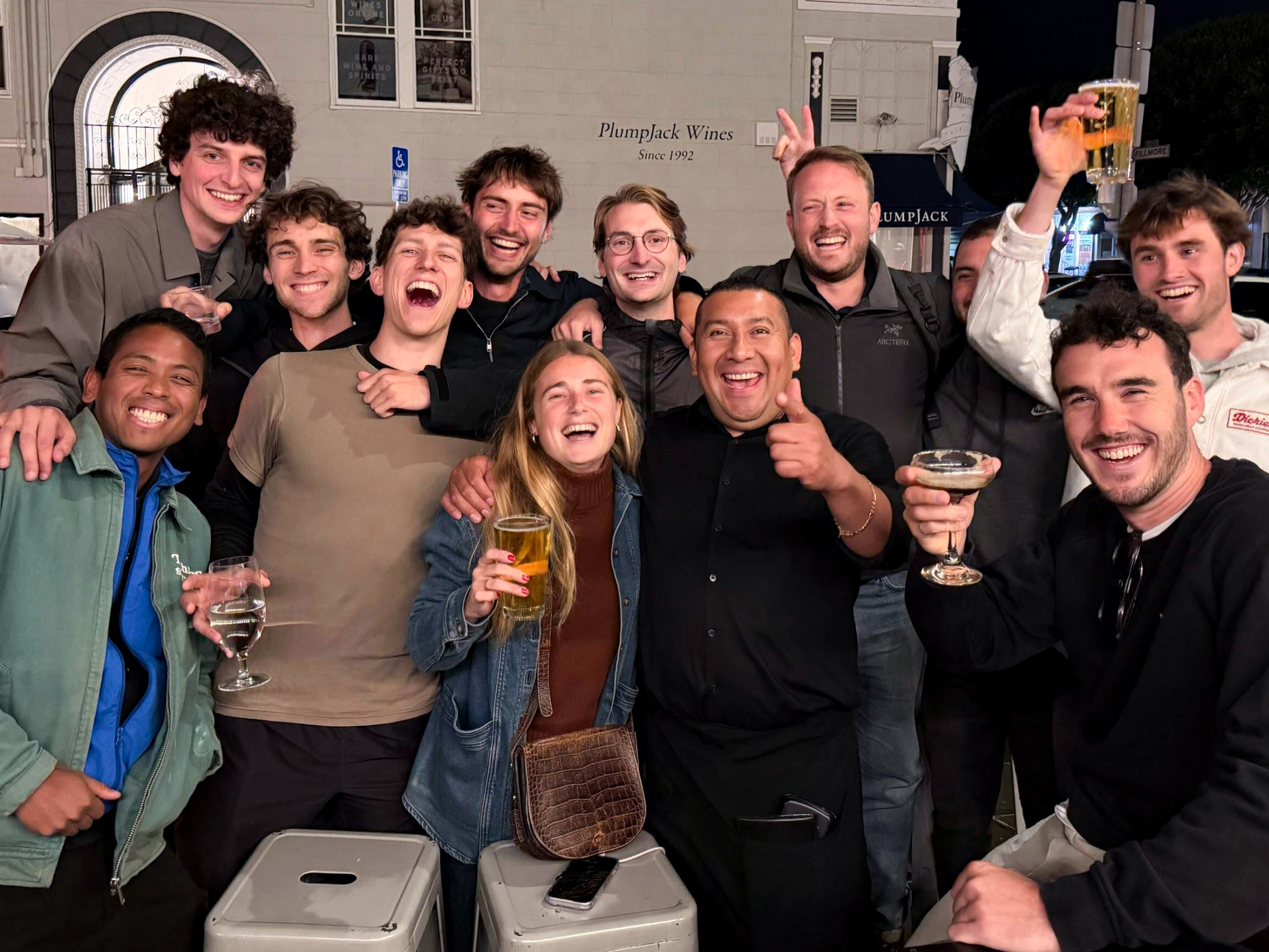
This created the culture of founders helping each other, caring about each other, and sharing learnings and difficulties. That matters a lot because it amplifies what founders get out of living in the same house for a month.
Q: OpenAI is Hexa House's main partner. How did that relationship come about?
We've been close to the OpenAI team in Europe for a long time, so when we started building the house, they were the first people we wanted to build it with. They have the best models, and we wanted our founders building on the best from day one.
We were already pushing the founders to build in public, sharing what they ship as they ship it. OpenAI loved that. It's the same thing they want to see: great builders doing real work with their tools.
In practice, it means nobody here is ever blocked on tools. If a founder wants to test something at 2 a.m., they test it. In a month where the whole game is how fast you learn, that matters more than people think.
5 Teams into YC: Building the Biggest Launchpad for European Founders
Q: What were the biggest outputs of this 1 month program?
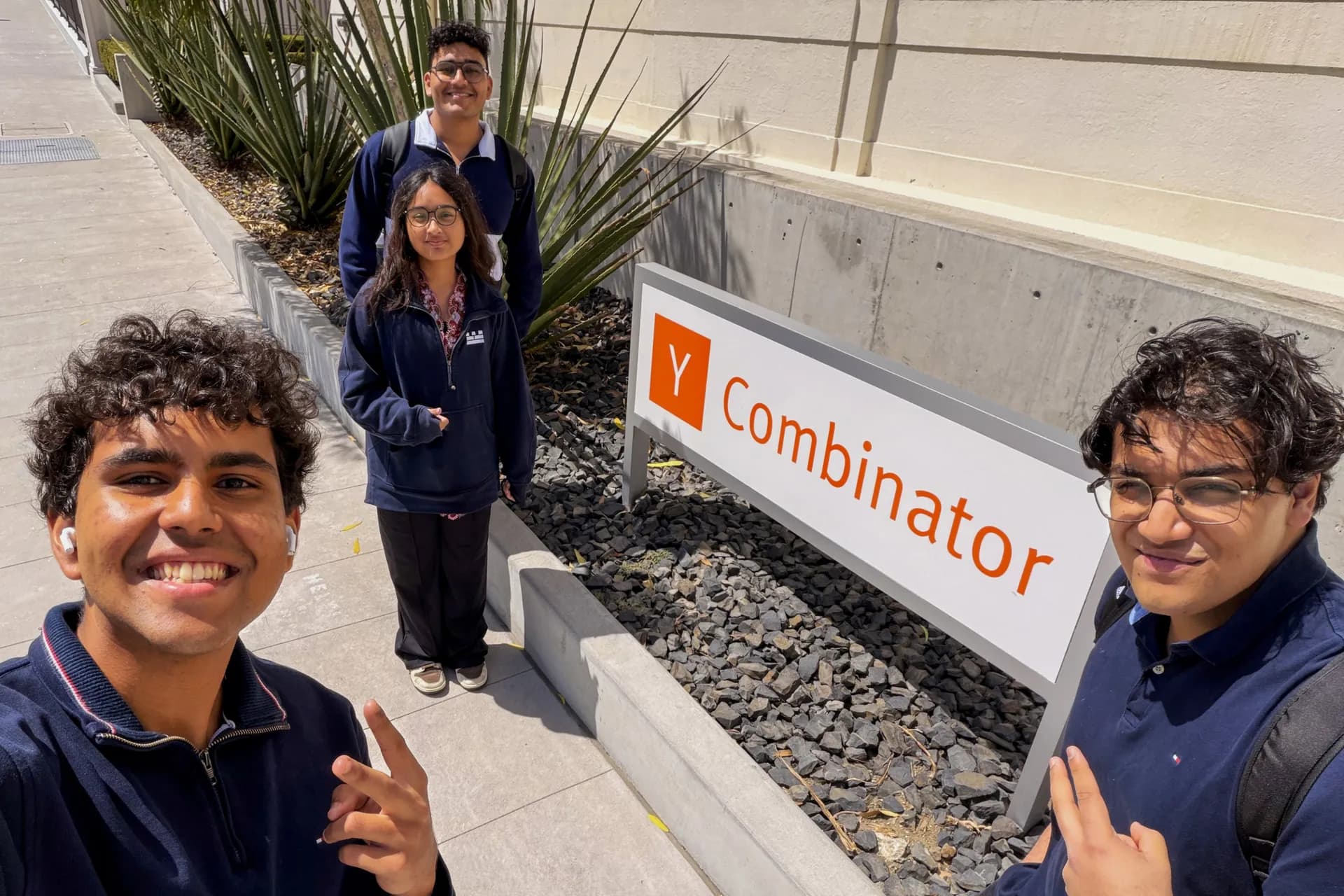
6 out of 8 teams have applied to YC and 5 have been accepted. That tells me two things: we're managing to reach the very best founders, and something real happened in this house.
Looking back, what most of the founders learned is that a month is more than enough to know whether your idea works or not. They came here with their first draft, iterated, and left with clients and an idea they now know is a great one.
For example, one team arrived building payment infrastructure for AI agents, essentially pocket money for agents so they could pay for things on their own. They left building compliance software for companies putting physical products on the market. Different problem, different buyer, different industry, nothing in common with what they walked in with. You arrive with a first draft of an idea, talk to enough people fast enough to find out it isn't the one, and move on to find the real one. Doing that in four weeks instead of eighteen months was the key.
Q: Any other teams that stood out?
2 teams. One team was exited founders who'd done $3M ARR before selling their company. They came to Hexa to start again on a new idea. The moment they arrived at the house, they started preparing the next steps. They somehow found their way into a conference in LA where their target customers, insurance brokers, would be. They set up a booth with branded shirts. They spent $20K to $30K to make it happen but eventually signed around 50 clients from the US by the end. Nobody knew who they were before coming here. They built their own credibility by talking to people and earning trust in their product.
Another founder is building a company for lawyers. At the beginning, she was doing design partners. People here told her, "I don't want to be a design partner, I want to buy your product." So she switched to selling directly and went from $0 to $100K fast. She signed clients almost immediately and is growing fast now.
Q: Looking ahead, what happens to the house after this cohort?
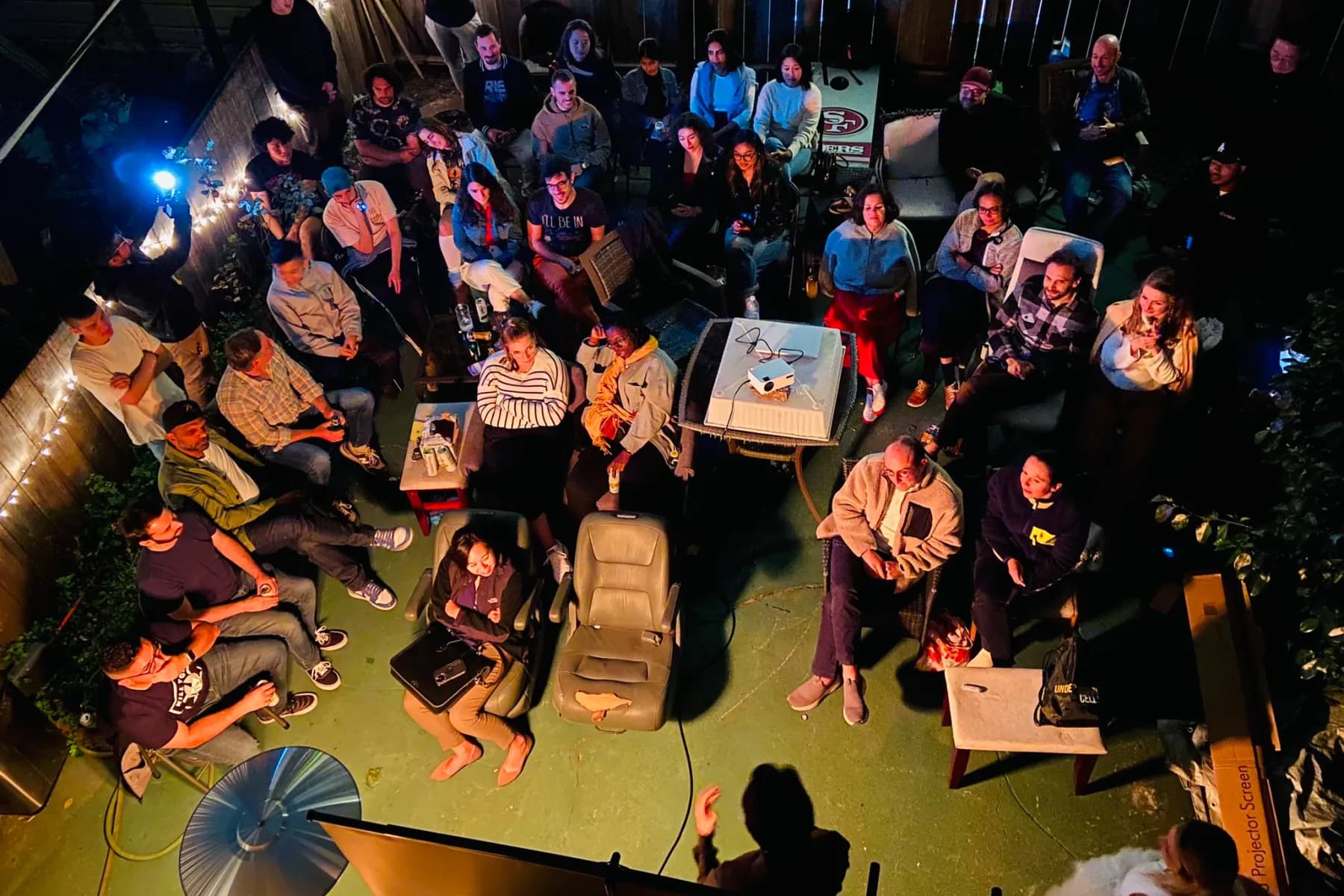
From September, the house is for the founders of our Start and Sprint programs. They come over from Europe to accelerate on go-to-market and, above all, to raise with US funds. We also run a lot of events all year: dinners, drinks, workshops. All of it happens in this house. We invite successful entrepreneurs, VCs, and operators from the Bay Area.
That's been great, and word of mouth has started to build around it. We're on our way to building the best launchpad for European entrepreneurs to succeed globally. Succeeding globally means coming to SF. That's the only goal.
💡
Read more about Hexa House and Hexa Studio
- Emile Geeraert | Venture Growth @ Hexa Studio
- Hexa Studio | Homepage
- Hexa Media | Podcast & Blog
- The startup studio behind Aircall and Swan | TechCrunch