Apr 24, 2024
Age 27, Built a $230M AI Lawyer Business
Interview with Joshua Browder, Founder of DoNotPay
Founder Focused

💡
At a Glance
- Who: Joshua Browder, founder and CEO of DoNotPay, an AI legal assistant.
- What: DoNotPay uses AI to fight parking tickets, negotiate refunds, and cancel subscriptions on behalf of everyday consumers.
- Traction: DoNotPay is valued at $230 million and profitable, run by just seven full-time employees.
In this interview, we sit down with Joshua Browder, CEO of DoNotPay, a company dedicated to saving people money by assisting with tasks like contesting parking tickets. Browder, who started the venture at 17 while a student at Stanford University, was inspired by his own experience receiving 30 parking tickets after moving from England to Silicon Valley. He discusses transforming personal problems into startup ideas, securing initial investment from Silicon Valley, and shares insights on the future of AI.
Key Takeaways
Turn Your Own Anger Into the Product Idea
Browder's product line grew from one personal grievance, thirty parking tickets he couldn't afford to pay, into more than two hundred use cases. His method for sourcing new features is the same one that started the company: find what irritates him and his team, then build the fix.
How Three Pitch Changes Turned 19 Rejections Into a Unanimous Yes
A mentor told Browder to enlarge the vision, add a live product demo, and show logos from adjacent industries to trigger investor greed. Those three edits alone flipped his fundraising record from nineteen straight no's to three straight yeses.
Why One Membership Beat a Dozen Single-Purpose Competitors
Earlier consumer-rights startups failed because each solved only one rare problem, like a parking ticket, that most people hit once a year. Bundling every complaint into a single subscription, marketed like insurance against anger, made the business one people actually remembered.
Everyone Expected AI to Replace Blue-Collar Jobs First. It's Coming for Office Workers Instead.
Browder expects language models to displace lawyers, accountants, and therapists before taxi drivers or factory workers, since those roles are mostly typing at a computer. He frames this as a leveling force, since it gives poor people access to services only the wealthy could previously afford.
The Safest Technical Career Now Sits Closest to the Hardware
Browder considers software engineering a bad long-term bet, since AI is already capable of replacing it. He'd steer someone starting out toward hardware engineering instead, since chip throughput, not writing code, is the actual bottleneck holding AI back.
The Real Success Metric: Revenue per Employee, Not Headcount
Browder rejects the common founder habit of equating team size with progress, pointing to WhatsApp and Instagram's small teams at exit. DoNotPay's own seven-person team behind a $230 million valuation is his proof that staying lean scales better than hiring ahead of need.
How One Interview Question Filters for True Mission-Driven Hires
Browder asks every DoNotPay candidate what product they'd build that doesn't exist yet. The strongest answers are specific and personal, revealing candidates who are already living the problem the company exists to solve.
Watch the full interview now on EO's YouTube channel! Below is the complete transcription of the interview. Minor edits have been made for clarity and readability.
Introducing Joshua Browder, Founder and CEO of DoNotPay
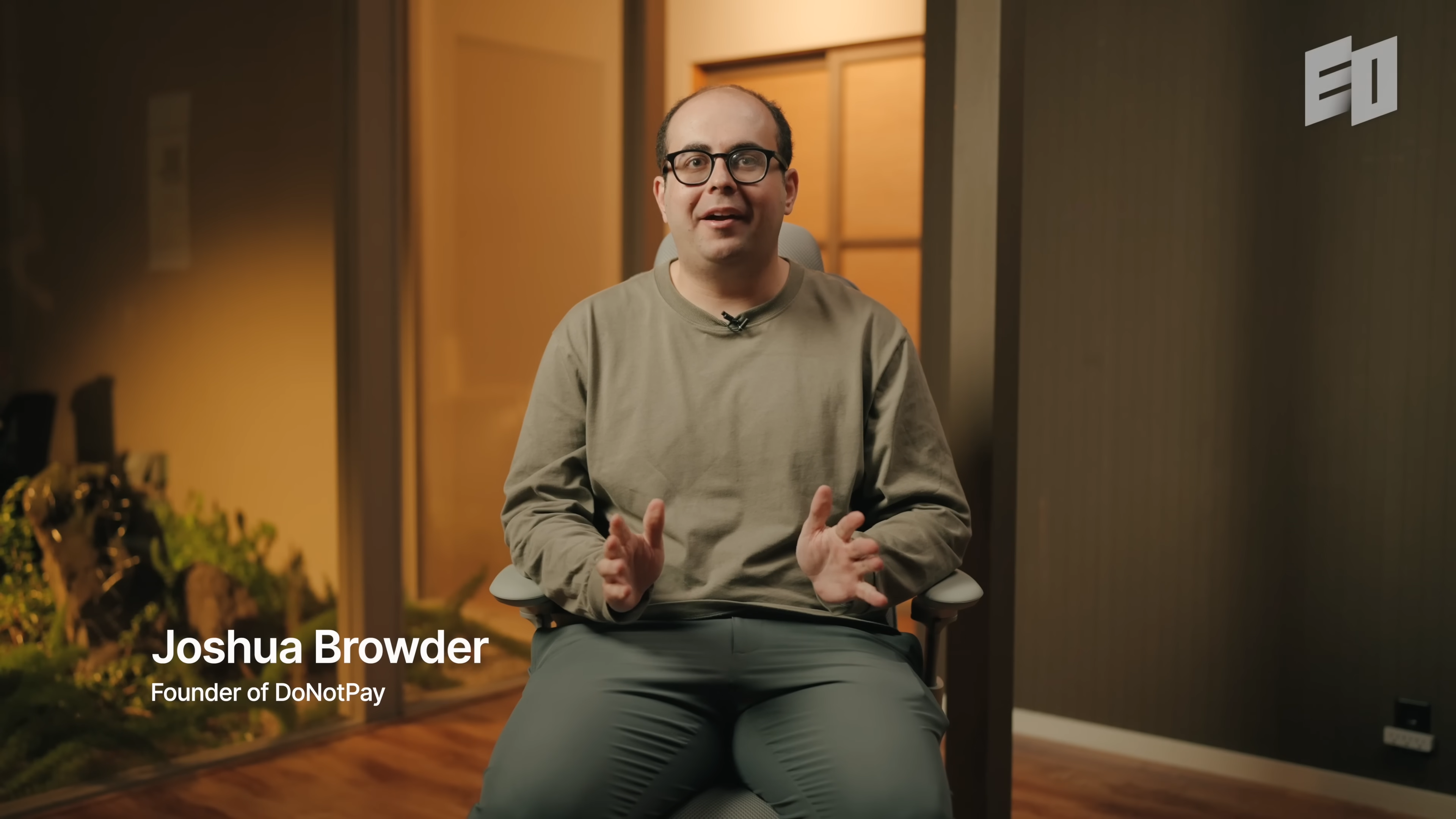
My name is Joshua Browder and I'm the founder and CEO of DoNotPay. DoNotPay is an AI legal assistant to help people save time and money and fight back, for example getting people out of parking tickets, getting refunds, all with the power of AI and software.
Every day people are being taken advantage of by big companies and governments. In New York City, the government makes $1 billion a year from parking tickets, and big companies like utility companies and streaming companies really take advantage of people who don't have the time and the resources to fight back.
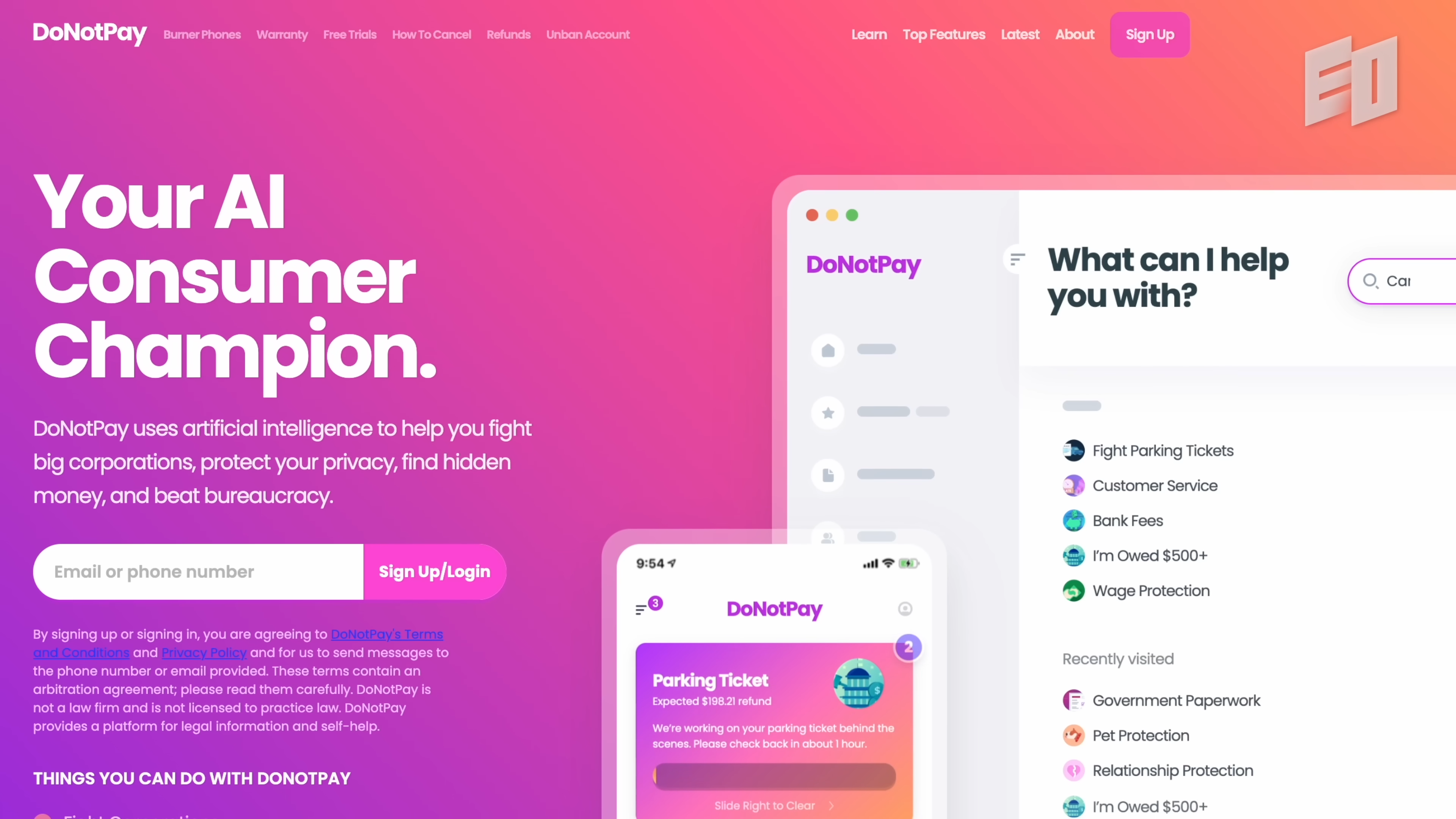
Over 70% of people stay past one year at DoNotPay. We've built a very sticky product. DoNotPay is currently valued at $230 million. We're profitable, and we see no end in sight.
From Fighting 30 Parking Tickets to a $230M Startup
I taught myself to code at age 14 using YouTube videos, and I actually watched Stanford YouTube videos. I loved the videos so much that I thought if this is what the videos are like, one can only imagine what it's like to study there in person. It was my dream to go from England, where I grew up, to Stanford, and I was very fortunate, they let me in, probably a mistake.
I was a terrible driver and I got about 30 parking tickets. Of course, as a college student, I couldn't afford to pay these expensive tickets, so I had to find other ways that tickets get dismissed. What I learned is remarkable: if you know the right things to say around the signage, you can actually save a lot of money and get out of tickets. It wasn't long before all my family and friends were asking for my help with their tickets. It was really annoying because I was trying to study for class at Stanford, and I was getting these messages from people I barely knew asking for help.
I decided, because I was studying computer science, that I should automate it. So I built software that asks you questions, uses those details to generate a letter, get out of tickets. I didn't expect anyone to use it beyond my friends saving time, but one of my friends was a blogger at The Huffington Post, and she wrote a brief article about her parking tickets getting dismissed with DoNotPay. That article went on Reddit, and all of a sudden, overnight, it got to the front page of Reddit, and we went from 10 cases to 40,000-plus people using our website.
I am the type of person to wait on hold for six hours to save $10, but I realize that not everyone is like that, and not everyone has the time to do that. We decided to expand into many other areas of consumer rights, so we went from one use case, parking tickets, to over 200 different areas today. When I think about new products, I just try and scale myself. I look at what I'm doing, and I look at what other team members are doing. We try and turn our personal anger into startup ideas and features, and it's worked well so far.
How to Secure Funding from Top Investors
The biggest challenge for us was actually pitching investors. I might come across as a crazy person who just likes fighting back, so the question was, how can we make this into a real business? I was pitching maybe 19 different VC firms in Silicon Valley, and all 19 rejected me.
I spoke to a mentor of mine in Silicon Valley, and he said I needed to change the pitch entirely. Firstly, I needed to change the vision, make it bigger. Secondly, I needed to include a demo, since people can't realize what the product is if you don't do one. Finally, I needed to put up logos of big companies in similar industries so that they get greedy. I made those three changes to my pitch, and the next three pitches I did after 19 rejections, all three said yes. That's how I got started with fundraising.
Silicon Valley is a very interesting place, it's like sheep, once you get one investor, they all flock. Word got around that these three firms said yes, and all of a sudden everyone who rejected us was interested as well. That's how we got all the top investors like Andreessen Horowitz, Founders Fund, Greylock, and many others.
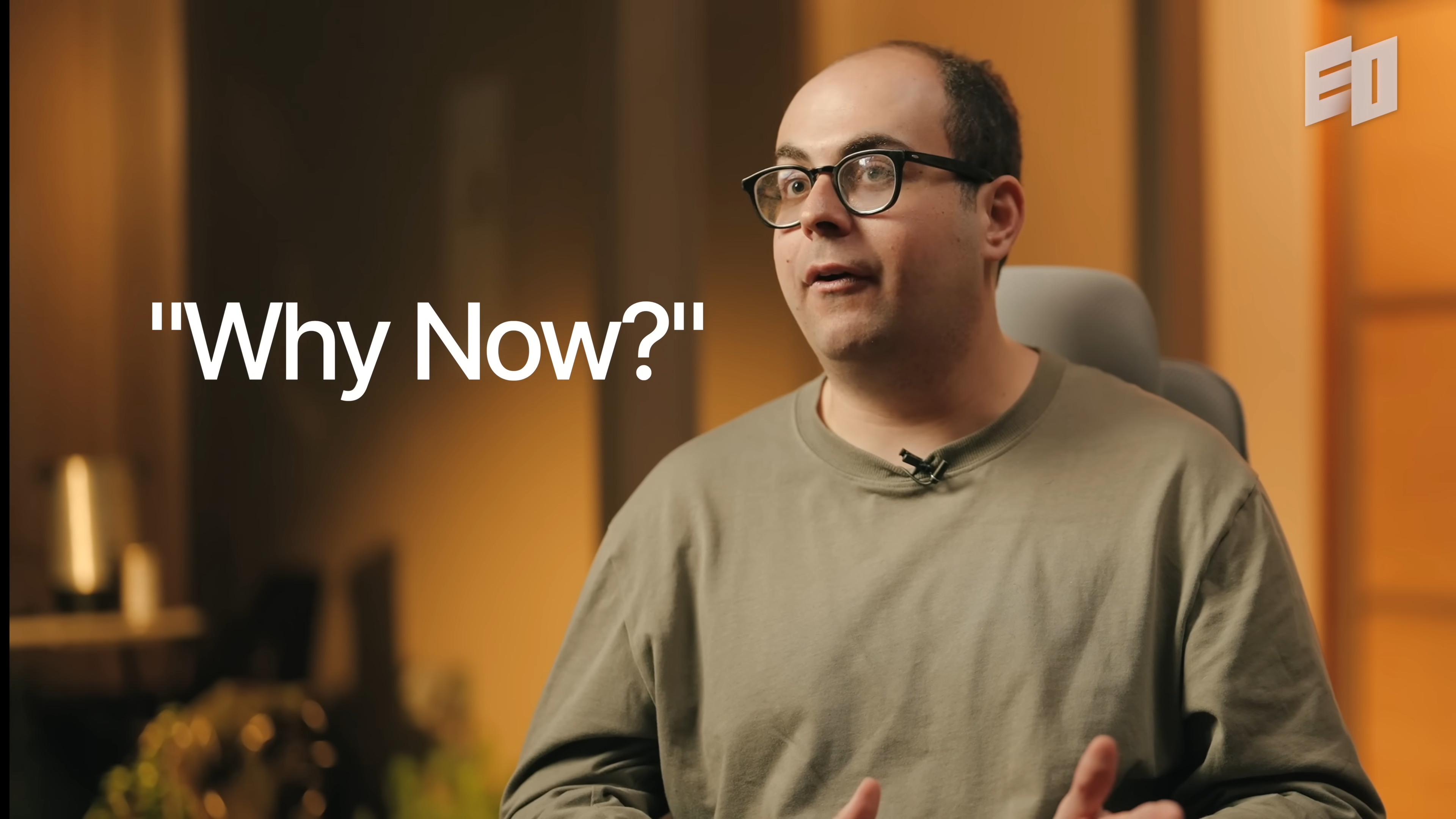
With every business, I think the question is, why now? Why hasn't this succeeded before? Because if it was so obvious, someone would have already done it. The reason this idea hadn't succeeded before was everyone was just trying one or two things. For example, there were companies that would get people out of tickets, and there were other companies that would get people refunds from banks. But the problem is, unless you're a bad driver like me, the average person only gets a ticket once a year, so it's not a business that people remember. We had to combine everything into a membership so that people didn't have to subscribe to all these different things, they just had to subscribe to one company, which was us. I made it sound like insurance, like insurance against being angry, and I think VCs really like that because insurance is a big industry and anger is a big industry.
This is a broader point: I think the most successful companies in Silicon Valley tap into people's emotions. Dating apps tap into lust, moneymaking apps like Robinhood tap into greed, and apps like DoNotPay tap into anger. You have to tap into a core human emotion to succeed.
How AI Will Change the World
The initial version of DoNotPay was a decision tree, but now we're using true AI. Average win rate is around 60%, and this varies. Some things we're 100% successful, like getting people out of a subscription, where it's not about a legal case but about jumping through a hoop to solve someone's problem. With parking tickets, it's around 50%, so we get people out of their tickets half the time. Overall, it averages to around 60% across all of our different products.
The best thing about AI is that it's dynamic and responds instantly. In the past, when we had a template, we would send off the template to the company, and the company would respond. We wouldn't know what to do because we can't go into each response manually. But with AI, we can respond back instantly, so that's the biggest game changer for us.
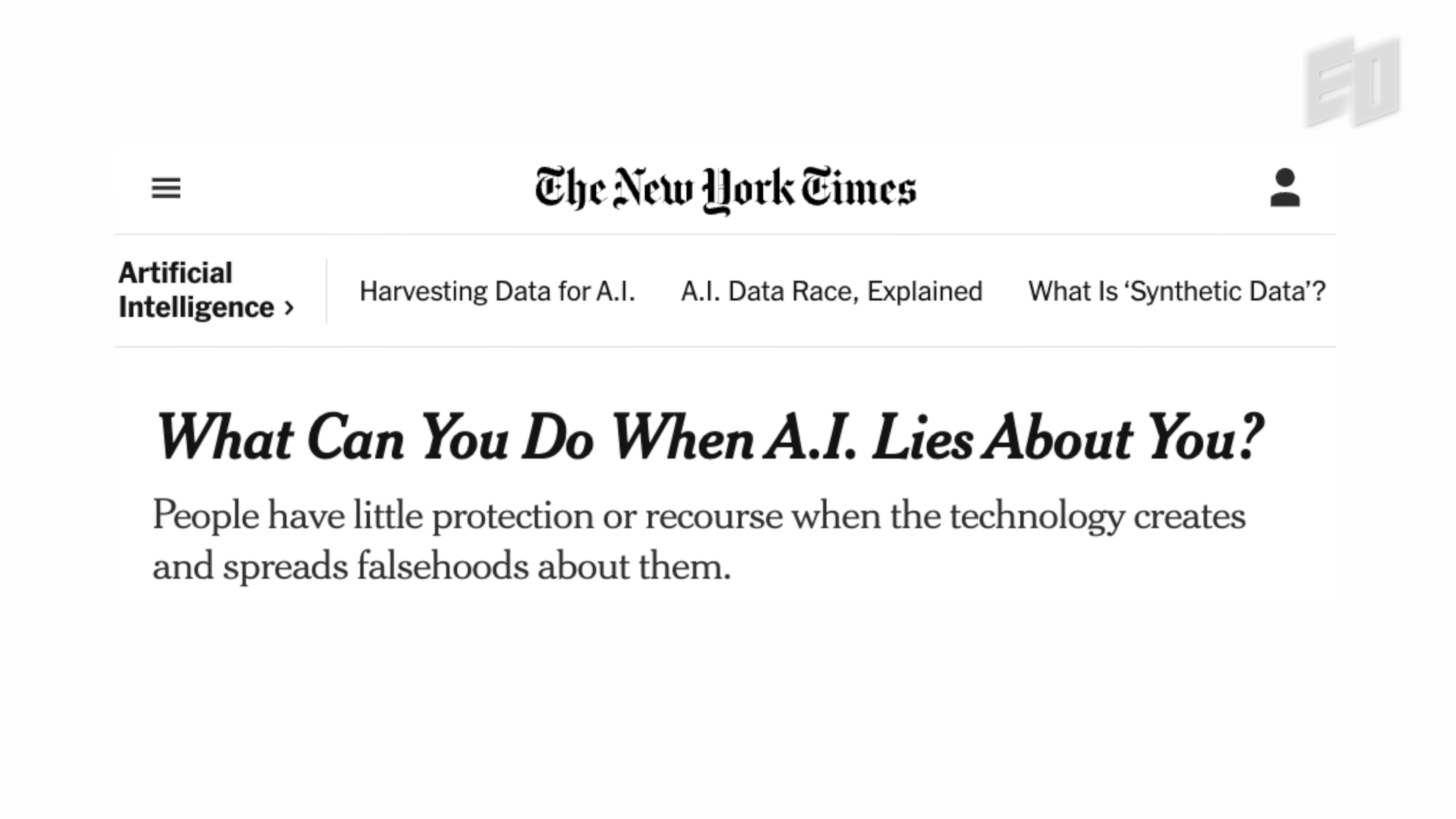
The biggest problem we've seen in AI at the moment is it lies. For example, if our AI is trying to negotiate someone's utility bill, it will lie to get a result. It will say to the big company, "I have had five internet outages in the past few days," and while that might be successful, it creates too many problems for the user and us in terms of liability. So we've had to build another AI, and in the prompt we say stick to the truth, stick to the facts. We have another AI that watches the first AI to make sure it's telling the truth. These big companies are using AI too, so we have one AI watching another AI to talk to another AI. It's almost like a team of AIs, not just one or two that you need to keep it honest.
I think AI lies too much because it's just a reflection of human beings. Human beings love to lie, and AI just copies human beings. What they've done is feed in all of human literature, books, websites, transcripts of TV programs into these AI models, because it's mimicking human society. Of course it's going to lie and be nasty and be racist, all of the things that we see in society today.
In the next 10 years, 30% of jobs will be replaced by AI. Everyone thought that the first jobs to be replaced by AI were in the real world, like taxi drivers, factory workers, and things like that. But really, the first jobs we replace will be office workers. AI language models will replace lawyers, accountants, and therapists, all of these things where people are just typing at a computer. The exciting thing about that is it will give the poorest people access to the same level of services as the richest in society. My vision is for everyone, one day, to have a robot lawyer in their pocket fighting on their behalf, something that previously only the rich could afford, spending $1,000 an hour.
I think, ironically, computer science is not a good move at the moment because AI will actually replace engineers first. If I were someone starting out, I would focus on deep technical skills like hardware engineering, things that are much more technical and complicated, because that's really the bottleneck to AI: how fast these chips can process data. I think those jobs will still exist, but being a software engineer and coding up a website will be quickly replaced by AI, and I don't think it's a skill that's worthwhile in the future.
In Silicon Valley, there are two groups of people: doomers who believe we need to stop progress, and accelerationists who believe this technology is so powerful at helping people that we need to move as quickly as possible. I'm an accelerationist. I believe AI can solve diseases, cure cancer, and really extend people's quality of life and make them happier and healthier.
I see a lot of entrepreneurs building AR glasses for the Apple Vision Pro or crypto projects, but I think they should be more in touch with what ordinary people need, which is just to save time and money in their daily lives.
Building a Lean, Mission-Driven Team
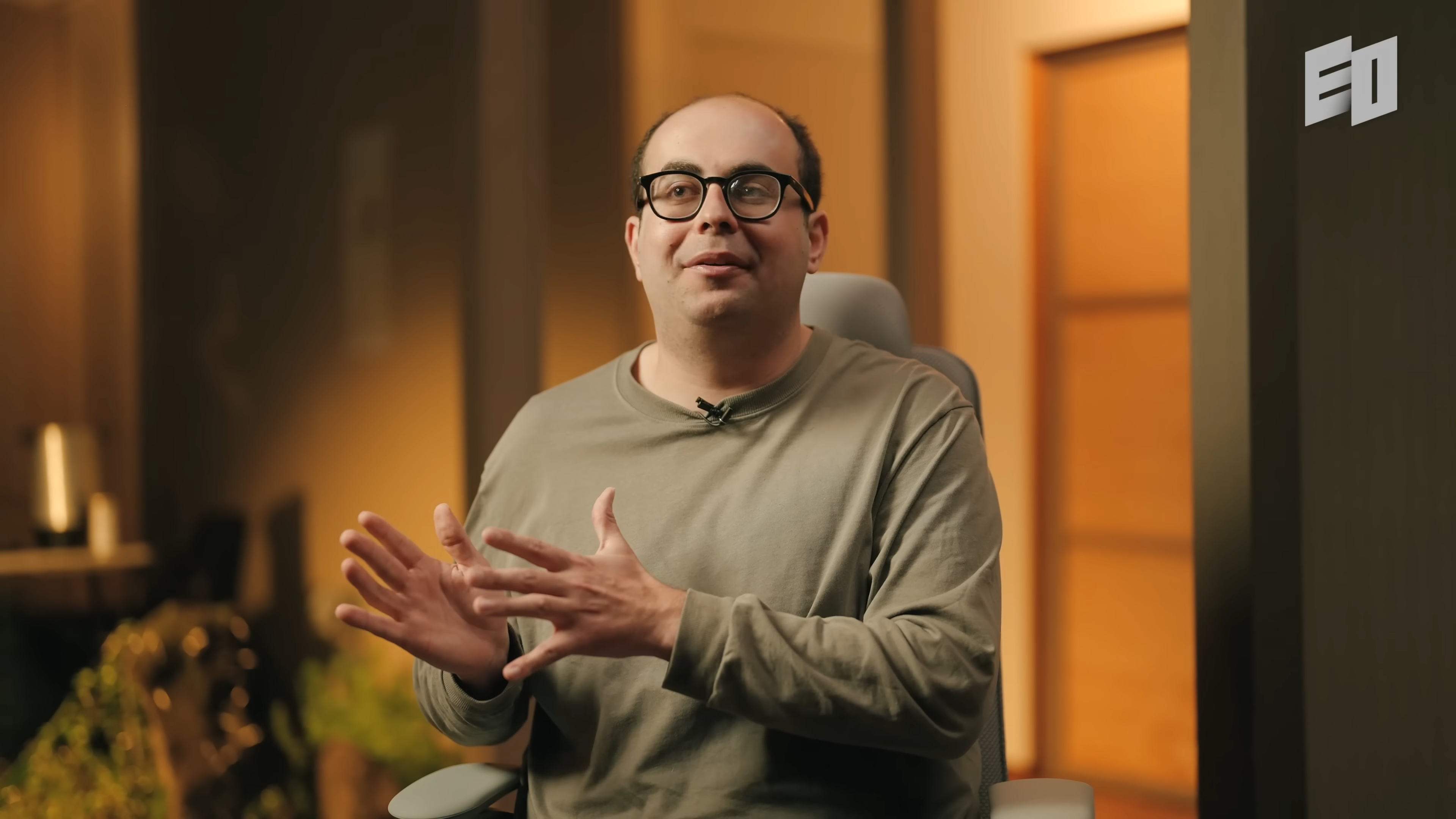
A lot of entrepreneurs measure their success by the number of team members they have. You see these companies at the series B and series C stage with 300 employees, and it only gets bigger. The way they justify their success is, look how many people have joined the team. I think that's completely the wrong way to look at it. The most important thing is growing the user base, growing the revenue, growing the profit, and staying as lean a team as possible while doing that. We're valued at $230 million, and we're only seven full-time employees, so every employee is worth more than $23 million in valuation.
With consumer companies, the input and output don't relate. With enterprise businesses, where you're selling to big companies, you can always scale up the revenue because you hire salespeople, customer support people, and so on. With consumer, it's really about building the best product possible. WhatsApp, the messaging app, only had about 20 people when they sold. Similarly with Instagram and many others. With consumer, it's about hitting the cultural zeitgeist and building the best product.
My biggest principle is making sure people are mission driven. In Silicon Valley we say there's missionaries and mercenaries. Mercenaries just want to do it for the money, and missionaries want to do it for the mission. At DoNotPay, our mission is to help people fight back.
When I'm hiring, I like people who are browsing Reddit at 2am looking for ways to save money, and I think about how they can scale themselves to build products. You can tell with someone if they really have a passion for something. I ask every DoNotPay candidate what DoNotPay product they would want to build, what we haven't built that they would want to build. The best candidates come up with really unique answers because they're passionate about the problem, and you can tell.
We embrace the DoNotPay lifestyle. What does that mean? We are very frugal with our own company expenses. Most companies and startups have corporate credit cards where employees have a card they can charge to the company. We don't have that. We love to save money because that's our mission, and we embrace that internally with our own expenses too.