Nov 03, 2024
How I built $2B AI Translation Startup
Interview with Jarek Kutylowski, Founder of DeepL
Founder Focused


💡
At a Glance
- Who: Jarek Kutylowski is the founder and CEO of DeepL. Born in Poland, he moved to Germany as a child without knowing the language, eventually earning a PhD in theoretical computer science before starting his tech career.
- What: DeepL builds specialized neural network translation software that eliminates international communication barriers for consumer and enterprise users.
- Traction: DeepL is valued at $2 billion, with hundreds of millions of monthly users, over 100,000 enterprise customers, and profitable operations since 2018.
Jarek Kutylowski grew up in Poland and moved to Germany as a child, where walking into a new classroom unable to spell his name in German taught him the raw power of language barriers. After earning a PhD in theoretical computer science, he realized that European businesses lose massive market opportunities when they fail to communicate with clients in local languages. Today, Kutylowski leads DeepL, a $2 billion AI translation company serving hundreds of millions of monthly users and over 100,000 corporate accounts. In this interview, Kutylowski reveals why speed is the single biggest moat in competitive markets, how product-led growth allowed DeepL to hit profitability without a massive sales force, and why specialized AI models outperform massive generalist LLMs in the enterprise.
Key Takeaways
A Free Product Removed Friction and Validated Demand
DeepL tested its early translation technology with a basic free service requiring no login. Usage numbers showed whether people wanted the product before the company invested in monetization, making low-friction access a practical way to validate both technology and market opportunity.
Use Quantitative Signals Before Qualitative Customer Research
Kutylowski says DeepL initially relied heavily on quantitative data, especially while the product had a consumer-like motion, then became more customer-focused as it shifted toward enterprise. Early hypotheses mattered, but usage revealed demand before interviews could fully explain it.
Speed Created DeepL’s First-Mover Advantage
DeepL reached the market with a neural-network translation solution before large technology companies had comparable offerings. Kutylowski argues that speed helped attract early adopters and word of mouth, while fast growth also required people to understand why constant organizational change was necessary.
Choose Specialized AI for Consistent Business Quality
General models can handle many tasks, but Kutylowski says specialized systems can deliver stable accuracy across a wide range of business inputs. Companies should begin with the operational problem, then compare general and specialized options alongside product integration and user experience.
Watch the full interview now on EO's YouTube channel! Below is the complete transcription of the interview. Minor edits have been made for clarity and readability.
Introducing Jarek Kutylowski, founder of DeepL
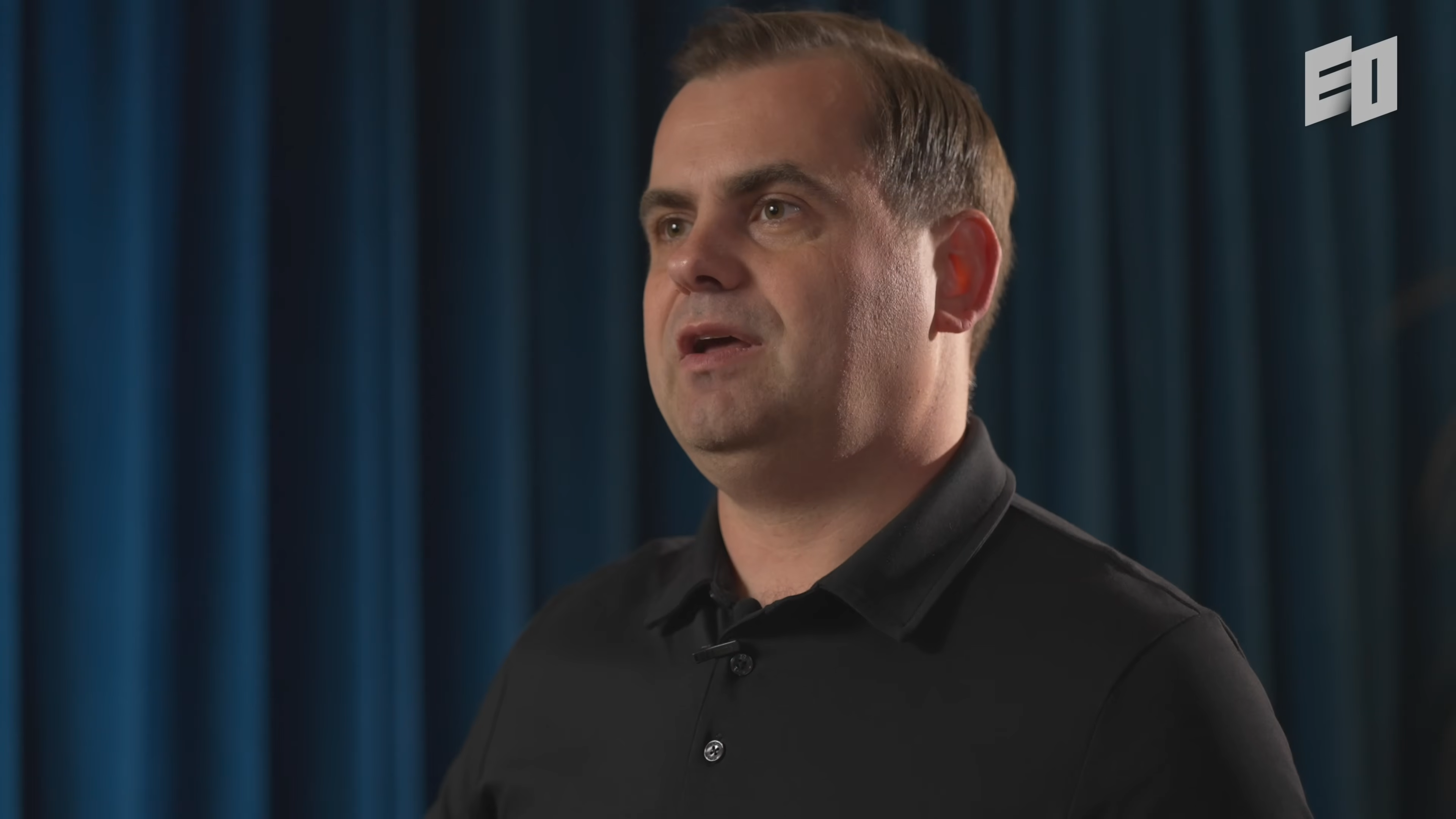
Hi, I'm Jarek Kutylowski, founder and CEO of DeepL, a company that builds AI to break down language barriers by making translation available to everyone. DeepL grew out of a huge free service that anyone in the world can use, and that service is used by hundreds of millions of people every month. Out of that, we've built a base of over 100,000 companies working with DeepL, and a few months ago we completed a fundraising round that valued the company at $2 billion.
An Immigrant Who Couldn't Speak German

I grew up in Poland, which at the time was transitioning from a communist system toward a post-communist one. I got access to technology a little later than people in the rest of the world, and I was amazed by how much you could achieve with it, especially with software. Then I moved to Germany with my family and was thrown into school very quickly. I didn't speak a word of German, which made me struggle quite a bit. I still remember my first day in class, I walked in and couldn't even really spell my name. I had to learn how to survive in a more complicated environment. I was lucky to learn German very quickly, and that made me feel welcome and part of the community. I learned that language and communication are super important in this world. If you want to belong to a community, you need to be able to understand each other.
From those early days of being fascinated by technology, that was the path I chose, in school and later. I majored in computer science and went on to do a PhD in very theoretical computer science. I enjoyed having a solid theoretical foundation, and I think a PhD builds a lot of depth, because you're thrown into a field of research that hasn't been discovered yet. You have to uncover something, and go through that process pretty much on your own. For me, and for the peers I saw, it built a lot of resilience for the rest of life.
After my academic years, I spent a little time working for a larger corporation that didn't fully suit me. At some point I realized I wanted to build something, to be part of something bigger. Founding a company and embarking on that deeper journey was what fascinated me.
Bridging Language Barriers with AI
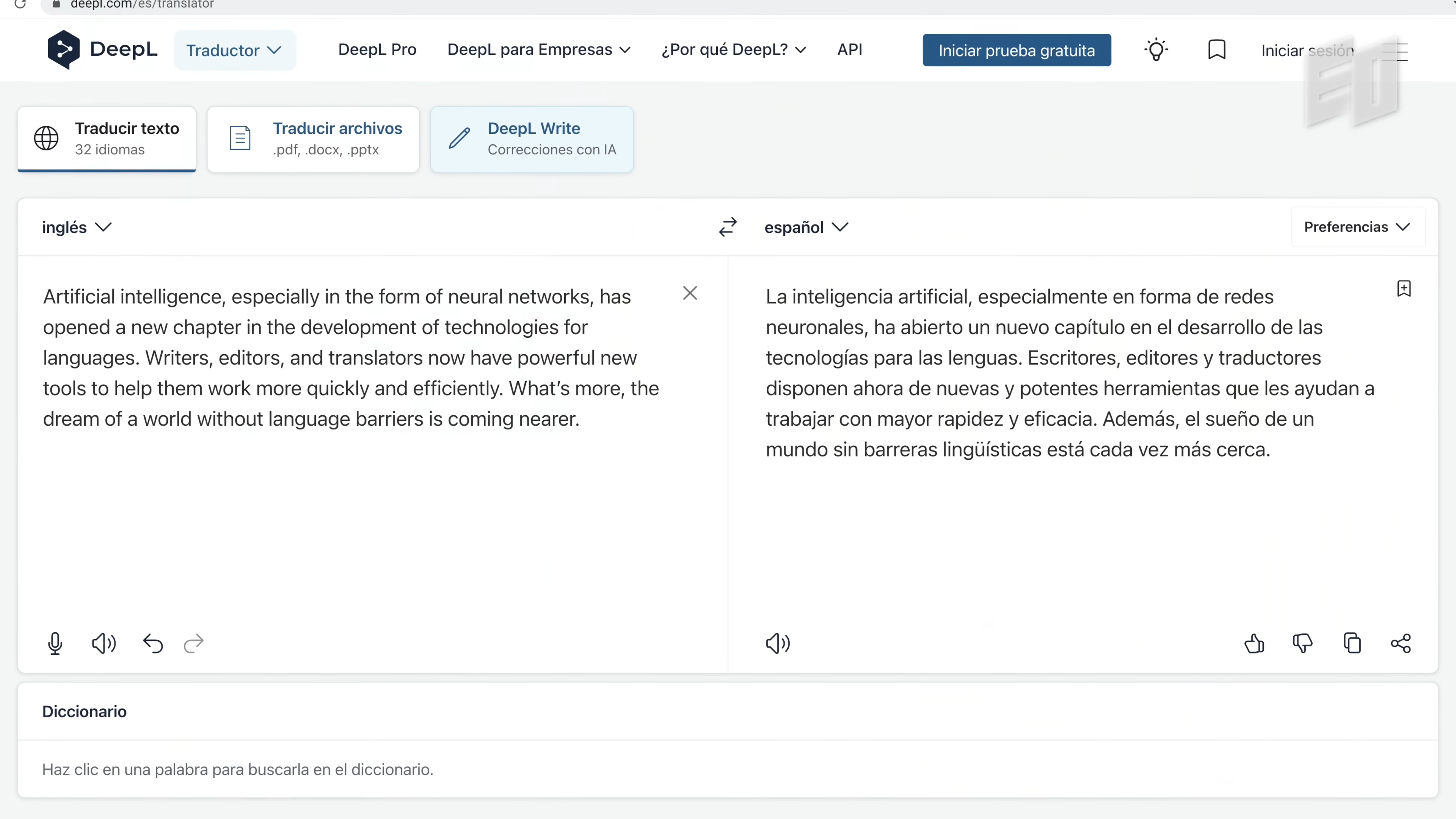
Around 2016 and 2017 there was a great moment when it became pretty clear, at least in academia, that a lot could be done with neural networks and AI. That was an excellent point in time to start playing with the technology and see how it could be applied to problems we might be thinking about.
I had this background in language. I had lived in two countries, so I knew what it means to speak different languages, and how big a problem it is from a European perspective. Every time you travel to another country, and more importantly do business with another country, there is a language barrier. Companies in Germany sell to French customers, to Italian customers, to Polish customers. You can try doing that by speaking English all the time, but in the end, every person wants to be addressed in their local language,they understand what you're offering much better. For companies, establishing those new markets is hard. You have to hire people in that region, or find people in your own country who speak the language, and that can mean doubling your sales headcount or a lot of customer service jobs. The translation industry is said to be worth about $60 billion. If translation becomes more efficient and productive, companies build better products and succeed in those markets.
The early days were pretty specific for DeepL. We knew translation was a big problem. What we didn't know was whether the technology we could build would be good enough to solve it and be better than the competition. That was the unknown. We also didn't know how to embed the technology in real-life applications and go fully to market, so we took the path of least resistance.
A Free Product That Validated Demand
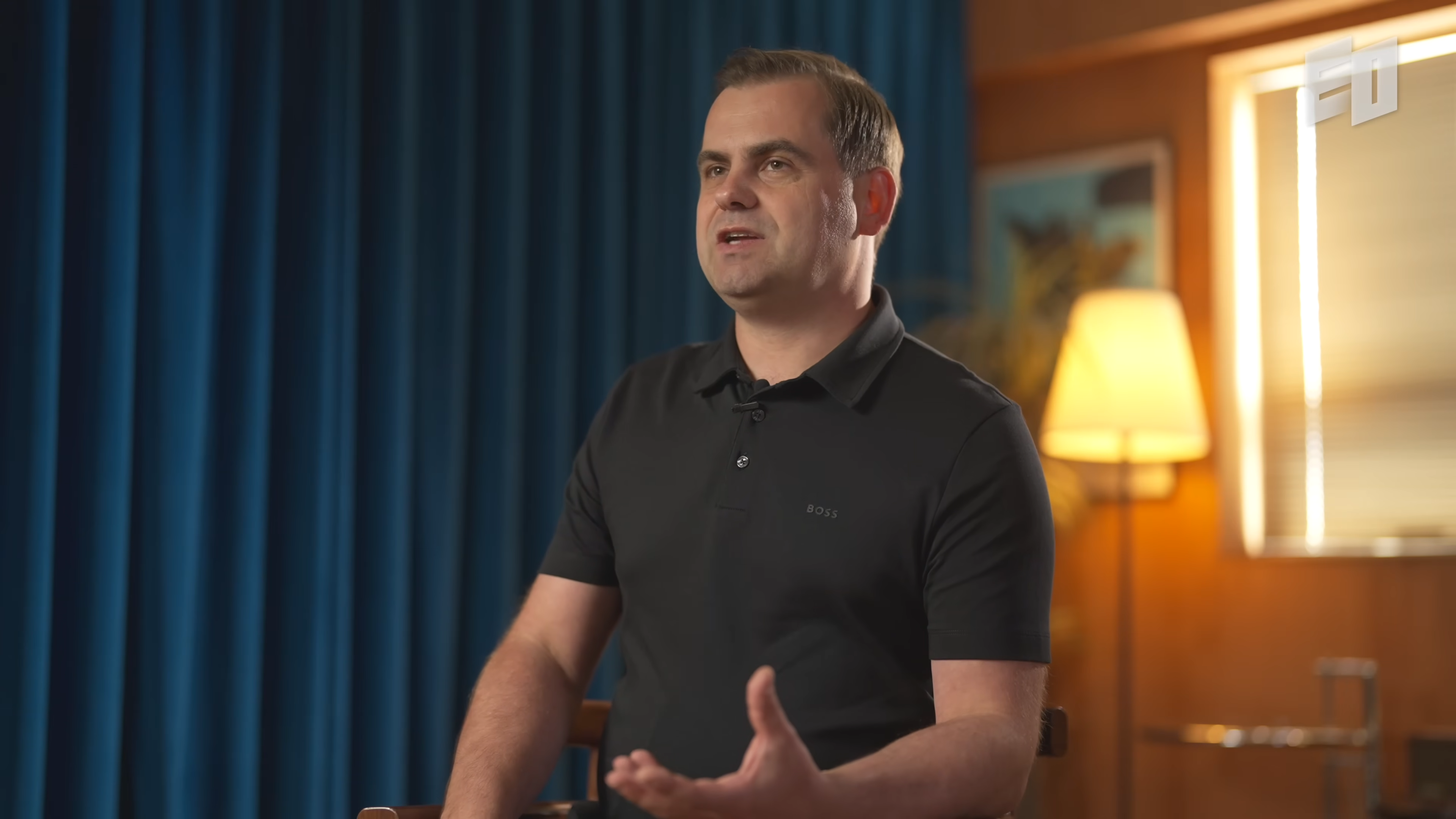
We built the technology and put out a service that was super basic. Bare-bones access to the technology itself, but simple to start using, with as few barriers as possible. No login, nothing like that. Just go there and start using the product. For us that was a great way to validate whether the technology and the early product idea made sense, and whether there was a market opportunity. And we saw very clear signals, purely from the usage numbers, that this was what people wanted and needed.
The next challenge was whether people would also be willing to pay, whether there was a monetization pattern. We started that in 2018, introducing new functionality into the product, putting some of it behind paywalls, and seeing whether we could convert free users into customers.
A lot of that, at the very beginning, was based on gut feeling. At the start, the hypotheses have to come from the founding team. But in a slightly more consumer-ish market, at the beginning you have to rely on quantitative data rather than qualitative findings. The customer focus came slightly later, when we shifted the product toward a B2B, enterprise persona as the buyer.
Speed Matters
The biggest challenge as a first-time CEO is making sure you're making decisions and pushing the company at the speed you could, because you don't know what the next step is. You rely on a lot of advice about how the company will look in the future, you figure things out from where you are and extrapolate to the next point. Doing that is incredibly slow. If I were to found another company and do it a second time, I think I could be much, much faster. Other than that, I don't think we made too many big mistakes as a company. Speeding it all up would just make such a big difference.
If you're a startup, especially in a competitive field like ours, where big tech has its own solutions, you always have to grow, and grow fast. That's essential for the company, even for its motivational health. It needs to grow fast all the time, and that made us scale the business in employees, in customers, in the number of products we offered.
In 2018 the business was already operating profitably. That's a function of how cost-effective the growth motion is when you don't have to hire a lot of salespeople. Customers come to you because they're convinced by the product. We've been lucky in that way as a company, and the biggest lesson, once again, is speed. We were the first company to market with a neural-network translation solution, which blew everybody else away and made sure we gathered our first user base, the early adopters who started spreading the word. If we had come out half a year later, a year later, I don't know if that would have worked. It's all about speed. You have to move fast, and figure out the next challenge, approach it, solve it, move on.
If you decide to grow your company very fast, you need to be aware of the change that comes with it. You have to understand what is happening and help everyone in the company be on that change journey. The biggest problem with moving fast in a high-growth company is that everybody has to go through a lot of change, because nothing is going to be the same this year as it was last year. Change is hard for us, our brains don't like going through it. Making sure everybody knows why we have to go through these changes, why it's important for the company, and that everybody is on board is incredibly important when you're building an organization. Context and understanding of the why help a lot, for the organization and for yourself.
Choosing Between General and Specialized AI

There are pretty much two types of AI models on the market right now. There are the very general generative models that can do almost anything, and the specialized models that focus on one particular solution at the best possible quality.
The big generalized models have surprised us with their ability to do a wide variety of tasks. What needs to be understood is that some of them don't perform that well on particular use cases, especially in business. In translation, you need stable quality and accuracy not on one or two emails but across a wide range of inputs, and this is where specialized models shine. They're built for a very particular use case and deliver that quality very consistently, while being more cost-effective and quicker to run, which matters a lot in some use cases.
For businesses, it's always good to look at what business problem you're trying to solve, what the general solutions are versus the specialized ones, and what advantages each brings. And the technology itself doesn't yet fully solve the problem. You also need the product, the integration, the user experience, and the UI to make it meaningfully impact your workforce's productivity. Specialized solutions usually come with a full suite that solves that holistically.
If you're thinking about bringing AI into your business, start with the basics. What problem do you want to solve? What is at the core of your company's performance, what is important, and what is working slowly? Starting from that business problem, you can look for the potential AI solutions. I'm not an advocate of finding applications for AI as a technology. I'm an advocate of starting with the problem and then looking for the AI solution that solves it well, because that way you optimize what is really worth optimizing in your business, rather than trying to apply AI to pretty much everything.