At a Glance
- Who: Alex Bouaziz (CEO) and Shuo Wang (CRO), co-founders of Deel. Bouaziz is a Paris-born serial entrepreneur who dropped out of his PhD in 2015 to start building companies. Wang is a Chinese-born MIT-trained mechanical engineer who previously founded and sold an air purifier company to iRobot.
- What: Deel helps companies hire and pay employees and contractors globally, handling compliance, payroll, and local labor laws across 90 plus countries through a single platform.
- Traction: Deel raised over $650 million and grew from $1 million to $100 million in ARR within 20 months. At the time of this interview, the company had about 1,300 employees across 80 plus countries.
In this interview, Alex Bouaziz and Shuo Wang reveal how they pivoted from selling to freelancers to targeting companies directly, how a pandemic-driven aha moment accelerated their Series A with Andreessen, and how Deel became the fastest growing SaaS company in history by reaching $100 million ARR in just 20 months.
Key Takeaways
Don't try to convince people to buy what they don't want
Bouaziz spent a year and a half at his first company trying to convince people to use a product no one wanted. With Deel, the co-founders flipped the approach entirely, building only what customers explicitly asked for and spending extensive time with them to understand their needs.
The freelancer never has the upper hand in payment dynamics
When Deel first launched, Bouaziz and Wang tried selling to freelancers directly, messaging hundreds per day. They quickly learned that independent contractors rarely have leverage to change payment processes, leading them to pivot to selling directly to the companies doing the hiring.
How did Deel grow from $1 million to $100 million ARR in 20 months?
Wang attributes the record-breaking growth to a combination of pandemic-driven demand and early infrastructure decisions. Deel set up small sales teams across EMEA, APAC, Latin America, and North America from day one, so when product-market fit arrived in 2020, the company was ready to scale globally.
Remote hiring outweighs the 30-mile radius every time
Bouaziz argues that limiting hiring to a geographic radius around an office sacrifices access to the best global talent. Deel itself hired over 1,200 people in less than a year and raised every funding round remotely, proving that distributed teams can operate at high velocity.
Deel speed means doing it today, not tomorrow
Bouaziz describes Deel's core operating principle as a bias toward immediate action. The concept is contagious within the team: when people see colleagues bringing their best work and moving fast, it creates an environment where everyone wants to match that energy.
Below is the complete transcription of the interview. Minor edits have been made for clarity and readability.
Introducing Alex and Shuo, Co-founders of Deel
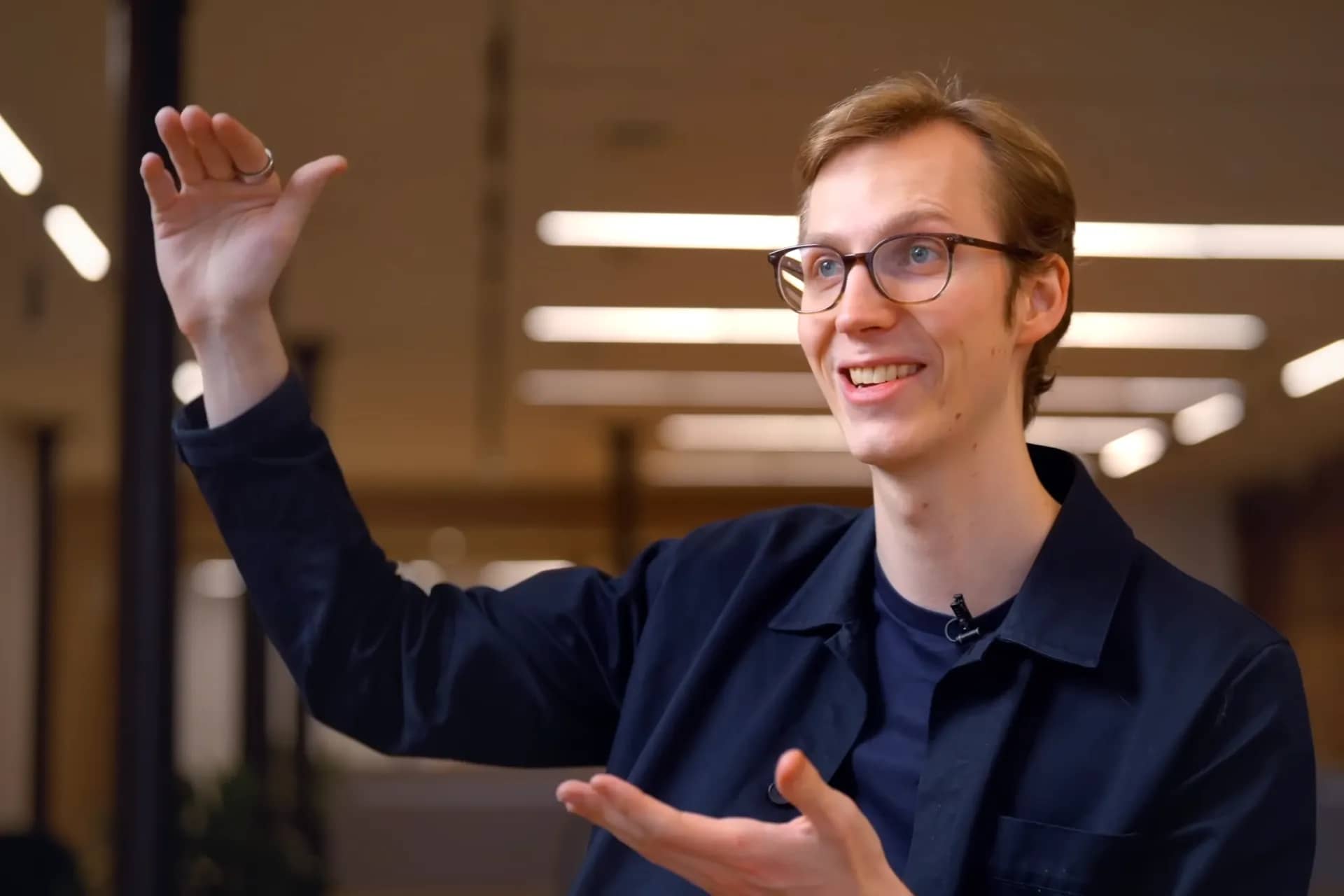
Alex Bouaziz (CEO and co-founder of Deel): I'm Alex Bouaziz. I'm the CEO and co-founder of Deel. We help companies go global and hire around the world. If you want to work with someone in a country where you don't have the infrastructure to do so, whether it's hiring them across the different work ways of hiring people, whether it's contractors, employees, opening your own entity, we do all of the back office for you so you can give them a great experience and start going global.
So we started Deel in 2019. Through the lifetime of the company, we raised over $650 million. We are making over $100 million plus in revenue in ARR, and we have about 1,300 people in 80 plus countries working at Deel.
Two international entrepreneurs
Alex: Throughout my life, I have lived in different countries. I was born and raised in Paris. I moved to Israel for my bachelor's. I lived in the US for my master's and in the UK for my PhD. When I was a kid, my dream was always to be the CEO of Nintendo. So I don't think that one is going to happen, at least for now. I just wanted to build something that made people happy and that ensured that they could do whatever is best for them.
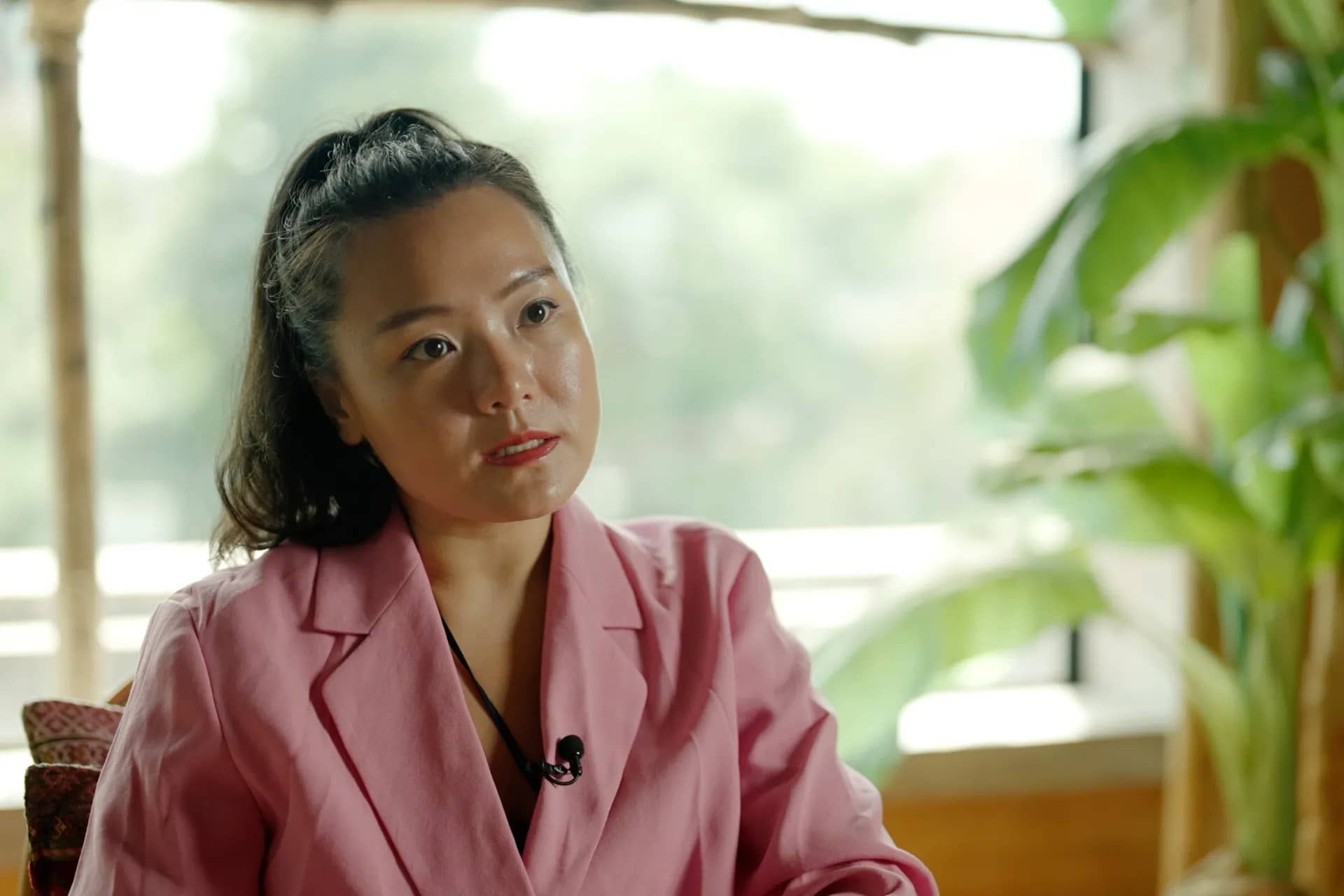
Shuo Wang (co-founder and CRO of Deel): Oh, Alex is extremely smart. He went to college at the age of 16, graduated at the age of 19, went to MIT at the age of 20, graduated from MIT at the age of 21. We met at school at MIT. There was this very popular math quiz, and I just handed it to Alex and said, "Hey, Alex, do this, check it out." He did it faster than me. I was like, "Alex is actually smarter."
I grew up in China with my grandparents, from my father's side, because my mom was in the States. My mom was an entrepreneur as well. She built her own business. When she first moved to the States, she had nothing, and no English. She built her own business, which imports scooters, motorcycles, golf carts from China, and then that wholesale for the entire America. So she was a very successful businesswoman.
I moved to the States at the age of 16. The first year was tough. I couldn't speak English. I took a year off to pick up my language and then study English. I studied very, very hard. During the first year at MIT, the school buses, I was riding my bicycle, but the shadow just knocked me over. It ran over my arm. This arm. I almost lost my arm. But I was thinking, what if I really lost it? This thing helped me to choose my major as a mechanical engineer for people like me, so that they can still use their robotic arm.
Alex: I always wanted to be a dropout. It's a nice title for entrepreneurs. When I dropped out of my PhD in 2015 and started building companies, at the beginning I thought videos was a great way to help people be happy and helping them create videos together. That was my first company. It was pretty tough because I definitely didn't get to product-market fit.
I kind of realized I'm not that good at consumer. The whole idea of finding a growth hacking way to get a lot of people and to get to critical mass, that's not really my thing. I think the most important thing is when you work for a company, you're never going to get it right the first time. You need to iterate a lot.
If you add one more feature, if you add one more feature, things might actually work out. And this is actually the hard part of being a product founder or an entrepreneur. You start thinking that people just don't understand just yet. But if you do that one more thing, they might. It's a weird trap because you end up losing a lot of time instead of just realizing and iterating.
What I understood from that is working a year and a half on a product that no one really used. It was a waste of time, but a good experience. But that's something that we changed completely with every product that we built after. We changed from trying to convince people to buy something they didn't want, to use something they didn't want, into just building something that we know they want because they're telling us and spending a lot of our time with our customers. That's something that I definitely got wrong the first time, but I think we fixed it a little bit the second time.
Shuo: At that time, I founded my first company, a consumer electronics company. The company name is Aries. We designed, built, and manufactured air purifiers in Beijing. We did exit it, so we sold it to iRobot later on. In that sense, it is a success. And I learned a lot from that startup. I understood more about how to build a strategy, how to build a business around the market, how to generate sales, and then build channels and distributions with other teams and other people. Those are the things that helped me to understand how to do sales for Deel today.
Alex: I'm pretty international, as you can hear. I met a lot of amazing people. And what I realized is that where you're from really does matter in terms of the opportunities you might get. I had amazing people, amazing friends of mine when I was studying in the US that went back to their home country while others went to the Bay Area. And the difference in salary was gigantic. Pretty fast I realized that I want to help these people get to work for the best companies in the world.
So what we do at Deel is very simple. We help companies go global and hire around the world. If you want to work with someone in a country where you don't have the infrastructure to do so, whether it's hiring them across the different work ways of hiring people, whether it's contractors, employees, opening your own entity, we do all of the back office for you so you can give them a great experience and start going global.
Shuo: After Aries, I went to San Francisco, spent quite some time there and then chatted with my good friend. His name is Fred. He was working at LinkedIn at that time, and he told me that he was able to work from home three days per week instead of five days in the office. I thought, if big companies like LinkedIn, like Google are supporting that work-from-home model, that may be the big trend.
Maybe more companies, smaller companies, will want to support that. And also the technology is very advanced because we have Slack, we have Zoom, we have Google Meet. People are just using those tools to work remotely. I think this is the big trend. And then a company will hire remotely outside of their own state, country, or city. And I think if this is the trend, the biggest problem that we can solve is payments and compliance and the local labor laws.
Alex: For very different reasons, we saw the same problems. For her, she was in China, and renminbi is a complex currency, and hiring people outside of China was complex for her. For me, it was more about my friends that I knew were amazing but just didn't have opportunities. So there were a lot of similarities into the problem, but from different angles, which really made it very interesting from a complexity perspective. So that's when we started, and eventually hired amazing people. I mean, I could go on because now we're 1,300 people, but hired a lot of amazing people around the world to help us build.
How Deel raised $629 million without a pitch deck
Deel is Gusto for international contractors. Today, 20 million international contractors get paid over $30 billion a year working for US companies. And the process of onboarding and paying those contractors is terrible.
You need a spreadsheet for their time, a spreadsheet for their info, tons of different payment methods, and so many tax and compliance documents. At Deel, we make it simple. We manage contracts, payments, taxes, all in one single interface, which means no more paperwork. And we do this globally.Alex BouazizCEO and co-founder of Deel
Shuo: At the beginning, we even built our crypto payments product because crypto at that time was very, very popular. Our first product was a performance-based payment system. If you finish a project, if you finish a milestone, you will get paid automatically. But the product is super complicated. We were trying to ask founders to use us, but it is so hard. We didn't acquire any users within the first two weeks of Y Combinator.
We thought, there is a problem. Everyone loves the idea, but the product itself is just not easy, not very user-friendly to use. And I think the very first product that we started with was PayPal payouts.
Alex: It's a funny story because when we started Deel, we tried to go first to the end user. We went to see freelancers and said, "This is a product that's going to help you get paid and you're going to have more control, and it's going to be more compliant." Shuo, my co-founder, and I used to sit down and message hundreds of people per day and try to convince those freelancers to ask their clients to pay them.
And then very quickly, we realized in the power dynamics, a freelancer or a person working as an independent contractor, which was our focus at the time, never really has the upper hand. They're just happy usually to even get paid. So the go-to-market was completely wrong.
So we switched and we started focusing on the customers themselves, the clients, and telling them, "We want to give you a great solution so that you can start paying your team globally and give them a great experience." And that worked out a little better because when you used to get one customer, you'd have all of their team on the platform as well.
Principles and Mission
Alex: At the very beginning, it's all about market validation and product validation. You don't need 100,000 customers. You need the first 100 that are going to really love your product and give you the right customer feedback so you can iterate for them.
Shuo: The purpose of a SaaS company is to make another company efficient, so that they do not need to do a lot of things manually. They can leverage this product to build an automated system. I think if the product cannot build an automated system, cannot provide a really good client experience, and in the end cannot make their team become productive or save their efficiency, I think this is a failure of the product. The client experience and product-market fit are the key to B2B business, so they can grow together. Both companies can grow together.
I think for me, the aha moment is our Series A investor, Andreessen, reached out to us and said they want to invest in us. That was at the beginning of the pandemic. And I just thought, this is definitely a big trend.
Alex: Are people hiring globally? For sure. Were they going to hire globally? For sure. A lot of much larger companies were left with no solution. I remember a Fortune 1000 company coming to us very early on and telling me, "My director of engineering is relocating to Croatia to be with his family during COVID. What am I going to do?" And they had no solution because they didn't have an entity in Croatia, but they wanted to keep employing them and they wanted to be compliant.
So what this enabled us is to tap into much larger accounts much earlier on because they had no solution other than ours. So timing to market was really great. We started realizing, we've got enough inbound that someone else could come and start selling. We understand the sales process enough for someone else to do it, which is very important. As an entrepreneur, if you can't sell, no one else can sell. When you get to a point where you think, "I can start scaling my sales cycle," that's the right point to start hiring.
Shuo: As a chief revenue officer, I care a lot about numbers. I care a lot about the revenue targets. So I think the biggest achievement is we are the fastest growing SaaS company in history. We grew from $1 million to $100 million within 20 months. We were at $50 million in revenue at the end of last year. And from December 2021 to March 2022, we doubled our revenue from $50 million to $100 million. So that is definitely the exponential growth period.
Alex: Why do you think you need offices? I have never worked in an office, so I don't know either. If you look at Deel, we raised every single one of our funding rounds remotely. I was joking around, if your employee works on the 10th floor and the other one works on floor one, they're working remotely from one another. They don't even know each other and probably will never talk to each other. So what's the difference, really?
If I look at the pros and cons, of course, if you could put all 1,300 people in this room with me today, I'd be the happiest person. I love my team. I love spending time with them. But the pros versus cons of being able to hire the best talent versus being forced into hiring in a 30-mile radius, it's outweighed like crazy. The reason why we've been able to get to hiring over 1,200 plus people in less than a year is because we're not limiting ourselves to one simple radius of everybody has to come to the office. I think talent and opportunities and the hunger that people globally have to get to work for great companies definitely outweighs being in an office.
Shuo: Since day one, we're not only a US-focused company. At the very beginning, we set up small sales teams in many different regions. So we have coverage in EMEA, APAC, Latin America, and North America. Even though it was very small, just one person to start with, it helped us to build the infrastructure, build the fundamentals. And when we had this product-market fit in 2020, it was very easy for us to scale to a good magnitude.
Alex: We have something called Deel principles. Our principles are very focused on, we're always working on that, it's always a work in progress. But it's basically, what does it mean to be at Deel? What do you represent toward our customers, towards other internal people? And each one of them really represents what matters to us as a company. My favorite one is Deel speed.
This idea of let's get stuff done and let's get them done fast and best for the customers with the most customer care. This has been the main driver, and we're actually known for that one as well. It's the concept of if there is something in front of you today, don't do it tomorrow, do it right now. We care about our customers and we get stuff done really fast. We do things today. We don't push them to tomorrow.
Usually a lot of people, a lot of hungry people that want to be successful, they want to do things right. They truly align to it. It's very contagious. When you have people that are working and really doing their best and bringing their best to work and contributing so much, then you want to do it too. You want to be like them. And that's the environment that I think this value has brought to them. If you combine trusting people and having a very strong data and KPI model, the output that people need to get in order for you to be happy with their work, then you're able to scale the company much faster.
Shuo: As a founder, I do a lot of sports. I tried boxing, I tried Muay Thai. I would love to learn Krav Maga. There are three things that we should value the most: physically active, emotionally stable, and mentally healthy. If we can do all three of those, we're in a very happy state. I do a lot of sports. And emotionally stable, that is very important for a founder when you come to communicate with other people because things happen.
There are a lot of random stuff happening every single day, and if you get mad every single time, and if you get upset for every single situation, you are done. It is very tiring. You need to be emotionally stable and calm down. And then, when things happen, you have that energy and you have the solution to solve.
Alex: No one is going to tell you that now is a good time. So you are the person who needs to tell yourself, "I want to try. I want to do it." And it's a mind trick that you're doing to yourself. If you think something is going to happen in your life that's going to change it, whenever you think is the right time, whatever the characteristics that you have are, that's when you should do it. Then you always have things that tell you maybe later, maybe another time, or I'll wait for this or that timeline to start. Spend a couple of hours a day on your idea, see what happens, and maybe you will start working on it and love it even more.
Silicon Valley is more than a place. It's a network, and it's people. And the mindset in the Valley, as actually very similarly in Israel, is the mindset of people that think they can do it, think they can build, think very naively that if they just try really hard, they'll achieve something. And that mindset is very special. It's the mindset of who cares if you fail. Just try really hard, work on something you care about. Maybe you were not employed for a year or two, and you might not have gotten that, which is very tough when you don't have that. But if you have the opportunity to do it, take your chance. You only live once, so you might as well give it your all, and you have fun doing it.
Globalization is inevitable. The world is becoming, and hopefully will become, a smaller place. And we want to be the infrastructure to make this happen. We want to help hundreds of millions of people get to work for the best companies in the world. And we want to make that smooth. We want you to be able to think, actually to not have to think, where is that person when thinking about hiring them. And building the whole infrastructure is going to be the key of the world of tomorrow. That's how we think about it.
So I'm a little biased, but I think Deel can be a world-changing company. Our cycle is like today, we already cover a big scope: hiring people as contractors. We have 90 plus entities around the world where you can employ people where you don't have entities. And now we run global payroll across all different countries for our customers, immigration. So we're stacking up and we've got a lot more products coming.