Nov 17, 2023
From Zero to $500 Million: The GlossGenius Story
Interview with Danielle Cohen-Shohet, Founder of GlossGenius
Founder Focused

💡
At a Glance
- Who: Danielle Cohen-Shohet is the Founder and CEO of GlossGenius. A former Goldman Sachs analyst and college makeup artist, she self-taught software design and full-stack development to build the initial GlossGenius product.
- What: GlossGenius is an all-in-one business management, scheduling, CRM, marketing, and payments infrastructure platform built for beauty and wellness entrepreneurs.
- Traction: Valued at over $500 million, serving tens of thousands of business owners while processing billions of dollars in annual transaction volume.
Danielle Cohen-Shohet left investment banking to build technology for small business owners after observing her father's entrepreneurial struggles first hand. By coding the initial scheduling MVP herself, Cohen-Shohet created GlossGenius to consolidate back-office operations, client management, and payments for salon and spa owners. Today, GlossGenius holds a $500 million valuation, powering tens of thousands of beauty businesses and processing billions in transactions. Her path demonstrates the advantages of revenue-backed unit economics, early founder-led coding, and embedding customer obsession across every department.
Key Takeaways
A Small Business Childhood Shaped GlossGenius
Danielle Cohen-Shohet grew up watching her father run a small business, while also developing a personal interest in makeup and the beauty industry. Her later experience in finance gave her another lens on how businesses work before she made the leap into building GlossGenius.
Start With Scheduling To Unlock The Business
GlossGenius began with scheduling because Danielle saw time management as the thread connecting reporting, analytics, payments, and marketing. Starting there created a practical foundation for understanding how a beauty or wellness business operates and where additional tools could later connect.
Building The MVP Yourself Speeds Customer Learning
Danielle designed and built the first product across its user experience, APIs, front end, and back end. Doing the work herself made her the direct source of product information, helping her understand customer needs and make changes quickly while the company was still forming.
Unbiased Beta Users Reveal What To Prioritize
Danielle asked friendly business owners to introduce people she did not know, creating a beta group that had no obligation to praise the product. Five early users became a growing set of engaged testers whose feedback shaped priorities, product direction, and the first revenue launch.
Early Startups Need Builders Comfortable With Ambiguity
An early GlossGenius hire expected an IT department before the company had even set up customer support operations. Danielle learned that young startups need people willing to roll up their sleeves, move between problems, and build structure rather than wait for it.
Customer Success Is The Real Measure Of Scale
GlossGenius measures its progress through the businesses it empowers, not simply through capital raised. Danielle connects customer success with company success and sees the product's long-term opportunity in helping more small business owners improve their livelihoods and participate in entrepreneurship.
Watch the full interview now on EO's YouTube channel! Below is the complete transcription of the interview. Minor edits have been made for clarity and readability.
Introducing Danielle Cohen-Shohet, founder of GlossGenius
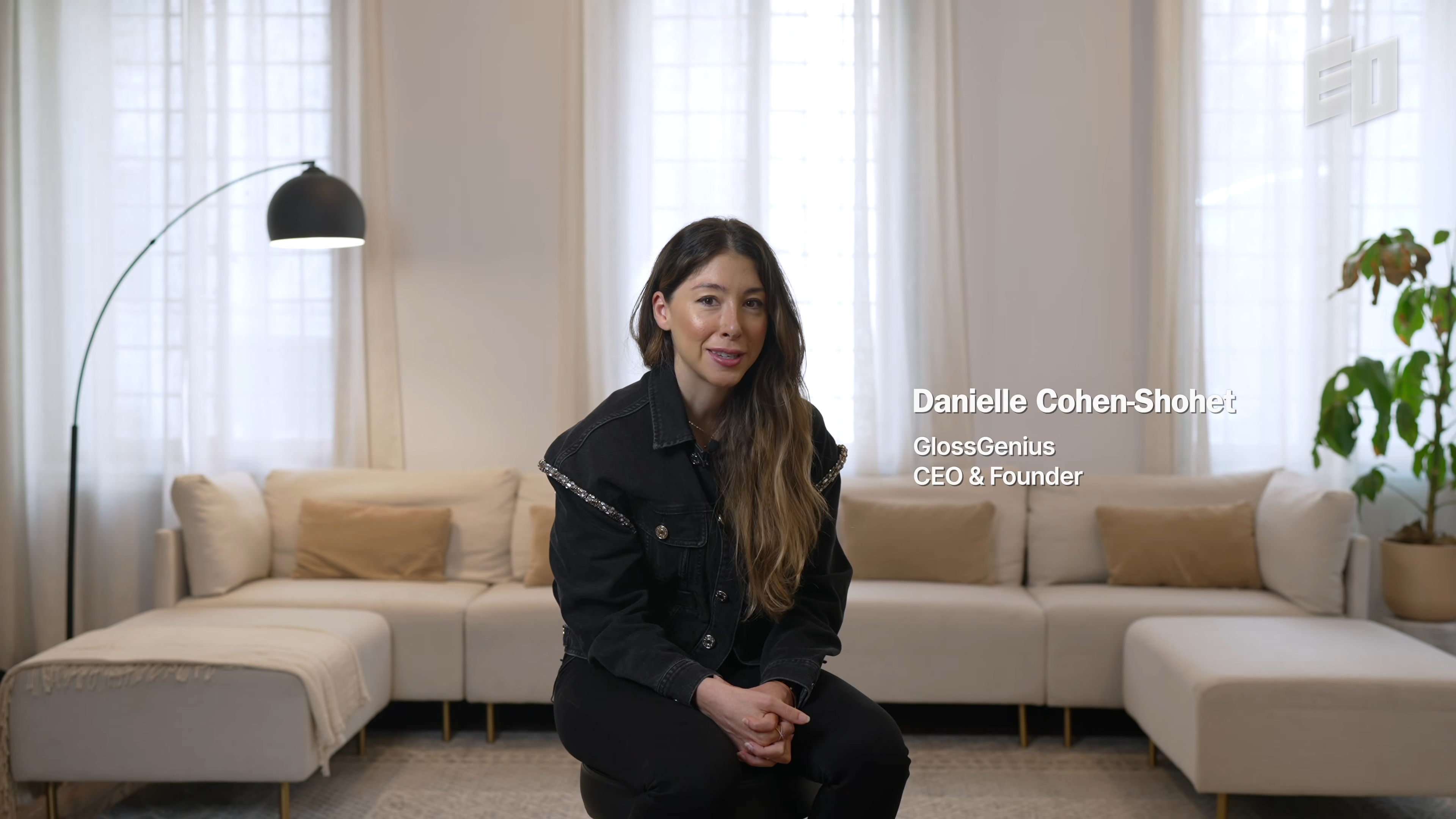
Hi, I'm Danielle Cohen-Shohet, the founder and CEO of GlossGenius. GlossGenius helps business owners in the beauty and wellness space manage critical parts of their back office and front office, whether that is scheduling, booking, client relationship management, payments, marketing, and more.
When you put all of that together, the problem we are actually solving is that it is really hard to succeed as a small business owner, given the many things in front of them on their plates every single day.
Childhood

I grew up in Florida. My father ran a small business, and I saw first hand the experience that he had starting and running a small business. I would consume a bunch of different business publications and magazines, and I was always really interested in entrepreneurship.
When I was in college, I loved doing makeup artistry. I got really interested in the beauty industry and learned so much about it. I had initially started my career at Goldman, and I was also interested in finance and how businesses work. There were always these things on my mind, especially given the interest I had in the beauty industry. It was basically about two years in that I got ready to make the leap, and I did.
Problems to Solve

If you look at a lot of businesses here, like the owner of a salon or a spa, they are first and foremost managing a lot of different things related to helping clients, improving the client experience, and getting them back in there. Most of the time these are very small operations trying to do the work of what we see in a lot of other, larger companies. That covers everything from managing the number of clients who come in at the top of the funnel. How are they getting new folks to experience the services that they offer?
Once they have gotten new folks booking and scheduling with them, how are they bringing in the best experience for them, and how are they enabling any one of these clients to interact with their business in seamless ways, wherever those clients are, whether online or offline? And now, once they are in the chair, how do they remember certain details about clients and improve the client experience when they are in the seat in person?
How do they manage all of the different operations related to staff, or scheduling, or resource management, like where clients sit and who helps them? So there is a big chunk of time management too that many of them are doing, and most of it is actually manual.
Building an MVP
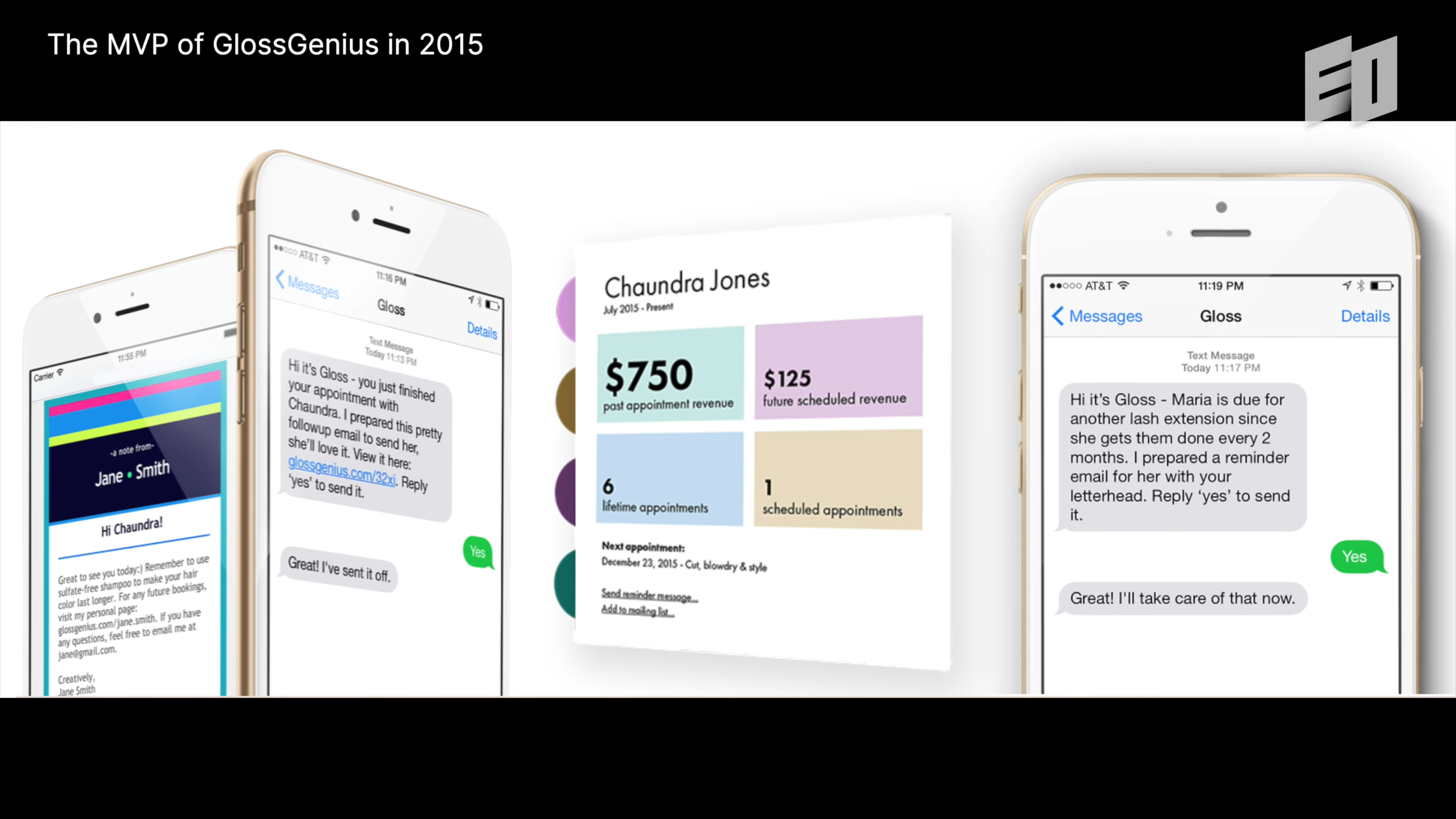
We started first with scheduling because we knew that everything revolved around scheduling. If you could understand someone's schedule and how they were managing their time, you could also help them manage other things, such as reporting and analytics around that, or how to connect that later to something like payments or marketing to bring clients back to land on their schedule. So that was the first place that I really focused on for the MVP.
I designed and built the MVP myself, the design for UX and UI, and the building and thinking about JSON APIs and a front end and a back end. I did that because I thought it was really useful for me to really understand the product that I was building. It also helped me build the best product, and build it quickly, because I would be the source of information for how this was built and then for what customers wanted.
If I could also be the person making changes on it really quickly, I thought that would unlock a whole bunch of opportunity to be moving really quickly, which is necessary. So there was a period of time where I did nothing but eat, sleep and code. That was what I really focused on for the MVP in terms of what it looked like. It is fun to think back to what it was and what it looked like and how much it has evolved, because we have come a far way.
Starting Go-to-Market
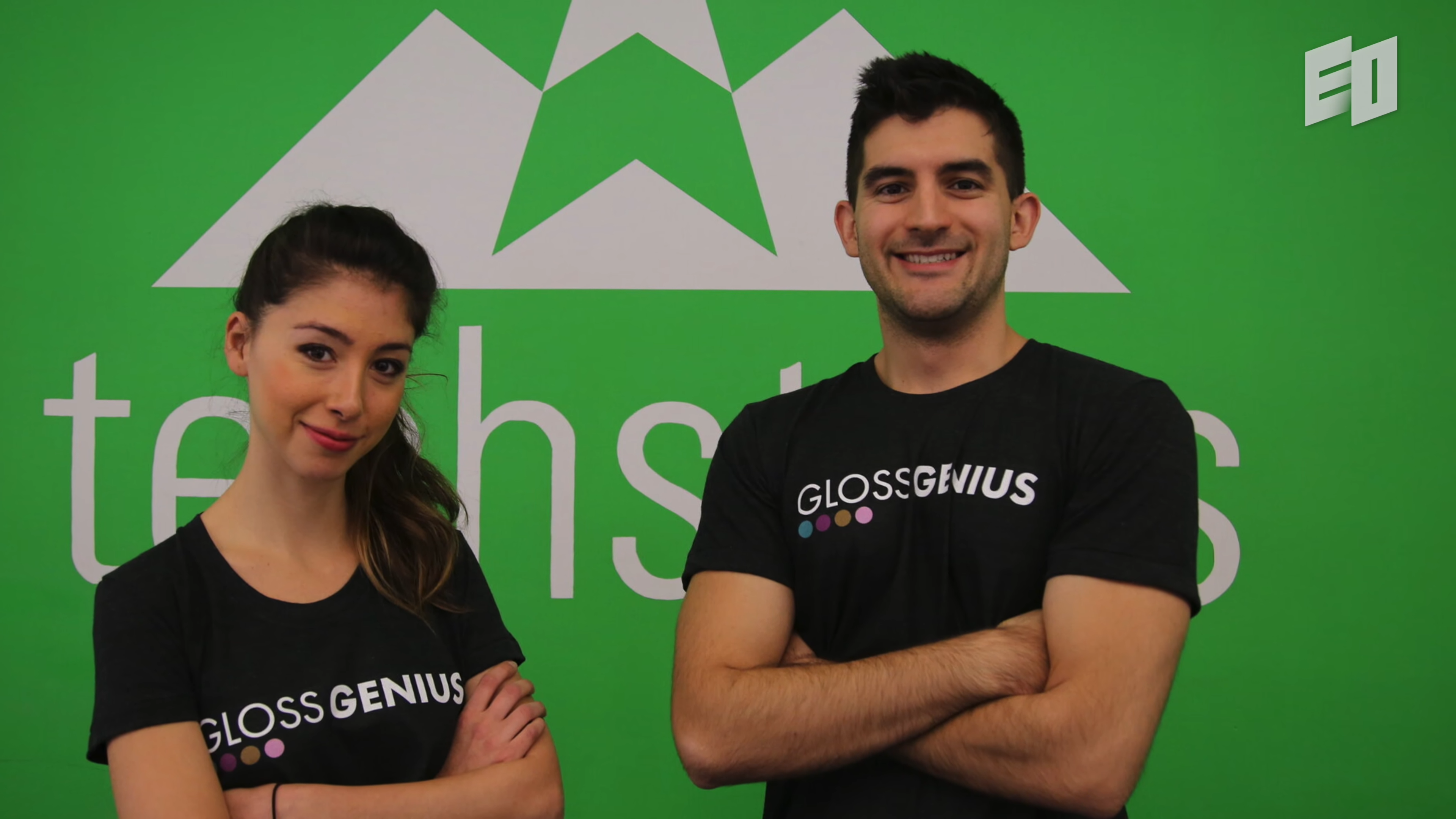
I had a few relationships with business owners who worked in the industry. I reached out to them and I said, I'm working on this thing. I thought that they would tell me something was great and use it because they had a relationship with me. So I had actually asked them to let me know of people they knew that I did not know, so that I could give this to them.
So I'd basically be getting unbiased feedback from people who had no obligation to tell me something was great. That was where I started, so it was really a small group of early users. All of the users who were in this beta, five of them at the time, would write back to the support email address and say they knew someone else who wanted to use it.
What ended up happening was that five customers, or users at the time because they were not paying customers, turned into seven, then ten, then 12. That got us an early group of really engaged early beta users who were very helpful for understanding how to build the product, which things to prioritize, and what to think about next. The beta went on for about a year, and then we released our first revenue generating product, which gave us the opportunity to turn many of those users into paying customers.
Challenges Had While Scaling the Business

There were so many challenges. There was so much to do and there was not enough time to do it all. I learned a lot about marketing, and I learned a lot about setting up systems and operations for the company. I built the finance department, and there were all these areas that were required to move the startup forward that I was learning for the first time operationally.
There was just so much to do and so little time, and all of it was important. I think a lot of people say you have to prioritize, but the realization was that all of it mattered. I could not just pick one thing to do versus another, specifically because there was not really a big team of folks that I had to support a lot of these different operations. We had raised a very tiny amount of capital just to start this first push and launch, so there really was not a lot of opportunity for us to start and hire right away and build out certain functions.
It was like drinking from a fire hose. On the hiring side, I remember there was a person we hired who just was not right for the business at the time and was not able to get their hands dirty. The business was so early that everything was all hands on deck and roll up your sleeves. This hire walked into the office one day and asked about the IT department getting them set up with a laptop, and we were still figuring out how to set up our customer experience ticketing desk, let alone the internal operations of the company. You just figure out that it was a mistake to have hired someone like that for the business at the time, given the stage the company was at.
Early stage startups should hire folks who can roll up their sleeves and get their hands dirty. Maybe those are folks who tend to be more the builder mentality type of person, versus someone who is used to a little bit more structure and process. There is so much ambiguity in the early days, and folks who generally like building can navigate ambiguity better than folks who would like a more structured environment. So when it comes to the very early days, make sure you are finding folks who are comfortable with a lot of change and with moving quickly from one place to another place, this problem to that problem, because the early days require a really different muscle for building that is foundational to a lot of the speed and progress you can make over time.
The business was sustainable. The focus was just going out and delighting customers and obsessing about what it would take to do that really well. Initially we were largely revenue financed, because it was very important for me to focus on a business that could stand on its own and have a model that had strong unit economics from the very beginning.
I always believed that institutional capital is something that can help you scale and do something that is already working faster, and I had seen a lot of different examples of companies out there that I believe took institutional capital too early, before they had even really figured out the model. What that helped them do was falsely scale something that was never working from the beginning. Our experience was the opposite one. We had something that was working from the beginning, and then we took institutional capital later, and that was the time to scale it. So that was pretty much the reason why I had waited to take some capital, which is that I just wanted to make sure that all the fundamentals were really solid and only then scale.
I think capital raising is an incredible milestone for any business, and I think it is a very enabling milestone for businesses too. But you can also use it to do so much more when you are thinking about the intentional use of it and using it for things that you want to scale that are already working. That is why I've always thought that capital raising is not necessarily equal to success, but a part of a very long journey that takes many years to put together. Ultimately, if we look at what investors really care about, it is whether your customers are happy, whether they keep coming back, and whether they keep spending more time with your product and investing more of their own dollars into other functionality. Your product has that success because it means that customers love the company you have and the product you are offering, and want to just keep using it and using more of it.
Customer Obsession Mindset
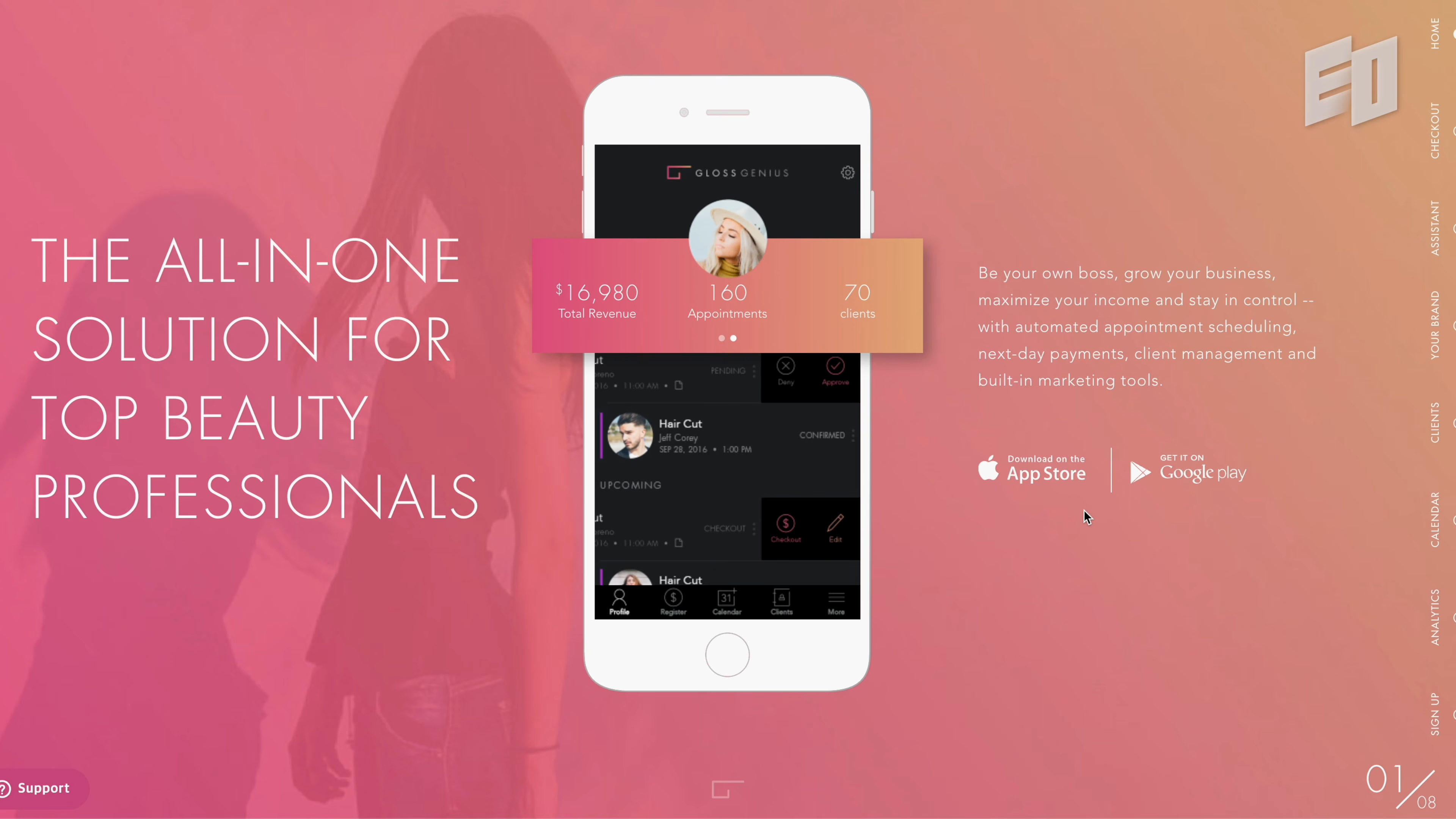
To date, we have grown to serve tens of thousands of businesses and process billions of dollars in activity for these business owners. When I put all of that together, the biggest achievement that we have accomplished so far is that we are impacting the lives of tens of thousands of people who rely on our business infrastructure every single day.
When I think about why we exist, it is because of our customers. Their success is our success. No matter how much capital we have, if we are not making them successful, we are just not going to succeed. There are five values at the company, and all of them really matter when it comes to customer obsession, but one in particular is really focused on this, and that value is to make others successful.
There is one number that we will always start with during all of our company town halls, and that is the number of businesses that we are empowering. We really care about this because it is a way for us to understand how we are doing on our mission of empowering entrepreneurship. When we look at the number of businesses that we get to power, it is a way for us to understand that we are having an impact on this big challenge of running a small business. It is really difficult, and ultimately we are enabling so much more entrepreneurship in the world around us. So that is a really important metric.
Other metrics that are really important also come down to some of the fundamentals that get back to us being able to reinvest more back into customers. There are a lot of things we do, like voice of the customer programs. We will interview customers during town halls, we will hold Q and A's and panels, and we will take transcripts from different customer calls and share them across the organization.
During onboarding, any person joining the team, no matter what role you are in, can sign up for customer interviews and for being a part of different teams that are maybe a little bit more closely on the front lines with customers. What this helps us do is drive a whole bunch of customer awareness and obsession across every part of the organization, not just the one that gets to talk to them every day. That is really important for creating a product that is helping customers and also imagining the future for them.
Advice for Startup Founders
If you want to build a company, probably the first piece of advice I would give is to just go get your hands dirty. I think that the idea is really 1% and execution is 99% of it. Learn about every area of your business. I see a lot of founders who have a strong suit in a certain area of the business, and that is amazing.
But when it comes time for them to unlock other areas and understand holistically what needs to happen across the business, the more you know about other parts of the business, the easier it will be for you to hire wonderful people who can help you scale them, because you will know what good looks like. You will develop this muscle of understanding the business and how it operates. That will become so intuitive to you over time and will be like a superpower. So I would say understand how other parts of the business operate, and do not be afraid to do that.
The second piece of advice is to understand what customers love about your product, but more importantly, to understand what they do not love about your product. I see a lot of founders who want to celebrate this amazing part of their product and how much customers love it, and it is even exciting for us to do that too when we release something and customers love it. It is so exciting.
But what I think is actually more useful is how you lean in to understanding the things that customers are not saying, the things they do not like that are reasons why they do not come back to your product. In some way it is like getting really good at knowing what your blind spots are and focusing on that a lot in the early days. Even as companies scale, that will be really important, and it will help you understand how to evolve the product over time in a way that you might not have even thought about.
I take a step back and I look at what we are doing, and we are enabling entrepreneurship and helping business owners succeed and improve their livelihoods every single day. When I think about the long term, we are in a big industry made up of small businesses. I think we have the opportunity to impact significantly more of the market and become a gateway for entrepreneurship, where anyone can come into the product and press a few buttons and suddenly their livelihoods are transformed.