Mar 16, 2026
I Hit $1M ARR in 117 Days. Bootstrapped to $10M. Here's My Playbook
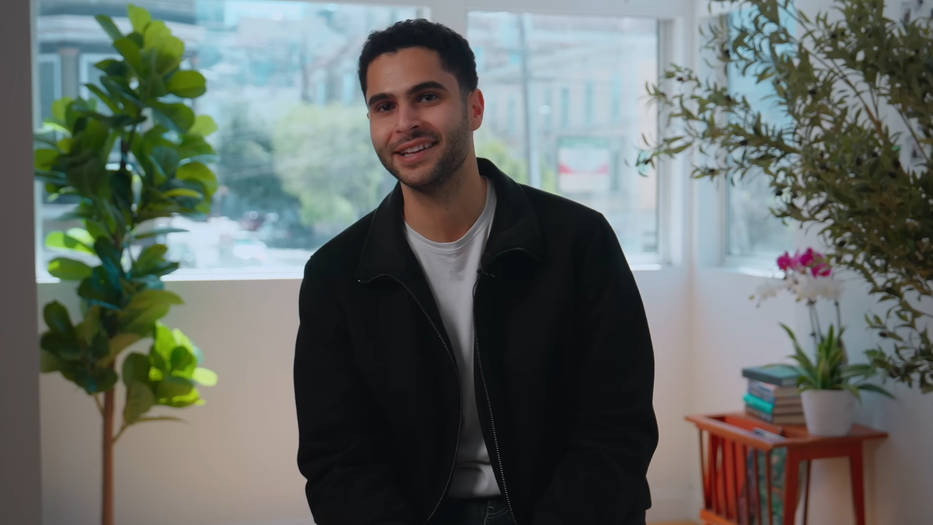
Interview with Yasser Elsaid, Founder of Chatbase
Founder Focused

0:00 / 0:00
💡
At a Glance
- Who: Yasser Elsaid is the founder of Chatbase, and got his first paying customer just 30 minutes after launching the product alone.
- What: Chatbase builds AI agents that handle customer support and sales conversations, acting as a brand ambassador for every customer interaction.
- Traction: Chatbase hit $1 million in ARR in 117 days and has since bootstrapped to $10 million in ARR with no outside funding.
Yasser Elsaid, founder of Chatbase, bootstrapped to $10M ARR with no funding. We asked him 15 questions to break down the exact playbook.
7 Key Takeaways:
Chatbase Hit $1M ARR in 117 Days Without Spending a Dollar on Marketing
Yasser had no money for paid ads in the first three months, so growth came entirely from building in public and posting daily on Twitter, LinkedIn, and Reddit. That constraint forced him to build an organic brand early, which made every dollar of paid marketing far more effective once the company could afford it.
Why the Biggest Bootstrapping Mistake Is Staying Risk-Averse Too Long
Early on it makes sense to be cost-efficient and ROI-obsessed, but Yasser says most bootstrapped founders never let go of that mindset once they have revenue to rely on. Chatbase's growth accelerated only after he started taking risks and hiring expensive people before he could fully justify the cost.
PLG Is Harder to Build Than a Sales Motion, But the Winning Model Combines Both
Sales is the easy path because a rep can walk a customer through setup and answer every question live. Yasser argues the real advantage comes from building a self-serve product intuitive enough to stand on its own, then layering sales on top of that foundation rather than replacing it.
Why a Mediocre Co-Founder Is Worse Than Building Alone
Yasser says the best co-founder pairings come from people who already have years of trust and proven working history together. Settling for a mismatched co-founder out of pressure to not be solo is a bigger risk than simply building the company by yourself.
How to Decide Between Bootstrapping and Raising
Yasser frames the decision entirely around exit size: bootstrapping gives founders a realistic shot at a $10 million to $50 million outcome, while raising capital is what makes a $500 million-plus outcome achievable. Raising when your actual goal is a smaller outcome just adds pressure and dilution without improving your odds.
How Warm Outbound Turns Existing Traffic Into Revenue
About 80 percent of Chatbase's outbound targets people who already visited the site, signed up, or churned, rather than cold prospects who've never heard of the company. Because those people already trust the brand from its content, the conversion rate on personalized follow-up is far higher than a cold-outreach campaign could achieve.
Every Decision Gets Re-Evaluated Against Today's Inputs, Not Yesterday's Ego
Yasser says founders often stick with a bad call because reversing it publicly feels like admitting failure in front of the team. He tries to build a culture where changing course as soon as new information arrives is treated as a sign of good judgment, not weakness.
Watch the full interview now on EO's YouTube channel! Below is the complete transcription of the interview. Minor edits have been made for clarity and readability.
Introducing Yasser Elsaid, Founder of Chatbase
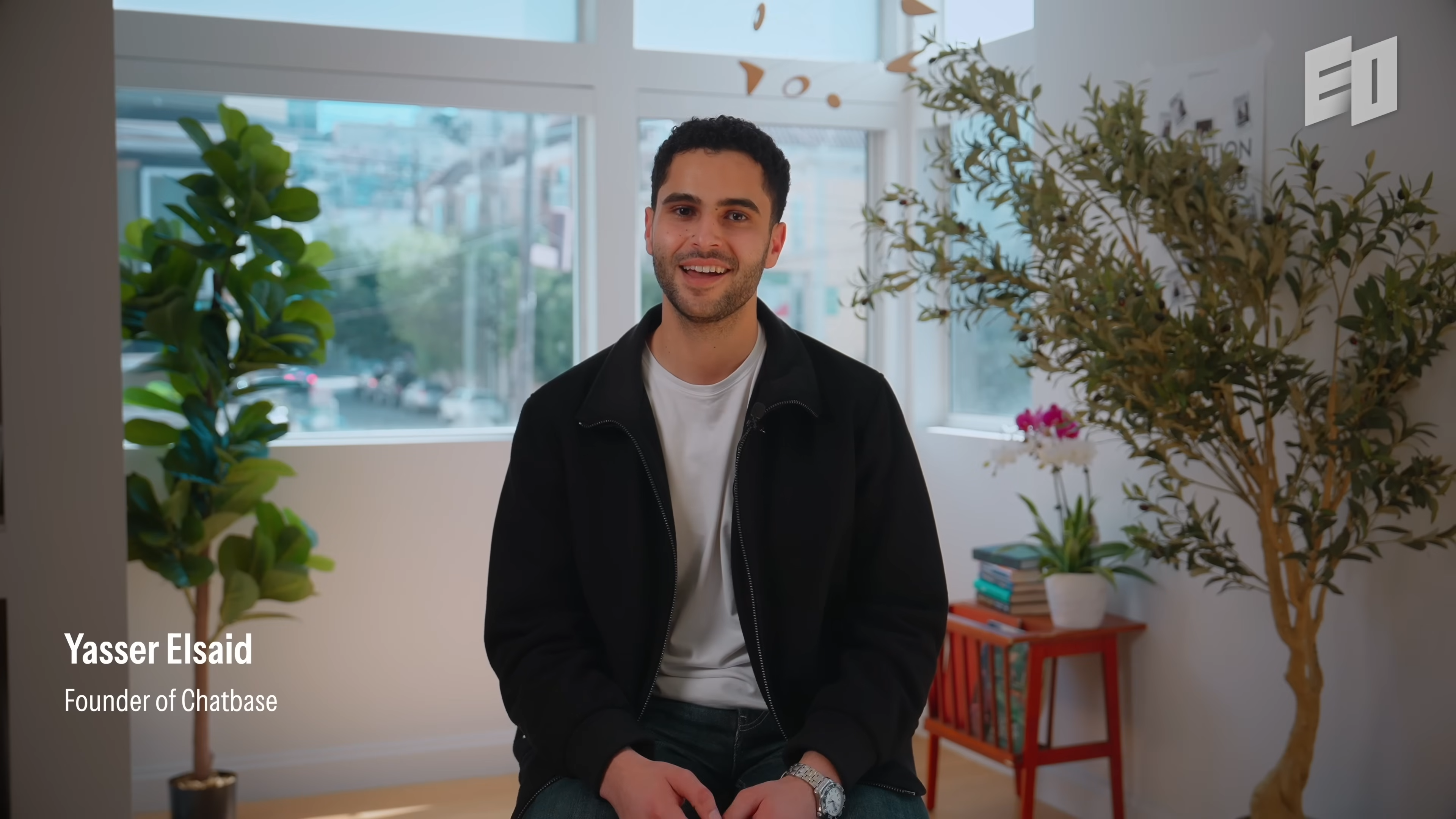
Hi, my name is Yasser. I'm the founder of Chatbase. Chatbase is a platform for doing customer-facing AI agents specifically for customer support and sales. We're building an AI agent that is a brand ambassador and gives that conversational experience to every customer. We just bootstrapped Chatbase to $10 million in ARR, and now I'm going to share the exact playbook that got us here.
Why Bootstrap?
Why did you bootstrap?
There are many advantages and disadvantages to bootstrapping. The biggest advantage is control: you only listen to your customers and the team, and that's it. This gives you a lot of freedom in building exactly what you want to build. The other reason is that the definition of success changes as soon as you raise. When you're bootstrapping, a successful outcome is being a fifty millionaire, a hundred millionaire, or even a two-hundred millionaire, which I think is very possible for us. But raising changes that equation a lot. What I would consider success might be even harder to achieve as soon as you sign a term sheet. Getting a successful outcome for me, for the team, and for the customer is a lot more likely on this path, and I think a lot of companies and founders are seeing that.
Now you see a lot of bootstrap founders, especially with all the AI tools you have now, which help you with coding, customer support, and marketing. You don't need as big a team as you used to. This era is the era of smaller companies, maybe ten to fifty people, with a lot higher revenue per employee, and when you have that equation, bootstrapping becomes a lot more feasible. My opinion is that you'll see an explosion of more and more bootstrapped companies doing insane numbers of revenue that were not possible before. It's also more fun to have control. So this is why I decided to keep the company bootstrapped.
The Common Mistake Bootstrap Founders Make
What's the common mistake bootstrap founders make?
When you operate as a bootstrap company, you're focused on profitability: everything you do has to be ROI positive, you're making sure you have money in the bank, and you're making sure to be as efficient as possible. The most common mistake bootstrap founders make is holding onto that mindset for too long: being extremely cost efficient with everything, always trying to make sure you're ROI positive, being risk averse. If you're like me and you want to build something huge, hire people, see revenue go up, see the number of customers go up, the biggest mistake is not being aggressive enough. It makes sense to have that mindset early on, but you should very quickly stop having it as soon as you have some revenue you can rely on. You have to take risks. You have to run experiments that might not be ROI positive. You have to hire people you think are expensive because they're good, and you shouldn't delay that. This is honestly the biggest thing: having the mindset of a bootstrap founder for too long. This is what we stopped doing, and we've seen a lot of revenue growth since we started acting that way.
Why Become a Builder?
Why did you become a builder?
I started university in Canada studying computer science. Everyone is affected by their environment, and the environment around me, everyone basically had the same goal, actually, in most universities in Canada, especially in computer science and engineering: getting a FAANG internship in California. It's called Cali or Bust. I just started optimizing my work, the effort I was putting towards getting that FAANG internship. I got it. I did an internship at Tesla, and another one at Facebook. Everything was very new, so it was very exciting, but I think very quickly I realized that maybe this wasn't the environment for me. The reason was it just felt too safe, too structured. It's mostly optimizing for the highest likelihood of making above $200,000 a year, which is a fine goal. For me, I was very inspired by people who are building companies, and I think it's such a privilege to have the freedom to wake up and decide, hey, this is what I want to build, I have this vision, and I want to bring it to life.
While I was doing these internships, I very soon realized that maybe this wasn't it. I looked at what my life would look like in five years, ten years if I continued on this path, and honestly, it looked exactly the same. The E3 engineer versus the E6 engineer, that person has a higher salary, more status within the company. This is of course an amazing life, and a lot of people would want that, but I just wanted the ability to create things. When I thought of that, I looked at what people are doing out there, and I saw this community of indie hackers, especially on Twitter. People like Pieter Levels or Marc Lou, they have an idea, they sit down and build it, and then they share it with the world. This gives them a lot of purpose and meaning. You imagine you have an idea, you bring it into existence, and then people validate that by giving you money because this thing you built is providing them value.
When I did those things, it gave me a lot more skills than what was actually needed when it came time to build Chatbase. I don't think I used any of the things I learned at those bigger companies, but I used a lot of what I learned building those smaller projects. You'll see that even the most impressive founders always have projects they were building, some of them very small, one-person projects, some of them bigger, but you always see some hint that they started with an idea and they wanted to bring it to the world. By doing that over and over again, one, they acquire the skill; two, they acquire the confidence; and three, they come up with better ideas for better products. That's exactly what happened with me. You learn how to build a company by building a company. Any skill you learn at a big company is mostly irrelevant, because it's a completely different dynamic, completely different goals, completely different kinds of people you're working with. If the goal is to build a specific company, the only way to get to that goal faster is to just start.

In building a company, especially early on, especially when you're solo, the outcome is one hundred percent correlated to the input you put in. You control all the inputs, and the output is a result of all of those inputs you had control over. It's very apparent when you're doing sports, especially individual sports, because you're responsible for your training, your equipment, your coaching, your nutrition, everything, and your outcome is solely based on your input and your training. You win because you won, and you lose because you lost. Taking that mindset into building companies is very beneficial. Knowing that you control your destiny gives you comfort. I knew I was smart enough to do this. I knew I had a lot of energy. I had the conviction. So it didn't make sense to me not to tie that skill and that energy to the outcome. For anyone with a similar mindset, starting a company is a no-brainer.
How Chatbase Started
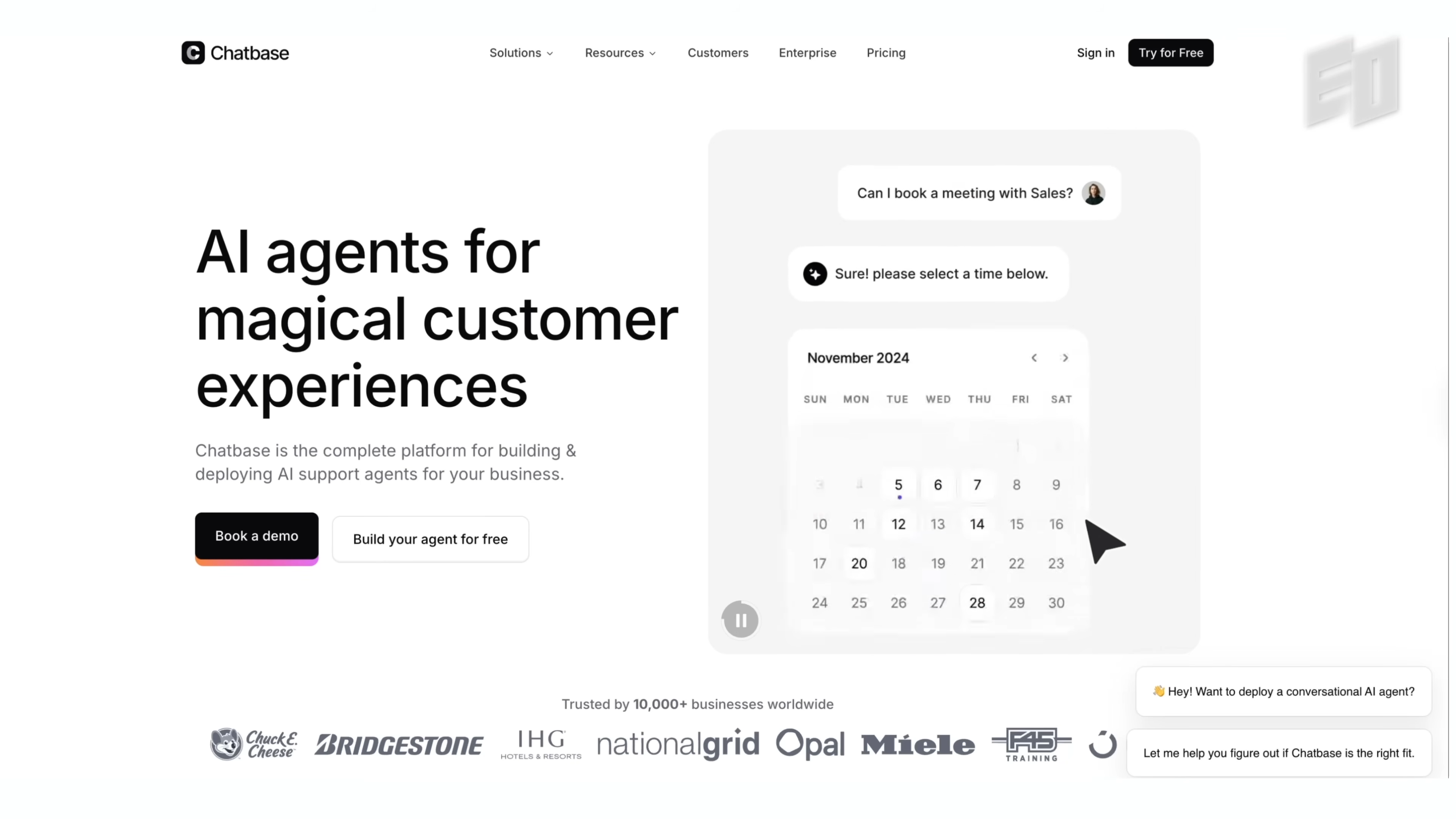
How did Chatbase start?
When I was building these other projects, some of them were using AI, because this was very early in the AI wave, before ChatGPT was launched. When you're building things, you see other people building things, you see some limitations in what you're building, and you see new ideas and opportunities. While building other things, it became obvious to me that there was this one idea that no one seemed to be doing, but it was obvious to me that it was extremely valuable. It felt like if I didn't do this now, someone else would, because to me it was such an obvious idea.
The idea was that you have these powerful language models trained on all this general data, but they don't have specific data for a specific person, company, or customer. My first example was a book: the very first version of Chatbase was uploading a textbook and then chatting with it. I found that idea because I was doing other projects in the space, and when you do that, you see the gaps, you see the opportunities, and you come up with new ideas.
I stopped going to class. This was in 2022, before ChatGPT launched, before it was mainstream like it is now. Maybe in some circles people were talking about AI, but nowhere close to the same extent as now. It was just, hey, we have this model called GPT-3, and people are doing some interesting things with it. There were a few companies using it. Back then, a lot of people saw the models, saw what they were, and thought of ideas for companies or products they could build on top of those AIs, but based on the current capability. Now everyone knows that if you're building an AI, you're building for the next model and the next model, so that every time the model improves, your product improves. But that mindset wasn't what everyone was thinking back then.
When I saw this model, it wasn't very powerful, a lot of use cases weren't very good, but you could hack in just enough to make it usable, at least to do a demo, at least to make it useful for some customers and some use cases. To me it was obvious that these models would improve. I didn't know how, I didn't know when, but if the model improved and I built the harness around it that made it able to do these cool new things, then I was winning, and my customers were winning too.
I launched at 1 p.m. I got my first customer thirty minutes after that, just a pricing page on the website. I put out a tweet, put a link, and then I saw my first Stripe notification. I think that's such a special moment. You built something from scratch, and someone was willing to bet that this is valuable to them, that they'd take out their card and spend money on it. Ten minutes after, I got the second person; maybe an hour after, the third person. At this moment, I knew I needed to stop everything else I was doing in life, because it was very obvious to me that this was a special moment and a special opportunity. A lot of people don't have this opportunity, and I just needed to make sure I took advantage of being in such a good position. So I stopped going to class, I stopped hanging out with friends. My main focus was building. I think that was the right move.
How to Hit $1M ARR
How did you hit a million in ARR?
I didn't spend any money on marketing in the first three months, because I didn't have money to spend on marketing. All the money I had saved up personally, even from working and from the internships, was mainly used to serve the models. Once I had enough revenue to cover the cost of the models, it started to become profitable, and it's been profitable ever since. But to start, there was no marketing. It was just building in public, launching on subreddits, launching on Twitter, launching on LinkedIn, talking about the product every day. A hundred percent organic. It's good that I was forced to do it early on and not rely on paid marketing or paid ads, because paid ads and paid marketing in general are very useful, but when you have the skill of organic marketing, one, you can build a brand around your company and about you as a person, and two, the efficiency of paid marketing becomes much stronger. Having that constraint of not having money to spend on marketing made it so that when we did have money, it went a lot further when we actually spent it on marketing.
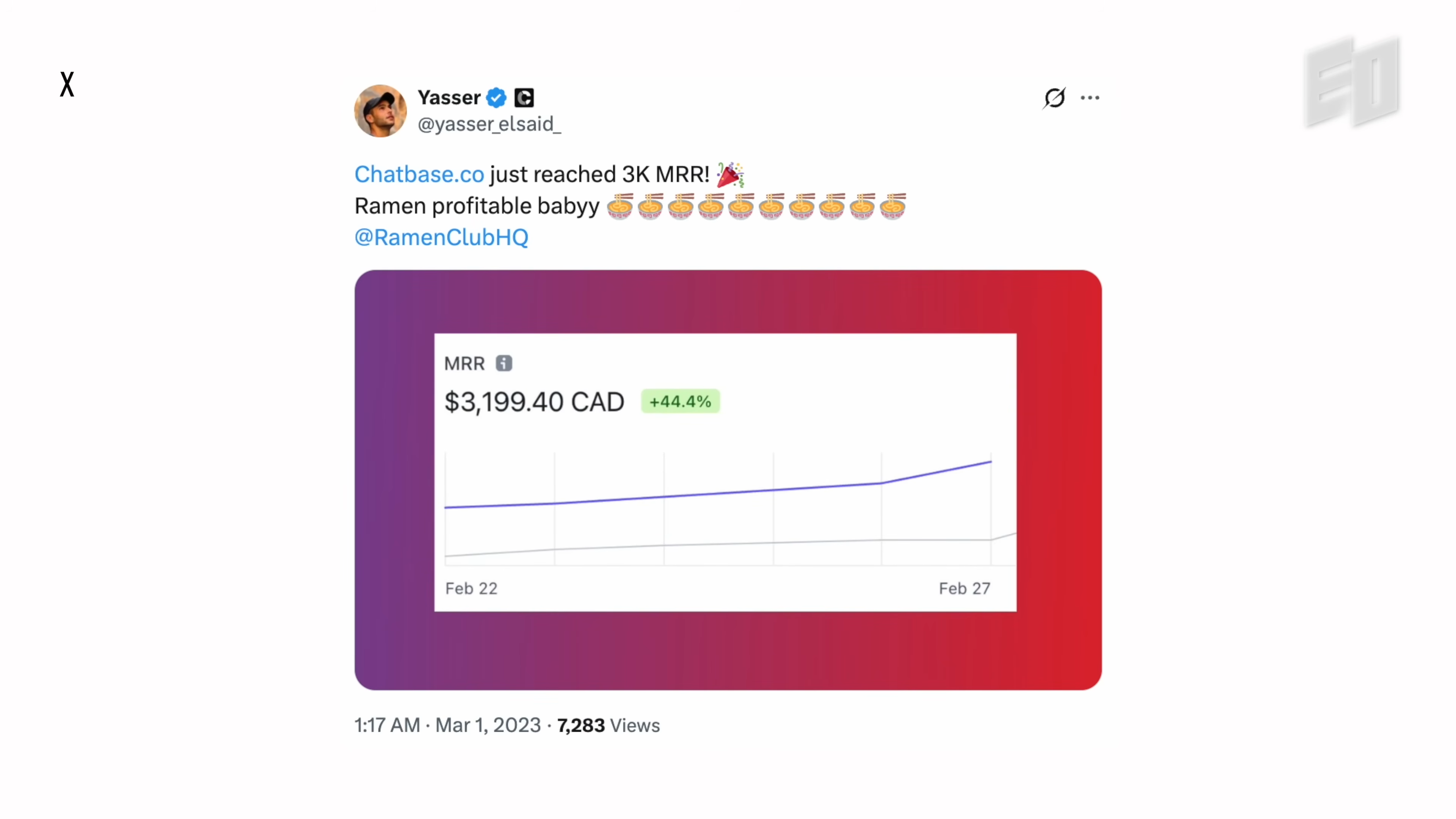
The first month, we were at $3,000 MRR. I think I posted about being ramen profitable. The second month it was close to $40,000, and then $60,000, and then we hit $1 million ARR 117 days in from that first tweet. It also helped me make an intentional decision not to have Chatbase as a lifestyle business. It's addicting to see the graphs go up. It's addicting to talk to customers and see how valuable the product is. It's addicting to hire people you like and build things with them. Getting there so quickly was so helpful in discarding the idea of keeping this as a side lifestyle business, and it made me focus on making this a very big success early on.
$0→$1M vs $1M→$10M: What Changes?
Zero to a million versus a million to ten million: what changes?
The problems you're facing going from zero to a million are very different than the problems you're facing going from one to ten, and I imagine ten to a hundred is also going to be very different. Zero to one is more about finding what people want and building that. I don't think that's very hard. It's just about putting in the time and effort into talking to customers, building, and talking to them again. You can brute-force this by putting in the work.
Going from one to ten, a lot of it is about having leadership skills. You have to have some ability to sell, some ability to explain your ideas and your product clearly, which for some people maybe isn't very natural. A big part of it is also building the culture, building the team, the energy, the incentives, the processes. That's a completely different game from going from zero to one with maybe a three-person team. That's not easy to do. A lot of people don't have the skills to do that. From what I've seen, going from ten to a hundred is also a completely different beast, but a lot of what you learn going from one to ten is extremely helpful, because you need a lot more skills to be able to perform well enough to get there.
Reducing Churn Early
How did you reduce churn early on?
When we started, our churn was high, and the reason was that especially at the start of the AI wave, a lot of people were experimenting with these new tools. They didn't know how capable these tools were or what use cases they were good for, and the company was also very new, so a lot of features we have now, we didn't have back then. As a result, we had high churn.
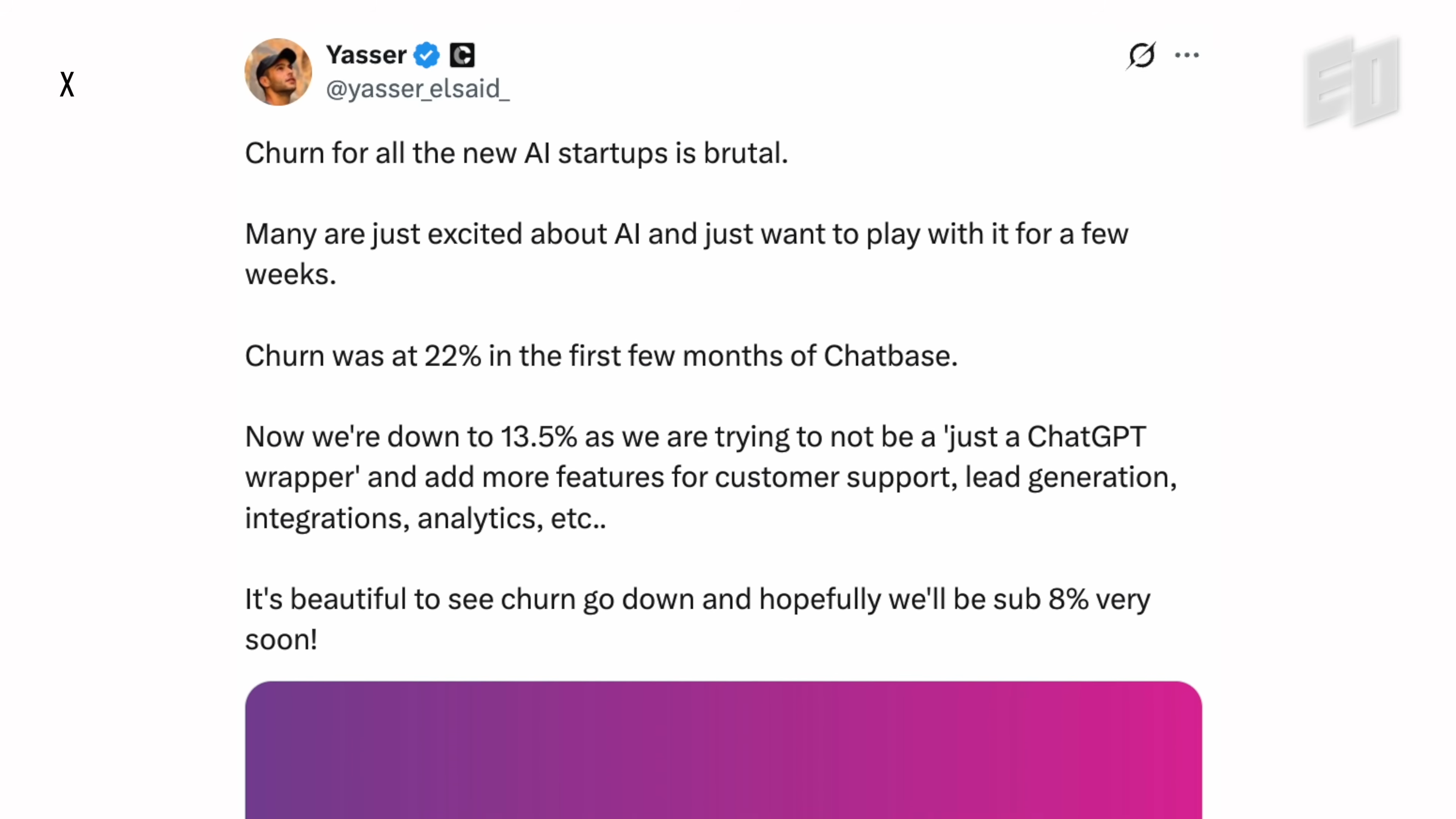
The reason we don't have high churn now, and the reason customers stick with us for a long time, is because they see the product improve every day. Even if it's not something that specific customer needs or uses, I think seeing that this company cares enough to push out something every day, that this is how fast we're shipping, sends a signal that we're building this for them, that we're putting effort into making this a better product. So one thing was making sure we were shipping and that all of these improvements were visible to customers. I think that helps a lot with reducing churn.
The other aspect was improving the product itself. When you start a product, especially when you get a lot of traction early on, that's not the best version of the product. The best version comes after you get feedback from customers, after you talk to them, after you collect insights from hundreds or thousands of them. Then you realize, oh, this is actually what I want to build. When new customers come in, they see that the problem ten other customers faced is already solved. Just listening to them, getting on calls with them, seeing how they use the product, making sure they're set up correctly, making sure they're live with the product in production, seeing all the hurdles they faced along the way, and making sure we remove all of them.
I don't think there's a specific cancellation flow, or hiding the cancel button, or anything like that which will help with your churn. Honestly, it comes down to how good your product is and how good it is at communicating its value to the customer. Early on, we built features, released them, and it was just very hard for people to see or use them. Sometimes people would churn for a reason we had already solved: a feature they wanted already existed, but our product didn't do a good job communicating that or making it easy for them to use. So what we did was overhaul our own onboarding flow to make sure there are different paths depending on the persona of the customer. For every path, we make sure we surface all of these capabilities and how to set them up as you're onboarding, and then we also started giving them the option to talk to someone on the team, so they feel like there's a person behind this website who cares enough to get on a call with them and help them get set up correctly. Even if for some reason they couldn't, they'd at least know there's a person who cares enough to get on a call with them. It's just consistent product improvement over a long time; you'll see the churn graph go down. Anything else that claimed to have a big impact on churn that wasn't about improving the product was probably more of a waste of time.
Thoughts on PLG?
What are your thoughts on PLG?
PLG is extremely powerful, but it's just harder to do. It's actually much easier to do sales than to have a very powerful PLG engine that's always working, always providing customers, and making sure those customers are successful. The easy thing is to get on sales calls, set up the product for the customer, make sure all their questions are answered, and that's it. The hard thing is to build a product that's extremely intuitive, that people can just go into, sign up for, and without much effort be successful with, especially if it's powerful.
I don't think it's smart to leave a lot of interest on the table without taking advantage of it for the sake of wanting to be PLG only. It's good to work with bigger companies, good to help them onboard, good to get on calls with them, fine to have long sales processes if it means making sure they're successful. I think the reason a lot of companies start sales-led, or even start with PLG but end up doing sales-led at some point, is because sales is just easier to do than an extremely powerful product that's only growing from PLG.
But there's a huge advantage to starting as a PLG product with self-serve as the main interface, and then going into enterprise from there. The reason is you're forced to make a good product, because there's no one to hold your customers' hands and make sure they're successful; they're just signing up on their own and using the product on their own. You're forced to have a good, intuitive, simple, but also powerful product to use, and that's valuable whether or not you're doing sales. Having that foundation of a strong self-served platform, and then adding a sales-led approach on top of that, gives you extremely powerful products. That's why I think Stripe is like a very strong example of that.
SEO & AEO Strategy
What's your SEO and AEO strategy?
A big part of it is just having strong SEO. Most of these models get their information by doing a web search, and if you're able to rank well for humans, you'll be able to rank for the AIs too, because the way it works is very similar; the page rank algorithm is very similar. The basic SEO strategies still work: writing blog posts, internal linking, external linking, making sure it's actually good quality that people want to reference when they're talking about something in the same space. Organic content also helps a lot with SEO, because when you have a strong brand, people want to reference it in their own content, and that's a big part of SEO.
A big part of AEO is also doing the basic CRM, along with review websites, things like Reddit, user-generated content, or even YouTube and TikTok. Those are also very important, because everything gets indexed when the model is trained, and then when the model is searching at runtime, you just need to make sure you exist everywhere and you're delivering the same message everywhere. You need a message that's very clear to you and your team: what value are you delivering, who's the target customer, what are your unique selling points. This is what we want people to think about us, and then you spray that everywhere, as much as possible, across all the surface area you can. When you find something that's working, like a specific channel, doing more of that makes a lot of sense. Right now, one person on our team is focused just on SEO and AEO.
How Warm Outbound Works
How does warm outbound work?
Warm outbound is this idea that because we started as a PLG-first company, because we're doing all of this content, we have all of this traffic on our website. We didn't start with a sales-led approach; we didn't grow by cold-calling customers and convincing them to use us. We already have this massive amount of traffic and following on organic channels. To boost it a lot more, you add warm outbound.
Basically what that means is you look at all the visitors who never sign up, visitors who do sign up, people who sign up and try the product but don't end up subscribing, people who subscribe but maybe stop using the product after a while. All of these are the highest-intent people in the world that you currently have. If you're not making sure the product is delivering the most value to them, you're not monetizing them the way you can. Warm outbound is making sure all the effort you put into getting that traffic, doing the SEO, doing the content, is actually pushing people through that last mile, making sure they're successful. After they sign up, you send them an email and say, hey, we're here for you, or you send them a LinkedIn connection request and say, let me know if you have any problem with the setup. Most of the time they're happy with that call, because they've seen your content and feel like they know the brand and trust it. That's what makes it warm, and that's what makes it a lot more successful, because cold is more about numbers: you're spraying and praying that out of a hundred thousand emails, you'll get two replies. This is more intentional, targeted outbound to a specific type of customer who's already invested in your company. For us, it's 80 percent warm. A lot of it is very personalized, a lot of it is WhatsApp groups, a lot of it is making friends with the customers. It's very high-touch, and it's very fulfilling for our team too, because you get to build relationships with those customers and actually solve their problems by just talking to them.
Experimenting With Pricing
How do you experiment with pricing?
When we started, Chatbase was more of a B2C tool: you'd upload textbooks or books and then chat with them. The pricing then was $10, and I think $30 was the other plan. When we transitioned into B2B, of course that changed. We still have very inexpensive plans for smaller companies or single developers to try the product. We started at $19 as the lowest plan; we're now at $40 as the lowest plan. We also experimented with moving the highest self-serve plan from $300 to $500.
We increased the pricing because the product became more powerful, using more tokens for more reasoning, solving much more complex issues. When people saw the price increases, we basically didn't see any change in churn, because people were seeing a lot more value from using the tools. You want to make sure you treat your customers well and that you're not just trying to increase the price as much as you can all the time, but at the same time, it's a good idea to experiment with the product. Experimenting with pricing also gives you a better idea of what type of customer is getting the most value out of your business, so you can talk to them more and understand their use case.
As for what pricing change made the biggest impact, it was moving up-market. When we did that, it was obvious that this is the way we're growing from that point onward. Maybe the biggest mistake was not experimenting more. I've never seen a company regret experimenting with their pricing, but I've seen many companies not experiment enough with it. The only balance you want to hit is making sure you still support your older customers who have used your product and gotten value from it. Find a balance where your customers are getting a lot more value than what you're charging them. The best pricing is when you're giving them so much value that they don't care about the price they're paying you.
Revenue Over Margins?
Why revenue over margins?
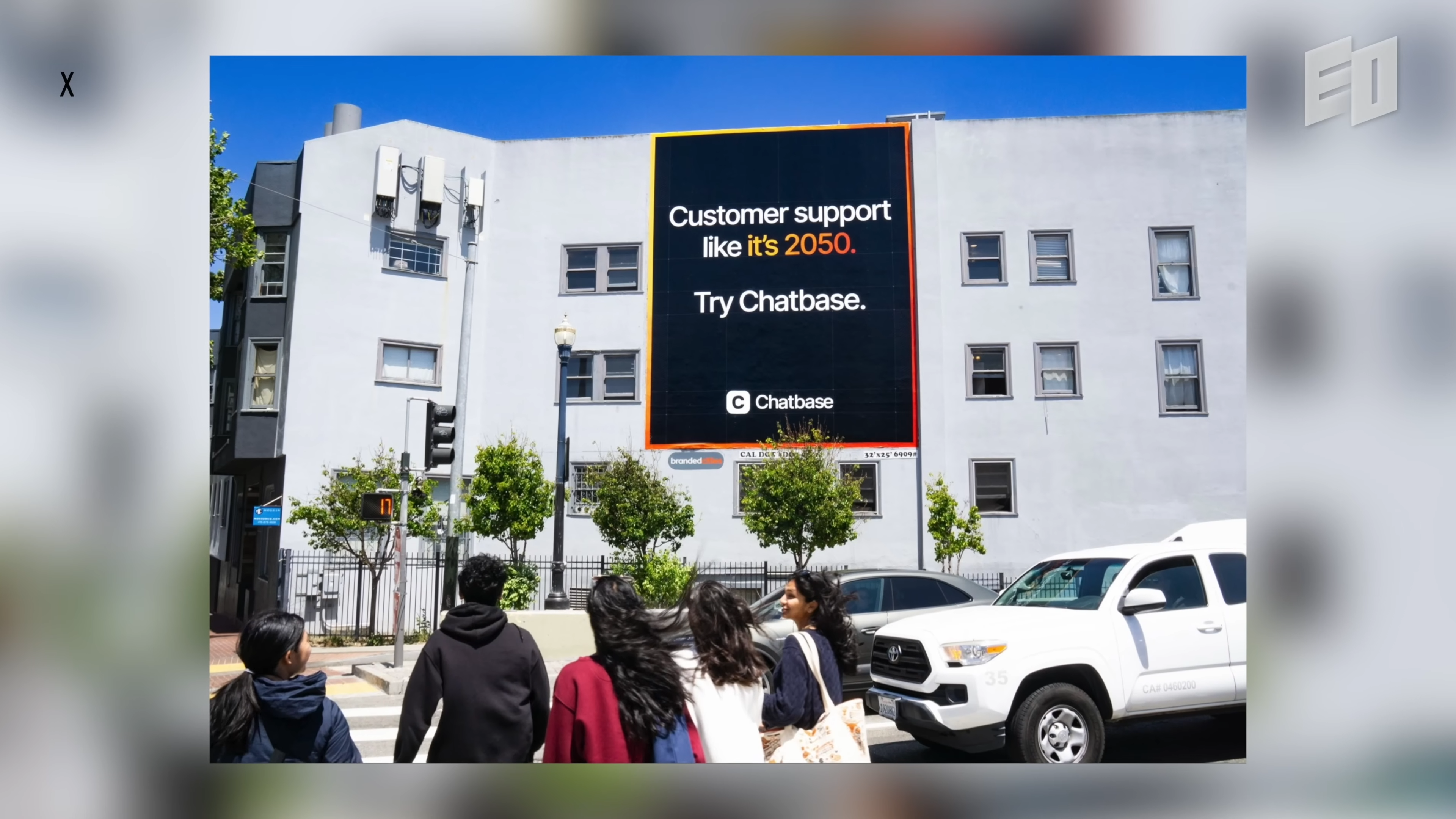
If you're choosing between high margins with less revenue, or more revenue with less margins, the better long-term play is higher revenue, more customers, even if it comes with less margin. About a year ago, we decided to buy billboards in San Francisco because we wanted more brand awareness here. It wasn't obvious how much of an impact that would make, or how much ROI it would give us, but some things aren't measured by return on ad spend. Some things just increase awareness and help you in the long run, increase your brand capital in general. On paper, it reduces your margins very drastically, especially if you're a smaller company. These are the things you need to be doing if the goal is to build something as big as possible. Some of the time it's not going to work; if you're smart enough, hopefully most of the time it will. The job is to take calculated risks.
Co-Founder or Solo?
Co-founder or solo?
There are two different decisions people need to make when they're starting a company: whether you want to find a co-founder to work with, and whether you want to raise. For both, it depends. If you want to build a company and you don't have an idea of who you want as your co-founder, you'll still want to search, but I think it's going to be very hard to find one. The best co-founders, from what I've seen, are people who have known each other for a while and have a lot of trust and confidence in each other's abilities. Of course there are exceptions to every rule, but in general it's such a big risk to say, I'm going to try to find a co-founder, and start working with this person, and a year in, or maybe even a few months in, you realize this wasn't a good decision. Having an amazing co-founder is better than being solo. Having a mediocre, or slightly worse, co-founder is probably a lot worse than being solo. In my case, I didn't even have time to think about whether I should have a co-founder. You just need to have extreme confidence in their values as a person, but also their skills, and that they complement you.
When to Raise
When should you raise?
It depends on what you define as a successful outcome. If your idea of success is that you exit and get, let's say, $10 million or even $50 million, I'd argue you have a higher chance of getting there if you bootstrap. If that's nothing to you, and your definition of success is a $500 million to billions-of-dollars exit, then you need to raise, because it's very hard to get to that outcome if you bootstrap. But it doesn't make sense if what you'd define as success is a $10, $30, or $50 million outcome, and then you go and raise. I think it just makes it harder to achieve, because when you raise, there's a lot of variance: you're trying to 100x this investment, and you need to hire as fast as you can, spend the money as fast as you can if it makes sense. In most cases, you either have an amazing outcome, or you're stuck in a place where it doesn't really make sense to sell the company for $100 million, because after the preference stack, after all the terms, after the dilution, you're not going to get that outcome. I'd say getting to a $100 million outcome bootstrapped might be even easier than getting to billions of dollars after you raise.
Decision-Making Framework
What's your decision-making framework?
Things change, especially if you're building a company in a fast-moving industry: a lot of competitors, a lot of new models released, a lot of market dynamics changing. These inputs all factor into how you make a decision. A lot of people have a lot of pride and ego behind the decisions they make, especially if they made that decision publicly, because you don't want to look bad in front of your employees or your team when you go back on a decision you made. But I think it's actually a sign of low self-confidence if you make a decision, some time passes, the inputs change, you realize this isn't the best decision moving forward, but your ego won't let you go back on it. That's a recipe for a company to fail. This is the case for founders, but it's also the case for everyone on the team. Everyone should know that dynamics change very quickly, and we need to make sure we're not sticking to a decision we made two weeks ago because we don't want to hurt someone's feelings. Every day we wake up and look at the inputs. We know why we made the decision two weeks ago, but we also know what's changed, and based on that, does it make sense to do something else? If the answer is yes, one hundred percent of the time, you need to do that something else. I think it's also the job of the founder to instill a culture where going back on a bad decision is encouraged when you're building in such a fast-moving industry.
Maybe it's useful to ignore the noise. If you look at all the people who fell into the trap of listening to what everyone else was saying about GPT wrappers, that there's no future, and stopped building, that wasn't the right idea. Now GPT wrappers have rebranded to model harnesses, and now they're all the hype. You see companies that have raised, that are now doing more than $100 million in ARR in three years. If they'd listened to the people saying, oh, this is a GPT wrapper, maybe they wouldn't be in this position. The takeaway is that people are going to speculate; maybe they're right, maybe they're wrong, but you don't lose anything by just putting your head down and working on building something valuable. I'm happy I did that three years ago.