
💡
At a Glance
- Who: Mike Hall is the CEO of Anza. He has spent over 20 years in the solar industry, including running a 165-person company that he restructured down to 45 to refocus the business.
- What: Anza is a data technology and services company that helps large-scale buyers of solar modules and batteries get real-time pricing instead of digging through PDFs and emails.
- Traction: Anza has partnered with 95% of the U.S. solar market on its platform.
Anza provides comprehensive data on solar panel pricing, enabling businesses to build long-term strategies that incorporate both pricing and risk management. In this video, we meet Mike Hall, CEO of Anza—a company that has partnered with an impressive 95% of the U.S. market—and delve into his entrepreneurial journey.
Key Takeaways:
Don't Start a Company Around the Thing You Love Doing
Loving to bake does not mean you will be happy running a bakery, and loving to code does not mean you should start a tech company. The skill that makes a great idea does not always match what makes someone happy running the business behind it.
Price by Asking, Not Guessing
The only reliable way to find the right price is direct, awkward conversations with customers about what they are actually willing to pay. Anchoring customers and reading how confidently they respond gets closer to the truth than asking an open-ended question.
He Cut a Business Unit That Was 120 of His 165 Employees, Overnight
When residential solar margins collapsed, Mike sold off the entire business line built around it rather than keep fighting a shrinking margin. The company went from 165 people to 45 in a single move.
Star Individual Contributors Often Struggle to Become CEOs
Many former colleagues who started their own companies hit the same wall: after years as top performers, they have to shift from getting the credit themselves to building the environment where someone else gets it.
Waste Hides in Two Different Clocks
How long something takes breaks into two separate questions: how many hours of real work it takes, and how long it sits on the calendar before it's done. Slow collaboration and long wait times both count as waste, even if no one is idle.
Being CEO Means Owning a Decision No One Else Can Make
Employees will usually vote to keep things as they are because change is scary, but not deciding is itself a decision to stay the same. The responsibility for that call belongs to the CEO alone.
Watch the full interview now on EO's YouTube channel! Below is the complete transcription of the interview. Minor edits have been made for clarity and readability.
Introducing Mike Hall, CEO of Anza
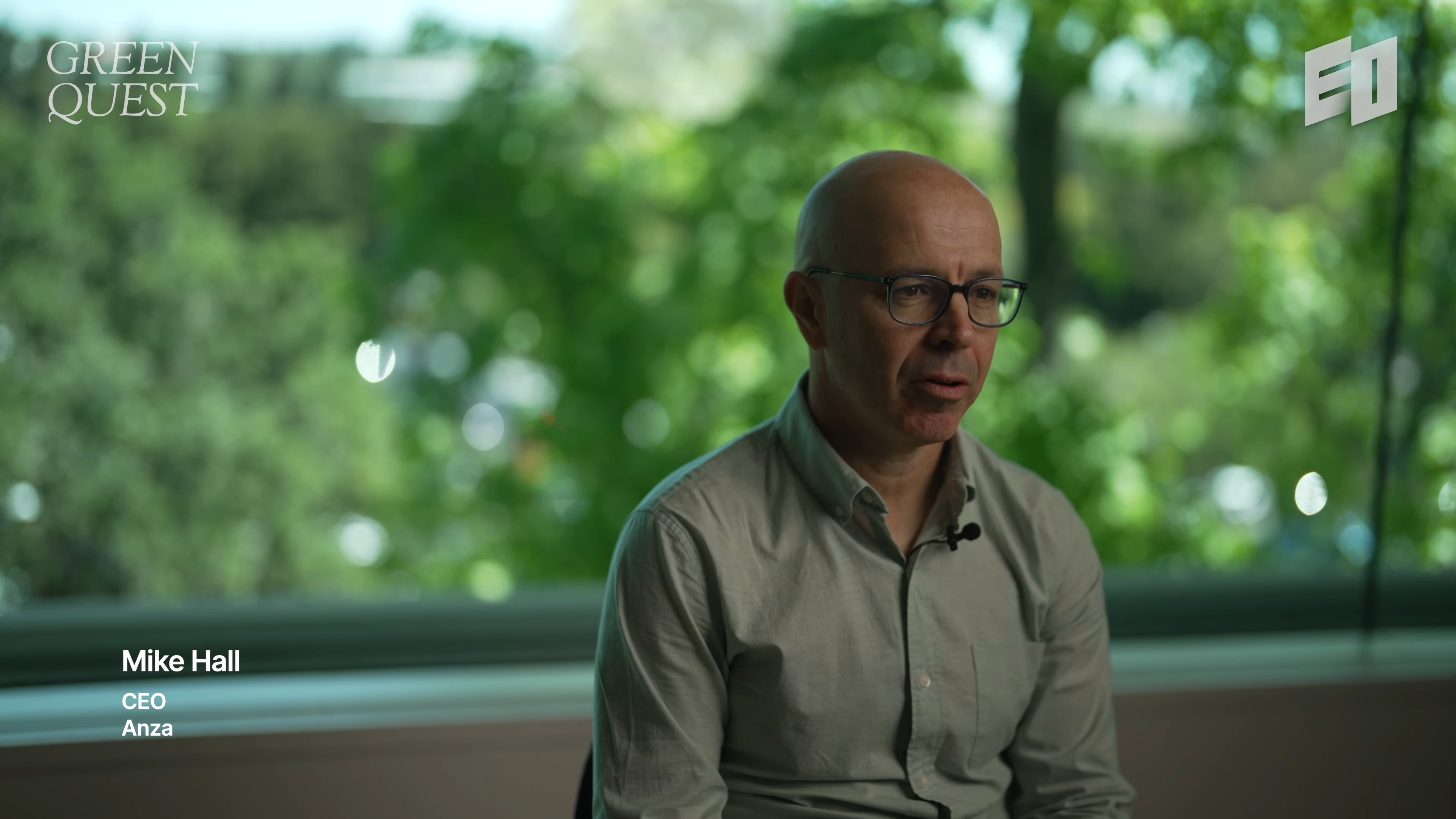
I'm Mike Hall. I'm the CEO of Anza. Anza is a data technology and services company focused on helping large-scale buyers of solar modules or solar panels. We've actually got 95% of the U.S. market partnering with us on the platform.
Because I've been in this industry for over 20 years, we really haven't evolved. It's a pretty complex market. The price of solar modules, the price of batteries, can move up and down significantly month to month, and sometimes even week to week. There are tens and tens of different providers, and they each have multiple products. These sellers need to know: hey, today, where does my product stand?
Why don't we create databases instead of deriving information out of PDFs and emails? Hey, you log into our platform and you can see all the options right there in a few clicks. On these large projects, it's millions of dollars of value that you can't find unless you have this stack and technology. What's taking right now weeks and months, we can do it in seconds.
Leaving What I Loved, Finding What I Needed
When I started, I used to go around local community organizations and I would do a presentation on the U.S. power supply. Maybe 45% came from coal. If you were to look at the slice that was renewable energy, you couldn't even see it, it was so thin. The industry has grown 35,000 times, literally 35,000 times, since we started. Basically all new generation in the U.S. is renewable, the cheapest source of new energy. Electrification of transportation and electric vehicles is really exciting.

It was fun to be very early in an industry. There was a lot of energy and enthusiasm about it. It was also hard, though, because nothing worked. The first power converters we bought, for example, they had 100% failure rates. Everything that is easy now was much harder in the beginning. But it was also small. I'm being real, our very first customers were family. My father was the first system, my uncle was the second, and we were basically going into people's homes and trying to sell them on 25, $50,000 rooftop systems. I'd probably pitch four or five homeowners a day, actually go into people's houses and sit at their kitchen tables, and none of them even knew people who had solar panels, so they were all very early adopters. You had to explain everything, you had to convince them that it was going to work. Grew from just a few of us doing this to actually like an enterprise with employees.
The good times and the wins are a little bit like a drug, you're just searching for the next one. If you ask customers about their problems, they might not always be able to name them. Day to day, they're just like, oh, it's not a problem, because that's how I do it, but they might not realize how much opportunity they're missing. Focus on the industry you know best, go out and talk to customers, and validate that you really do have something.
How do you do this thing? A really great question is: how long does it take? Simple question, but there's actually two different questions there. There is how many hours does it take, process time, and then how long does it take on the calendar, how long does the clock take. Both of those are potential sources of waste. Sometimes it takes too long to actually do the task. A task can take too long to get done because collaboration is slow, wait times are long, how much does something cost, how many times you have to do something over and over again. Whenever you find waste, you've got a problem to solve.
The thing that you started with and might be successful in the beginning might not be successful forever, and you may have to make some hard decisions to just move on from a thing that you might have loved. That's what happened for us. The residential market, like installing solar on people's homes, that became so competitive, our margins started to compress. Took like a year, year and a half, trying to do everything we could to turn it around. We kind of had two choices: we could just continue to chase the competition down, or we could look for another market. These bigger projects were higher leverage, with fewer people per dollar, whereas the other one is so human capital intensive. We had glimpses of a new, exciting niche within the project and customer base we already had, we just needed to put all our focus there. Ultimately, we made the hard decision to get out of the business entirely, we actually sold that whole business unit off. We were 165 people then, about 120 of them worked in that business. We overnight went from a 165 person company to a 45 person company.
As those problems changed, our project types changed, but also our business changed. We negotiate with the utility and the local authorities to do a large project. It's really hard to go from something you know really well to something you don't know at all. We hadn't done that. I'm not sure the company would have survived.
To Know the Right Price, Ask the Right Questions
The best way to figure out what the price is, is to have those awkward conversations with customers and potential customers about their willingness to pay. That's the right way to do it. Anything else is just guessing.
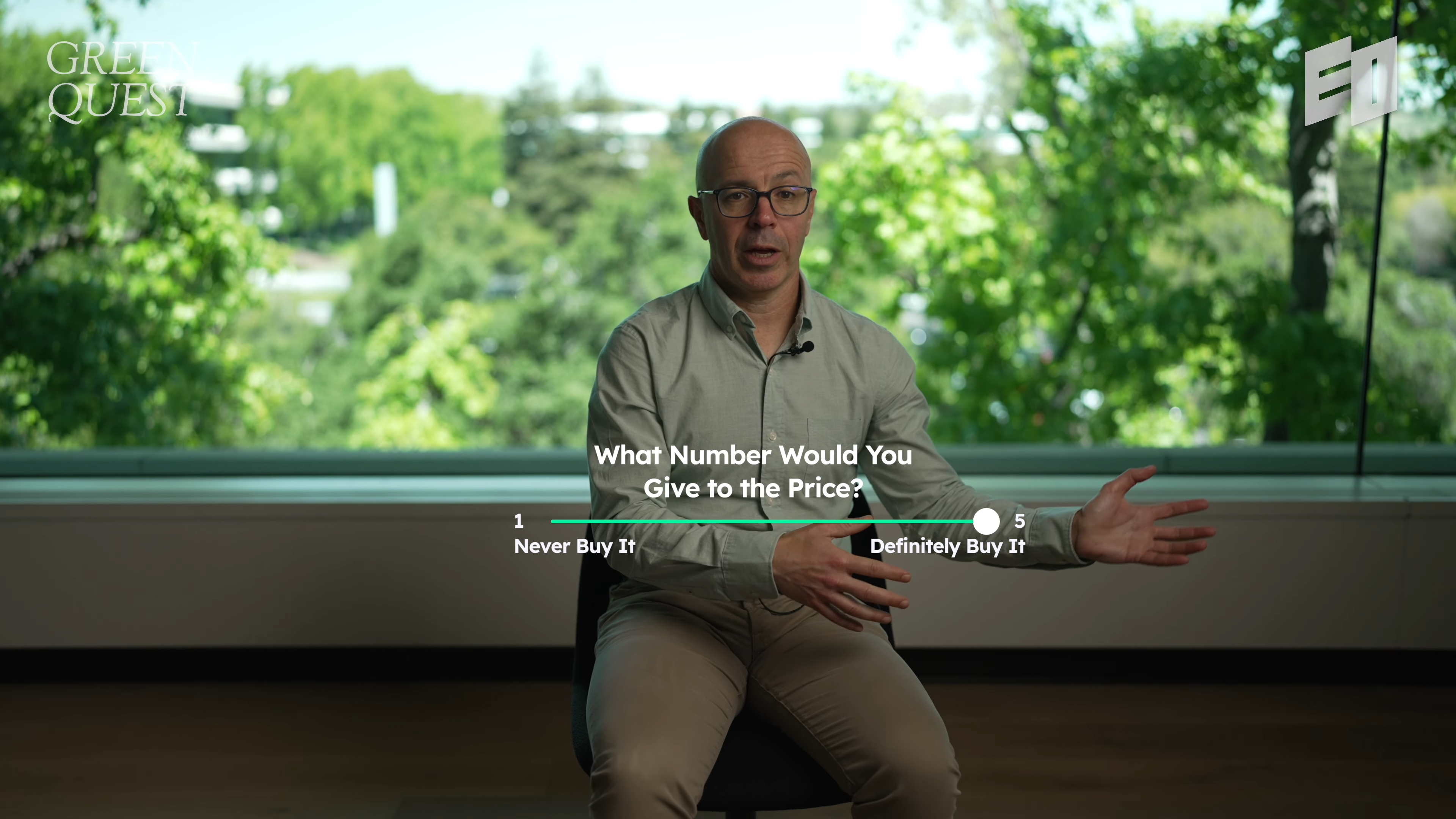
I think people do it backwards a lot, where they arrive at their pricing because that's what they need to have in their business model to hit their forecast, or they price based on cost. But that can be completely disconnected from what the market is willing to pay. The first thing you have to establish is how your market is segmented, are they even interested in the product you want to sell. That's one of the most important questions that I don't think people talk about enough. We're going through this right now with a product launch we're doing in September: okay, if we were to charge $30,000, what number would you give that price? There's actually macro data on this: if they give you a five, there's like an 80% chance they'll actually buy. If they give you a four, it might be a 50% chance they'll buy. If you're getting all ones and twos, you're probably overpricing it.
From there, once they've said "I am willing to pay," that's binary, so then you can ask them the next question about how much. If you get a lot of data, you might be able to start to find price cliffs, where there's a psychological thing that happens at that price point. Humans don't actually respond rationally to pricing. But you're also going to have to move forward with less than perfect data at some point, almost no one has the money to get perfect data. I'd also be careful about just asking what are you willing to pay, because customers tend to give you a small number since they think they're in a price negotiation, even though they're not. You may want to anchor them, and then have them respond to your anchor.
Margins are a different question, and it really speaks to your strategy. If you really have a genuine case that a high amount of market share, high penetration, is going to in and of itself create a competitive advantage, you probably just need to price at whatever it takes to get that market share. If that's not the case, you need to price so that your unit economics are profitable. I mean, you may spend more than your gross margin on R&D and sales, and that's fine, if it's taking you two years to recover your cost of sales, you've got a problem. I see a lot of companies that price to gain market share but don't necessarily have a great story for how that market share is going to deliver a long-term competitive advantage.
Why Star Players Don't Always Make Great CEOs
I love my job, I think it's a lot of fun. It's also tiring. Not all the work is yours to do, but all the responsibility is yours, so you wake up with it, you go to bed with it, you think about it in the shower. As a CEO, your job is to make those tough calls. It's not a democracy. If you ask everybody to vote, they will probably vote to maintain the status quo, because the unknown is so scary. But if you don't make a decision to change, then you're making the decision to stay. Hey, you have a lot of employees who you're loyal to, and you have shareholders who may have wanted you to hit some number. Sometimes there's going to be tension there, that's what's tough, and I don't have a great formula for that. How do you separate your own attachment, and other people's attachment to the status quo, from what you believe to be right, to sometimes persist, stand on that hill, whether to keep going or to make a big change of course? You're the only one who can make that decision.
I'd say the hardest part, if you were the superstar individual contributor and now you're trying to be a leader, is that you're just trying to set up the infrastructure and the culture so that someone else can close a big deal or deliver the product on time. That can be a difficult transition. Many people who used to work with me have gone and started their own companies, and I think this is one of the most fundamental challenges: emotionally, they were all star performers individually, and now all the credit should be going to someone else. Your job is to create the environment so that they can be successful, not that you can be successful.
Don't start a bakery if you love to bake. If you love to code, don't necessarily start a tech company. If your passion is a specific technology, you might have a great idea. You might not be happy in the long term being CEO.