
Sep 09, 2022
How a World Cup soccer player built a $600 million shoe brand
Interview with Tim Brown and Joey Zwillinger, Co-founders of Allbirds
Founder Focused

💡
At a Glance
- Who: Tim Brown (former New Zealand World Cup soccer player) and Joey Zwillinger (biotech executive) are the Co-founders of Allbirds.
- What: Allbirds is a sustainable footwear and apparel company that engineers natural materials like Merino wool, eucalyptus fiber, and sugarcane into high-performance, low-carbon shoes.
- Traction: Launched on Kickstarter in three days with $120,000 in pre-orders, generated $1 million in sales in their first month with the flagship Wool Runner, and scaled into a global brand made across specialized international factories.
Tim Brown retired from professional soccer to challenge the footwear industry's heavy reliance on synthetic plastics, teaming up with biotech executive Joey Zwillinger to develop shoes made from natural Merino wool. After Kickstarter success and manufacturing trials in South Korea, they launched the Wool Runner in 2016, generating $1 million in sales in their first month. Today, Allbirds operates as a global sustainable shoe brand, pioneering carbon footprint labeling across every product line. Their journey demonstrates how focusing on a single, well-designed product beats releasing vast catalogs, why product quality must always precede sustainability claims, and how material innovation can disrupt traditional retail markets.
Key Takeaways
Small Improvements Compound Into Long-Term Entrepreneurial Progress
Tim Brown carries a lesson from sport into entrepreneurship. People overestimate short-term capacity but underestimate long-term progress. Daily improvement can be hard to see, so founders need patience with compounding effort and the courage to keep working before results become obvious.
Pair Complementary Strengths With A Bigger Purpose
The Wool Runner began with Tim Brown's product observations, but Joey's climate and materials perspective gave Allbirds a larger purpose. Their different backgrounds connected comfort, simplicity, sustainability, and innovation, turning a promising shoe into a business designed to challenge the industry's legacy assumptions.
Trust Your Questions When Experts Say Quit
Experts told Allbirds the wool opportunity was too small and customers would not care. Tim Brown and Joey Zwillinger kept asking why it had not been done, then launched one silhouette to control the experience, proving that selective feedback and focused execution can coexist.
Make The First Product Simple And Loveable
Allbirds launched the Wool Runner on March 1, 2016, sold a million dollars of shoes in its first month, and kept improving it through about 40 running changes. Joey Zwillinger calls this a minimum lovable product, focused enough to launch, strong enough to matter.
Measure Impact Before You Try To Reduce It
Allbirds puts a carbon footprint on every product because Joey Zwillinger believes measurement must come before reduction. The company combines material innovation with a clear purpose and sharp prioritization, saying no repeatedly so a small team can focus resources on meaningful progress.
Watch the full interview now on EO's YouTube channel! Below is the complete transcription of the interview. Minor edits have been made for clarity and readability.
Co-founders

Tim Brown: It was an incredible ride. It was the first time in 28 years that New Zealand had been to the World Cup. There were a lot of things I learned from sport that have been very important for me as an entrepreneur. Generally, as individuals, we tend to overestimate what we can do in the short term and underestimate what can be achieved in the long term if we stick with something. Sport teaches you to stick with something, but on a day-to-day basis it can be hard to see the improvement. You have to believe in the compounding impact of getting a little bit better every day.
I think the opportunity to start your own idea and chase it is a privilege. You get to choose a problem with real meaning, and you should remember to laugh often. It opened up a whole new set of challenges, but it was the beginning, and it was the beginning because we tried and because we had the courage to put it out there. If you are having fun along the way, laughing in the face of the big challenge you are tackling, it can be incredibly rewarding. So give it a go.
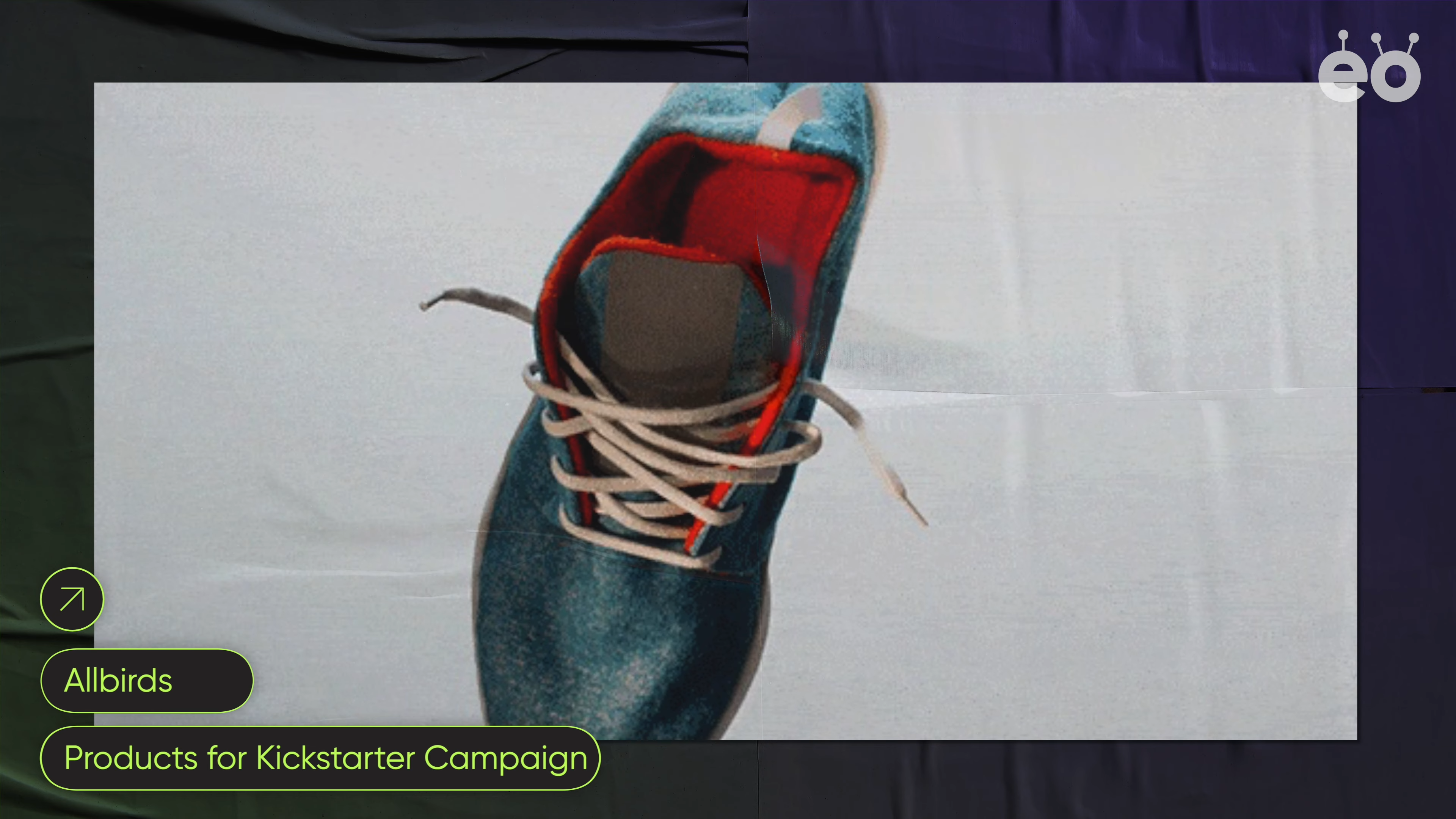
When I played sport, I was sponsored by one of the big sportswear companies, which was one of the great things about playing. From my own observations, footwear design felt very loud, and most of everything was made from plastic and synthetic materials. I started to imagine a different type of business and a different way of making and thinking about product. After I retired from sport, I had a professor at business school who got frustrated with how much I talked about the shoes. He said, stop talking about it, get it out into the world and see if someone other than your mum will buy these things.
It turns out it is very, very hard to make shoes. Making a shoe from materials that had never or very seldom been used in footwear is even harder. Merino wool was our first material.
The Kickstarter was very successful in a short space of time, but it lacked a purpose. I do not think I had the big dream, and I really was not sure I wanted to keep going. It was hard. Then I met Joey, my co-founder. He had been on a different journey around climate change and the environment, and he opened my eyes to the challenge around climate change and the fashion industry, and to the opportunity for a brand to be a true leader in that space. He was the one really responsible for the big dream. And don't tell him I said anything good.
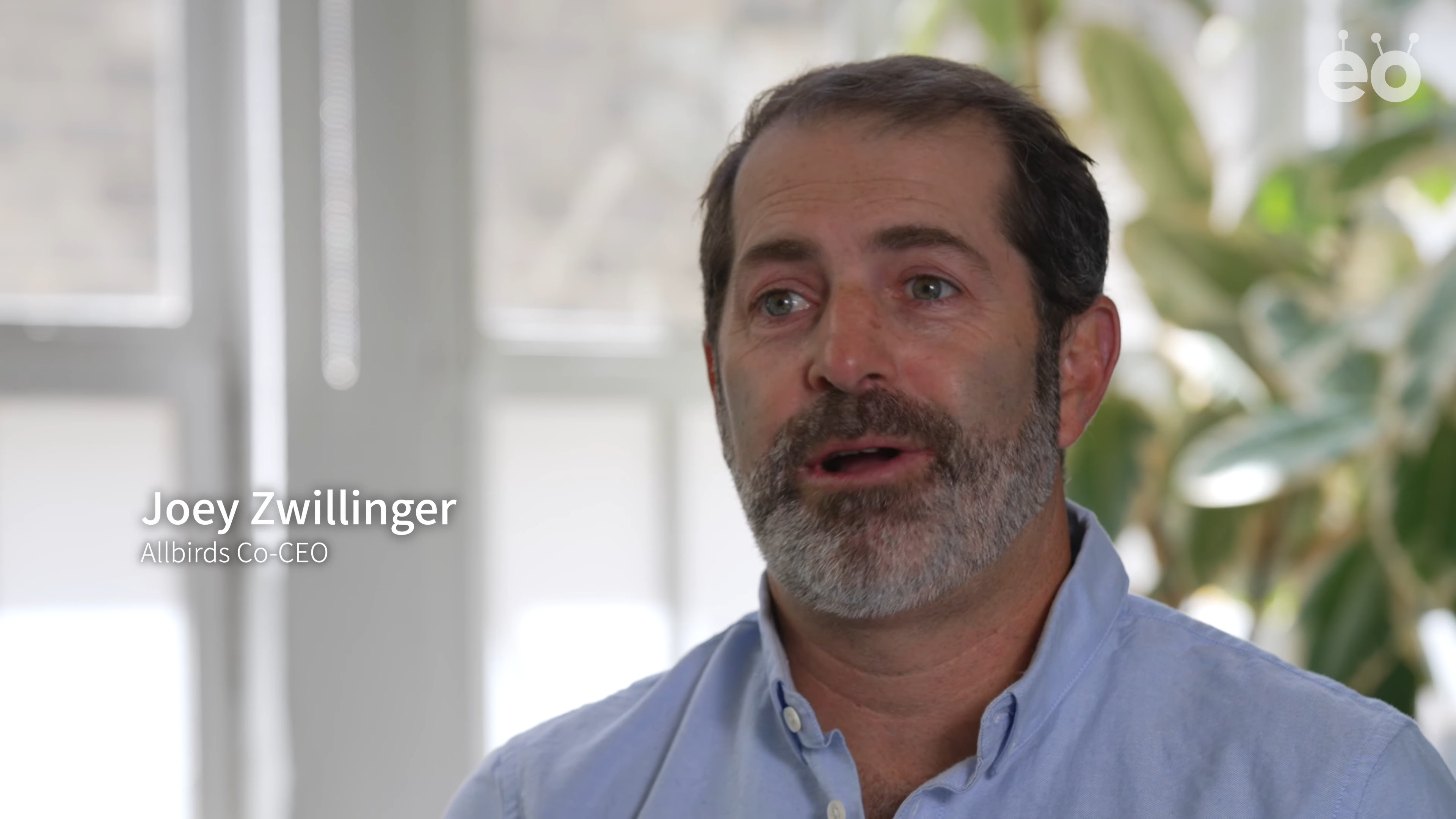
Joey Zwillinger: Tim and I were friends through our wives. We saw each other at weddings. They lived in London at the time, and when he put the Kickstarter on the platform I got the email and immediately bought a pair. He had already connected a lot of what is still at the absolute core of what Allbirds stands for, simplicity in design, a focus on comfort, and sustainability connected through innovation. The Kickstarter sold out really fast, about $120,000 in three days, which is a lot for a Kickstarter in the fashion category.
I ran a green chemicals business that used biotechnology to engineer microalgae. What I knew from my background was that there were lots of opportunities to take naturally derived materials and turn them into amazing products that felt unique and different and left no dent on the planet. I thought maybe I could move downstream into a brand and show the world how you could make that no-compromise solution.
About a year later we started talking seriously about the idea. Maybe there was a different way to do this business that could connect your strengths with my strengths and see a business opportunity much bigger than what you are setting out to do today.
The Wool Runner
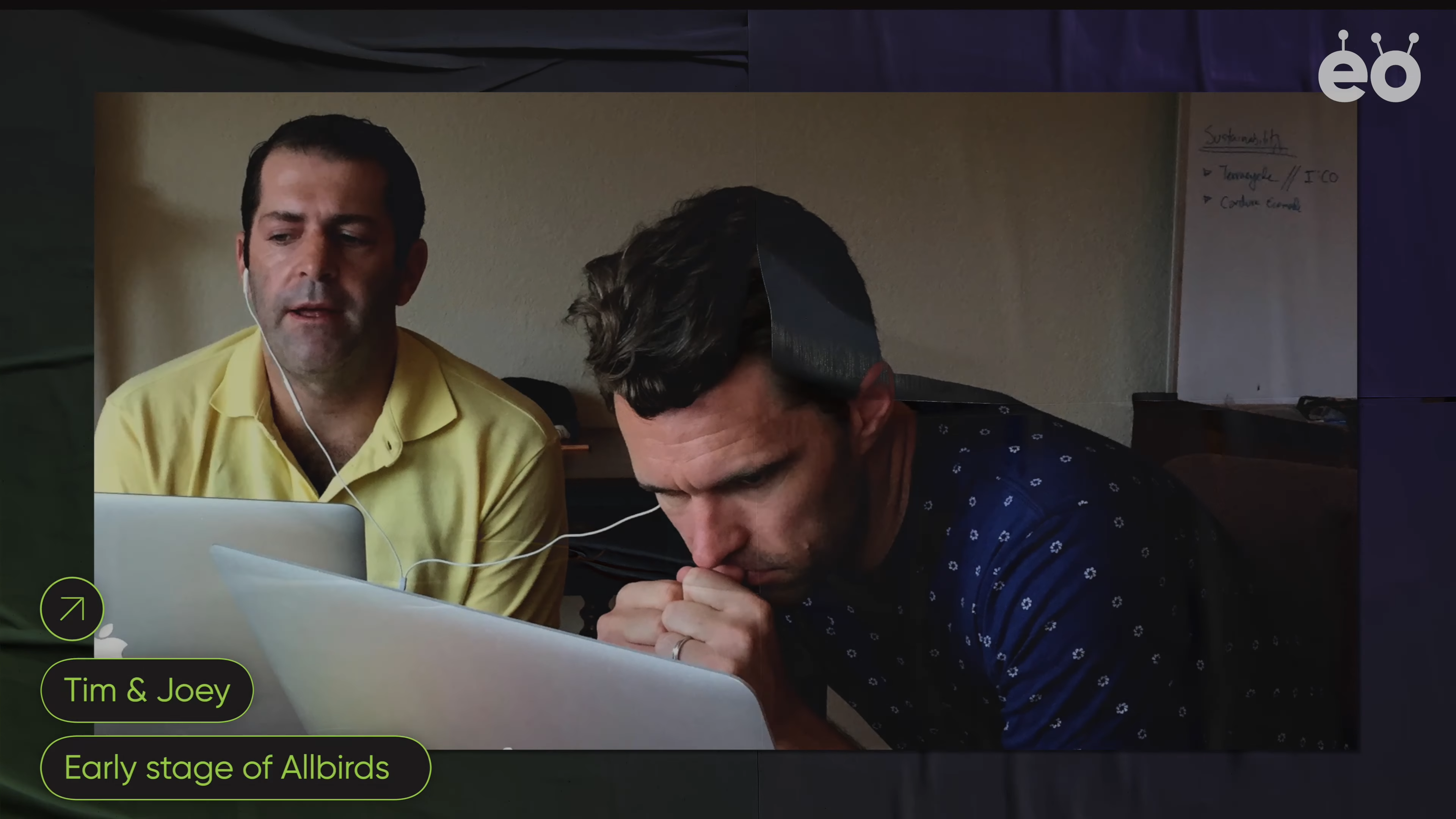
Joey Zwillinger: Tim was a professional athlete. I was in material science and biotechnology. We did not know that much about shoes, so we came in and did what we believed was right instead of being burdened with the industry's legacy way of thinking.
Tim Brown: We had four other employees alongside Joey and me, plus his dog Walter, and we were working out of his mother-in-law's house just outside San Francisco. Very humble beginnings. We met a couple of really experienced people in the wool industry, and a little further down the road in the footwear industry, and both said this was a waste of time. They had looked at it, the opportunity was not big enough, and the consumer was not going to care.
It was one of those moments where you either quit or double down and try even harder. We asked them really simple questions about why it had not been done before, and we could never get an answer that satisfied us. So we trusted ourselves. I like to say that if you do not seek feedback, you are dumb. But I can equally make the case that you are more dumb if you listen to all of it.
Joey Zwillinger: I think we are a bit different from companies that have gone at sustainability as the outcome. Customers buy great products, not sustainable ones. There is never going to be a sacrifice on the performance, the comfort or the style of the product. That has to be A+.
Tim Brown: It was a long, long journey of working it out, finding factories and developing materials. We made a lot of mistakes. When we went looking for our first manufacturing partner, we went to Busan in Korea, and we found an incredible factory there that really understands the quality we stand for and our purpose.
Joey Zwillinger: We believed we could start selling with one product, a limited line that we knew had a beautiful, unique aesthetic. We wanted to control the experience.
Tim Brown: Lots of experts told us that is not the way you launch a shoe brand. You need lots of options. But we focused maniacally on one single silhouette.
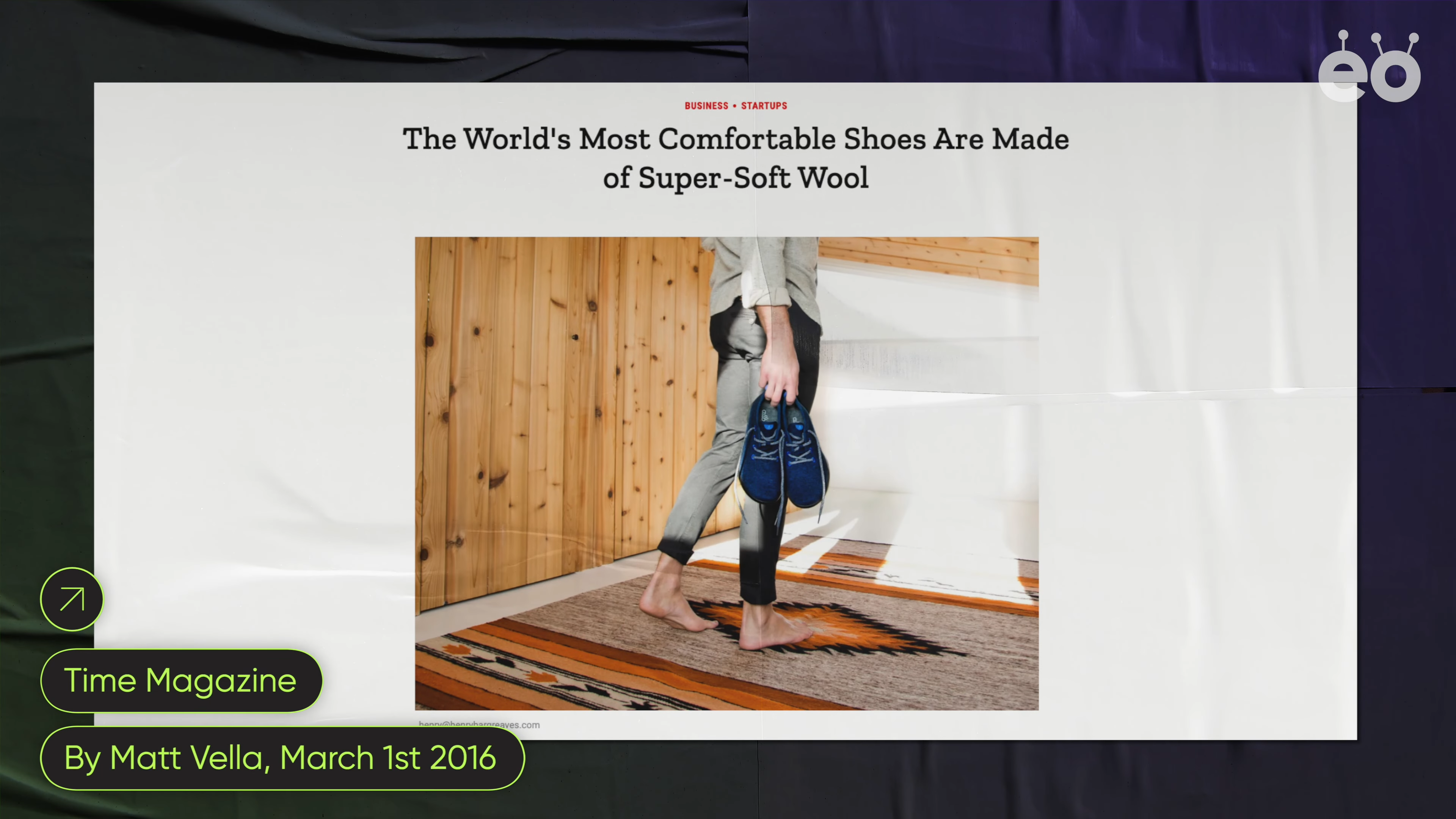
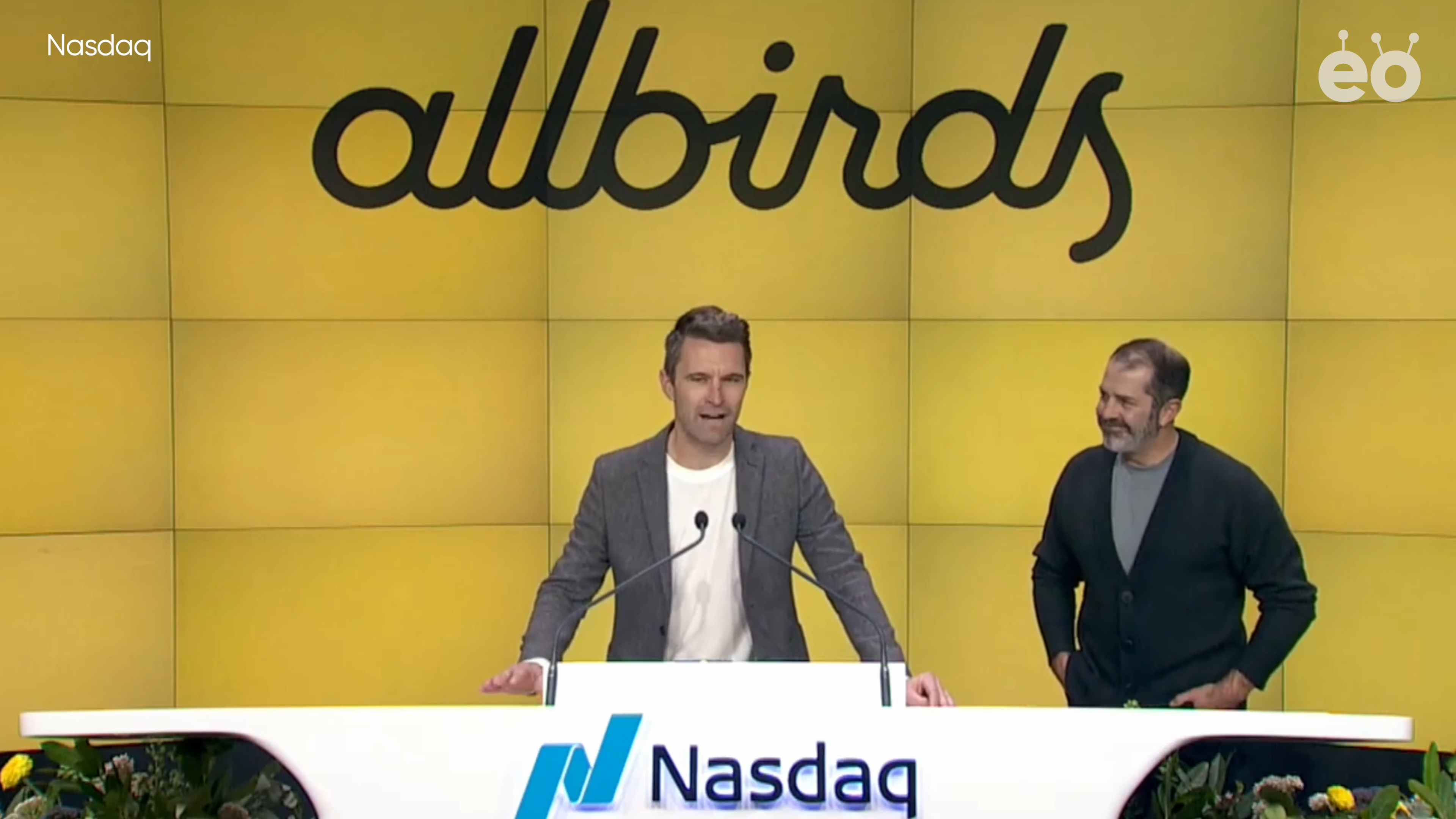
Joey Zwillinger: On March 1, 2016, we launched the Wool Runner. Time magazine said we were the most comfortable shoe in the world, which was obviously super helpful. We sold $1 million worth of shoes in the first month. Demand ran ahead of our supply, and frankly we could not make enough shoes.
Tim Brown: It was successful, and it has become an iconic product for us. Sometimes we assume innovation is about adding more things and making new things. Sometimes it can also be about simplifying.
Joey Zwillinger: In the tech industry people talk about a minimum viable product. We like to talk about a minimum lovable product. The hurdle is a little higher. It does not mean it is perfect, and we want to make it better every day. We have probably made 40 running changes to the Wool Runner by now.
Tim Brown: We built from there into new materials, into performance and a lot of different things, but that focus is deeply rooted in our DNA.
Sustainability
Joey Zwillinger: What is crazy is that 20 billion pairs of shoes are made every year, and virtually all of them are made from petroleum plastic or leather from cows. Those are essentially the two options, and they pollute the earth through carbon emissions, then go into landfills and are wasted. There is no circularity in the sneaker industry. I wonder whether I brought three kids into a world that will be less enjoyable than the one I experienced, and that is a sad question to have to ask.
Tim Brown: If you asked everyone in Korea, New Zealand and America, the vast majority would say they care about the environment and sustainability. But when it comes to buying things, it is not always clear what is right or wrong, good or bad. Part of our job at Allbirds has been to make sense of that, and we have done it through the lens of carbon. That is the main focus of our environmental work. Every product we make carries its carbon footprint on the tongue or the heel, the same way calories are labeled on food.
Joey Zwillinger: We really believe you first have to measure it. You cannot reduce it if you do not know where you stand. So first measure it, then reduce it to zero, and work backwards from there. That focuses our efforts every day so we use our resources, our capital and our time as wisely as we can. What we need to focus on is constantly innovating. Consumers never get tired of innovation.

Tim Brown: Natural materials can be harder to work with, particularly because the industry has not innovated in them as much. We have tried to do that with merino wool, with eucalyptus fiber and with sugarcane in our soles. That material innovation is at the core of Allbirds.
Joey Zwillinger: It is the engine that drives our product creation. Two things really help us be effective as a company trying to do something no one has done before. The first is a really clear purpose. It always goes back to this. We make great products, not sustainable ones, but truly great products are sustainable. The second is prioritization. Consumers hear so many different things in a single day, and we need to cut through with a consistent, sharp message. If we did 50 different things, we would lose focus and the customer would stop caring. That is a trap a lot of people fall into. They do not say no 99 times for every one thing they say yes to. When we are less effective, it is because we said yes to three things instead of one. We are a very small company relative to this industry. Twenty billion pairs of shoes are made every year and we are in the low millions, so we have so much room to grow. We just have to focus, execute, and innovate the hell out of these natural materials.
Team
Tim Brown: To the team here and the folks watching at home, I am sure I am not the first person to get up and say their team is great, but let me make the case for why it is the best. You have come here and laughed in the face of challenge. It is funny, with a little bit of success, every step is more challenging than the last, so you have to constantly reset your expectations. There are many things we need to do better and many more challenges to tackle, and that is a privilege because of how far we have come. There are little moments that tell you you are on the right track, an interaction with a teammate, the solving of a problem, the release of a new product. Often it is the mistakes, in the fullness of time, that teach you the most.
Joey Zwillinger: We are now six years into this journey. What I learned back then was that the big challenge for Allbirds would be giving ourselves the time to spend a year training factories, developing materials and doing the really hard work. We knew this would be a long road, and respecting those timelines lets us invest with a really long horizon. Anyone starting a business quickly finds that always-on thinking about your business is very tiring if you do not believe in what you are doing. So I go back to the purpose of the company. If I authentically believe the world needs a leader in consumer products to change the view on climate change, that gets me out of bed every day, no matter how hard the last day was, and says, all right, let's go again. We are fighting for something important. It is less that I am confident and more that I have one life to live. If I am going to take one swing at the baseball, I would rather swing for the fences.
Tim Brown: As a founder, I feel incredibly fortunate. People talk a lot about the challenges, and that is real, but let me talk about some of the good things. You get to choose who you work with and surround yourself with people who are smart, thoughtful and hardworking. You can build deep relationships and friendships. Just as in my sporting career, when you are part of a team shooting for a problem bigger than any one individual and bigger than the group, I do not think work gets any better than that. It is worth it. Anyone who gets the opportunity to do it should give it a go.
Explore more