At a Glance
- Who: Tiago Sada, Head of Product at Tools for Humanity, the company co-founded by Sam Altman and Alex Blania to ensure humans can thrive in the age of AI.
- What: Tools for Humanity built the Worldcoin project, including the Orb (a biometric verification device using iris scanning), World ID (a privacy-preserving digital identity), and uses blockchain for ownership, openness, and provable privacy.
- Traction: Tools for Humanity has raised over $250 million, the Orb is in its fifth generation and is open source on GitHub.
In this interview, Tiago Sada reveals why Sam Altman co-founded Tools for Humanity alongside OpenAI, how the Orb verifies identity using iris biometrics that never leave the device, and why blockchain is essential for proving privacy. He also shares why the copilot model will reshape how developers build with AI, and why we will soon choose work based on purpose, not income.
Key Takeaways
AI is advancing faster than expected, and the internet's identity crisis is growing with it
Sada explains that Worldcoin started when Sam Altman realized AI was coming much faster than anticipated. The growing challenge of distinguishing real people from bots on platforms like Twitter, and across social media and financial services, drove the need for a scalable identity solution.
Document-based identity verification excludes most of the world
Traditional ID verification through passports or driver's licenses is not only insecure, with deepfakes making it worse, but more than half of the world's population lacks a digitally verifiable ID. Sada argues that any global identity system built solely on documents would exclude more than half of all adults.
Private biometric verification is the strongest answer to proving you're human
Sada describes how the Orb uses iris scanning to generate a unique code representing each person. By default, only the iris code leaves the device and everything else is deleted on the spot. The system is engineered so that it is mathematically impossible for websites to access biometric data.
Blockchain makes privacy provable, not just promised
Sada explains that Worldcoin uses blockchain and crypto technology because it provides three critical properties: ownership, openness, and provable privacy. The goal is decentralization to the point where the company cannot be evil, not just chooses not to be.
The copilot model is the smartest way to bring AI into existing products
Rather than building entirely new AI-native apps, Sada advocates for the copilot approach: keep the existing product and layer an assistant on top. He predicts a wave of copilot-style integrations across writing, design, and other everyday tools in the next few years.
Education will shift from job preparation to purpose
Sada envisions a future where people choose work based on passion and contribution rather than income. He believes that within a few decades, education will focus less on career preparation and more on enabling people to pursue what excites them.
Below is the complete transcription of the interview. Minor edits have been made for clarity and readability.
Introducing Tiago, Head of Product at Tools for Humanity
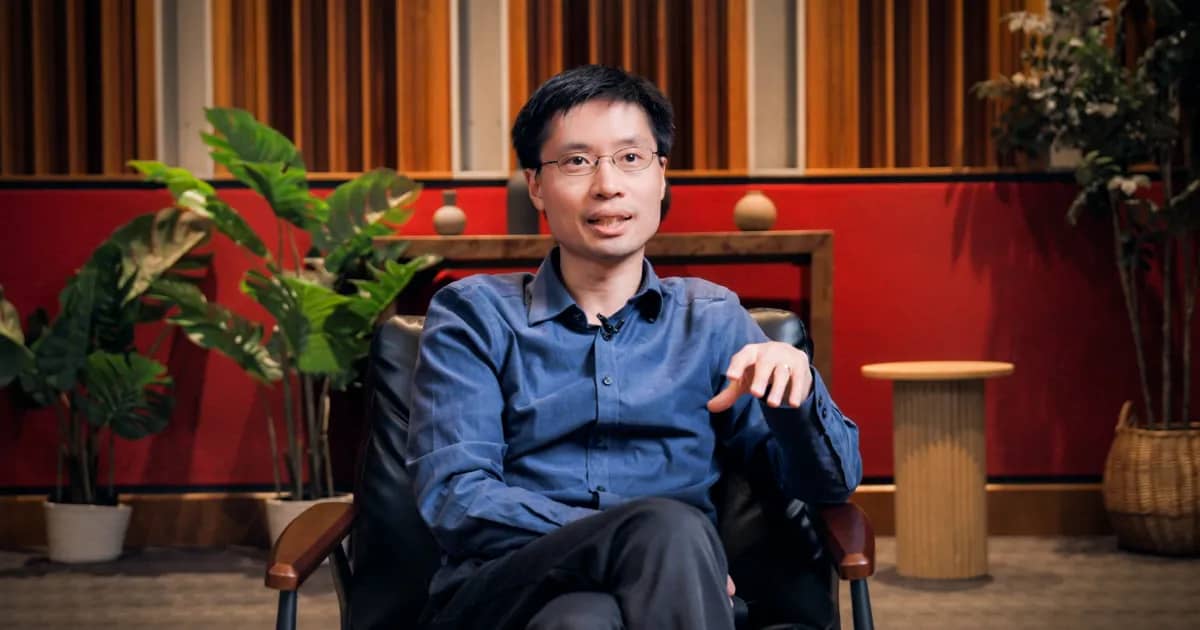
Tiago SadaCourtesy of EO
My name is Tiago. I am Head of Product at Tools for Humanity. Tools for Humanity was started about four years ago by Sam Altman and Alex Blania, with a very basic goal of making sure humans can thrive in the age of AI. Tools for Humanity has raised over $250 million. The first major project that we built was the Worldcoin project, and alongside that, we had to build different parts: things like World ID and World App, and obviously the Orb, which we'll talk about today.
How to differentiate people in the age of AI?
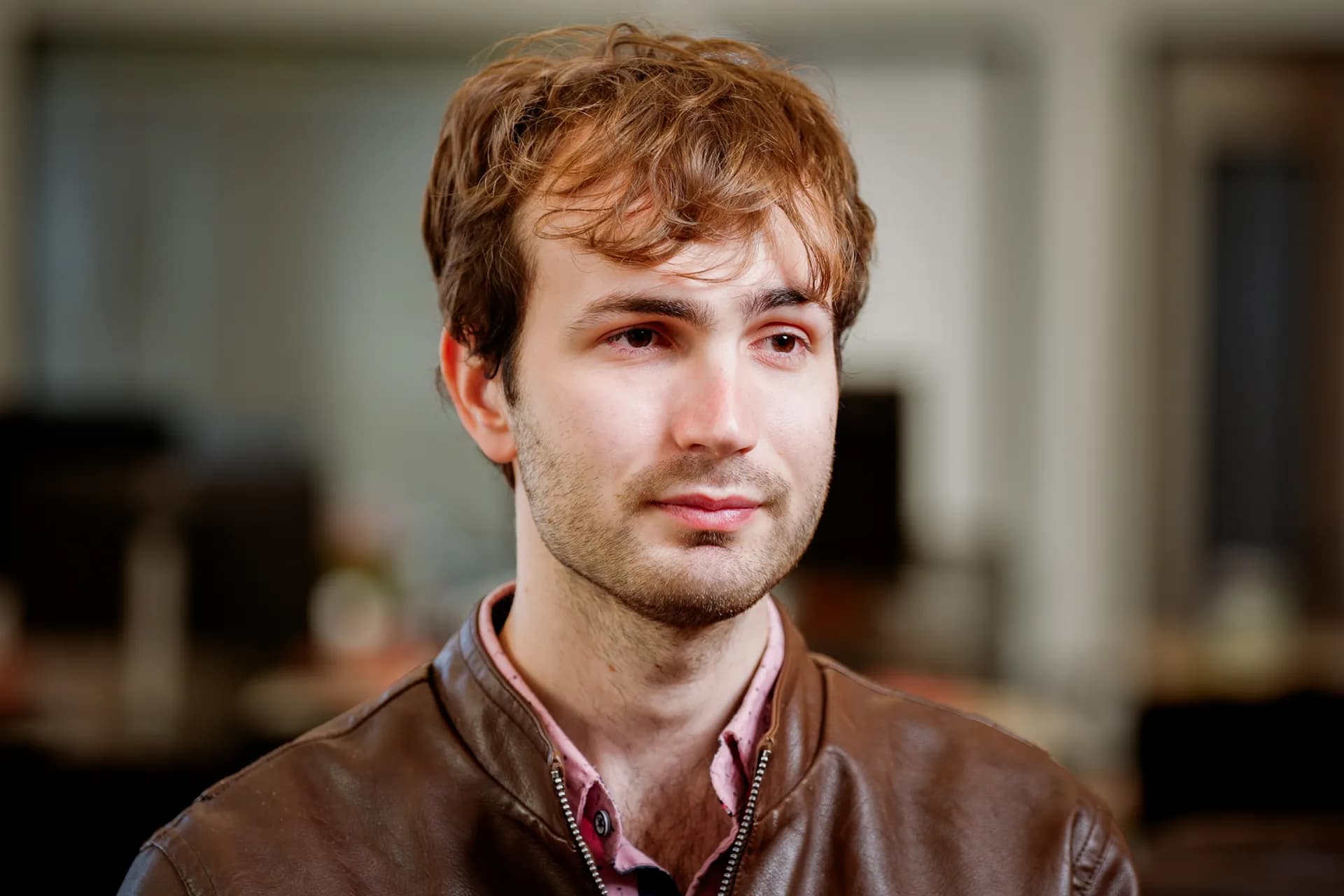
Tiago SadaCourtesy of EO
Worldcoin started about four years ago when Sam, who's also the co-founder of OpenAI, realized that advanced artificial intelligence was coming. It was not just coming; it was coming a lot faster than a lot of us expected. When you go on Twitter and you see 20,000 Twitter accounts saying something about a topic, how do you know if those are 20,000 real people giving their opinions, or one guy in a basement with 20,000 bots trying to shape some narrative?
We're seeing across the internet, whether it is social media or financial services, there is a need to know what is a person and what isn't. This is getting harder to do with new advanced AI systems. It turns out this is a really difficult problem. You can get a bit more complex and verify official documents like a passport or a driver's license. But there are a couple of challenges with that. It's not super secure today.
You can go on Google, print out a fake ID, and get through most of these document verification systems. It's very difficult to make them secure, and as AI progresses with deepfakes, that's going to get even harder. Even if you could do all of that today, more than half of the world's population doesn't have an ID that you can verify digitally. If you want to build a system that is global, you would already be excluding more than half of the adults in the world.
The last bucket of things that you arrive to is biometrics. When you think about it, biometrics is fundamentally what makes us different as each person. This is why companies like Apple have done it for a long time in their products and services. This is why for even longer, governments have used it to distinguish people. That is the fundamental answer that we got to. If you're able to verify biometrics in a way that is private, in a way that is secure, they are the best answer to being able to distinguish unique humans.
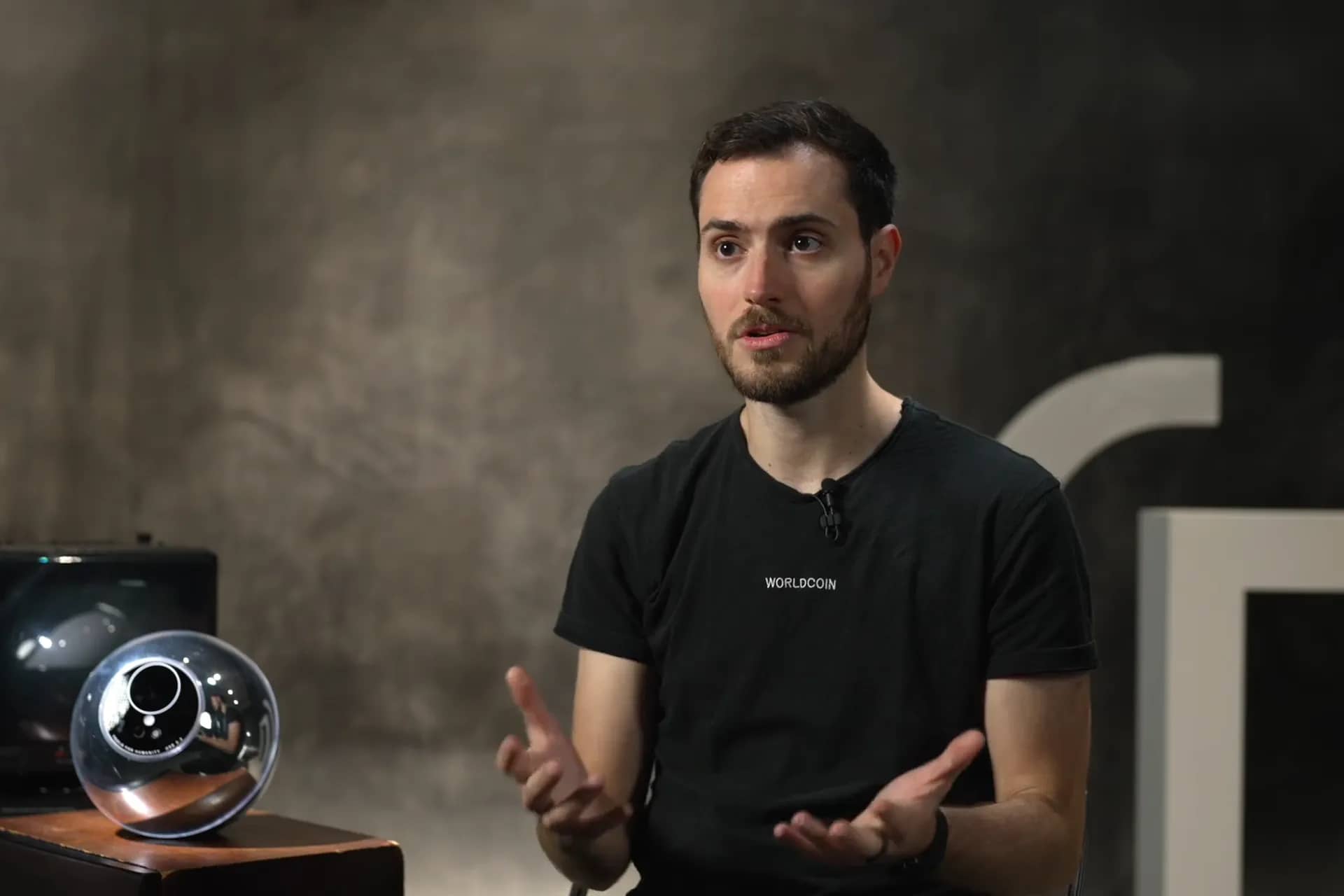
This is the Orb. The Orb is a machine that is in charge of making sure that you are a unique person. It does three things. First of all, it looks at your face, makes sure that you're not a picture, that you're not a little Chihuahua, that you're not trying to cheat with prosthetics. Then it generates what is called an iris code, which is very similar to the new identity system that Apple is building onto their VR headsets, where it generates a code that represents the randomness of your iris.
By default, that's the only data that needs to leave the device. We use that to make sure that you only verify one World ID. For anyone that wants a deep dive, the Orb is open source, and you can go on GitHub and look at the schematics and see everything that's going on. There are a couple of different parts here. First of all, there is the face. The face has a bunch of sensors, and that is what does the verification, very similar to the sensor that your iPhone has on the front of it.
Then it has one main lens, a tiny one, and that's a custom lens that we designed and manufactured. The cool thing about that lens is it uses something called liquid focus. There is a membrane that expands and contracts, so there's incredible precision. It's really fast to verify with the Orb. This is about the fifth generation of the Orb. We've iterated it by going around the world and learning a lot about it. The very first generations, for example, used to spit out an actual physical coin.
You would do your verification, and then on the front a little coin would come out that had a QR code, and that was how you would sign up to the system. But it turns out that when you're trying to build something for a billion people, building 8 billion little aluminum coins is not super environmentally friendly. It's not super cheap, and people didn't care about their coins. We got rid of that, and now the Orb is a lot smarter. It only has one camera which can find your face so that you can position it easily, and it can do your verification a lot faster.
One of the biggest misconceptions is precisely this: the fact that it's not just private, but that it is one of the most private things that we've ever used. It's super counterintuitive. When you hear you're going to do a biometric verification to get an ID that you can then use on websites, what you think is, all of those websites are going to get my biometrics. Do I want to do that? But the way the system is engineered, that is mathematically impossible.
There are a couple of layers of protection. The first one is the Orb runs eight different AI systems, eight different neural networks on device that do all of these checks to make sure that you're a real person, that is alive, that is unique. By default, only one thing called the iris code is what needs to leave. Everything else gets deleted on device. There's not even data. That is super counterintuitive, and when people understand it, they're really excited by it. But sometimes you have to go and explain that.
Tools for the future predicted by Sam Altman
Tiago SadaCourtesy of EO
World ID 2.0 introduces apps, a new way to use integrations to verify your accounts online using World ID. What I would say about Worldcoin is it uses blockchains and crypto technology because it is the only way to build something like Worldcoin. It's very similar to the internet in the early 2000s. Most of the startups from back then died, but there were a few startups like Google, for example, that turned out to be incredibly important for the world because they were using that technology in a way that made sense.
What crypto gives us is three really important properties. The first is the ability to give people ownership on the network. The only way to do that today, especially internationally, is through crypto tokens. The second thing is making this an open ecosystem that anyone can connect to and anyone can use without our permission. It's like the internet: anyone can publish a website. Being able to make this open without having to go through any intermediaries is super important.
The last thing is everything privacy-related. The only way to not just make it private, but prove to the world that it is in fact private, and what we're saying happens is what happens, is through blockchain networks. At the end of the day, the answer is decentralization. We need to get to a point where it's not about whether we are able or not. It should be: we cannot be evil. That starts with open sourcing as many things as we can.
That starts with doing audits and having different people and government agencies looking at what is happening. But at the end of the day, we should not have the capacity to be evil. That is generally how we approach these things. People should be incredibly excited that we get to live in this time. In terms of how to prepare, lean into these things. I like to see the system like calculators.
Back in the day, we used to have rooms of people that were doing math, and that was how we were doing things. Then eventually we had a little pocket calculator where you can do five plus five, and now that's in our phones. To think that we used to have rooms of people whose job was to add numbers and multiply them, that's crazy. We will very soon realize that it will be even harder than it has been historically to deal with bots, and to do so in a privacy-preserving way.
There is a lot of impulse to start collecting a bunch of user data to try to make sure that there are people, and there's a better way now. In terms of how to integrate AI systems into products and services, like any other technology, it comes down to: you need to try it. You cannot slap a technology on top of a product and have it work. It has to make sense.
I'm personally a big fan of the copilot model: you keep your app the same way that it is, and then you have an assistant that is helping you with those tasks along the way. For the next few years, we'll see a bunch of apps that are copilots or assistants in your life for different things. You will be writing a document and there will be a little assistant helping you write that document. You'll be editing a picture or doing a design, and there will be a little assistant that will help you with those things.
As a developer, thinking about what are real problems that the world has today, real apps that we already use, and which of those can be enhanced by having a system where you could automate things, a lot of powerful insights will come from that. Historically, we think a lot about education in terms of what will prepare me to get a good job when I grow up, and that notion will go away.
We will work not on what gives us money, but on what we like, what we get purpose from, how we want to contribute to society. That might be art, it might be science, it might be a bunch of different things. Choosing how to approach education will be a lot less about what will let me have a good job, but how do I get to do the type of things that I'm excited about doing in the future. We will definitely, within a few decades, be in that point in time.