The Other Side of the Deal
In late September, AMD agreed to buy World Labs, the AI model and research lab led by Fei-Fei Li, for about $8.2 billion. The deal is expected to close by the end of the year. EO's earlier piece looked at why a chipmaker would pay that much for a 2-year-old lab: AMD wants researchers close enough to its chip designers to shape chips two or three years before they ship.
This piece looks at the deal from the lab's side. A research lab does its best work when it is free to pursue questions on its own terms. Can it keep working at that level once it has a parent company? For a frontier lab that has chosen to sell, and for the company buying it, the answer matters.
Lisa Su and Fei-Fei Li.Source: Fei-Fei Li's Substack.
Keith Adams, co-founder of Pebblebed, a seed-stage venture firm, knows corporate research labs from the inside. He was the founding engineering lead of Facebook AI Research (FAIR), the lab where PyTorch was born, and later chief architect at Slack. Adams does not doubt that joining AMD makes sense for World Labs. "At the seed stage, a research-driven team finding a home that values it this highly is the kind of outcome we dream of," he told EO.
Asked whether co-design is really that valuable for model research, or whether the deal is ultimately about securing compute, he answered, "Both!"
"Co-design is genuinely valuable where model research meets memory bandwidth and kernel scheduling; the model architects who work across the hall from the semiconductor design team see things the rest of us read about a year later. It is also true that reliable compute at cost is a durable advantage for any lab right now, and there's nothing cynical about wanting it."Keith AdamsCo-founder and Managing Partner of Pebblebed
That matches how Li explained the move in a personal post on her Substack: "To do this requires scaling our efforts, widening our reach, and getting closer to the hardware. Without having a focused hardware effort, AI is hobbled in efficiency. And scale."
So the lab gets compute and scale. The question is what it gives up in return.
A Price That Points at People
What AMD bought comes down to people and a roadmap. Vamsi Boppana, AMD's senior vice president of AI, told analyst Patrick Moorhead that talent and roadmap together drove the price, and that after seeing World Labs' undisclosed roadmap, AMD was "blown away."
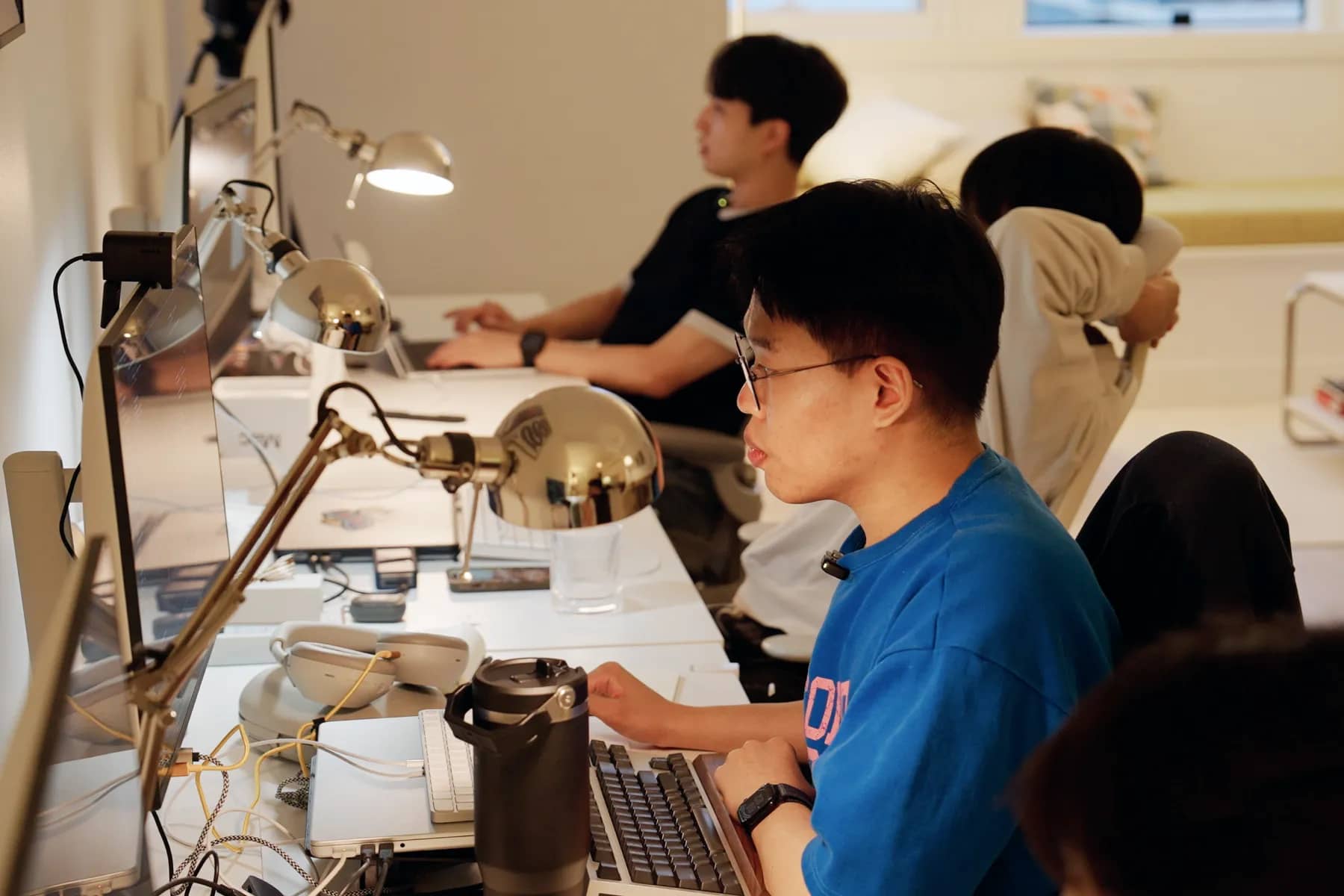
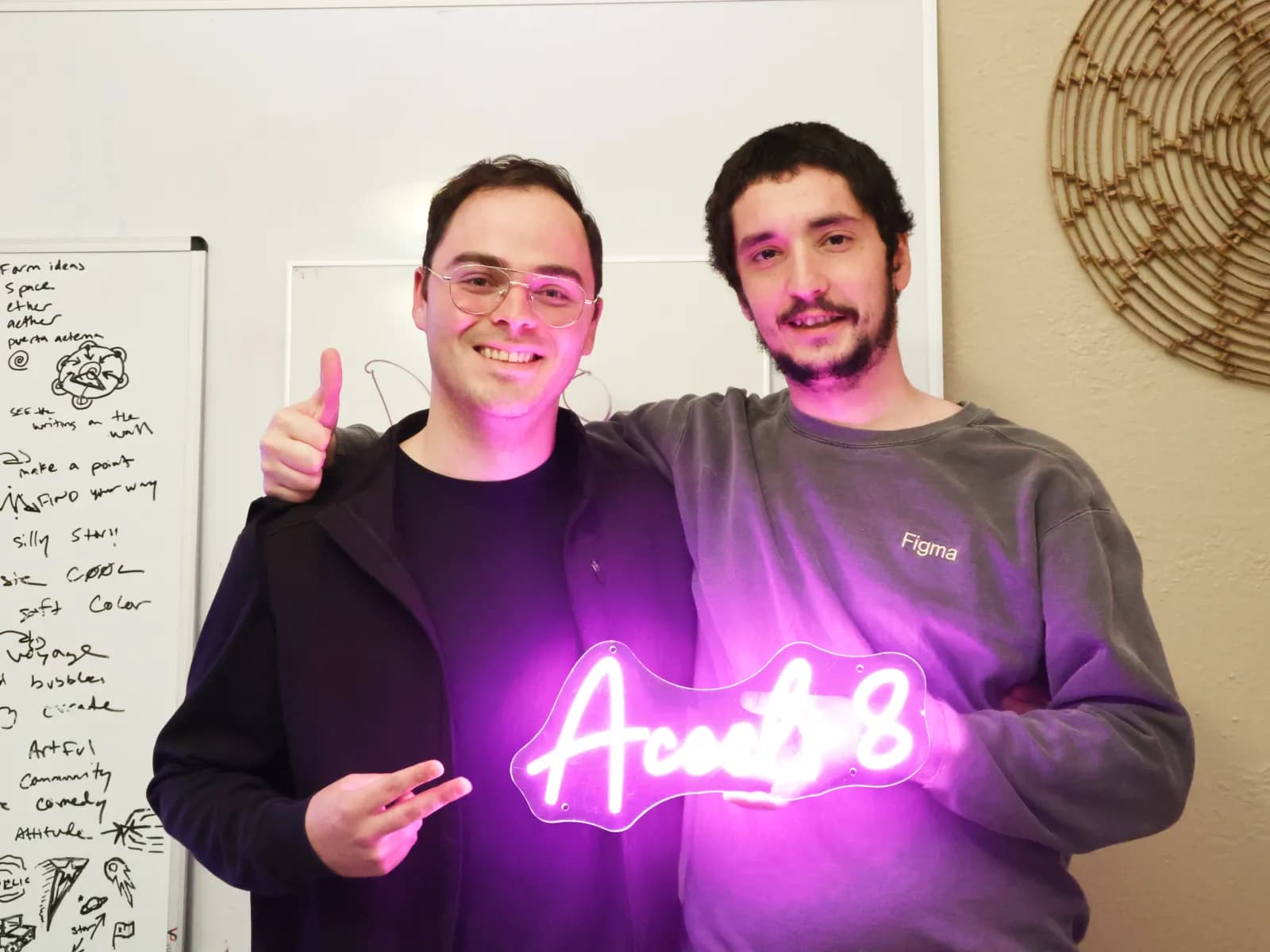
Members of the World Labs team.Source: World Labs.
Consider the scale. World Labs launched in 2024 and has about 70 employees. Spread across them, $8.2 billion comes to roughly $117 million per employee. The figure is crude, since the deal is paid in stock and also buys a roadmap and products. Still, it shows how heavily the price leans on the people. An executive at an AI company, speaking on background, described the market bluntly: only a handful of people are treated as truly top AI talent, and companies want to hire them at almost any price.
Adams has a rule of thumb for which labs stay independent. "If the lab makes a product with a revenue line, it can usually choose its own destiny; if the moat is mostly taste and talent, that is a lovely thing that tends to find its way into somebody else's balance sheet, because talent is very hard for incumbents to nurture in-house."
AMD’s explanation of the price emphasizes World Labs’ talent and roadmap rather than its commercial business. It does have a commercial side, including its Marble model, an API and work with Autodesk, but it has not disclosed revenue, and nobody at AMD has cited that side as a reason for the price. When the asset is people, the question that matters is how they will be managed.
The PyTorch Test
Being part of a big company does not stop a lab from changing an entire industry. PyTorch came out of FAIR and became the default framework for AI research. Can a lab inside a chipmaker have that kind of influence?
"It can, but PyTorch is a high bar to clear," Adams said. "PyTorch succeeded because Facebook let it have an independent existence: it ran on everyone's hardware, solved everyone's problems, and nobody had to be a Facebook customer, user, or employee to use and improve it. If AMD gives World Labs comparable independence to publish, build, open-source, and ship things that run just fine on a competitor's silicon, World Labs will continue to be regarded as a serious and independent force."
"The moment a lab's output is leashed to the parent company's marketing roadmap, their credibility starts to erode."Keith AdamsCo-founder and Managing Partner of Pebblebed
Seen this way, how AMD and World Labs talk about open models is worth a closer look. Both companies named open models, or contributing to an open ecosystem, among their goals after the deal.
A concept image of Nvidia's Nemotron models.Source: Nvidia.
And open models can serve a chipmaker's business. Eugene Cheah, co-founder and CEO of Featherless AI, an AI inference platform, pointed to Nvidia's Nemotron team. (AMD is an investor in Featherless.) Nemotron's models are far smaller than the leading closed models or major open models such as Kimi or Qwen, he said, but they serve as an official reference point among chipmakers.
"One of the things that they always tend to do really well is to show, 'Hey, if you want to train a model like this, this is how many GPUs you need. These are the settings we use. This is how much it'll cost.'"Eugene CheahCo-founder and CEO of Featherless AI
Still, World Labs explicitly promised open models, both in Li's Substack post and in the company's announcement, while AMD has sounded more careful. CEO Lisa Su told Bloomberg that "you're going to have both open as well as proprietary models."
Boppana was more guarded still. He declined to frame the acquisition as an open-model strategy and said competing with customers at the frontier is "not the intent at all." Moorhead, who relayed the conversation, noted that this was "softer than Fei-Fei's public commitment to providing open models and platforms."
The gap is not a contradiction, and people who work near chips see AMD's position as close to common sense. Damnang, a semiconductor engineer and independent analyst at Damnang Research, told EO that Nvidia's in-house LLM developers describe their goal the same way: less about building frontier models of their own, more about understanding how models behave and getting the most out of Nvidia's compute. He takes AMD's stated line at face value: build model research capability, but keep the business centered on supplying compute to customers.
Openness, though, is only the most visible of the pressures a lab faces inside a big company. Adams has a name for the rest.
The Strategy Tax
Asked about the biggest trap World Labs should watch for inside AMD, Adams pointed to what Dave Winer popularized as the "strategy tax." The concept is credited to Ben Slivka, who led Microsoft's Internet Explorer team in the 1990s.
An excerpt from Dave Winer's 2001 essay on the strategy tax.Source: Scripting News.
In a 2001 essay, Winer described products inside a company like Microsoft that have to accept constraints that hurt their own competitiveness in order to serve another product. His example was a company that makes both a web browser and a word processor.
"Consider a company that develops both a Web browser and a word processor. The product team for the browser might get lots of input from users saying, 'We'd like a better editor in the browser.' It would be natural to give the users what they want. So they put the feature in their project plan, but when it comes up for review, the CEO shoots them down. 'They should use the word processor,' he says."Dave WinerSoftware developer and author of Scripting News
"Every big company serves multiple external and internal constituencies; you have different customer segments externally, and internally, competing projects and divisions targeting the same external needs," Adams said. "The roadmap for a product inside a large company sometimes sacrifices its own competitiveness for the good of the larger organism."
"This isn't a knock on AMD; it is the statistical physics of large organizations, even the best, and I've felt the pull myself."Keith AdamsCo-founder and Managing Partner of Pebblebed
AMD announces its acquisition of World Labs.Source: AMD.
AMD already runs its own research teams and spans several business units. The teams it has brought in from outside include another model lab, Silo AI, along with companies at other layers of the stack such as Nod.ai, ZT Systems and Taalas. Then there are its customers, including the data center clients that build AI models of their own. Once the deal closes, World Labs will have to account for all of them.
These pressures are common in large companies. Their presence alone does not show that World Labs’ independence is at risk. But the chip industry has seen how quickly overlapping teams get sorted out once they share an owner. In 2016, Intel bought Nervana Systems, an AI chip startup, for about $400 million. In December 2019, it paid $2 billion for Habana Labs, another AI chip startup, and said Habana would operate as an independent entity. About two months later, Intel ended development of Nervana's training chip and moved forward with Habana's line instead. Habana's chips performed better, so the decision had a clear technical rationale. Still, it shows what happens when two teams inside one company are aimed at the same need.
Within a research lab, the strategy tax can also accumulate through smaller, everyday requests. A customer needs a feature. A product team needs a demo. A chip launch needs a model that shows off the new chip. None of these is unreasonable, and each one pulls researchers away from the open-ended work that made the lab worth buying.
For now, little is known about how independently World Labs will be able to run its research after the deal closes. Boppana said training will lean toward AMD, with more compute behind it, while deployment will stay multiplatform because World Labs already has products running on other platforms. Beyond that, AMD did not respond to EO's questions about whether World Labs will keep publishing research and releasing models and tools that run on non-AMD hardware, or how the lab will work alongside AMD's existing model teams.
The Person Who Says 'Not Yet'
Even so, the deal has one important defense built in: Li's seat at AMD's executive table.
"For World Labs to succeed as part of a product company, someone with tangible authority has to keep saying 'not yet' to perfectly reasonable requests on behalf of paying customers."Keith AdamsCo-founder and Managing Partner of Pebblebed
Lisa Su and Fei-Fei Li in an interview with Bloomberg Tech.Source: Bloomberg Tech.
Li will serve as executive vice president and chief scientist, reporting directly to Su, and her mandate extends beyond World Labs. "Fei-Fei has a tremendous portfolio and ability to add across AMD," Su said in the same Bloomberg interview. "We will really want and welcome the contributions of Fei-Fei and the World Labs team across the AMD roadmap." After the deal closes, according to AMD's announcement, the World Labs team will continue to focus on advancing AI model research.
Li, for her part, described the decision as a matter of belief rather than options, and said the lab would keep doing its current work while expanding. Su said the two of them had already discussed using World Labs' existing work to accelerate the open ecosystem.
Read together, these are encouraging signs that AMD intends to give the lab room. Reporting directly to Su could give Li leverage to protect the team's research priorities when they compete with other demands across AMD. That reporting line does not guarantee independence, but it gives her a way to argue for it at the highest level.
Whether the seat is enough will depend on how it gets used. Adams' test is not whether Li has authority, but whether she spends it on saying no.