May 09, 2023
When AI can do inspiring things except eliminate jobs
Interview with Andrew Song, Co-founder of Whisper
Founder Focused

0:00 / 0:00
💡
At a Glance
- Who: Andrew Song is the co-founder featured in this interview, speaking about the work behind Whisper. The discussion connects Andrew Song's background to company-building choices, focusing on the problem being solved, the people served, and the evidence guiding decisions as the organization develops.
- What: The interview examines how Andrew Song, co-founder and CEO of Whisper, moved from a Facebook product management role to building an AI-powered hearing aid startup, driven by watching his grandfather hide his hearing aids rather than deal with how poorly they worked.
- Traction: Whisper launched its first product in 2020, has raised a Seed and Series A from Sequoia, employs about 55 people, and is targeting a hearing loss market worth tens of billions of dollars that affects roughly 1 in 8 people in the US.
In this interview, Andrew Song, co-founder and CEO of Whisper, traces his path from product management at Facebook to building an AI hearing aid company after finding his grandfather's hearing aids hidden away, unworn because they worked so poorly. He walks through the company's long hardware struggle, roughly 15 to 20 MVPs and countless false successes and failures, and the belief that carried the team through it: it's better to be fast than right, since being right is so hard to know in advance.
Key Takeaways
Build Products Around Problems You Cannot Ignore
Song's grandfather hid his hearing aids because the experience was so poor, turning a family problem into a technology opportunity. He treats such moments as windows that should be entered, especially when a new product could restore participation and confidence.
Let Reality Decide Whether the Product Matters
Whisper balanced spreadsheets, interviews, and surveys against a more human question: would a real patient have a reason to choose the product? Song says the business became meaningful when the team could answer yes for the person who needed better hearing.
Use Many MVPs to Find the Right Hardware
Whisper moved from laptops and headphones to microphones attached to hearing aids, solving latency, sound quality, and reliability one prototype at a time. Song's lesson is that hardware progress comes through many imperfect experiments, and speed helps the team discover mistakes sooner.
Expect False Successes During Constant Product Refinement
Even after microphones worked, new failures appeared when users showered or returned to wearing the device. Song learned that development contains false successes and false failures, so teams must keep refining without assuming any single milestone means the work is complete.
Design for Confidence, Control, and Human Connection
Song says hearing support is not only about restoring sound. It can change confidence and control, while a subscription model can make access more manageable, so Whisper frames the product around the life and relationships of the person wearing it.
Let Personal Truth Guide Meaningful Work
The personal truth guides decisions now and connects product building to work that can remain meaningful beyond the founder's own tenure.
Below is the complete transcription of the interview. Minor edits have been made for clarity and readability.
Introducing Andrew, the Co-Founder of Whisper
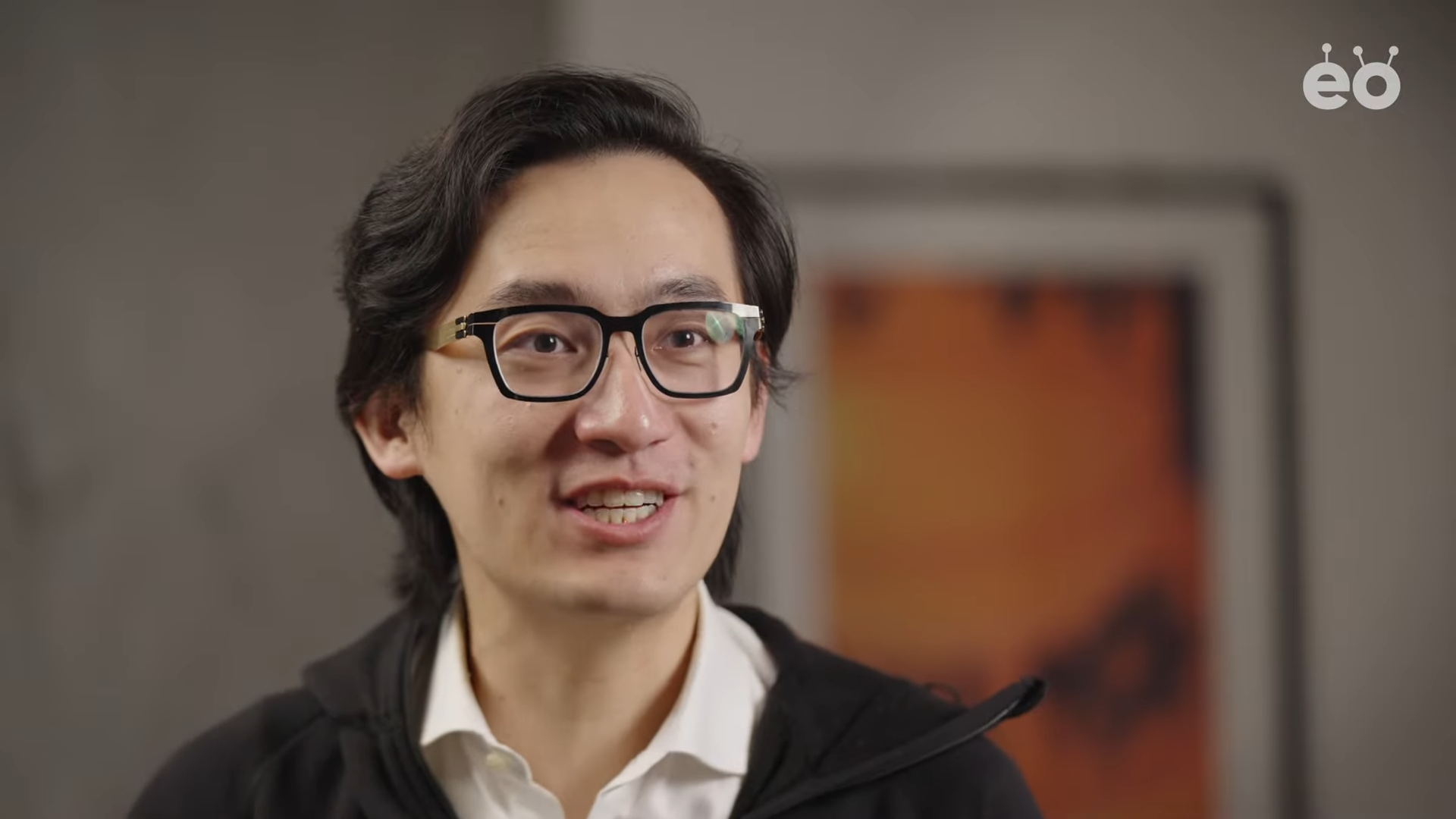
Hi, I'm Andrew Song. I'm the co-founder and CEO of Whisper. We're a hearing aid startup here in San Francisco, California. Whisper is very unique. We use AI to help people hear better and try to emphasize person who's speaking to you. And for people who have hearing aids, this is a really big challenge. Their devices are louder than you and I would use.
And so you need to be able to really deeply understand what to emphasize and what not. About 55 people and here to change the world of hearing.
An Young Engineer Building Products
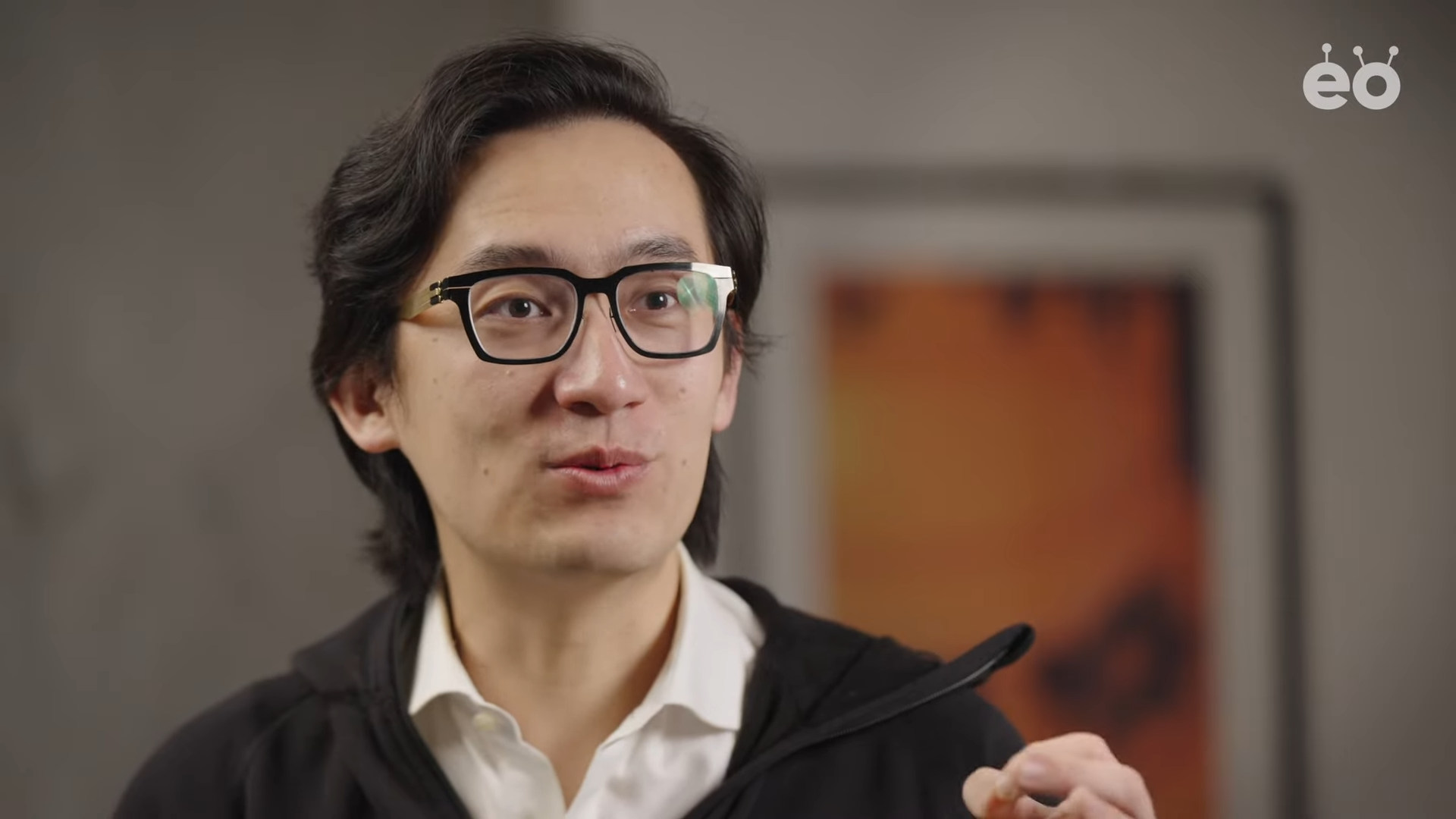
I was born in China. I grew up in Canada. Looking at where I am today, everything I get to do today is a version of a dream of that young Andrew. I really knew that technology was really interesting. I got to use a lot of computers. Part of the reason I went to the University of Waterloo and studied computer science, studied mathematics is I was actually really inspired by Bill Gates when I was very young.
He wrote a book called The Road Ahead. He wrote about how the Internet is going to change the world, 10 or 15 predictions about how we're all going to live different lives. I read that book as a young person thinking, Wow, it sounds like science fiction. It's like you're reading a space novel. My background is in math and computer science, so I studied that in my undergraduate at the University of Waterloo in Canada.
And Waterloo was very unique in that it gave us the opportunity to do six co ops, so six 3 to 4 month jobs as students. You know, when I did all of those co-op terms, what I actually worked on and what I was excited about, it was always product building, building a new product, putting it in front of people and them liking it or not didn't really matter to me.
You know, I just wanted to work and improve it and build it. And it was actually a friend of mine who worked at Facebook who said, If you're thinking about that, then why don't you just do it. I interviewed for that product manager role, and I think I did terribly. I mean, I'm pretty sure I did terribly because people told me I did terribly after.
I think from Facebook's point of view, they looked at me and they said, well, he's an okay engineer so we can hire him as a product manager. And if he's a terrible product manager, he can just be an engineer. Adapting was so difficult.
One of my biggest career memories was from my first week at the job, and then I sat down at my desk and I had my laptop open and I had Excel open. I don't know why I had Excel open. It was a blank excel, just like empty cells. And I looked to my left and there was a software engineer. They were writing code quietly with headphones on.
I looked to my right. There was another software engineer writing code, and I asked myself, What am I supposed to be doing right now? And I was a software engineer, so my first instinct was like, maybe I should go write some code. And then I stopped myself and I said, No, I'm supposed to be doing something else. Maybe there's something I can learn about the product analytically.
Really memorable example for me, when I felt that transition is actually when I first started working on Messenger, my responsibility was to cover consumer products everyday people sees and touches and uses. That was my team's responsibility. It's a big responsibility. When I started working, I just do everything. You got to cover everything. This is your responsibility now. It's important and that's impossible. You can't cover everything.
You have to go back to what's this product doing for people again, getting back to that, that confidence inside of yourself that you understand why this product should exist and how it can be different or how it can be improved. I think the biggest thing I learned through that phase was having a really true sense, a really objective sense of how your product was working in the real world.
And you just have to figure that out for yourself. And that's how you can be the most valuable in many ways on your team, is to have a really clear view of what's going on.
Grandpa Losses Hearing
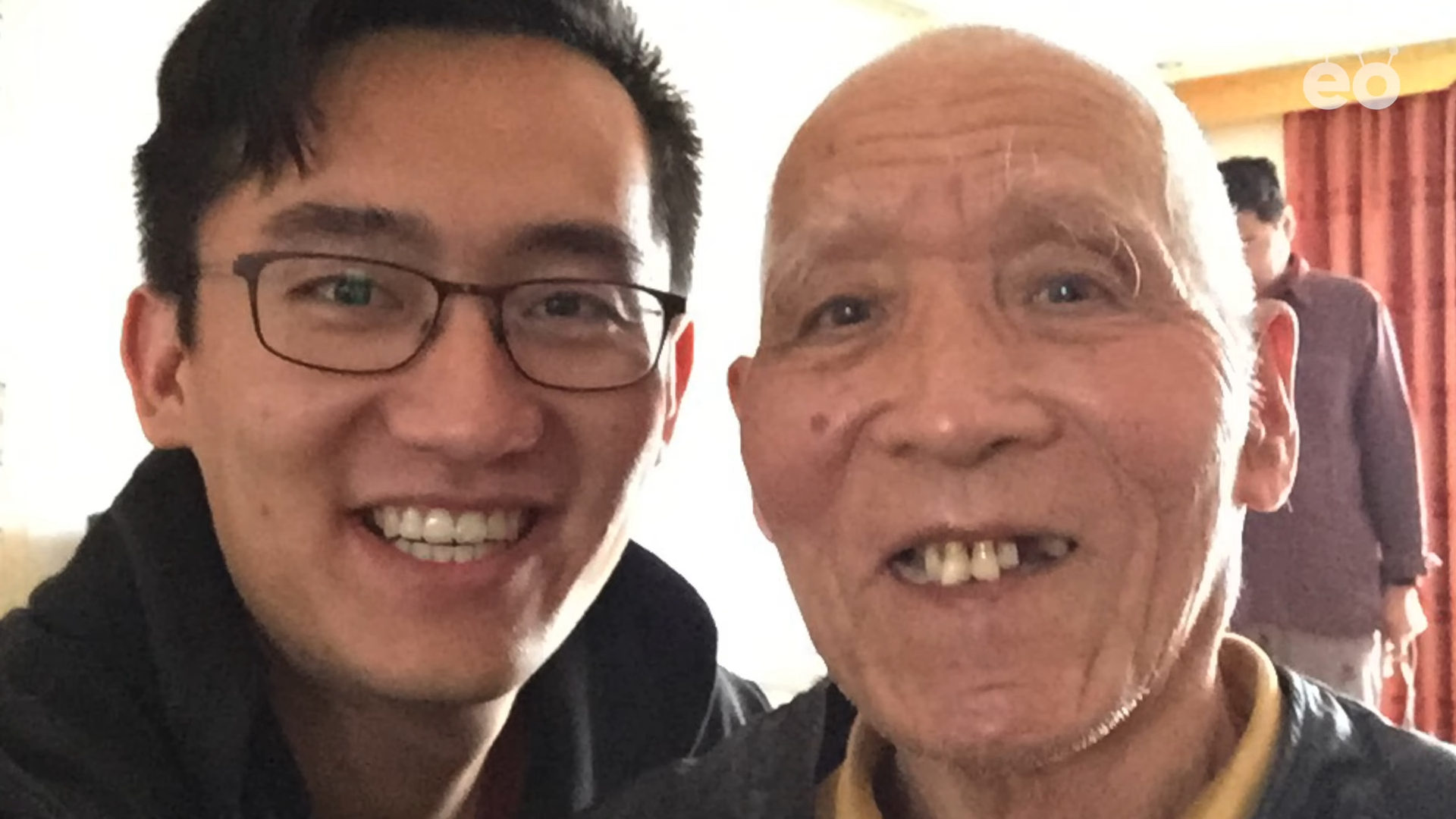
So my grandfather lives in China. My grandfather really helped, I think, guide me, you know, all the things that good parents want. You know, a good student, work hard. You know, my grandfather's experience is unlike many other people. He started losing his hearing. I think one of the challenges, though, is that hearing loss is often a very private. When you start realizing you have hearing loss, you may not want to share that with people.
In fact, you probably want to reject that idea and say, I don't have hearing loss that people are talking too quiet. You went to a doctor, they gave him hearing aids and then he just chose not to wear them. In fact, I found out about it when I opened a drawer in his home. And so when I tried the first set of hearing aids he got, I was shocked at how bad the experience was.
That's really what pushed inside of me a problem in the real world to a technology opportunity. My philosophy sort of in life has always been if there's a window of opportunity that opens in front of you, you should jump through it. The opportunity to build a new product, a new technology, and to have such a profound impact on people like my grandfather.
It's not one that I felt like I would be happy closing the window on that was my version of just seeing what we could do and saying, There's something here and you just have to leap and go for it.
We use Artificial Intelligence We use AI And tried to emphasize the person speaking to you. You know, when we started the business, there's always like 10,000 spreadsheets that you're trying to work through and understand what the business looks like.
You do lots of interviews with consumers, but at the end of the day, the question that we had to ask ourselves was, at the end of all of these spreadsheets and all of these interviews and all of these surveys, at the end of that was a person was a patient who needed something. And when they had to make that decision, was there a reason for them to choose Whisper or not?
And we felt like the answer was yes. And so I think in that way, that's the my grandfather's biggest influence on it is just reminding us that that's there. Building a hearing aid is not a series of just building an MVP and then building the product.
For us, it was probably building 10 or 20 MVP's along the way because today when you look at Whisper, there's a product there and look, a hearing aid, of course it would look like this. But along the way we struggled so much. One of the things we learned very early on was it's better to be fast than right because it's very hard to be right. So you might as well be fast and find out if you're wrong.
And the first results that we got were, I think, really inspiring. You know, they were on laptops. We didn't have hearing aids yet. We had laptops with headphones and big microphones that we were holding out in the world, that that was what our hearing aid was. But we could record some sound and see that light. Oh, when I listen to this, when I just recorded it, it's very noisy.
It's hard to hear the person. And now that I've built my little model over the past few months, it sounds great. And then why don't we put the mic on the headphones? That's a little closer. Wire up some microphones, will just glue them to the hearing aids and that will be our second hearing aid.
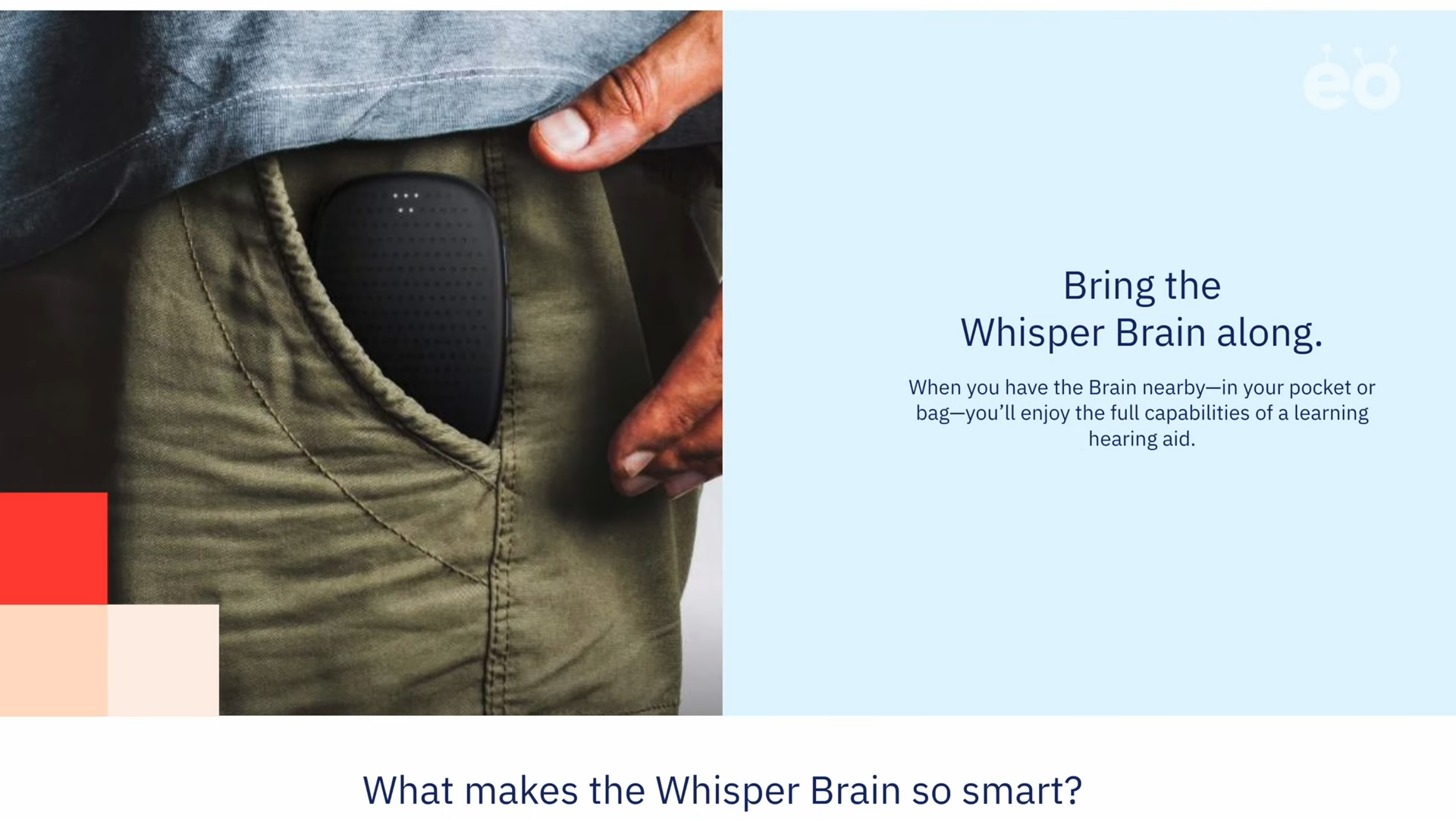
And then there are all the latency and everything was a little bit weird because we had to use this laptop like, oh, well, if we use some audio equipment and wireless altogether, maybe it'll sound a little bit better. That was our third demo. There are so many. It's hard to count when you go through and build a hardware product especially we worked with a partner to build them, to manufacture them.
And one of the first things we found out, the microphones don't work and it became this kind of ongoing problem where we couldn't figure it out, couldn't figure it out. And the longer it takes for you to figure out and solve a problem like that, the more you think. I don't solve this problem, the company is going to die.
You know, after we got the microphones working and solved many other problems and people kept saying, if I shower and come back and wear it, it stops working, you know, we thought we were done. We thought we were close to the end, but now we just added all this extra work company is going to die again. We're at like the 15th hill by this time. This is the 15th hill we've had to climb.
But it really, I think, shows the commitment of the team to solve it. In the time that we did, building the final product required so many decisions along the way, and it never felt like we were done almost until we were forced to be done. We launched our first product back in 2020, right in the middle of the pandemic.
And you can imagine working on a hardware product on real patients in a pandemic was not the easiest thing. There is a moment in the company where we brought somebody who used hearing aids, someone who wanted to try our product, and they put it on and they said, Wow, that's amazing. And they started crying. I got emotional. The whole team got emotional. It was a very powerful moment.
What I really learned through that process, though, was how each step isn't necessarily a step forward and you can have a lot of false successes and false failures. And so it's just constant refinement and bringing in people to help us answer that question is that to get us really, really close I think even today I look at the product and there's some deep part of me that's very unsatisfied.
But I think everyone I think that's just part of life that I accept now. And we're building our next product that looks so much better. I also realize at the end of that process we're going to feel the same way too Making a great product.
Impacting on Millions In The U.S.
I think it goes back to that truth that require an understanding of where is this thing that you want to build? Where is it going to be used in the world? You have to understand for many people, when you have hearing loss, getting your hearing back or restoring some of your hearing through a hearing aid is not really just about your hearing. It's about your confidence. It's about your control.
And so that model, that relationship you have with the product is one that's ongoing through life. Unfortunately, in the US, hearing aids are also can be very expensive. And so a subscription model also can make it more affordable for many people. Sequoia is an investor. They led the series Seed and the Series A with us. They've been great partners.
And so when we went out, my co-founder Dwight always says a crazy team in an idea with a slide deck, like just trying to go, go make it work. And one of the things that has always been true for Whisper is it's really important for us to educate investors or potential investors on what the market really is. Most investors don't sit around thinking about the hearing aid space.
It's tens of billions of dollars globally hearing loss affects something like 1 in 8 people in the US. There are more and more people getting older every single day. we really wanted to focus on this person at the end of this light for us that was looking for something better with their hearing. Now we reach customers through a number of different ways because there are so many people out there who are looking for better hearing.
They're look going on the Internet. They're asking their friends. I like to remind people we did not invent the problem of hearing loss. Hearing loss has existed as long as humans have existed. And again, that excitement of what's possible to what exists, that huge difference is where we think Whisper has a spot in the world.
Truth that Grandpa Gave

He got to try a very early version of it. I remember when he tried a good set of hearing aids finally He started to look around and be part of the conversation again. I think half my family thought he was losing it mentally because he wasn't able to follow the conversation. He just can't hear you.
I think it's really important in any thing you do in life, whether you're a CEO or a co-founder or a product manager to know your truth. There's a truth behind how that's going to change the world somewhere in there, and that will guide so many decisions along the way.
And those decisions become so much easier when you know that truth inside of you, when you can communicate that truth to everybody that you're working with. And those decisions become so hard when you're not sure. That's I think, the biggest takeaway that I've learned. Unfortunately, he actually passed away very recent a few months ago. I think that has caused me to reflect a lot about his inspiration on me personally and this this company that that's been built.
But I also think about it, consumer lens, just like a lens of somebody who wants to hear better and wants to laugh at jokes. And that experience is happening in households every day around the world. It is a human phenomenon. It is beyond language. It is just something that we all deal with and see in our loved ones, especially as they age. And that is, I think, the guiding light part of my truth.
The truth for me at Whisper is ultimately that what technology can do for people who use hearing aids, who rely on them to laugh at jokes, hear stories that technology is so far beyond what is existing in products today. That's our opportunity. That's what makes us really excited. That's what makes us optimistic.
I think one of the great opportunities when you get to work in a field like technology is you can often build products or work on ideas that will last for much longer than maybe even beyond your life. I think everybody who has the privilege of working in an area like that, there's somewhere in there that that's part of the dream, is to just do meaningful work.
I hope the work that I do is meaningful and in some way can last beyond even my work on it can last in some form into the future.