Aug 28, 2023
Essential Business Strategy : Forecasting Future Trends
Interview with Vinnie Lauria, Investor of Golden Gate Ventures
Founder Focused

💡
At a Glance
- Who: Vinnie Lauria, co-founder of Golden Gate Ventures, started out building startups in Silicon Valley before moving to Singapore.
- What: Golden Gate Ventures invests in Southeast Asia's rising consumer class, using a proprietary data platform called GGV Brain to time when a market is ready for a given category.
- Traction: Golden Gate Ventures has over $250 million in AUM, more than 80 investments, nine unicorns, ten exits, and two IPOs in its portfolio.
In this conversation, Vinnie Lauria, co-founder of Golden Gate Ventures, breaks down the world of market prediction strategy in Southeast Asia. Discover how Vinnie's visionary insights and unique crystal ball strategy have played a pivotal role in shaping the region's economic landscape. Learn the techniques and principles behind this forward-thinking approach and gain insights into how it has been instrumental in anticipating market trends and opportunities. Whether you're an entrepreneur, investor, or simply curious about the future of Southeast Asia's markets, Vinnie Lauria's wisdom offers valuable insights you won't want to miss. Tune in to gain a deeper understanding of the forces driving Southeast Asia's economic growth and how predictive strategies, as demonstrated by Vinnie, can unlock new possibilities.
Key Takeaways:
Why One Pitch Deck Is Never Enough to Prove a Market Is Ready
Golden Gate Ventures treats a single convincing founder pitch as a red flag, not a green light. Real market timing only shows up once multiple unconnected founders independently chase the same idea at once.
How Golden Gate Ventures Uses China's Past to Time Southeast Asia's Future
GGV Brain compares the ratio of online to offline purchases in a market like Indonesia against that same ratio in China years earlier, then checks which verticals took off in China once it hit that point. That backward-looking comparison is how the firm decided social commerce and group buying were ready to scale in Southeast Asia.
Is 30 Days Enough Time to Sell a Dying Startup?
Founders who wait until they're a month from running out of cash to look for an acquirer have already missed their window. A real soft landing takes a minimum of four months to negotiate, so that conversation needs to start roughly two quarters out.
When Five Investors Say the Same Thing, Listen
Founders often dismiss investor feedback as self-interested noise. Once several independent investors converge on the same critique, the odds they're all wrong drop sharply.
The New VC Playbook: Hunt the Thesis, Not the Pitch
As competition among both founders and investors intensified, Golden Gate Ventures shifted from waiting for pitches to picking a theme and knocking on every door in that space. Thematic, outbound sourcing has replaced inbound pitching as the firm's default mode.
His First Startup Was Four Years Too Early. That Failure Built His Entire Investment Thesis.
Vinnie Lauria's first startup, a location-based chat app, launched four years before the iPhone made it viable and never found traction. That firsthand experience of bad timing is why Golden Gate Ventures now treats market timing, not the idea itself, as the hardest problem to get right.
The Best Investors Show Up in the Valley, Not Just at the Peak
Lauria says the job isn't just funding companies, it's staying present through founders' hardest calls and roughest months. That willingness to sit in the difficult moments, not just celebrate the wins, is what builds the trust that keeps founders coming back for advice.
Watch the full interview now on EO's YouTube channel! Below is the complete transcription of the interview. Minor edits have been made for clarity and readability.
Introducing Vinnie Lauria, Co-Founder of Golden Gate Ventures
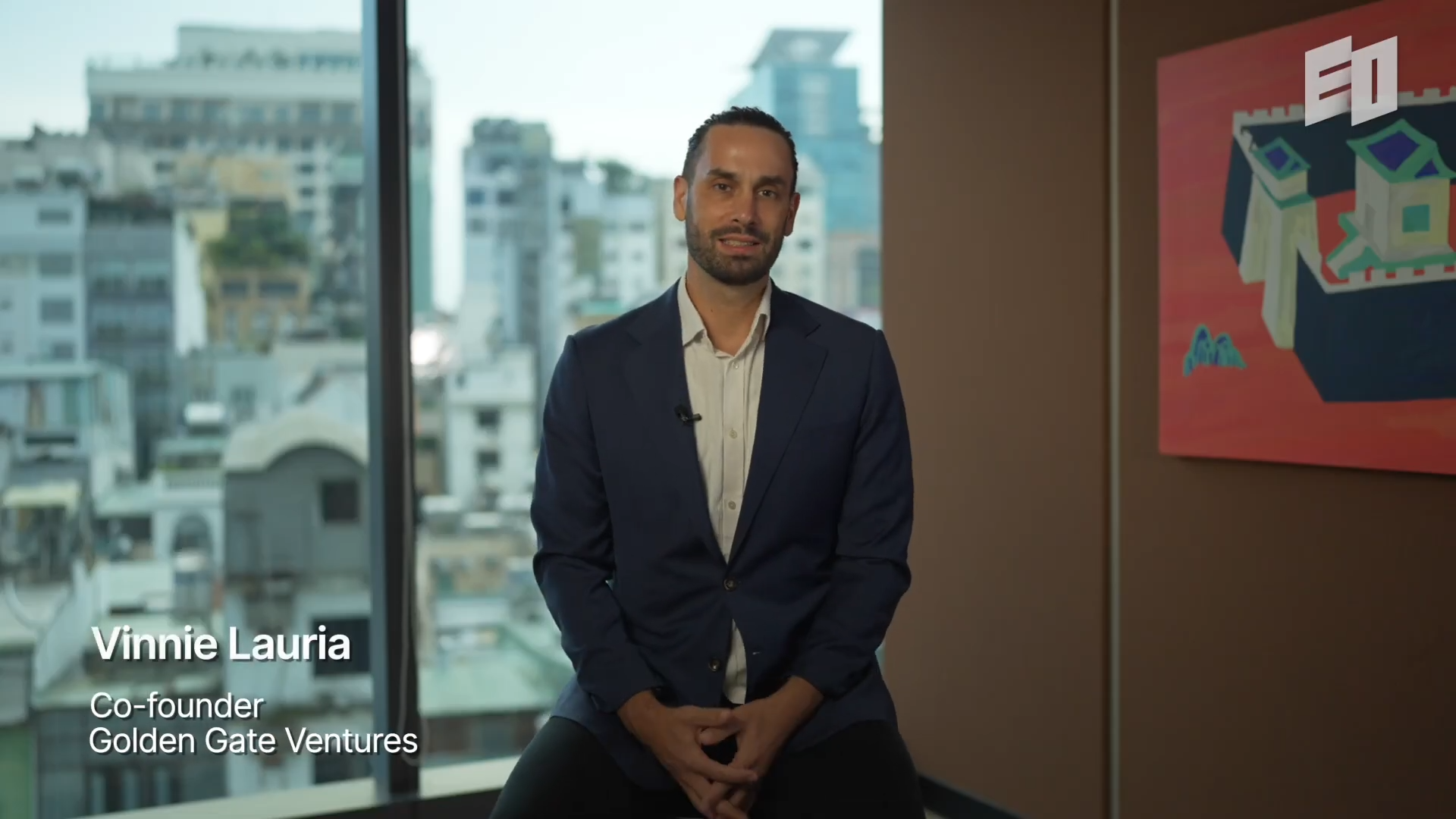
My name is Vinnie Lauria, co-founder of Golden Gate Ventures. Golden Gate Ventures is an early-stage venture capital fund. Early stage usually means Series A or pre-Series A. We invest in startups that have audacious entrepreneurs. We have over $250 million USD in AUM. We've made over 80 investments to date. Notable companies include Carro and Carousell, Stripe, and AngelList. We have over nine unicorns in the portfolio, over ten exits, two IPOs, and over 11 write-offs in the portfolio as well.
My career started not on the venture capital side. I was actually a computer engineer by training, to the point where I was doing web development work in high school. That was my first job. I always thought about programming in the '90s as a hobby, nothing I would actually do for work.
But then when I graduated, I ended up being offered a very lucrative job role, and I was hired right out of college by IBM. I realized big corporate life wasn't for me. I did like the startups I had worked at in high school, so I quit IBM. Not one company gave me a job offer, and so my back was against the wall. I sold all of my stuff in New York, moved out, and moved into a hostel in San Francisco because I didn't have a lot of money.
That's where I met Paul Bragiel. He had just moved to Palo Alto, so we started brainstorming, talking, and decided to jump in with him, moving into the same house. At one point we had seven guys living in a three-bedroom. I was sleeping on the floor. We were working in the living room. We built our first startup, Meetro, a location-based chat app. This was 2004, about four years before the iPhone, and that idea was just way too early for the market. We raised some money from a VC but could not get any sort of critical mass to take it to other cities and other locations. So we ended up shutting that down.

The second company, Lefora, online forums, online groups. This was before Facebook had Facebook groups. It was acquired by a media company out of Los Angeles, CrowdGather. It was an exit, and it was enough that I could take some time off and have a little cash. I used that as an opportunity to take an extended honeymoon. We spent three months in China, about six months in Southeast Asia, three months in India, always trying to meet locals: Beijing, Shanghai, Bangkok, Jakarta. I would always ask my friends in San Francisco for an intro, my Indonesian friend or my Chinese friend. Because San Francisco is all tech, I always got introduced to people in the tech space, mostly startups, some investors.
I got this accidental cross-section of China, India, and Southeast Asia. All were high-growth, developing economies, but the tech was at different maturity. China was super mature, India was maturing, and Southeast Asia was nothing. I had this gut feeling of where the next ten years was going to go. Like, I can see it, I can feel it, I can taste it.
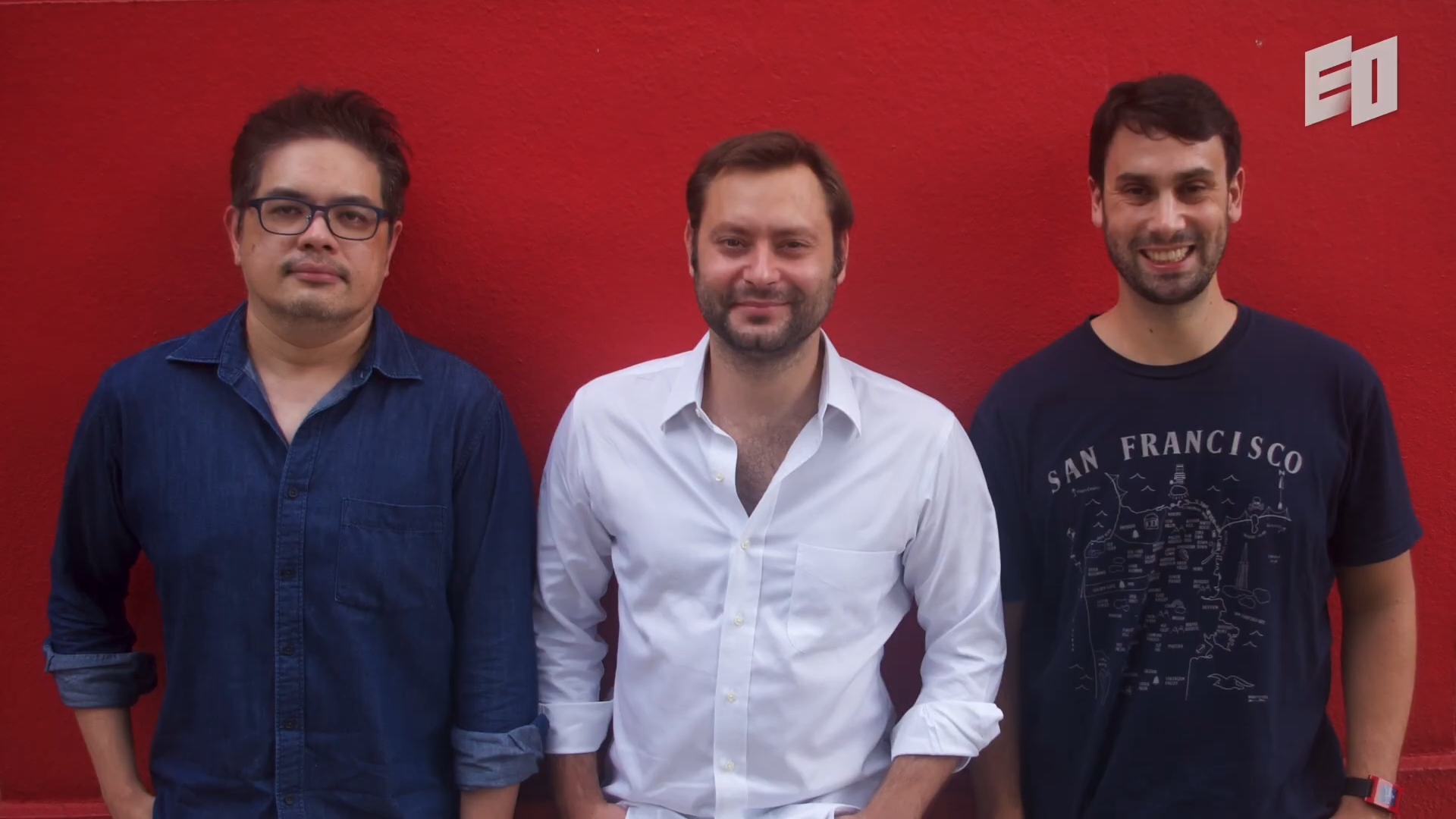
During this one-year travel, I met my now long-term work partner, Jeffrey Paine. He kept inviting me back to Singapore, and being out here, it just started really cementing in that Singapore is this hub, physically and logically, of Southeast Asia. Paul Bragiel, myself, and Jeffrey Paine came together to co-found Golden Gate Ventures back in 2011.
GGV's Data-Driven Expansion in Southeast Asia
Our hypothesis has not changed in over a decade, which is investing behind the rising consumer class of Southeast Asia. People are earning more in this region, and then they're spending more, and they're going to do that offline and online, and that's worked really, really well for us in terms of what our first few years looked like.
Those would be the Web 1.0, from a US perspective, so the eBays, the PayPals, the Amazons. So we had this magic crystal ball of what's going to do really, really well in other parts of the world. That's what we invested in Carousell, completely different than eBay, but essentially a classifieds marketplace for Southeast Asia. In terms of PayPal, early on we did a bunch of payments investments, including Coda Payments, which has done phenomenal for us. It was cheating in terms of having the playbook. It's like going back in time and knowing what will work and why. So those are the types of investments that we've made.
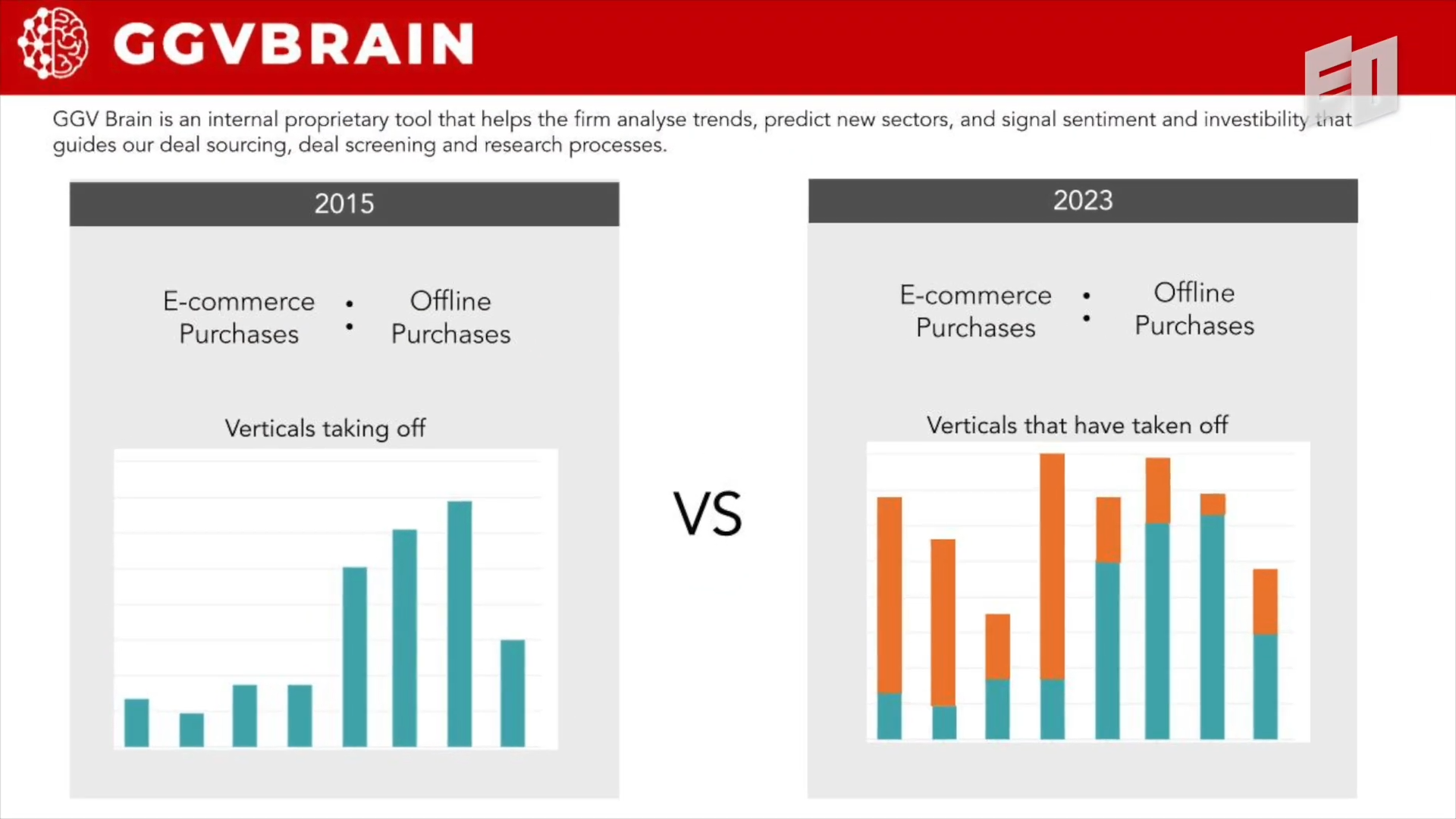
Back in 2018, we came out with an internal platform that's dubbed GGV Brain, and it uses a proprietary database of data that we've been collecting since 2011 on different verticals, on different startups. We've also bought data from outside of this geography, China, India, US, like Crunchbase, and we use that to basically identify certain themes and verticals and cross-reference that with other data to say, is this time right now.
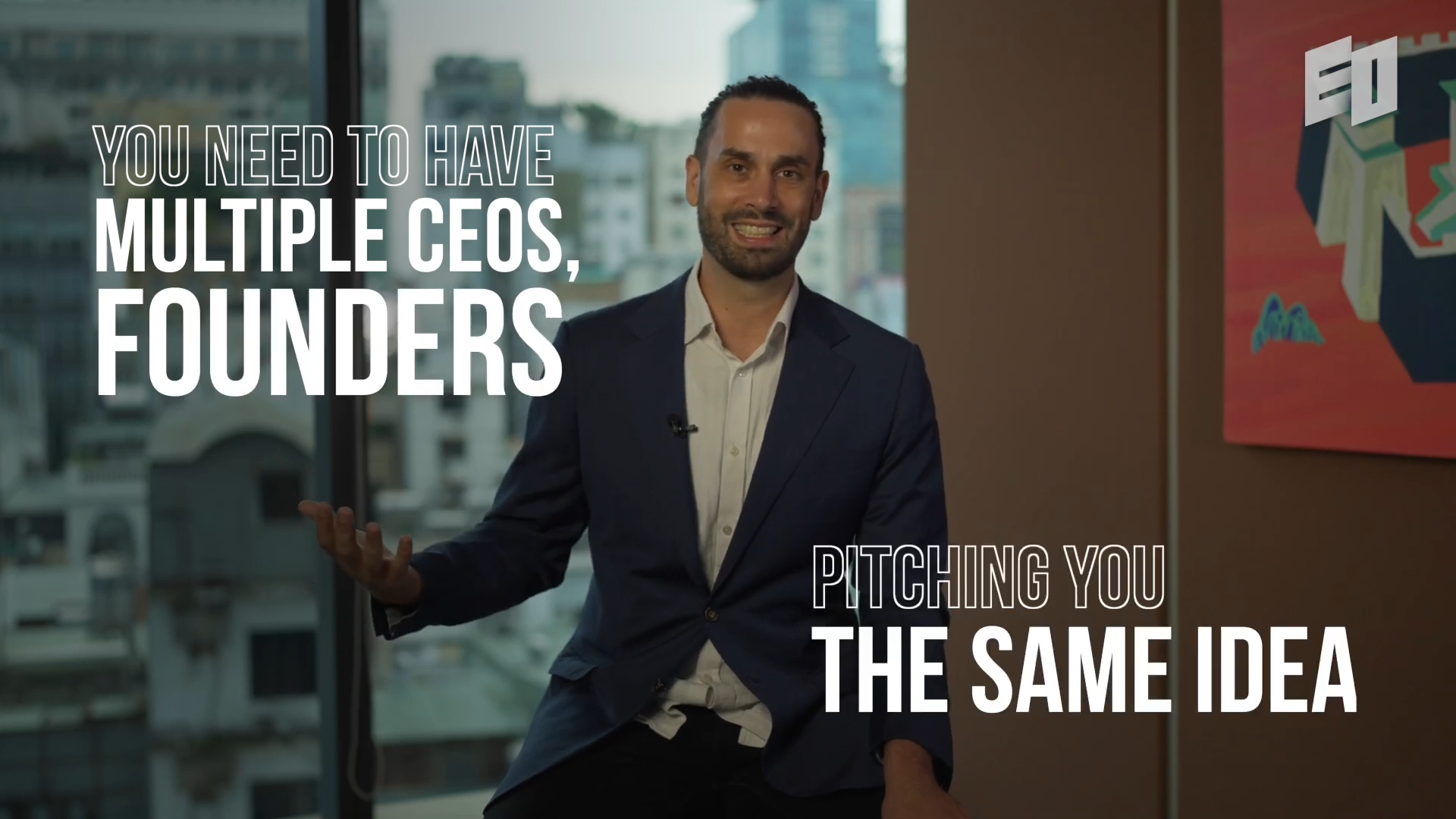
Right now, the timing I'm talking about is more around these markets and consumer behavior, what is ready, and there's a few different ways you can do that. The easy way is, as a VC, if you have one company pitching you an idea, it is too early. I have heard VCs say this when I was an entrepreneur. I've now learned, being on the VC side, you need to have multiple CEOs, founders pitching you the same idea to say now this is time right for the market.
The other sort of behavior data that we can use to really time the market is looking at ratios. What made us decide this is the right time? It's when we use GGV Brain to say, okay, if we look at data of e-commerce purchases as a ratio of offline purchases, which is a smaller percentage, and we look to a market like China and rewind the data back to when that ratio is similar, what were verticals being started around that time that were new and unique? We got that data set, fast forward to today in China, and asked which one of these verticals, or multiple verticals, have done really, really well.
There are some things that are obvious: logistics, last mile delivery, and we've done a bunch of that because as e-commerce takes off, so does last mile. But then this is where it started highlighting certain things like social commerce and group buying, whereas a market like Indonesia versus China, sometimes it could be 8 to 12 years behind. It gave us an indication that, based on the activity of people buying online, what the average spend is and how fast that's growing, this would be a really opportune time to invest in social commerce. That's what led our thesis for the region.
The Traits of The Founders We Seek
Identifying promising startups back then was a little easier, in that the whole ecosystem was smaller. The ability to literally talk to anybody who's building anything was possible. As a former entrepreneur, it's changed for the good. There is way more competition. There's way more competition between CEOs, there's way more competition between VCs. Capital and doors to knock on is quite exhaustive now. That's great for a founder and for a CEO.
What that means is, with Golden Gate Ventures, we need to be more thematic, more thesis-driven, more outbound-driven, where it's not somebody pitching us. It's us saying we want to invest in a certain space and then knocking on every door to find somebody working on it. We spent a lot of time interviewing the management, the CEO, the founding team, to say this is the team we want to back, and we want to know that they're all in and they're going to be making that big jump.
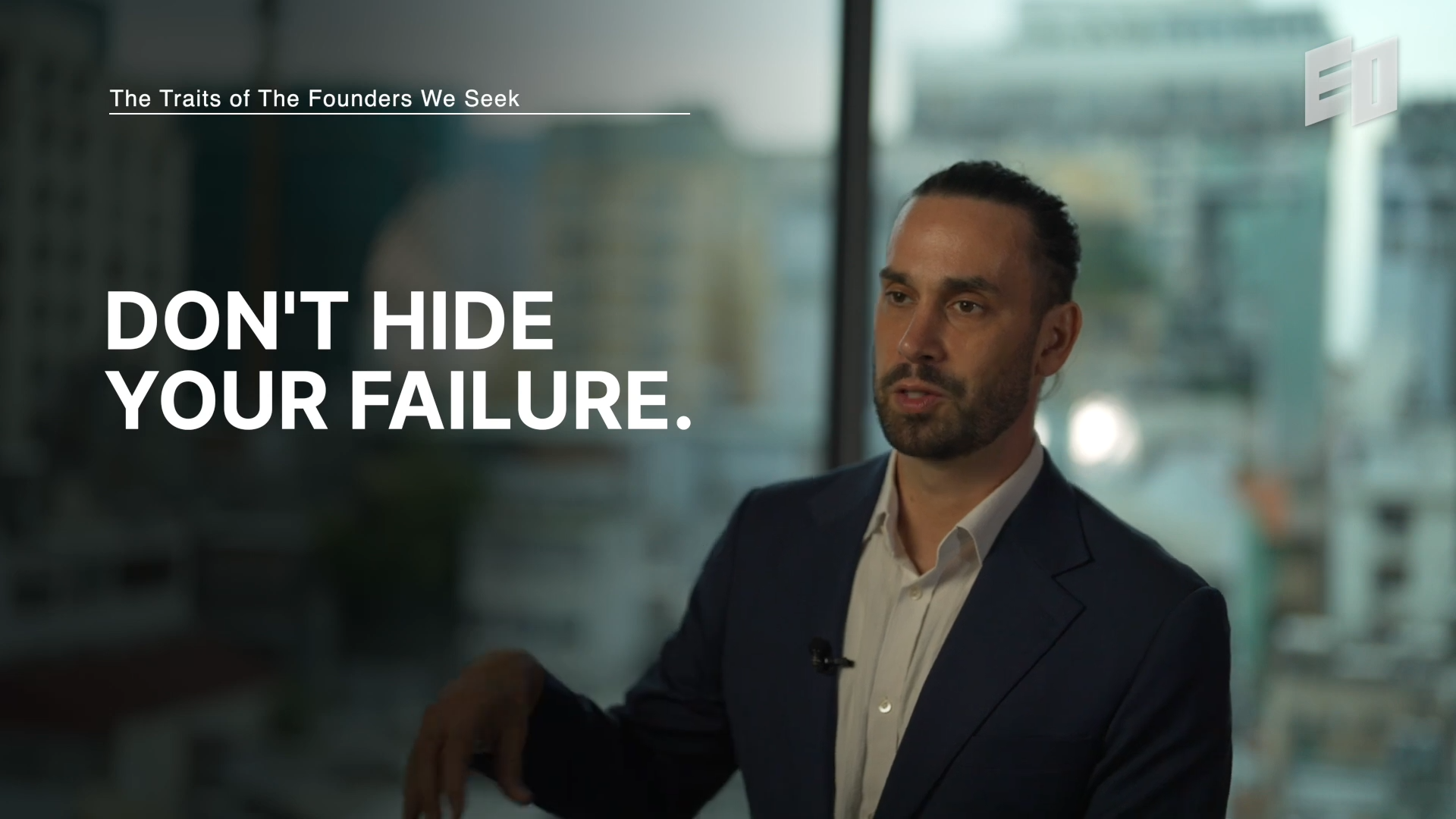
Failure, I look at it as it's a good word. Like, as a little kid, you can't learn to walk if you're not falling over. So you need to have these failures. You need to be able to learn from these failures. Look back: what should I have done differently to get to that next stage? I look at the same thing with investment. A lot of founders would want to hide that they had a failure behind them. But as somebody who's had my own failure behind, and know in Silicon Valley, it's not a bad word. That's just a way of learning and gaining experience. I would really always want to draw that out, and I would see that as a positive thing, that if you've had a failure but you want to continue working with the same sort of people, that's an amazing sort of team to back.
To back building a product, we would know what's best, and investors might not know, and customers may not know yet, but they will. This is where I've had to shut down companies, and what I've realized is you do need to be very reflective. If you have five investors saying the same thing, there's probably some truth behind that. So take it as advice. It's not just because investors say no, don't listen to them. If you hear multiple independent people offering advice, take that.
Needing to be aware of that on a global stage is very important. Globally, the markets are bad and we'll continue to get worse. Southeast Asia, specifically Vietnam, Indonesia, Singapore, these are literally the engine of growth globally. So these markets may be slowing down, but when you compare them to the US or Europe, this is where global investors want to put their money.
Now, at the end of the day, there have been companies in our portfolio that have shut down. There probably will be more over the next 12 months. My goal, as an investor who's been through a few economic cycles now and shutdowns, is to really talk to those founders, and it shouldn't come as a surprise. If we know the economy makes it harder to raise, and the cost of running the company is X, how do you make that cut a year ahead to give yourself the runway you need? This is why you see technology companies making these huge cuts, 15 percent, sometimes 20 percent, early, and that's what the news reports on. That's because I think they're just way more sensitive to saying we need to ride this out for the next two years. Then it's the traditional companies, the consumer companies, automotive, real estate, and so on, that you see making the cuts later.
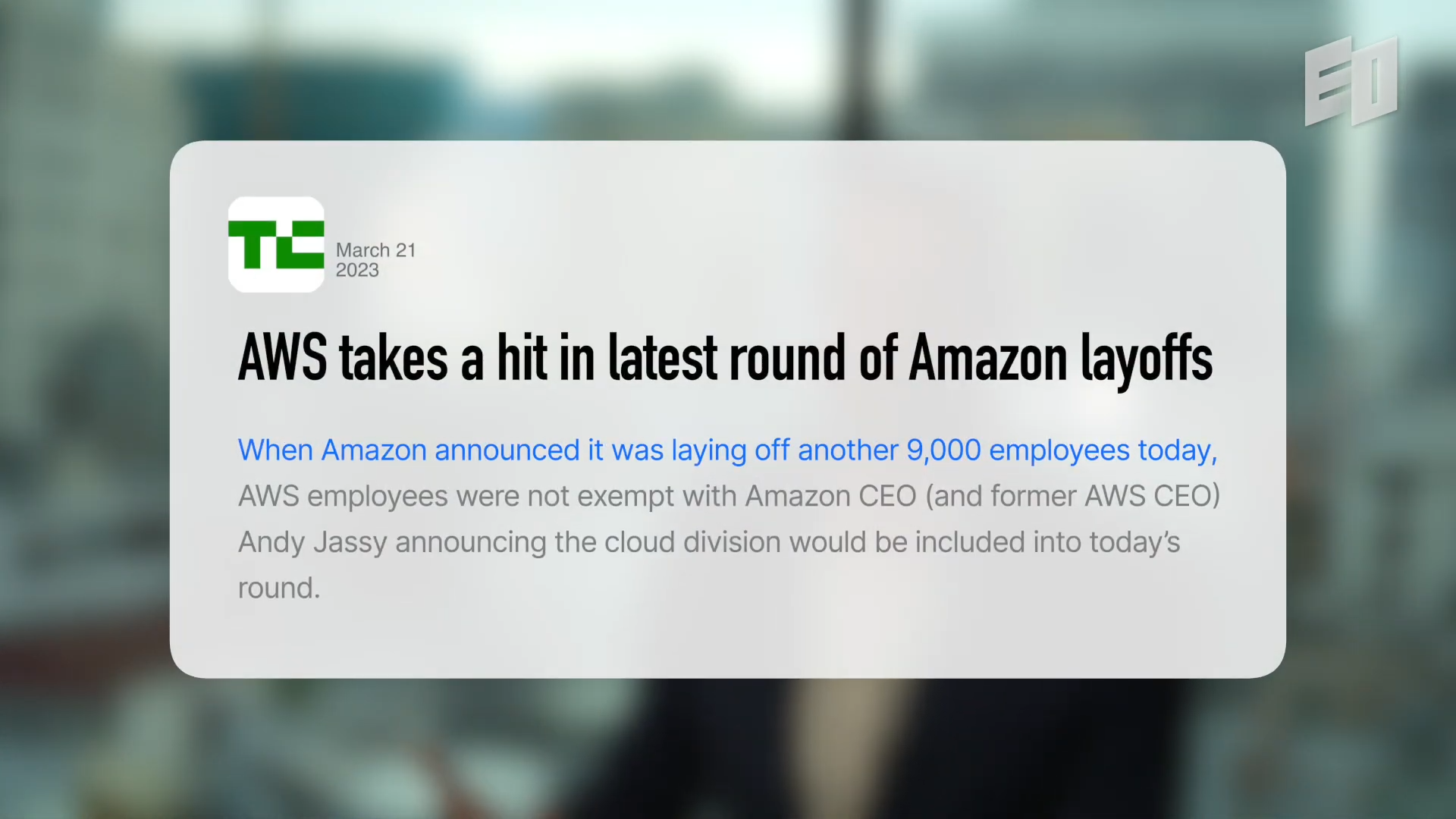
So I think as a technology startup, as a founder, you need to be a mix of optimistic and pessimistic about the future, and balance that in such a way that you're providing the runway, the life that the company needs. If you can't capitalize, that may mean looking for an exit, a soft landing. They say that takes six months. A number of founders I've met are like, we're going to run out of cash and we want to look for an acquisition, and they have less than 30 days. That's just useless. Minimum four months, you need to have a conversation like that. So for any founders out there listening: think long term, half a year to a year forward, and what the company is going to need to do to survive past that is the most important question.
The things that we learned along the way is how to identify entrepreneurs that have that potential, both the interest, the mission, the drive, but also the capability to take companies regional, whether that's on their own, through acquiring, through JVs. That is a challenge of this region, but also an opportunity for the people that can do it.
Personally, where do I find value and make the job fun? It's connecting with founders. I feed off that energy. Founders just have this raw optimism about changing the world. That's amazing, and for me, the best part of the job is when a founder is at an inflection point and has really difficult decisions to make, and I can help bounce ideas, coach them, advise them through that.
I can tell you there've been a few times where a founder and I are talking about something, and they get off the call and tell my partner that was a really hard call because Vinnie was throwing all these difficult sort of questions at me. But then, give it a week, and they come back with this new idea of a new feature or product or a new direction, and we have this brainstorming call. I love that. I love going through that trough, and the valley, and then coming up high, and building that trust so that it's not just me as an investor on the other side of the table, but there through the rough and the good. That's what I love about this job.