Jun 05, 2026
27-Year Investor Explains What You're Missing While Chasing AI
Interview with Terry Doyle, Managing Partner of TELUS Global Ventures
Founder Focused


💡
At a Glance
- Who: Terry Doyle is the managing partner of TELUS Global Ventures, who has been investing in technology companies since 1999 and has lived through the dot-com crash, the mobile revolution, and the AI hype cycle.
- What: TELUS Global Ventures is the corporate venture arm of TELUS, a Canadian global technology and services company.
- Traction: TELUS Global Ventures has about 90 portfolio companies, 60% of which have a commercial deal with TELUS, and did about $34 million of business with those companies last year.
In this video, Terry reveals why he avoided AI investments during the peak hype, why inexperienced founders often beat industry veterans, and the contrarian investment approach that's made him successful. Discover what smart money is really focusing on while everyone else chases the latest trends.
Key Takeaways:
Why Do Beginners Outperform the Experts?
Experience often narrows how someone sees a problem, since past failures teach people what "doesn't work." Founders without that baggage make fewer hidden assumptions, which is why the least experienced builders sometimes find breakthroughs seasoned operators miss.
The Dot-Com Crash, Mobile, and AI Are the Same Cycle
Twenty-seven years of watching Webvan collapse, mobile phones go mainstream, and AI go vertical taught one lesson: invest against the hype curve, not with it. If everybody is piling into the same trade, that's the signal to wait.
Horizon 3 Beats Chasing AI
McKinsey's horizon framework separates technologies ready to use now from ones still years from commercial reality. The best venture bets often sit in horizon 3, where the business itself doesn't yet see the opportunity, like TELUS's early quantum security investments.
Pay Tuition for the Future You Can't Monetize Yet
Some investments won't produce a commercial deal for five or six years. TELUS treats that gap as tuition, learning how a space evolves early enough to be useful once the market catches up.
The Three-Step Rule for Handling Mistakes
Acknowledge the mistake, fix it, and never repeat it. Telling a team upfront that mistakes are expected removes the fear that makes people freeze up and play it safe.
You're Investing in the Person, Not the Pitch
The idea and the market matter less than whether the founder can keep working a problem after it stops making progress. That stubborn persistence, not the size of the idea, is what separates good founders from the rest.
Stop Selling the Idea, Start Solving the Problem
Money follows problems that are actually being solved, not pitches that sound good. An investor's real job is finding the smart people solving hard problems and connecting them to the capital that wants in.
Watch the full interview now on EO's YouTube channel! Below is the complete transcription of the interview. Minor edits have been made for clarity and readability.
Introducing Terry Doyle, Managing Partner of TELUS Global Ventures
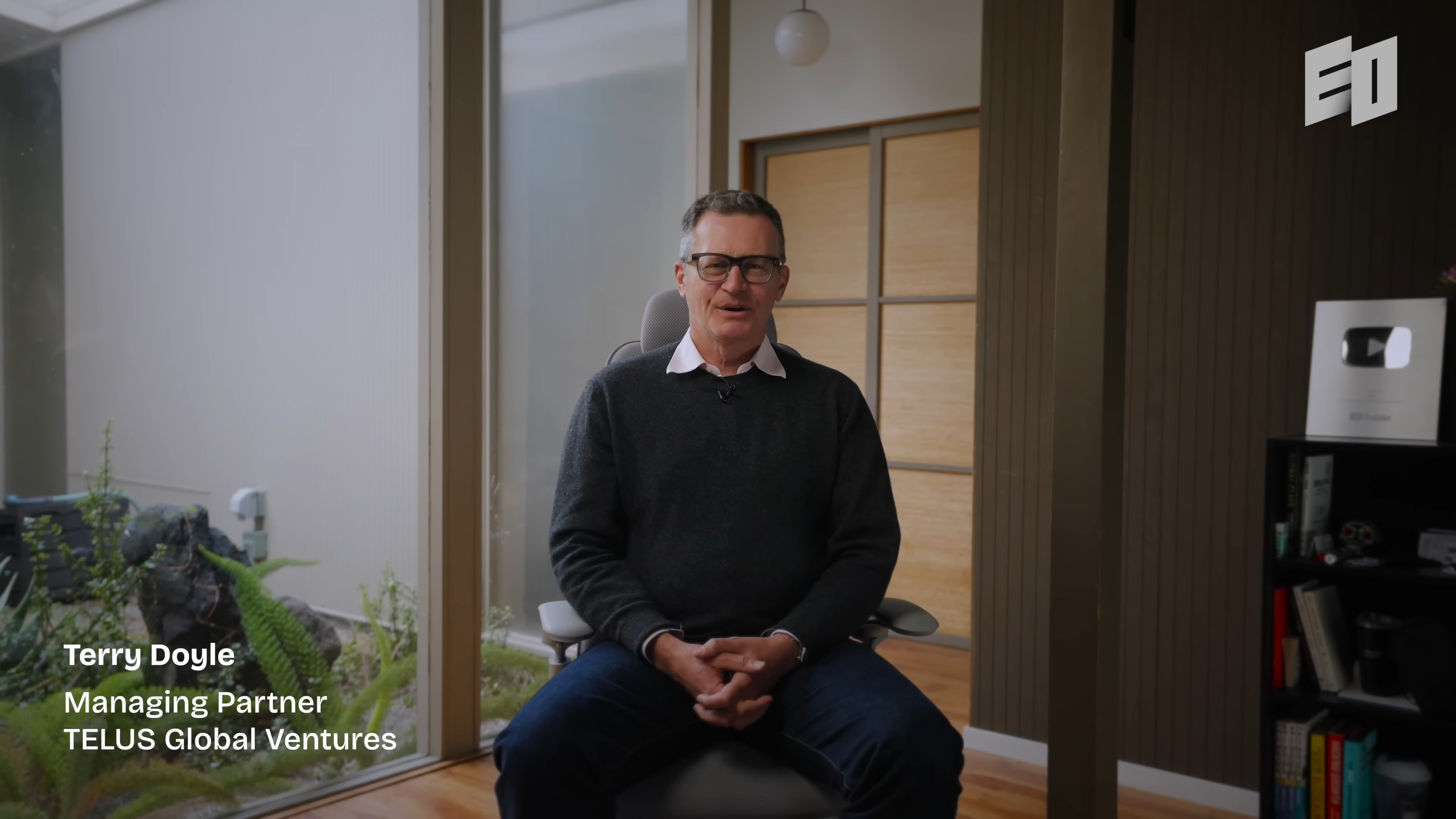
Hi, my name is Terry Doyle. I'm the managing partner of TELUS Global Ventures. We're the corporate venturing arm of TELUS, a Canadian headquartered global technology and services business. We have about 90 companies in our portfolio, and 60% of them have a commercial deal with TELUS. Last year we did about $34 million of business with our portfolio companies.
Why Beginners Outperform the Experts
Age is not a determination of intelligence. In fact, some of the best founders I meet are great because they don't have preformed ideas. Sometimes you meet people who've got lots of experience, and because of that experience, when something hasn't worked, they sort of shut their minds off. They think, that doesn't work, I can't do this, I can't solve this problem this way. Whereas people who maybe don't have that experience bring a very new perspective to solving a problem, because they don't make assumptions. If you talk to people at great companies like Google, they spend a lot of time trying to prevent people from making those assumptions.
Your response to this question is X. Do you realize that there are two assumptions built into that? Why have you made those assumptions? Oh, that's just always how it's been. Removing that bias is almost where you get real breakthroughs.
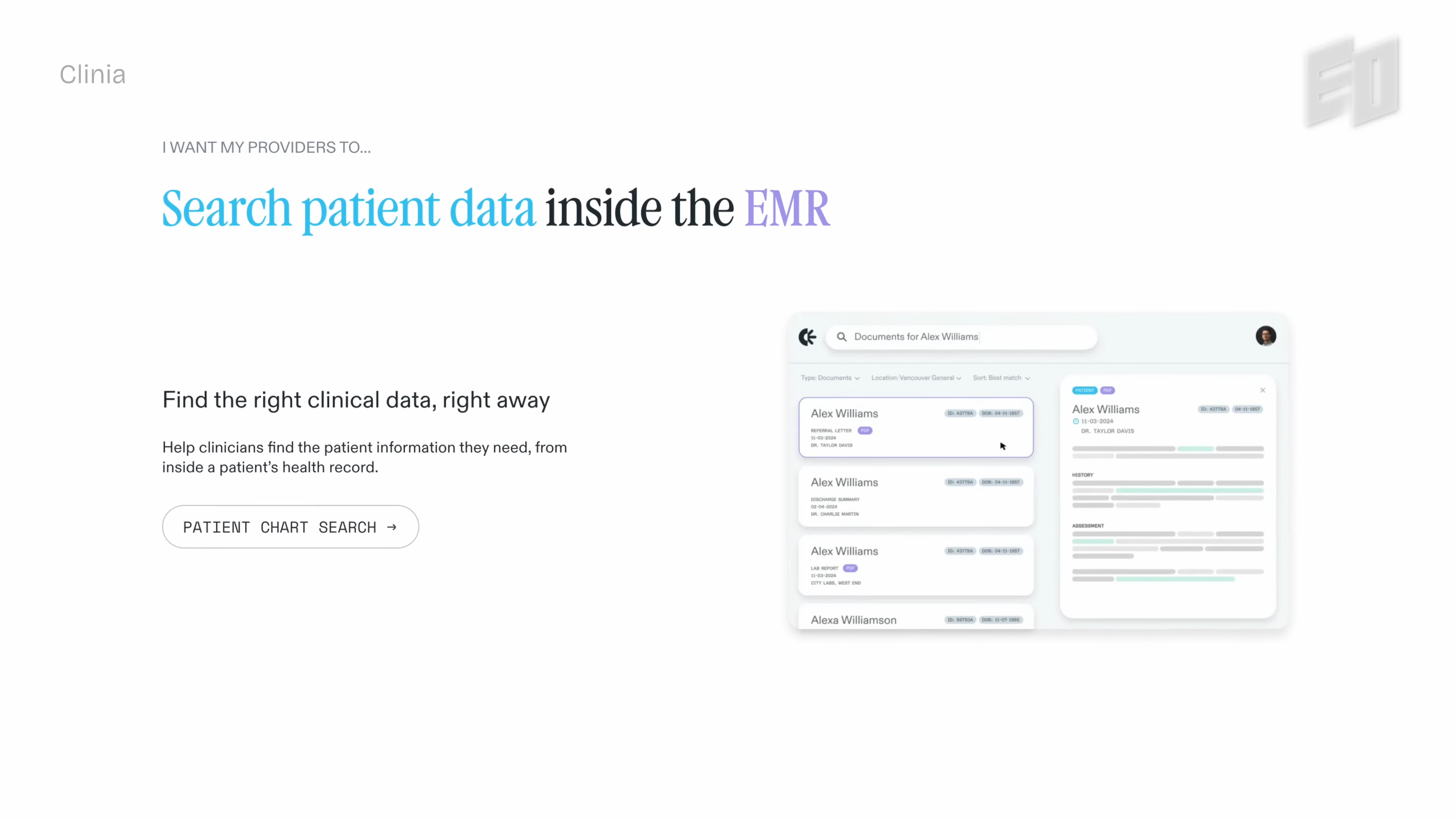
We've invested in companies like Clinia, which has developed an AI-driven, optimized search for enterprise customers that helps providers give better outcomes to patients. We knew we had a lot of data, but data is only as good as how it's presented and how it's accessed. Clinia has really changed the way we think about what we can do with that data, and that business. It's changed how our customers think about their own data, and how they run their businesses. Creating that shift, in the way we think and how our customers think, was really one of the important outcomes we got from making that investment.
Focus on Horizon 3, Not AI
But I've been investing and working in technology companies since 1999. I've seen a bunch of technologies come and go. I saw the first dot-com crash, when Webvan raised hundreds of millions of dollars and then went bankrupt. I was working in the mobile phone industry when all of a sudden the world discovered mobile phones. What that does is it changes the lens under which you look at new technologies and new developments.
In 2014, I was spending time with some of the best people in the world in artificial intelligence, thinking, this is great, it's going to be a good development. Maybe I won't be as excited about the changes in the marketplace as if I'd never seen those previous cycles. It means that when I was investing in 2022, I was not investing in what everybody else was investing in, because I felt like we were going straight up the hype curve. You want to invest when nobody else is investing. If everybody's investing in the same thing, you probably shouldn't be in there. You should wait.
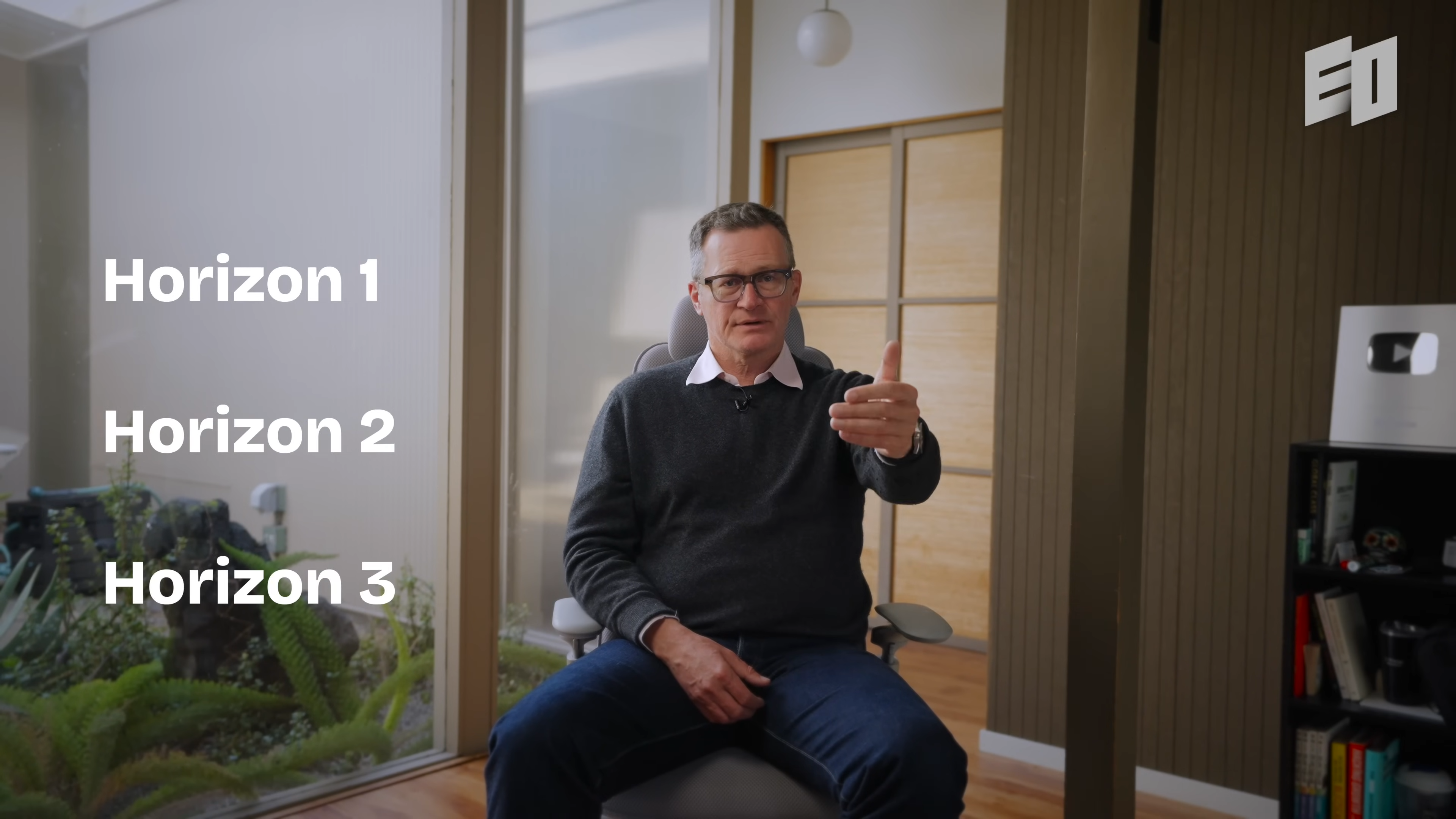
When a good investor is able to see a fundamental shift in society, the consulting firm McKinsey has a language for this: horizon 1, horizon 2, horizon 3. Horizon 1 is something we can use now, at the beginning of its life as a technology. Horizon 3 is well into the future, very far from being commercialized, more like fundamental science. We'll sometimes want to make an investment in a Horizon 3 company when the business doesn't yet see the opportunity for it.
Quantum security is a good example. We know that at some point quantum will create tools that let people do harm, just as we're starting to see with AI. We've done some investing in quantum security, and we're not quite at the point where we can use it. We have to make an educated guess: we think this is going to be a problem in the future, so we should invest early and get what I'll call tuition value about how the space is evolving, even if it means we wait five or six years before there's any commercial deal with the company. Being able to spot the large shifts makes you better able to invest in the right things. If you jump at every new development, you're probably going to have a hard time. You're probably going to make a lot of mistakes.
Quantum security is a good example. We know that at some point quantum will create tools that let people do harm, just as we're starting to see with AI. We've done some investing in quantum security, and we're not quite at the point where we can use it. We have to make an educated guess: we think this is going to be a problem in the future, so we should invest early and get what I'll call tuition value about how the space is evolving, even if it means we wait five or six years before there's any commercial deal with the company. Being able to spot the large shifts makes you better able to invest in the right things. If you jump at every new development, you're probably going to have a hard time. You're probably going to make a lot of mistakes.
I talk to my team all the time about the idea that we will make mistakes. As soon as you say that, it changes the way people do things, because they don't freeze up. They're not nervous about making a mistake. So, one, we're going to make mistakes. The most important thing is to acknowledge you've made one. Second, fix the mistake as best you can. Third, and most important: don't make the same mistake twice. I think if you create that environment for people, they feel more comfortable. They explore options more. They don't freeze up and get conservative in how they think. That's really our job. Our job is to take risk on behalf of the company, do it in a way that's sensible, and push the company to get more technology into the hands of our customers to make their lives better.
Stop Selling Your Idea
You'll hear many investors talk about whether they're investing in the individual, or in the idea, or the market. I think the individual is really the most determinative factor. Somebody's ability to solve problems and continue working at them even when they're not making headway is the sign of a good entrepreneur. There's a level of stubbornness there that's really important in taking on big problems: that problem-solving mentality, and the ability to keep working even when there's no progress. That's one of the things that makes good founders.
So our job is really to find great founders who are solving significant problems, and if you find those people, you can usually find people who want to give them money to solve them. That's really what you're doing as an investor. You're finding money, and you're finding smart people, and you're bringing them together.
Being a founder is a really hard job, an exceptionally hard job. You have to have the ability to wake up every day and want to take on and solve a difficult problem. So I think the thing I find rewarding is that every time I work with a founder, and I'm able to help them go a little bit farther on their journey, that's rewarding for me.