Jul 28, 2025
The 8-Year Journey to Building a $4B AI Company
Interview with Victor Riparbelli, Co-founder of Synthesia
Founder Focused


💡
At a Glance
- Who: Victor Riparbelli is the Co-founder and CEO of Synthesia. He spent eight years developing AI video tools, enduring 100 investor rejections during the AI winter before securing initial seed backing from Mark Cuban.
- What: Synthesia is an enterprise AI video generation platform that enables users to create corporate training videos and talking-head digital avatars directly from text or presentations.
- Traction: Surpassed $100 million in ARR, raised $330 million in venture capital at a $4 billion valuation, serving over 65,000 customers worldwide including 70% of the Fortune 100.
Victor Riparbelli co-founded Synthesia in 2017 after seeing early neural networks generate synthetic video in real time, betting that video creation would transition from camera crews to laptop software. After pivoting away from expensive video translation tools, Riparbelli focused on solving corporate communication needs with customizable digital avatars. Today, Synthesia generates over $100 million in annual recurring revenue with a $4 billion valuation, serving more than 65,000 global clients. His experience reveals how product-led growth feeds enterprise sales, why founders must distinguish true utility from viral novelty, and how deep technical conviction survives long research cycles.
Key Takeaways
Synthesia Began With A Bet On Video's Future
Victor Riparbelli saw neural networks generate high-quality video automatically and believed the technology could change how people create and consume video. The early product was difficult to build, but the size of the possible shift made the company worth exploring.
One Investor Who Shared The Vision Was Enough
After roughly 100 investors rejected Synthesia, Victor and his co-founders found an ally in Mark Cuban, who already believed in their vision. The experience taught them to seek people who share an unconventional future view instead of spending all their energy trying to convert skeptics.
Find The Painkiller Behind A Viral Technology
Synthesia first explored AI dubbing, but the process was slow, expensive, and merely interesting to customers. Conversations revealed that people who needed corporate videos had a more urgent problem, so the company narrowed its product toward accessible talking-head video creation.
Real Use Cases Matter More Than Viral Attention
The avatar MVP attracted many visitors who made a few entertaining videos and never returned. Victor focused instead on the smaller group with recurring needs, learning that those customers compared Synthesia with text documents rather than professional video and therefore had a different quality threshold.
Product Led Growth Can Feed Enterprise Sales
Synthesia used open product access to let people discover use cases and qualify themselves before engaging sales, while enterprise teams handled larger accounts. Victor says combining these motions requires balancing product roadmaps, sales capabilities, and the different cultures of self-service and enterprise work.
Video And Audio Will Reshape Information Sharing
Victor expects text to remain, but believes training, knowledge, and information sharing will increasingly move toward video, audio, and immersive formats. His broader argument is that people have consistently preferred content that feels more interactive, visual, auditory, and connected to real-world experience.
Watch the full interview now on EO's YouTube channel! Below is the complete transcription of the interview. Minor edits have been made for clarity and readability.
Introducing Victor Riparbelli, co-founder of Synthesia
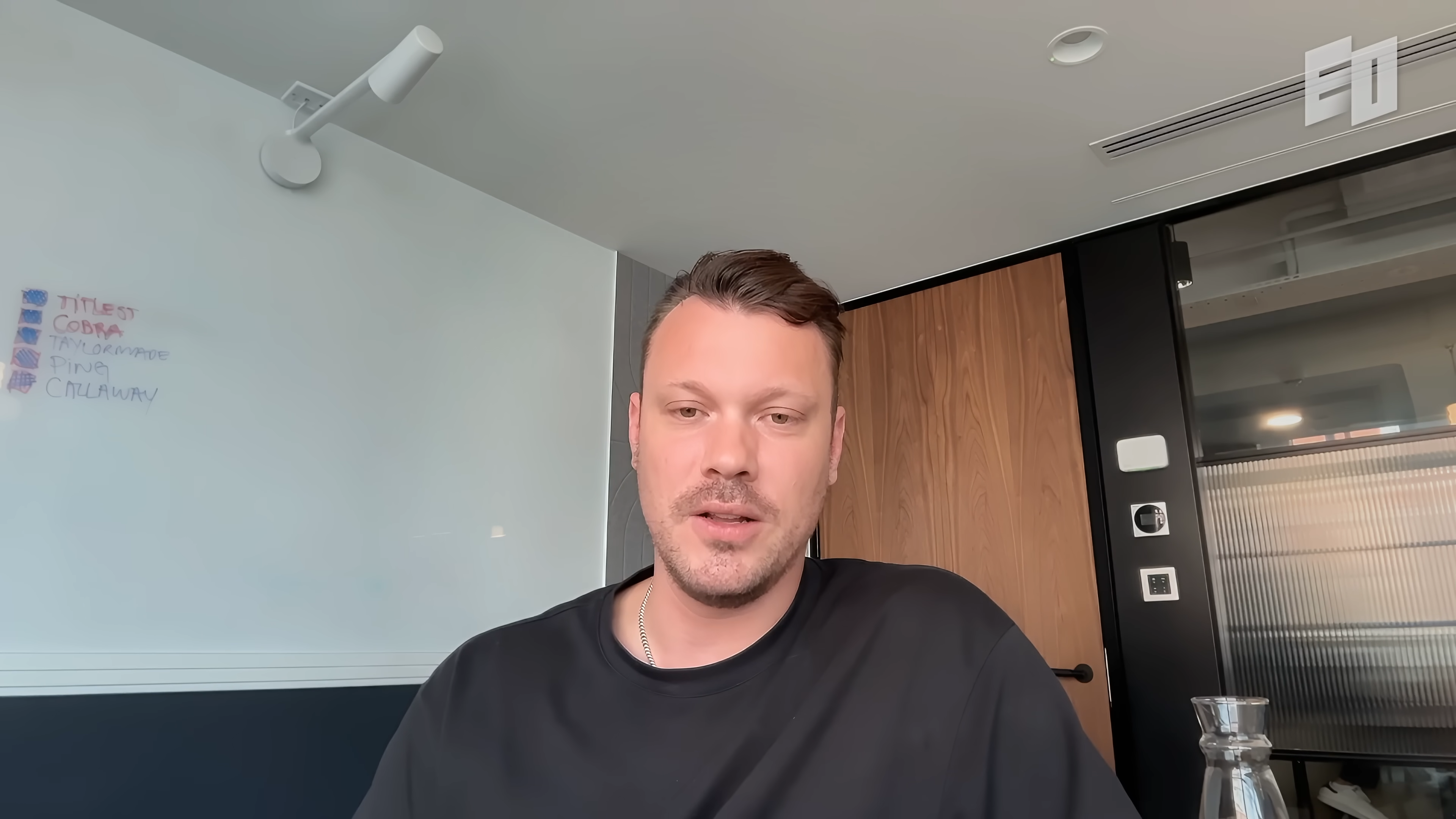
I'm Victor Riparbelli, and I'm one of the co-founders and the CEO of Synthesia. Synthesia is the world's leading AI video platform for the enterprise and for businesses. At its core, what we help our customers do is land whatever message they have for their customers, their employees and their partners with the most engagement and effectiveness possible. So we have built a platform that enables anyone who knows how to use a PowerPoint to create a video. What we are really all about is communicating in video, which is the most effective way to deliver a message today.
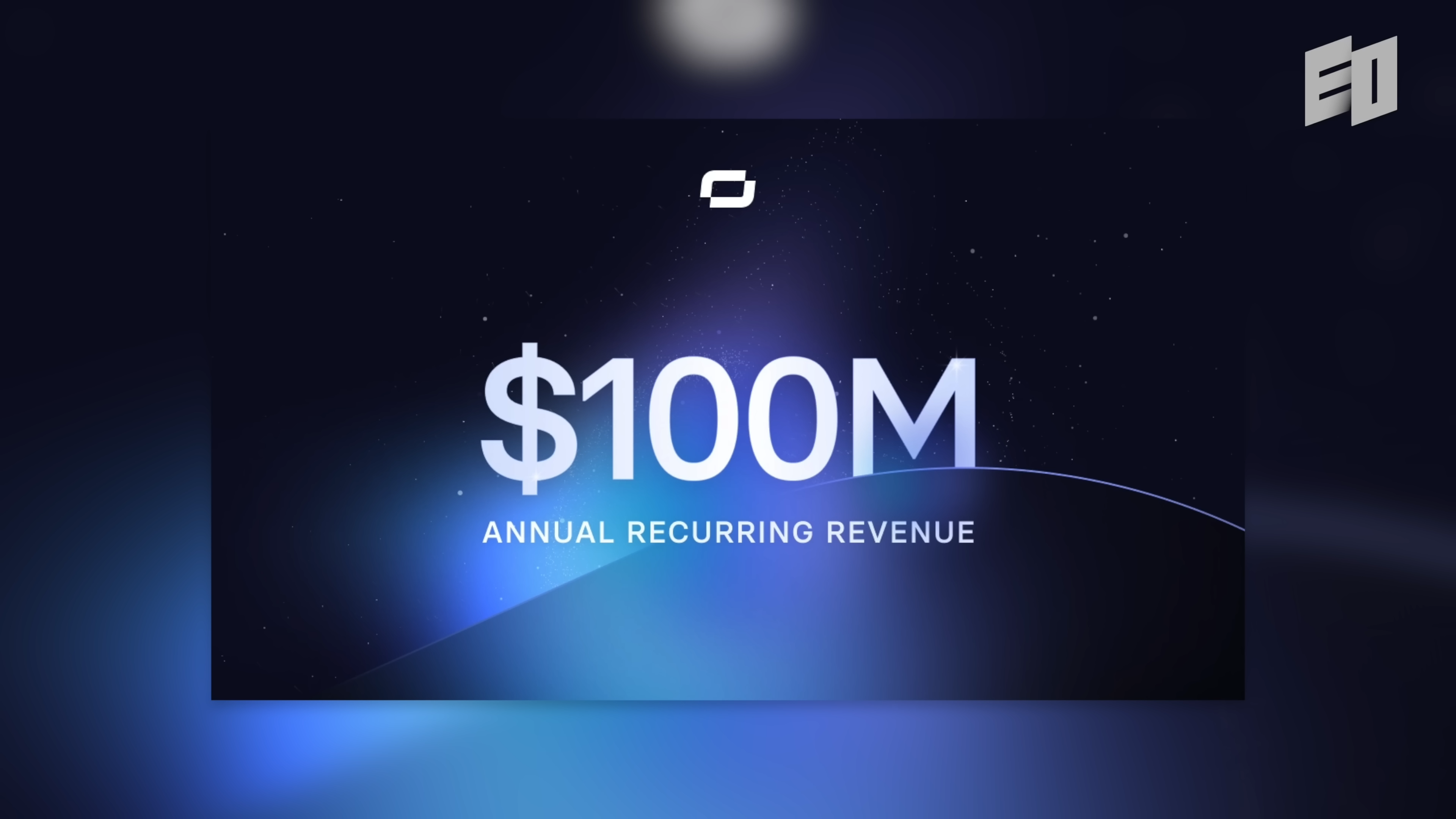
We crossed $100 million ARR. We have raised $330 million in venture capital. Commercially, we work with more than 70% of the Fortune 100 today, and we have more than 65,000 customers all around the world. People are not trying to use a model to do something. They are trying to solve a problem that they have, and in our case the problem is making a video for something.
Why I Spent 8 Years Betting on a Crazy Idea
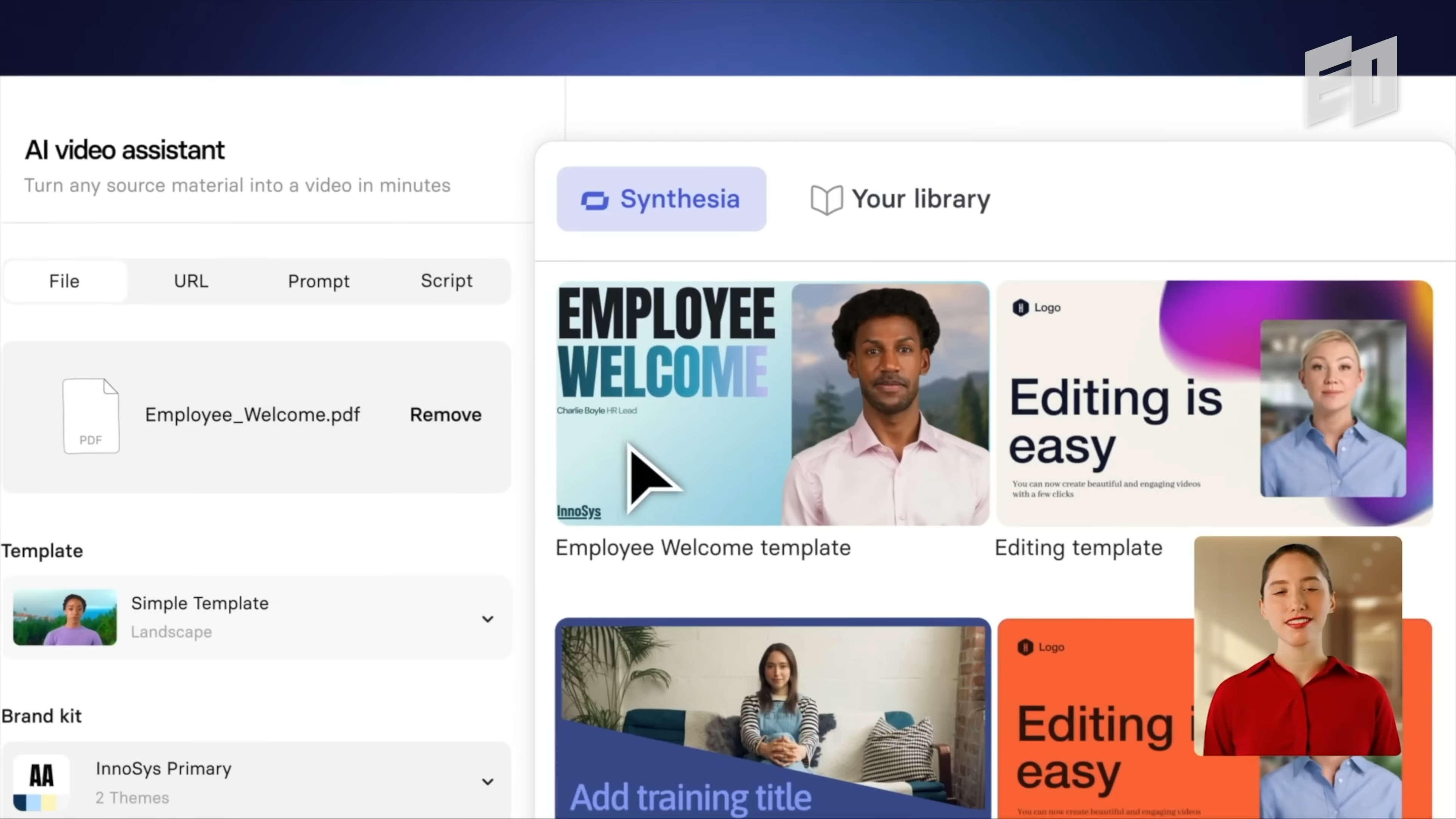
We started the company in 2017. The first three years of the company were not very fun. The tech did not really work, and it was an uphill battle.
This was the first time the world really saw a neural network generate video at a pretty high quality, fully automatically. If you saw the output of that face to face video and you had to do it in a visual effects studio, you would be talking about millions of dollars to create a clip like this, and this thing did it in real time. When I saw that for the first time, my mind started running. I felt like this was going to change everything about how we create, and it was also going to change everything about video itself as a medium. I felt like it was worth exploring starting a company around this technology.
When we see new technologies, the first thing we do is always imagine all the 1000 ways it can go wrong. Cars, smartphones, AI, video generation, music generation, that is always what we default to. But it turns out that most of the time technologies end up being used mostly for good things by good people, and there is a subset of people who use them for bad things. Being optimistic about technology, especially in the early stages of it, is actually a huge arbitrage in itself.
Essentially, we went out and we told people that in 10 years you are going to be able to make a Hollywood film from your laptop, just with your imagination. You will not need anything else than that, and it has got to be more or less free to do it.
A lot of people just thought that was a crazy idea. It was in the AI winter, and there had been a lot of disillusionment, because a bunch of companies funded in the years before we started had turned out to not really work. The technology was just too immature. We got turned down by around 100 investors or something like that, until we eventually sent a cold email to Mark Cuban.
He was probably the only person we met who totally shared our vision of the future. So he was not evaluating the vision, he was bought in on that. He was more evaluating whether he thought the team was worth funding and whether he thought we had a shot at building something real.
You need one person to say yes, and that is all it takes. Generally it is easier to try and find people who already share your vision of what is going to happen in the world, as opposed to trying to convince them of it. That is especially true if you are not doing something that is in the current hype cycle.
If in your gut you truly feel that you are onto something, and that someone, if it is not you, is going to build a big company around the product that you are doing, you should continue.
Throughout the entire journey of Synthesia, I've never doubted for a day in my life that someone is going to build a big company around this technology. I could doubt myself sometimes, I could doubt my execution, and I could be afraid that I was too early for where we were. But I never doubted that this technology was going to be extremely valuable for the world, and that someone was going to build a company around it.
Are You Building a Painkiller or a Vitamin?
The hard thing is knowing when to continue and when to pivot. We started off with a million dollars, which is not a lot of money when you are building a company like the one we were trying to build. So we had to figure out what we thought we could realistically both build and sell before having to raise the next round, with which we would have to show some kind of progress.
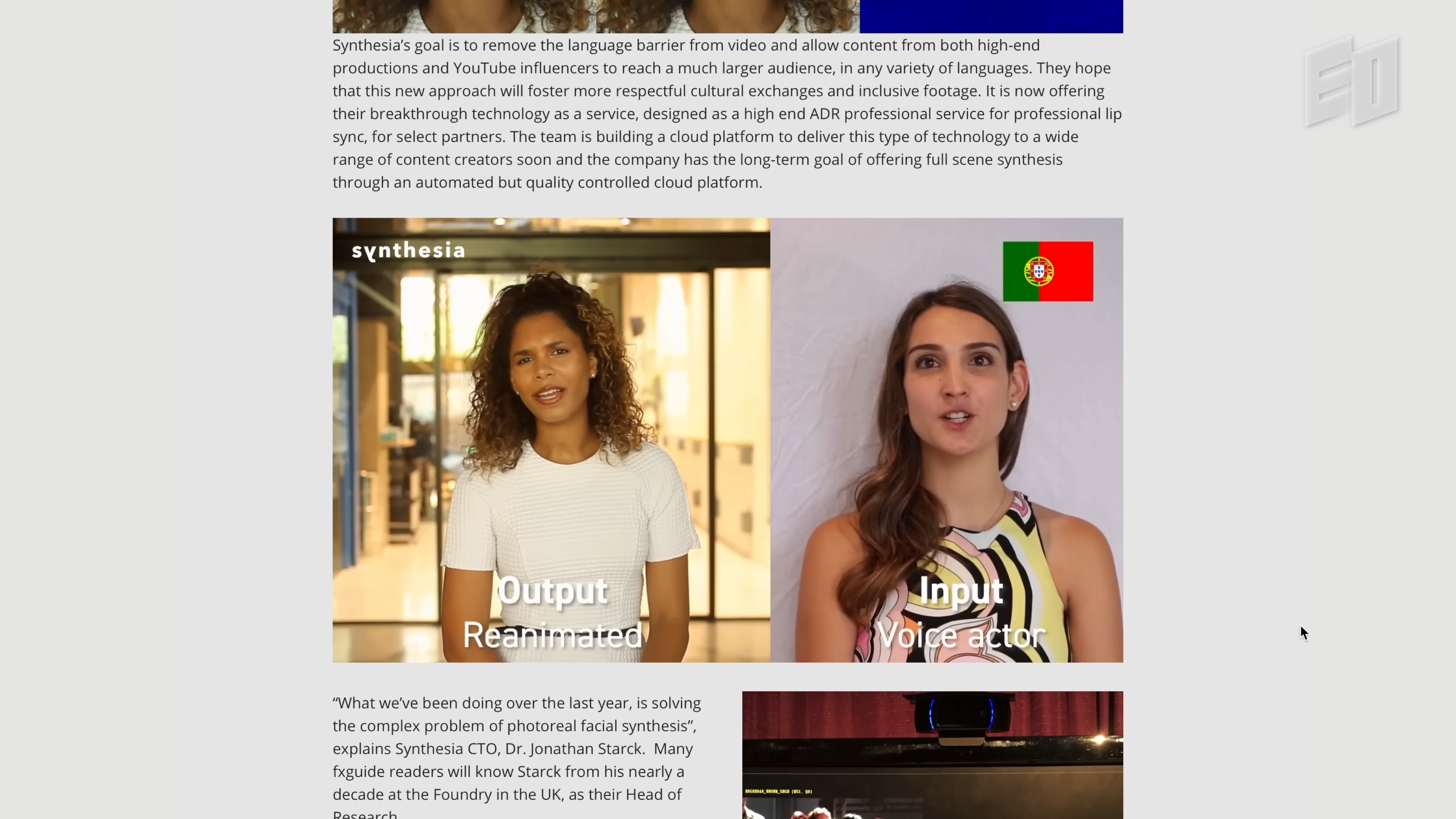
The first thing we stumbled upon was this idea of AI dubbing. You give us a real video shot on an actual camera, and we can translate it for you by replacing the voiceover with a different language and then also reanimating the face. It looks like the actor is speaking a different language, which would be useful if you are making a Hollywood film and you want to distribute that all over the world. If you could make it look like it was recorded in French or Italian, that would be good for those audiences. That value proposition was actually good enough, and it is definitely valuable when you can do it, but the technology was very early.
It only worked if you looked straight at the camera. It took two PhDs about 10 days to make a 30-second clip. It did not scale at all, and the quality threshold is insanely high, because all these video people would not accept anything but the very best in terms of quality. It was just clear to us that it was a vitamin and not a painkiller. People liked it and they thought it was cool, but if we disappeared, no one was going to yell and scream. They would just go back to translating the way they did things before.
So we went back to the drawing board, and we of course talked to lots of people during this period.
We realized that rather than focusing on the people who were already making video all the time, there was a huge group of people, billions of people probably, who were not making videos at all. These people are desperate to make video, and they were basically telling us, hey, I want to deliver this message to someone, and I know I should be doing a video or audio because that is what people want to consume. I just don't know where to start. I don't know how to use a camera, my boss won't give me any budget to record it, and I know that there are so many problems after I've actually shot the content, even though I get to make a video, because you cannot edit a video after you have shot it. There are all these problems with video.
Then we spoke more and more to these people, and ultimately we learned that a lot of what these people wanted to do was corporate videos. Corporate videos are a lot easier than Steven Spielberg films. So if we could just essentially help our customers with the talking head style footage, that would be pretty big.
That was a much smaller domain than making any kind of Hollywood film you can imagine. So we built this avatar technology, and that became one of the central parts of the product today. That is when the company started to really take off very quickly.
We had a lot of conviction on the technology very early. It was very unclear what the right first use case was, something that was both valuable and that you could realistically build, but I think we found our way there. You could argue that we should just build the avatar technology from day one, but back at day one, none of us had any idea how we would potentially do that.
The research evolved over the years and we learned the technology better and better, so I think product strategy is one of those things that is much more art than science. We were very much led by a deep understanding of the customers that we are serving and of course deep insight into the technologies. It ultimately turned out the right way.
Fun and Cool Won't Keep Users Coming Back

Once we launched the product and we had the first avatar MVP out there, we went viral very quickly. We had lots of people coming onto the website and lots of people making free demo videos of avatars by typing in things, because it was fun and cool and they wanted to show all their friends. It is amazing. The first time you see it, you are kind of mind blown.
But a lot of these people did not have any real use case, and we could see that in the retention. They were not coming back. They were just making a few videos, showing them to people and not making any more videos, so that was not really a sustainable revenue stream for us.
But there was a small group of people who kept using the product and kept coming back. We went into that group and we spent a lot of time speaking to those folks, and that is where we uncovered an interesting value equation. These people were not comparing our videos to real videos or camera videos, they were comparing our videos to text documents. When that is the comparison, the quality threshold looks very different, and the feature requests that they need look very different.
It was not an organic thing, this idea of letting yourself be guided by customers while also applying a lot of critical thinking. The critical thinking is difficult when you have so much inbound interest. I think a lot of AI apps are feeling this today, where you may go viral and have a lot of people who are interested in your product and come to you and play around with it. But it is really important to understand who is coming because they have a real use case that is recurring, and who is coming because it is a cool, fun thing that they want to try out.
In the early days of 2021, we had customers who would scream and yell if we shut down the product tomorrow. That is always a good acid test of whether you have something real or not, or whether people mildly care but not really. We all realized that there were lots of unanswered questions for sure, but there clearly was something. There is a kernel of something that is huge.
It was so exciting in some ways because it felt like it was our little secret, and it was for a couple of years. It was not very obvious from the outside that anyone had any real use for this tech. That was a fun couple of years, when we felt like we knew something the rest of the world did not, and we were capitalizing on it.
The Vacuum Effect of Product-Led Growth
We figured out very early, actually in 2021, that we wanted to focus on the enterprise, because that was clearly where there was the most value to drive and clearly where we could get to the biggest contract size. But it was also very obvious to us that the growth channels and the way to get this in the hands of as many people as possible was not through enterprise sales. It was through just giving people access to the product, letting them play around with it, letting them find their own use case and letting them qualify themselves before they spoke to the sales team.
What was hard is when you are building a bottoms up motion and you are trying to build a top-down motion at the same time. Those things conflict in many different ways. As a startup you have limited resources, and a lot of things you build for a big company will have very little impact on a small company. If you build admin tooling for a CIO, a 50-person company is not going to care about that. They will not get much value out of it. On the other hand, if you build tools for small businesses, a lot of that will not have value for someone who is really big.
There are always these trade-offs that you make. But when you look at the last 10 or 15 years, some of the companies that have had the best and most impressive runs are companies that have managed to combine the kind of vacuum effect of PLG where you really get it working. It is just this vortex that sucks in traffic and converts it into both paying customers and credit cards, but it also spits out the world's best enterprise leads to a world-class sales team that knows how to hand-hold customers, take them through a sales process, make them successful and do all these different things.
It is interesting because it is not just in the expression of the product and the product roadmap. A lot of people tend to think that, but it is also very much in the people you hire. Some people really love the self-service world, and that is what they are passionate about. Other people really love enterprise sales. Marrying those two cultures together is definitely a challenge, but I think we have in broad strokes done pretty well on it.
Find the Bit-Off Underdogs

I think a mistake people often make, especially people who have already had a job in big tech or at successful companies, is that they go out and try to hire people from Google, Meta and OpenAI, whatever kind of companies are hot in our time. They go out and say, hey, I have this cool startup idea, why don't you join me. I'll pay you not as much, but I'll try and pay you almost roughly as much.
Of course this can work, and there are very smart people who work there who also want to do the startup hustle. But oftentimes you just cannot get them straight up, and if you do get them, they are used to a very different salary and a very different lifestyle working in a big tech company as opposed to being in a startup. So that is actually often not the best path.
I think the better way of doing it, which is what we did, is to try and find people who are a bit off. They are not the most obvious people to join your startup, but there is something you like about them. That could be that they have a lot of hustle. They might be engineers with grit who maybe have not worked at a tier 1 or tier 2 company, but they have a great open source project that they are managing and updating.
There are other signals you can find with people. If you can find these people who are truly hungry and want to work at a startup and want to put in the work, and you gather a great group of those, they will very often outperform the 10 people who used to work at big tech with their comfy lifestyles. These are people you can take and help shape and give opportunities to do something. That is your only option in the early days, finding that ragtag group of underdogs who have the collective energy to go up against the competitors and incumbents.
I think there is nothing that prepares you to really start a business like starting a business. Spending four years in McKinsey is not going to make you a better entrepreneur. It may give you a little more network and it may be slightly easier to raise money.
But if you truly know deep in your heart that you want to build a company and you are a builder, I think you just get started as quickly as you can. Don't be afraid of starting too early. The doom scenario is rarely as bad as people think it is or make it out to be, and most big companies really value people who have tried to do something themselves, even if they failed.
I do think that we will see less and less text in the world. I don't think we will be consuming most of our information in text. I think there will still be a place for text, because we still go to the theater and we still listen to vinyl. There will definitely be a place for text to exist.
But in the world of information sharing, training and knowledge, I do think that we will move into a world in which we consume almost everything as video and audio, and maybe VR and AR in 10 or 20 years with those technologies. I do think that is going to happen, and I don't think it is going to be as bad as people think it is. A lot of people are very averse to the idea that people would not necessarily be using tech as much as they are today. But I think as humans it is very clear that we have always been on this trajectory towards more interactive and more visual and more auditory content that reminds us more of actually being in the real world.