At a Glance
- Who: SY Lee and Jason Zhao are the co-founders of Story, an IP blockchain protocol; Lee previously founded Radish, a mobile serialized fiction platform that Kakao acquired for almost half a billion dollars in 2020, and Zhao was the youngest product manager at DeepMind before co-founding Story.
- What: Story is a blockchain protocol that makes intellectual property programmable, letting creators register IP on-chain, set licensing, royalty, and usage terms in code, and letting others license, remix, or build on top of that IP without lawyers or intermediaries.
- Traction: SY Lee says Story has closed three funding rounds, each led by Andreessen Horowitz, and that several hundred teams are building on top of Story with millions of total addressable users, as of the video's Aug 2024 publish date.
In this EO documentary, Story co-founders SY Lee and Jason Zhao explain why they believe intellectual property needs to become as programmable as money, and why the old model of legal contracts and intermediaries can't survive AI. Andreessen Horowitz's Chris Dixon compares IP to Lego bricks that anyone can license, remix, and recombine. Builders like Sekai's Kaiser, Mahojin's Keehyun Kang, Magma's Oli Strong, and Stability AI's Scott Trowbridge describe what they're building on top of Story's protocol. SY Lee says the goal is to turn the internet into an IP Legoland, giving every creator a set of Legos with fair compensation, attribution, and provenance built in.
Key Takeaways
Lee Started Story a Year After Selling His Last Company to Kakao
Lee says he sold his mobile fiction platform Radish to Kakao for almost half a billion dollars in 2020, but felt he hadn't tackled the mission he actually wanted to solve: fixing the collapsing business model around content and journalism. He started Story one year later, arguing that transformative businesses get built in a founder's 20s or early 30s at the latest.
Zhao Quit His Dream Job at DeepMind Because Blockchain Felt More Urgent
Zhao says he was the youngest product manager at DeepMind but quit during 'DeFi summer,' convinced that blockchain, not just AI, would be needed to secure digital property rights. He argues that AI creates infinite abundance of content while blockchain provides the provable scarcity needed to build a business model around it.
Dixon Says Intellectual Property Is Becoming Like Lego Bricks
Dixon, who says Andreessen Horowitz has led three rounds of financing for Story Protocol, describes a future where a creator can set the terms for a character or story and anyone else can build on top of it, the way one Lego brick connects to another. He says the person who creates the brick controls the economics and decides who can use it and on what terms.
Builders Say They Couldn't Do This Without Story
Sekai's Kaiser, who Zhao says won the grand prize among roughly 300 projects at ETHDenver, built a comic app where users license IP as NFTs and remix each other's characters. Mahojin's Keehyun Kang and Magma's Oli Strong, whose platform has grown to more than 2 million users, both say Story Protocol lets them solve problems, like attributing and compensating remixers, that they couldn't solve on their own.
Lee Says AI Makes Programmable IP Urgent, Not Optional
Lee says social media turned everyone into a creator, and generative AI is now turning every creator into a studio that can produce Hollywood-level content from a single prompt. He argues that without embedding compensation, attribution, and provenance directly into IP, that abundance of content will not translate into a sustainable business model for the people making it.
Below is the complete transcription of the interview. Minor edits have been made for clarity and readability.
Intro
"What needs to happen on a first principle level is for users and content creators to declare, don't fuck with my data."SY LeeCo-founder of Story
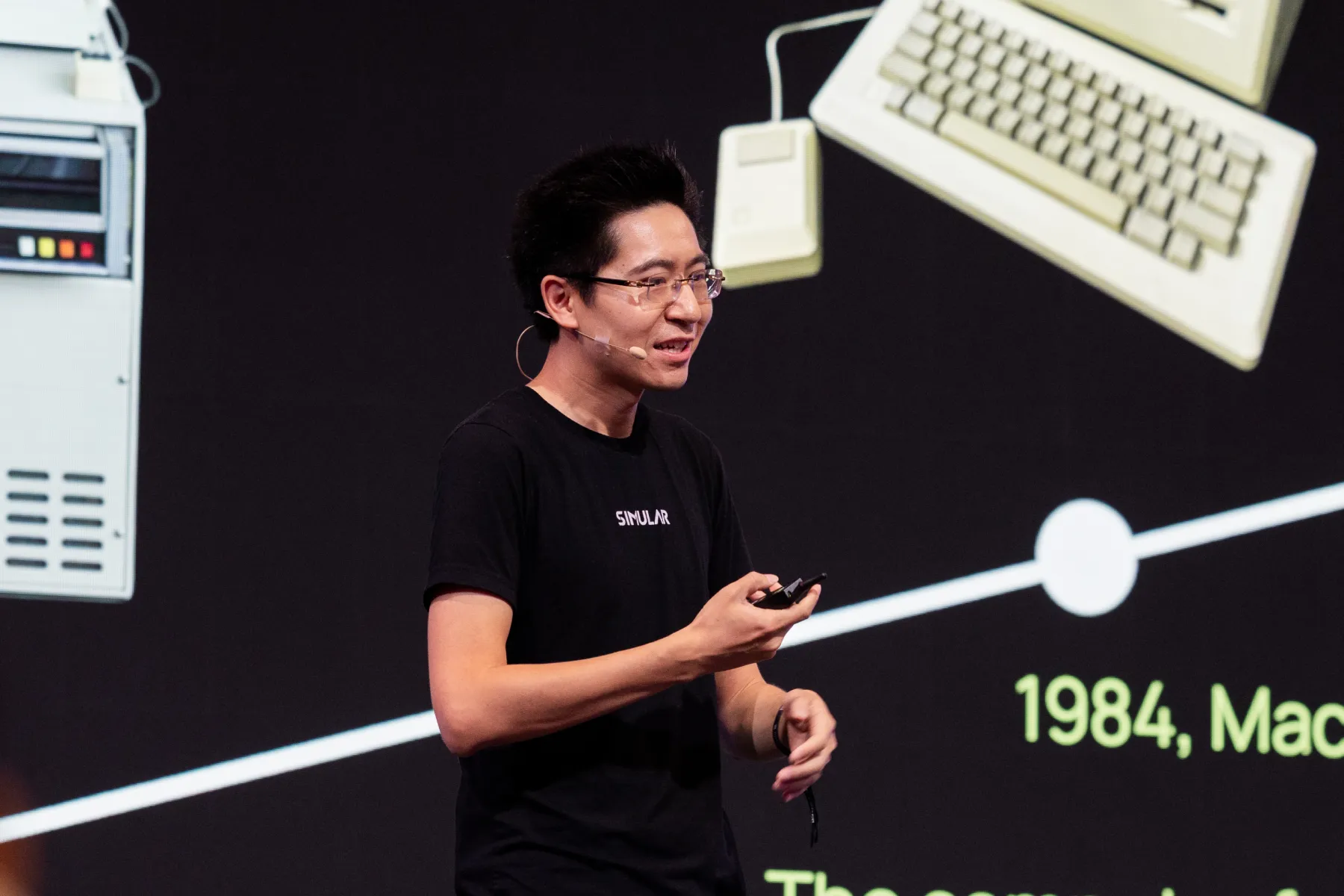
SY Lee (Story, co-founder): Hello, this is SY. I'm one of the co-founders and CEO of Story. We're building the world's IP blockchain, with a particular focus on building the programmable intellectual property layer. We're one of the fastest growing ecosystem IP media related apps that actually leverages generative AI. We were very fortunate enough to actually have raised great funding with a set of very supportive investors. The company got three rounds of funding, and every single round was led by Andreessen Horowitz.
We have several hundreds of teams who are actually building on top of Story, with millions of total addressable users who are using the apps that are building on top of Story. That's been very exciting. What's been most encouraging is we have an incredible team. I previously founded a consumer app that sold to Kakao for half a billion dollars. We have Jason Zhao, who was the youngest PM at DeepMind. We have a very unique mix of talents between IP, media, content, AI and Web3.
Two Young Founders
SY: I'm a serial entrepreneur that's been focused on solving problems at the intersection of technology and content for more than a decade. I went to Oxford and I studied this degree called Politics, Philosophy and Economics, and I thought the two biggest levers around impacting society was one, actually going into politics, and second, actually going into media. So the first company that I built was a startup called Byline, which was a crowdfunded journalism platform.
The chief reason why I built the platform was that the advertising driven model for news and journalism was getting collapsed, and all these independent journalists and content creators were actually getting unemployed and they could not produce their quality journalism and investigative journalism to report on the biggest issues of the time. I wanted to create a platform where these journalists and reporters can directly pitch to readers about what they want to write about and match the demand of the readers and the quality of content.
It was almost like a pre-Substack, and the company did not scale in the way that I wanted to. Not many projects were getting funded. But I still kept my yearning and ambition for really fixing the business model around content.
And I went kind of the opposite of journalism, which was a mobile serialized fiction platform. It was basically capitalizing on the fact that on the smartphone people want snackable, bite-sized episodic content with cliffhangers, instead of reading a Kindle ebook. They want a serialized story that is going to be released almost daily on your phone. It was not an easy journey. When I first started Byline I was like 22, 23. When I started Radish, I was 25, and I was lucky and fortunate enough to have actually found an inflection point in the business and scaled up from 2018, and the startup ended up getting acquired by Kakao for almost half a billion dollars in 2020.
I left Kakao, and I started Story. The big reason why I ended up starting Story is I really felt that at the end of the day I didn't tackle the mission that I really wanted to. For me, I had this massive ambition with Byline. The industry of journalism was getting collapsed, the industry of media was getting collapsed, with all this big advertising revenue being taken away to big tech. I wanted to tackle this massive problem, and I had to give up on it.
So I had to focus on a mobile content platform, a mobile fiction platform that's also focused on mobile romance, a serialized content. I had to go very deep and narrow and monopolize a niche, and to actually work on that, take over that niche, and try to expand down the line later.
It was a good run, but one of the chief reasons I ended up selling that company was realizing the fact that I was just one of many small fish in that content ecosystem. I was spending a bunch of money on marketing to big tech companies to get my content noticed and discovered. I was spending a lot of money on content. I was fighting this zero-sum war against other content platforms to get more attention. I just saw the business not scaling in a way that I wanted to, unless I joined forces with other bigger companies that had a bigger content budget and marketing budget. It was a good success; all the shareholders won, it was a really good personal outcome, but I didn't build a transformative, game-changing company that I wanted to build.
What was really fortunate was that I had a good exit. I was still young. I had this great network. Above all, I had this experience while that fresh feeling was alive. I really wanted to tackle a bigger problem at the intersection of content and technology.
One of my advisors and investors said that going from zero to one, especially making a very disruptive, transformative business, you want to do that in your 20s or maybe at early 30s at the latest. It's almost like being an athlete. Apple, early 20s. Google, early to mid 20s. Nvidia, 30, 31. Meta, early 20s. Every single company that you think of that is a trillion dollar plus with massive market impact and societal impact, they were started by early to mid 20-somethings, and at the latest 30 or 31. When I sold my company I was 30, and I felt like the time is running out. If you're going to start a business anyway, maybe you should do it now, because that's your prime time.
So that's why I started Story one year after getting my last company, Radish, acquired by Kakao.
Jason Zhao (Story, co-founder): So I'm 25. When I was at Stanford, I actually spent almost all my time there in the AI department. I was doing AI research with PhDs, and after graduation I was actually the youngest PM at DeepMind. It was a dream job in many ways. What I was doing was taking the abstract research that came out of projects like AlphaGo and AlphaZero, these game-playing reinforcement learning agents, and finding ways to translate this zero-to-one research into products that could actually be commercialized, that could actually help people rather than just being showcases.
I've always been obsessed with taking new knowledge and making it useful, and being the sort of person who translates research into production. I'm not interested in just doing research, because then it doesn't touch anyone. It was a great role, but there were two reasons really that I found it almost unbearable, and I had to quit even though it was initially my dream job.
Number one, around 2020, 2021, when I was at DeepMind, I started rereading the Bitcoin white paper, the Ethereum white paper. This was DeFi summer. I started reading the Uniswap white paper, the MakerDAO white paper, all these core DeFi protocols. What struck me was that these are pieces of research published by anyone on the internet. It's not just five big companies that can do AI research in blockchain. It's very egalitarian. Anyone in the world can think about it, because in AI you need economies of compute, of data and of capital to do research, so only I at DeepMind or someone at OpenAI could do that.
Whereas in blockchain you have people all around the world publishing these white papers, and then within months they would implement them in smart contracts, and then months later there would be millions of dollars being transacted. People would try to fork it, they would try to build apps on top of it, they would even try to hack it. That's just a very open, evolutionary, Darwinian ground where research was translating to production in a very fast and exciting way. That was very exciting to me.
And it was all happening in public with this open-source ethos. People were talking about DAOs, they were talking about experiments in governance, they were talking about how we can redistribute token ownership more equally, how we can replace companies, how we can replace governments.
There's a very different political philosophy there. You have libertarianism, you have socialism, you have capitalism, and many more philosophies interacting together. That was very exciting to me. But what was even more exciting was the fact that you look around and there are not many mainstream use cases, especially outside of finance. It's Bitcoin as an immutable store of value, it's stablecoins as instant global settlement with low fees, it's DeFi as a replacement to some of the centralized financial system.
But blockchains can do so much more than money. That was my thesis. And to be honest, if you look at the biggest businesses in the world, it's not JP Morgan, it's Facebook, it's Apple, it's Netflix. It's these consumer companies that create media and create culture and allow others to contribute and remix that culture. Ultimately that's what people spend their time doing. They're not on Charles Schwab for ten hours a day managing their 401k or their finances. They're on TikTok, they're on Netflix, they're on Facebook.
To me, the idea of blockchain as a source of digital property rights was extremely exciting. And because I had worked in AI, I understood that AI was about to reshape creativity. AI was about to create an infinite abundance of content. You and I, from our bedrooms, can create Hollywood-level content and share it with the entire world. That's a great thing. But how do you actually create incentives for people to create content?
How do you create a business model around that content and network effects around that content if everyone's able to produce hours and hours of content with a single prompt? That's going to be a big problem, and it can only be solved by blockchain, because blockchains are digital scarcity, provable scarcity, and AI is infinite abundance. So I found that blockchains to secure intellectual property rights, blockchains as infrastructure for creativity, was almost obvious to me, but no one was doing it.
And because no one was doing it, you're really limiting the scale and the impact of this technology, because you're not able to reach consumers who don't care about DeFi, who don't care about finance, who just want to own and create and remix and consume content. That's kind of how the vision for Story started.
To be completely honest, I quit DeepMind knowing not exactly what Story would look like. I quit DeepMind because I just knew that I couldn't stay there anymore. I just knew that this was the future, that I wanted to work on blockchain technologies, and that I couldn't wait. Even though DeepMind was a dream job for me, it was the easiest and the best decision I made to just quit, not even with a plan, but just trusting that this vision and this interest would lead to something great.
The Story team
SY: So my co-founder, Jason Zhao, I met him two years ago. He was very special. He's a student of philosophy and computer science at Stanford. For me, the best crypto and Web3 blockchain entrepreneurs are first a philosopher, and second, a technical visionary.
If you look at Vitalik Buterin, the founder of Ethereum, he's not just a computer scientist and technical visionary. His writing is incredibly thoughtful. He's a philosopher, he's a political thinker, he's an economic thinker. He's deeply thinking about the intersection of politics, philosophy, economics, governance, and technology all at the same time.
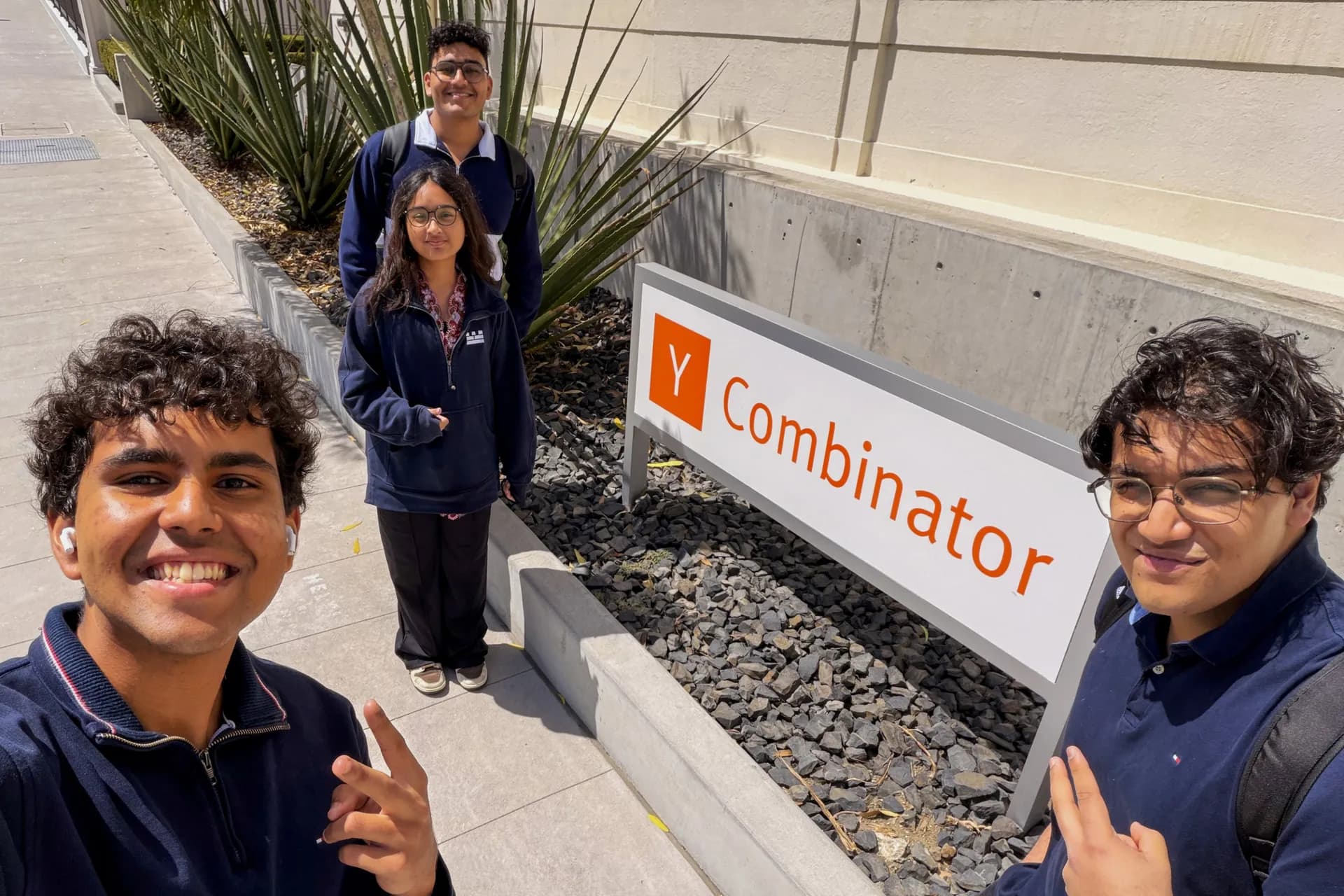
Jason: So the way that SY and I met, we were both in the same accelerator, and we didn't know each other at the time, but then the next day we got coffee, we got to know each other, and it became very obvious that SY is a visionary and an experienced entrepreneur.
He knows how to build a business, and he knows all the real problems that people are facing in the world of entertainment, in the world of IP, in the world of media. I, on the other hand, had this very technical background. So for us, we had a very similar vision. We wanted to use blockchains to solve these real problems in IP, but we had very complementary skill sets as well.
SY: I started working with him casually first, to try our chemistry. Three to four weeks into working together, he came back with this like 10 or 11 page white paper. When I read the first page of his white paper, I sensed that he had even bigger ambition, and I was very encouraged, because I really wanted to partner with someone who's ready to take on a very ambitious project.
Jason: So the fundamental thesis in this white paper is: what does the world look like, and what do we have to do in order to make intellectual property fully programmable? The fundamental principle behind the white paper is that, just like blockchains made money programmable. We will also, through Story, unlock an internet where creativity, where intellectual property, where ideas have property rights, and not just property rights, but property rights that can be programmed, so that every piece of content on the internet, whether it's on Netflix, whether it's on Twitter, whether it's on a decentralized application, is registered on Story, and has an API for rights that anyone, whether they're a developer, an individual or a creator, can interact with.
That's the vision. It's really about the next era of creativity. We really do think that building this infrastructure will lead to a renaissance, where instead of having the same movie, four Avengers movies, five Spider-Man movies, seven Harry Potters, and many more sequels, what we want is a future where culture is more vibrant, more bottom-up, and more owned by the creators and their communities. And so, without making IP programmable, that's not possible.
Chris Dixon (Andreessen Horowitz, GP): We've led three rounds of financing for Story Protocol, and the first round we led, it took about three weeks from the first time we met to when it came to an investment.
The big vision is that data and intellectual property become like Lego bricks. The idea would be, someone could create a superhero or fantasy character, the new Harry Potter or something, a character or story. It could be a game object, it could be a piece of data used in an AI algorithm, any kind of intellectual property.
The vision would be that one person or a set of people can create some objects, and then someone else can come along and say, I'll take your character and write a story about it, and then someone else comes along and creates a game about it. It becomes like LEGO bricks, in the sense that you have one piece and one piece, and you recombine them in different ways.
But each person that creates a brick has control of setting the terms, saying, if you want to use this, you've got to give me some percentage of any revenue you make, or whatever licensing terms. The person who creates the LEGO brick is in charge of the economics, and they decide that you can use this under these circumstances and under these payment arrangements. Then anyone else can come along, and assuming they comply with those things, and that's enforced through copyright law, they can reuse those things.
And so, the kind of beautiful idea here is that you create a really inclusive, participatory, creative economy. And anyone can come in and join, no matter how big or small you are. You don't need to be a big company to be able to license your data. You can just be a single provider. The artist, the creator, has full control of the terms, so they're empowered.
You get what's beautiful about the internet: you get the combined creativity of all these people. Maybe one person is good at creating stories, one person is good at inventing characters. Someone else takes that and forks it, the way you fork a software project and create a different version of it. Maybe one person creates a comic, one person creates a video game. Maybe one person does it by hand and someone else uses an AI system, and all of that is allowed, as long as the person creating that LEGO brick decides it's allowed. They can set those terms. That's what Story Protocol does: it lets you create those objects, set the terms, and track that on a blockchain. Blockchains are very good at tracking that in an immutable way.
What's great about it is, if you look at these AI systems, they've basically sucked in all the data on the internet. You search for something on Google, you still click through and go to these websites, and those websites make money on advertising and paywalls and other things.
In an AI world, you're not going to need to go to the websites, so we're very clearly and quickly entering a world where a lot of these creators will not have an economic model anymore. Why would I pay an illustrator when I can just go to Midjourney and create an illustration? And of course, Midjourney and all these services probably learned a lot of their AI from that data, but they're not paying them any money.
SY: So what needs to happen on a first-principles level is for users and content creators to declare, don't fuck with my data. I own this data. This is my sovereignty, my precious private property, my precious intellectual property. It's your property rights, it's your sovereignty.
You're saying that, but at the same time, what you're saying is: here I'm embedding the information around my copyright, I'm embedding the terms around licensing, I'm embedding the terms around royalty sharing. You embed it into your IP in a writable format. It's encoded. Now we're saying code is law, and this code is law is getting embedded into the IP.
What would have taken hundreds of pages of legal docs, we abstracted away and put into a small number of parameters: revenue share, geography, commercial or non-commercial usage. You set the parameters, you configure your parameters around the usage of your IP, and you program that into the IP, and you put it on the blockchain. Now, what would have taken hundreds of legal docs and an army of lawyers, you can do permissionlessly and frictionlessly, without any intermediaries, and you can license an IP, interact with an IP, repurpose that IP.
Jason: The ultimate goal for Story is that, to the creator, to the developer, to anyone who interacts with the blockchain, they don't have to understand a single thing about how blockchain works. They don't have to understand a single thing about how law works. They might not even have to understand the concept of IP itself. We really take a lot of inspiration from Stripe.
It's so simple to pay using Stripe, but behind that Stripe checkout widget is so much complex logic, so much complex regulatory and compliance activity that really abstracts away all of the complexities of the global payments and banking system. Similarly, for Story, we've built very simple UI and developer tools, so that if you're a Web2 developer, or if you're a creator who doesn't understand anything about technology, it just works.
Builders using Story
Kaiser Kim(Sekai, Co-founder): Okay, so should I just go through the demo? There's a story opening, there's a theme song here, and on the right side you have more information about the story. You can expand it and see more information here, like different characters, locations, the world, and the theme song. Here you can create the story.
On the right side you can see more of the story that you're creating in real time. If you scroll down here, these are all the characters, the branch, and then the world. You can choose between different worlds, like Azuki is the guardian here, or if you have Bored Apes or Pudgy Penguins, you can choose that too. If you select a world, you can import different characters from that world, and you can also create your character really easily with AI, create different locations, and then update dialogue here with AI, and that's all AI-generated voice, or you can upload your own voice.
Everything here is minted as a Story Protocol IP asset. Once you create the story, you can set licensing terms. You'll be able to say, I want to earn 50% commission if somebody else uses my story or uses a character. These are all the contracts that we have.
Jason: We met Kaiser very early on in the company, at our first-ever hackathon. We had an alpha release of the protocol. Kaiser was there because he was friends with one of our engineers. He was a Coinbase engineer, but on the side he's a big part of the Azuki community. He was building this comic app where people could license their IP in the form of NFTs and use it in comics, and allow other people to use their character in those comics as well. This idea of IP LEGOs being composable and monetizable was just so aligned with what we were doing.
He won a prize at our first hackathon, and then a few months later he went to ETHDenver and won the global prize there. There were about 300 projects at ETHDenver, some of the best builders in the world are there, and he won the grand prize. He's just an excellent engineer, building for himself, building for his childhood. He told me something very interesting, which is that he built Sekai because it's the tools he would have wanted to have when he was a kid growing up, thinking about stories but using AI and blockchain, and using Story to make it super easy for people to realize their almost childhood dreams about creating content.
Keehyun Kang (Mahojin, co-founder): So Mahojin is a remix AI layer for builders, which third-party app creators can give their users to instantly and easily create Gen AI images. If you look at the world from a builder's perspective, there are some things that don't really make sense for us. This time, Gen AI is very popular, but when we try it, it doesn't seem consumer-level.
JongHwa Kang (Mahojin, co-founder): So, to think about it, a better dataset leads to better AI models, and better AI models lead to better generated AI outputs, and better AI outputs obviously lead to whatever, like better use of that content, and it can make a flywheel run that flywheel faster. The connection between the dataset provider and the end consumer, the whole chain has to be connected seamlessly.
Keehyun: If you think about the industry right now, all the model developers are developing their models for free. It makes a lot of business models that are impossible on Web2 actually possible on Web3, because when there are too many stakeholders and contributors on a single value chain, it's really hard to get into a contract with five, six or seven different contributors, but I think Web3 makes it possible.
Oli Strong (Magma, COO): My name is Oli Strong, I am based in London, and I am the COO of the American company Magma. Magma is a web based creative platform. We offer the sophistication of professional grade art tools with the fun and accessibility of a social media or gaming platform.
Magma launched four years ago, and in that time we've grown organically to a user base in excess of 2 million. We've got nearly 100,000 daily active users. There are a couple of reasons why we're motivated to partner with Story.
Number one, we are very aligned in terms of how we see the future. We both believe in empowering creators, and that ultimately anyone can be a successful creator, putting that ability in the hands of users around the world. One feature that we've been developing and already seeing very organically is remixing, where artists riff off other creators' skills and ideas and develop it, by using Story Protocol as the backend infrastructure.
We give the original creator the authority and attribution that they deserve, instead of artists just coming in and copying content or taking it illegally or unfairly. By using Story, we can trace that IP in a graph, we can show users how it's evolved over time, potentially where it's forked off in different directions, and we can see this ripple effect as a result of a single idea. Partnering with Story on that is really exciting, because it gives real transparency to our users.
Jason: We're solving a problem for them, and just like with Kaiser, just like with Mahojin, they're doing something that they wanted to do but couldn't do without Story. That's the most important thing: not the support we're giving them, but the fact that we're solving a problem that couldn't be solved otherwise. On top of that, as a company we really want to make sure that the builders succeed on Story.
In the example of Sekai with Kaiser, the CEO and founder, he has key access to our office, he comes in multiple times a week to use our office, we've introduced him to all of our best investors, and got him a seed round led by a16z. It's almost like we're helping him incubate the project. No other project cares as deeply about making sure that these partners succeed, because for us at Story, if our developers and entrepreneurs who are using our software are not succeeding, then we're not succeeding.
So instead of going to the creators directly, we're saying, look, Kaiser, we just want to make sure that you're supported, that we're solving real problems for you, and that you will go and solve these problems for creators in turn. That's kind of our go-to-market strategy: very real-world focused, and also very developer focused, where we're focused on entrepreneurs.
Future of Media
Chris: The internet likes to copy. One way to think about the internet is a supercharged copying machine. You go on Twitter and create a meme, and someone else copies the meme and spreads it. The internet likes to spread things. The traditional media business likes to restrict things. You think about paywalls, or Spotify, and generally what the media business does is go and market something, and then try to charge you to access it.
So there's some tension there. I call it the attention monetization dilemma. On the one hand, when you have a piece of media, you want as many people to see it as possible. On the other hand, in order to make money from it, you need to restrict something, you need to charge for something. I always found the video games industry to be particularly interesting, because it has taken a different approach to this dilemma than every other form of media.
Rewind back to the beginning of the internet, the video game industry. The way the video game industry worked is, if you want to play a game, you go to the store, buy a box, and get a video game and play it. It was the same model as DVDs or movies: you go buy a movie.
The same way the internet comes along, fast forward to today, you have streaming services and things like this, but for the most part, the music and movie business kind of works the same way. You go on iTunes, you pay whatever dollars to buy a movie, or you buy a bundle of movies through a streaming service. Same with music.
The video game industry has evolved very differently. Most of the best video games today, like Fortnite or League of Legends, are free to play, and instead of charging, they upsell you, charge for virtual goods, and other things. Why did they do this? They make it free to play because they realize the benefits of making it free and letting it spread across the internet; people can copy it, stream it, create memes, create whatever they want.
Those benefits make it so much more popular that they shouldn't charge for the game; they should let people take it, stream it, do whatever, and instead make it so popular, so ubiquitous, that so many people will want to play it. They'll get so engaged that they'll end up buying better outfits and better dance moves and all the other things you buy in these video games today. Video games have a radically different model than they did 30 years ago, because they embraced the fact that the internet likes to remix and spread things.
Now look at the revenues of these industries. The video game industry, at the beginning of the internet, was roughly equal to the music business, around 25 billion a year. Fast forward to today, the video game industry is something like 180 billion, and the music industry has basically stayed flat at 25 billion.
If you look at places like Steam, the game store on the PC, you have this really interesting modding community where people take these games and remix them. League of Legends was originally a mod of World of Warcraft, a user-created mod. Originally, Dota was, and then League of Legends was taken from Dota. There's a long tradition of remixing in video games, of spreading things around, and I've always felt that these concepts the video game industry pioneered should proliferate beyond video games.
So when I met SY, what was intriguing was that he had also thought a lot about these ideas and had come up with a lot of interesting solutions. It's like a prepared mind: I had been thinking about this for a long time, and I'd been looking for somebody who was thinking about that too. A lot of what he's doing, the way you can think of Story Protocol, is providing a toolset to creators in other areas, like musicians and writers and artists, to let them embrace these concepts that video games pioneered.
Scott Trowbridge (Stability AI, VP of Business Development): Hi, my name is Scott Trowbridge. I'm the vice president of business development and also on the board of directors for Stability AI. Stability AI is a leading image generation and media generation AI company. We started by pushing Stable Diffusion to market, which is the leading open-source image generation tool used by 5 million-plus creators globally. We now expanded to offering generative AI models across image, video, audio, 3D and other modalities, and effectively now serve enterprise companies and creators enabling generative AI media solutions.
I'm quite interested in crypto, so some of our earliest investors were Web3 crypto funds, and actually the first use of Stability, looking at machine learning and predictive modeling, was actually looking at NFTs on Discord and looking at the attributes and characteristics of those, scoring them and effectively figuring out what the value of these is depending on what those attributes are. So that started there. The whole philosophy and focus behind Stability is really focused on open-source models. A decentralized protocol for the creator industry is going to become increasingly important.
SY: We have a pretty defensive vision, what I call defensive vision. The reason why I call it defensive is we are helping creators protect their IP in this age of AI and get fair compensation. I want to also play offense. IP can't just sit and try to protect itself. IP needs to play offense and fully utilize this powerful technology that is generative AI.
We are at a massive crossroads. Social media made everyone a creator, but now they are a studio, because with their fingertips they can make incredible content with just an idea, with just a prompt. But at the same time it's in massive danger. For me, that is actually turning the internet into an IP Lego land.
Give every creator an amazing set of IP Legos. Imagine millions of characters created by your fellow creators, millions of games created by other fellow creators, while giving them fair compensation, attribution, and provenance. Now you have this magic wand of generative AI. Combine these two things, and we'll see an explosion of creativity; we'll see a digital renaissance.
Above all, I feel extremely grateful because I struggled for a long time with my last startup. I had cash crunch issues, I had time issues, I think I was a pretty immature entrepreneur, I fucked up on many things, so I struggled a lot. And this situation that I'm in, being able to partner with the world's best team, team members that I can only dream of, and investors I can only dream of.
When I first came to Silicon Valley, when I first came to America, all these employees that I'm actually partnering with were untouchable, and investors like Andreessen Horowitz, like the world's top-tier investor, were untouchable to me. I'm really grateful to have this massive, ambitious vision. I've had this vision from the get-go, but AI is making it a lot more relevant, a lot more urgent, what we are building. I feel like I've been waiting for this.
Usually startups take eight to ten or twelve years to actually start working. I know that because I've experienced it; I know how hard it is; I knew that was going to happen. I feel like I've been waiting for this moment for more than a decade. Right? Now I have this chance, and this is a problem that I think needs urgent solving. It's not just about solving that problem: if we enable this primitive, we think we can actually open up a very empowering world for creators. That gets me going.
That's very exciting, because I struggled for a long time and now I'm finally getting the chance. And life is long, right?