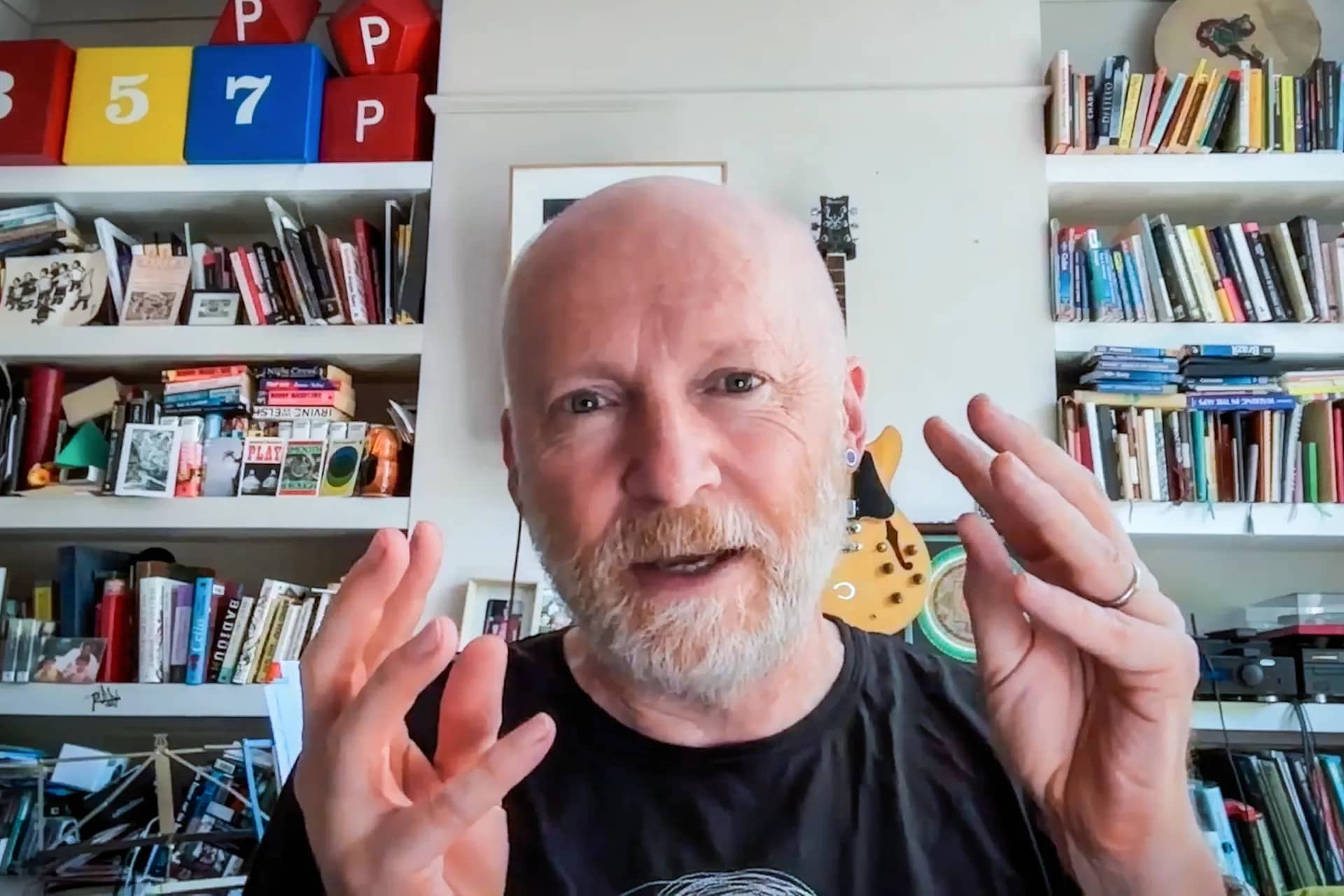
Interview with Jeremy Utley, Professor of Stanford
At a Glance
- Who: Jeremy Utley is an adjunct professor of creativity and AI at Stanford University, where he has taught at the intersection of creativity, innovation, and entrepreneurship for 15 years. He co-wrote the book Idea Flow with Perry Klebahn, which came out one month before ChatGPT launched, and has since focused his research on helping non-technical professionals become better collaborators with generative AI.
- What: The interview covers Utley's research on why some professionals get far more out of AI than others: treating it as a teammate to coach rather than a tool to operate, letting AI interview you to surface where it could help, and bringing genuine inspiration and technique to a model everyone else has equal access to.
- Traction: Utley's research found that fewer than 10% of working professionals are deriving meaningful productivity gains from AI, even though it can make people meaningfully faster and more effective on paper. His clearest example of what's possible: a National Park Service ranger built a natural-language tool in 45 minutes that is projected to save the agency roughly 7,000 days of human labor a year across its parks.
In this interview, Jeremy Utley, an adjunct professor of creativity and AI at Stanford, explains why most professionals get so little out of AI despite its potential, and what the outperformers do differently. He walks through concrete techniques, from letting AI interview you about your own workflow to treating it as a teammate you coach rather than a tool you operate, alongside real examples like a National Park Service tool that could save thousands of workdays. He closes with his view on creativity itself: AI makes 'good enough' easier, but exceptional work still requires pushing past the first idea.
Key Takeaways
Let AI Interview You About Your Workflows
Jeremy Utley recommends asking a language model to act as an AI expert and question you one prompt at a time about your responsibilities, workflows, goals, and performance measures. That process can reveal both obvious and unexpected places where AI could support your work.
Natural Language Tools Can Save Thousands Of Workdays
At Glen Canyon National Park, Adam Rymer used natural language to build a paperwork tool in 45 minutes after identifying a task he dreaded. Its spread across roughly 430 parks showed Utley how basic AI training can let non-technical professionals create operational improvements with unusually broad effects.
Treat AI Like A Teammate, Not A Tool
Utley’s research found that outperformers approached AI as a teammate rather than a tool. When the output was mediocre, they coached it, offered feedback, and invited questions, changing the interaction from accepting an answer to developing a result through collaboration.
Inspiration Is A Discipline For Better Outputs
Utley recalls Lecrae’s phrase, “inspiration is a discipline,” as a reminder that creative output depends on cultivated inputs. Since everyone can access the same ChatGPT, he says differentiated results come from the user’s technique, experience, perspective, and accumulated observations.
Creativity Requires More Than The First Idea
"Doing more than the first thing you think of,” can explain why AI can make acceptable work easier without making it exceptional. World-class results require generating, reading, sorting, and processing enough variations to move past good enough.
Creators Should Work With AI, Not Fear It
Utley argues that creators should lean into AI because the technology can unleash capabilities rather than eliminate creative agency. His preferred framing is not using AI as a passive instrument, but working with it as a collaborator whose possibilities expand when people engage deeply.
Watch the full interview now on EO's YouTube channel! Below is the complete transcription of the interview. Minor edits have been made for clarity and readability.
Introduction
I'm Jeremy Utley. I'm an adjunct professor of creativity and AI at Stanford University. I've been teaching at Stanford for the last 15 years at the intersection of creativity, innovation, entrepreneurship, and now increasingly, artificial intelligence. The topic that I'm most focused on right now is helping non-technical professionals learn to be good collaborators to or with generative AI. And then two years ago, myself and my partner at the time, Perry Klebahn, wrote a book called Idea Flow, which was the canonical book on idea generation and prototyping.
So I was super proud of that. It was the culmination of a dozen years of leading executive programs and the leadership program and the entrepreneurship program at Stanford. And one month after our book came out, ChatGPT came out. To me, the fact that I wrote the canonical book on idea generation just prior to AI is like writing the best book on retail just before the internet.
AI is a tool to dramatically augment and amplify our creativity. And the truth is, I didn't know a lot about it when the book came out. So one month after my book came out, instead of going on a world book tour, I strapped myself back into the front row as a student and said, I need to be learning about this transformative new technology.
So I started taking classes. I started conducting research. I started working with and studying teams inside of organizations, using the tool to understand the simple question, how does generative AI impact the individual and the team and the organization's ability to solve problems?
Chapter 1: Do not Ask AI, Let It Ask You
You can give an AI a prompt, for example. How should I answer this question? Or you could give an AI the question, I want to ask how I should answer this question. What's the best way of framing that question to an AI? So you see what I did there? I asked AI for how to ask AI my question, but you can use AI to use AI, which is you couldn't use Excel to use Excel.
PowerPoint can't teach you how to use PowerPoint. Email can't teach you how to use email. AI strangely can teach you how to use itself if you think to ask. Go to your language model of choice and just say the following. Hey, you're an AI expert. I would love your help and a consultation with you to help me figure out where I can best leverage AI in my life.
As an AI expert, would you please ask me questions one question at a time, until you have enough context about my workflows and responsibilities and KPIs and objectives that you could make two obvious recommendations and two non-obvious recommendations for how I could leverage AI in my work.
The 10X Creativity Hack
You will have one of the most enlightening and illuminating conversations you've ever had, and it's all because of AI's ability to evaluate its own work.
What I've seen is non-technical employees are able to do incredible things. Here's one example. The National Park Service called me and asked me if I would conduct a training program for a bunch of backcountry rangers, so they gathered a group of about 60 backcountry rangers and facilities managers into a training session, and I spent a couple of hours over Zoom teaching folks the basics of collaborating with AI.
One of the people in that session was a gentleman named Adam Rymer, who works at Glen Canyon National Park. And one of the things I say is you should focus on parts of your work that you dread, parts of your work that you don't enjoy, that you think, oh, I have to do this again. And Adam said, if I have to replace the carpet tiles in the lodge.
I have to fill out all this paperwork. And so to replace a carpet tile will sometimes take 2 or 3 days of paperwork. Then he thought, could AI help me write that paperwork? And in 45 minutes, he built a tool with natural language that saves him two days of work every day he makes a statement of work. And then listen to this.
Someone got access to that tool and shared it across the other parks. There's about 430 parks in the service. The National Park Service is estimating that the tool that Adam built in 45 minutes is going to save the service 7000 days of human labor this year. That's the kind of impact that normal professionals can have, even without any technical ability, if only they're given very basic foundational training.
Chapter 2: Don't Use AI, Treat It As A Teammate
People are wanting to learn AI and how it can be transformative for their business, but they don't have the basic language. And so while lots of organizations are asking me how can we work with AI to transform our business? Where I have to start with them is how do you work with AI? The research I'm familiar with suggests that while on the one hand, AI makes people 25% faster and 12% more work and 40% better quality, it's also true that less than 10% of working professionals are deriving meaningful productivity gains from collaboration with AI.
To me, there's this enormous gap. I call it the realization gap. We conducted studies both in Europe and in the United States. And what we found is, surprisingly, AI didn't help most people be more creative.
In fact, in many cases, the people that we studied, AI made them less creative. And as we started digging into the research, we were surprised and looked at the data. We were confused because you think AI should make people more creative, not less. And we studied the underperformers and then we studied the outperformers. And what we found is the outperformers had a fundamentally different orientation towards AI than the underperformers did, whereas the underperformers treated AI like a tool.
The outperformers treated AI like a teammate, and shifting your orientation from tool to teammate changes everything about the kinds of outcomes that you can achieve working with generative AI. A simple example is what do you do when it gives you mediocre results? If it's a tool, you get a mediocre result and then maybe you improve it. Or maybe you say, it's no good at doing that.
If it's a teammate who's given you a mediocre result, think about the last teammate who gave you work product that wasn't sufficient. You gave them feedback. You gave them coaching, you gave them mentorship, you helped them improve it. And so what we found is that people who treat AI like a teammate, coach it and give it feedback and importantly, get it to ask them questions.
The fundamental orientation a lot of people take towards AI is I'm the question asker. AI is the answer giver. But if you think about AI like a teammate, you say, hey, what are ten questions I should ask about this?
Or what do you need to know from me in order to get the best response? So things, for example, like you have a difficult conversation coming up with a coworker. Did you know you could leverage a large language model to roleplay that conversation? You can get an AI to interview you about your conversation partner, and then construct a psychological profile of your conversation partner, and then play the role of your conversation partner in a roleplay, and then give you feedback from the perspective of your conversation partner on how you approach the conversation.
That's something you can do today, and there are many things like that. I call them drills, but there are many things like that where if someone will just shift their consideration set of what are the things I can do with AI. They end up discovering applications that I've never even dreamed of. I've been doing this stuff for two years, and my students are regularly coming to me with use cases I've never imagined that landed them in a destination I could have never predicted, and they could never have predicted.
For me, I never thought about myself as a creative individual. Now, I fully and fundamentally believe every single human being has innate creative capacity. Every single one of us. Everyone has this latent creative capacity. Once I was teaching a class with a hip hop artist named Lecrae.
He's a multi-time Grammy Award winning artist, and he and I are teaching a class to graduate students at Stanford, and we're giving them the assignment. You've got to go get inspiration in the world. And what I can see is it's like looking at myself in the mirror ten years ago, because all of the business school students in the class are going, "inspiration?"
And I just felt Lecrae is clearly the creative legend in the room. I said, Lecrae, what do you think about inspiration? And of course, as only a hip hop artist could do, he dropped a bar. He said, inspiration is a discipline. And I realized in that moment, for these students, it's not even on their radar as a tool, let alone a routine part of their life.
But the most wildly creative individuals I know are disciplined about cultivating the inputs to their thinking, because they know it affects the outputs of their thinking. And so, even in regards to AI, I push people. What is the inspiration you're bringing to the model? Everybody has the same access to the same ChatGPT. How do I get a different output than you do?
It's because of what I bring to the model. And what do I bring to the model? Certainly I bring technique, but I also bring my experience. I bring my perspective. I bring all the inspiration I've gleaned from the world. That's what gets a user a differential output from a model.
Chapter 3: How To Go Beyond "Good Enough" Ideas
A seventh grader in Ohio who I don't even know what her name is, but her teacher asked, what is creativity? And she put a post-it note up on the board that says, Creativity is doing more than the first thing you think of. And that's my favorite definition, because it speaks to a profound cognitive bias that we hold. It's been called functional fixedness. It's been called the Einstellung effect. But the basic premise is humans tend to fixate on an early solution and be satisfied.
Herbert Simon called it satisficing, but it's the idea that if we get to good enough, it's enough. And that's why I love that seventh grader's definition. Creativity is doing more than the first thing you think of. It's pushing past good enough. Is the definition of creativity changing in the age of AI? I don't think so. The reality is, with AI, it's now easier than ever to get good enough.
If your goal is world class, if your goal is exceptional, then what you want to be prompting for is actually volume and variation, and that takes time. It takes time to not only read through it, but to sort it and to process it. But fundamentally, the definition of creativity doesn't change in the age of AI. It's just that the human's ability or inability to arrive at a creative state is affected not only by the technology, but also by their stated or unstated objectives in collaborating with it.
Creators don't need to be afraid of AI. Creators need to dive in. They need to lean in. Creators are about to be unleashed in a way they've never been unleashed before. The only correct answer to the question how do you use AI is, I don't. I don't use AI. I work with it. When you start working with AI, it will change everything.