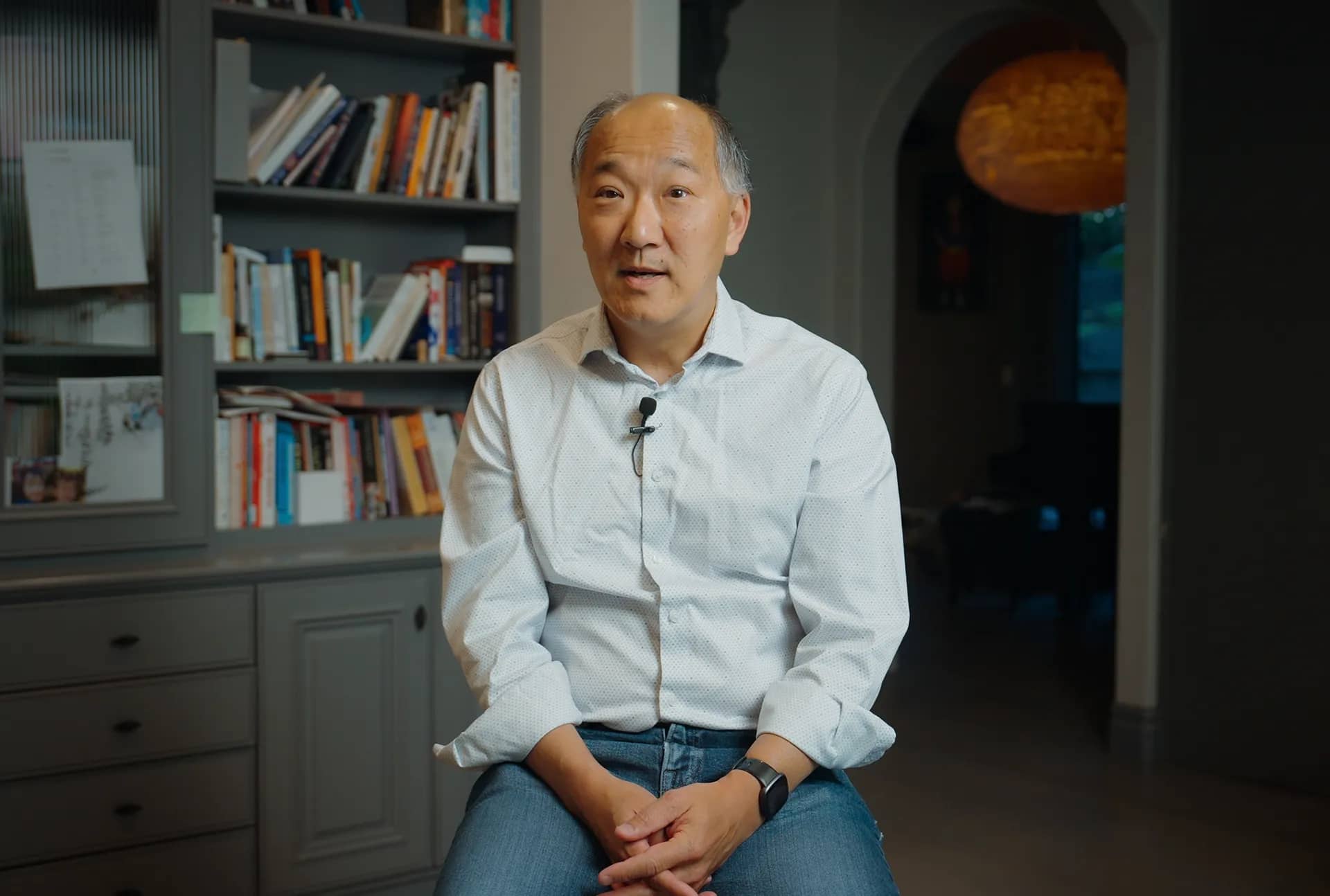
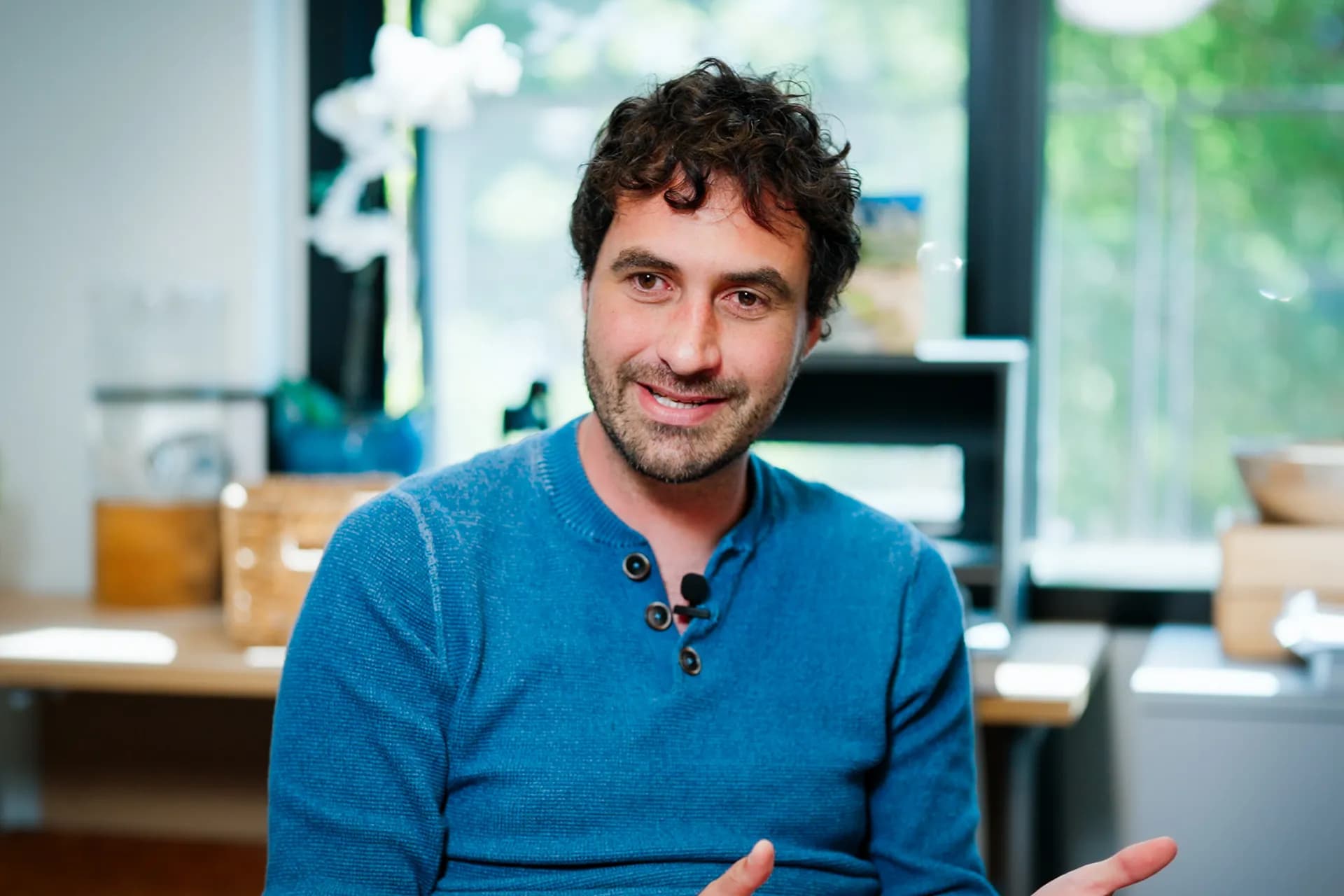
Interview with Marcus du Sautoy, Professor of Mathematics at Oxford University
At a Glance
- Who: Marcus du Sautoy is a professor of mathematics at the University of Oxford and the Simonyi Professor for the Public Understanding of Science, the chair once held by Richard Dawkins.
- What: He is the author of Thinking Better: The Art of the Shortcut, which explores why humans, unlike AI, are wired to hunt for shortcuts instead of grinding through a problem.
- Lesson: AI has already caught up to two of the three types of human creativity, but the rarest kind, and the intention behind any of it, still belongs to us alone.
In this conversation, he gives you a working definition of creativity: three specific types, in order of difficulty, and then shows exactly which two AI has already taken and which one it still can't reach. Along the way: why AlphaGo's Move 37 counts as genuine machine creativity and deserves the credit over its programmers, and why the human edge turns out to be something nobody puts on a résumé. We're lazy. AI isn't. That's the whole advantage.
6 Key Takeaways:
The Three Tiers of Creativity
Creativity is not a single concept, but rather three distinct types: exploratory (pushing the limits of existing rules), combinational (merging different disciplines), and transformational (breaking past conventions). While AI excels at the first two, transformational creativity remains its biggest hurdle.
Mathematics Is a Form of Fiction
Unlike natural sciences that must strictly align with the physical universe, mathematics is deeply creative and resembles storytelling. Mathematicians invent rule sets and explore universes that have no physical reality, such as creating new, non-flat geometries.
AI Acts as a "Digital Telescope"
Rather than acting as an independent artificial brain, AI currently functions as an "augmented intelligence" tool. Just as Galileo's telescope allowed humans to see further into space, AI allows us to see deeper into digital structures, helping to spot patterns or counterexamples in decades-old mathematical conjectures.
Machines Are Capable of Transformational Creativity
AlphaGo's famous "Move 37" demonstrated that AI can break human conventions to discover superior strategies, finding a higher "mountain peak" of gameplay that humans couldn't see. Because this unconventional strategy evolved from the machine's own learning process rather than hardcoded instructions, the credit for the creativity genuinely belongs to the AI, not the programmer.
True AI Consciousness Requires Intention
Current AI, including large language models, operates on statistical probabilities without any inherent desire to express itself. The first real indication of a "ghost in the machine" will be when an AI creates something out of a self-directed intention, rather than just fulfilling a human prompt.
Human "Laziness" Drives Innovation
Humans naturally seek shortcuts to avoid laborious work, a trait that led to the birth of algorithms, famously demonstrated by a young Carl Friedrich Gauss finding a mental shortcut to sum numbers. Because AI never tires of doing things the hard way, the ultimate collaboration lies in combining human lateral thinking with a machine's raw processing power.
Watch the full interview now on EO's YouTube channel! Below is the complete transcription of the interview. Minor edits have been made for clarity and readability.
Intro
Professor Marcus du Sautoy.Courtesy of EO
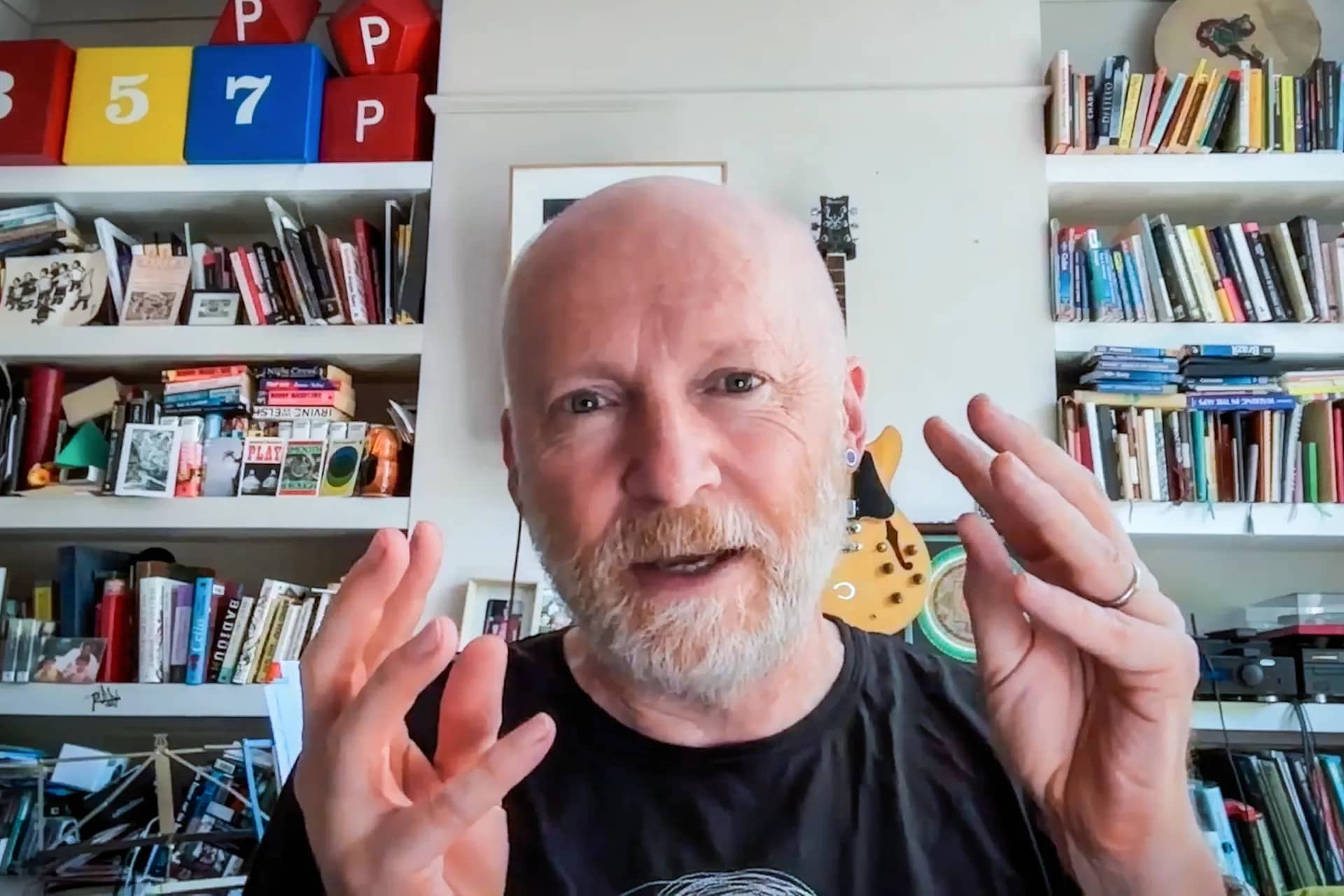
My name is Marcus du Sautoy. I'm a professor of mathematics at the University of Oxford, and also the Simonyi Professor for the Public Understanding of Science. My role is a bridge between the world of academia, where a lot of these things are developed, and society, who are going to be impacted by these new technologies.
In particular, one of the things I've been interested in very much recently is the impact of artificial intelligence. We see AI being so successful that we're beginning to wonder: is there anything it can't do? And I think one thing people often raise as something AI could surely never do is the idea of creativity.
Isn't our creativity, in some way, a unique expression of what it means to be human? But what do you mean by creativity? The first sort is called exploratory creativity: taking the rules of the game as they stand and trying to understand what more you can do within that rule set. Then you've got what's called combinational creativity. This is finding new things by being creative in combining different areas. Combinational creativity and exploratory creativity are things I think an AI will be very good at.
But what is it that we can do that AI will perhaps always be limited by? The most difficult and the rarest form of creativity is transformational creativity.
We're actually quite a lazy species. We're a bit like the lion that sits around all day in the savannah and then just does a short burst in order to capture its prey, and that describes very much how we humans like to approach problems. Very often that leads to incredible innovation. But transformational creativity, I think, is a challenge.
Lesson 1: The Three Levels of Creativity
When I was at school, I didn't fall in love with mathematics immediately, partly because it focused too much on the technical side, like multiplication tables. It just didn't light me up. Then I was very lucky to have a teacher, when I was about 12 or 13, who showed me the beauty of mathematics: the creative side of mathematics.
It's perhaps unexpected for people to hear that mathematics is a creative subject. People recognize it as the language of nature and the language of the sciences: if you're doing physics, very often you'll have to use this language. But why is it something creative? My teacher showed me how mathematics is bubbling under everything, especially nature: the Fibonacci numbers, 1, 1, 2, 3, 5, 8, 13, where you get the next number by adding the two previous numbers together. That's a simple little pattern, but then you start to see that this is the key to the way nature grows things.
This is best explained by pointing out a big difference between mathematics and the other sciences. The other sciences are trying to understand the universe around us: why particular animals evolved, in biology, or what the fundamental particles are that make up the universe. You might be as creative as you want in the sciences, but it's not particularly helpful if it doesn't match reality. In mathematics, that matters much less. We're quite interested in worlds that don't have a physical reality.
One example is the different sorts of geometries we've created. The ancient Greeks started with Euclidean geometry, which is a flat geometry, but then mathematicians in the 19th century began to create new geometries where triangles did strange things. Triangles on a sphere add up to more than 180 degrees. There's also hyperbolic geometry, like a saddle or a Pringle, where triangles do different things again.
Quite often our stories are about universes that have no physical reality, which sounds very much like a novelist or a science fiction writer who says, "Okay, suppose these are the rules of the game." And then you explore what happens. I fell in love with mathematics because of its creative side.
Professor Marcus du Sautoy on Oxford Today.Courtesy of Oxford
But what do you mean by creativity? I think there's a lot of concern about whether our species, the human species, is going to be wiped out, taken over, or replaced by artificial intelligence, and one thing people often raise as something AI could surely never do is the idea of creativity. Isn't our creativity somehow a unique expression of what it means to be human? But I think this word "creativity" is actually quite hard to pin down, and that's the first challenge. If you're going to ask whether AI can be creative or not, you need a pretty good definition of what creativity is.
Type 1: Exploratory creativity
The first sort of creativity is called exploratory creativity. This is taking the rules of the game as they currently stand and pushing that creativity to its extreme: trying to understand what more you can do within that rule set. For example, if you take the music of the Baroque, I'd say Bach was still working within that rule set, but he was just superbly creative in pushing the musical style to its absolute limits. And I'd say that was a great example of exploratory creativity.
Type 2: Combinational creativity
Then you've got what's called combinational creativity, and this is one I love using in my own work. I often do it in mathematics, because I'll go to a seminar, say in geometry, but I'm a number theorist, so I'll see how they're analyzing their structures and whether that gives me a new mindset for looking at my own area. A very simple example might be fusion cooking: taking the ingredients of Asia but cooking them in a European way. This is a very fruitful way of finding new things, being creative by combining different areas.
Type 3: Transformational creativity
The most difficult and the rarest form of creativity is transformational creativity. That's where something seems to come out of nowhere. It's the sense that you are breaking all the conventions of the past. Often that's how transformational creativity is done: you understand the rules of the past, and then you break something. I'd say a lot of the creativity at the beginning of the 20th century is of that type. You've got serialism in music, where suddenly you're throwing away harmonic structure and just introducing a 12-tone row. That's really throwing away old structures, but something very interesting and liberating.
I think that's the rarest form, and in a way, the most challenging for an artificial intelligence, because the way AI is creative is that it learns the styles of the past and develops those.
Exploratory creativity is something I think an AI will be very good at. Combinational creativity, it's very good at, too: learning a style from one completely different discipline and applying it to another. But transformational creativity, I think, is a challenge.
3 Levels of Creativity.Courtesy of EO
Lesson 2: How Creative is AI in 2026, Actually?
Now, how powerful is this tool?
Recently, we've had some mathematical challenges that have been open for decades. Certainly, with the aid of artificial intelligence, we've been able to make progress on these. But, interestingly, the sort of problem artificial intelligence is good at is a very particular sort.
How AI is changing math.Courtesy of Nature
Take the case of this mathematical problem: we had a conjecture that we thought was true. The AI didn't prove that it was true. It did something different: it found a counterexample. It showed it wasn't true.
This is where we see the power of this tool, almost like a telescope. When Galileo got a telescope, it allowed us to see deeper into the solar system than we ever had before. We can regard AI in a similar way: it's almost like a digital telescope, allowing us to see into the digital world and watch patterns emerge.
It still required very good use of the tool, but it was able to tease out a particular structure that contradicted what the conjecture was saying. Artificial intelligence is going to be very good, for example, at that. That's why I often translate "artificial intelligence" not as artificial intelligence, but as augmented intelligence. I think that's one of its strengths. But there's also an example of genuine machine creativity, artificial intelligence that's really changing the landscape.
There's a very famous move that AlphaGo made in this match against Lee Sedol: move 37 of game two. Commentators watching live called it out in real time. "That's a very surprising move," said one. "I thought it was a mistake," said another.
I would regard this as genuinely the first sign of creativity in a machine, because AlphaGo made this move very early in the game, and it was a very unconventional move. It was very deep into the board compared to what people traditionally play at the beginning of a game. It was a new sort of move, and a very surprising one. I remember listening to the commentary on this match on YouTube, and all the commentators gasped. One commentator called it a very bad move, because it seemed so weak to play that deep into the board so early.
Commentators calling Alpha Go's move 37 a mistake.Photo by Google Deepmind
Yet by the end of the game, this was the move that won AlphaGo that second game. It was an incredibly valuable move, and it has genuinely changed the way humans play the game of Go.
You could say, is that exploratory creativity, because it's just exploring the rules of the game? But I don't think so. I think you could regard it as transformational creativity, because we had certain ways we thought were good to play the game, and AlphaGo showed us you don't have to stick to that. You can break it and do something quite different.
We thought we'd climbed a mountain peak, and that we knew the best place to play this game. But what the AI revealed is that, okay, that might be a high peak, but it's only what we mathematicians call a local maximum. There's actually a much higher peak if you go down the valley and up the mountain just across the way. But we couldn't see that, because it was surrounded by fog in our minds. And so AlphaGo has led us to a higher peak.
Lee Sedol, 9-dan Professional, playing Go with AlphaGo.Photo by Google Deepmind
Now, you could say: hold on, isn't that just the creativity of the coder who wrote AlphaGo? No, I don't think so, because this line of code that appeared, this strategy, wasn't written in by a human. It grew out of the learning process of the code.
If a human had seen that line of code, they probably would have deleted it, thinking AlphaGo had gone off in a bad direction, that this was a bad sort of move to play that deep. But that strategy, those lines of code playing this deep so early in the game, grew out of the learning process of the code. I think you should genuinely credit that to the AI, not the human.
But AlphaGo didn't want to play the game of Go. It wasn't really interested. It was us who had the intention to get it to play the game.
We have to recognize that AI is created using a lot of statistics. It's a statistical model. Something like ChatGPT, you have to recognize, is really just generating text: what's the most probable thing to follow, given its learning process. So it can show you that something happens, but not why.
I'm not saying it won't get to that stage, but at the moment, it won't suddenly write a novel because it wants to tell you what it's like to be an AI. And that intention to express itself, I think, will be our first indication that maybe there's a ghost in the machine.
Lesson 3: What Only Humans Can Do
We see AI being so successful, we're beginning to wonder: is there anything it can't do? What is it that we can do that AI will perhaps always be limited by? It actually led me to write one of my books.
The book after the one I wrote about AI and creativity is Thinking Better: The Art of the Shortcut, because I think one of the things humans are very good at is this: when we're faced with a problem, we're actually quite a lazy species. We're a bit like the lion that sits around all day in the savannah and then just does a short burst in order to capture its prey, and that describes very much how we humans like to approach problems. Very often that leads to incredible innovation.
We're faced with a problem, and we can see how to do it by doing a huge amount of laborious, donkey work, but I don't want to do that. You sit back and try to find some lateral thinking, which is what humans are very good at: finding a clever way around the problem you're facing. I think mathematics developed out of that mentality.
My favorite example of the lazy mind of the mathematician is one of my mathematical heroes, Carl Friedrich Gauss, who, when he was at school, was asked to add up the numbers from 1 to 100. The teacher thought that would keep them occupied for ages.
Carl Friedrich Gauss.Courtesy of EO
Here's a good example of the dumb way: you start with 1 + 2, that's 3, + 3 is 6, + 4 is 10, and that's going to take you forever. But Gauss, who was still only about 8 years old at the time, said, "Hold on, there's a much cleverer way to do this." If you add the first and last number, 1 + 100 is 101. 2 + 99 is 101. 3 + 98 is 101. There are 50 pairs of numbers adding up to 101, so the answer is 5,050.
That was fast and efficient, and it's a mentality I can apply even if the teacher says, okay, now do 1 to a million. The laborious way, you'd be there for days. But that strategy can be applied no matter how big the number is, and that's the real power. In a way, we're starting to see where computing emerges from, because what you're doing is creating an algorithm: it doesn't matter what number you give it, the algorithm will give you the answer fast, efficiently, and correctly.
Early coding is all about this: you might have many different numbers, but if they're all working under the same rule set, that's a real, amazing shortcut. The challenge is: would AI come up with these kinds of shortcuts? I don't think it often will, because it has no problem working incredibly hard, churning through a problem for hours. We run out of energy; AI still doesn't mind doing things the dumb way.
But, going forward, that may change. It may be that human and AI together can go so much further, because we combine our passion for the shortcut, the passion for saying, "Okay, you could do that the really long way, but let me introduce a shortcut instead." Once you introduce that into the program, you've got an incredibly efficient combination of the human and the machine.
One of my central messages is to remember that artificial intelligence is not a competitor. It's a collaborator.