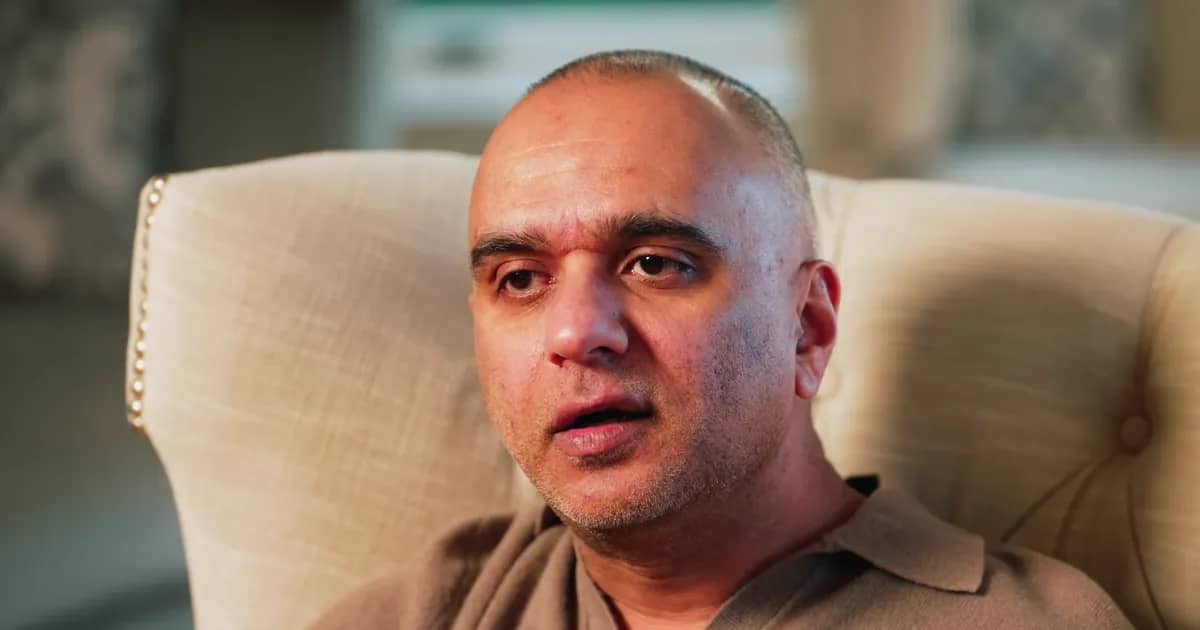
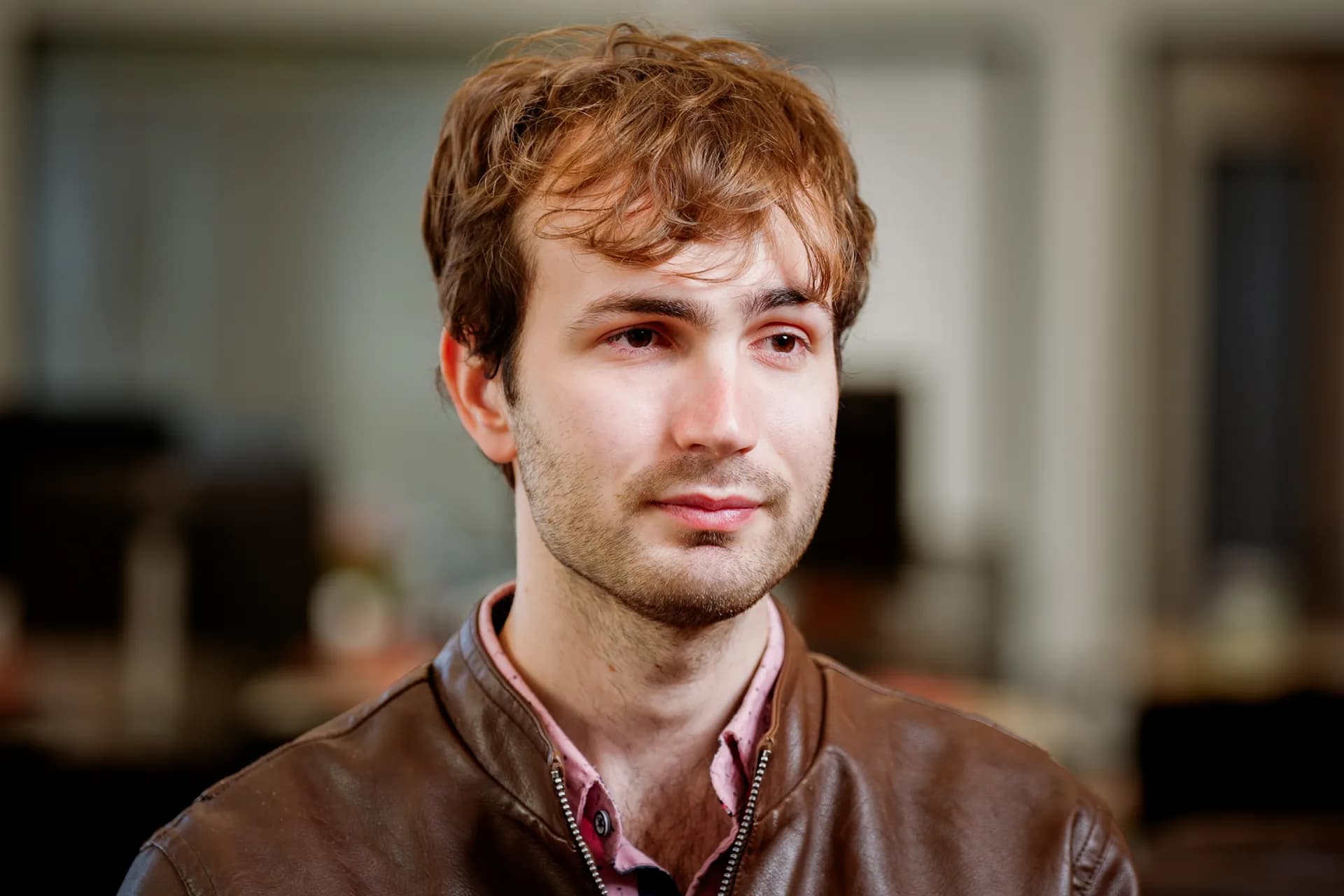
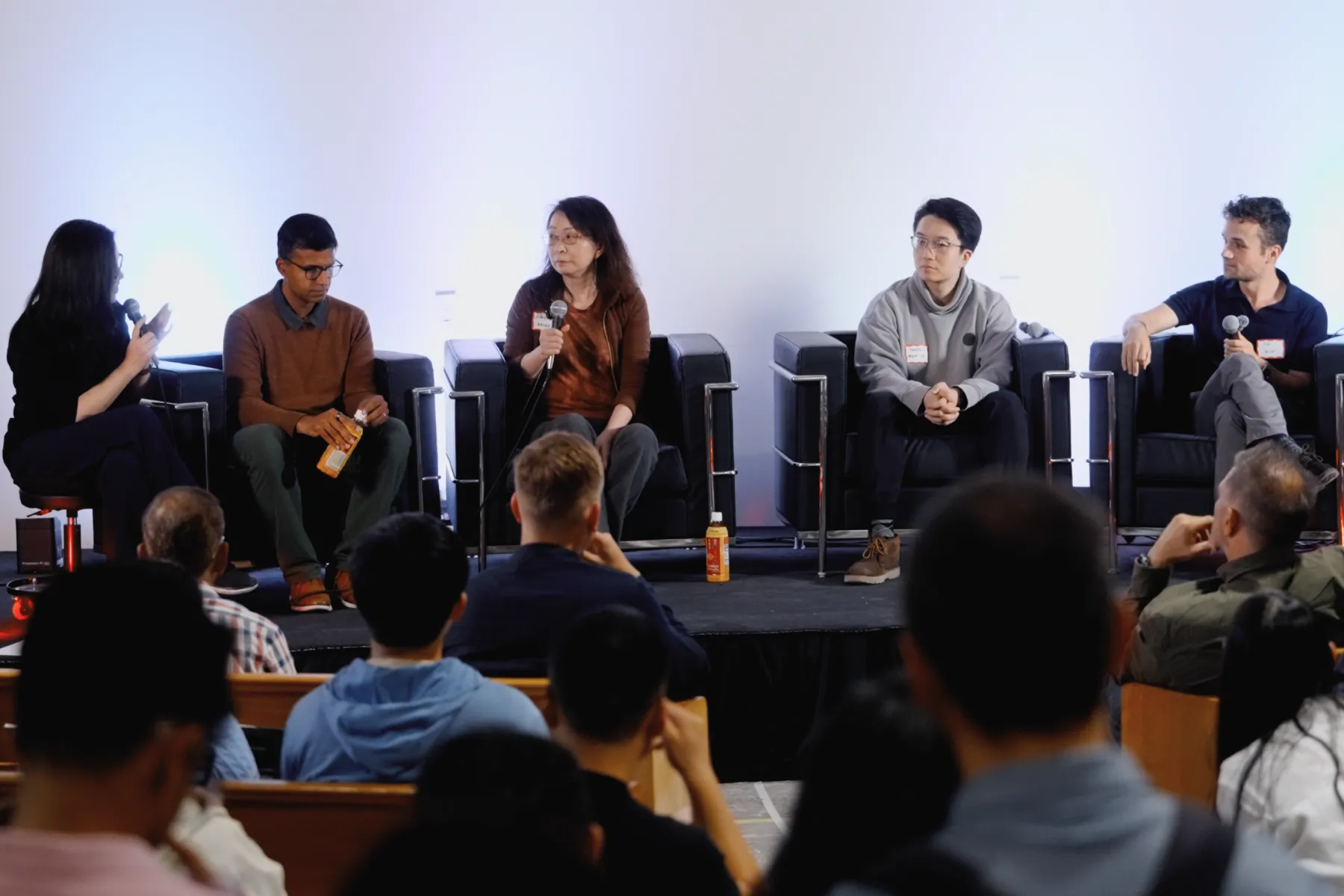
Interview with Eric Simons, Co-founder of Stackblitz
At a Glance
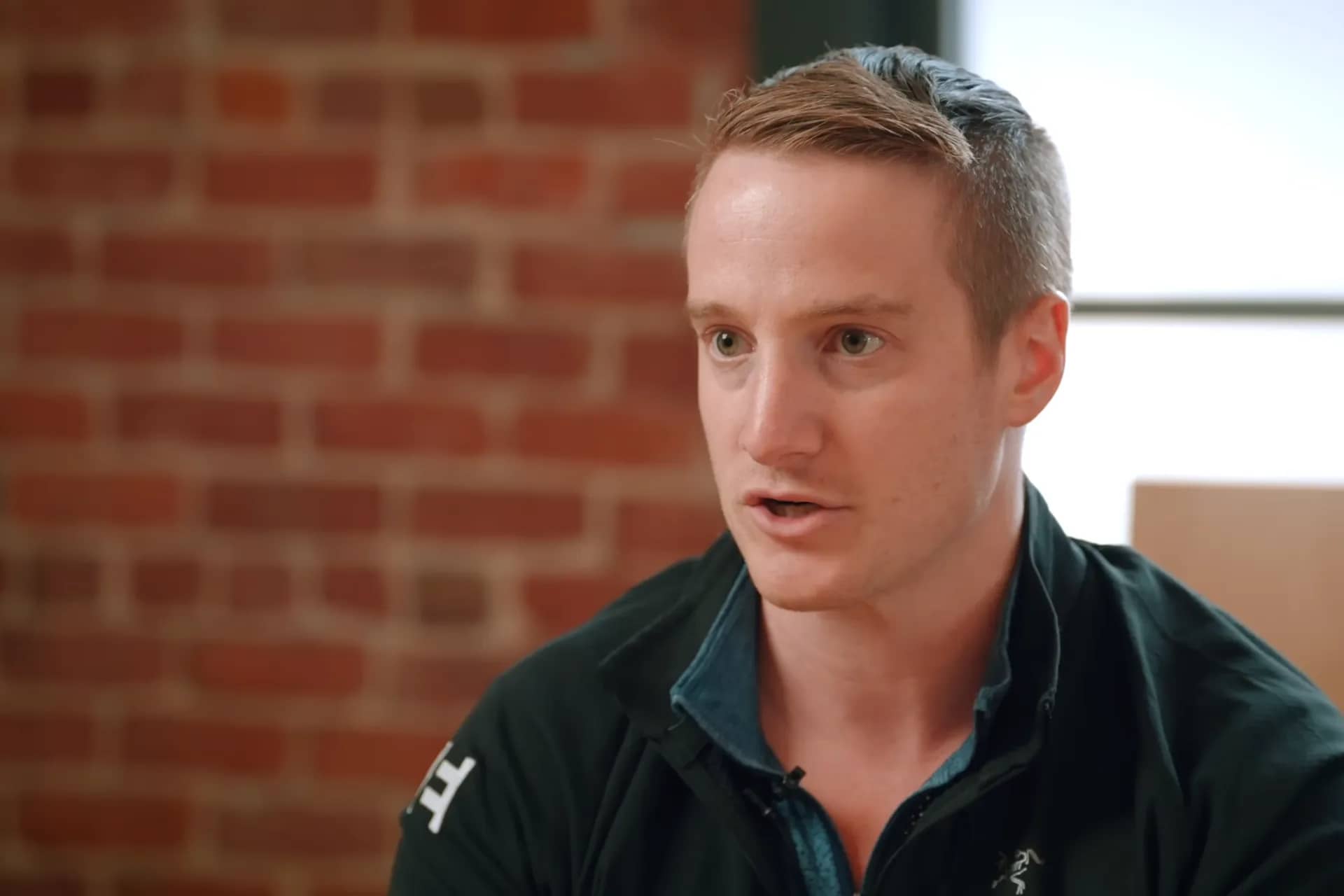
- Who: Eric Simons is the co-founder and CEO of StackBlitz, the team behind Bolt.new. At age 19, he moved to Silicon Valley and secretly lived inside the AOL headquarters for four months to code his first web applications, later founding the developer education platform Thingster, which reached over 100,000 users.
- What: StackBlitz built Bolt.new, an open-source, AI-powered web application generator that lets users prompt, build, and deploy full-stack web applications directly in a browser tab in 30 seconds.
- Traction: Bolt.new scaled from $0 to $20M ARR in two months, reached $40M ARR in five months, and grew to nearly 4 million registered users.
Eric Simons spent five years building StackBlitz's browser dev technology without driving monetization. Simons and his co-founder faced shutting down the company in 2024, but refused to quit. Simons trained for a full Ironman while running a final batch of product experiments, leading directly to the launch of Bolt.new and a viral growth wave that hit $40M ARR in five months. In this interview, Simons reveals why StackBlitz held off on AI until Anthropic released Claude 3.5 Sonnet, how a single tweet unlocked viral distribution, and why all software will be written by AI in single-digit years.
Key Takeaways
Bolt Turned a Decade of Experiments Into Breakthrough
Before Bolt, Eric Simons and his co-founder spent years building browser-based development technology while struggling to find a business model. After deciding to exhaust every promising experiment, Bolt became the final attempt before winding down, making persistence concrete rather than sentimental.
Launch With a Tweet When the Product Delivers
Bolt's launch consisted of a single tweet, but users immediately turned the promise into action by typing an app idea and receiving a working web application in 30 seconds. Simons saw the product's speed and clarity create its own distribution, reaching $20 million ARR in two months.
Wait for AI Capability Before Committing Your Pivot
Simons shelved an early Bolt prototype because its generated applications were broken or unattractive. When Anthropic's Sonnet 3.5 coding model improved the experience, StackBlitz pulled the idea back and launched within 90 days, showing that timing matters more than adding AI for appearances.
Scale Feedback Through Users Who Lead Community
Bolt scales support and product feedback through engaged users in Discord, Reddit, and Twitter, alongside team members dedicated to helping customers. Community leaders surface repeated pain points and help the company separate useful signals from the thousands of daily requests.
Exhaust Every Option Before You Decide to Quit
Simons distinguishes stubbornness from conviction by asking whether he is protecting an idea because it matters or merely following advice never to give up. His standard is to leave no stone unturned, so a shutdown reflects a fully tested path rather than an unfinished effort.
AI Will Let More People Build Software
Simons expects AI to remove much of software development's monotonous work while expanding who can create applications. Developers can spend more time on difficult, high-value problems, and people without traditional programming backgrounds can turn ideas into websites, apps, and games.
Watch the full interview now on EO's YouTube channel! Below is the complete transcription of the interview. Minor edits have been made for clarity and readability.
Introducing Eric Simons, co-founder of Stackblitz
I'm Eric Simons, co-founder and CEO of StackBlitz, and we're the creators of Bolt.new. People go to Bolt.new, type in the idea of a website or whatever they want to make, hit enter, and 30 seconds later they have a web application ready to go. In the first two months after launching Bolt, we went from 0 to $20 million of ARR. In the three months since, we've added roughly another $20 million, and we now have almost 4 million registered users and are continuing to grow like a weed.
The 19-Year-Old Who Secretly Lived in the AOL Building
I liked computers from a pretty early age. I was building computers, gaming computers, that sort of thing. That's actually how my co-founder and I met, when we were around 12 or 13. The first product we built was basically a version of Dropbox before Dropbox existed, back in 2006 or 2007. At that time, the way you brought your digital documents between school and home was a USB flash drive, and when you're 12 or 13, you're going to forget it. You're going to leave it at home. It happened all the time. So we had the idea to just make a digital storage service that people could upload their homework to. It took off like wildfire, and many school districts across Illinois and the Midwest started using it.
I think I was 18 or 19 when I came out to Silicon Valley. We had gone through one of the accelerator programs, which at that time would give you something like $200K. We went through that money, and then we were out of money, but the product wasn't ready to launch. So what do you do? We just happened to have access to the AOL building, because one of our investors was renting office space there, and I had a key card. There were couches I could sleep on, and a gym with showers. I was 19. Expectations for quality of living are pretty low at that age. So I ended up living out of their headquarters, coding from 9 a.m. to 11 p.m. or midnight, for about four months, until someone finally caught on that I was living there. They found me and threw me out at five in the morning. I didn't know anyone in Silicon Valley, and I'm not from California. I went and slept on a table at Starbucks until they opened.
Thinkster was a company we didn't really intend to be a company. We had a whole bunch of startup ideas we were trying on the side, and we were building lots of web applications for each of them. To stay afloat, we thought that we actually know a lot about building web applications, because we're doing it so much, so we could teach folks online, charge for courses, and make money to keep trying other ideas. The thing is, of everything we were working on, Thinkster was the most successful. We were teaching a lot of people, something like 100,000 of them, how to do web development.
The biggest problem those learners had is common to anyone learning how to program. The hard part is not learning to write the code, but setting up the development environment, which means getting your computer to even run code. That is a huge challenge, whether you're a beginner or an advanced developer. People using Thinkster just couldn't get their environment set up to learn how to write code.
Then we had the realization that it should theoretically be possible to run an entire dev environment inside the browser itself. No servers, nothing installed locally, running inside a browser tab. We looked at all the technologies that had been released in browsers and thought, someone must have done this already. We were just trying to solve our own problem, not start a company. We looked around, and there was nothing. Nothing that could actually do it. I knew this was something very different, because I technically understood the underpinnings that made it possible, yet no one had gone and done it. That key insight is what led us to start StackBlitz. It would be huge for people learning to code not to have to set up environments. It would make it far more accessible, and people could just keep building in it. Why would you even need a local environment? That was the origin of StackBlitz, and it came directly out of Thinkster.
The 2-Month Miracle That Took 7 Years
We had spent half a decade building out this technology. The problem is that anyone who really knows how to write software already knows how to get things set up on their local computer, and will gravitate toward that because it's familiar. If you're building something web-based, getting people to leave their environment is a huge challenge.
We tried a whole bunch of experiments over the previous two years. They were all very cool, and the people who tried them thought they were awesome. But none of them moved the needle on monetization. My co-founder and I had talked about whether we should pack it in and shut down the company. So last year, with our board, we made a decision. We're going to spend the rest of this year trying everything we think is a cool idea, and if that doesn't work out, we'll have left no stone unturned and we'll prepare to start spinning things down.
How would I walk away from this knowing I gave it everything I had? Last year, as this was going on with the company, I also had my first child, and if you talk to anyone who has a kid, you don't get a lot of sleep. It's pretty high stress. So I had a lot of challenges on the personal side as well as the work side.
I woke up one morning last April, after my daughter was born, and decided I was going to do a full Ironman, six months from then. I had never run a marathon. For those six months I was bringing full intensity to every part of my life. Physically, I was training for the race. Mentally, I was at my job, leaving no stone unturned and trying lots of experiments. And I have to tell you, I've never been happier in my life. Investing in myself, my co-workers, my products, my family, and my business with such intense dedication, I was okay with whatever the outcome was. If we ended the year and our destiny was the same, so be it. Let the universe decide. I had done everything I possibly could. Bolt was the last experiment we had before we would start winding things down.
What Bolt lets you do is, using just text, type in the idea of an app or a website you want, and it builds it. The launch strategy for Bolt was a tweet. That was it. No blog post, no press release. That tweet went viral. People saw it, went to bolt.new, typed in the idea of a website they wanted, hit enter, and 30 seconds later they had a web application ready to go.
On the first day we added about $60K. I remember one of our engineers saying, guys, we added 60K today, oh my God. I jumped in and said, yep, that's cool, but this is launch day, it's going to go away. That didn't happen. Every single day we kept adding more ARR. In the first two months we went from 0 to $20 million of ARR. Everyone we talked to had never seen anything like it. It was an unbelievable shift in the destiny of our company.
The 4 Keys to $20M ARR in 2 Months
1.Don't Rush Into AI Without Purpose
I'd actually had the idea for Bolt about a year earlier, in February 2024. At that time, with the frontier models from OpenAI and others, we tried to build a prototype of Bolt and spent a couple of weeks on it. What we found was that the output just wasn't good enough. You would tell it to build an app, and often it would be broken, or wouldn't look good, or wouldn't function properly, which ruins the experience. So we put the project on the shelf, thinking maybe we'll come back to this when the models get better. Then in May we happened to get a sneak preview of what was coming from Anthropic with Sonnet 3.5, a coding model that changed software development, period. We saw it and thought, this is good. This is going to change everything. So we pulled Bolt off the shelf, took the latest APIs from Anthropic, pulled them together, and launched within 90 days.
After ChatGPT launched, a lot of companies were adding AI to their products, not in a very thoughtful way. People just wanted to look relevant and show they had an AI strategy. We didn't, because we didn't see the value, and it wasn't clear how it would make the experience that much better. All of our competitors were churning out AI ideas. We held off, because we didn't have conviction on it. And when we did find the right thing, we went all in. Look at the competitors we were up against then versus now. A lot of them have shut down, some have started pivoting to AI, but from a user and revenue perspective, Bolt is the number one thing.
2. Stop Asking, Start Building a Community
We get thousands of emails, tickets, and tweets per day. Sorting the signal from the noise is a very difficult challenge, but one of the things we invested in early with Bolt was community. We have a great community around Bolt, where people really love the product, and there are people who are just really smart, genuine, awesome folks who have stepped up and become leaders in it.
That's really how we've been able to scale both support and product feedback. These are people in our Discord, our Reddit, Twitter, who hear what users are running into, may be running into it themselves, and tell us, hey, this is something we're hearing a lot, and here's maybe how you fix it. We've also hired a couple of people whose entire job is talking to our users, helping them get unstuck, hearing their feedback. The only way you can meaningfully scale support and the full cycle of user feedback is to have great people, in your community or on your core team, whose entire job that is, all working together, bringing in the data points, making good decisions, and getting the right things prioritized in the product.
We like to work on things users have specifically asked for, where it's a big pain point, or things we've validated that people want. It's very easy for entrepreneurs, and people early in their product career, to have lots of cool ideas that are not attached to the reality of the end user, to what they're trying to do with the product and the challenges they're running into. A lot of this comes down to experience. My co-founder and I have been building things for almost 20 years, so we have a good sense of which ones are cool ideas that we should get to later, which ones are really important and we should do now, and which ones are high-priority things that need to be fixed. And we sort accordingly.
3. Open Your Code, Own Your Market
One of the interesting things we did was open-source the core version of Bolt when we launched. Even today, I think it's the most popular AI product, by users and revenue, that has an open-source version. Nothing else out there really has that. But it was clear to us that someone was going to open-source this at some point, and it would be a lot better for us, and for the AI model providers, if it was available for people to try out, fork, and improve. That turned out to be a key decision, because a lot of people use Bolt precisely because they can play with the open-source version and fork it and make it better.
We've invested a ton in the open-source world, in large part because our product wouldn't work without the amazing open-source software built for web development. It's also really important to us that the people building web development toolchains, like Vite, care about us too, and want to make sure their projects work well in our environment. That's been key for us. We became the largest backer of Vite back in 2021, and we have multiple people on our team who work on open source full time. I think developers love our products in part because we genuinely care about open source, and about making sure the people working on it get compensated and can keep doing it sustainably.
4. When to Pivot, When to Push Forward
The only way I learned to tell when it was time to pivot versus time to iterate was by trying a lot of startup ideas over the course of a decade. Through that I built a gut instinct for when we were at the end of the line on an idea and needed to pivot and try something else. So my recommendation would be that if you think you need to go deep on something and go long, you should do it. You're eventually going to find out, one way or the other, whether you were right or wrong, and you learn from that. If you went really deep and it didn't pan out, you take that as a lesson, as part of the journey.
When I was younger and heard people give the advice I'm giving now, my takeaway was that you should just never give up, no matter what, and hold on to the idea. That's directionally good advice, but there's a line. You have to learn to be intellectually honest with yourself and ask, am I not giving up because that's what people say you should do, or am I not giving up because I really have conviction in this and want to see it made possible?
And then seeing it all the way through. When you're starting out, finding that passion is one challenge. The other side, which we saw, is this. Okay, we built this amazing thing, so now how do you actually turn it into a business? The important part there is, when you're driving through hell, don't stop. If you're going to build a business, go all the way and don't leave any stones unturned, because what you don't want is to look back and think that we had this really cool thing, it could have been really important, but we didn't do a full-court press and make sure we had exhausted every option before spinning down.
You're Underestimating AI
AI's impact on software development is huge. I think it's clear at this point that software development is going to be the number one application of AI, as far as high-leverage, high-impact, high-revenue applications go. All of the world's software is going to be meaningfully written by AI within single-digit years. That doesn't mean software developers are going away. There are a lot of things in software development that are monotonous and not intellectually challenging, common stuff you have to do to build an application, and AI just obliterates all of that, so you can work on the more complicated, high-value, intellectually challenging tasks. We're going to see more and more software built, and it's enabling people who are not software developers to build software. Whether you have an idea for a website or an app, you can go to Bolt today and do that.
As for the next five years of Bolt, I think it's going to be something that everyone from the Fortune 100 to 10-year-olds uses to build the future of how you stream movies, how you check your bank account on a mobile app, or a game a 10-year-old had the idea for. Some of that you can even do with Bolt now, but the quality and the scale of what you'll be able to do is going to be giant compared to today.