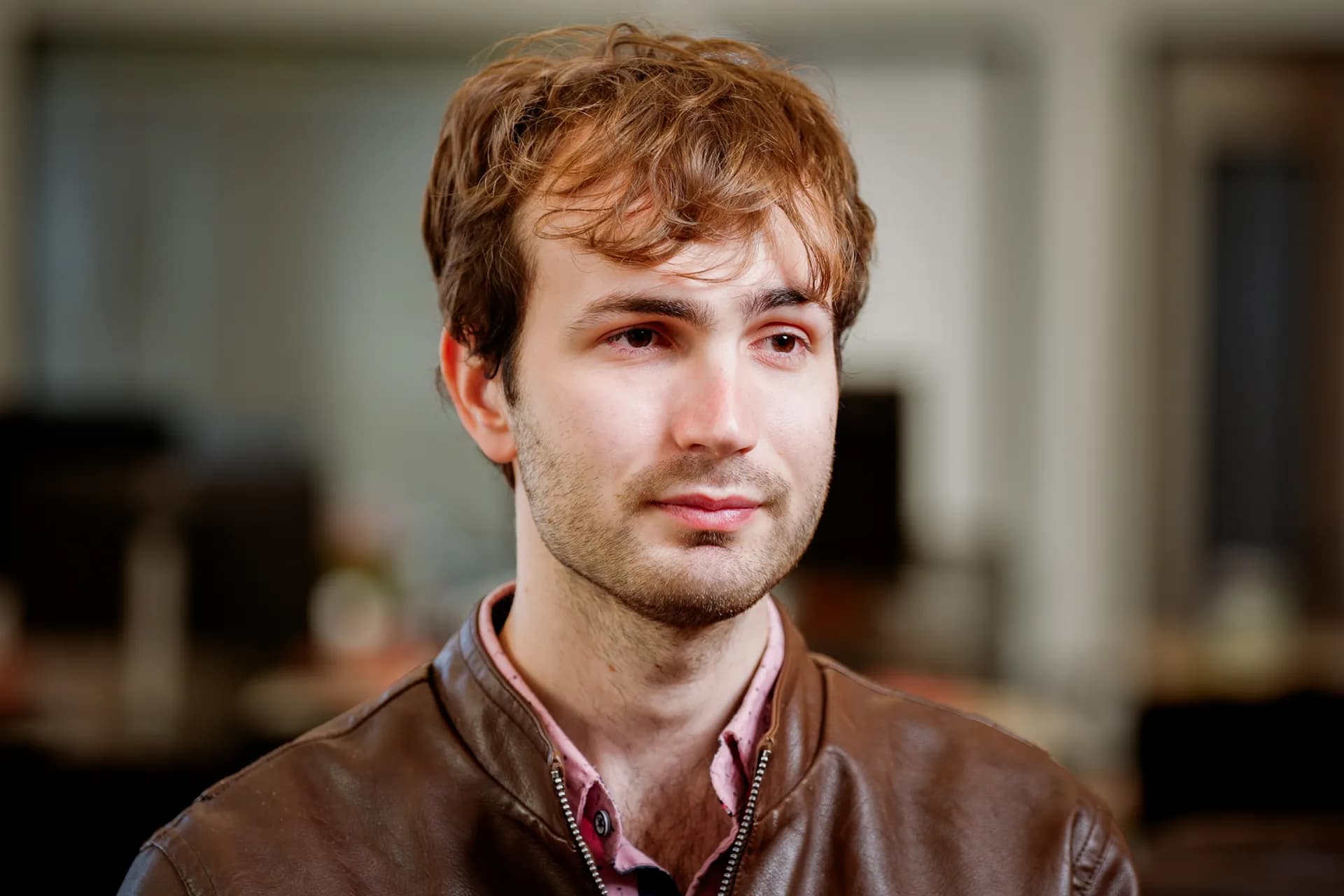
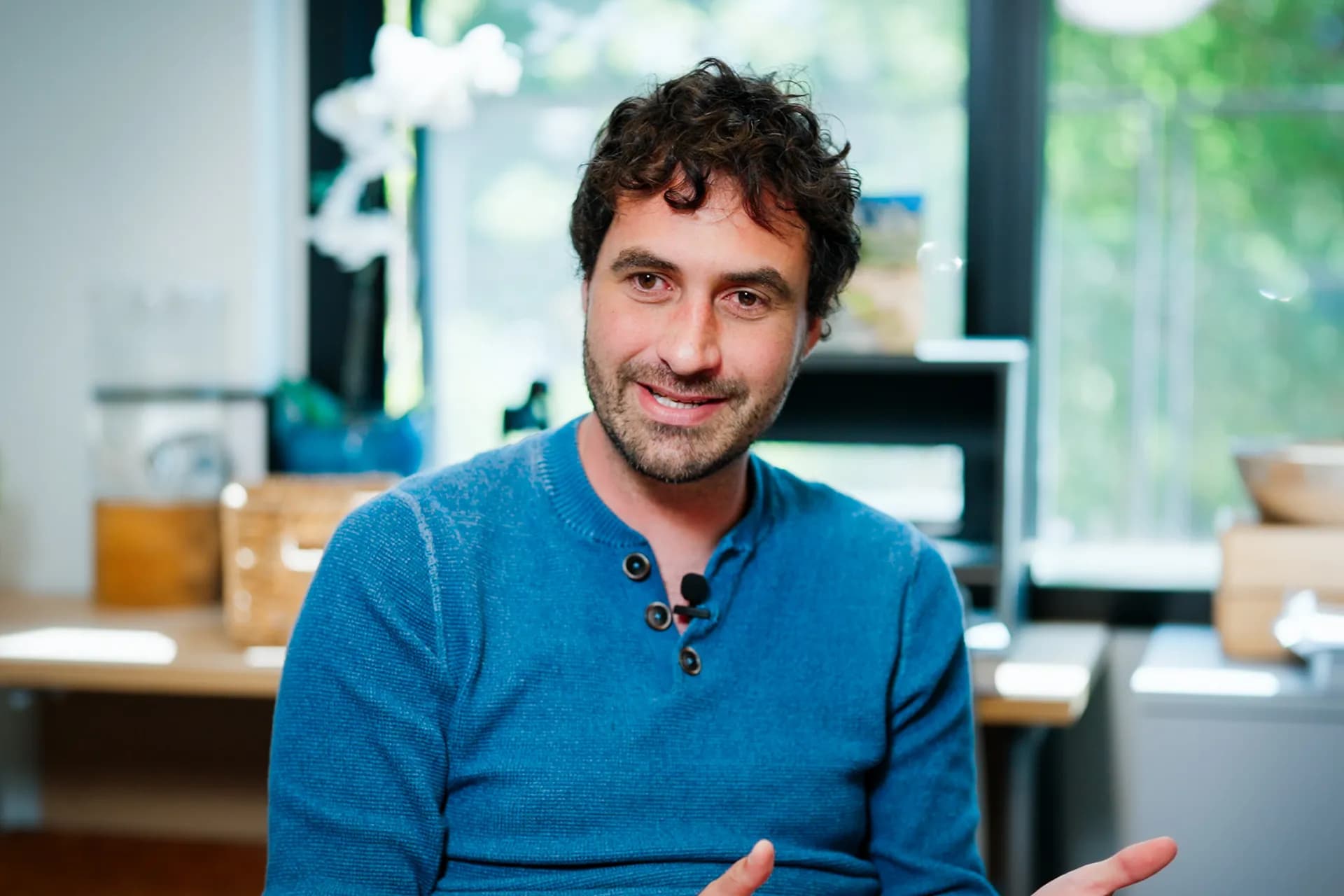
Interview with Mike Smith & Chara Smith, Co-founders of Smith & Diction

At a Glance
- Who: Mike Smith and Chara Smith are the co-founders of Smith & Diction, a design studio they run out of Philadelphia's Bok Building.
- What: Smith & Diction builds full brand identities, from logo to verbal identity. Their clients include Perplexity, Gamma, Exposure and Anterior.
- Traction: The five-person studio has spent ten years building some of AI's most talked-about rebrands, all led directly by its two founders.
In this episode, Mike Smith (Art Director) and Chara Smith (Head Copywriter) share how they build iconic brands with precision, creativity, and heart. Expect a ton of insight into what really makes branding great.
Key Takeaways
Brand Isn't Something You Buy, It's Something You Do Every Day
A brand toolkit isn't the finish line. Every customer service call and every moment someone spends in your product shapes how people see you, whether you're paying attention to it or not.
The Fastest Way to Sharpen a Brand: Decide Who It's Not For
Smith & Diction rules out unlikely users on purpose, like Chara's own mom or her co-founder Mike, a working designer who doesn't need the tool. Naming who a brand isn't for makes it far easier to speak clearly to who it is.
Why "Efficient" Is the Weakest Word in AI Marketing
Stop a thousand people on the street and ask what they want in life. No one says they wish they were more efficient, yet that's the pitch behind most AI ads today.
How Copywriters Still Beat ChatGPT
ChatGPT can produce technically correct copy but can't tell which of two headlines makes a reader's heart hurt. Emotion, not efficiency, is the one edge a human writer still holds.
Perplexity Won by Selling Discovery, Not Answers
Positioned against Bard and ChatGPT, Perplexity's citations turned a dead-end answer into a portal to more information. That distinction became the brand's headline: where knowledge begins.
Smith & Diction Capped Its Own Growth on Purpose
With a team of five, Mike and Chara Smith know that growing much further would pull Mike out of hands-on design and into meetings. They started the company specifically so his title could stay designer, not creative director.
Watch the full interview now on EO's YouTube channel! Below is the complete transcription of the interview. Minor edits have been made for clarity and readability.
Introducing Mike Smith and Chara Smith, Smith & Diction Founders
Mike: I am Mike Smith. I run Smith & Diction with my wife Chara in the beautiful Bok Building in Philadelphia. Smith & Diction is a design studio. We mainly focus on creating thoughtful identities for imaginative clients. We work on companies like Perplexity, Gamma, Exposure, and Anterior. Just anything that feels really, really unique.
Chara: I'm Chara Smith and I run Smith & Diction with my husband Mike. I run most of the Diction side of what we do, so I oversee all of our brand strategy and messaging and copywriting. Our approach is pretty different in that we're small. We're intentionally a small team, so everyone we work with works directly with us. Mike and I are the founders and we also lead the project.
At a traditional big agency, the people who started the company and the people who run the company are not the ones actually doing the work. They're not the people doing the writing and doing the design. Here that's the opposite. We are not only the people who started the company and who run the company, but we also are the people doing a majority of the work. I handle a lot of the copywriting and strategy myself. Mike leads all of the design along with his team. So you just get so much more connection between the people we're working with, our partners, our clients, and our team, because we're the lynchpin between those two.
Branding and Copywriting 101
Chara: Everybody has a brand. Brand is simply how people see you. Whether you spend a lot of time and money developing a brand or you don't, like Mike was talking about with our favorite bagel shop where it's just a bag with a Sharpie on it, that is still a brand even though there was no money spent on it. It's letting people know we do not care about design, we only care about making the best bagels in this city, and you're conveying that through that medium even if you didn't spend a single dime on it.
I think the thing that a lot of people miss about brand is that if you choose not to invest in it, you still have one. People will see you in a certain way. If you have a social media ad, then you have an avatar, and what does that look like and what does that tell people about you? I like to think that what we do is help you understand what your brand is and let you be in control of it, instead of letting your audience decide your brand because you're not quite aware or you don't have a handle on it.
When we give you a brand toolkit, that's not the end of the conversation. Branding as an exercise doesn't mean it's a thing you buy and then you're done. A brand is what you do every single day. Every single interaction you have is part of your brand: every customer service conversation, every moment somebody spends on your platform or your product. If you're a client like Gamma, those are all part of your brand, and we just give you the tools at the beginning to say here's how you can create a brand that will reach your audience, here's the toolkit. Then you have to go out and live that brand and be that brand every single day.
That's my speech of brand: you can't just buy one. Brand is how people see you, and how people see you will continue to change with everything you do and every interaction they have. You can choose whether those interactions get better and better, so they're more and more interested in being in your club, or whether every time they interact with your customer service they have a worse and worse impression of your brand. It doesn't matter how much money you spend on design if your customer service team isn't delivering on the qualities your brand is conveying.
Mike: Branding to me is just like, would you put a sticker on your car or your notebook or your laptop? A good brand is one of those things that exists as more than just a transaction. It's something that becomes part of your life. When you're creating a brand, it's so easy to think transactionally, to think I want people to download this product or use this menu. But you want people to want to live their life with that brand as part of their mental ecosystem.
For me, the Volcom logo, when I was growing up skateboarding, I drew that logo on everything: every book, every year, every class. I was just so obsessed with how beautiful and simple it was. I think a brand is something that pulls you in. It's almost like a gem or a crystal that you can't help but want to be near, that you can't help but want to hold. When you look at some of the brands we've made, I try to always give them a little bit of a tangible quality, so people can feel like they can reach out and grab it, or it could sit on your desk as a really cool paperweight.
Why is branding important for business, for products and things like that?
I think branding is important in that use case because the easier it gets to make stuff, the more brand will actually make things that people want to have in their lives. When you have a product, like Instagram, every single day I am influenced by the AI or the UI in that product. It would be a disservice not to treat people with the respect of caring about what's in their hand. When you're invading people's lives, the least you can do is respect the attention they're giving you, and make a product or a UI or a brand that feels like it's actually making their life better, easier, more fun, that makes them smile when they open the app. There are so many things that want to take away your energy and your happiness that I feel like it's a brand's job to make you feel a little bit better. But it doesn't work like that as much anymore.
To me, I think the biggest mistake that happens when you're creating brands is that sometimes people think it's just logo, type, color. That's the trifecta of brand. But realistically there's so much more. There's so much more interesting things you can do with photography, art direction. You can make the type skew to represent motion, or bring in some sort of exciting movement: this image is blurred, or has a 3D effect, or has an X-ray or MRI scan look for a healthcare company.
People are so quick to say, "Oh no, I just need a logo, I just want to put a logo on a PowerPoint cover." I think brand is so much deeper than that, and if you approach it in that shallow way, people will get to the bottom of it really quickly. That's dangerous territory, because you're relying on the product to be absolutely impeccable if the brand itself is super shallow.
Chara: A verbal identity is all the words you use to communicate. It comes out of strategy. Often a strategy is mostly an internal-facing document, things you say to your team as you're growing: here's what we value and we're never going to change, here's what we're trying to do and how we're going to position our company. Verbal identity is once you cross the line from talking to your internal audience or your partners to talking to your external audience.
What is your website going to say? What tone do you use? What are the actual words you put on a website, on social posts, on ads, in a video? What's your tagline, what are your headlines, how do you talk about yourself?
It's interesting because in some ways it's different from design. A lot of design elements, like a logo, you'll get and keep for a long time; you'll settle into a color palette and it won't change frequently. Words are different. They change all the time. Your website headline might change every couple of months.
It's really important with a verbal identity to understand the overarching tone and personality of who you are and how you talk, so that when you're writing new lines, they still feel on brand, like they're written by the same personality. A verbal identity is never going to deliver all the words you'll ever need. Instead, it sets the tone so you can keep writing new words that always feel like the same voice.
For Gamma, for example, we worked on their verbal identity. The big idea we rooted everything in was get your ideas out there. We loved that as a starting point, because their audience isn't people who are especially talented at designing a presentation or building their own website. They're people who are more interested in the ideas and just need them to get out there quickly, and that's exactly what Gamma does. We had so much fun working on the tone for this one, because one of our tone words was imaginative, and so few brands get to be imaginative.
If I was a writer and somebody handed me a verbal identity with "imaginative" in it, that means I get to use fun words. I don't have to use the same regular words everyone else uses to say "start your presentation now." I can instead say "start a presentation about exploring the ocean now." You can suddenly put a lot more personality into that brand because the verbal identity tells you right from the beginning: use your imagination, do something different.
We've built verbal identities for lots of clients. We're working right now with a client called Contra, that helps freelancers get paid. They were a really tricky verbal identity because they have two very distinct audiences. On one hand you have freelancers who want more jobs and want to get paid, maybe a designer, an animator, a writer, a developer, a videographer, who wants more 1099 work and wants to show their work off and get hired. On the other hand you have the people who are going to hire them, and their reasons for being on Contra are very different because of those two audiences. It took us a lot of work to figure out how to connect with both of them at the same time, communicating slightly different offerings and values in the same consistent tone and using the same core messaging across the board.
Our concept for them was get more creative: whether you're a self-described creative person trying to get more work, this is a way to get more creative work. If you're somebody trying to hire more creatives, you can get a more creative team, you can get more creative with the way you're forming and growing your business. If you want to scale more quickly, you don't necessarily have to hire the traditional way. We love it because it lets you fill in the blank after "creative" with whatever it is you want in your mind. Being able to hit on something that felt powerful for both of those audiences was really fun.
I would say the most common mistake I see is thinking that exactly what you want people to do is what you should write. That doesn't happen in advertising. In the big advertising world, people understand you don't write a billboard that says "buy more chocolate." You make people want chocolate. You make them think there's nothing better than a bar of chocolate right now. When a lot of people, particularly in the tech world, are building products or writing a website, they forget that and they go put "buy now" on their website, which is not actually the best way to get somebody to buy something. What you have to do is make them want it. You have to appeal to an emotion inside of them and make that connection.
If I were to talk broadly, I see a ton of ads, especially in the AI space, that are all about efficiency, and I just think it's ridiculous. You could stop a thousand people on the street and ask them what they want in life, and no one is going to say, "I really wish I was more efficient." That's not an emotion, that's not a thing people want. It's a thing people want for their teams, for their companies. Maybe they want other people they're paying to be more efficient, but nobody wants that for themselves. You have to connect with something beyond that, something people actually want, something that feels positive to them, instead of just saying AI will make you more efficient. That's not actually a thing people want to buy. Let's move beyond efficiency and figure out what it can provide that's a benefit to my life.
Copywriting is so interesting. In one of my early jobs, I used to talk with one of my good copywriting friends about how copywriting is either the easiest job in the world or the hardest job in the world, and it all depends on how well you do it. Particularly now in the world of AI, if you're writing something that sounds like ChatGPT could write it, it's going to be hard out there, because there's a whole new set of tools capable of writing copy. The only leg up we have on ChatGPT isn't speed or efficiency, it's that we can be more creative and think from a more human perspective.
To me, the main difference between fine copy and good copy is the emotion. What's the feeling behind it? How do you make somebody read something and feel something? I like to think of copywriting from a storytelling or cinematic perspective: how do you make something feel emotional and strike a chord with somebody, as opposed to simply conveying information?
Of course you want to convey information too, especially on a website, in practical executions. A lot of bad copywriting stops at conveying information. That's fine, but it doesn't make somebody feel something.
When I hear people say things like "people don't read anymore," I think that's so not true. People read all of Game of Thrones, and that was an incredibly long and dense book. Why? Because it was filled with emotion. People read a lot, but they only read when it makes them feel something; they're not interested in reading very dense, informative content. So the main differentiator, if you want something to be good, is for it to be emotional.
I think that's also what gives us a leg up on ChatGPT, because ChatGPT doesn't have emotions. It can try to emulate emotion, but it can't genuinely understand the difference between two headlines. If one of those headlines makes your heart hurt and the other one doesn't, ChatGPT doesn't know the difference; technically they might be equal. My advice to any copywriter would be: write with your heart. Put as much emotion and heart as you can into everything, and you're more likely to hit something that changes the world or makes a difference.
Building the Perplexity and Gamma Brands
Chara: We've had clients before, and Perplexity in particular was a really hard client, because their audience is literally everyone. In the same way that Google's audience is everyone, they wanted anyone on the planet to be able to go to Perplexity and find something. There was no defining who's more likely to use this; it was just how do you appeal to everyone all at the same time, and that's really hard. What they wanted to do was so aspirational.
We were somewhat lucky that we did it a little earlier. I feel like the AI field is messier and more crowded now than it was. At the time it felt like there were only a few serious contenders in AI, so it was much easier to say, "as opposed to ChatGPT, or maybe Copilot, what do you do differently than the key ones?" Bard was one of their competitors at the time, and we quickly landed on the fact that Perplexity had citations, and no one else was doing it in quite the same way.
It let you turn your AI experience from a dead end (you ask something, it gives you information, and that's it) into a portal to everything, basically turning it into what Google used to be: the front page of the internet. Perplexity is your starting point, and then you can click any of those citation links and go anywhere you want to go. We were eventually able to hone in on this one differentiator that set them apart: ChatGPT is going to give you an answer to your problem, Perplexity is going to open up doors to knowledge, so you can continue to discover. There's a big difference between "I want to know something, here's the answer, I'm done with this interaction" and "here's the information, and if you'd like to learn more, here's all the places you can go." It's like the old idea of giving somebody a fish versus teaching them to fish. That language, circling around the idea of knowledge, and then circling around Perplexity as the place where it begins, everything starts here but then it can go further, eventually became the headline: where knowledge begins.
For the most part, something like Gamma is actually easier than that, because you can think about who it's for, even if maybe you want everyone to be able to use Gamma ultimately. I think about Gamma and sometimes it's helpful to think about who it's not for. Gamma is not for my mom. She doesn't like computers, she's scared of AI, this is not her feature, she's going to be overwhelmed. We rule her out. Gamma is also not for Mike. He's a talented designer, he can do his own deck presentation, he doesn't need Gamma to do that magic for him, he knows how to design a deck.
So how do you find, in the middle, somebody for whom it feels like it resonates? I find that really being able to create an accurate picture of that person in your head helps. For Gamma, it might be educators. I think about the teachers I know, what their lives are like, who they are, what their daily routines are, what they do that's different from what I do, what their needs are, what kinds of presentations they might make. The more time you spend really treating your audience like you're in a novel or a movie, putting yourself in the shoes of that character, the more you can think about how to talk to them in a way that's going to matter to them, not necessarily to you.
Mike: I feel like we've gotten really lucky with a few logos. The Exposure logo is just a globe with a star in it. The Perplexity logo is like a spinning door. How do I approach shaping logos? A lot of the time I'll try to push it into really far extremes first and then simplify, simplify, simplify. Weirdly, a lot of the time I'll just post it on Twitter and ask, "has anyone seen this before?" The collective hive mind of Twitter, or X, or whatever you want to call it now, is better than any design book or database I could check.
But I always try to make sure our logos have a 10% strange thing about them. I think that's a really important part of the studio: I want to make sure we're not creating just a classic geometric logo that everyone's seen a million times. In this era, people are cranking out logos that look like flowers, or the most basic three circles, and I'm like, what are we even doing? That's not ownable in any way.
I try to get to the foundational parts of why this company exists in the first place. We don't just create logos to fill a space, that's never what we're doing. As long as the logo can tell a story and convey an emotion or a strategy, that's when we know we're onto something. We'll create dozens of things in the identity process that anyone else would say, "oh yeah, that works, that's perfect, that's fine, it fits, it's beautiful," but we always try to push it a little further to feel more interesting.
Same with color. I was on a call once with someone who said, "oh, I just eyedropper things from Pinterest," and I was like, I think about color in the deepest, darkest way possible: can it work in light mode, can it work in dark mode, can we find Pantones for this thing? Just trying to be responsible with color is really exciting to me, and it's where I find the most joy these days, when two colors that maybe don't quite go together still create some sort of exciting vibration between them. That's really exciting to me. I always spend a lot of time on color, and just making sure you leave time to explore is really important.
The Story Behind Smith & Diction
Mike: I grew up in New Jersey, right outside the city, but I grew up skateboarding, coming into the city to skate. I grew up in the heyday of Love Park, so a lot of really awesome skateboarders were hanging out there at that time, and I was just kind of obsessed with Philly from such a young age. I would draw the LOVE sign over and over again on all of my notebooks and things in school.
In high school I had two really great art teachers who told me I really needed to focus on doing something with art, that I should be hyper-focused on it for college. I was thinking I'd go be a history teacher, and they said, "what if you just applied to one art school, just to see how you like it?" So I did.
I ended up going to an art school in Delaware, and quickly transferred out because I hated it. I didn't enjoy it that much, because I was commuting an hour there and an hour back, and I got there and nobody took it seriously. Everyone was questioning the homework assignments, saying "oh, I didn't quite understand the homework so I just didn't do it." I was working two jobs, driving here, commuting here, and still getting the homework done, and I was thinking, you guys, for some reason, don't believe in this part of your career. Chara and I talk about this all the time: ever since I saw Photoshop for the first time and realized what you could make with it, I knew this was going to be the rest of my life, and I have no backup plan, no other thing I want to do. This is exactly what I want to do.
So when I was in art school, a lot of people were still figuring out what they wanted to do, and I just didn't want to be around that. I went to a local university in South Jersey, where I fell in love with printmaking. That's where I made a ton of posters, learned about setting type, learned about etching prints and plates. Print is deep inside of my DNA, and I love bringing that print ethos into a lot of what I'm working on today. I'm not so focused on making the next best digital product, I'm focused on making something someone wants to hang on their wall.
I was so obsessed with things like Element skateboards, and Girl, and Chocolate, and all that stuff, and I was just like, how can I make a career doing that? That's what really excited me. I also realized through skateboarding that brand is so much more of an identity for people than a lot of people might think. If you're not skateboarding, you might say, sure, I buy a special kind of soap, but that's not your identity. But when you skateboard, you ride that deck, you can get sponsored by that company, they can pay you to have their board under your feet or their shoes on your feet, and it became a much deeper obsession once you realize design can actually be used as a proxy for your identity.
After college, I worked at an advertising agency in South Jersey, where I learned a lot of the basics of the programs. After that, I went to work at a place called 160over90, which is where I met Chara. She was my copywriting partner, and I was the design side of it. We grew up in the brand design space completely united, together on every single thing we worked on, so we basically have one brain now about how we think about design and our approach to branding.
After that, we both went to a place called Charity Water in New York City. That's where we really focused on the idea that design can do really good things for the world. When I went to work at Charity Water, the mission there was to solve the world's water crisis, but their vision, the thing above that, was to reinvent the idea of charity. Growing up, you always see charity as not having any money for design, like it always kind of feels like it shouldn't look fancy. But working at Charity Water, we really focused on things feeling nice, feeling like something you should pay attention to. Utilizing design to draw attention to these really important things in the world was something I was so excited to be part of, and we helped raise a few million dollars while we were there for clean water projects in Africa and all over the world.
It was really awesome to be around people who were excited about helping people, because when I went there I was at a pretty low point in my design career, thinking, is design just making millionaires more money? If so, I didn't really want to be part of that. I left the agency world to focus on whether design could be used for good, and I believe it can. I had a great time while I was there and learned so much.
Scott Harrison, when you're around him, you just want to do well, you want to help solve the world's biggest problems, and he makes you believe it's possible. I feel like I try to bring a little bit of that energy to our studio and to the work we create: sure, if you want to change the world a little bit, we'll help you try to do that as best we can. We learned about writing a really good mission statement, having really good strategy, and the impact social media can have on people. We learned a lot of that at Charity Water.
After Charity Water, we looked around New York for a little bit, thinking, what's our next step, what's our next move? I really just didn't want to work for anybody else ever again, so we moved home and said, let's give this studio a shot, we'll see what happens. As long as I can pay my rent every month, this will be a great success. Ten years later, here we are, still paying rent, still really excited about making stuff. That's my whole life story.
Chara: Mike is honestly wild. He's not a regular person. Regular people, I wouldn't have started this company by myself. I think I'm lucky because I learned early on the value of design: you can write a great headline, but if it's just scribbled on a cardboard box, it doesn't have the same power as when the design and the copywriting are really working together.
It was never my idea to start the company. He told me he wanted to start his own company on our first date, and I think I probably knew that even beforehand, because we'd been working together for months already, all day every day, so I knew a lot about him even before we started dating. It was 100% his vision. I was just like, cool, I love writing and I love the creativity of it, so if that's your vision, I will be behind it 100%. He just refuses to let anything be mediocre, and if it's not good enough, we won't present it.
I do also think we're a little different from a lot of studios on the practical side. Our team doesn't have a lot of meetings, we don't spend a lot of time on that, we don't have a lot of team-building events. Summer, on our team, lives in a different state, we see her maybe once or twice a year. Our designers come into work, spend eight hours designing, and go home. Because we get them to mostly focus on their craft and getting better at it, instead of being in required team-building events or doing timesheets or having HR conversations, none of that is part of their days. We have one team meeting a day where everybody syncs up to make sure we're on the same page, and other than that we mostly just let people do what they do. I think that helps us make better work, because the main thing people do is actually work on the work instead of spending their day in meetings.
Do you have a plan to scale your business?
Chara: No. In America there's a desperate culture of growth: you must make more money every year, you have to grow and succeed and grow and grow, and everything you make has to be bigger and better than the last. We have to fight against that so hard, but really and truly our goal is never to be a big company. We want to be a small company, still doing the work every single day for as long as we have this company.
We've always wanted to grow a little, because if we were maybe ten people we could have a bit more capacity to do more projects at once and have a bigger team. But Mike isn't scalable, so with our team of five we've already reached the point where if we grow much more, he'll be less and less able to actually do the design, and we're very conscious of that. Part of the reason we started this company was so he could be a designer.
In a traditional agency, your career path goes from designer to senior designer to art director to creative director, and very soon all you are is in meetings, giving creative direction, and you never design anything. Mike, that's part of why we started this company: he just wants his title to be designer forever, he just wants to be making the designs. So far we've been able to keep it that way, where he's a lead designer on every single project, and that's really how we want to keep it. We'll see if we're able to do that forever, but that's the goal.
Mike: How did I get to this point in my career? It's a really good example of not having a backup plan and just trying really hard and failing a lot. That's something I think is super important for people, especially in this new age of AI, where you can have things spit out answers without even thinking about it. To me, there's so much beauty in messing up and not being afraid to mess up. I think skateboarding is the ethos of that: you only land a trick once, but you try it sixty times, you fall on your face, you break your board, you've thrown your body down this set of stairs or off this ledge twenty times, and at the point where your body's like, I can't take any more, you come really close to landing one, and that energy just comes right back up, and you're like, I'm going to try it one more time, and then you land it, and it was all worth it. For design, I'm the same: not afraid to mess up, not afraid to put out stuff that maybe people don't like, as long as I learn something about myself in the process.
There's no backup plan. I'm doing this until I die. So why would I ever be scared of learning or failing when this is it? Of course there are going to be highs and lows, so why not just try it every single day?
I think that's the most important thing: when people get scared of trying, that's when you fall into safety, that's when you fall into being like, "I just wish I could grab these pieces and collage them together, do some scrapbooking." I'm just like, no, I want to reinvent the book, almost every single time. That's the point, that's why we're doing this. I don't understand people who are just like, I wish it was easier. I'm having so much more fun making the stuff. That's where my heart feels the feelings of, I guess, creating something from scratch, and there's nothing more beautiful than that.