Nov 02, 2022
Things I Learned From 10 Years In Silicon Valley
Interview with Sisun Lee, Founder of Morelabs
Founder Focused

0:00 / 0:00
💡
At a Glance
- Who: Sisun Lee is the founder featured in this interview, speaking about the work behind Morelabs. The discussion connects Sisun Lee's background to company-building choices, focusing on the problem being solved, the people served, and the evidence guiding decisions as the organization develops.
- What: The interview examines Morelabs and the problem behind how he tested an idea, learned from users. It also elaborates on how he made choices about product, technology, team, and growth.
- Traction: The transcript records concrete company progress and also follows uncertainty and customer learning. The practical lesson is to connect growth with evidence, measure the response, and adapt the plan as new information changes the opportunity.
In this interview, Sisun Lee discusses work associated with Morelabs and the lessons that emerged while building it. The conversation covers concrete examples of how the team found a problem, tested a product, responded to setbacks, and chose what to do next. Readers will learn a practical framework for turning insight into execution while staying close to customers, changing evidence, and the tradeoffs involved.
Watch the full interview now on EO's YouTube channel! Below is the complete transcription of the interview. Minor edits have been made for clarity and readability.
Key Takeaways
Go Where the Product's Reality Actually Is
At Facebook, Sisun Lee's mentor sent her from San Francisco to Kenya to understand remote users firsthand. She returned knowing slow internet changed the product problem entirely, a lesson she carried into Tesla: identify the highest-impact question, then investigate it where reality is happening.
A Side Project Can Reveal Unexpected Demand
Sisun Lee discovered hangover recovery products in South Korea and launched a side project while still at Tesla. When it reached about $200,000 in monthly revenue, an Asian market gap turned a playful experiment into a company opportunity she could not ignore.
Ruthless Prioritization Protects Companies During Crises
When COVID cut Morelabs' revenue by 90%, Sisun Lee resisted another reorganization and instead rejected nearly every planned product launch. That ruthless prioritization conserved cash while protecting culture, showing that survival can depend on removing attractive work rather than adding emergency complexity.
Step Down When Your Motivation No Longer Fits
After Morelabs shifted from digitally native to retail driven, Sisun Lee recognized that sales and marketing were not her intrinsic motivation. She helped a retail leader become CEO, aligning the company's next phase with someone who genuinely wanted to lead it.
Exploration Can Restore Energy After Burnout
Stepping down left Sisun Lee without the identity and routine she had built around Morelabs, so she spent a year exploring Costa Rica and Colombia. She found that novelty and deliberate uncertainty could help restore energy and perspective before choosing what to do next.
Introduction
Hi, my name is Sisun I used to be a product manager at Facebook, Uber and Tesla before I founded Morelabs in 2017, stepped down as CEO after we raised Series B, and now I'm working on my second company called Ramper, which is a blockchain infrastructure business out of San Francisco and Seoul, 31 years old and I love adventures.
Chapter 1: Product Manager
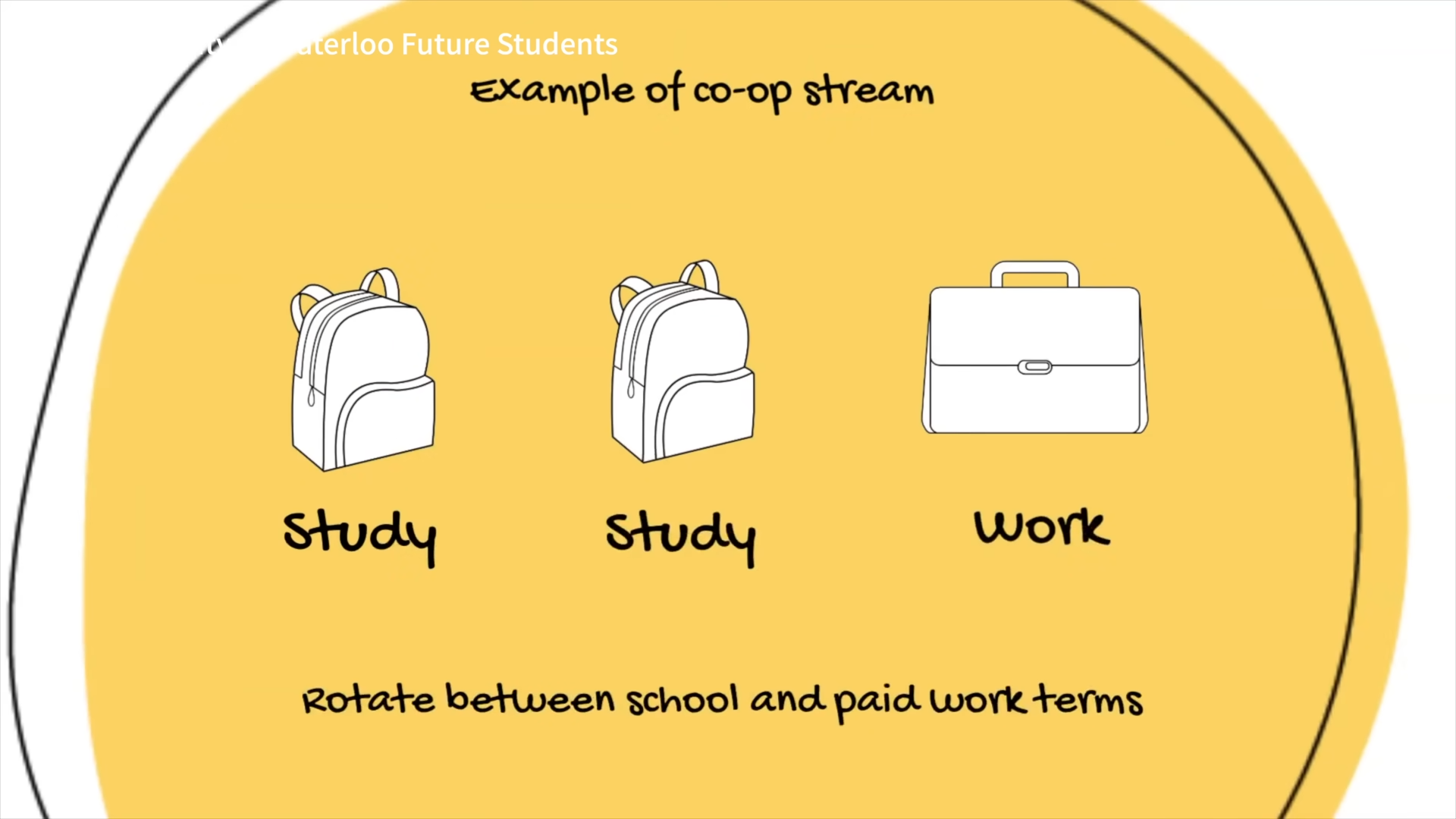
So I went to Waterloo. It's an engineering school in Canada. Waterloo is pretty interesting because they have a co-op system, which means every four months you have to do school and work and work has to be related to your academic major. And I didn't know going into school, but I really didn't like academics, but I didn't know what to do.
And after my second year was completed, I actually dropped out for one year and during one year, I wanted to just kind of explore. And I got really lucky because during that exploration I interned at Facebook as a data analyst because it turns out that what you do in research, which is kind of like crunching a lot of numbers for professors, is a skill that you can do it in places like Facebook as a data analyst.
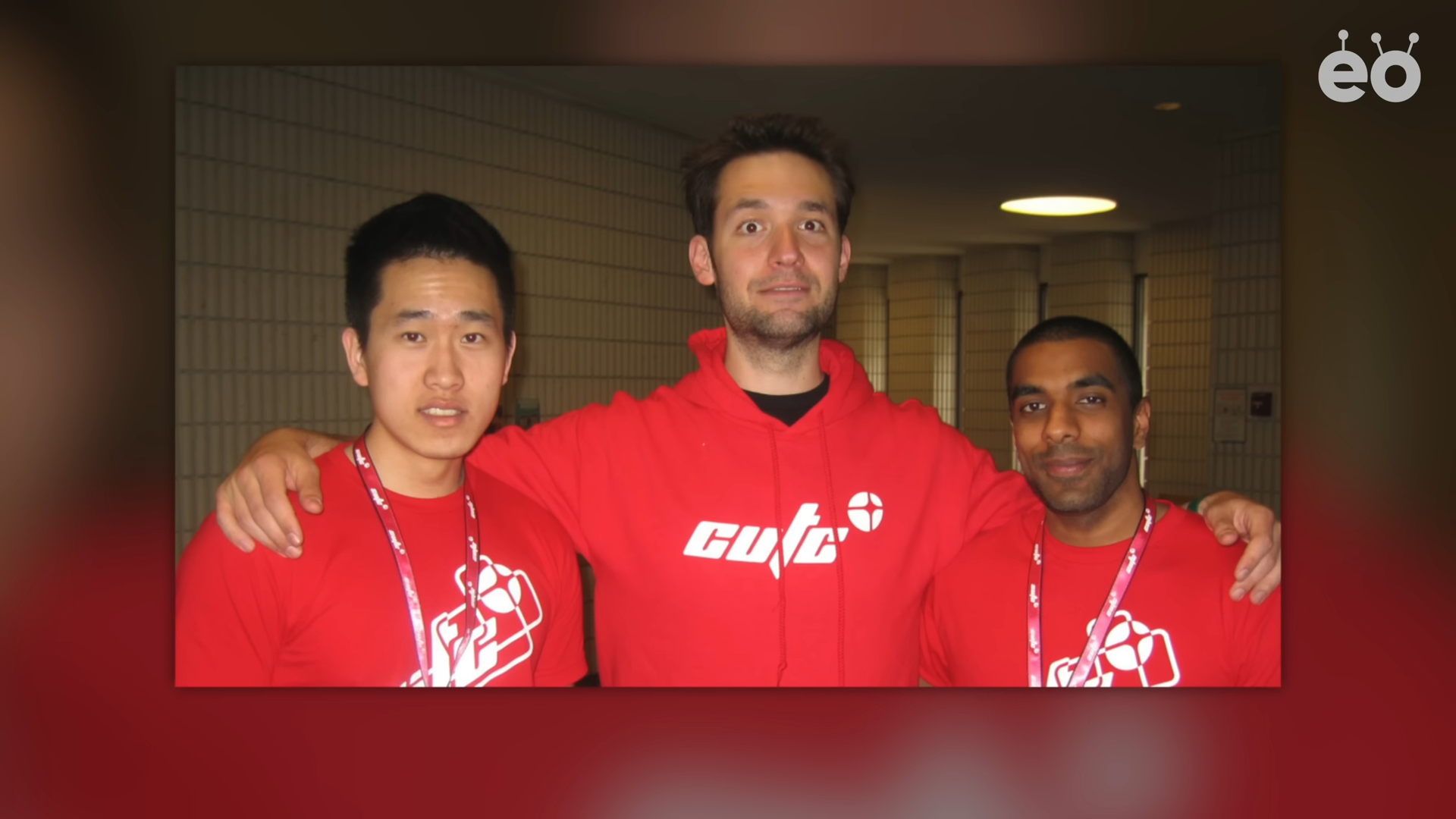
So I fell in love with the place and I wanted to come back to a place like Facebook after. So I graduated in system design Engineering, so I joined Facebook as a RPM. It stands for Rotational Product Manager and basically it's for folks like me who just graduated college without much product management experience.
So Facebook will rotate you through three different projects as a way for you learn how to become a PM and then you are equipped with a mentor. At Facebook, I actually spent a lot of my time emerging markets like India and Southeast Asia because the project that I was part of was Internet.org I mean, definitely my first job at Facebook was very memorable because I had a really interesting mentor.
I had a lot of ego. I wanted to show that, Hey, I can contribute. I did some research trying to show him in our weekly meetings like, Hey this is like what I found, this is what we should be doing. And he asked me just like a question very bluntly, What's the most impactful thing you could be doing?
And the result of this conversation was basically the audience that we're trying to build for are people in remote parts of India and Africa. And I'm here sitting in Facebook HQ in San Francisco with high speed Internet, trying to come up with insight as to what the market needs. And he wanted me to come to the conclusion that the most impactful thing I could be doing is to just go to Africa right now.
And I just flew to Kenya without any itinerary. And that was really kind of challenging in a sense I just graduated, and now I'm in Kenya and I don't know what I'm doing here, but I'm supposed to bring insightful things back to the company. So I spent two weeks there, go into the suburbs, talk to people, understand the landscape.
And then I actually came back and we had a lot to discuss which was basically like Guys, the internet is so slow that none of this matters. You know, we have to radically rethink about everything.
But I think that was the most memorable, really good introduction into what a PM is, which is your job is always defined by You should do whatever is most important for the company in terms of making the product successful. So Tesla was my job after My job title was staff product manager under Growth Team.
And a unique challenge at the time was because Tesla's growth model was sort of very standard, which is you open up large flagship stores in metropolitan cities. Once you saturate all of the big cities around the world, how do you grow anymore?
And so the idea with the growth team was how do we accelerate that on e-commerce And at the time sort of Elon's vision was can you just like get people to buy at one click online, just like Amazon? And we had a really interesting entry point because every Tesla owner gets a mobile app.
And so can we leverage that into building a product driven referral model and that allows them to invite their friends. But overall, the idea with the growth team was how do you optimize e-commerce on Tesla.com So more and more people come and buy.
I think of my sort of job as a PM and what I've learned simply as you're ability to identify what's the most impactful thing to do to drive the throughput of that product team and then you just go do it. Then you have to like execute on that whatever you identify, but you're repeating that continuously. Chances are you're going to be wrong. And even if you do, I think you're going to be wrong many times.
In fact, you're going to be wrong more than you're right. It's just okay because as long as you're right, one really big way that it makes up for everything. So then the question is how many of those iterations that you get to do is probably going to dictate your success If one PM does one thing, I mean, if they're right, that's good for them, but if they're wrong, they're going to fail.
But if the other product person does it ten times, chances are you could be right once out of those ten.
Chapter 2: Hangover Recovery
Tell us about your brand, first of all. I think the way this got started is as actually a funny story. When I visited South Korea as an adult for the first time, one thing that I realized was everyone just drink. What was also interesting was that there was this giant industry for recovery for the next day. Oh, really? This was just really like a fun project. So in the beginning that was definitely not a motivation to build a company.
And I was still full time at Tesla. All of a sudden, side project is making like $200,000 of revenue a month. It's an arbitrage Like in Korea and different parts of Asia, like Hong Kong and Japan, there's already a lot of these products. It's just in the western market there just there wasn't Even though I didn't really have a foresight into how this would go, it just felt like a really fun opportunity to just go for it.
I was in Silicon Valley where starting a company, we had some amount of seed amount probably, I think at the time around 400 and 500,000 Probably, I think at the time around $400 ~ $500,000 that investors wanted to put in. So they were very much encouraging me and it seemed like such a fun, wild ride and it didn't seem like that much of bad downside. So let's go for it.
First two years was definitely a big rush. You know, you're sort of like captivated as a first time entrepreneur. Every month our revenue is going up. We're hiring new people, we're trying to raise more money. And then the downs are also bad. there's a problem with the product. We think we're going to die tomorrow.
And then in third year, the pace was not as crazy as the first two years because at the time I personally wanted to build a company that was more closer to like A technology driven e-com business. Then like the next Redbull. It actually turned out that was a bad decision.
You know, there's a reason why RedBull, which is multi billion, I don't know exactly what they're worth because they're a private company, but I would assume that the majority of their sales are offline, not online, simply because that is the right format for that type of business. The very same thing with things like mourning recovery. You don't plan on getting drunk. You just when you're drunk, you might want to grab it on your way home.
And so a third year is when we started to really put those perspective into place and think about, Okay, how do we build this company in the long run? Just because I came from the world of technology, it doesn't mean that's what we should do. In 2020, we were gearing towards our Series B, and that's when COVID hit. Our revenue was hit by 90%.
We made 10% of what we normally do, and obviously our chances of raising money went out the window because now it's like, well, we just lost 90% of revenue. But the reason why we wanted to raise money was so that we can dominate distribution, which means we were going to overspend money and lose on profitability to get that sort of market share and brand identity out there.
And so we're burning cash and so we need to raise the next round. And this is also when pandemic hit, we really, really can't raise money. The first impulse was we felt like we had to cut costs quite a bit, which means like letting a lot of people go. We ended up not doing it, but that was a very tough decision for sure.
The reason why we ended up not doing it is because Leading into 2020 at the end of 2019, we've sort of like formalized how we want to build this company, which was we started as a digitally native tech driven company to basically say, Hey, the success model isn't like Facebook, it's like Red Bull. So we had to restructure the team and identity around being a world class sales and marketing driven organisation.
We've already done this and to do another cycle of organization restructure we just felt like would destroy the company culture and morale. We were trying our best not to go there. And so what other costs can we get rid of? It actually forced us to really ruthlessly prioritize. There were so many products that we wanted to launch with, so many cool things we thought we wanted to do.
We just basically said no to everything. And that allowed us to conserve our cash flow quite a bit. I think great things are never built by people who knew how to do things all along, but by those who have the resilience and grit to try, fail, iterate towards their mission. And so being that mission driven and having that aptitude is more important than anything.
I think part of it is that's always gives me assurance, which is when you see something great done by great people, it's basically, Oh, you work really hard to do this. It's not like you are like really much smarter than me who knew how to do it. That's always just a good frame of reference to just make me less stressful when things are really hard. And thankfully the 90% revenue had didn't last.
It wasn't as good as before. But then in May we got like 40% back and then in June we start to like, recover. So things were much better than we anticipated. Thankfully, we didn't let anybody go. Revenues start to come back and then we had an investor that believed in our long term mission and gave us another cash injection.
Chapter 3: Stepping Down
But the moment of decision really came as we wrapped up our Series B because that's like a relief. Now I can think about some more things than just how do we survive? As soon as we knew that we were going to shift the company's DNA from this digitally native company into retail driven. I wasn't sure that I was the right CEO because we had to become the world class sales driven and marketing driven organization.
And I'm a tech product guy. And more importantly, number two, I don't think I had the actual intrinsic motivation to want to do that. I have a lot of books on like sales and marketing and branding and a certain point I just never read them. I don't want to learn about this, right? And in my spare time I'm actually going back into tech.
I'm working with my friends from the Bay Area to work on side projects for fun. And so those things were very much of in conflict for me At the time, we had with one board member, which was from Altos Ventures I don't remember the exact script transcript, but it was something along the lines of the best CEO is somebody that's intrinsically passionate and a company deserves that type of person.
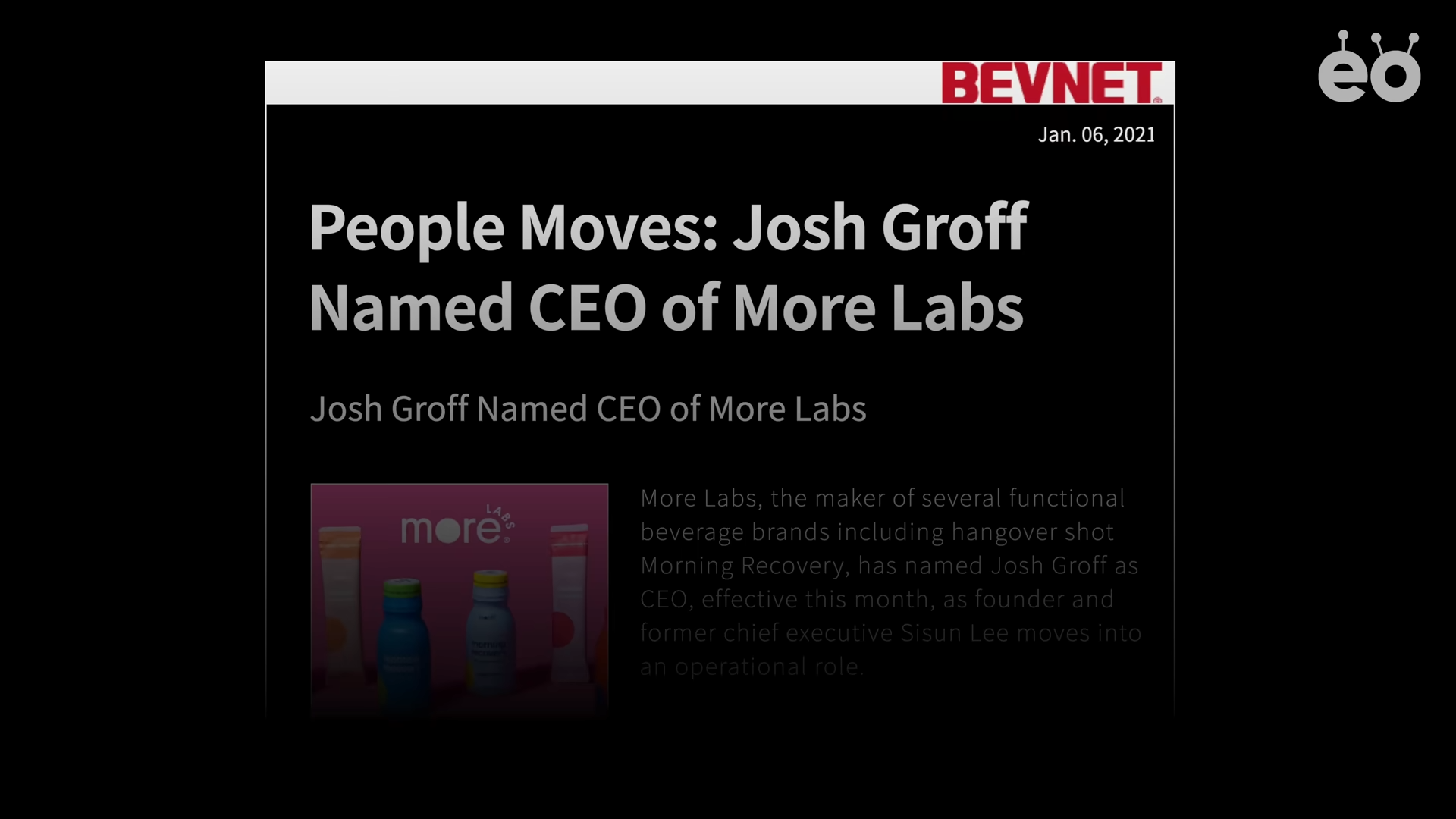
And so if I'm feeling this way and I need to figure out who is the best person that can quickly make this transition happen, thankfully, we actually hired a leader in our company who was running our retail organization, and it seemed like it was a natural progression for him to step up as CEO. So we talked about it and we talked to the board and the whole thing was much easier because he rose to the challenge.
And I think that's a testimony to his leadership because when he became fully appointed as a CEO, nobody in the company left. So I think the transition took like six months until I was very much off of my day to day. I mean, even to this day, I don't think it's gone. Like I still sit as a board and it's very dear to me and anything I can do, I help out.

Where the vacuum was is I wake up and I don't have something to do. And this is self imposed on me, which was I've created my own brand identity as being part of Morelabs. And that started to go away. So yeah, I was pretty lost for a while. I actually spent about a year exploring. I was traveling to Costa Rica and Colombia and just basically just trying to figure out, Hey, what do I want to do with my life?
And I think novelty and exploration are definitely things I seek because it's an unknown. And I think unknowns are really fun. As long as it's what you deliberately want to do, it's when you sort of step down, you realize how burnt out you are that you start to come back. And I think as you gain regain energy, you gain new perspective to figure out what to do.
And it was it was very clear like, okay, I definitely am going to do something else. I just don't know what yet.