Nov 13, 2024
High School Dropout Made World’s #2 NFT Project
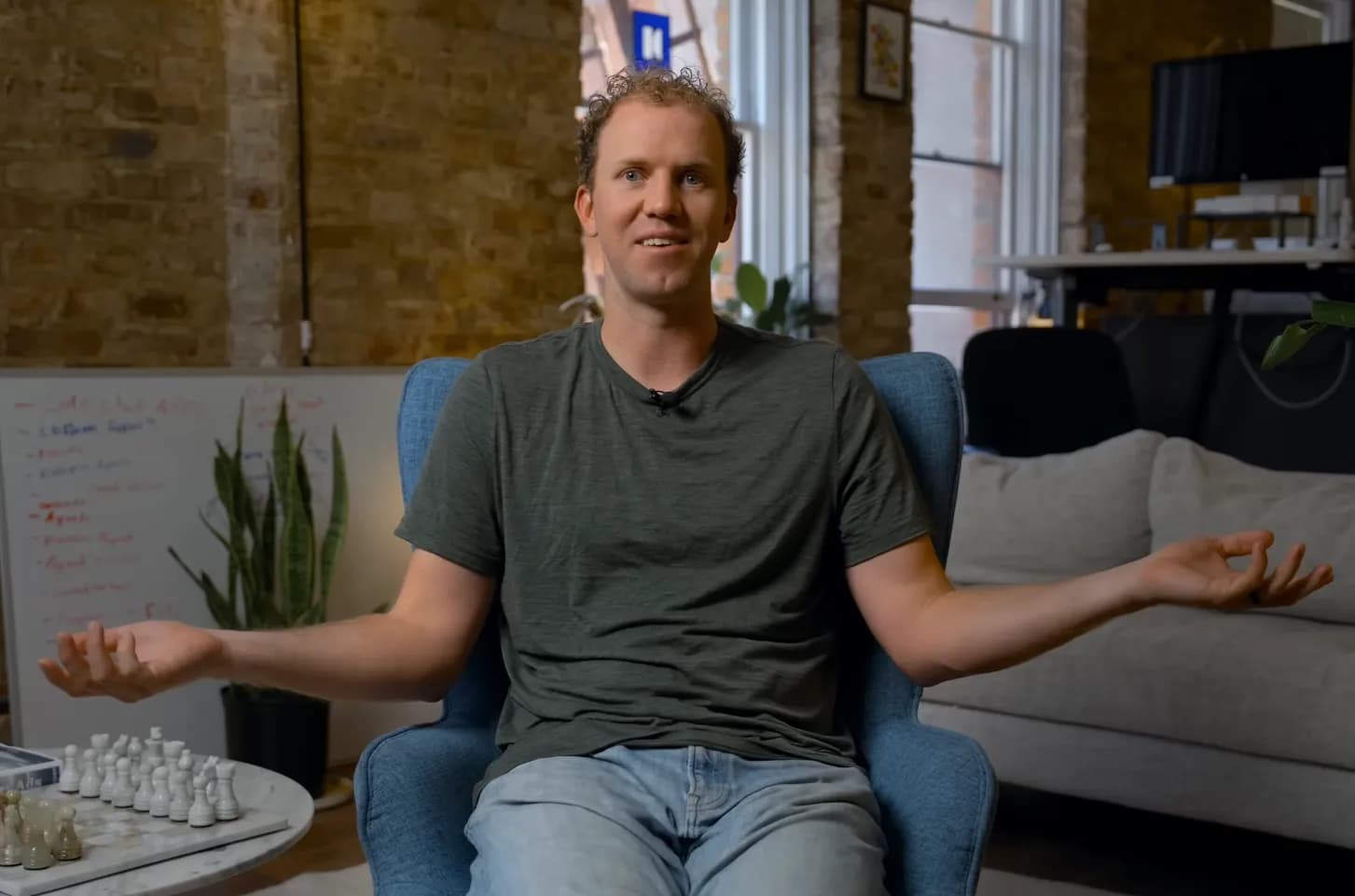
Interview with Luca Netz, CEO of Pudgy Penguins
Founder Focused

0:00 / 0:00
💡
At a Glance
- Who: Luca Netz is the CEO of Igloo Inc., the company behind Pudgy Penguins. He describes leaving high school at 16, becoming an early employee at Ring, building an e-commerce business, and later acquiring the Pudgy Penguins brand.
- What: Pudgy Penguins is an IP brand that began in Web3 and now spans digital collectibles, physical toys, social content, and blockchain products. Netz's strategy is to use familiar consumer products such as toys to bring mainstream audiences into the digital-collectible ecosystem.
- Traction: Netz says Pudgy Penguins sold 1.5 million toys in 12 months for just over $15 million in gross sales and generates roughly 50 to 60 million social views per day. He says the brand was acquired for $2.5 million about two and a half years before the interview.
In this interview, Luca Netz explains how dropping out of high school forced him to design his own education and how a shift from self-pity to personal agency changed his trajectory. He traces his path through Ring, e-commerce, influencer marketing, and NFTs before acquiring Pudgy Penguins and turning the brand toward mainstream consumer products. He also explains why he sees toys as a bridge into crypto and why he believes consumer adoption, brand, and distribution now matter more than pushing technical complexity onto users.
Key Takeaways
Replace Self-Pity With Agency
A YouTube talk gave Netz a piece of advice that became foundational for him: stop seeing yourself as the victim and stop feeling sorry for yourself. At the time, he was a teenager under financial stress and comparing himself with what he saw online. He says that mindset shift pushed him toward taking action rather than waiting for circumstances to improve.
You Can Build an Education Outside School
After leaving high school, Netz asked what college actually provided and concluded that much of the public lecture and mentor content was available online, even if the student network was harder to replicate. He spent time consuming talks and learning directly from builders. He then added practical experience by working at Ring and later running his own businesses.
Distribution Skill Became a Repeatable Asset
Netz's jewelry business scaled from zero to $2.5 million in revenue in six months with roughly 60% margins. He attributes much of that to early skill in influencer and Instagram marketing. That ability to create demand later became relevant when he evaluated Web3 brands and saw that technology alone would not determine the winners.
Use Physical Products as a Trojan Horse
Every Pudgy toy includes a birth certificate with a QR code that can onboard a buyer into Pudgy World and provide a crypto wallet and digital collectibles. Netz sees the toy as a familiar entry point that can bring people on-chain without first asking them to understand crypto infrastructure. He says hundreds of thousands of people have been onboarded through this mechanism.
Consumer Crypto Has to Prove Itself Through Use
Netz criticizes crypto products that force unfamiliar concepts onto users instead of meeting people through experiences they already understand. He believes much of the underlying blockchain infrastructure is becoming commoditized, shifting competition toward brand, users, and marketing funnels. His long-term thesis is that consumer applications are the frontier that will determine whether crypto expands beyond finance.
Watch the full interview now on EO's YouTube channel! Below is the complete transcription of the interview. Minor edits have been made for clarity and readability.
Introduction
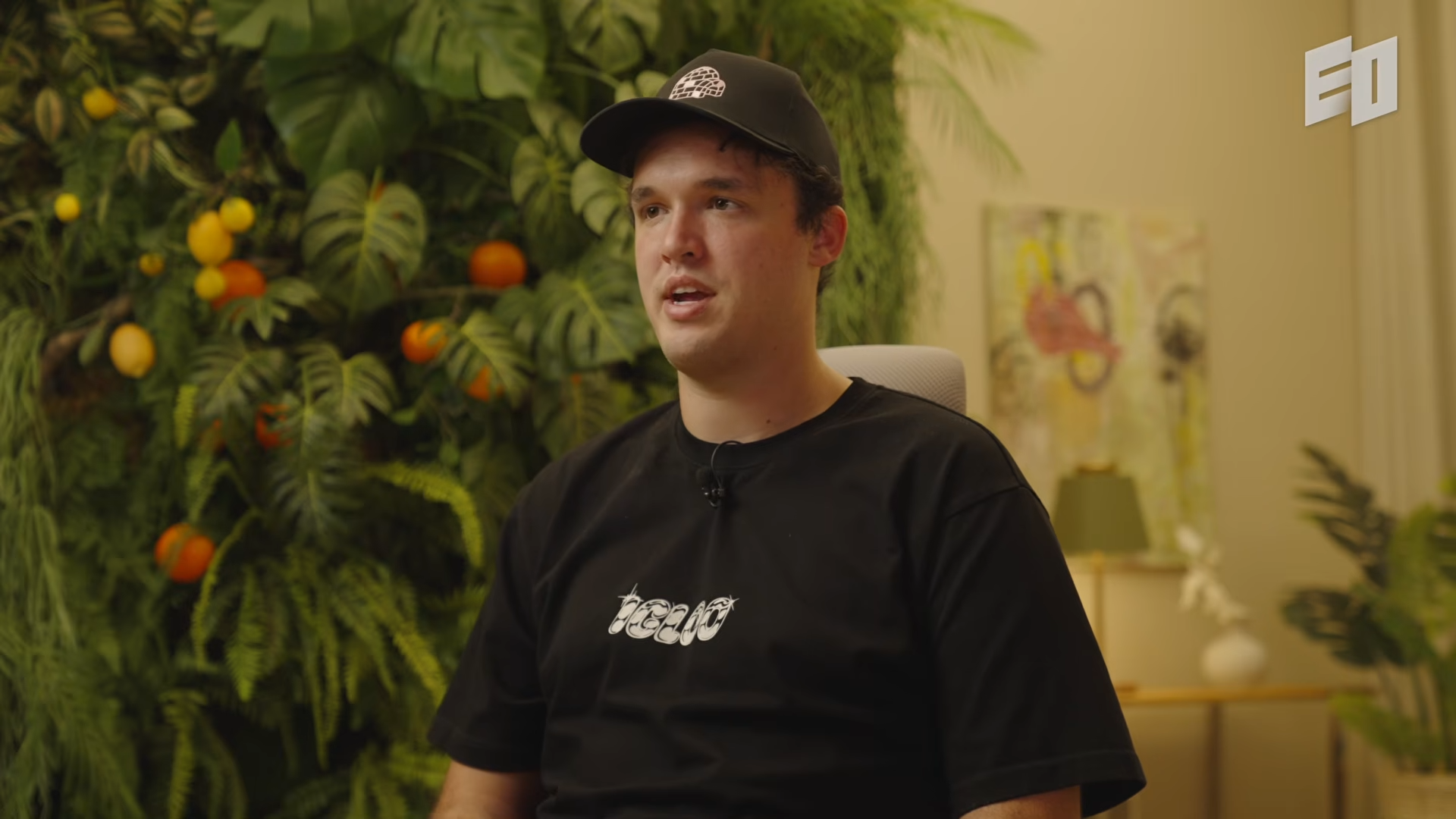
I'm Luca Netz, and I'm the CEO of Igloo Inc. It holds Pudgy Penguins, which is an IP brand that has been incubated and started within Web3. Of the last two and a half years, it's the best-performing NFT in the market. We've launched a slew of different content and product initiatives. We have toys in Walmart and Target nationwide in the United States. In 12 months, we've sold a million and a half toys, grossing just north of $15 million. We are clocking in about 50 to 60 million views every single day across different social channels.
Chapter 1: The Founder Born on the Streets
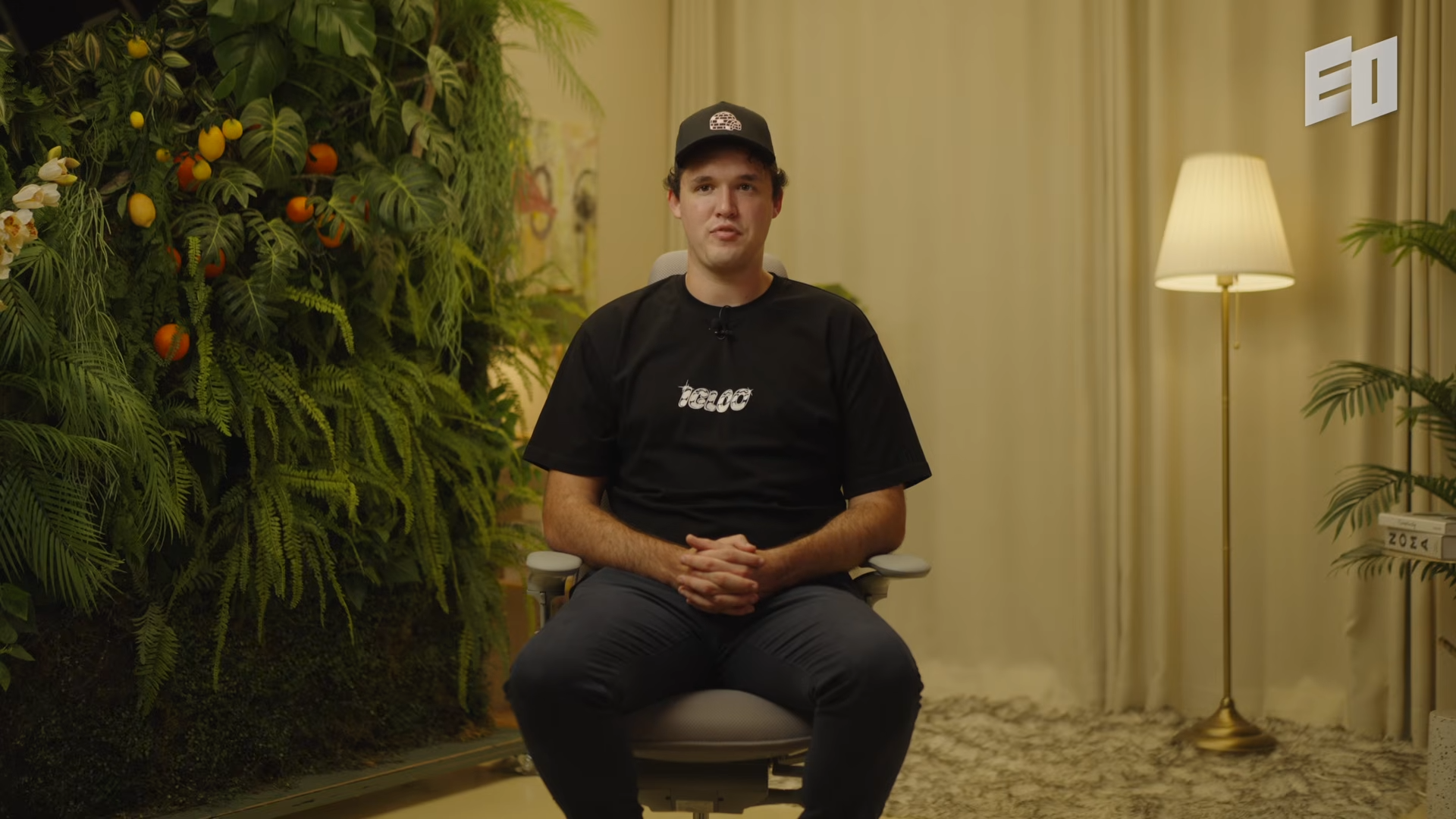
So I think growing up, it was pretty tough. It was me, my mom, and my brother. My mom was a single mom, just really bouncing around house to house, guest bedroom to guest bedroom for about 10 years. It was about 14 different places in 10 years, all over Europe, all over America, making friends for six months, new schools, new people. It wasn't easy. I think in the early years, it kind of felt normal.
But as I began to get a little bit older, it became increasingly clear mom was always having, like, nervous breakdowns and stressing out, never had the nicest clothes, always kind of felt like the misanthrope within the group of, you know, kids and people around me. You know, when she decided to have kids with my dad, she thought, like, hey, I'm going to play the motherly role.
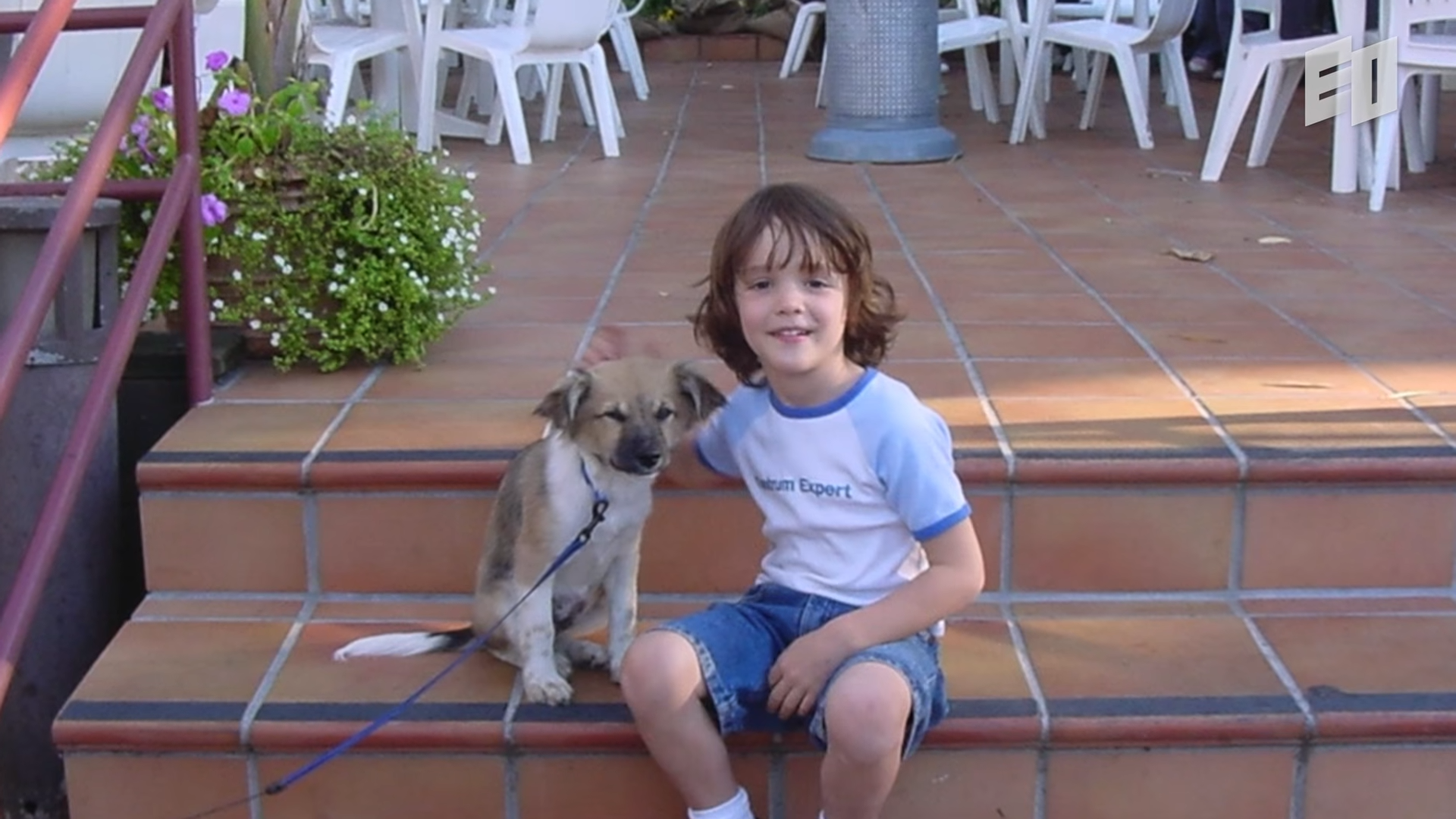
And unfortunately, when he decided to leave and kind of veer in his own world, that put her in a really interesting position where she didn't go to school and, you know, develop, you know, professional skills. She had two kids, and ultimately when he left, she was kind of left, in crypto, we'd say, holding the bag. Yeah, so when I was 16, my mom started Airbnbing our small apartment. And so ultimately it went from a home to a hostel.
As a young man, old enough to work in America, that really drove me to a new brink of pressure and stress, and when I decided I just needed to take initiative. Now, I wanted to go to school and I wanted to go to college for business, but I knew I was going into debt to get that degree. And so it seemed really counterintuitive for a businessman to go into debt to get a business degree.
And so I realized that that probably also wasn't in my future as well. It just didn't seem like a good business decision. And so at 16, I dropped out of school. When I dropped out of high school, I kind of came to the conclusion that I had to get an education somehow. I actually talked to somebody who I really respected that was really successful in the real world, and I said, What's the benefit of college?
And he said, Probably the two biggest things you get from college is the public classes of, like, mentors and entrepreneurs and the alum coming and teaching the students, and then the network that you get from the actual students that are going to that college. And so I was like, Well, you know, I can't really supplement for the network part. But every single one of those alumni speeches where entrepreneurs and alumni from Stanford and Harvard, all of them are recorded and put on YouTube. And so I spent a lot of time just listening to those people.
And the most impactful piece of advice that one of these YouTube videos taught me was, I forget the entrepreneur, but he was speaking, and a guy had asked him, What would you tell other entrepreneurs as, you know, some of the most important pieces of advice for them to succeed? And the first thing he said was, Don't be the victim and stop feeling sorry for yourself.
And I was about 15 years old at the time, and I was peak feeling sorry for myself. Mind you, 15 years old, you know, basically 10 years ago, Instagram was a thing. I'm seeing all these people, you know, flex and flaunt. I was really depressed at 15, and I was feeling so sorry for myself and asking, you know, the universe, Why me? Why this? Why that? Once I heard that, it really clicked for me in a meaningful way, and probably the most impactful thing from a mindset perspective was that shift.
At 15, I stopped feeling sorry for myself. I realized that I was pretty much old enough to go and make something happen, and that's when my whole life changed. I decided to kind of pursue an entrepreneurial endeavor in throwing underground rap and hip hop shows in South Central Los Angeles.
I did that really well and profitably for a while, but I ended up getting arrested too many times for these illegal events. I decided to get a job. I took a hundred resumes. I went up and down Fairfax and Melrose and handed them out, and then took my behind to TechRow in Santa Monica.
And thankfully, I got a job at a tech startup at the time, which was a pretty small one called Ring Doorbell. I was one of their early employees, like first 20 or 25 employees. I was packing boxes for them, and ultimately I did that for about a year and a half. And I basically saw that business go from 25 employees to 500, 600 by the time I left.
And they were getting ready to start to sell to Amazon, which they ultimately did for a billion dollars. But during that time, it really motivated me to be a digital entrepreneur. I had learned this concept of e-commerce and Shopify and how easy that platform had made actually being able to sell things online. And one thing led to another, and I decided to start a jewelry business, which took off pretty quickly.
So if you've ever done an e-commerce store before, it gives you notifications and it makes this like money sound. And so when I first started getting like my first couple hundred dollars a day, I used to take pots and pans throughout the house every time I heard the cha-ching, and I used to bang them together. And then I used to get sales like every minute, so I couldn't do it anymore.
But it took two years after I dropped out of high school to make my first million bucks. It scaled up pretty quickly. I had kind of cracked a code around influencer marketing. I mean, I was probably one of like the earlier pioneers around influencer, specifically Instagram marketing, that I think most people weren't doing.
And once I cracked the code, I scaled it as quickly as I could, and I was able to basically go from zero dollars to two and a half million dollars in revenue in six months, and I was clocking in 60% margins. It was a pretty good life.
Chapter 2: The Collector to Founder
So I think naturally, I had some friends in 2017 who were really big into crypto. 2016, they started to take off, and so I'd been familiar with Bitcoin and some of these other coins for a while. But once my friend told me about NFTs, I got really excited.
So I started to buy and collect a lot of NFTs. I started to fall in love because it actually fulfills maybe a childhood trauma void that I kind of had in the back of my mind, which was growing up, I had nothing. So once I started to have money, I started to collect cool things, like things that I thought were interesting that you'd kind of present at show and tell. So NFTs are interesting because the unit basis of the token, because they're non-fungible tokens, NFTs, they're small amounts.
And so in Pudgy Penguins' case, there's only 8,888 Pudgy Penguins. Demand is created by who can resonate with that character and how far that character can go. And I thought Pudgy Penguins' address was the most universal IP of the bunch and could reach the most amount of people and resonate with the most amount of people. And so for this reason, I thought it was the one that could yield the most demand, and that ultimately led me to my first buy of my Pudgy Penguin NFTs.
I bought a ton of them. I bought them for like 20, 30, 100 bucks each. But unfortunately, the founders at the time were 18- and 19-year-olds, didn't really build the business the way that it should have been built. And so rather than, like, complaining, I decided that I thought that the opportunity and the market potential in this industry was huge. I believe that digital collectibles are going to dominate a huge percentage of the market cap of just the collectible business in general. And today, right now, I think the difference between physical and digital collectibles is about 99 to 1%. If the collectible market cap in general for all collectibles around the world is $500 billion, only 1% of that market cap is in digital collectibles, and the other 99% is in physical collectibles. However, digital collectibles have a slew of pros that physical collectibles do not. There's no authenticity issues.
There's no spoofing issues. There's no friction when buying or selling. There's a slew of things that I think make collecting digitally significantly better than physical. And so when you look at that gap of 99 to 1. And you look at all of those pros, you realize that that gap is going to close. And the couple companies that lead the charge in closing those gaps, I think are going to be worth tens of billions of dollars.
And looking through that lens and understanding, I think, the market potential, and then looking at the competitors and the businesses at the time that were supposedly, you know, trying to lead that charge, I looked at them and I thought to myself, well, I don't think these people know how to run a business, and I think I can do a better job than all of them.
So to prove that thesis, we bought the brand two and a half years ago for two and a half million dollars, and we've been trying to prove out that thesis ever since. So far, it's worked out according to plan.
Chapter 3: Once In A Lifetime Magic
We've sold a million and a half toys in 12 months. The penguin is ultimately the magical piece in all of this. I think there's only so many IPs in the world that have that.
And just naturally, when I closed my eyes and I saw those penguins for the first time, I smiled. I felt good. And when you have an emotional, visceral reaction to a character the first time you see it, that's not to be ignored. That's once-in-a-lifetime magic that needs to be harnessed. Crypto has to be for everyone.
That doesn't just mean, you know, men and women and, you know, different ethnic and professional backgrounds. It also means the younger generation. And I think toys played a huge part in that, in being able to reach certain audiences and speak to audiences in a way that they're familiar. Every toy that we sell actually comes with a birth certificate. On that birth certificate, there's a QR code. People scan that QR code. They sign up to Pudgy World. They input an email and a password. They're given a custody crypto wallet, and then they're able to redeem three to five NFTs through a payless gas experience that basically gets them on-chain collecting NFTs for nothing short of a $5 purchase of a toy.
And so when you think about it, you know, we've sold, you know, a million and a half toys. We have hundreds of thousands of QR code scans. You know, we've onboarded hundreds of thousands of people on-chain, leveraging this mechanism and this Trojan horse that is the Pudgy toy, and ultimately getting them familiar with what it is to, you know, be a part of this, you know, digital collectible universe. And I think it's one of the most beautiful stories ever told in terms of how you're reinventing the relationship between brand and consumer into brand and participant.
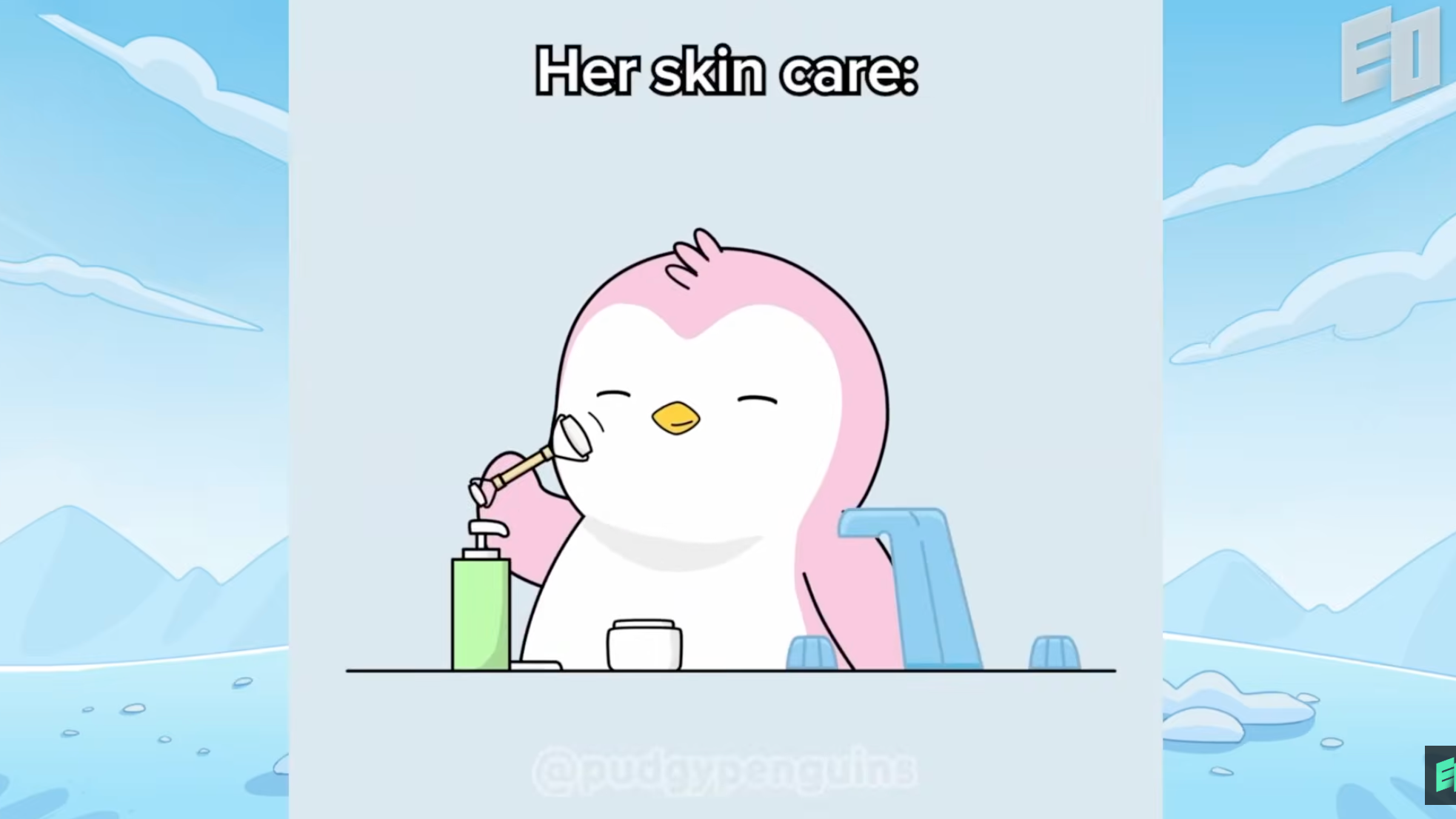
Meaning, if you're an NFT holder and you're a first edition collector, you can actually have the opportunity to turn your NFT into a physical product that the company will then push and distribute to Walmart and Target, and you will get a licensing fee for that. That's a really interesting way to think of brand.
If you're a consumer, why would you pick participating in a Disney ecosystem when you can participate in ours and potentially have your character get brought to life and actually participate in the upside of what you're championing? And so the toy business was really interesting because I thought it was the lowest-hanging fruit in terms of really testing that model. And seeing if it's something that was feasible and scalable. And two years later, we've found that that's probably the case, and it's changed the whole paradigm on how people are looking at Web3 IP.
I think the problem with the crypto industry is too many people are trying to force things down people's throats instead of meeting consumers where they are. And if you just keep issuing more supply and you're not creating enough demand, ultimately you have these, you know, ups and these monster downs.
We haven't issued any NFTs, and we have no plan on issuing any NFTs. I think for us, more than, you know, just a place to make money or to lose money, it's a place that empowers basic human rights and takes this idea of physical ownership and translates it in the digital world, which I think is going to be more important than people think here very shortly. Pudgy Penguins products, our blockchain products are powered by different L2s within the Ethereum ecosystem.
Chapter 4: The Game of Building The Best Brand
Ethereum is the dominant cryptocurrency today outside of Bitcoin. But unfortunately, as a scaling solution, when you go in terms of, you know, a lot of usage, it needs a rollup to kind of be working on top of it. And so these are called layer twos, which are basically scaling solutions built on top of Ethereum that allow Ethereum to scale. And ultimately, I think L2s and just blockchains in general have gotten to the point that I think a majority of the tech under the hood is commoditized.
I don't think it's a game of who can make revolutionary technology. I think it's now a game of who can build the best brand with the most users and the best marketing funnel. And I think it's time for us to grow our ecosystem in a way where other people can build and do the things that Pudgy Penguins has done and be able to get the support from us and the guidance and the mentorship, as well as the tooling necessary for them to really achieve that success and to achieve those goals.
Now, I'm of the guidance that I think consumer crypto is the final frontier and the most important frontier for crypto that crypto has ever seen, at least in its life cycle. I believe this because I think if we don't break through to consumer quickly, or at least in the next couple of years, that there's a ceiling is going to be set on crypto. And so there's really two paths that I think crypto can go. It can be, you know, digital gold. It can be programmable money.
I think that ceiling is probably somewhere between, you know, 10 and 15 trillion dollars, which I think is still great and we have a lot further to go. However, there's another thesis, and that thesis is blockchains are the next iterations of economies, and those economies are going to be built on the internet.
And that ceiling, I think, is 90, 100, 120 trillion. And to get there, you actually have to have breakthrough use cases and you have to have that fast. The problem is, is so much of the everyday consumer who's familiar with crypto is conditioned to believe that it's a safe haven for the casino degenerates and just a place to either make or lose money.
But You know, rather than just saying it's so much more than that, we have to prove it's so much more than that. And this is where I think the barrier to pushing the consumer crypto boundary and breaking through that barrier is ultimately going to be the most important frontier. And so for the last two years, Pudgy Penguins and the Igloo has been the face of that consumer crypto revolution. And I think very few people have done or even come close to what we've been able to do from a consumer adoption perspective.
But now it's time to take it up a notch further. We needed a blockchain. We ended up acquiring one as of recent, led by an amazing developer that goes by Saigar, who's, I think, one of the most well-respected developers in crypto. Now we're building the consumer chain that ultimately I think is going to power the next generation of viral consumer applications that we've yet to see in crypto.