At a Glance
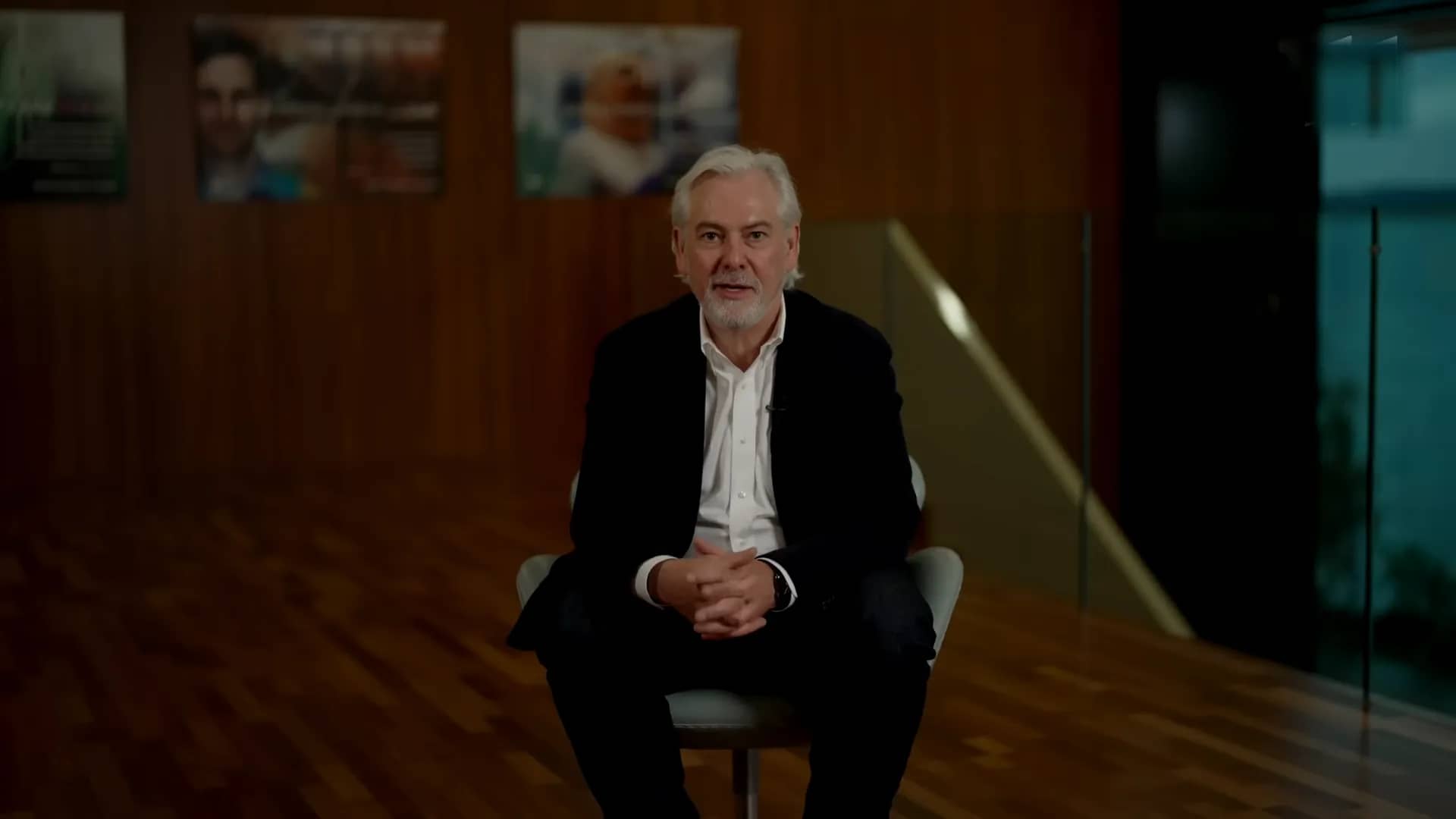
- Who: Jacek Olczak is CEO of Philip Morris International, joined in this interview by Stefano Volpetti, PMI's Chief Global Growth Officer, and Gizelle Baker, PMI's Vice President of Global Scientific Engagement.
- What: The interview covers PMI's decade-plus transformation from the world's largest cigarette maker into a smoke-free products company, the science behind that shift, and the harder problem of changing smokers' actual behavior rather than just proving cigarettes are harmful.
- Traction: PMI has invested more than $10 billion in smoke-free R&D since 2008, grown to over 1,500 R&D staff globally, reached 27 million IQOS users worldwide, won FDA authorization for a Modified Risk Tobacco Product with reduced-exposure claims in 2020, and now draws roughly a third of total group revenue from smoke-free products.
- Summary: Olczak, Volpetti, and Baker describe how PMI shifted from defending cigarettes to building an entirely new, science-led business, and what founders can take from a transformation made in real time, with no playbook to follow.
In this interview, Jacek Olczak, Stefano Volpetti, and Gizelle Baker of Philip Morris International describe the company's transformation from the world's top cigarette maker into a smoke-free products business, the science built to support it, and the harder problem of changing smokers' behavior rather than just proving cigarettes are harmful. The conversation offers founders and operators practical lessons on testing assumptions, following evidence, and choosing the next step when the path is still uncertain.
Key Takeaways
Jacek Olczak Learned Leadership Through Changing Roles
Jacek Olczak began in Philip Morris International’s finance department and moved through operations, sales, and other roles before becoming CEO. He says each transition was difficult because people claim to welcome change, while the reality is that changing still feels uncomfortable.
Smoke-Free Transformation Required Massive Resource Reallocation
Philip Morris International invested more than ten billion dollars since 2008 in research, development, and manufacturing for smoke-free products. Olczak says 99% of its research and product-development resources now support that direction, alongside complete disinvestment from cigarettes.
Behavior Change Is Harder Than Proving Harm
Gizelle Baker learned that scientific evidence alone would not make cigarettes disappear because people can understand the harm and continue smoking. The difficult challenge is helping smokers make a behavioral change, so a less harmful product must also be acceptable enough to replace the old behavior.
Uncharted Transformation Requires Real-Time Learning At Scale
Olczak compares the company’s transformation to learning how to swim by entering the water, because no organization had attempted the same change at its scale. The practical method is to make assumptions, verify them quickly, incorporate lessons, and keep improving.
Scientific Capability Turned Transformation Into Evidence
The company expanded from one clinical trial every few years to eight in parallel, building a scientific organization capable of defending its evidence to regulators. Gizelle Baker, who built that function, identifies the 2020 authorization for reduced-exposure claims as her most exciting moment in that progression.
Focus On The Biggest Opportunity Before Expanding
With more than a billion smokers still in the world, Olczak says Philip Morris International has only begun addressing its central opportunity. His leadership priority is to stay on that course, keeping longer-term possibilities in view without allowing them to dilute the immediate mission.
Watch the full interview now on EO's YouTube channel! Below is the complete transcription of the interview. Minor edits have been made for clarity and readability.
Introduction
Jacek Olczak: My name is Jacek Olczak. I am the Chief Executive Officer of Philip Morris International. Philip Morris International, for many years, has been known as the cigarette maker, the global leader in the cigarette category. For the last 10 years, we've been known as the company which wants to transform its purpose fully to unsmoke the world: to replace the cigarette with safer, much better alternatives, the smoke-free products, different categories, and so on.
Transforming a $150 Billion Business
Jacek Olczak: When I was young, I was playing in a band. I was playing on the bass guitar. I actually think if not for Philip Morris, I could have been a very successful musician. What was my motivation to learn English at the time? My motivation was zero, but there was a huge persistence from my father and mother, who were forcing me to learn English, and I was questioning the purpose of learning a language which you have no opportunity to use.
Because Poland, as you know, was behind the Iron Curtain, and you couldn't travel or access foreign media. So fast forward, I owe it very much to my parents that I caved in and listened to them and learned the language.
I joined Philip Morris more than 30 years ago in the finance department. I always wanted to have a finance career, and Philip Morris has somehow helped me realize the other aspects of the business beyond just finance. I was moving from operations to sales and many other roles in the company, and then, fast forward, very fast forward, 30 years later, I am Chief Executive Officer. I don't regret anything that has happened to me, but I do admit that very often when I was changing roles, I found it very difficult to change. Change is not something which we like to do. We always admit and claim that we are open to changes, but the reality is we don't like to change. Somehow, with the help of Philip Morris, I navigated, or they helped me navigate, my career, so I ended up where I am.
I learned how to smoke in the last years of university, so it was before Philip Morris, and I was a smoker for more than 20 years. My predecessors started investing in smoke-free products while science and technology innovation were not there yet, but we had the desire to address the problem of smoking. So if you know that cigarettes are so harmful, is there a way that you could reduce the harm they create? 10 years ago, when we started sharing more with the public our vision to go smoke-free, and we were showing and demonstrating the products, there were more questions than answers, and a lot of people were skeptical. Will it work? Will it be accepted by smokers? What is the science behind it?
Joining a Company Under Scrutiny
Stefano Volpetti: So I joined about five years ago. It was a difficult decision, because I'm not a smoker. I'm a health freak, and I was not even thinking that a tobacco company would be on the horizon for me.
Gizelle Baker: There's a lot of skepticism, distrust, and maybe even dislike, because, oh my gosh, what is the tobacco industry doing in a scientific debate? And I have to admit, I was one of those people. When I came to interview for the company, I was like, "If they think I'm going to say smoking doesn't cause death and disease, they're completely wrong."
Gizelle Baker: There's a lot of skepticism, distrust, and maybe even dislike, because, oh my gosh, what is the tobacco industry doing in a scientific debate? And I have to admit, I was one of those people. When I came to interview for the company, I was like, "If they think I'm going to say smoking doesn't cause death and disease, they're completely wrong."
Stefano Volpetti: There's been a debate around better alternatives to cigarettes in the US since the '70s, the '80s, the '90s. There are even books written about it from the late '90s, one of them called Clearing the Smoke, simply because we've known for decades that cigarettes cause disease and are addictive. So the question, "Can we do something for those who don't quit?" has always been there. What was missing was the technology, the science, to come up with an alternative in a way that consumers would like. But it was approximately in 2008 that we realized we could do it. The battery technology had evolved. The science had evolved. We realized at that time that we could invest more and accelerate the pace of change, and we've invested over $10 billion since 2008 in research, development, and manufacturing.
Jacek Olczak: 99% of our entire R&D, so research, development, product development, etc., the resources are today behind the smoke-free products. So we completely de-invest in cigarettes, because we consider that the faster we get rid of cigarettes, frankly speaking, the better it is for the public, for the smokers, for the people who smoke, and for the company.
Gizelle Baker: First, growing up, I thought once people know that smoking is bad for you, it will just disappear. Then, as I went through my education and into my career, I realized that despite the fact that smoking is harmful, people continue to smoke. That's the hardest thing to get as a scientist: if you put the science out there that proves smoking is bad, you think you've solved the problem. So coming up with a product that's less harmful is one thing, but actually convincing people to make that tough behavioral change and give up cigarettes is even harder. That was the biggest challenge we faced. Even as a scientist, realizing that, it was difficult to face.
Stefano Volpetti: The ambition of the company is to basically phase out cigarettes around the world. And how do we phase out cigarettes? We do it by applying the position of the company: if you don't smoke, don't start. If you smoke, quit. If you don't quit, change, and this means change to smoke-free products that are scientifically substantiated to be better alternatives.
Stefano Volpetti: The ambition of the company is to basically phase out cigarettes around the world. And how do we phase out cigarettes? We do it by applying the position of the company: if you don't smoke, don't start. If you smoke, quit. If you don't quit, change, and this means change to smoke-free products that are scientifically substantiated to be better alternatives.
Stefano Volpetti: Cigarettes are something that's harmful for you, and IQOS has a number of benefits. If you think about the three families of smoking-related diseases: when it comes to cardiovascular disease, you immediately see clinical improvement. Respiratory, same thing, because you don't have solid particles sticking to your lungs. On cancer, you will need more time, because those diseases develop over time, but everything we see points in the direction of a significant reduction. So ultimately, the change is real. If you have friends who used to smoke and moved to IQOS, ask them how they feel.
From Skepticism to 27 Million Users
Stefano Volpetti: When these smoke-free products were first commercialized under the brand IQOS in Japan and Italy, nine years later, there are 27 million users of IQOS around the world. When you talk to a user, most of the time they say, 'I changed my life.
Jacek Olczak: Look, we're always going into completely new territory, into uncharted waters. Nobody has done such a transformation. Nobody has done a transformation at the scale and size of our company. So yes, obviously, you know a lot of things ahead of your organization, so you can demonstrate to yourself that this vision has a high degree of realism, that it is a realistic vision. However, the fact of the matter is you're jumping into territory nobody has ever jumped into before. But if you believe in something, it actually gives you the courage to build on it, and you have to be very open-minded. You're making a lot of assumptions. You have to verify them almost in real time: take a lesson, incorporate it, improve, improve, improve. So what we know about smoke-free products compared to what we knew 10 years ago, we most likely wouldn't start the transformation 10 years ago if we knew then what we know now. But the fact that we know so much about smoke-free products today is because we started 10 years ago. It's like learning how to swim without going into the water first. You might watch YouTube, but you only get a perception of how to swim. Each of us has learned to swim by stepping into the water without knowing how. That's exactly what happened at Philip Morris 10 years ago.
Jacek Olczak: Look, we're always going into completely new territory, into uncharted waters. Nobody has done such a transformation. Nobody has done a transformation at the scale and size of our company. So yes, obviously, you know a lot of things ahead of your organization, so you can demonstrate to yourself that this vision has a high degree of realism, that it is a realistic vision. However, the fact of the matter is you're jumping into territory nobody has ever jumped into before. But if you believe in something, it actually gives you the courage to build on it, and you have to be very open-minded. You're making a lot of assumptions. You have to verify them almost in real time: take a lesson, incorporate it, improve, improve, improve. So what we know about smoke-free products compared to what we knew 10 years ago, we most likely wouldn't start the transformation 10 years ago if we knew then what we know now. But the fact that we know so much about smoke-free products today is because we started 10 years ago. It's like learning how to swim without going into the water first. You might watch YouTube, but you only get a perception of how to swim. Each of us has learned to swim by stepping into the water without knowing how. That's exactly what happened at Philip Morris 10 years ago.
Gizelle Baker: We have about 700 people working in this R&D center, but as a company we now have over 1,500 people globally who are either doing science and research or supporting the company so we can do that research. When I started here at PMI, I was in charge of building a data management and biostatistics function that could run the clinical research that was ultimately submitted to regulators around the world to allow the product to be marketed.
Gizelle Baker: When I started with the company, we were doing maybe one clinical trial every couple of years, and we built up the organization to be able to conduct eight clinical trials in parallel, a complete transformation and focus on science for an organization that had never been that focused on science before. In the end, in 2018, I got to defend the science to the US FDA's Tobacco Products Scientific Advisory Committee, so I got to answer all the questions they asked. I got to defend the science, and ultimately, in 2020, we got authorization for a Modified Risk Tobacco Product with reduced-exposure claims. I think that was my most exciting moment.
Stefano Volpetti: It will take decades to eventually get to a point where people abandon cigarettes. We can't really tell if they will abandon nicotine as well, but at some point that may not be the issue anymore. For now, we need to stay focused on replacing cigarettes with smoke-free alternatives, but in parallel we're building a new line of business, because now we have 1,500 scientists working with us full-time. We have capacity and capability we didn't have before, along with companies in the healthcare and wellness space, so we're also building a new line of products in healthcare and wellness that will potentially become additive to what we already have. But speculating further than a few decades would really be too much, and humanity has always used nicotine, so let's see where it heads.
Jacek Olczak: You can still have an opinion about the company from the past, but I think it's also needed that people open their minds and judge us on what we're doing today, and how much we've already contributed to resolving the problem of smoking, rather than keep telling us we shouldn't trust the tobacco company. At the end of the day, it's not the company, it's the people in the company. You watch the actions, you judge them on the actions, and you have to go in and reformulate your opinion. Everyone has the right to change. When you deprive individuals or companies of the right to change, to transform, it actually slows progress, with negative consequences for society.
Jacek Olczak: The key achievement is that if somebody had told us 10 years ago that we would have more than 20 million fully converted IQOS users, that we'd have $10 billion in revenue coming from smoke-free products, that a third of our total group revenue, a very large company, would come from smoke-free products, you would be skeptical about how realistic that is. So I think we've made so much progress on the smoke-free journey so far, despite the fact that here and there, one could expect that we should get more support.
But we're not complaining. However, I think the next 10-year period, more people should be happy about the progress we've made, and I'm not talking about people in the company, but people externally, and be encouraged that many markets have reduced smoking rates to a degree that was never achieved in the past through conventional ways of addressing combustible smoking. More people should open their minds and look objectively at what we have and the big opportunities for everyone around, because it's not only smokers, or people who smoke, but also their families, their kids, their wives, their husbands. Everyone around is impacted by the problem of smoking, so we should all celebrate the progress we're making going smoke-free.
I'm not that worried about the prospects of Philip Morris. My objective today is to focus on what we've achieved and build on our current success. There are still more than a billion smokers in the world. Having fully converted 20 million smokers today, we've barely scratched the surface of the opportunity in front of Philip Morris, and it's my job to keep us on this course. It's also very important in business to have one big opportunity and make sure you're very successful in addressing it. There might be other opportunities popping up on a longer time horizon, so you keep them a little to the side. That doesn't mean you don't invest in them, but you cannot reprioritize and lose focus on what is the immediate, biggest opportunity in front of us, and for society.
Well, if you believe in something, go for it. We sometimes try to overcomplicate our thinking, without realizing that in the design of a product, service, or process, you will never have a 100% guarantee that something can be successful. If you have a 60 to 70% probability that something might lead to a successful product, go for it, because you'll learn the rest from consumers, and the faster you go and serve the consumer, the faster you start improving and learning.
Very often, people are worried that there is a risk of failure, but the fact that you're not doing anything is the highest risk of failure, because you essentially change nothing. So if you believe in something, you do your homework, you go and run, and you're going to win.