Jul 10, 2024
Lessons Learned as Second Time Founders
Interview with Brandon Foo, Founder of Paragon
Founder Focused

0:00 / 0:00
💡
At a Glance
- Who: Brandon Foo is the founder and CEO of Paragon, a developer platform for integrations, after previously co-founding an email startup called Polymail.
- What: Paragon lets software companies integrate their products with SaaS applications like CRMs and marketing tools, solving a problem Foo discovered while trying to sell Polymail to enterprises that kept asking for one-off integrations.
- Traction: Paragon has grown revenue over 4x in the last couple of years and usage to over 15,000 connected users, a 17x increase in the past year, after finding strong product-market fit within two months of relaunching.
In this interview, Brandon Foo traces his path from learning to code and running a software studio to building Polymail, an email startup that hit 20-30K daily users but struggled to serve enterprise customers with a general product. He explains how repeated requests to integrate with tools like Salesforce and HubSpot led him to found Paragon, narrowing the product around a single integrations layer that found fast product-market fit. He closes with tactical advice on validating demand early: charge before building, start around $30-50/month, and secure five paying customers before writing any code.
Watch the full interview now on EO's YouTube channel! Below is the complete transcription of the interview. Minor edits have been made for clarity and readability.
Key Takeaways
Developers Can Learn by Building for Other Founders
Brandon Foo learned to code online after private equity and banking internships felt wrong, then met Ishmael Samuel through UCLA's LA Hacks. Their software studio let them build for startups and corporations, turning client work into paid exposure to founders' recurring problems.
General Products Can Miss Enterprise Problems
Polymail reached 20,000 to 30,000 daily active users with strong consumer adoption, but its general email product struggled to serve businesses. Brandon Foo says the team retrofitted features to imagined market problems instead of starting with enterprise pain and designing around it.
A Narrow Integrations Wedge Created Strong Conviction
Repeated requests for Salesforce, HubSpot, and other integrations showed Brandon Foo that software companies were rebuilding the same connections by hand. Paragon narrowed its product around a single connecting layer, rebuilt from the ground up, and found strong product-market fit within two months.
Customer Friction Can Validate Product-Market Fit
Brandon Foo sees strong demand when customers already spend time, money, or resources working around a problem. Bugs can also be positive evidence when users care enough to report them, because sustained friction may signal engagement rather than rejection.
Charge Early to Test Problem Strength
For B2B products, Brandon Foo ties willingness to pay to money saved or created. He recommends starting around $30 per month, then testing $50 and higher prices as customers accumulate, using pricing changes to learn who values the product and how urgently.
Get Paying Customers Before Writing Code
Brandon Foo recommends securing five paying customers before building, using a landing page, ads, cold outreach, or a waitlist. If prospects do not buy, their feedback can reveal adjacent problems and help the founder change direction before spending months on code.
Introduction
Brandon Foo: I'm Brandon, founder and CEO of Paragon. And Paragon is the developer platform for integrations. What we do is help software companies integrate their products with different SaaS applications like CRMs, sales, marketing and messaging software. We started Paragon about five years ago in 2019.
We've grown in terms of revenue by over four X in the last couple of years, and we've grown usage to over 15,000 connected users, which we've grown by about 17 times in the last year. I was in college in undergrad, and I was studying math, math and economics, did a couple internships in private equity and banking, realized it wasn't really for me. It was becoming possible for anybody to build software.
And so I just started to do tutorials and learn how to code myself online. The information, you know, was available for free. I started to get involved in the hackathon community at UCLA. We host a hackathon called LA hacks. It's the biggest collegiate hackathon in the world. So I met my co-founder Ishmael at the hackathon LA hacks.
Ishmael Samuel: We built custom software solutions for startups and corporations that wanted to build mobile or web applications. We did everything end to end, including branding, UI, UX, you know, logos, landing pages, mobile apps, etc. And we had the fortune of working with a lot of startups and a couple of really big companies. And so we got paid to to learn and to have a lot of fun.
Brandon Foo: We started a software development company together called control LA. Honestly, a large part of it was learning from other founders, and I think and we got to kind of experience that alongside a lot of those founders that we were building with. I worked on Controlla with Ishmael for about a year.
From Polymail to Paragon

Brandon Foo: After that, I went to start an email company called Polymail. So we started Polymail around 2015. Email, naturally, is a very large market. Billions of people, almost everybody in the world uses email. Everybody uses email, but no one's very happy with it. There's a lot of opportunity for us to build a much better solution there. We applied to YC. We ended up getting into the summer 16 batch pretty early on.
We hit, I think it was around 20 to 30,000 daily active users. While we saw good strong adoption from individual end users, consumers, and we really saw a big opportunity to go up market and sell to enterprises to build a B2B email solution. Every company uses email for work. That was the point that we struggled to get traction in the market by building a very general email solution.
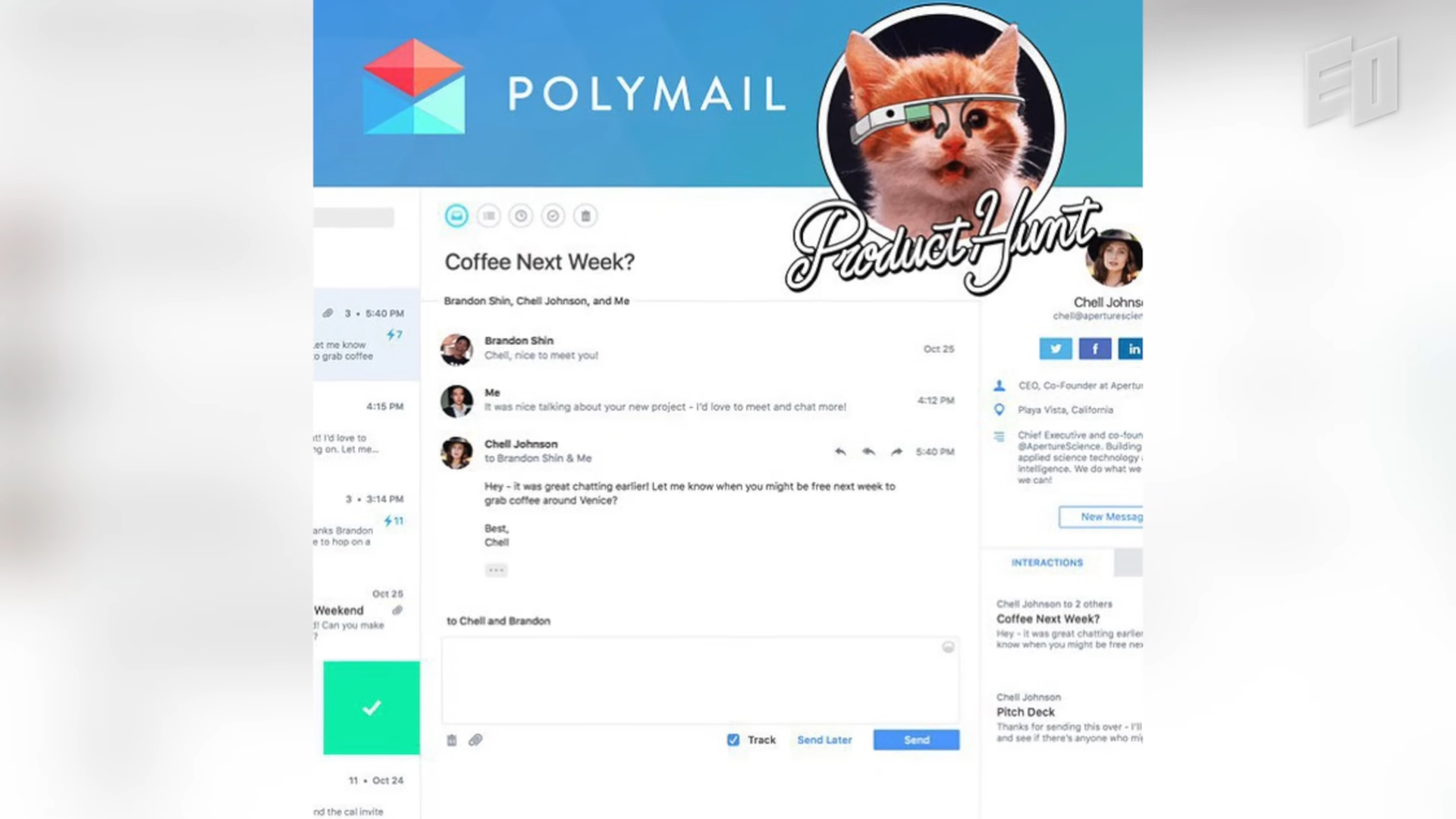
Our products just wasn't really well designed for a lot of B2B use cases. We tried over time to take a solution and retrofit it to different problems that we tried to find in the market, as opposed to starting from those problems in the first place and then building the products from that.
So I think going back, if we had the opportunity today, I would say starting from day one in parallel with the products, I would also consider building a go to market strategy. When Ishmael and I first started Paragon, we looked back on our experience as developers. Eventually, you know what took us back and took me back to the problem that I had faced at polymer.
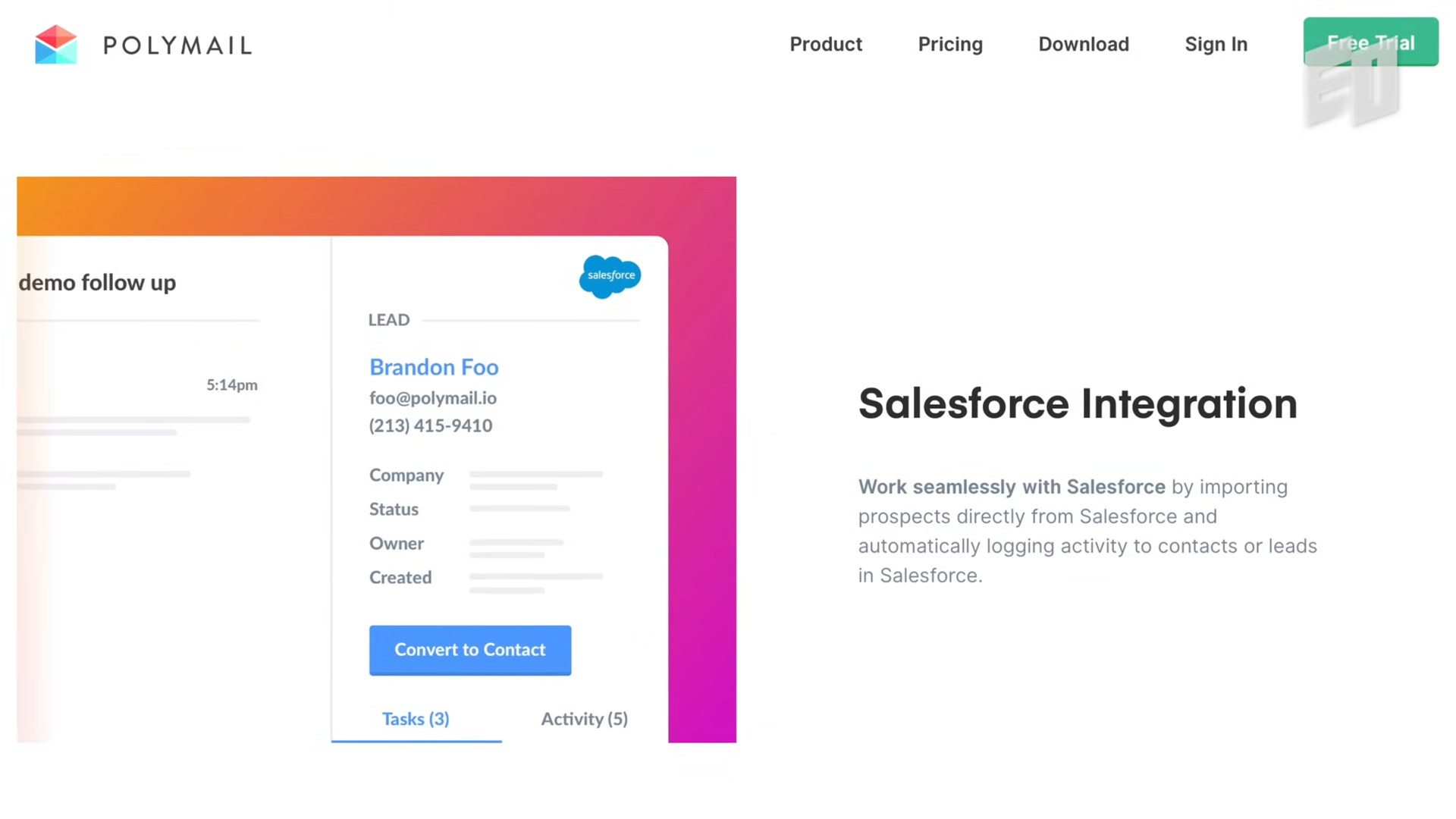
And when we were trying to sell to enterprise customers, hearing the same requests. Can you integrate with Salesforce? Can you integrate with HubSpot? Can you integrate with all these different solutions and having to write code manually to build all of those integrations and basically reinventing the wheel every time in our discovery process, exploring different ways that we could try and tackle these problems.
Finding an Unsolved Integrations Problem

Brandon Foo: It took us back to, you know, the integrations problem and seeing that until Paragon, until then, the only real solution in the market was for developers to write code for every single integration, for every single API to build these integrations with what are thousands of different applications in the market today.
Through that process, I think we eventually found, you know, really strong conviction on if we could build the stripe for integrations, if we could build the single connecting layer that developers could just install once and instantly connect their product to the hundreds or thousands of different SaaS applications in the market, that's something that could be useful to almost every software company in the world.
Ishmael Samuel: And we realized then that, hey, this is really an unsolved problem. But the size of the problem is, is huge. It's like a multi-billion dollar problem. No one's doing it right. We rebuilt our entire product from the ground up, focusing on that use case of customer facing integrations. And within two months of launching, we saw very strong product market fit, just hockey stick growth in terms of usage retention, RR, etc.
I think we were able to very concretely define, you know, here is the market that we're trying to build for. Here's the problem, here's the value that customers derive. If we're able to solve this problem for them. And I think that is ultimately what's allowed us to pursue and capture a much bigger market opportunity with Paragon.
Validating Product-Market Fit with Customers

Ishmael Samuel: I think it's a great thing when customers do one of two things. One, they're already spending time, money and resources trying to solve this problem. That's when you have, like your ideal user. They essentially validated that, hey, this is a significant enough problem for me to pay people or spend time doing the thing. So when you when you see people jumping over hoops trying to solve your specific problem, I think that's a that's a great sign.
You know, two, if you have customers using your product and they're reporting bugs and they're being telling you all the ways that it could be better, that's actually a very good thing. I think a lot of people get very self-conscious. We do a lot of betas just from our founder network, and I. I like to report bugs and people get very self-conscious about that. No, that means I'm using it. And, you know, I'd like to see it improve.
And if you have customers who are constantly reporting bugs, you know, think, you know, are they legitimately angry, you know, or are they so excited about your product and they're finding all these different things that, you know, they they they want it to improve.
Brandon Foo: Having gone through my first startup in Polymail, we were very intentional about doing. When we first started, Paragon was trying to get our first customers before we even built the product. As soon as we started to think of and test and validate different ideas, and as soon as we started to write the code for some of these ideas, we were doing this in parallel and trying to get customers pitching customers, trying to basically validate our sales process at the same time, and trying to get customers to pay $30. Would they pay $50? Would they pay us $100 if we could deliver on this product that we're pitching them? And there's no better test than if a customer is willing to give you $50.
Brandon Foo: Having gone through my first startup in Polymail, we were very intentional about doing. When we first started, Paragon was trying to get our first customers before we even built the product. As soon as we started to think of and test and validate different ideas, and as soon as we started to write the code for some of these ideas, we were doing this in parallel and trying to get customers pitching customers, trying to basically validate our sales process at the same time, and trying to get customers to pay $30. Would they pay $50? Would they pay us $100 if we could deliver on this product that we're pitching them? And there's no better test than if a customer is willing to give you $50.
Charge Early and Test Willingness to Pay

Ishmael Samuel: Ultimately, it comes down to are people willing to pay for it or are they willing to keep paying for it? I think a lot of founders make the mistake of not charging for their product. And ultimately, if you know you're trying to build a B2B business, there's only two reasons that businesses pay you money, and it's because you're saving them money or you're making them more money.
And if you're not providing a strong enough value prop in one of those two things, then you know they're not going to do it. So charge early and charge as much as possible even before you build a product to try to get people to, you know, preorder that shows intent, that shows value.
Brandon Foo: For B2B SaaS, pricing is generally pretty straightforward. There's a monthly subscription, and for any meaningful problem that you're solving for a business, I think you should be able to charge at a minimum $50 a month. If a company is not willing to pay $50 a month, it probably means you're not solving a big enough problem for them. I would say if you're selling a B2B product or you're trying to validate a B2B product in the market, start at $30 a month, which is where we started.
And then if you get enough customers, be willing to buy your product at $30 a month, start asking for $50 a month, start testing higher and higher price points. And I think doing that both is good for your growth, but also helps test the strength of your product market fit. And how big of a problem is it that you're solving for these customers? And it's a very iterative approach.
I think pricing is always a work in product process, and we're still changing our pricing to this day. But I think in that process, you'll learn more about your customers and what they are willing to pay more for, what they're maybe not willing to pay more for, maybe who your customers aren't, you know, and who your customers are that you should be focusing on.
Get First Customers Before Building

Brandon Foo: First of all, I would recommend every founder who's in the early stages of building their product to try and get your first five customers before you actually build the product.
There are so many ways that you can do this now, and there's so many tools available where you can easily spin up a landing page that sells the value prop of your product, and you could buy a few ads, or you could send cold emails to your prospects to this landing page and see. Do people convert? Do they actually buy it?
Or maybe you have a wait list or this is something anybody can do without writing a single line of code. If you can go out and get five paying customers or ten paying customers, probably means that there's some meaningful problem out there that people are willing to purchase. Pay money if you can solve, and that's a good sign, you should build the thing that you're marketing.

If you can't get five paying customers, hopefully in that process you also have the opportunity to treat it like a sales process and talk to those customers. Get their feedback, pitch them on the solution that you're building, even if it's not the thing that they're willing to pay for. Now, you can get some deeper insight into what are the problems that they have. Maybe they're tangential.
Maybe it's something completely different than what you had thought was the problem that you're solving.
I think that process is even more valuable in terms of if customers are willing to give you feedback on what are the problems, that they are willing to pay for, the problems that they have that can help you iterate and shift your product approach, shift your strategy, and eventually you will find something that people are willing to pay for.